Why Addison’s Hides in a Goldendoodle for Months
It’s incredibly frustrating when your beloved Goldendoodle isn't feeling quite right, but the symptoms are so vague that you can't quite put your finger on it. Even more disheartening is when those symptoms come and go, making it seem like you're imagining things or that your vet is struggling to pinpoint the problem. This guide dives deep into why Addison's disease, a tricky endocrine disorder, often hides in Goldendoodles for months, causing immense stress for owners and delaying crucial treatment.
Understanding Addison's Disease in Goldendoodles
Addison's disease, medically known as hypoadrenocorticism, is one of those conditions that can sneak up on you and your Goldendoodle, often masquerading as other, less serious ailments. It's not a common household name like diabetes or allergies, but it's particularly important for Goldendoodle owners to understand due to their genetic predispositions.
What is Addison's Disease?
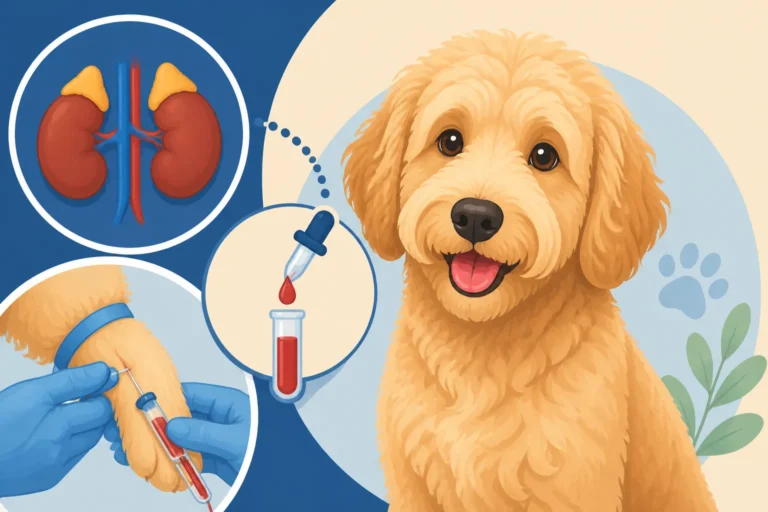
At its core, Addison's disease involves a malfunction of the adrenal glands, which are tiny, vital glands located near your Goldendoodle's kidneys. These glands are responsible for producing several crucial hormones, primarily cortisol and aldosterone. Cortisol is the body's natural "stress hormone," playing a huge role in metabolism, immune function, and helping your dog respond to stress. Aldosterone, on the other hand, is vital for regulating electrolyte balance, specifically sodium and potassium, which impacts blood pressure and kidney function. When these glands fail to produce enough of these hormones, the body can't cope with daily stressors or maintain its delicate internal balance, leading to a cascade of often subtle, intermittent problems.
The Genetic Link in Goldendoodles
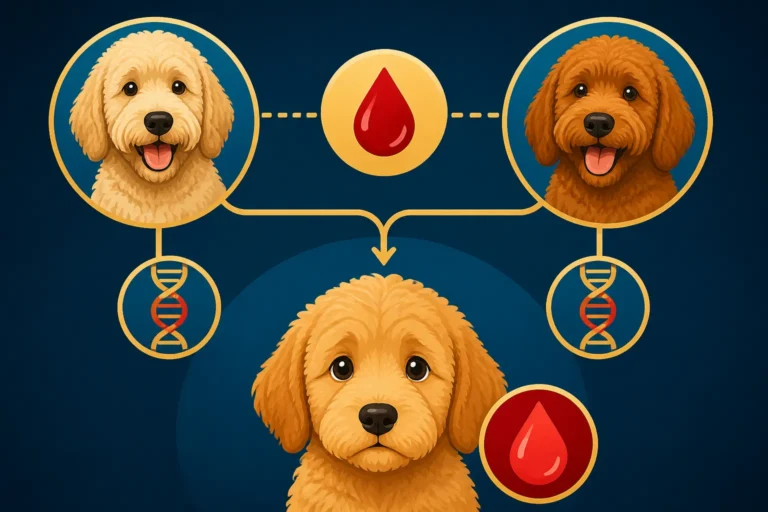
While any dog breed can technically develop Addison's disease, it's known to have a strong genetic component, particularly in certain breeds. Our wonderful Goldendoodles inherit their genetics from two parent breeds: the Golden Retriever and the Poodle. Both Standard Poodles and Portuguese Water Dogs, which are closely related to Poodles, are breeds with a known increased incidence of Addison's. This means that when you combine the genetics of a Poodle with a Golden Retriever, your Goldendoodle inherits a higher likelihood of carrying the genes that can lead to this condition. This isn't to say every Goldendoodle will get it, but the predisposition is undeniably there, making awareness even more critical. If you want to learn more about the specifics, we have a detailed article on Addison's Disease a Goldendoodle Gets From the Poodle.
Why it's a "Great Pretender"
The most frustrating aspect of Addison's disease, and why it often goes undiagnosed for so long, is its chameleon-like ability to mimic a host of other common canine illnesses. Veterinarians often refer to it as "the great pretender" because its symptoms are so vague and non-specific. You might see your Goldendoodle acting a little "off" – maybe a bit tired, or they've had a minor upset stomach. These are symptoms that could point to dozens of issues, from a simple dietary indiscretion to stress or even a mild infection. The problem is, unlike many conditions that progress linearly, Addison's symptoms tend to wax and wane, disappearing for days or weeks, only to return with a vengeance, making a clear diagnosis incredibly challenging.
The Elusive Symptoms of Addison's
Imagine your Goldendoodle, usually a ball of boundless energy and affection, suddenly seems a little subdued. Perhaps they skip a meal or have a bout of loose stools. As a dedicated owner, you worry, but then they bounce back. This is the classic, frustrating pattern of Addison's disease, making it a master of disguise.
Common, Non-Specific Warning Signs
The list of potential Addison's symptoms reads like a general list of "my dog isn't feeling well" ailments. You might observe:
- Lethargy and weakness: Your Goldendoodle seems unusually tired, less enthusiastic about walks or playtime, or struggles to get up.
- Gastrointestinal upset: This is very common, manifesting as vomiting, diarrhea, or a decreased appetite. Often, these are initially dismissed as stomach bugs or eating something they shouldn't have. If you’re seeing issues, it’s worth checking out our guide on Goldendoodle Vomiting and When It Matters and Goldendoodle Diarrhea Lasting More Than Two Days.
- Weight loss: Gradual, unexplained weight loss can occur over time.
- Shaking or muscle tremors: Though less common, some dogs may exhibit these, particularly during periods of stress.
- Increased thirst and urination: While less prominent than in other diseases like diabetes, it can be present.
- Intermittent pain: Some dogs may seem to have abdominal pain or stiffness.
The sheer variety and lack of a single, definitive symptom make it incredibly difficult for owners and even experienced veterinarians to immediately connect these dots to Addison's disease. They often mimic other conditions, leading down blind alleys in the diagnostic process.
Waxing and Waning Nature
Perhaps the most insidious characteristic of Addison's disease is how its symptoms ebb and flow. Your Goldendoodle might be lethargic and refuse breakfast one day, then be perfectly fine, tail wagging, zooming around the yard the next. This intermittent nature can be incredibly deceptive. You might think, "Oh, it was just a bad day," or "They must have eaten something weird." This cycle of seeming recovery followed by a relapse makes it easy to delay a vet visit, or if you do go, the vet might not see the symptoms at their peak. It also contributes to owner fatigue and doubt, making you question if you're overreacting, even when deep down, you know something isn't right.
Mimicking Other Conditions
Because the signs are so general, Addison's disease can easily be mistaken for a host of other more common ailments. A Goldendoodle experiencing vomiting and diarrhea might first be treated for gastroenteritis, parasites, or even food sensitivities. Lethargy and lack of appetite could be attributed to stress, a minor infection, or just an "off day." If a Goldendoodle has generalized weakness, it might be mistaken for arthritis, especially in an older dog, or even a low blood sugar episode. The frustrating part is that treatments for these common issues often provide temporary relief, making both owners and vets believe they've found the solution, only for the Addisonian symptoms to return later. This prolonged period of misdiagnosis is precisely why Addison's can hide for months, sometimes only revealing itself fully during a life-threatening "Addisonian crisis."
Why Goldendoodles Present a Unique Challenge
While Addison's is a tricky diagnosis in any breed, our Goldendoodles' specific traits and the way we interact with them can inadvertently create additional hurdles to early detection.
The Goldendoodle Temperament Mask
Goldendoodles are renowned for their outgoing, friendly, and often goofy personalities. They are eager to please, enthusiastic, and generally have a high energy level, especially when young. This inherent bounciness and joyful demeanor can actually become a "mask" for subtle underlying illness. When a Goldendoodle is just a little off, a tad less enthusiastic, or slightly quieter, it can easily be dismissed as them having an "easy day" or simply maturing. Their strong desire to interact and please their humans might even cause them to push through mild discomfort, making it harder for an owner to notice the gradual decline. For instance, a Goldendoodle might still wag its tail when you walk in, even if it feels weak, or attempt to play, only to tire out quickly, which an owner might not immediately interpret as a serious symptom.
Delayed Recognition by Owners
Given the Goldendoodle's generally robust and happy nature, combined with the waxing and waning symptoms of Addison's, owners often don't rush to the vet at the first sign of trouble. If your dog has a day of mild diarrhea, and then seems perfectly fine for two weeks, it's natural to assume whatever it was has passed. You might attribute a slight dip in energy to a long walk or a busy week. This delayed recognition means that by the time a Goldendoodle owner brings their pet in, the disease may have progressed further, or the symptoms might have temporarily receded again, making it difficult for the veterinarian to observe them firsthand. This cycle of "wait and see" due to the non-specific nature of the illness inadvertently prolongs the diagnostic process.
The "Normal" Puppy/Adolescent Phase
Goldendoodle puppies and adolescents are bundles of energy, but they also have their moments of intense growth spurts, developmental changes, and sometimes, seemingly random "off" days. A young Goldendoodle might have a day where they're not as hungry, or seem a bit more sleepy, which can easily be attributed to a growth spurt, teething, or just normal puppy exhaustion after a busy play session. As they enter adolescence, their energy levels can fluctuate, and some behavioral quirks might emerge, potentially masking subtle signs of illness. This makes it particularly challenging to differentiate between a healthy, but perhaps tired, growing Goldendoodle and one whose mild symptoms are actually early indicators of Addison's disease. It's a fine line to walk, and often, owners don't realize something more serious is at play until the symptoms become more pronounced or frequent.
The Diagnostic Journey: Why It Takes Time
Navigating a potential Addison's diagnosis can be a long and winding road, filled with frustrating detours and moments of doubt. Because the symptoms are so vague, the path to a definitive answer isn't always straightforward.
Initial Misdiagnoses
When your Goldendoodle first presents with vague symptoms like vomiting, diarrhea, or lethargy, a veterinarian will, understandably, rule out the most common culprits first. They might suggest a change in diet, deworming, antibiotics for a suspected bacterial infection, or anti-nausea medication. These initial treatments can sometimes offer temporary relief, further confusing the picture. For example, if a Goldendoodle is given an anti-inflammatory for perceived joint pain (which can sometimes be a subtle symptom of Addison's), they might feel better for a short period. This cycle of treating for common ailments, seeing temporary improvement, and then having symptoms return, can delay the consideration of Addison's for weeks or even months. It's not a failure on the part of the vet or owner, but rather a testament to the disease's deceptive nature. This is also why having good pet insurance, like Healthy Paws, can be so crucial, as it helps cover the costs of these initial investigations and potential misdiagnoses without adding financial stress to an already difficult situation.
The Need for Specific Testing
The definitive diagnosis of Addison's disease relies on a specific test called the ACTH (Adrenocorticotropic Hormone) stimulation test. Unlike routine blood work, which might show some suspicious electrolyte imbalances (like high potassium and low sodium) or mild anemia, the ACTH stimulation test directly measures the adrenal glands' ability to produce cortisol.
Here's how it generally works:
- Baseline Blood Sample: A blood sample is taken to measure your Goldendoodle's baseline cortisol level.
- ACTH Administration: A synthetic form of ACTH is injected. This hormone normally stimulates the adrenal glands to produce cortisol.
- Second Blood Sample: After a set period (usually one hour), a second blood sample is taken to measure cortisol levels again.
In a healthy dog, cortisol levels will significantly increase after the ACTH injection. In a Goldendoodle with Addison's disease, the cortisol levels will remain low, indicating that the adrenal glands are not functioning properly. Because this test is specific and often requires a referral or a vet with specific equipment, it’s not usually the first test ordered for vague symptoms. We have a full article on The ACTH Test for a Goldendoodle if you want to dive deeper.
When to Push for Further Investigation
As an owner, you know your Goldendoodle best. If your dog's vague symptoms persist, recur frequently, or worsen despite conventional treatments, it's absolutely crucial to advocate for further investigation. Don't hesitate to mention Addison's disease to your vet, especially given the Goldendoodle's genetic background.
Key indicators that should prompt you to push for an ACTH stimulation test include:
- Recurrent gastrointestinal issues: Vomiting and diarrhea that keep coming back, even if they improve with medication.
- Persistent lethargy/weakness: Your Goldendoodle just doesn't have its usual spark, day after day.
- Unexplained weight loss.
- Sudden collapses or extreme weakness (Addisonian crisis): This is an emergency and requires immediate veterinary attention.
- Blood work showing electrolyte imbalances: If routine blood tests show high potassium and low sodium, this is a major red flag for Addison's.
It’s completely okay to ask your vet to consider Addison’s, especially if your Goldendoodle is a younger adult (typically between 2-7 years old, though it can occur at any age). Early diagnosis, even if it takes persistence, is key to managing this condition effectively and ensuring your Goldendoodle can live a full, happy life on appropriate lifelong medication. Having pet insurance, like Healthy Paws, can certainly alleviate some of the worry about the costs associated with these specialized diagnostic tests.
Addison's Symptoms vs. Common Ailments
To illustrate just how easily Addison's symptoms can be confused with other, less serious issues, here's a comparison. This table isn't meant for self-diagnosis, but rather to highlight the overlapping nature of signs that makes Addison's so difficult to pin down.
| Symptom | Potential Addison's Sign | Common Ailment It Mimics | Key Differentiating Factor (often requires vet assessment) |
|---|---|---|---|
| Lethargy/Weakness | Persistent, waxing & waning, can progress to collapse | Simple tiredness, minor illness, aging, stress | Severity, duration, recurrence, lack of response to rest. |
| Vomiting/Diarrhea | Intermittent, often unexplained, can be severe in crisis | Dietary indiscretion, parasites, bacterial infection | Recurrence, failure to respond to typical GI treatments. |
| Decreased Appetite | On and off, sometimes complete refusal to eat | Picky eating, stress, minor upset stomach | Persistency, combination with other subtle symptoms. |
| Weight Loss | Gradual, unexplained, despite adequate food intake | Underlying chronic disease, malabsorption, dental issues | Progressive nature despite dietary adjustments. |
| Shaking/Tremors | Can occur due to electrolyte imbalance or weakness | Cold, fear, excitement, neurological issues | Context, presence of other Addison's specific signs. |
| Increased Thirst/Urination | Less common, but can occur due to kidney involvement | Diabetes, kidney disease, urinary tract infection | Electrolyte imbalance on blood work. |
Lifelong Management and Proactive Care
Once Addison's disease is correctly diagnosed, it's incredibly manageable with lifelong medication. The journey might be challenging to reach that diagnosis, but the outcome for Goldendoodles who receive treatment is overwhelmingly positive.
The Importance of Consistent Medication
For Goldendoodles with Addison's, treatment typically involves replacing the hormones their adrenal glands aren't producing. This usually means a daily oral corticosteroid (like prednisone) to replace cortisol and a monthly injectable mineralocorticoid (like desoxycorticosterone pivalate, or DOCP) to replace aldosterone. It's crucial that these medications are given consistently, exactly as prescribed by your veterinarian. Missing doses or altering them without veterinary guidance can lead to a return of symptoms or, worse, an Addisonian crisis. While managing lifelong medication sounds daunting, it quickly becomes part of your routine, and the transformation in your Goldendoodle's health and vitality is usually remarkable. You can learn more about the specifics of treatment in our article, Lifelong Medication for an Addisonian Goldendoodle.
Regular Monitoring and Adjustments
Even with consistent medication, Goldendoodles with Addison's require regular veterinary check-ups and blood work, especially in the initial months after diagnosis, to ensure the medication dosage is optimized. Your vet will monitor electrolyte levels and overall health to make any necessary adjustments. Over time, these visits might become less frequent, but they remain vital for ensuring your Goldendoodle continues to thrive. These ongoing medical costs are another area where pet insurance, such as Healthy Paws, can be a huge help, ensuring you can provide the best possible care without financial strain.
What Breeders Can Do
For those considering getting a Goldendoodle, asking breeders about health testing, particularly for conditions prevalent in the parent breeds like Addison's, is crucial. While there isn't a single definitive DNA test that can predict Addison's with 100% accuracy, responsible breeders should be transparent about the health history of their breeding lines. A comprehensive The DNA Panel a Goldendoodle Breeder Should Run can help identify carriers for other genetic conditions, and an honest breeder will discuss any known instances of Addison's in their lines. Always look for a breeder who is open about their dogs' health, provides health clearances, and offers a health guarantee, which can be a lifeline if conditions like Addison's emerge. Unfortunately, because Goldendoodles are a crossbreed, there is no official breed club health scheme like the CHIC program for purebreds, which means buyers must rely heavily on breeder integrity and individual parent health records. For more on this, check out Why a Goldendoodle Has No Breed Club Health Scheme.
Disclaimer
The information provided in this article is for educational purposes only and is not a substitute for professional veterinary advice. Always consult with your veterinarian for any health concerns or before making any decisions about your Goldendoodle's medical care.