Goldendoodle Cataracts and Vision Loss
It's heartbreaking to notice your sweet Goldendoodle struggling with their vision, bumping into furniture they once navigated with ease, or hesitating on stairs they used to bound up. The worry that sweeps over you when you suspect your furry best friend is losing their sight is immense, and it’s natural to feel overwhelmed by what it might mean for their future. This guide aims to shed light on Goldendoodle cataracts and vision loss, offering a comprehensive look at the causes, symptoms, diagnosis, and management strategies to help you navigate this challenging journey with confidence and compassion.
Understanding Cataracts in Goldendoodles
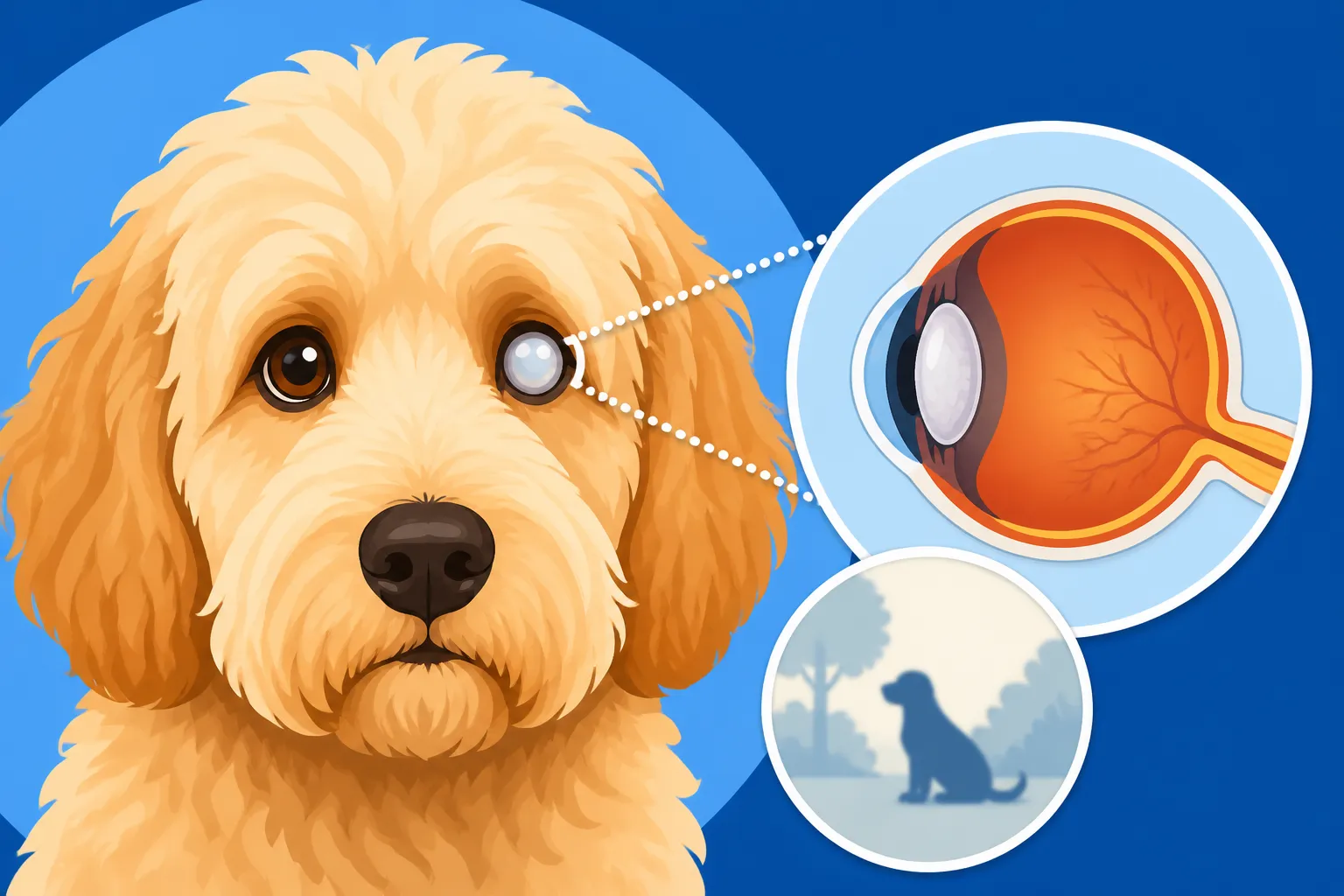
Cataracts are a common eye condition that can affect Goldendoodles, just like many other breeds and mixed breeds. They occur when the lens of the eye, which is normally clear, becomes cloudy or opaque. Think of it like looking through a foggy window – the light can't pass through clearly, making vision blurry or even impossible in severe cases. This clouding can be subtle at first, often going unnoticed, but it can progress over time, gradually obscuring more and more of your dog's vision.
What Exactly Are Cataracts?
At its core, a cataract is a change in the structure of the lens proteins. The lens's primary job is to focus light onto the retina, much like the lens of a camera. When these proteins start to clump together, they form opaque areas that scatter light rather than allowing it to pass through cleanly. This results in the characteristic cloudy appearance in your Goldendoodle's pupil, which can range from a small, almost invisible speck to a dense, milky white or bluish-gray mass that completely covers the lens.
It's important to remember that cataracts are different from the bluish haze that often develops in older dogs' eyes, known as nuclear sclerosis. Nuclear sclerosis is a normal aging change where the lens hardens and becomes slightly cloudy, but it usually doesn't significantly impair vision. Cataracts, on the other hand, actively block light, leading to real vision loss. A veterinary ophthalmologist can easily tell the difference between these two conditions, offering you much-needed clarity.
The impact of cataracts depends on their size, density, and location within the lens. A small cataract on the edge might not bother your Goldendoodle much, while a dense, central cataract can cause significant visual impairment. This is why early detection is so crucial – catching them early can help you monitor their progression and make informed decisions about treatment before vision loss becomes debilitating.
Common Types of Goldendoodle Cataracts
Cataracts aren't a one-size-fits-all condition; they can manifest in several ways, and understanding the different types can help you grasp the potential causes and outlook for your Goldendoodle. The most common distinctions relate to their origin and progression.
One of the most frequently seen types in Goldendoodles is hereditary or juvenile cataracts. These are often present at birth or develop within the first few years of life. Both Golden Retrievers and Poodles, the parent breeds of Goldendoodles, are known to carry genes for various forms of hereditary cataracts. This means your Goldendoodle, as a mixed breed, can inherit these predispositions from either side of their lineage. These cataracts can progress rapidly or slowly, sometimes remaining small and not affecting vision much, while others can quickly lead to blindness.
Another significant category is diabetic cataracts. If your Goldendoodle has diabetes, they are at a very high risk of developing cataracts, often quite rapidly. The high sugar levels in their blood can lead to an accumulation of sugar in the lens, which then converts into a substance that draws water into the lens, causing it to swell and become cloudy. These cataracts can develop very quickly, sometimes leading to complete blindness within weeks if the diabetes is not well-controlled. This highlights the importance of regular veterinary check-ups, where conditions like diabetes can be identified early.
Lastly, age-related cataracts are common in senior Goldendoodles. While distinct from nuclear sclerosis, these cataracts typically develop later in life, usually after the age of eight. They tend to progress slowly, often over several years, giving both you and your dog time to adjust to gradual vision changes. Other, less common types can be caused by trauma to the eye, inflammation (like uveitis), or nutritional deficiencies, though these are less prevalent than the hereditary or diabetic forms. Knowing the potential cause can sometimes guide treatment options and help your vet manage underlying health issues.
Identifying the Signs of Cataracts and Vision Loss
Spotting vision changes in your Goldendoodle can be tricky, especially in the early stages when they're masters at compensating. They know their environment so well that small changes might not be immediately obvious. However, as cataracts progress and vision becomes more impaired, you'll start to notice more overt signs that something isn't quite right.
Early Symptoms and Subtle Changes
In the initial phases, you might just get a fleeting glimpse of a slightly cloudy spot in your Goldendoodle's eye. It might look like a pale, bluish-white or grayish opacity in the center of their pupil, sometimes more visible in certain lighting conditions. You might dismiss it as a trick of the light, but if you see it more than once, it's worth noting. Take a moment to observe them in bright daylight and then again in dimmer indoor light.
Beyond the visible cloudiness, subtle behavioral changes can be telling. Your Goldendoodle might start to hesitate slightly before jumping onto a familiar couch or descending stairs, or they might misjudge distances when catching a treat in the air. You might notice them bumping into objects in unfamiliar environments, even if they navigate your home perfectly. They might also become less enthusiastic about playing fetch, particularly if the ball rolls into a shadowy area, as their depth perception begins to falter.
Another indicator can be a change in their confidence, especially in dimly lit rooms or at dusk. They might stick closer to you, seem more anxious, or be more easily startled by unexpected movements or sounds. These slight hesitations or increased clinginess can be early warning signs that their vision is subtly declining, and it's always best to discuss these observations with your vet. Catching these early cues allows for prompt evaluation and potentially early intervention.
Progression to Significant Vision Impairment
As cataracts mature, the cloudiness in the lens becomes much more pronounced, often appearing milky white or opaque, clearly visible to the naked eye. At this stage, your Goldendoodle's vision will be significantly affected, moving beyond subtle changes to noticeable difficulties in their daily life.
You'll likely observe more frequent collisions with furniture, walls, or even you, particularly if objects have been moved or if they are in an unfamiliar space. Walking on a leash might become more challenging as they struggle to see obstacles in their path. Their overall confidence in movement will diminish, and they might become more reliant on their other senses, like hearing and smell, to navigate. For example, they might start to sniff the ground more intently when walking to get a sense of their surroundings. This is also a time when you might notice other concurrent eye conditions, so it's wise to get an expert opinion. Learning about Progressive Retinal Atrophy and the Goldendoodle Eye Test can provide insight into other potential visual challenges.
In cases where the cataracts become fully mature, meaning the entire lens is opaque, your Goldendoodle may become functionally blind. At this point, they can only perceive light and dark, if anything at all, and will struggle to navigate even familiar environments. This can be incredibly distressing for both pet and owner, leading to increased anxiety, reduced activity levels, and a significant impact on their quality of life. Owners often describe their Goldendoodles as "walking with their nose to the ground" or showing genuine fear when trying to move through a room. This level of vision loss is usually when surgical intervention becomes a serious consideration, if appropriate for your dog.
Diagnosing and Managing Goldendoodle Cataracts
Once you suspect your Goldendoodle is experiencing vision issues, the first and most critical step is a visit to your veterinarian. They can conduct an initial eye examination and, if cataracts are suspected, will likely recommend a consultation with a veterinary ophthalmologist. This specialist has the equipment and expertise to accurately diagnose the type and extent of the cataracts and discuss the best course of action.
The Diagnostic Process at the Vet
Your regular vet will start with a thorough general physical exam, including a basic ophthalmic examination. They'll use an ophthalmoscope to look into your Goldendoodle's eyes, checking for obvious cloudiness in the lens, assessing pupil responses, and looking for any signs of inflammation or other abnormalities. They might also check for conditions like diabetes, which can be a primary cause of cataracts, by taking blood and urine samples. This initial assessment is crucial to differentiate cataracts from other eye conditions that might present similarly, such as nuclear sclerosis or even Progressive Retinal Atrophy Carried by Both Goldendoodle Lines.
If your vet confirms suspicions of cataracts, or if they have any doubt, they'll refer you to a board-certified veterinary ophthalmologist. This specialist will perform a more detailed eye exam, often using specialized equipment like a slit lamp biomicroscope to get a magnified, three-dimensional view of the eye's structures. They'll be able to precisely grade the cataracts, determining their size, location, and maturity (incipient, immature, mature, hypermature). They'll also perform an electroretinogram (ERG) to assess the function of the retina, ensuring that the retina is healthy enough to benefit from cataract surgery. An ocular ultrasound might also be done to check for any abnormalities behind the lens, such as retinal detachment, which wouldn't be visible due to the cloudy lens. All these tests are vital for determining the prognosis and the suitability of your Goldendoodle for surgery.
| Cataract Maturity Stage | Description | Impact on Vision | Treatment Approach |
|---|---|---|---|
| Incipient | Very small, isolated opacities, less than 15% of lens | Minimal to no vision loss | Monitoring, eye drops (if inflammatory) |
| Immature | Cloudiness involving more of the lens, but light still passes through | Mild to moderate vision impairment | Monitoring, potential surgery discussion |
| Mature | Entire lens is opaque, completely blocking light passage | Severe vision loss to blindness | Surgery (if suitable) |
| Hypermature | Lens begins to shrink and liquefy; can cause inflammation | Complete blindness | Surgery (more complex), managing inflammation |
Treatment Options: Medical vs. Surgical
When it comes to treating cataracts in Goldendoodles, the options generally fall into two categories: medical management or surgical intervention. The best approach depends heavily on the type, maturity, and cause of the cataracts, as well as your dog's overall health and your family's circumstances.
For incipient or very small cataracts, or if your Goldendoodle has other health conditions that make surgery risky, medical management might be considered. This typically involves using anti-inflammatory eye drops if there's any associated inflammation, and sometimes antioxidants or other supplements, though there's limited scientific evidence that these can reverse or significantly slow cataract progression. The primary goal of medical management is often to control secondary issues like inflammation or glaucoma that can arise from cataracts, or simply to make your dog more comfortable as they adjust to vision loss. It's important to have realistic expectations here; medical treatments rarely restore lost vision.
The only effective way to remove cataracts and restore vision is through surgical removal. This procedure, called phacoemulsification, is very similar to human cataract surgery. It involves using an ultrasonic probe to break up the cloudy lens, which is then aspirated out of the eye. An artificial intraocular lens (IOL) is usually implanted to restore focus, though some dogs do very well without an IOL. Cataract surgery is highly specialized and requires a veterinary ophthalmologist. It has a high success rate (around 90% in healthy eyes) but it's also a significant undertaking, both medically and financially. It’s crucial to consider Goldendoodle Eye Testing and Treatment Costs when making such a decision, and explore options for Goldendoodle Pet Insurance for a Dog With No Breed Papers if you haven't already, as this type of specialized care can be expensive. Many owners find peace of mind knowing that providers like Healthy Paws can help with these unexpected veterinary bills, particularly for complex surgeries.
Post-Operative Care and Potential Complications
If you decide to pursue cataract surgery for your Goldendoodle, the journey doesn't end when they come home from the clinic. Post-operative care is absolutely vital for a successful outcome and to prevent complications. This usually involves a rigorous schedule of multiple eye drops several times a day for several weeks, if not months, to prevent inflammation and infection. Your dog will also need to wear an Elizabethan collar (the "cone of shame") for a period to prevent them from rubbing or scratching their eyes, which could jeopardize healing.
Regular follow-up appointments with the veterinary ophthalmologist are necessary to monitor healing, adjust medications, and catch any potential complications early. These complications, though less common with experienced surgeons, can include glaucoma (increased pressure in the eye), retinal detachment, infection, or persistent inflammation. While the success rate is high, it's not 100%, and some dogs may experience ongoing issues. Your Goldendoodle's activity will need to be restricted during the recovery period, which means no jumping, rough play, or strenuous exercise. This can be challenging for an energetic Goldendoodle, but it's critical for proper healing. Understanding Goldendoodle Costs Across a Full Lifetime often helps owners budget for such potential scenarios.
Even after successful surgery, your Goldendoodle will require ongoing monitoring of their eye health. Annual check-ups with an ophthalmologist might be recommended, especially if they are prone to other eye issues. Maintaining their overall health, including managing any conditions like diabetes, is also key to preventing new problems.
Caring for a Goldendoodle with Vision Impairment
If surgery isn't an option, or if your Goldendoodle has vision loss from other causes like Night Blindness as a Goldendoodle's First PRA Sign, it doesn't mean their quality of life needs to diminish. Dogs are incredibly adaptable, and with a few adjustments and a lot of patience, you can help your visually impaired Goldendoodle live a full and happy life.
Adapting Your Home Environment
The first and most crucial step is to create a safe and predictable environment for your Goldendoodle. Try to keep furniture and their food/water bowls in consistent locations. Moving things around frequently can be disorienting and frustrating for a dog who relies on memory and feel to navigate their home. Consider blocking off stairs or areas with potential hazards with baby gates, especially if their vision loss is severe. This helps prevent falls and keeps them from bumping into dangerous items.
Adding textures or scents to differentiate areas can also be incredibly helpful. For instance, placing a small rug or a scented mat near their food bowl or bed can provide tactile or olfactory cues. You can also use different textures of flooring to mark transitions, like a runner leading to the back door. Corner protectors on sharp furniture edges can prevent painful bumps, and soft blankets on hard surfaces can cushion accidental collisions. Remember, what we see as small obstacles can be significant challenges for a dog who can’t see.
Maintaining a clear pathway from their sleeping area to their potty spot is also important. Some owners use indoor potty pads or create a designated, easily accessible outdoor area. Consistency is key here. If your Goldendoodle relies on a consistent path, they will quickly learn and feel secure. These adjustments aren't just about safety; they're about reducing anxiety and allowing your dog to move with confidence within their familiar world.
Establishing New Routines and Communication
When your Goldendoodle's vision starts to fail, their reliance on other senses intensifies. This is where consistent routines and clear verbal cues become invaluable. Always speak to your Goldendoodle before approaching them, touching them, or entering a room so you don't startle them. A gentle "Here I come!" or "Coming through!" can make a huge difference.
Establishing new verbal markers for steps, curbs, or obstacles on walks can help guide them. For example, a consistent "step up" or "watch out" can alert them to changes in elevation or upcoming hazards. Keeping walks on familiar routes, especially initially, can help them build a mental map of their surroundings through smell and memory. Consider using a harness instead of just a collar for walks, as it gives you more control and a gentler way to guide them without pulling on their neck. This also reduces the risk of injury if they suddenly pull in an unexpected direction due to a perceived threat or disorientation.
Engagement through scent work, puzzle toys, and audible toys can keep their minds stimulated and prevent boredom or depression. Nose work games, where they use their powerful sense of smell to find hidden treats, are fantastic for building confidence and providing mental enrichment. Consider interactive toys that make sounds, such as those with bells or crinkles, which they can locate without visual cues. These activities tap into their natural instincts and ensure they continue to enjoy playtime, even without full vision.
Safety and Quality of Life Considerations
Safety is paramount for a visually impaired Goldendoodle. Never leave them unsupervised in unfamiliar environments or near hazards like swimming pools without proper fencing. Consider investing in a "halo" or a bumper collar, which can act as a physical barrier to prevent them from bumping their head into objects. These devices attach to a harness and extend in front of their face, gently bumping into objects before their head does, giving them a tactile warning.
Regular veterinary check-ups are even more important for senior Goldendoodles or those with vision loss. Your vet can monitor for any pain, secondary eye issues, or other age-related conditions. As your Goldendoodle ages, it’s beneficial to know more about Senior Goldendoodle Care After the Age of Nine, which often includes managing sensory decline. If your dog is struggling with pain or anxiety related to their vision loss, your vet can discuss medications or therapies to improve their comfort. It's also important to have a plan for The Last Decisions for an Aging Goldendoodle, which, while difficult, can ensure their comfort and dignity in their final years.
Ultimately, your attitude and emotional support are crucial. Dogs pick up on our emotions. If you are stressed or anxious about their blindness, they will likely feel it too. Maintaining a calm, confident, and positive demeanor will reassure your Goldendoodle and help them adapt more easily. Shower them with affection, talk to them often, and continue to engage them in activities they enjoy, adapting as needed. Your love and consistency are the most powerful tools in ensuring they maintain a high quality of life.
Preventative Measures and Genetic Considerations
While not all cataracts are preventable, especially those linked to genetics or certain diseases, there are steps you can take to minimize risk and promote overall eye health for your Goldendoodle. Understanding the genetic predispositions of the breed is particularly important when considering a puppy.
The Role of Responsible Breeding
For Goldendoodles, which inherit traits from both Golden Retrievers and Standard Poodles, understanding the health screening practices of their parents is paramount. Both parent breeds have known genetic predispositions to various eye conditions, including hereditary cataracts and Progressive Retinal Atrophy Carried by Both Goldendoodle Lines. A responsible breeder will conduct comprehensive health clearances on their breeding stock to minimize passing on these genetic diseases.
Before purchasing a Goldendoodle puppy, always ask to see the health certifications for both parent dogs. This should include OFA (Orthopedic Foundation for Animals) eye clearances, which are performed by a board-certified veterinary ophthalmologist. These certifications should indicate that the parents are free of hereditary eye diseases. While a "clear" certification doesn't guarantee your puppy will never develop an eye issue, it significantly reduces the risk of inheriting common hereditary forms of cataracts. This is particularly important because, unlike some purebreds, Goldendoodles don't have a single breed club overseeing health standards, so it's up to individual breeders to perform these tests. Remember, The Annual Eye Exam a Goldendoodle Breeder Should Have is not just a recommendation; it's a vital step in ethical breeding.
Be wary of breeders who claim their dogs are "clear by parentage" without showing actual test results for the specific parents. Genetic testing (DNA tests) can also identify carriers for some forms of PRA and other conditions, but a comprehensive eye exam by an ophthalmologist is still critical for checking for conditions like cataracts that might not have a simple DNA test. Don't be afraid to ask questions and insist on seeing the paperwork. A transparent breeder will be happy to provide this information.
General Eye Health and Wellness
Beyond genetics, general health plays a significant role in your Goldendoodle's eye well-being. Regular veterinary check-ups are essential for detecting systemic diseases like diabetes early. As mentioned earlier, diabetes is a leading cause of rapidly progressing cataracts in dogs. Catching and managing diabetes effectively can sometimes prevent or slow the onset of these cataracts. Your vet will monitor blood sugar levels and other indicators during routine visits, which are especially important for Goldendoodles, given their mixed heritage and potential for various health conditions.
Nutrition also plays a supporting role. A balanced diet rich in antioxidants can contribute to overall health, including eye health. While no specific diet can prevent genetically programmed cataracts, good nutrition supports the body's natural defenses against cellular damage, which can contribute to age-related eye conditions. Discuss appropriate diets with your vet, especially if your Goldendoodle has specific health concerns or allergies.
Protecting your Goldendoodle's eyes from trauma is also important. While a playful Goldendoodle might not appreciate it, avoid activities where their eyes could be easily scratched or poked, such as running through dense thorny bushes. If your dog has long facial hair, regular grooming around their eyes is crucial. Long hair can wick moisture and debris into the eyes, leading to irritation or infection. Keeping the hair trimmed can also help you spot any subtle changes in their eyes more easily. Don't forget their ears either; while not directly related to cataracts, neglected ears can lead to discomfort, and conditions like Goldendoodle Ear Infections Under a Furnished Ear are common and require diligent care.
Financial Considerations for Cataract Management
Dealing with cataracts and potential vision loss in your Goldendoodle can come with significant financial implications. From initial diagnostic tests to potential surgery and ongoing care, the costs can quickly add up. Being prepared for these expenses is part of being a responsible pet parent.
Diagnostic and Medical Treatment Costs
The journey begins with diagnostic tests, which can vary depending on your vet and location. An initial vet visit will involve a general exam, potentially blood work to screen for underlying conditions like diabetes, and a basic eye exam. If a referral to a veterinary ophthalmologist is needed, that initial specialist consultation alone can range from $150 to $300, depending on the complexity and location.
The specialized tests performed by an ophthalmologist, such as a slit lamp examination, ocular ultrasound, and electroretinogram (ERG), are crucial for diagnosis and surgical planning. Each of these tests can add hundreds of dollars to the bill. For instance, an ERG alone can cost between $200 and $500. If medical management is chosen, the cost of prescription eye drops can also accumulate over time, often ranging from $20 to $50 per bottle, and may be needed long-term.
It's in these moments that pet insurance becomes a real lifesaver for many Goldendoodle owners. Policies from providers like Healthy Paws can reimburse a significant percentage of these diagnostic and medical treatment costs, greatly alleviating the financial burden. However, it's vital to enroll your Goldendoodle in pet insurance before any signs of cataracts appear, as most policies consider pre-existing conditions ineligible for coverage. This is also something to bear in mind when thinking about The Goldendoodle Conditions Insurers Exclude.
The Cost of Cataract Surgery
Cataract surgery, while highly effective, is a specialized procedure and represents the most significant financial investment in managing cataracts. The total cost for phacoemulsification, including anesthesia, the surgery itself, the intraocular lens, and initial post-operative medications and follow-up visits, can range dramatically based on geographic location, the veterinary ophthalmologist's fees, and the complexity of your dog's case.
You can typically expect to pay anywhere from $3,000 to $5,000 per eye for cataract surgery. If both eyes need surgery, these costs can double. This figure often includes the immediate post-operative medications and a few follow-up exams. However, any complications that arise, such as glaucoma or retinal detachment, will incur additional diagnostic and treatment costs. This is where Goldendoodle Eye Testing and Treatment Costs really hit home.
Having pet insurance, such as a comprehensive plan from Healthy Paws, can make this life-changing surgery accessible. Many plans offer high reimbursement rates (e.g., 70-90%) after your deductible is met, which means a substantial portion of these large bills could be covered. It's truly an investment in your dog's future, and for a Goldendoodle, an animal beloved for its vibrant personality and active nature, restoring vision can dramatically improve their quality of life.
Long-Term Care and Adaptations
Even if surgery is successful, or if you opt for conservative management of cataracts, there will be ongoing costs associated with long-term care. This includes routine follow-up appointments with your veterinary ophthalmologist to monitor eye health, which might be yearly or more frequent if complications arise. The costs of any ongoing medications, special diets, or supplements also need to be factored in.
For dogs with permanent vision loss, the costs shift more towards making their environment safe and enriching. While baby gates, non-slip rugs, and corner protectors are one-time purchases, they still represent an expense. Specialized toys that are audible or scented might be more expensive than standard toys. Regular grooming to keep hair out of their eyes and for overall hygiene also contributes to Goldendoodle Grooming as the Biggest Line in the Budget.
Additionally, if your Goldendoodle develops other age-related issues in conjunction with their vision loss, such as arthritis or cognitive decline, these will also require ongoing veterinary care and potentially medication. Thinking about Senior Goldendoodle Vet Visits After Nine and the overall Goldendoodle Costs Across a Full Lifetime can help you financially prepare for the entire lifespan of your cherished companion, ensuring you can provide them with the best possible care, regardless of their visual acuity.
Disclaimer
This article is intended for informational purposes only and does not constitute veterinary medical advice. Always consult with a qualified veterinarian or veterinary ophthalmologist for any health concerns or before making any decisions about your Goldendoodle's care.