Goldendoodle Behavior Problems That Start in Puppyhood
Bringing home a Goldendoodle puppy is often a dream come true, filled with visions of cuddles and joyful play. However, many new owners quickly discover that adorable puppy antics can rapidly morph into frustrating behavior problems if not addressed head-on. This guide is here to walk you through common Goldendoodle puppy behaviors that, left unchecked, can become serious issues, offering empathetic advice and practical solutions to help you and your furry companion navigate these crucial early months.
Understanding the Goldendoodle Puppy Brain
Goldendoodle puppies are a unique blend, inheriting traits from both the intelligent Poodle and the eager-to-please Golden Retriever. This combination can be a double-edged sword: they often learn quickly, which is fantastic for training good habits, but it also means they can just as swiftly pick up and reinforce undesirable ones. Understanding their inherent predispositions is the first step in prevention.
The Golden Retriever's Biddability Meets the Poodle's Smartness
Imagine the boundless enthusiasm of a Golden Retriever – always happy, always wanting to be part of the action, and eager to please their human. Now, couple that with the sharp wit and problem-solving abilities of a Poodle, a breed historically known for its working intelligence. Put them together in a Goldendoodle puppy, and you have a creature that's incredibly smart and highly motivated by interaction, but sometimes a little too clever for its own good. They watch you, they learn, and they can figure out quickly what gets your attention, even if it's not ideal behavior. This might mean they learn that nipping gets a reaction, or jumping earns a surprised gasp, both of which are forms of attention to a puppy. Their desire to be close to you and engage can, without proper guidance, lead to behaviors like constant nipping or jumping for attention because they've successfully "trained" you to respond.
Why Early Intervention Matters So Much
Puppyhood is a critical window for learning and development. From about 3 to 16 weeks, puppies are like sponges, soaking up every experience and forming associations that will shape their adult personalities and behaviors. What seems like a minor annoyance when your Goldendoodle is a tiny fluffball can become a deeply ingrained and difficult-to-change habit as they grow into a powerful, energetic adult. For instance, a small puppy jumping on your leg might be cute, but a 60-pound adolescent Goldendoodle doing the same can knock over a child or an elderly guest. Addressing these behaviors when they are just starting, with gentle but firm consistency, is far easier than trying to retrain a deeply ingrained habit later on. Think of it as laying the foundation of a house; if you don't pour a solid, level foundation, you'll have problems with the structure for years to come.
Nipping, Biting, and Mouthiness
Almost every Goldendoodle puppy owner experiences the "shark phase." Those tiny, needle-sharp puppy teeth seem designed for one purpose: exploring the world through biting, and sometimes, connecting with human skin. While it's a natural part of puppy development, it's crucial to manage this behavior carefully to prevent it from escalating into a serious problem.
The Natural Urge to Mouth Everything
Goldendoodle puppies, like all puppies, use their mouths to investigate their surroundings. They don't have hands, so everything goes into the mouth – your fingers, your clothes, the furniture. This is compounded by their Golden Retriever heritage, a breed famous for its "soft mouth" and a strong desire to carry things (and people, sometimes!) in their mouths. Plus, those puppy teeth hurt! As their adult teeth start to emerge around 12-16 weeks, they feel discomfort, and chewing helps alleviate the pain, much like a baby teething. So, when your Goldendoodle puppy nips at your hands or gnaws on your pant leg, they're not usually trying to be mean; they're exploring, playing, and managing discomfort. The challenge is teaching them what is okay to mouth and what isn't.
Redirecting Chewing and Nipping onto Appropriate Items
The key to managing nipping and excessive mouthiness is consistent redirection. When your Goldendoodle puppy's teeth make contact with your skin, even gently, let out a high-pitched "ouch!" or "yelp" sound. This mimics a littermate's reaction to too-hard play and often startles the puppy. Immediately after the yelp, remove your hand and offer an appropriate chew toy. This could be a sturdy rubber toy, a rope toy, or a treat-dispensing puzzle. Make sure you have a variety of safe, engaging chew toys readily available around your home. Many owners find great success with a range of options from places like Amazon, ensuring there's always something acceptable to chew on. If the puppy continues to nip at your hands even after redirection, a short "reverse time-out" can be effective: calmly stand up and walk away for 10-20 seconds, removing yourself from the interaction. This teaches the puppy that rough play makes the fun stop. For a deeper dive into this topic, check out Goldendoodle Puppy Biting and Mouthing.
When Nipping Becomes a Problem
While most puppy nipping is normal, it's important to differentiate playful mouthiness from genuinely problematic behavior. If your puppy's nips are consistently hard, breaking skin, or if they seem to escalate in intensity despite your efforts to redirect, it might be more than just typical puppy play. Pay attention to body language: is your puppy stiffening, growling, or showing signs of fear or possessiveness when you try to remove an item or interact? If the nipping is accompanied by aggressive posturing or seems to be driven by guarding resources (toys, food, space), it's time to seek professional help. A certified professional dog trainer or veterinary behaviorist can assess the situation and provide tailored guidance. Ignoring these more serious signs can lead to significant behavioral challenges as your Goldendoodle matures.
Jumping and Frantic Greetings
Ah, the "Goldendoodle greeting"! It's often delivered with such joy and enthusiasm that it's hard not to melt a little, but a jumping Goldendoodle, especially a standard-sized one, can be a real handful. This behavior starts early and, if allowed to continue, becomes incredibly difficult to extinguish.
The "Hello, World!" Enthusiasm of a Goldendoodle
Goldendoodles are often described as "hyper-friendly" dogs. They love people, they love other dogs, and they want to greet everyone with unbridled joy. This excitement, combined with their natural exuberance, often translates into jumping up on people. For a puppy, jumping is a way to get closer to your face, seek attention, and express their sheer delight. The problem is, even if you push them down gently or say "no," any attention—even negative attention—can reinforce the behavior. They learn that jumping on you gets a reaction, making them more likely to do it again. It's an innocent behavior from their perspective, but one that can quickly become a safety concern, especially if you have children or elderly family members around.
Teaching "Four Paws on the Floor" from Day One
The mantra for stopping jumping is "four paws on the floor." The moment your Goldendoodle puppy starts to jump, turn your back, cross your arms, and completely ignore them. Do not make eye contact, do not speak, do not touch. As soon as all four paws are back on the ground, immediately turn back, praise them softly, and offer a treat. If they jump again, repeat the sequence. Consistency is absolutely vital here. Every single person who interacts with your puppy must follow this rule – family members, friends, even strangers you meet on walks. It's difficult to get right every time, but without this consistency, the message gets muddled. You can also incorporate "sit to say please" into your daily routine: ask your puppy to sit before you put down their food bowl, before you open the door for a walk, or before you give them a toy. This teaches them that calm, polite behavior earns rewards. For more detailed training methods, read Goldendoodle Jumping on Every Visitor.
Managing Excitement and Impulse Control
Beyond directly training "four paws on the floor," it's incredibly helpful to work on your Goldendoodle's general impulse control. Goldendoodles are smart and energetic, and they need mental challenges to help them learn to manage their excitement. Games like "wait" before eating, "leave it" when a tempting item is on the floor, or practicing a "stay" can all contribute to building a stronger "off switch" for their enthusiasm. When a visitor comes over, consider putting your puppy on a leash initially and having them perform a "sit" or "down" while you greet your guest. Only when they are calm can they be released for a polite greeting. This helps manage the initial burst of excitement that often leads to jumping. Over time, as your Goldendoodle matures and gains more practice with impulse control, those frantic greetings will likely become much calmer and more enjoyable for everyone involved.
Separation Anxiety and "Velcro" Tendencies
Goldendoodles are renowned for their affectionate nature and their desire to be close to their human families. This "Velcro dog" tendency is endearing, but if not managed carefully from puppyhood, it can blossom into full-blown separation anxiety, a heartbreaking and destructive problem for both dog and owner.
The Goldendoodle's Need for Company
Both Golden Retrievers and Poodles are highly social breeds. Goldens thrive on companionship and being part of the family, while Poodles, originally bred as water retrievers, are known for their intelligence and close bond with their handlers. Combine these traits, and you get a Goldendoodle who genuinely loves to be with their people. This manifests as following you from room to room, wanting to be involved in every activity, and curling up at your feet the moment you sit down. While lovely, this intense bond can make being left alone incredibly stressful for them. If a puppy never learns to cope with solitude, even for short periods, they can quickly develop an unhealthy dependency, where being separated from their owner causes genuine panic.
Building Alone Time Gradually and Positively
The key to preventing separation anxiety is to teach your Goldendoodle puppy that being alone is a normal, non-threatening, and even pleasant experience. This starts with very short, controlled periods of alone time, gradually increasing the duration. Crate training is an invaluable tool here. A properly introduced crate should be a safe, comfortable den where your puppy can relax. Start by leaving your puppy in their crate with a high-value chew toy or a treat-stuffed Kong for just a few minutes while you are still in the house, perhaps in another room. Slowly increase the time, and eventually, step outside the house for brief moments. Make your departures and arrivals low-key – no dramatic goodbyes or over-the-top hellos. You want to normalize the process. For detailed guidance on this, consider resources like BAXTER & Bella, which offers comprehensive online puppy training programs that often include modules on building confidence and managing alone time. Crate Training a Velcro Goldendoodle is another excellent resource for this process.
Recognizing the Early Signs of Distress
It's vital to differentiate between a puppy who is simply bored or a bit restless when left alone, and one who is experiencing genuine separation distress. Early signs of anxiety might include whining, barking, or howling shortly after you leave, pacing, excessive drooling, or destructive chewing (especially around doors or windows). As it progresses, you might see house-soiling (even in a fully potty-trained dog), self-mutilation (like excessive licking or chewing paws), or attempts to escape their confinement that can lead to injury. If you notice these signs, don't dismiss them as "bad behavior." Your Goldendoodle isn't being spiteful; they are genuinely distressed. It's crucial to consult with your veterinarian or a certified professional dog trainer who specializes in separation anxiety. This isn't a problem that typically gets better on its own, and early intervention can prevent it from becoming a debilitating issue for your dog.
Potty Training Setbacks and Regression
Potty training can feel like a marathon with a Goldendoodle puppy. You think you've finally got it down, only for an accident to happen right in front of you. While frustrating, many setbacks in potty training stem from inconsistencies or a misunderstanding of how puppies learn.
The Importance of a Consistent Schedule
One of the most common reasons for potty training struggles is a lack of consistent routine. Goldendoodle puppies, especially when they're very young, have small bladders and limited control. They need to go out frequently: after waking up, after eating or drinking, after playing, and before bedtime. A good rule of thumb is their age in months plus one hour (e.g., a 3-month-old puppy can hold it for roughly 4 hours, but you should take them out much more often). Having a predictable schedule helps them understand when and where they are expected to relieve themselves. If the schedule is haphazard, with long stretches between potty breaks, or if they're not consistently taken to the same spot, they'll struggle to form those crucial associations. Every accident indoors is a missed opportunity to teach them the correct behavior and can actually reinforce the habit of going inside. For a weekly guide, look into Goldendoodle Potty Training by Week.
Cleaning Accidents and Preventing Recurrence
When accidents happen, it's essential to clean them properly and avoid punishment. Goldendoodles, like all dogs, don't understand "revenge peeing." If you rub their nose in an accident or scold them after the fact, they will only learn to fear you or to hide their accidents, making the problem worse. Instead, clean accidents thoroughly with an enzymatic cleaner (you can find these at most pet stores or online). Regular household cleaners might remove the stain for you, but they often leave behind odors that only a dog can detect, signaling to your Goldendoodle that it's still a "potty spot." While cleaning, try to redirect your Goldendoodle away from the area. If you catch them in the act, a quick, sharp clap or "Ah-ah!" can interrupt them, then immediately scoop them up (if small enough) and rush them outside to their designated potty area. Praise them lavishly if they finish outside.
Addressing Regression in Older Puppies
It's not uncommon for Goldendoodle puppies to seem fully potty trained, only to regress around 6-12 months. This can be incredibly disheartening. If your previously reliable puppy suddenly starts having accidents, the first step is always a vet visit. Urinary tract infections (UTIs) or other medical issues can cause a sudden loss of bladder control. If medical causes are ruled out, then it's time to re-evaluate your routine. Has the schedule become lax? Are you spending less time supervising? Adolescent dogs, much like human teenagers, can test boundaries and sometimes "forget" their manners. Go back to basics: consistent schedule, frequent potty breaks, leashed trips outside, lavish praise for success, and diligent supervision indoors. Consider temporarily confining them to a smaller, easy-to-clean area or using their crate more often when you can't actively supervise.
Lack of Leash Manners and Pulling
Walking your Goldendoodle should be a joyful experience, not a wrestling match. However, many Goldendoodle puppies, full of curiosity and energy, quickly learn to pull on the leash. If not addressed early, this can lead to uncomfortable walks, sore shoulders, and even potential injury for both you and your dog.
The Drive to Explore the World
Goldendoodles are active, intelligent dogs with a strong desire to explore their environment. When you take them outside, especially to new and exciting places, their natural instinct is to rush forward, sniff every interesting scent, and greet every person or dog they see. This inherent drive, combined with their strength and enthusiasm, makes pulling on the leash a very common behavior. They simply haven't learned that a loose leash is the polite way to walk. To a puppy, pulling means they get to go where they want faster, and if it works even occasionally, they'll continue to try it. Goldendoodle Leash Pulling by Size Category delves into how their size influences this behavior.
Introducing the Leash and Collar Positively
The foundation of good leash manners starts indoors. Introduce the collar or harness and leash in short, positive sessions. Let your Goldendoodle puppy wear their collar for brief periods, distracting them with treats and praise. Once they're comfortable with the collar, attach the leash and let them drag it around indoors (under supervision, so it doesn't get caught on anything). This helps them get used to the feel of the leash. Next, practice walking on a loose leash inside your home, giving treats every few steps for staying beside you with a slack leash. Keep these sessions very short and fun. The goal is for your puppy to associate the leash and collar with good things and pleasant experiences, not with being dragged or restrained.
Loose-Leash Walking Techniques
Once your Goldendoodle is comfortable with their gear, you can begin loose-leash walking training outside. Avoid harsh corrections or jerking the leash, as this can scare your puppy or make them pull even harder. Instead, use positive reinforcement. The "stop and go" method is very effective: the moment your puppy pulls on the leash, immediately stop walking. Only when the leash goes slack (even if they turn to look at you or take a step back) do you resume walking. This teaches them that pulling gets them nowhere, but a loose leash keeps the walk going. Reward them frequently with treats and praise for walking nicely beside you. Consider using a front-clip harness, as these provide more control by redirecting your dog's forward momentum when they pull, making it physically harder for them to drag you. Consistency is key; every walk is a training opportunity.
Unpredictable Coat Changes and Grooming Aversions
One of the most appealing aspects of a Goldendoodle is often their charming, low-shedding coat. What many new owners don't realize, however, is that this coat comes with significant grooming demands, and a period of unpredictable change that can quickly lead to painful matting if a puppy isn't prepared.
The Infamous Goldendoodle "Coat Change"
Between 8 and 12 months of age, most Goldendoodles go through a significant "coat change." Their soft, fluffy puppy coat begins to shed out, making way for their denser, adult coat. The problem is, this shedding puppy fur often gets trapped within the incoming adult coat, creating a perfect storm for matting. It can feel like mats appear overnight, forming tight, painful clumps close to the skin. If not brushed out daily and meticulously, these mats can become so severe that the only humane option is a complete shave-down. Many Goldendoodles end up at the groomer for their first big "haircut" around this age only to discover their entire body is matted, requiring a drastic solution. This period requires intensified grooming efforts, often daily, to keep the coat healthy and mat-free. You can learn more about this by reading Why a Goldendoodle Suddenly Mats at Nine Months.
Early Grooming Desensitization is Crucial
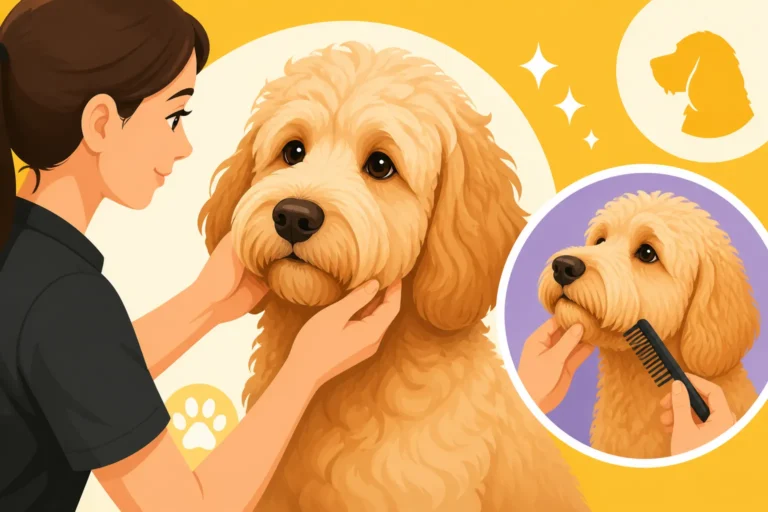
To prevent a Goldendoodle from becoming fearful or aggressive during grooming sessions, it's absolutely vital to start desensitization and positive association from the day you bring them home. This means handling their paws, ears, tail, and mouth frequently, making it a positive experience with treats and praise. Introduce brushes and combs early, even if just for a few seconds at a time, followed by a reward. Get them used to the sound and feel of clippers (even if they're not turned on at first) and the dryer. Many online puppy training resources, such as BAXTER & Bella, offer specific modules and step-by-step guides on how to make grooming a positive experience for your Goldendoodle puppy. The goal is to teach them that grooming is not something to be feared, but rather a routine that brings good things. You can find more advice in Training a Goldendoodle Puppy Before Its Coat Changes.
Avoiding Grooming Trauma
A bad grooming experience, especially during puppyhood, can have lasting negative effects. If a Goldendoodle is brought to a groomer with a severely matted coat, the process of dematting is often too painful and stressful, necessitating a full shave-down. While necessary for the dog's comfort, this can be a traumatic experience. Future grooming sessions might be met with fear, struggle, or even aggression, making routine maintenance incredibly difficult and more expensive. Regular brushing at home, making grooming a positive experience, and consistent visits to a professional groomer who uses positive reinforcement are key. Finding a groomer who understands Goldendoodle coats and takes the time to build a rapport with your dog is invaluable. Investing in good quality brushes and combs, and learning line brushing techniques, will save you a lot of heartache (and money!) in the long run.
General Destructive Chewing and Boredom
Beyond the nipping of puppyhood, Goldendoodles can develop destructive chewing habits that persist into adolescence and adulthood. This often isn't malicious; it's usually a symptom of boredom, stress, or a lack of appropriate outlets for their intelligence and energy.
Why Goldendoodles Chew (Beyond Puppyhood)
While puppies chew due to teething and exploration, older Goldendoodles might chew for a variety of reasons. They are highly intelligent dogs, inheriting mental prowess from the Poodle side and a strong work drive from the Golden Retriever. If they aren't provided with enough mental and physical stimulation, they can easily become bored. A bored Goldendoodle will often "create" their own fun, which might involve redecorating your couch or turning your favorite shoes into confetti. Chewing can also be a stress-reliever for some dogs, a way to cope with anxiety (including separation anxiety) or frustration. In some cases, it can simply be a habit they picked up as a puppy that was never properly redirected.
Providing Appropriate Outlets for Chewing
The best defense against destructive chewing is a good offense: provide plenty of acceptable chewing opportunities. Offer a wide variety of durable chew toys that cater to different chewing styles. Rotate these toys regularly to keep things interesting. Treat-dispensing puzzles, like a frozen Kong stuffed with peanut butter or kibble, can keep a Goldendoodle occupied for a significant amount of time, challenging their brain while satisfying their chewing instinct. For ideas, check out Goldendoodle Puzzle Feeders and Scent Games. Beyond chewing, ensure your Goldendoodle is getting adequate physical exercise – typically 30-60 minutes a day, often split into two sessions. But remember, physical exercise alone isn't always enough. Mental stimulation through training sessions, puzzle toys, and scent games is crucial for tiring out their active brains.
Preventing Destructive Chewing Through Management
Management is your best friend when dealing with destructive chewing. "Puppy-proof" your home by removing tempting items that are within reach. If you can't supervise your Goldendoodle directly, confine them to a safe, puppy-proofed area, like a playpen or a crate, with appropriate chew toys. This prevents them from practicing undesirable behaviors. For instance, if you're cooking dinner, and can't watch them, ensure they are in a place where they can't chew your furniture. Never leave your Goldendoodle unsupervised with items they might chew inappropriately. Consistency is key here; every time they successfully chew on an inappropriate item, they reinforce that behavior. By carefully managing their environment and consistently redirecting them to appropriate chew toys, you can teach your Goldendoodle what is and isn't okay to chew.
Behavior Problems Table
Here's a quick overview of some common Goldendoodle puppy behavior problems, their typical causes, and basic solutions to help you get started on the right paw.
| Behavior Problem | Common Cause(s) | Early Intervention Solution(s) |
|---|---|---|
| Nipping/Biting | Teething, exploration, seeking attention, play | Yelping, redirecting to appropriate chew toys, reverse time-outs, positive reinforcement for soft mouth |
| Jumping Up | Excitement, seeking attention, greeting behavior | "Four paws on the floor" rule, turning back, rewarding calm greetings, "sit to say please" |
| Separation Anxiety | High social drive, lack of alone-time training | Gradual increase of alone time, positive crate association, low-key departures/arrivals, vet consult |
| Potty Accidents Indoors | Inconsistent schedule, small bladder, medical issue | Strict potty schedule, frequent trips outside, enzymatic cleaners, positive reinforcement for outdoor potty |
| Leash Pulling | Exploration, excitement, lack of training | Positive leash introduction, "stop and go" method, front-clip harness, rewarding loose leash walking |
| Grooming Aversion | Lack of early desensitization, painful matting | Daily positive handling of paws/ears/mouth, early brush/comb introduction, high-value treats |
| Destructive Chewing | Boredom, anxiety, lack of appropriate outlets | Abundant chew toys, puzzle feeders, adequate mental/physical exercise, supervision, puppy-proofing |
Disclaimer
This article is for general informational purposes only and does not constitute professional advice. Laws, prices and regulations vary by location and change over time. Consult a qualified professional for guidance on your specific situation.