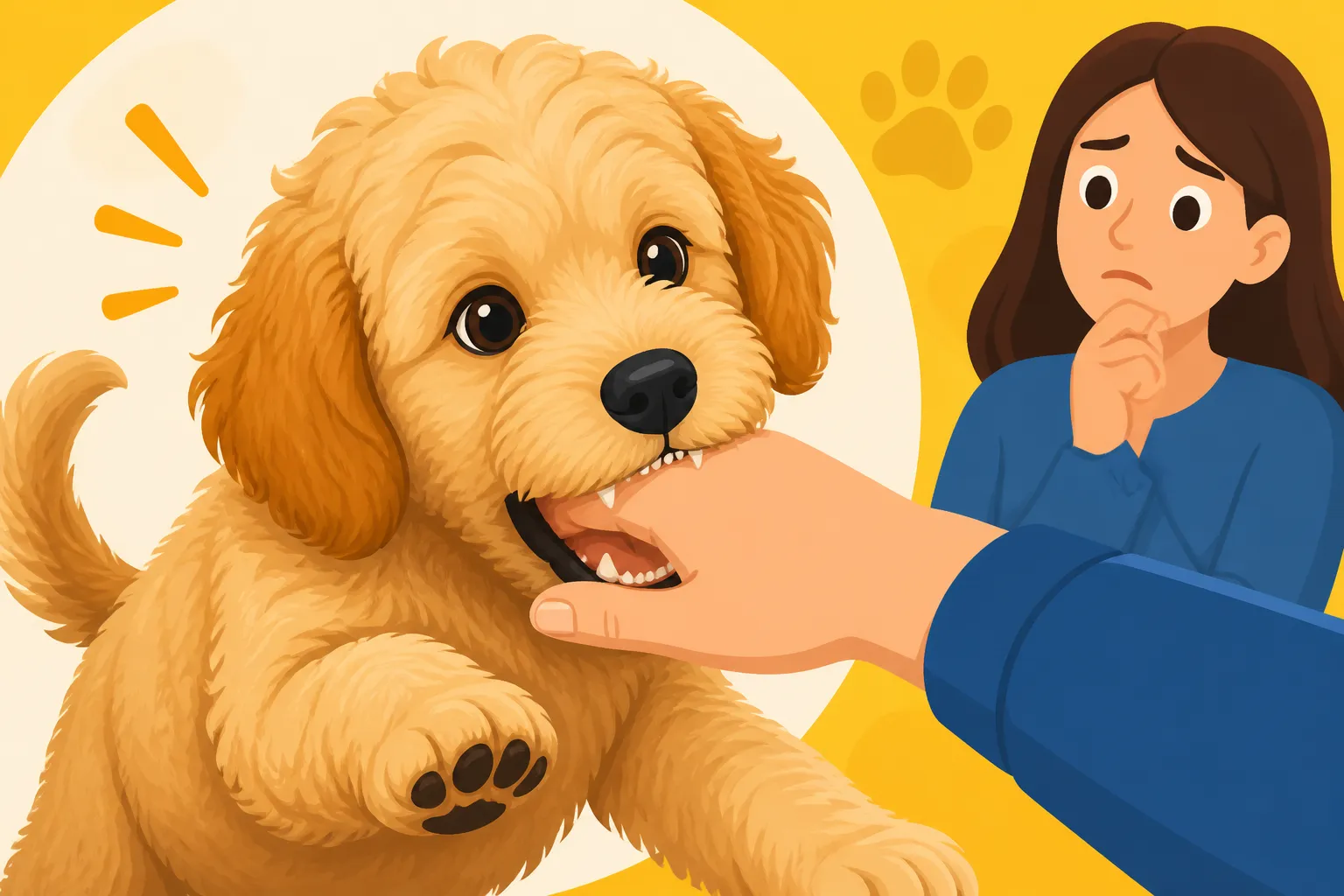
Goldendoodle Puppy Biting and Mouthing
Bringing a Goldendoodle puppy home is an exciting time, full of wagging tails and floppy ears. But let's be honest, it often comes with a rather painful reality: sharp, needle-like puppy teeth that seem to find human skin with unerring accuracy. This isn't just a minor annoyance; it can make interacting with your new furry family member a constant challenge, leaving your hands, ankles, and even your clothes in tatters. This guide is here to walk you through the why and how of Goldendoodle puppy biting and mouthing, offering practical, empathetic strategies to help you raise a gentle and well-mannered companion without losing your mind (or your skin) in the process.
Understanding Why Goldendoodle Puppies Bite and Mouth
It's easy to take puppy biting personally, especially when those little shark teeth feel like they're actively trying to hurt you. But the truth is, a Goldendoodle puppy isn't biting out of malice; they're biting because it's completely natural dog behavior. Understanding the root causes can help you approach the situation with patience and effective training methods.
The Natural Instincts from Both Parent Breeds
Goldendoodles inherit a fascinating blend of traits from their Golden Retriever and Poodle parents, and this includes their natural instincts around biting and mouthing. Think about what these breeds were originally developed for: Golden Retrievers were bred to gently retrieve waterfowl, using their mouths to carry birds back to hunters without damaging them. This means they have a natural inclination to carry things in their mouths and a soft mouth, but they also need to learn what is appropriate to mouth and how gently. Poodles, on the other hand, were also water retrievers and intelligent working dogs. They use their mouths to explore, play, and understand their environment, much like human toddlers use their hands.
So, when your Goldendoodle puppy nips at your fingers, they aren't trying to be aggressive. They're often just acting on these deep-seated instincts. They're exploring the world with their mouths, trying to engage you in play, or simply feeling the urge to hold something. This genetic predisposition means you have to be extra diligent in teaching them appropriate mouth manners, as their natural drives are strong. It’s not about stopping the behavior entirely, but reshaping it into something acceptable.
A common scenario might involve your puppy grabbing at your pant leg as you walk by. It feels like an attack, but often, it's an invitation to play, or simply an exploration of texture. This is where their retriever heritage really shines through – they want to "retrieve" you, or perhaps just engage. Understanding that this is a primitive, instinctual behavior, rather than defiance, sets the stage for a more effective training approach.
Teething and the Need for Oral Exploration
Just like human babies, Goldendoodle puppies go through a significant teething phase. They are born without teeth, then their tiny, sharp puppy teeth erupt around 3-6 weeks of age. These are the ones that inflict those memorable, painful nips! Then, between roughly 3 to 6 months old, these puppy teeth fall out and are replaced by their stronger adult teeth. This process can be quite uncomfortable and even painful for a puppy.
During teething, your puppy has an intense need to chew and mouth everything they can get their jaws around. Chewing helps to relieve the discomfort in their gums, massages the new teeth as they come in, and helps to dislodge loose puppy teeth. If they don't have appropriate things to chew on, they will absolutely find inappropriate things, whether that's your hands, furniture legs, or the remote control. This isn't naughtiness; it's a physiological need.
Imagine a baby constantly trying to put everything in their mouth while teething – your Goldendoodle puppy is doing the exact same thing. Providing a variety of safe, appealing chew toys is paramount during this period. Frozen carrots, special puppy teething rings that can be chilled, or even a damp washcloth tied in a knot and frozen can provide immense relief. Goldendoodle Puppy Chewing Through Furniture is often a direct result of this intense teething urge combined with a lack of appropriate outlets.
Play Behavior and Puppy Nipping
For puppies, biting and mouthing are also fundamental parts of how they play and interact with their littermates and mother. When puppies play together, they nip and tumble. If one puppy bites too hard, the other will often yelp, pause play, or move away. This teaches them "bite inhibition"—how much pressure they can apply with their mouths before causing pain. This crucial lesson is learned through natural social interactions.
When your Goldendoodle puppy comes to live with you, you become their new "pack." They will naturally try to play with you the way they played with their siblings, which includes nipping. They don't yet understand that human skin is much more delicate than a littermate's furry hide. Your job is to teach them that human skin is extremely fragile and that even gentle mouthing is not acceptable. This is a critical step in their development, ensuring they don't grow into an adult dog that plays too rough.
It's tempting to engage in rough play with a cute, fluffy puppy, letting them mouth your hands. However, this actually reinforces the idea that human hands are toys to be bitten. Instead, focus on redirecting that play drive onto appropriate toys. Think of it as teaching a toddler not to hit, but to use their words or a toy instead. The instinct to play and interact is healthy; the method of interaction needs refinement. This is particularly important for Goldendoodles, as their friendly, exuberant nature can easily lead to overly enthusiastic, mouthy greetings if not properly guided.
Early Intervention: Starting Bite Inhibition Training from Day One
The moment your Goldendoodle puppy steps paw into your home, the clock starts on bite inhibition training. The sooner you begin, the easier it will be to shape their behavior and prevent those little nips from becoming big problems. Consistency and immediate feedback are your best friends here.
The "Ouch!" Method and Its Variations
The "Ouch!" method is one of the most widely recommended techniques for teaching bite inhibition. It mimics the yelp a littermate would make when bitten too hard, signaling to the puppy that they've crossed a line. Here's how it generally works:
- Yelp Loudly and Clearly: The instant your Goldendoodle puppy's teeth touch your skin, let out a sharp, high-pitched "Ouch!" or "Yip!" The sound should be sudden and convincing, enough to startle the puppy without scaring them.
- Withdraw Attention: Immediately after the yelp, remove your hand or body part from the puppy's reach. Cross your arms, stand up, or even turn your back. The key is to withdraw all attention, even eye contact. This teaches the puppy that biting stops the fun interaction.
- Brief Time-Out: If the puppy continues to nip or gets overly excited, remove yourself from the room for 10-20 seconds. This is not punishment, but a clear consequence: biting equals the immediate end of playtime and social interaction. Then return and try again.
- Reward Calm Behavior: When you return, if the puppy approaches calmly and doesn't nip, reward them with praise or a low-value treat. If they start nipping again, repeat the "Ouch!" and withdrawal.
Initially, your puppy might be startled and then resume biting. This is normal. The goal is repetition. They need many instances of "Ouch! Fun Stops!" to connect the bite with the negative consequence of play ending. Consistency across all family members is crucial. If one person lets the puppy mouth them, it undermines the training efforts of everyone else. Think of it as a universal language for your puppy: "That hurt, so the game is over."
Redirecting Chewing to Appropriate Items
One of the most powerful tools in your bite inhibition toolkit is redirection. Goldendoodle puppies need to chew. It's a fundamental instinct, especially during teething. Instead of trying to stop them from chewing, your goal is to teach them what they are allowed to chew.
Keep a variety of appropriate chew toys readily available in every room your puppy has access to. When your Goldendoodle puppy starts to mouth your hands, furniture, or anything inappropriate, immediately intervene. Don't yell or punish, simply interrupt the action with a calm "No" or "Ah-ah," and then immediately offer an approved chew toy. As soon as they take the toy in their mouth, praise them enthusiastically: "Good chew!" or "Yes!"
The timing here is everything. You want to interrupt the undesirable behavior and immediately replace it with the desired one, then reward the desired behavior. This isn't about shaming them for chewing, but guiding them to the right objects. If your puppy ignores the toy you offer, try different textures and types. Some puppies love soft, plush toys, others prefer harder rubber, and many adore anything they can really sink their teeth into, like a safe teething stick. Redirecting a Goldendoodle Puppy Onto a Toy is a skill you'll use constantly in those early months.
A great idea is to have a "toy basket" or a designated spot on a low shelf (easily accessible to you, but not necessarily free-for-all for the pup) where you keep an assortment of chews. When your pup is getting mouthy, you can grab a toy without having to search, making the redirection swift and effective. I've found that having a mix of textures and shapes, from Nylabones to KONGs filled with peanut butter, really helps keep their interest. Some excellent options can be found on Amazon, offering a wide variety to suit any puppy's preference.
Managing Over-Excitement and Nipping
Often, puppy nipping escalates when a Goldendoodle puppy becomes over-excited. Their natural exuberance and play drive, combined with a lack of impulse control, can lead to frantic nipping and jumping. This is particularly true for Goldendoodles, who often have a "go big or go home" approach to play! Recognizing the signs of over-arousal and intervening before the nipping starts is a key proactive strategy.
Look for signs like frantic zooming around, excessive barking, body stiffening, or intensely staring at your hands or feet. When you see these cues, it's time to interrupt the activity and help your puppy calm down. This might involve:
- A "Puppy Time-Out": Gently place your puppy in their crate or a designated quiet area (a puppy-proofed playpen) for a few minutes until they settle. This isn't punishment, but a chance for them to decompress.
- Structured Calm Activities: Instead of wrestling or chase games, engage in a calmer activity. This could be a short training session focusing on basic cues like "sit" or "down" (which require mental effort and focus), or offering a puzzle toy that encourages them to settle and work for a treat.
- Enforced Naps: Young Goldendoodle puppies, much like human toddlers, often get cranky and bitey when they're overtired. If your puppy is getting nippy and hasn't napped in a while, it's likely they need sleep. Gently guide them to their crate for an enforced nap. Goldendoodle Puppy Sleep and Night Waking covers the importance of proper sleep schedules for puppies.
It's tempting to try and "tire out" an over-excited puppy with more physical play, but often this just exacerbates the problem, leading to even more frantic, mouthy behavior. Focus on mental stimulation and teaching them how to switch off and relax. These early lessons in self-regulation are invaluable for raising a well-adjusted adult Goldendoodle.
Practical Strategies for Goldendoodle Puppy Biting
Once you understand the "why" behind the biting, it's time to dive into the "how" of managing it. These practical strategies focus on clear communication, positive reinforcement, and consistent boundaries, all of which are essential for a smart, eager-to-please Goldendoodle.
Using Time-Outs Effectively
When the "Ouch!" method isn't quite enough, or if your Goldendoodle puppy is getting particularly bitey and over-excited, a short time-out can be incredibly effective. Remember, the goal isn't punishment but a clear consequence: biting ends all fun and attention.
Here's how to implement a time-out:
- Immediate Action: The very second your puppy bites too hard or mouths inappropriately, remove yourself from the interaction. Say "Too bad!" or "Time out!" in a calm, firm voice, then immediately move away.
- Physical Removal (of yourself): The most effective time-out for a puppy is when you leave. Step behind a baby gate, go into another room, or simply turn your back and ignore them for 10-20 seconds. This removes the "reward" of your presence and attention.
- Use a Designated Space (if needed): If leaving the room isn't practical or if your puppy follows and continues to nip, you can gently place them in a designated "time-out" spot. This could be their crate (which should never be used for punishment otherwise), a playpen, or even tethering them to a piece of furniture a short distance away from you. The idea is to remove them from the stimulating situation.
- Keep it Brief: Time-outs should be short. Once the puppy has settled down for a few seconds, let them out or re-enter the room and resume your activity. If they immediately start biting again, repeat the time-out. The brevity prevents it from becoming a punishment and instead reinforces the direct consequence of biting.
The key is consistency and repetition. Every single time those teeth touch skin inappropriately, the consequence must be the immediate withdrawal of attention or removal from the situation. Goldendoodles are intelligent and quickly learn cause and effect, especially when their favorite thing (your attention and play) is on the line. I always stress this to new owners: it feels mean to ignore your cute puppy, but it's the kindest long-term approach to teach them appropriate manners.
Providing a Variety of Chew Toys and Enrichment
As we touched on earlier, Goldendoodle puppies need to chew. It's not a suggestion; it's a requirement for their mental and physical well-being, especially during teething. Simply having one type of chew toy isn't enough; variety is truly the spice of life for a mouthy puppy.
Consider offering a rotation of chew toys with different textures, hardness levels, and purposes:
- Soft, Comforting Chews: For gentle mouthing or when settling down. Think plush toys (supervised, especially if your pup is a shredder!) or softer rubber toys.
- Harder Teething Toys: Designed to withstand rigorous chewing and soothe sore gums. Brands like Nylabone, Benebone, or KONG offer excellent, durable options. Many of these can be chilled or frozen for extra relief during teething.
- Interactive Puzzle Toys: These are fantastic for mental enrichment and can keep a puppy occupied for a good chunk of time. Fill a KONG with peanut butter, yogurt, or wet dog food and freeze it. Snuffle mats and treat-dispensing balls also fall into this category.
- Edible Chews: Supervised edible chews like bully sticks or dental chews can be a valuable outlet, but always ensure they are size-appropriate and digestible. Avoid rawhide or anything that splinters.
The goal is to always have an appropriate chew readily available when your puppy feels the urge to mouth. If you see your puppy chewing something they shouldn't, redirect them to a favorite toy. Praise them when they choose an appropriate chew on their own. Regularly rotate their toys to keep them novel and exciting. The Hour or Two a Goldendoodle Needs Each Day often includes dedicated time for these types of independent chewing activities. A monthly delivery box with new and interesting chews can be a fun way to keep this fresh for your pup!
Structured Play and Socialization
Play is essential for a Goldendoodle puppy's development, but unstructured, frantic play can easily lead to over-arousal and increased nipping. Implementing structured play, both with you and with other dogs, is crucial for teaching appropriate interaction.
Play with You:
Avoid games that encourage nipping, like wrestling with your hands. Instead, focus on games that involve toys:
- Fetch: Goldendoodles have that strong retriever drive! Use a soft ball or a tug toy. If they nip your hand when retrieving, use your "Ouch!" and pause the game.
- Tug-of-War: This is a great game for building a bond and teaching impulse control. Crucially, teach a "drop it" cue. The game only continues if they release the toy on command. If they accidentally nip your hand during tug, the game immediately ends.
- Hide and Seek: Use treats or a favorite toy. This engages their nose and brain and is less likely to lead to mouthiness.
Socialization with Other Dogs:
Safe, supervised play with other puppies or calm, adult dogs is invaluable for teaching bite inhibition. Other dogs will offer immediate, clear feedback if your Goldendoodle puppy bites too hard. A yelp from another dog, or a sudden disengagement from play, is a powerful lesson. Goldendoodle Play Style With Other Dogs often highlights their friendly, but sometimes over-exuberant, nature.
Enroll your Goldendoodle puppy in a well-run puppy class. These classes provide safe environments for socialization and often include structured playtime where an experienced trainer can monitor interactions and step in if necessary. Proper socialization during their critical early weeks (up to 16 weeks) is vital for developing good social manners, which includes appropriate play behaviors. This early exposure helps them learn boundaries and how to interact respectfully with others, both canine and human.
When Puppy Mouthing Becomes a Problem: Addressing Persistent Biting
Most Goldendoodle puppies will grow out of the intense nipping phase with consistent training and redirection. However, sometimes the biting persists, becomes harder, or shows signs that it's more than just typical puppy behavior. Knowing when to escalate your efforts or seek professional help is important.
Recognizing the Difference Between Play Nips and Aggression
It's vital for Goldendoodle owners to understand the difference between normal puppy mouthing/nipping and actual aggressive biting. Most puppy biting, even when painful, is rooted in play, exploration, or teething. Aggression, however, stems from fear, resource guarding, pain, or territoriality.
Signs of Play Nipping/Mouthing:
- Loose, relaxed body language: Wiggling, playful bows, tail wags, soft eyes.
- Mouthing is usually soft: Even if it's annoying, the pressure is often light, or the puppy quickly lessens pressure after a yelp.
- Interrupted by a yelp: The puppy is often startled by an "ouch" and may pause or back off.
- Context: Happens during playtime, greetings, or when seeking attention.
- No growling or snarling (or very soft, playful growls): Play growls sound different from warning growls.
- No resource guarding: Not biting to protect food, toys, or space.
Signs that Might Indicate Aggression (or a serious problem):
- Stiff body language: Tense muscles, rigid posture, still tail (or tucked).
- Hard bites that break skin repeatedly: A puppy should learn bite inhibition; persistent hard bites are a concern.
- Growling, snarling, baring teeth: Especially if paired with stiff body language and not in a playful context.
- Lunging, snapping, or biting when guarding resources: If your puppy bites when you approach their food, toys, or bed, this is resource guarding and needs immediate professional intervention.
- Biting without provocation: Biting seemingly out of nowhere, not related to play.
- Inability to be interrupted: The puppy continues to bite aggressively despite efforts to redirect or stop the interaction.
- Fearful body language: Crouching, tail tucked, ears back, avoiding eye contact, followed by biting if cornered.
If you observe any of the signs of aggression, even in a young Goldendoodle puppy, it's crucial to take it seriously. While rare, aggression can develop early. Never ignore these signs, hoping your puppy will "grow out of it."
Seeking Professional Help for Problem Biting
If your Goldendoodle puppy's biting is persistent, extremely hard, draws blood frequently, or shows any signs of aggression, it's time to call in the professionals. Don't feel ashamed or embarrassed; many puppy owners face challenges, and seeking help is a sign of responsible pet ownership.
Here’s who to consult:
- Certified Professional Dog Trainer (CPDT-KA or KPA CTP): Look for trainers who use positive reinforcement methods and have specific experience with puppy biting and behavior modification. They can assess your puppy's behavior in person, provide tailored strategies, and help you implement them correctly. They can guide you through the process, offering practical, hands-on advice.
- Veterinary Behaviorist (Dip ACVB): These are veterinarians who have specialized in animal behavior, much like a human psychiatrist specializes in mental health. They can diagnose underlying medical issues contributing to behavior (like pain) and, if necessary, prescribe medication in conjunction with behavior modification. This is often the route for more severe cases of aggression or anxiety-related biting.
When looking for a trainer, ask about their philosophy and methods. Avoid anyone who suggests harsh punishment, alpha rolling, or dominance theory, as these methods can exacerbate fear and aggression in puppies and damage your bond. A good trainer will focus on teaching your puppy what to do rather than just punishing what not to do. Online resources, such as those offered by BAXTER & Bella, can also provide structured guidance and support for common puppy issues, helping you prepare for professional interactions.
Remember, early intervention is key. The longer problem behaviors persist, the harder they are to change. A professional can help you decipher your puppy's communication and give you the tools to guide them towards appropriate behavior. Finding a Trainer Who Works With Goldendoodles can help you select the right person for your situation.
Consistency is Key: Involving the Whole Family
This cannot be stressed enough: consistency is the absolute bedrock of successful puppy training, especially when it comes to biting and mouthing. Goldendoodles thrive on clear rules and routines, and any deviation can confuse them, slow down progress, or even undo previous learning.
Imagine this scenario: you've been diligently using the "Ouch!" method and redirecting to toys, and your puppy is finally starting to get it. Then, a family member comes over, lets the puppy mouth their hands, and laughs, thinking it's cute. To your Goldendoodle, this is incredibly confusing. One person says "no biting," while another says "biting is okay." This mixed messaging means your puppy doesn't learn a clear boundary.
Therefore, every single person who interacts with your Goldendoodle puppy – every family member, house guest, or friend – must be on the same page regarding bite inhibition.
Here’s how to ensure consistency:
- Establish Clear Rules: Hold a family meeting to discuss the chosen training methods (e.g., "Ouch!" and redirect). Make sure everyone understands why these methods are used.
- Demonstrate and Practice: Show everyone how to react when the puppy bites. Practice the "Ouch!" and withdrawal. Demonstrate how to correctly offer a chew toy.
- Manage Interactions: For very mouthy puppies, you might need to supervise all interactions with children or guests closely. If someone isn't following the rules, gently step in and redirect the puppy yourself, or briefly remove the puppy from the interaction. Introducing a Goldendoodle Puppy to Children often requires extra vigilance and teaching both the child and the puppy how to interact safely.
- Set Up the Environment: Make it easy to be consistent. Have chew toys readily available in all areas. Use baby gates to manage space if needed.
Consistency creates a predictable environment where your Goldendoodle puppy can learn quickly and confidently. They'll understand that "human skin is off-limits" is a universal rule, not just something some people enforce sometimes. It requires patience and a unified front, but the payoff is a well-mannered Goldendoodle who knows how to interact gently with their human family. This dedication to consistent effort will shape your Goldendoodle into a wonderful companion for years to come.
Disclaimer
This article is for general informational purposes only and does not constitute professional advice. Laws, prices and regulations vary by location and change over time. Consult a qualified professional for guidance on your specific situation.