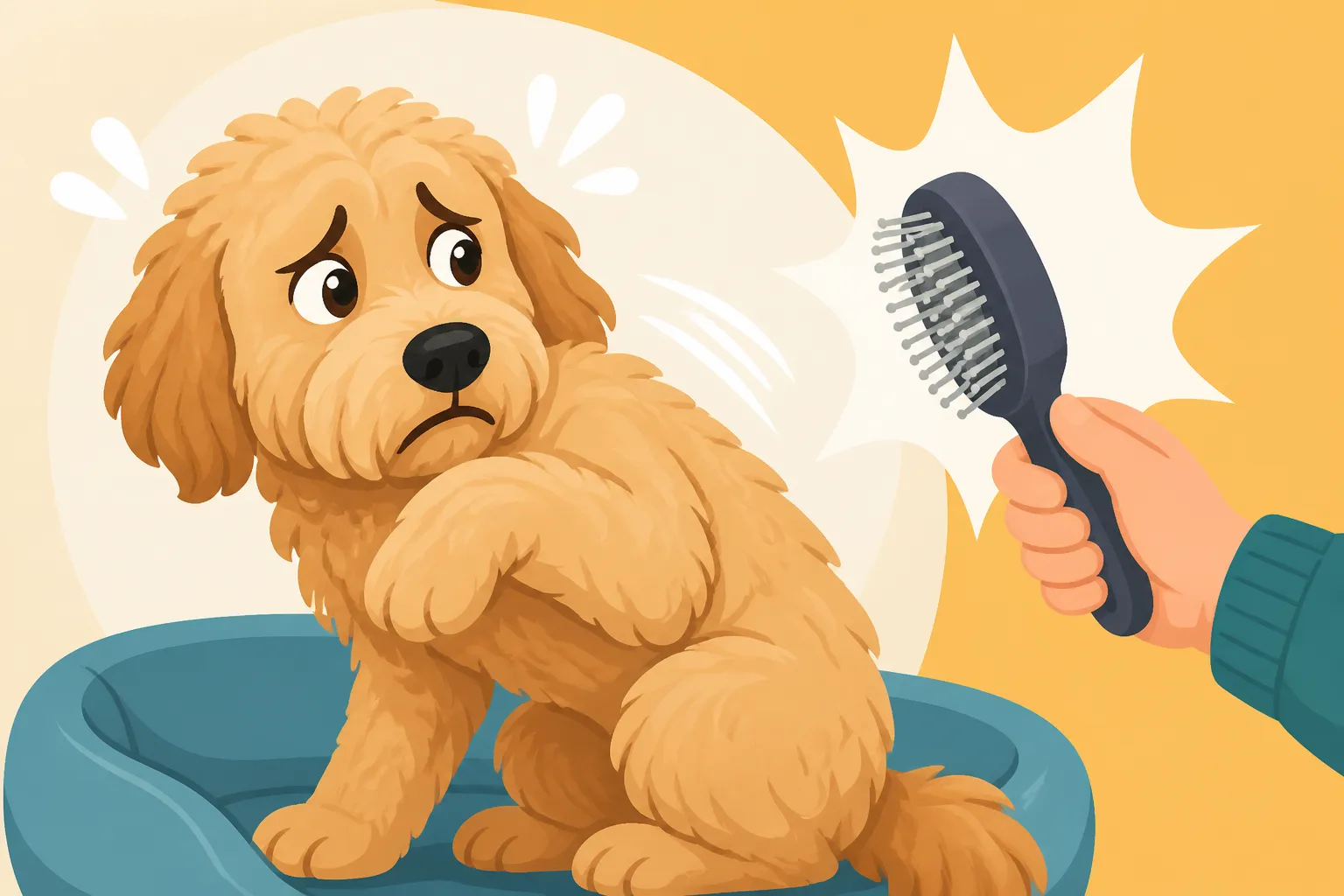
A Goldendoodle That Flinches at the Brush
It's incredibly disheartening and even a little scary when your sweet Goldendoodle, the one you adore, suddenly recoils, whines, or even snaps when you bring out the grooming brush. You just want to keep their beautiful coat healthy and mat-free, but their reaction makes it feel like you're torturing them. This guide is here to help you understand why your Goldendoodle might be flinching at the brush and, more importantly, how to gently rebuild trust and make grooming a more positive experience for both of you.
Understanding Why Your Goldendoodle Flinches at the Brush
When your Goldendoodle flinches, it's not usually because they're trying to be difficult or defiant. There's almost always an underlying reason, and understanding that reason is the first step toward finding a solution. It could be a physical discomfort, a past negative experience, or even a lack of proper introduction to grooming.
Pain or Discomfort During Brushing
The most common reason a Goldendoodle develops an aversion to the brush is simply that it hurts. Their gorgeous, often curly or wavy coats are notorious for matting, especially in tricky areas like behind the ears, in the armpits, or around the tail. When a brush snags on even a small mat, it pulls at their skin, causing genuine pain. Imagine someone tugging hard on your hair – it's not pleasant, right? Your Goldendoodle feels the same way. If they've had one too many painful brushes, they'll quickly learn to associate the brush with discomfort, leading to flinching, pulling away, or even snapping as a self-preservation mechanism.
Sometimes, the pain isn't even coat-related. An underlying skin irritation, like allergies, hot spots, or even parasites, can make their skin incredibly sensitive. What might normally be a gentle stroke could feel excruciating to them. Goldendoodle Allergies and Itchy Skin is a common concern that can make brushing problematic. They might also be experiencing joint pain, especially in older Goldendoodles, making certain positions or handling uncomfortable. They can't tell you in words that their hip aches, but flinching when you reach near it while brushing can be a clear sign.
Fear or Past Negative Experiences
Dogs, especially intelligent breeds like Goldendoodles, have excellent memories when it comes to unpleasant experiences. If your Goldendoodle had a particularly rough grooming session as a puppy, or even just one really bad mat that had to be painfully brushed out, that memory can stick. They might have been held down too forcefully, had a painful detangling session, or perhaps a sharp nail trim went wrong. These negative associations can make them anticipate pain or fear whenever the brush appears.
Consider a scenario where a young Goldendoodle puppy, not yet accustomed to the sensations of grooming, was rushed through a brushing session because the owner was in a hurry. The brush pulled, the puppy yelped, and the owner, perhaps frustrated, might have inadvertently created a negative memory. From then on, that puppy starts to tense up just seeing the brush. It's a classic example of classical conditioning: brush equals bad experience. This isn't a judgment, but an observation of how easily these associations form. This is why Why Goldendoodle Grooming Training Starts Week One is so important.
Lack of Positive Conditioning or Desensitization
Many Goldendoodles don't get enough positive exposure to grooming tools and handling when they're young. We often assume they'll just tolerate it, but grooming is a very intrusive activity from a dog's perspective. It involves being touched all over their body, sometimes held in strange positions, and hearing unfamiliar sounds. If a puppy isn't gradually introduced to these sensations with lots of praise and treats, they can quickly become overwhelmed or fearful.
Imagine a Goldendoodle puppy who has only ever received quick, superficial brushes. Then, around the time their adult coat starts to come in (often between 8-12 months), mats become a real issue. Suddenly, the owner has to spend much longer brushing, getting down to the skin, and dealing with tangles. The puppy, never having been properly desensitized to this level of handling, finds it alarming and uncomfortable. The contrast between their previous experience and the new, more intense grooming session can create resistance. This highlights why early, consistent, and positive training is paramount for things like Training a Goldendoodle Puppy for the Grooming Table.
Gentle Techniques to Rebuild Trust with the Brush
Rebuilding trust takes time, patience, and a consistent, positive approach. You're essentially re-educating your Goldendoodle that the brush isn't a threat, but rather something that can be a neutral, or even pleasant, experience.
Desensitization and Counter-Conditioning
This is the cornerstone of overcoming fear and aversion. Desensitization means gradually exposing your dog to the brush in tiny, non-threatening steps. Counter-conditioning means changing their emotional response from fear to positive anticipation by pairing the brush with something they love, like high-value treats or praise.
The Step-by-Step Approach:
- Start with Proximity: Begin by simply having the brush visible in the room, but far away. Don't even pick it up. If your Goldendoodle remains calm, offer a treat. Repeat this several times over different sessions. The goal is for them to see the brush without reacting negatively.
- Gradual Movement: Slowly reduce the distance. Place the brush closer, pick it up, then put it down. Always watch your dog's body language. If they show any signs of tension (lip licking, yawning, stiffening, moving away), you've gone too fast. Go back a step.
- Touch, Treat, Release: Once your dog is comfortable with the brush being close and handled by you, try a single, quick touch of the brush to their least sensitive area (often their shoulder or chest, away from any known matting or sensitive spots). Immediately offer a super high-value treat (like small pieces of chicken or cheese) and then put the brush down. The key is "touch, treat, release" – short, sweet, and always ending on a positive note. Don't try to brush a stroke.
- One Stroke at a Time: Over many sessions, gradually increase to one gentle stroke, then treat, then put the brush away. Slowly build up to two strokes, then three, always ensuring the strokes are gentle and mat-free. Use a slicker brush and then follow with a comb to ensure no snags.
- Vary Locations: Once they tolerate a few strokes in one area, start applying the "touch, treat, release" method to different parts of their body: back, sides, legs, and eventually the more sensitive areas like paws, face, and ears. This process is similar to how you would approach Handling a Goldendoodle's Paws Every Single Day.
Remember, the goal is not to get the entire brushing done in one go initially. It's to change their emotional response. Short, frequent sessions (even 30 seconds to a minute) are far more effective than long, stressful ones. BAXTER & Bella, an online puppy training program, often emphasizes this kind of positive, gradual desensitization for various grooming and handling procedures, providing a structured way to introduce these concepts.
High-Value Rewards and Praise
When you're working through desensitization and counter-conditioning, the type of reward you use matters immensely. Regular kibble might not cut it. You need high-value treats – something your Goldendoodle absolutely adores and rarely gets. Think small pieces of cooked chicken, cheese, hot dogs, or commercially available soft training treats. These treats create a powerful positive association.
Beyond treats, genuine praise in a happy, calm tone of voice is also crucial. "Good dog! Yes!" can make a big difference. Some dogs also respond well to a favorite toy or a quick game of fetch after a successful short session. The key is to make every interaction with the brush predict something wonderful.
Creating a Calm and Safe Environment
The environment where you groom your Goldendoodle can significantly impact their comfort level. A chaotic household with kids running around or loud noises is not conducive to a calm grooming session.
Tips for a Calm Environment:
- Quiet Space: Choose a quiet room where you and your Goldendoodle won't be disturbed.
- Elevated Surface (if appropriate): Some dogs feel more secure on a non-slip elevated surface, like a sturdy grooming table or a kitchen counter with a mat, as it often limits their ability to escape and signals "we are working." However, if they are already fearful, starting on the floor might feel safer for them. Always prioritize safety and comfort.
- Non-Slip Surface: Whether on the floor or a table, ensure your Goldendoodle has good footing. Slipping can add to their anxiety. A rubber mat or bath towel works wonders.
- Soft Lighting and Soothing Music: For some sensitive Goldendoodles, soft lighting or calm classical music can help create a more relaxed atmosphere.
- Minimize Distractions: Put away toys, turn off the TV, and ensure other pets or family members won't interrupt.
When you begin your sessions, approach your Goldendoodle calmly. Avoid looming over them or using a stern voice. Your own relaxed demeanor will go a long way in communicating that there's nothing to fear.
Essential Tools and Routine Adjustments for a Flinch-Free Groom
The right tools and a consistent, proactive grooming routine are absolutely vital for preventing mats and making brushing more comfortable for your Goldendoodle. Without them, you're fighting an uphill battle.
The Right Brushes and Detangling Sprays
Not all brushes are created equal, especially for Goldendoodle coats, which can range from wavy to tightly curly. Using the wrong brush can cause pain and frustration for both of you.
Key Brushes:
- Slicker Brush: This is your primary tool. A good quality slicker brush with bent wire pins is essential for getting through their dense undercoat and preventing mats. When selecting one, look for flexible pins that don't scratch the skin. You can find excellent options on Amazon.
- Metal Comb: A long-toothed metal comb with both wide and narrow teeth is crucial for checking your work after brushing with the slicker. If the comb can't glide smoothly through the coat down to the skin, there's still a mat. This is the truth behind The Slicker Brush and Comb a Goldendoodle Needs.
- Pin Brush (Optional): While not for deep mat prevention, a pin brush can be good for general surface brushing or for sensitive areas once comfort is established.
Detangling Sprays: Always use a good quality detangling spray or conditioning spray before you brush, especially if their coat is dry or prone to static. These sprays lubricate the hair, making it easier for the brush to glide through and preventing breakage and static that can pull at the skin. Think of it like conditioner for your dog's hair – it makes a huge difference. Apply the spray, let it sit for a moment, and then brush section by section.
Consistent and Proactive Grooming Schedule
Waiting until your Goldendoodle is matted before brushing is a recipe for disaster and will almost certainly lead to flinching and aversion. The key is prevention.
Schedule Guidelines:
- Daily Brushing: For most Goldendendoodles, especially those with curly or wool coats, daily brushing is non-negotiable. This might sound like a lot, but short, consistent daily sessions (5-10 minutes) are far more effective and less stressful than trying to tackle major mats once a week. You need to be doing Brushing a Goldendoodle Often Enough to Stop Matting.
- Line Brushing: Don't just skim the surface. You need to learn how to line brush, which means parting the coat and brushing in small sections, from the skin out. This ensures you're getting all the way down to prevent mats from forming at the base of the hair. This is detailed in Line Brushing a Goldendoodle Section by Section.
- Focus on Mat-Prone Areas: Pay extra attention to behind the ears, armpits, inner thighs, tail, and around the collar or harness area. These are the spots where Behind the Ears and the First Goldendoodle Mats commonly occur.
- Professional Grooming: Even with diligent home grooming, professional grooming every 6-8 weeks is usually necessary. They have powerful dryers and specialized tools to ensure the coat is thoroughly brushed and trimmed. Discuss your Goldendoodle's sensitivity with your groomer so they can take extra care. This falls under the advice of Goldendoodle Grooming Every Six Weeks Adds Up.
| Tool Type | Purpose | How It Helps a Flinching Goldendoodle |
|---|---|---|
| Slicker Brush | Removes loose hair, prevents mats, brushes out tangles | Efficiently removes tangles with less pulling when used correctly. |
| Metal Comb | Detects mats the slicker brush missed, finishes coat | Confirms mat-free status, ensures no painful snags are left. |
| Detangling Spray | Lubricates hair, reduces static and friction | Makes brushing much smoother, less painful, and reduces hair breakage. |
| High-Value Treats | Positive reinforcement, distraction | Creates positive association with brush, shifts focus from fear. |
Cooperative Care Training
Beyond just desensitization, consider incorporating cooperative care training into your routine. This is about teaching your Goldendoodle to actively participate in their grooming rather than just tolerating it. The concept is that your dog has a "say" in the process.
For example, you can teach them a "chin rest" cue, where they rest their chin on your hand, and you only brush while they maintain that position. If they lift their chin, brushing stops. This gives them a sense of control and teaches them that they can "opt out" if they're uncomfortable, which ironically often makes them more willing to participate. This type of training helps build a strong bond and mutual respect.
When to Seek Professional Help
There are times when the situation with a Goldendoodle flinching at the brush goes beyond what an owner can comfortably or safely handle on their own. Knowing when to call in the professionals is crucial for both your well-being and your dog's.
Consulting Your Veterinarian
If your Goldendoodle suddenly starts flinching or showing aggression towards the brush, and this behavior is new or escalating, the very first step should always be a vet visit. As discussed, pain is a primary driver for many behavioral changes, and skin issues, hidden injuries, or joint problems could be the culprit.
Your vet can perform a thorough physical examination to rule out any underlying medical conditions. They might check for skin infections, allergies, hot spots, ear infections (Goldendoodle Ear Infections That Return Every Month can be incredibly painful), or orthopedic pain. Sometimes, a dog might even have a small burr or thorn embedded deep in their coat that you can't see but that hurts immensely when brushed over. A professional diagnosis and treatment plan can address the root cause of the discomfort, often making the training process much easier. In severe cases, they might prescribe pain relief or anti-inflammatory medication to make initial re-introductions to the brush less painful while you work on behavior. Also, if your Goldendoodle is showing signs of aggression like snapping, a vet check is essential to rule out medical reasons for A Goldendoodle That Snaps During Grooming.
Enlisting a Professional Dog Trainer or Behaviorist
If your Goldendoodle's fear or aggression towards the brush is deeply ingrained, or if you're struggling to implement desensitization techniques effectively, a certified professional dog trainer or a veterinary behaviorist can be an invaluable resource.
How They Can Help:
- Assessment: They can observe your Goldendoodle's body language and your handling techniques to identify specific triggers and areas for improvement. They might spot subtle signs of stress you've missed.
- Personalized Plan: They'll create a tailored desensitization and counter-conditioning plan that's specific to your dog's needs and comfort level. This might involve using a muzzle for safety initially (muzzle training should always be positive and gradual, never punitive).
- Hands-On Guidance: They can guide you through the process, showing you exactly how to hold the brush, how to apply pressure, and when to reward. This hands-on help can be incredibly empowering and build your confidence.
- Behavioral Modification: For more severe cases, like Sudden Goldendoodle Aggression and a Vet Check related to grooming, a veterinary behaviorist can offer advanced behavioral modification strategies, potentially including medication to reduce anxiety and make training more effective.
When looking for a professional, seek out those who use positive reinforcement methods exclusively. Avoid trainers who advocate for harsh corrections or dominance-based techniques, as these will only exacerbate your Goldendoodle's fear and further damage your relationship. Many trainers offer online courses or virtual consultations, which can be a convenient way to get expert advice, just like the structured programs offered by BAXTER & Bella.
Considering a Professional Groomer with a Gentle Approach
Sometimes, the best solution is to let a professional groomer handle the bulk of the grooming, especially if the mats are severe or if your Goldendoodle is truly terrified. However, it's crucial to find a groomer who understands and practices fear-free grooming techniques.
What to Look For:
- Patience: A good groomer will take their time, work slowly, and prioritize your dog's emotional well-being over getting the job done quickly.
- Positive Reinforcement: They should use treats, praise, and gentle handling.
- Open Communication: They should be willing to discuss your Goldendoodle's history and sensitivities and provide honest feedback.
- "Happy Visits": Some groomers offer "happy visits" where your Goldendoodle comes in just to get treats and positive attention, without any actual grooming being done, simply to build positive associations with the salon environment.
Be prepared that a groomer might recommend a shorter cut to remove all mats and start fresh, especially if the coat is severely tangled. This "fresh start" can often make future home grooming much easier for you and less painful for your Goldendoodle. While it might not be the look you initially envisioned, it's often the kindest thing for your dog.
Remember, addressing a Goldendoodle that flinches at the brush is a journey, not a sprint. Celebrate small victories, be patient, and always prioritize your dog's comfort and emotional well-being. With consistent effort and the right support, you can transform grooming from a dreaded chore into a manageable, even pleasant, part of your routine.
Disclaimer
This article is for general informational purposes only and does not constitute professional advice. Laws, prices and regulations vary by location and change over time. Consult a qualified professional for guidance on your specific situation.