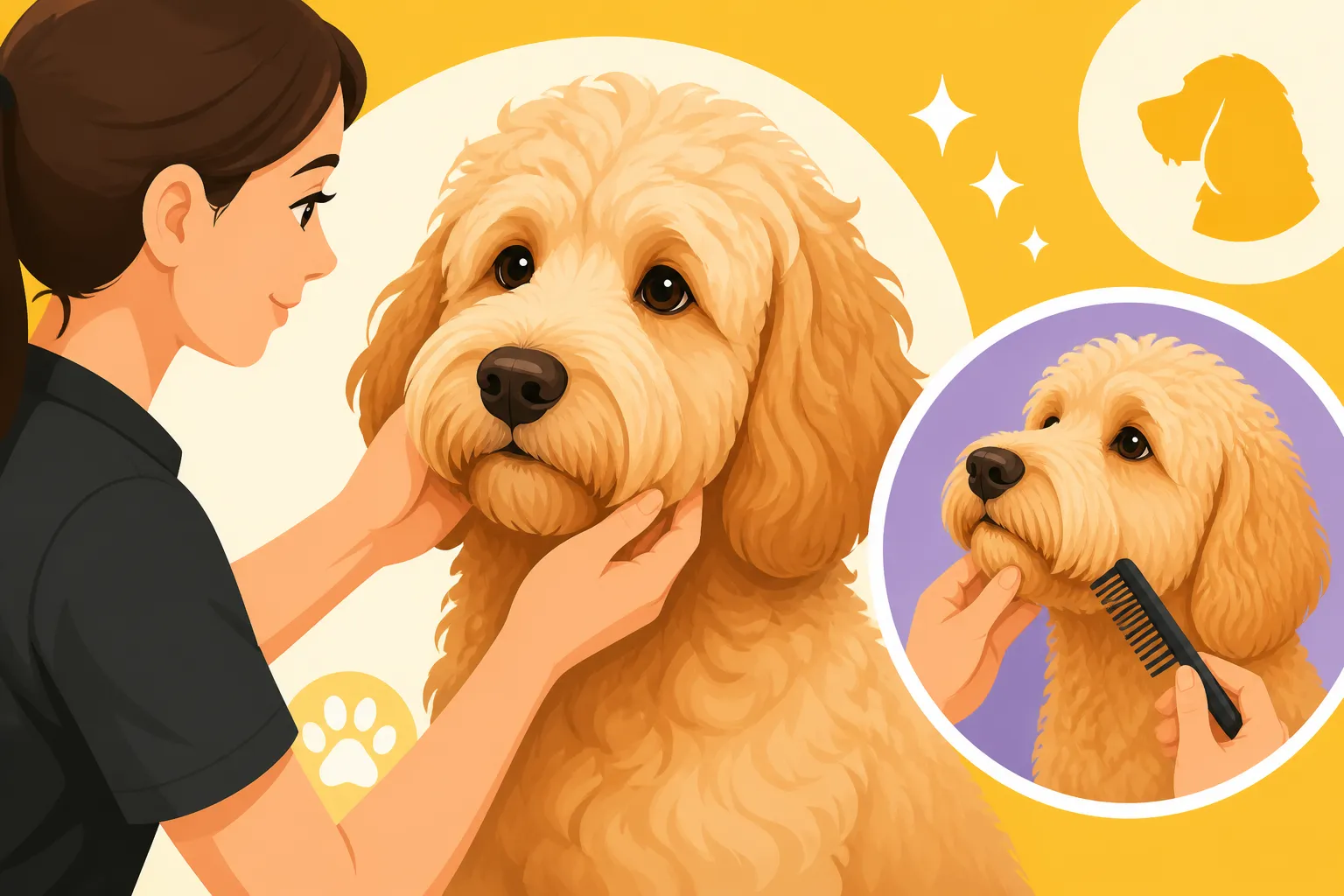
Practicing Face and Beard Handling on a Goldendoodle
Keeping your Goldendoodle's face and beard clean and mat-free can feel like an Olympic sport, especially with their adorable, shaggy furnishings that seem to attract every crumb and piece of debris. Many Goldendoodle owners wrestle with matted beards, eye goop, and general facial discomfort for their beloved pups, often feeling frustrated and overwhelmed. This comprehensive guide will walk you through the essential steps and positive reinforcement techniques to make face and beard handling a calm, comfortable, and even enjoyable experience for both you and your Goldendoodle, preventing painful mats and costly grooming emergencies.
Why Consistent Face and Beard Handling is Non-Negotiable
Let's be real: that fluffy Goldendoodle face is what captured many of our hearts. But beneath the cute, curly exterior lies a responsibility. Neglecting your Goldendoodle's face and beard isn't just about aesthetics; it's a significant health and comfort issue. When you don't regularly brush, clean, and manage the hair around their eyes and mouth, you're setting them up for a world of discomfort, potential infections, and bigger problems down the line.
Imagine trying to eat your dinner with hair constantly falling into your bowl, or having sticky, crusty food residue clinging to your chin all day. That's essentially what a Goldendoodle experiences without proper face care. Mats can form quickly, particularly behind the ears and around the chin, pulling at their sensitive skin. This pulling can be painful and lead to skin irritation or even infections if moisture and debris get trapped underneath. Moreover, long hair around the eyes can obstruct vision, collect eye discharge, and even rub against the cornea, leading to irritation or injury. Regular, gentle handling ensures your Goldendoodle stays comfortable, healthy, and happy. It also makes professional grooming appointments much less stressful for everyone involved, often saving you money on dematting fees.
Preventing Painful Mats and Skin Irritation
Mats are the bane of every Goldendoodle owner's existence, and the face and beard are prime areas for them to form. Food, water, drool, and environmental debris cling to those luscious locks, quickly creating tangles that can escalate into tight, painful mats if not addressed promptly. These mats don't just look unsightly; they pull at the skin, restricting movement and causing chronic discomfort. If the skin underneath becomes irritated, it can lead to hot spots or bacterial infections, requiring veterinary attention.
By routinely brushing and combing these areas, you break up any nascent tangles before they have a chance to solidify into full-blown mats. This proactive approach saves your dog from pain and reduces the chances of needing an emergency trip to the groomer for a complete shave-down of their face, which can be a traumatic experience for a dog that isn't used to it. The key is prevention, and prevention starts with your hands and a good brush, often.
Ensuring Clear Vision and Eye Health
The hair around a Goldendoodle's eyes, those lovely long lashes and soft fringes, can ironically become a problem if not managed. When this hair grows too long, it can fall into their eyes, irritating the delicate eye surface and potentially leading to corneal abrasions or ulcers. More commonly, it traps eye discharge (the dreaded "eye boogers" or "sleepies"), which can harden into crusts. These crusts are not only uncomfortable but can also create a breeding ground for bacteria, leading to eye infections.
Regularly trimming this hair and gently cleaning around the eyes with a damp cloth or a specialized eye wipe is crucial. This helps keep their vision clear and reduces the risk of eye irritation and infection. It's a small task that makes a huge difference in their daily comfort and overall eye health. Remember, Goldendoodles can be prone to various eye issues, so maintaining good hygiene around this sensitive area is paramount. You can find excellent eye-safe wipes and combs on platforms like Amazon that can make this task easier.
Making Grooming Appointments Less Stressful
Think about it from your Goldendoodle's perspective: a stranger is touching their sensitive face with buzzing clippers and sharp scissors. If they aren't accustomed to having their face handled at home, this can be an incredibly frightening experience. Many professional groomers will tell you that the face is often the most challenging part of a Goldendoodle groom, precisely because owners haven't prepared their dogs for it.
By regularly practicing face and beard handling at home, you desensitize your Goldendoodle to being touched, brushed, and even having grooming tools near their face. This builds trust and confidence. When your dog is calm and cooperative during face handling at home, they're much more likely to be calm and cooperative on the grooming table. This means a smoother, quicker, and less stressful experience for your dog, and a less frustrated groomer. It can also prevent the need for sedation, which is sometimes required for uncooperative dogs during intricate face trims. Why Goldendoodle Grooming Training Starts Week One is a vital read for any new puppy parent.
Starting Early: Puppyhood Training for Face Handling
The best time to start practicing face and beard handling with your Goldendoodle is the moment you bring them home. Puppyhood is a critical socialization window, a time when they are most open to new experiences and learning. By making face handling a positive and consistent part of their daily routine from week one, you establish a foundation of trust and comfort that will serve them (and you!) for their entire lives. Don't wait until mats form or grooming becomes an emergency; start building that positive association now.
Early training isn't just about getting them used to the physical sensations; it's about teaching them that handling is safe, predictable, and even rewarding. It helps them develop what's called "cooperative care," where they actively participate in their grooming and veterinary procedures rather than resisting them. Training a Goldendoodle Puppy Before Its Coat Changes touches on why consistency during this formative period is so important.
The Power of Positive Reinforcement and Short Sessions
When it comes to puppy training, positive reinforcement is your absolute best friend. Every interaction with their face should be gentle, brief, and immediately followed by something wonderful – a high-value treat, a favorite toy, or enthusiastic praise. Start incredibly small. Simply touch their face for a second, then immediately reward them. Repeat this several times. As they become comfortable, gradually increase the duration of the touch or introduce a soft brush.
Keep these sessions super short, no more than a minute or two, especially in the beginning. The goal is to end each session on a positive note, before your puppy gets antsy or resistant. If they show any signs of discomfort, dial back your approach and make it even easier next time. You're building a positive emotional bank account around face handling, one successful, happy interaction at a time. Brands like BAXTER & Bella offer excellent puppy programs that emphasize cooperative care and positive reinforcement, which are perfect for setting your Goldendoodle up for success with grooming.
| Training Step | Duration/Frequency | Reward Type | Goal |
|---|---|---|---|
| Gentle Face Touch | 1-2 seconds, 5-10x daily | High-value treat | Puppy accepts brief touch willingly |
| Soft Brush/Comb Touch | 2-5 seconds, 3-5x daily | Treat + praise | Puppy tolerates brush on beard/cheeks |
| Eye Area Touch/Wipe | 1-2 seconds, 2-3x daily | Small, soft treat | Puppy allows gentle cleaning around eyes |
| Mouth/Lip Lift | 1-2 seconds, 2x daily | Favorite chew/toy | Puppy accepts mouth inspection |
| Introduce Scissors/Clippers (off) | Brief presence, 1-2x daily | Treat | Puppy shows no fear of tools' appearance |
Getting Your Puppy Used to the Tools
It’s not just your hands your Goldendoodle needs to get used to; it’s the tools you’ll be using. Brushes, combs, grooming scissors, and even the sound of clippers can be intimidating for a young pup. Introduce them gradually and always pair them with positive associations. Let your puppy sniff the brush, then immediately give a treat. Gently touch the brush to their back, reward. Then move to their face for a fleeting moment, and reward.
For scissors and clippers, start by simply having them present in the room while you give treats. Then, move to holding them near your puppy's face (still off) and rewarding. Eventually, turn the clippers on in another room, then in the same room at a distance, always rewarding calm behavior. The goal is to demystify these tools, so they become just another part of the routine, not something to be feared. A good quality slicker brush and a metal comb are essential. The Slicker Brush and Comb a Goldendoodle Needs will guide you to the right tools.
Step-by-Step Guide to Face and Beard Handling
Okay, you've got your positive mindset and your Goldendoodle is somewhat accustomed to being touched. Now let's get into the practical steps for maintaining that adorable face. Consistency is key here. Aim for short, regular sessions rather than one long, overwhelming session once a month.
Always ensure your Goldendoodle is calm and relaxed before you begin. A tired dog, perhaps after a good walk or play session, is often more cooperative. Have all your tools ready: a slicker brush, a metal comb, eye wipes or a damp cloth, a detangling spray (optional but highly recommended), and plenty of high-value treats.
Brushing and Combing the Beard and Muzzle
This is your first line of defense against mats. Start by spritzing the beard lightly with a dog-safe detangling spray. This helps the brush glide through the hair and prevents breakage. Using a slicker brush, gently brush downwards and outwards, making sure to get all the way down to the skin. Hold the skin taut with one hand while you brush with the other to minimize pulling.
After the slicker brush, follow up with a metal comb. The comb is crucial because it finds any smaller tangles that the slicker brush might have missed. Start combing from the ends of the hair, gently working your way up to the roots. If you encounter a knot, don't yank! Spritz more detangling spray, gently work it apart with your fingers, and then try combing again from the outside of the knot, slowly working inward. Pay special attention to the underside of the chin and where the beard meets the neck and ears, as these are common matting spots. Working a Mat Out of a Goldendoodle Coat provides more detailed strategies for stubborn tangles. Remember to offer praise and treats throughout the process.
Cleaning Around the Eyes and Removing Eye Goop
The delicate area around the eyes requires a gentle touch. Use a soft, damp cloth or a specialized dog eye wipe to gently clean away any discharge or crust. Always wipe away from the eye, not towards it. For hardened "eye boogers," you might need to hold a warm, damp cloth over them for a few seconds to soften them before gently wiping. Never try to pick or pull at hardened goop, as this can pull out hair or irritate the skin.
If the hair around the eyes is too long and consistently falls into their eyes, it might be time for a trim. You can use blunt-nosed grooming scissors for safety, holding them parallel to the face (never pointing towards the eye). Trim only a small amount at a time, just enough to clear their vision. If you're nervous, this is a great task to leave to a professional groomer, but getting your Goldendoodle used to the idea of scissors near their face is a good preparatory step. Keeping Hair Out of a Goldendoodle's Eyes is another excellent resource for specific techniques.
Managing Hair Around the Mouth and Nose
Just like the beard, the hair around the mouth and nose can get messy. After meals, check for any food residue. A damp cloth can easily wipe away fresh food. For dried-on bits, a gentle wipe with a warm, damp cloth is best. Cleaning a Goldendoodle Beard After Every Meal is a daily habit you should adopt.
Sometimes, hair around the lips can become discolored from food or water. While often cosmetic, keeping it clean helps prevent bacterial growth that can thrive in a damp, food-rich environment. For general hygiene and to prevent constant wetness, a groomer can often trim the hair very short around the lips and muzzle, a "sanitary trim" for the face if you will. This can significantly reduce staining and keep the area cleaner. If you're tackling this yourself, again, use blunt-nosed scissors and exercise extreme caution.
Troubleshooting Common Challenges
Even with the best intentions and early training, Goldendoodles can sometimes present challenges during face and beard handling. Don't get discouraged! These issues are common, and with patience, consistency, and a few clever tricks, you can overcome most of them.
One of the biggest frustrations is when your dog simply won't stay still. This isn't usually defiance; it's often anxiety, discomfort, or simply a lack of understanding of what you want from them. Another common issue is resistance to specific tools, whether it's the brush, the comb, or the sight of scissors. Tackling these head-on with gentle, consistent methods is key to long-term success.
Dealing with a Squirmy or Resistant Goldendoodle
A squirmy Goldendoodle trying to escape face handling is a frustrating experience for sure. First, check your dog's comfort. Are you being too rough? Is there a mat pulling? If not, it's likely a training issue. Break down the task into even smaller steps. If they squirm when you touch their muzzle, go back to just touching their cheek. Reward heavily for even a second of stillness.
Consider the environment: is it quiet and free from distractions? Can you use a grooming table with a gentle restraint (like a grooming arm loop) to provide stability, not to force them, but to help them understand "place"? Some owners find success with a lick mat smeared with peanut butter or another favorite treat. This distracts them and keeps them focused on a positive experience while you work. BAXTER & Bella's online training programs often feature techniques for cooperative grooming that can be incredibly helpful for managing squirmy pups. Just remember: patience, tiny steps, and abundant rewards.
Overcoming Fear of Tools or Sounds
If your Goldendoodle is afraid of the brush, comb, or the sound of clippers, you need to desensitize them. This means gradually exposing them to the feared stimulus at a very low intensity, while pairing it with something positive.
- Start from afar: Place the feared tool across the room. Every time your dog looks at it without reacting negatively, give a treat.
- Move closer: Over days or weeks, gradually move the tool closer, always rewarding calm behavior.
- Introduce touch: Once they're comfortable with the tool nearby, gently touch it to their body (not face initially), reward. Slowly work your way to the face.
- Sounds: For clippers, start by turning them on in another room. Gradually bring them closer, rewarding calm responses at each step. Never force them or restrain them in a way that increases their fear. The goal is to change their emotional response from fear to neutrality or even anticipation (because tools mean treats!). Getting a Goldendoodle Used to Clipper Noise offers more specific advice on this front.
Handling Sensitive Ears and Mouth
Many Goldendoodles are sensitive about their ears and mouths, especially if they've had ear infections or dental issues in the past. These areas are prone to mats and need regular attention.
For ears, start by gently stroking the outside of the ear flap, then lift it briefly, rewarding heavily. Slowly progress to briefly touching inside the ear (where hair grows) with your finger, and then introducing an ear wipe or cleaner. For the mouth, gently lift their lip for a second to expose their teeth, then reward. This helps with dental hygiene later on. Goldendoodle Ear Care Under All That Hair and Goldendoodle Dental Crowding in the Smaller Sizes provide important context for these sensitive areas. If your dog consistently reacts with pain or aggression when these areas are touched, consult your vet to rule out any underlying medical issues before continuing training.
Maintaining a Clean and Healthy Goldendoodle Face
Once you've established a routine for face and beard handling, the key is consistency. This isn't a "one and done" task; it's an ongoing commitment to your Goldendoodle's comfort and health. Incorporating these steps into your daily or weekly routine will ensure that their adorable face stays clean, healthy, and happy.
Remember, a clean face isn't just about looking good; it's about preventing discomfort, infection, and costly vet visits. Your Goldendoodle relies on you to maintain their coat, and their face, with its unique features, needs special attention.
Daily Wipes and Spot Checks
Make it a habit to do a quick "face check" every day. This takes less than a minute. After meals, use a damp cloth to wipe their beard and muzzle clean of any food residue. Check around their eyes for any discharge and gently wipe it away. Give a quick glance inside their ear flaps. This daily habit prevents small issues from becoming big problems. Fresh food is much easier to wipe off than dried, crusty build-up that has to be painstakingly picked or soaked.
This isn't a full grooming session; it's just a quick touch-up. It also reinforces the idea that having their face touched is a normal, non-threatening part of their day. You can even use these daily checks as micro-training sessions, rewarding them for calmly allowing you to perform the quick wipe.
Regular Brushing and Combing Schedule
Depending on your Goldendoodle's coat type (straight, wavy, or curly), you'll need to brush and comb their face and beard anywhere from every other day to daily. Curly, wool-like coats tend to mat more quickly, so they demand more frequent attention. Wavy coats might get by with every other day, while flatter, straighter coats can sometimes go a bit longer, but still need regular checks.
Consistency is more important than duration. Five minutes every day or every other day is far more effective than an hour-long battle once a week. Incorporate it into a routine, perhaps while you're watching TV in the evening. Keep your tools handy, maybe a good slicker brush and comb purchased from Amazon, so there are no excuses. The more often you do it, the more accustomed your Goldendoodle will become, and the faster and easier it will get for both of you.
Professional Grooming for Trims and Maintenance
Even with diligent home care, professional grooming is indispensable for maintaining a Goldendoodle's face and beard. Groomers have the right tools, experience, and expertise to safely and effectively trim the hair around the eyes, mouth, and ears. They can achieve clean lines and precise lengths that are difficult, if not impossible, to replicate at home.
Schedule regular grooming appointments, typically every 6-8 weeks, for a full groom that includes facial trims. Discuss your Goldendoodle's specific needs and your preferred style with your groomer. If you've been consistent with home handling, your groomer will thank you, and your Goldendoodle will have a much more positive experience. Consider these appointments as essential health maintenance, not just a luxury. They are an investment in your Goldendoodle's comfort and well-being.
Disclaimer
This article is for general informational purposes only and does not constitute professional advice. Laws, prices and regulations vary by location and change over time. Consult a qualified professional for guidance on your specific situation.