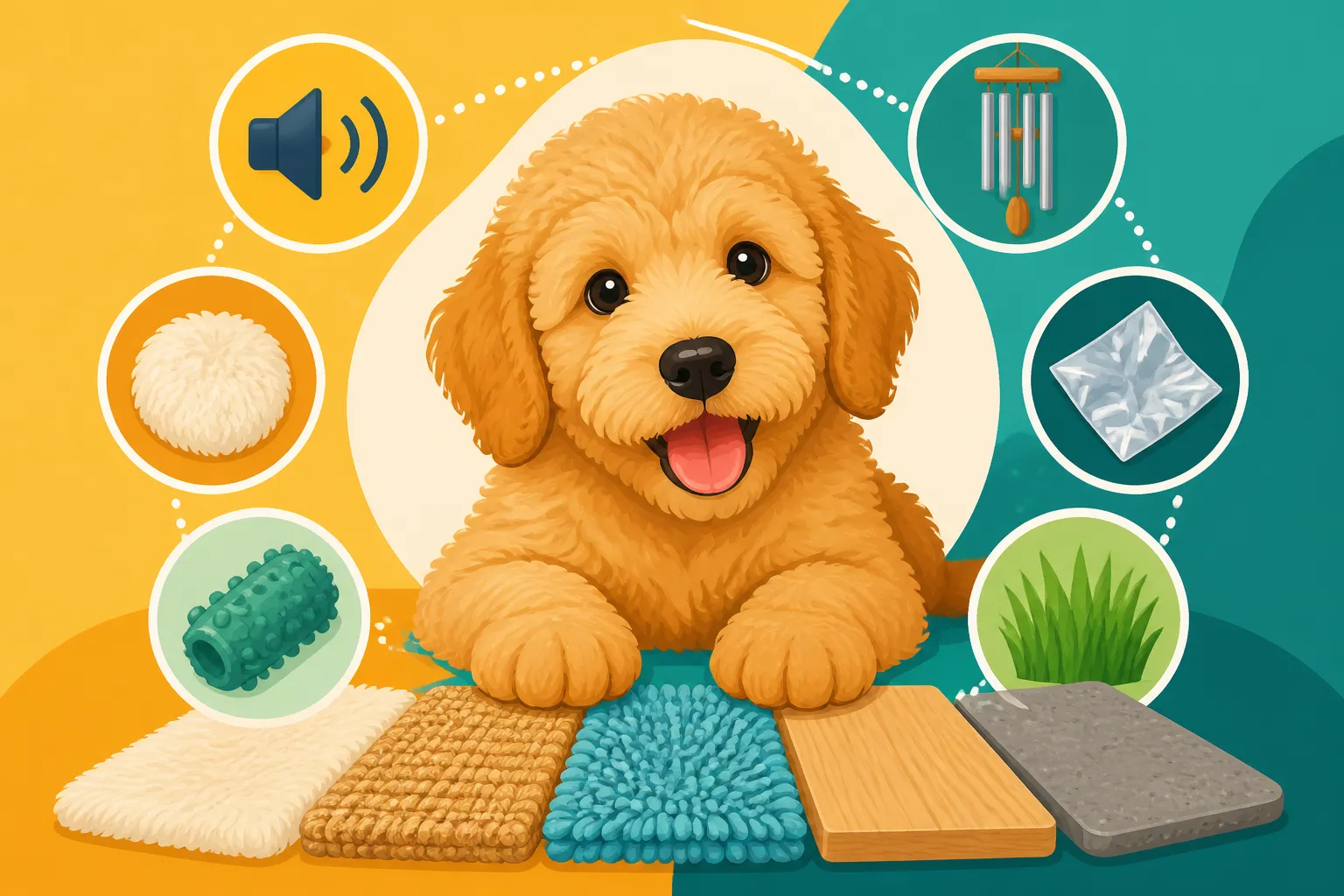
The Sounds and Surfaces a Goldendoodle Puppy Needs
Bringing home a Goldendoodle puppy is one of the most exciting, heartwarming experiences, but it also comes with a lot of responsibility – especially when it comes to setting them up for a happy, confident life. One of the biggest challenges new owners face is helping their fluffy bundle of joy navigate the overwhelming world of new sights, smells, and sounds, not to mention all the weird and wonderful surfaces their little paws will encounter. This guide is all about helping you introduce your Goldendoodle puppy to a diverse range of sounds and surfaces safely and positively, building their confidence from day one.
Why Exposure to Varied Sounds and Surfaces Matters for Your Goldendoodle Puppy
It’s easy to focus on just people and other dogs when we think about puppy socialization, but truly well-adjusted Goldendoodles are also comfortable with the world around them. This includes everything from the rumble of a vacuum cleaner to the squish of wet grass under their paws. Neglecting this crucial aspect of early development can lead to a fearful or anxious adult dog, which no one wants for their beloved companion.
The Critical Window for Goldendoodle Puppies
You've probably heard about the critical socialization window, which typically runs from around 3 to 16 weeks of age. This period is absolutely paramount for your Goldendoodle puppy's development. During these weeks, their brains are like sponges, soaking up every new experience and forming associations that will last a lifetime. Positive experiences with new sounds and surfaces now can prevent significant fear responses later. Think of it this way: a sound or surface they encounter as a positive, neutral, or mildly interesting thing during this window is far less likely to become a source of panic when they're older. This doesn't mean you should overwhelm them; it means calculated, gentle, and positive exposure. It's often during this phase that owners are also grappling with Goldendoodle Puppy Vaccination Timing and when it's safe to even venture outside, which adds another layer of complexity.
Preventing Fear and Anxiety Through Early Exposure
Imagine a dog that's terrified of thunderstorms, or one that refuses to walk on anything but soft carpet because a bad experience with a grating when it was young made them wary. These aren't just minor quirks; they can significantly impact a dog's quality of life and your own. By proactively exposing your Goldendoodle puppy to a variety of sounds and surfaces in a controlled, positive way, you are essentially inoculating them against future fears. You're teaching them that the world, while sometimes a little strange or noisy, is generally a safe and interesting place. This builds resilience, confidence, and a more adaptable temperament, crucial for a breed known for its sensitive and intelligent nature, inheriting traits from both the Golden Retriever and the Poodle.
A Symphony of Sounds: Introducing Your Goldendoodle to the Auditory World
Our homes and the world outside are full of noises that we barely notice, but to a tiny puppy, every whir, clang, and boom can be a startling new sensation. The key is to introduce these sounds gradually and always pair them with something pleasant.
Household Noises and Appliances
Your home, while a sanctuary, is also a hub of peculiar sounds. Things we take for granted can be terrifying to a puppy.
- Vacuum Cleaners: This is a big one! Many dogs develop a lifelong fear of the vacuum. Start by having the vacuum in the room, turned off, while your puppy plays or eats. Then, turn it on in another room at a low setting, far away, while giving treats. Gradually move it closer, always keeping the experience positive with high-value rewards. Never force your puppy near it.
- Blenders, Toasters, Coffee Makers: These sudden, sometimes loud noises can be startling. Again, introduce them from a distance. If you're making a smoothie, let your puppy be in a nearby room, perhaps with a chew toy. If they notice the sound, calmly offer a treat. The goal is "loud noise = yummy treat," not "loud noise = scary monster."
- Doorbells and Knocking: Goldendoodles, with their eager-to-please nature, can become excitable greeters. Practice the doorbell or knocking sound while teaching a "place" command or having them settle on a mat. Ring the bell, give a treat, repeat. When guests arrive, your dog associates the sound with positive calm, not just frantic excitement. Goldendoodle Place Training on a Bed or Mat can be incredibly helpful here.
- Washing Machines and Dryers: The rumbling and thumping of laundry appliances can be alarming. Again, introduce them gently. Let your puppy explore the laundry room when the machines are off. When they're running, keep your puppy in an adjacent room and offer comfort or treats if they seem curious but not scared.
Outdoor and Urban Acoustics
Once your puppy has had their vaccinations and your vet gives the all-clear for outdoor adventures, a whole new world of sound awaits. This needs to be managed carefully, especially during their Goldendoodle Fear Periods in Puppyhood.
- Traffic and Sirens: City or suburban life means cars, trucks, and emergency vehicle sirens. Start with short, positive outings. Sit on a bench near a moderately busy street, offering treats as cars pass. The goal isn't to ignore the sounds, but to register them as non-threatening background noise. If a siren blares, stay calm, reassure your puppy with a gentle stroke, and offer a treat. Your calm demeanor is key.
- Construction Noise: Hammering, drilling, and machinery can be quite loud. If there's construction nearby, start with observation from a safe distance. If your puppy seems worried, move further away until they are comfortable. Use high-value treats to create positive associations.
- Children Playing and Screaming: This is a big one for many families. Children's high-pitched voices and sudden movements can be startling. If you have kids, help them understand how to interact calmly with the puppy. If you encounter children outside, observe from a distance, rewarding calm behavior. For more on this, consider resources like Introducing a Goldendoodle Puppy to Children.
- Lawnmowers and Leaf Blowers: These seasonal sounds can cause distress. Similar to the vacuum cleaner, introduce them from inside the house first, then gradually move to outdoor exposure, always maintaining distance and pairing with treats and praise.
Nature's Soundtrack
Even nature itself has its share of interesting and sometimes unsettling sounds for a young pup.
- Thunder and Rain: Many dogs develop a phobia of thunderstorms. Start preparing early. Play recordings of thunder at a very low volume while your puppy is relaxed or playing. Gradually increase the volume over days or weeks, always observing their comfort level and associating it with positive things like a favorite chew or a special treat. You can find various sound desensitization tracks on platforms like Amazon.
- Rustling Leaves, Crashing Waves, Birdsong: These sounds are generally more benign, but still part of the rich auditory tapestry your puppy needs to experience. Simply being present in these environments and letting your puppy explore naturally, without forcing them, will help them acclimate. A walk in the park where leaves rustle or a trip to a calm beach can be wonderful experiences.
Treading New Paths: Exploring Different Surfaces for Goldendoodle Paws
Just like sounds, different textures underfoot can be novel and sometimes intimidating for a puppy. Early exposure helps build confidence and ensures your Goldendoodle won't be hesitant to walk on various surfaces later in life.
Indoor Terrain for Little Paws
Even within the safety of your home, there's a world of textures to explore.
- Hardwood, Tile, Carpet, Rugs: Most homes have a mix of these. Encourage your puppy to walk on all of them. For slippery surfaces like hardwood or tile, ensure they have good traction by keeping their nails trimmed and paw pads groomed. If they seem hesitant, lay down a non-slip runner or a towel for them to walk across first, gradually removing it as they gain confidence. A common struggle is Why a Goldendoodle Slips on Hardwood Floors.
- Stairs: Introducing stairs should be done carefully, especially for larger Goldendoodle puppies, to protect their developing joints. Start with just one or two steps, luring them with treats. Always supervise. For tiny puppies, you might carry them up and down initially, gradually introducing the concept as they grow a bit older and more coordinated.
- Grates and Mats: Many entryways have metal grates or textured mats. These can feel strange or even a bit scary on delicate puppy paws. Place treats on and around the grates, encouraging them to step on them briefly. Make it a fun game, not a challenge.
- Crinkly or Noisy Materials: Things like tarps, plastic sheeting, or even bubble wrap (under supervision!) can introduce interesting tactile and auditory feedback. Let them investigate at their own pace.
Outdoor Adventures and Textures
Once your puppy is vaccinated and cleared for outdoor exploration, the possibilities expand. Remember, short, positive experiences are always better than long, overwhelming ones.
- Grass (Wet and Dry): This is usually a natural and pleasant surface, but ensure they experience both dry, sunny grass and damp, dewy grass.
- Gravel and Pebbles: These can be tricky. Start with very fine gravel, rewarding every step. Avoid sharp, large stones. If your puppy is hesitant, walk quickly over a short patch, distracting them with praise and treats, then immediately return to a comfortable surface.
- Concrete and Pavement: Common and unavoidable, but introduce it gently. Hot pavement can burn paws, so always check the temperature with your hand first.
- Sand and Mud: Beaches or muddy trails offer great sensory experiences. Let them dig in the sand (supervised!) or squish through a small patch of mud. Just be prepared for bath time afterward!
- Uneven Ground: Natural trails, gentle slopes, and slightly lumpy ground help with balance and coordination. This builds body awareness, which is vital for agile Goldendoodles.
Building Paw Confidence with Purposeful Activities
Beyond just walking on surfaces, you can actively build your Goldendoodle's paw confidence and body awareness.
- Balance Boards and Wobbly Surfaces: Simple wobble boards or even just thick cushions can introduce instability, helping them learn to shift their weight and build core strength. Start with very stable options and always ensure it's safe.
- Mini Agility Equipment: Low tunnels, small platforms, or weave poles (again, very low and wide for puppies) can be fantastic for building confidence, coordination, and mental stimulation. There are many starter kits available on Amazon for home use.
| Surface/Sound Type | Why It's Important | How to Introduce It Safely |
|---|---|---|
| Vacuum Cleaner | Prevents fear of common household appliances | Start off, then low volume in another room, gradually closer with treats. |
| Doorbells/Knocking | Manages greeting excitement, prevents frantic barking | Ring, treat, repeat. Practice 'place' command. |
| Traffic/Sirens | Acclimates to urban environments, reduces anxiety | Short, calm outings from a distance, positive reinforcement. |
| Thunder/Rain | Reduces phobia development | Play recordings at low volume with treats/chews, gradually increase. |
| Hardwood/Tile | Ensures comfort on common indoor flooring | Ensure good traction; use runners, treats for hesitant pups. |
| Gravel | Builds paw resilience, comfort with varied outdoor terrain | Start with fine gravel, lots of praise and treats. Keep it brief. |
| Stairs | Develops coordination and confidence | Introduce one or two steps at a time, use lures, supervise closely. |
| Grates/Metal Covers | Overcomes aversion to unusual textures | Place treats on/around, make it a game, don't force. |
Practical Approaches to Sound and Surface Socialization
It’s not enough to just expose your puppy; you need a strategy to make these experiences positive and beneficial.
Controlled Introduction and Positive Association
The golden rule here is "low and slow." You want to create positive associations, not traumatic ones.
- Observe Your Puppy's Body Language: This is crucial. Are their ears back? Tail tucked? Are they refusing to move? These are signs of stress. If your puppy shows any signs of fear, you've gone too far, too fast. Retreat to a comfortable distance or stop the activity.
- Pair with High-Value Treats and Praise: Every time your puppy engages positively with a new sound or surface (even if it's just a glance in its direction), immediately reward them with their absolute favorite treat and enthusiastic praise. This builds that all-important positive association: "new thing = good things happen!"
- Keep Sessions Short and Sweet: Puppy attention spans are tiny! Aim for just a few minutes at a time, several times a day, rather than one long session. You want to end on a high note, leaving them wanting more.
- Never Force It: Dragging a puppy onto a scary surface or holding them near a loud noise will only intensify their fear. Always give them the choice to engage or retreat. You want them to choose to explore, building their intrinsic confidence.
- Lead by Example: Your calm, confident demeanor is contagious. If you act anxious or overly worried, your puppy will pick up on that. Be their rock!
Tools and Resources for Safe Exposure
You don't have to navigate this journey alone. There are fantastic resources available to help you.
- Sound Desensitization Apps/Tracks: As mentioned, you can find specific recordings online, often through platforms like Amazon, that simulate various household, urban, and natural sounds. These allow you to control the volume and duration, making them invaluable for gradual desensitization.
- Puppy Classes and Socialization Programs: Many reputable trainers offer puppy classes that focus not just on basic obedience but also on safe socialization. These environments often include various surfaces and controlled sound exposure. Programs like BAXTER & Bella provide comprehensive online training platforms that often include modules on environmental desensitization, guiding you through the process step-by-step. They understand that bringing a puppy home can feel overwhelming, and their structured approach can be a lifesaver.
- Variety of Toys and Chews: Offering a favorite toy or a long-lasting chew during sound exposure can help distract and create positive memories.
- Different Leashes and Harnesses: Sometimes a new type of harness or a lighter leash can help a puppy feel more secure on new surfaces. For advice on these, you might find Harnesses That Suit a Goldendoodle Coat useful.
When to Seek Professional Help
While Goldendoodles are generally adaptable and eager to please, some puppies may have a genetic predisposition to anxiety or may have had a negative experience before coming home.
- Persistent Fear or Phobias: If, despite your best efforts, your puppy exhibits extreme fear, panic attacks, or persistent avoidance of certain sounds or surfaces, it's time to call in the professionals.
- Aggression Triggered by Sounds/Surfaces: While less common, some fearful dogs may resort to defensive aggression when overwhelmed. This requires immediate intervention from a qualified professional.
- Unexplained Behavioral Changes: If your puppy suddenly becomes withdrawn, destructive, or excessively vocal (beyond normal puppy antics like Goldendoodle Puppy Biting and Mouthing or Goldendoodle Puppy Sleep and Night Waking) after an exposure experience, consult your vet or a certified veterinary behaviorist. They can rule out any underlying medical conditions and help create a tailored behavior modification plan.
Remember, early intervention is key. The sooner you address these issues, the easier they are to resolve, ensuring your Goldendoodle grows into a confident, happy, and well-adjusted companion who loves to explore the world with you.
Disclaimer
This article is for general informational purposes only and does not constitute professional advice. Laws, prices and regulations vary by location and change over time. Consult a qualified professional for guidance on your specific situation.