A Friendly Goldendoodle That Turns Reactive on Leash
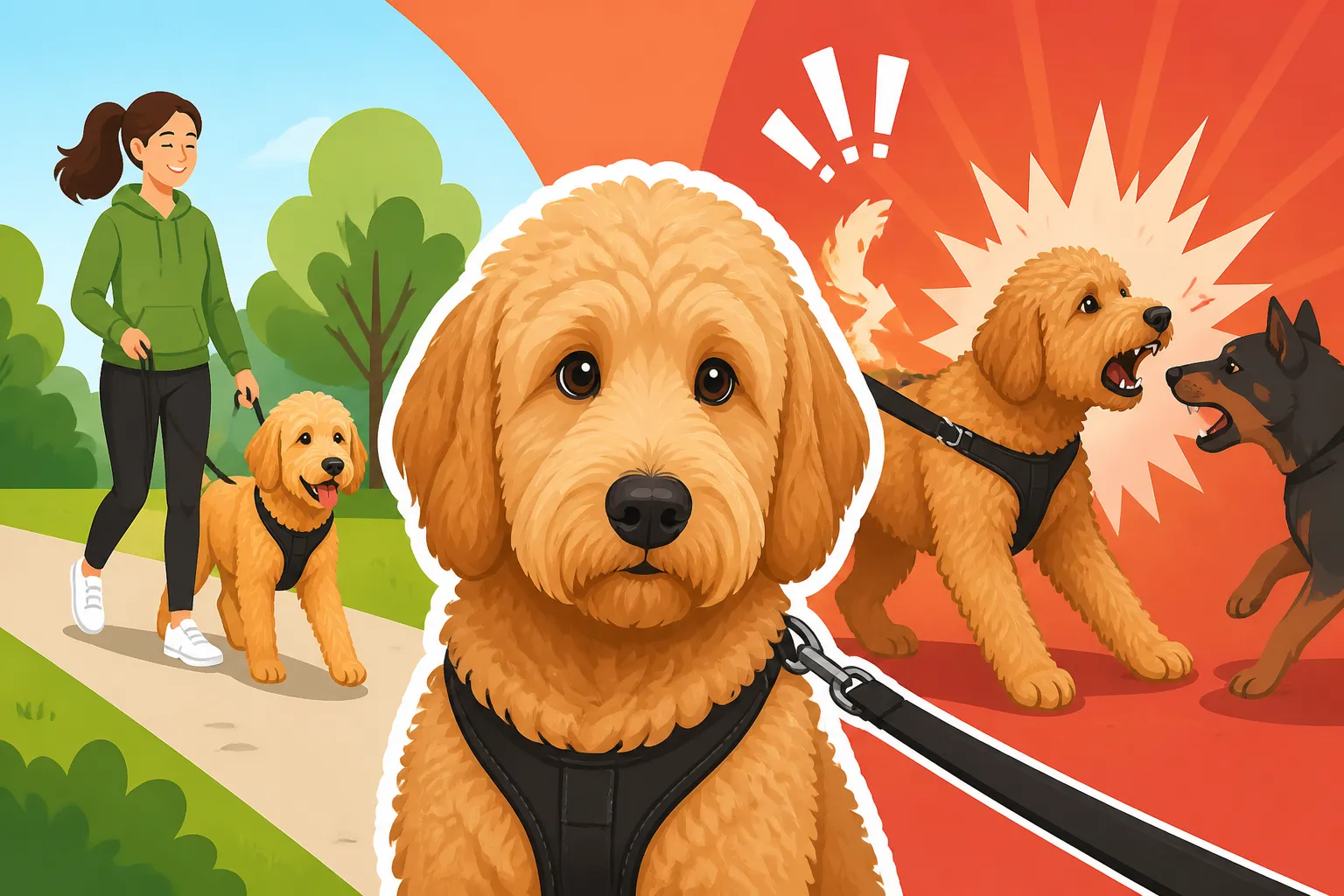
It's incredibly disheartening when your sweet, goofy Goldendoodle, who showers everyone with love off-leash, transforms into a barking, lunging maniac the moment you clip on the leash and step outside. You know your dog is friendly, so why the sudden change? This guide will dive deep into understanding why even the friendliest Goldendoodles can become leash reactive and provide actionable strategies to help your beloved companion regain their calm, friendly demeanor on walks.
Understanding the "Friendly" Goldendoodle Paradox on Leash
Goldendoodles are often sought after for their incredible temperament – a delightful mix of the Golden Retriever's eager-to-please nature and the Poodle's intelligence and sensitivity. This combination typically creates a dog that is highly social, affectionate, and genuinely loves people and other dogs. So, when this naturally friendly dog starts barking and pulling on the leash, it feels like a betrayal of their very character, leaving many owners frustrated and embarrassed.
The Goldendoodle's Innate Desire to Greet
Think about it: your Goldendoodle probably lives for interactions. They want to say hello to every person, every dog, every squirrel they encounter. This comes directly from their heritage. Golden Retrievers are famous for their outgoing, gregarious personalities, always ready with a wagging tail and a slobbery kiss. Poodles, while sometimes perceived as more reserved, are also intelligent, social, and form strong bonds, often eager to engage with their surroundings. When you combine these traits, you get a Goldendoodle that often possesses an overwhelming desire to interact.
However, the leash inherently restricts this natural impulse. It's like putting a child who desperately wants to play with their friends behind a fence and then expecting them to calmly observe. The inability to fulfill that deep-seated desire to greet, coupled with the excitement of seeing potential friends or interesting scents, creates a bubbling cauldron of frustration. They aren't necessarily aggressive in the traditional sense; they're often just incredibly, intensely, overwhelmingly frustrated by the barrier the leash creates between them and their perceived fun. This isn't a problem of malice; it's a problem of manners and management.
Over-Arousal vs. Aggression
This is a crucial distinction that many Goldendoodle owners struggle with. What looks like aggression – the barking, lunging, hackles raised – is often a manifestation of extreme over-arousal. Your Goldendoodle isn't trying to hurt the other dog or person; they're essentially screaming, "LET ME GO SAY HELLO!" or "WHY CAN'T I PLAY?!" They're so keyed up, so excited, so utterly overwhelmed by the stimulus that they lose control.
True aggression often involves more nuanced body language that signals a desire to create distance, such as a stiff body, direct stare, whale eye (showing the whites of their eyes), or a low growl that truly means "back off." In many leash-reactive Goldendoodles, the body language, though intense, is actually quite social, if poorly executed. They might be trying to invite play with their barks, or they might be so over-threshold that their brain can't process polite greetings. Understanding this difference helps shift your approach from fear-based punishment to patience and teaching coping mechanisms. It’s about helping them regulate their big feelings. You can read more about their innate drive in What a Goldendoodle Inherits From Each Parent Breed.
Leash Frustration Syndrome
"Leash frustration" is exactly what it sounds like, and it's a diagnosis many Goldendoodle owners can relate to. It's when a dog, inherently friendly and sociable, becomes frustrated and displays reactive behaviors (barking, lunging, whining) when on a leash because they are prevented from interacting with a desired stimulus, often another dog or person. This isn't usually a sign of an aggressive dog, but rather a dog that hasn't learned appropriate leash manners or impulse control in the face of excitement.
The frustration builds because they associate the sight of another dog or person with positive interaction, but the leash prevents that interaction. Over time, this frustration can lead to what looks like aggressive displays, making walks stressful for both dog and owner. It’s a vicious cycle: the more they're pulled away or reprimanded for reacting, the more frustrated and confused they become, often leading to even more intense reactions next time. It's a classic case of unfulfilled social drive meeting physical restraint.
Identifying the Triggers and Early Signs of Leash Reactivity
Before you can effectively address leash reactivity, you need to become a detective. What exactly sets your Goldendoodle off? Is it every dog, or just certain types? Is it people walking by, or just kids on bikes? Knowing your dog's specific triggers and recognizing the subtle hints they give before an explosion is key to stepping in before the situation escalates.
Common Reactivity Triggers for Goldendoodles
Goldendoodles, due to their social nature and energy levels, can have a variety of triggers, but some are more common than others. Often, it's the sight of another dog, especially one that is also on a leash or passing quickly. They might also react to:
- People: Particularly people jogging, cycling, or those with unusual hats or umbrellas. Children can also be a big trigger due to their unpredictable movements and high-pitched voices.
- Sounds: A sudden loud noise, a car backfiring, or even distant dog barks can put them on edge, making them more prone to react to visual triggers.
- Movement: Anything fast-moving, like skateboards, scooters, or even a flock of birds taking flight, can ignite their chase drive or over-excitement.
- Specific Contexts: Some dogs are fine in wide-open parks but react strongly on narrow sidewalks or when exiting a vet clinic, where space is limited and tension might be higher.
Keeping a log of these incidents can be incredibly helpful. Note down the time, location, what the trigger was, how far away it was, and what your Goldendoodle's reaction looked like. This data will reveal patterns and help you proactively manage walks.
Subtle Cues Before the Bark
Your Goldendoodle isn't just suddenly erupting; there are almost always subtle body language signals leading up to the full-blown reaction. Learning to read these early cues allows you to intervene before your dog goes "over threshold," meaning before they're too overwhelmed to respond to you. Look for:
- Stiffening Body: Their body might become rigid, and their tail might stop wagging or slow down.
- Hard Stare: They fixate on the trigger, sometimes with a furrowed brow or ears perked.
- Lip Licking/Yawning: These can be "displacement behaviors" indicating stress, especially if there's no obvious reason for them to be licking or yawning.
- Head Turns/Averting Gaze: This can be a sign they're trying to cope or process.
- Increased Pace/Pulling: They might start pulling harder on the leash, trying to get closer or away.
- Whining/Soft Growls: These audible cues are often precursors to full-blown barking and lunging.
By catching these early signs, you can start to redirect your Goldendoodle's attention, create distance, or use a positive interrupter to prevent the escalation. This proactive approach is much more effective than trying to correct them once they're already in a full meltdown. It’s about being their advocate and helping them navigate a complex world.
The "Popcorn Moment" Effect
Imagine a piece of popcorn heating up in a microwave. It sits there, then pop! Suddenly, it's a completely different thing. Leash reactivity can often feel like this for owners – one minute your Goldendoodle is fine, the next they've exploded. This "popcorn moment" often happens after a series of cumulative stressful events, or a single highly impactful negative experience.
For example, a Goldendoodle might be mildly anxious about other dogs, and then one day, another dog charges at them while they're on leash, resulting in a terrifying interaction they couldn't escape. This single event can "hardwire" a reactive response. Or, it could be a slow build-up of constantly being dragged away, feeling frustrated, and never getting to meet the dogs they want to meet. Each frustrated bark reinforces the behavior, telling their brain, "This is how we deal with seeing other dogs on leash!" Breaking this cycle requires consistent, positive intervention.
Foundational Training to Address Leash Reactivity
Addressing leash reactivity isn't just about stopping the barking; it's about changing your Goldendoodle's emotional response to their triggers. This takes time, patience, and a consistent application of positive reinforcement. Starting with solid management and building reliable commands is your first line of defense.
Management Strategies for Immediate Relief
While you're working on changing your Goldendoodle's underlying emotional response, management is absolutely critical. This means actively preventing your dog from practicing the reactive behavior. Every time your Goldendoodle barks and lunges, it reinforces the behavior, making it harder to break the habit.
- Avoid Triggers: This might mean changing your walking routes, walking at different times of day when fewer dogs or people are out, or driving to quiet parks where you can work at a distance. If other dogs are the primary trigger, seek out areas where you can ensure plenty of space.
- Increase Distance: When you spot a trigger, simply crossing the street, turning a corner, or stepping behind a parked car can make a huge difference. The goal is to keep your Goldendoodle under threshold, meaning they notice the trigger but don't react.
- Use Visual Barriers: Sometimes, a simple fence, a large bush, or even stepping behind your own body can provide enough of a visual block to help your Goldendoodle stay calm.
- High-Value Treats: Always carry incredibly delicious, small, and soft treats (like cooked chicken, cheese, or hot dogs). These aren't just for rewards; they're also for distraction and counter-conditioning.
Remember, management isn't a long-term solution, but it buys you time and prevents rehearsals of unwanted behavior. It creates a safe learning environment where your Goldendoodle isn't constantly overwhelmed. You can also explore different walking gear like a front-clip harness from a store like Amazon to help with pulling, as discussed in Harnesses That Suit a Goldendoodle Coat.
Reinforcing Calmness: The "Look at That" Game
This game, also known as "engage/disengage," is a cornerstone of reactivity training. It teaches your Goldendoodle to calmly observe a trigger and then look to you for a reward, rather than reacting.
Here's how it works:
- Spot a Trigger (from a distance): Find a distance where your Goldendoodle notices the trigger but doesn't react. This is your sweet spot.
- Mark the Observation: The moment your Goldendoodle looks at the trigger (but stays calm), say "Yes!" or click your clicker.
- Reward: Immediately follow with a super high-value treat, bringing it to their nose to redirect their attention to you.
- Repeat: As they eat the treat, the trigger might pass. If it's still there, they'll likely look at it again. Repeat the "Yes!" and treat.
The goal is to change their emotional association: "Oh, there's another dog! That means good things (treats) happen when I look at it and then look back at my human." This isn't about ignoring the trigger; it's about changing their emotional response from anxiety/frustration to anticipation of a reward. Goldendoodle Impulse Control Exercises can lay a great foundation for this.
Building a Solid "Watch Me" and "Touch" Command
These two commands are invaluable tools for redirecting your Goldendoodle's attention and engaging their brain when distractions are present.
"Watch Me" (or "Look"):
This command teaches your Goldendoodle to make eye contact with you on cue. Start practicing in a quiet environment:
- Hold a treat near your nose.
- Say "Watch Me" (or "Look").
- The moment your Goldendoodle makes eye contact, even for a split second, say "Yes!" and give the treat.
- Gradually increase the duration of eye contact before rewarding.
- Once reliable indoors, practice in slightly more distracting environments, always starting with short durations and high-value rewards.
"Touch" (Targeting):
This command teaches your Goldendoodle to touch their nose to your hand (or a target stick). It's fantastic for breaking focus and moving your dog away from a trigger.
- Hold your open palm out near your dog's nose.
- When they sniff or touch your hand, say "Yes!" and immediately reward with a treat from your other hand.
- Add the verbal cue "Touch" just before they make contact.
- Once they reliably touch your hand, you can use it to guide them, for example, moving them past a trigger or getting their attention away from something interesting.
Both of these commands empower you to engage your Goldendoodle's brain and give them something to do instead of reacting. The mental effort involved in focusing on you can be incredibly tiring for a Goldendoodle, in a good way! The Thinking Work That Actually Tires a Goldendoodle explains this in more detail.
Advanced Techniques for Long-Term Behavioral Change
Once your Goldendoodle has a solid foundation in management and basic redirection, you can start layering in more advanced techniques to truly reshape their reactions over time. This is where patience really pays off, as progress can feel slow but is ultimately deeply rewarding.
Desensitization and Counter-Conditioning in Practice
These are the scientific principles behind the "Look at That" game, and they are powerful.
- Desensitization: Gradually exposing your Goldendoodle to a trigger at a level below their reaction threshold, slowly increasing the intensity (closer distance, longer exposure) over many sessions.
- Counter-Conditioning: Changing your Goldendoodle's emotional response to a trigger from negative (fear, frustration) to positive (excitement for treats/praise).
Combine these two by always pairing the sight of the trigger with something wonderful.
Step-by-Step Scenario:
- Set Up: Arrange to have a friend with a calm, neutral dog walk by at a distance where your Goldendoodle is relaxed. This might be across a large field or even 100 feet away on a quiet street.
- Observe & Reward: The instant your Goldendoodle sees the other dog and stays calm (no stiffening, no staring), mark it with "Yes!" and feed a rapid-fire succession of high-value treats for as long as the other dog is visible. You want to create a party!
- Disappear: The moment the other dog disappears, the treats stop. This helps your Goldendoodle understand that the presence of the other dog predicts good things.
- Gradual Progression: Over many, many sessions (days or weeks), slowly decrease the distance to the trigger. If your Goldendoodle starts to show signs of stress or reactivity, you've gone too far, too fast. Back up to a distance where they are comfortable. This process should be slow and methodical.
- Vary Triggers: Once comfortable with one "fake" dog, introduce other dogs, different people, and different environments, always starting at a safe distance and gradually closing the gap.
This process is about changing how your Goldendoodle feels when they see a trigger, not just suppressing the behavior. For dogs that truly love to socialize, this method helps them learn that seeing another dog can be a positive, calm experience, even if they don't get to physically interact. Socializing a Goldendoodle Beyond Hyper-Friendliness emphasizes the importance of appropriate, calm socialization.
Engaging a Goldendoodle's Brain with Scent Work
Goldendoodles are intelligent dogs, combining the working brain of a Poodle with the tracking abilities of a Golden Retriever. Harnessing this mental energy through scent work can be an incredible outlet for their drive and helps to tire them out mentally, which often leads to calmer behavior on walks.
Scent work, or "nose work," teaches your dog to use their natural sense of smell to find hidden treats or toys. It's low-impact, can be done indoors or outdoors, and deeply satisfying for dogs.
Simple Scent Work Games:
- "Find It" Indoors: Hide a few small, high-value treats around a room while your Goldendoodle watches. Then release them with "Find it!" As they get good, hide treats in more challenging spots.
- Scent Walks: Instead of just walking, scatter treats in the grass for your Goldendoodle to sniff out. This engages their nose, slows them down, and allows them to explore their environment in a calm, fulfilling way.
- Puzzle Toys: Toys that require your Goldendoodle to solve a puzzle to get a treat are fantastic for mental stimulation. You can find a wide variety of these on Amazon.
Mental exercise is just as important, if not more important, than physical exercise for Goldendoodles. A mentally tired dog is often a calmer, more responsive dog. A Goldendoodle that has had a good scent work session might be much less likely to react on their subsequent leash walk.
Harnessing and Leash Choices for Better Control
The right equipment can make a significant difference in managing a leash-reactive Goldendoodle, not just in controlling them physically, but also in making them more comfortable and less likely to choke themselves.
Front-Clip Harnesses:
These harnesses attach the leash at your dog's chest, rather than their back. When your Goldendoodle pulls, they are gently redirected sideways, making it much harder for them to pull you forward. Brands like Balance Harness or Easy Walk are popular choices you can find on Amazon. They prevent pressure on the throat, which can reduce coughing or gagging, and make the experience more comfortable for your dog.
Head Halters:
For strong pullers or highly reactive dogs, a head halter (like a Gentle Leader or Halti) can provide excellent control. It works similarly to a horse halter, guiding the dog's head, and where the head goes, the body follows. It's crucial to introduce a head halter slowly and positively, using lots of treats, as many dogs initially resist them. Never yank or pull on a head halter, as it can be uncomfortable.
Longer Leashes (with caution):
While counterintuitive for reactivity, a longer leash (6-8 feet, not a retractable leash) can sometimes give your Goldendoodle a bit more space to sniff and feel less restricted, which can reduce frustration. However, this must be used with extreme caution in areas with triggers. A longer leash means you need excellent handling skills and awareness of your surroundings to prevent your dog from getting too close to a trigger or tangling with others.
Avoid Retractable Leashes:
These leashes are generally not recommended for reactive dogs. They teach dogs to pull to gain distance, offer little control, and the sudden jolt when the leash locks can be startling or even cause injury. For effective training and safety, a fixed-length leash is always best.
Choosing equipment that helps you manage your Goldendoodle effectively and comfortably for them can make walks much more enjoyable and productive as you work on their reactivity. Remember, the goal is not just control, but comfort and teaching.
When to Seek Professional Help and Resources
There are times when home training and management strategies aren't enough, or when you feel overwhelmed and stuck. Recognizing when to bring in professional guidance is a sign of a responsible pet owner, not a failure. A good professional can offer tailored advice, practical demonstrations, and support that speeds up your progress and ensures everyone's safety.
Recognizing When You Need a Certified Professional
While you can achieve a lot on your own with dedication, certain situations warrant the expertise of a professional dog trainer or behaviorist:
- Lack of Progress: You've been consistently implementing strategies for several weeks or months, and you're simply not seeing improvement, or your Goldendoodle's reactivity is getting worse.
- Safety Concerns: Your Goldendoodle's reactions are becoming increasingly intense, to the point where you fear they might injure another dog or person, or even themselves due to their frantic behavior.
- Your Stress Levels: You dread walks, feel constantly overwhelmed, or are starting to resent your dog because of the leash reactivity. This stress impacts both you and your Goldendoodle.
- Aggression: If you suspect your Goldendoodle's reactivity is crossing the line from frustration or over-arousal into genuine aggression (e.g., trying to bite, growling to warn off rather than to demand interaction), professional intervention is critical.
- Unusual Behavior: If the reactivity came on suddenly, or is accompanied by other concerning behavioral changes, a vet visit is always recommended first to rule out pain or an underlying medical condition. Pain can drastically impact behavior.
A qualified professional can assess your dog's specific situation, identify subtle triggers you might have missed, and design a tailored training plan that works for you and your Goldendoodle. They can also offer hands-on guidance and troubleshoot challenges in real-time. Finding a Trainer for a Goldendoodle can provide further insight on this.
Choosing the Right Trainer for Leash Reactivity
The dog training world can be a bit like the wild west, so it's essential to choose a trainer who uses modern, ethical, and effective methods. For reactivity, you must seek out a trainer who specializes in positive reinforcement and force-free techniques.
What to Look For:
- Certifications: Look for certifications like CPDT-KA (Certified Professional Dog Trainer – Knowledge Assessed), CDBC (Certified Dog Behavior Consultant), or behaviorists with veterinary degrees (DACVB). These indicate a commitment to education and ethical practice.
- Force-Free Philosophy: The trainer should explicitly state they use positive reinforcement, reward-based methods, and avoid punishment, corrections, or aversive tools (like prong collars, choke chains, or e-collars). Punishment can suppress reactivity but often exacerbates underlying fear and anxiety, making the problem worse in the long run for sensitive Goldendoodles.
- Experience with Reactivity: Ask about their experience working with leash-reactive dogs, particularly friendly ones.
- Observation & Tailored Plans: A good trainer will want to observe your Goldendoodle in their environment or on a walk (from a safe distance) to assess the behavior before offering solutions. They should create a customized plan, not a one-size-fits-all approach.
- Client Communication: They should be good communicators, explaining their methods clearly, providing resources, and empowering you to be the primary trainer for your dog.
Avoid anyone who promises quick fixes, uses intimidation, or recommends tools that cause pain or fear. Goldendoodles, with their Poodle sensitivity, respond best to kindness and clear communication.
Online Training Programs and Communities
While a local professional is ideal for severe cases, many excellent online resources and communities can provide invaluable support, education, and even structured training programs for leash reactivity.
- BAXTER & Bella Online Puppy School: While primarily for puppies, their comprehensive program often includes foundational exercises like "Watch Me," "Leave It," and impulse control that are critical for managing reactivity in older dogs too. Their structured approach and community support can be incredibly helpful for consistent training. They provide lifetime access to their curriculum, which covers many of the basic behaviors that can help prevent or mitigate reactivity later on.
- Facebook Groups & Forums: Search for "Goldendoodle reactivity" or "leash reactive dog" groups. These communities can offer a sense of camaraderie, practical tips, and moral support from owners facing similar challenges. Always vet advice with caution, but the shared experience can be powerful.
- YouTube Channels & Online Courses: Many reputable positive reinforcement trainers offer free videos or paid courses specifically on leash reactivity. Look for channels from certified trainers.
- Supplies from Amazon: Once you have a clear plan, platforms like Amazon are fantastic for sourcing specific training tools, high-value treats, puzzle toys, and appropriate harnesses (like the ones mentioned earlier) quickly and conveniently. Having the right tools at hand makes consistent training much easier.
Remember, addressing leash reactivity is a journey, not a destination. It requires consistency, patience, and a deep understanding of your Goldendoodle's needs. With the right approach and, if needed, professional guidance, you can help your friendly Goldendoodle become a calm, confident companion on walks, turning those frustrating excursions into enjoyable adventures once again.
Disclaimer
This article is for general informational purposes only and does not constitute professional advice. Laws, prices and regulations vary by location and change over time. Consult a qualified professional for guidance on your specific situation.