A Goldendoodle That Greets Everyone at the Vet
Oh, that boundless Goldendoodle joy! It's one of the things we adore about them, right? That tail wagging a mile a minute, those happy barks, the desperate desire to make friends with every single human and dog they encounter. It’s wonderful when you’re out on a casual stroll, but when you step into the vet’s office, that hyper-friendliness can quickly become a stressful situation for both you and your furry friend. This guide is all about understanding why your Goldendoodle greets everyone at the vet with such gusto and, more importantly, how you can help them navigate these necessary visits with a little more calm and a lot less chaos.
The Roots of Your Goldendoodle's Overzealous Vet Greetings
It’s easy to feel a little embarrassed or frustrated when your Goldendoodle turns into a bouncing, barking, leash-pulling ball of fluff at the vet. But understanding why they do this can really help shift your perspective and approach. It’s rarely about them being "naughty" and almost always about their inherent nature combined with a stimulating environment.
A Blend of Golden Retriever Affection and Poodle Enthusiasm
Your Goldendoodle inherits a rich temperament from both its parent breeds. From the Golden Retriever side, you get that undeniable, unwavering friendliness. Goldens are, by nature, eager to please and love everyone. They see a new person as a new best friend just waiting to happen. Combine that with the Poodle’s intelligent, often high-energy, and sometimes sensitive disposition, and you have a dog that not only wants to engage but might also get overstimulated easily in a novel environment.
Think about it: the vet's office is full of interesting smells, unfamiliar people, and often other dogs (some of whom might be stressed, which your sensitive Goldendoodle can pick up on). For a dog bred to be outgoing and responsive, it's like a giant buffet of sensory input. They're not intentionally trying to cause a scene; they're simply responding to their instincts to engage with their environment and the people in it. They want to say hello, to solicit attention, and perhaps even to offer comfort, all wrapped up in a bundle of excitement.
The Problem of Novelty and Lack of Routine
For many Goldendoodles, vet visits aren't a regular, predictable part of their week. They're usually infrequent events, perhaps once or twice a year for annual check-ups or vaccinations, or maybe more often if there's a specific health concern. This infrequency means the vet's office remains a highly novel environment, triggering that extra burst of excitement or even anxiety. Without a consistent routine, your Goldendoodle doesn't get the chance to habituate to the sights, sounds, and smells of the clinic.
Imagine yourself in a situation you only encounter rarely – say, a crowded, noisy tax office. Even if you're normally calm, you might feel a bit more on edge, a bit more unsure of how to act. For your Goldendoodle, the vet's office can be that same kind of overwhelming experience. The lack of routine means they haven't learned to associate the vet with calm or routine procedures; instead, it's often linked to a flurry of new experiences, quick greetings, and then some poking and prodding. This can make their attempts at greeting even more frantic, as if they're trying to cope with the environment by engaging with everything around them.
Proactive Training for Calm Vet Visits
The key to managing your Goldendoodle’s greetings at the vet is to start long before you even step through the clinic doors. It's about proactive training and building positive associations, not just trying to put a lid on the excitement in the moment.
Desensitization and Positive Association
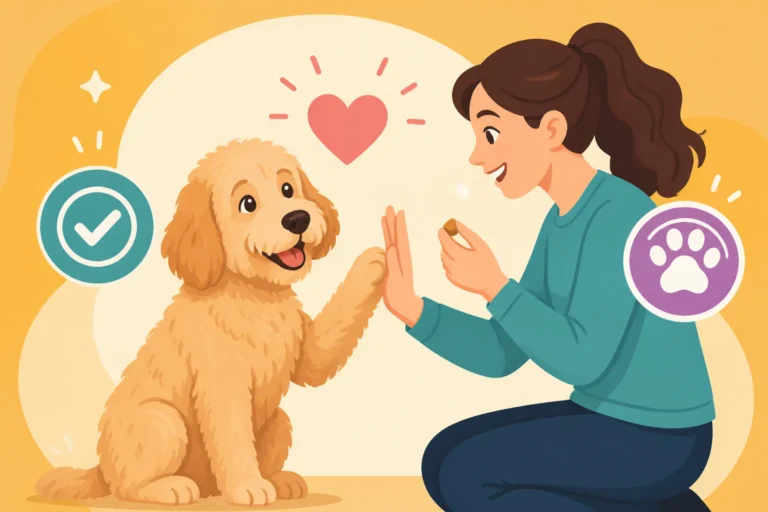
The goal here is to change your Goldendoodle's emotional response to the vet's office. Instead of seeing it as a place of high excitement or potential stress, we want them to view it as neutral, or even better, as a place where good things happen. This starts with desensitization. If your vet allows, visit the clinic just for fun. Walk in, give your Goldendoodle a super high-value treat (like boiled chicken or cheese), and then walk right back out. No weigh-in, no exam, no other dogs – just a quick, positive interaction. Repeat this several times over weeks or months, gradually increasing the duration of your stay. Maybe sit in the waiting room for a few minutes, again, just giving treats. The idea is to flood the experience with positive reinforcement without any of the actual "vet stuff."
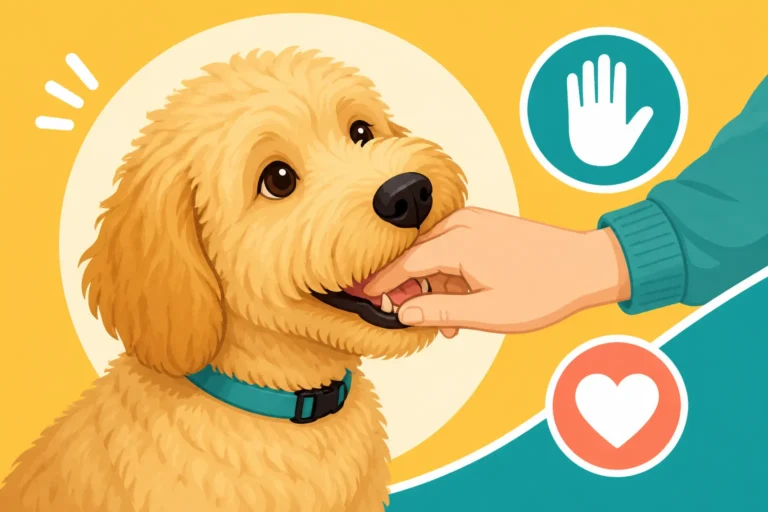
You can also practice similar exercises at home. Get them used to being handled, touching their paws, ears, mouth, and tail gently. Make these handling sessions super rewarding with treats. Training a Goldendoodle Puppy for the Grooming Table offers excellent tips that are transferable here, as getting a Goldendoodle to stand still for grooming is very similar to standing still for an exam. Use a calm, reassuring voice, and end the session before your dog gets anxious or overstimulated. The more comfortable they are with handling from you, the better prepared they’ll be for the vet.
Teaching a "Place" or "Settle" Command
A solid "place" or "settle" command can be a game-changer in a busy waiting room. This command teaches your Goldendoodle to go to a designated spot (like a mat or a small bed) and relax there until released. This isn't just about obedience; it's about giving them a job to do and a way to self-regulate their excitement. Start training this at home in a quiet environment, rewarding them heavily for staying on their mat. Once they’re reliable, gradually introduce distractions.
For instance, you could use a portable mat that smells like home – one you might even pick up on Amazon for your training sessions. This mat becomes their "safe zone." When you bring them to the vet, lay down their mat in a corner of the waiting room (if space allows and it’s safe), and cue them to "place." Offer them a long-lasting chew or a puzzle toy to keep them occupied and reinforce that settling is rewarding. This gives them a clear expectation of what to do, rather than leaving them to figure out how to navigate the overwhelming environment on their own. It helps them engage their thinking brain over their reactive brain. Goldendoodle Impulse Control Exercises can also be incredibly useful in developing this self-control.
Using High-Value Rewards and Calming Aids
When you're at the vet, standard kibble probably won't cut it against the excitement or stress. You need high-value rewards – something your Goldendoodle rarely gets and absolutely loves. Think small pieces of cheese, hot dogs, cooked chicken, or even squeezable treat tubes. These are powerful motivators and can help redirect their attention from other people and dogs to you.
Consider also using calming aids if your Goldendoodle is particularly anxious. This could range from pheromone sprays (like Adaptil) in their carrier or on a bandana, to calming chews or supplements recommended by your vet. For some, a thundershirt or calming wrap can provide a sense of security. Always discuss any supplements or significant calming aids with your vet beforehand to ensure they are appropriate for your specific dog. The online puppy school BAXTER & Bella, for example, often discusses using various tools and techniques to build confidence in puppies facing new environments, which could include preparing for vet visits. The key is to find what works best for your individual Goldendoodle to help them feel more at ease.
Navigating the Vet's Office: Strategies for Success
Even with the best preparation, the vet's office can still be a challenge. Here are some strategies you can employ in the moment to manage your Goldendoodle's over-the-top greetings and help ensure a smoother visit.
Strategic Timing and Requesting Space
One of the simplest yet most effective strategies is to be strategic about when you visit. If possible, schedule appointments during off-peak hours when the waiting room is less likely to be crowded. Early mornings or late afternoons often have fewer clients. You can also call ahead and ask your vet's office if they have a specific quiet area or if you can wait in your car until it's time for your appointment. Many vet offices are very understanding and accommodating of dogs who get overwhelmed or over-excited in the waiting room.
When you do arrive, immediately advocate for your Goldendoodle's space. Don't be afraid to politely ask other clients to give your dog a little room, or to manage your Goldendoodle's leash to steer them away from direct interactions with other dogs or people if you're working on calm greetings. Having a clear plan to minimize direct, unmanaged greetings can significantly reduce your Goldendoodle's arousal levels and prevent them from practicing unwanted greeting behaviors.
The Art of Redirection and Focus
When your Goldendoodle starts to hyper-focus on another dog or person entering the waiting room, your job is to redirect their attention back to you. This is where your high-value treats and a practiced "watch me" or "focus" command come in handy. As soon as you see them start to stiffen, stare, or get ready to lunge, intercept that energy. Present a treat right at their nose, say your focus command, and reward them for making eye contact with you. Repeat this several times as the distraction passes.
Another technique is to use their natural retrieve drive. Carry a favorite, squeaky toy that only comes out for vet visits. When a new person or dog approaches, you can give the toy, engage in a quick, controlled game of fetch (if space allows and it's appropriate), or even just have them hold it. This gives them an outlet for their energy and redirects their attention from the stimulus to an acceptable activity with you. Remember, Goldendoodles generally want to please you, so if you make you the most rewarding thing in the room, they'll be more likely to listen. Goldendoodle Recall in an Open Field discusses building focus, and those principles apply even in a distracting indoor environment.
Leash Management and Body Language
Your leash is not just a restraint; it's a communication tool. Use it to subtly guide your Goldendoodle and manage their proximity to others. A short, controlled leash helps prevent them from practicing lunging and jumping. However, avoid yanking or using harsh corrections, as this can increase their stress and make future vet visits even more challenging. Instead, use gentle pressure and guidance. If your Goldendoodle starts to pull towards someone, stop walking, get their attention, and only proceed when the leash is loose.
Pay close attention to your Goldendoodle's body language. Are they starting to get stiff? Are their ears perked and tail wagging furiously? These are signs that they're escalating. Intervene before they reach peak excitement. Remain calm yourself, as dogs are incredibly adept at picking up on our emotions. Your calm demeanor can help reassure them that everything is okay, even if they're feeling overwhelmed. A well-fitted, comfortable harness can also help with leash control without putting pressure on their neck, especially for a stronger Goldendoodle that might pull.
Here's a quick comparison of proactive vs. in-the-moment strategies:
| Strategy Aspect | Proactive (Before the Visit) | In-the-Moment (During the Visit) |
|---|---|---|
| Goal | Build positive associations, teach calm behaviors | Manage current excitement, prevent escalation |
| Environment | Home, non-vet locations, brief vet drive-bys | Vet waiting room, exam room |
| Key Tools | High-value treats, mat, grooming tools, online training programs | High-value treats, specific toys, leash, calming voice |
| Focus | Desensitization, cooperative care, "place" command, handling | Redirection, focus commands, advocating for space, leash control |
| Typical Duration | Weeks to months of consistent practice | Minutes to an hour per visit |
When Friendliness Masks Other Issues
Sometimes, what looks like sheer exuberance or hyper-friendliness might actually be a Goldendoodle's way of coping with stress, fear, or over-arousal. It’s important to distinguish between genuine joy and an exaggerated display that signals underlying discomfort.
Over-Arousal as a Coping Mechanism
Many Goldendoodles are high-energy dogs, and in a stimulating environment like a vet's office, that energy can quickly tip into over-arousal. This isn't necessarily fear, but rather an inability to self-regulate their excitement. They might greet every person and dog not just because they're friendly, but because they don't know what else to do with all that pent-up energy and sensory input. This can manifest as frantic barking, jumping, pulling, and an inability to focus on you.
If you suspect this is the case, consider how much exercise and mental stimulation your Goldendoodle gets before a vet visit. A tired Goldendoodle is often a calmer Goldendoodle. A good, long walk or a vigorous play session before an appointment can help burn off some of that excess energy. Engaging their brains with puzzle toys or a brief training session at home can also help. Goldendoodle Exercise and Mental Work Every Day emphasizes the importance of both physical and mental stimulation for their well-being. If they're well-exercised and mentally engaged, they'll have more capacity to handle the vet environment calmly.
Recognizing Signs of Underlying Anxiety
While a Goldendoodle’s friendly nature is usually genuine, sometimes excessive greeting, especially if it seems frantic or accompanied by other subtle signs, can be a symptom of anxiety. A dog that is truly anxious might still try to greet everyone, almost as a displacement behavior or a way to seek reassurance, but their body language will tell a different story.
Look for signs like:
- Lip licking: Not just after a treat, but seemingly out of nowhere.
- Yawning: When not tired.
- Head turning/averting gaze: Trying to avoid interaction.
- Tail tucked: Even if still wagging slightly.
- Shaking or trembling: More obvious signs of fear.
- Panting heavily: When not hot or after exertion.
- Excessive shedding: A stress response.
- "Frozen" posture: Reluctance to move.
If you notice these behaviors alongside frantic greetings, it's worth discussing with your vet. They might suggest behavioral modification techniques, a certified professional dog trainer, or even anti-anxiety medication if the stress is severe. A Goldendoodle That Panics in Its First Weeks Home goes into more depth on recognizing and addressing anxiety in a Goldendoodle, which can certainly carry over to stressful situations like vet visits.
Helping your Goldendoodle be a calmer, more pleasant patient at the vet is an ongoing journey. It requires patience, consistency, and a deep understanding of their unique personality and needs. By taking a proactive approach and recognizing the subtle cues they give you, you can transform stressful vet visits into manageable, even positive, experiences for both of you.
Disclaimer
This article is for general informational purposes only and does not constitute professional advice. Laws, prices and regulations vary by location and change over time. Consult a qualified professional for guidance on your specific situation.