Harnesses That Suit a Goldendoodle Coat
One of the trickiest things about owning a Goldendoodle, especially if you have a dog with that gorgeous, flowing, often curly coat, is finding gear that actually works without wreaking havoc. Many new Goldendoodle parents quickly discover that a traditional collar can pull and irritate, and a poorly chosen harness can create a matted disaster in a matter of hours. This guide is all about navigating the world of dog harnesses to find one that keeps your Goldendoodle comfortable, secure, and mat-free, ensuring your walks are a joy, not a grooming chore.
The Unique Challenges of a Goldendoodle Coat and Harnesses
Let's be real: that beautiful Goldendoodle coat is a magnet for attention, but it's also a magnet for tangles and mats if you're not careful. This distinct characteristic makes choosing the right harness far more complicated than simply picking one off the shelf. You're not just looking for a tool to walk your dog; you're looking for something that respects their unique fur.
Why Standard Harnesses Can Lead to Matting and Friction
The biggest culprit when it comes to harness-induced matting is friction. When a harness rubs against your Goldendoodle's coat, especially in areas where hair is dense or prone to tangling, it quickly snarls the individual strands together. Imagine constantly rubbing a piece of yarn against itself – it won't take long before it turns into a knot. The same thing happens with your Goldendoodle’s hair.
Traditional harnesses often feature thick, rough nylon straps that sit directly on sensitive areas like the armpits, chest, and behind the front legs. Every step your dog takes, every time they shift their weight or sniff the ground, that material is moving, creating micro-tangles. Over time, these small tangles become larger, tighter mats. It's particularly frustrating because you're trying to do something positive – take your dog for a walk – only to find you've created a significant grooming challenge. You'll often find these mats start as small, felted patches right where the harness straps lay, especially if you don't remove the harness immediately after walks or if your dog wears it for extended periods. It's a common issue, and one that often sends Goldendoodles to the groomer with painful Armpit and Collar Mats on a Goldendoodle.
Comfort and Safety Beyond the Coat
Beyond the matting issue, the harness still needs to be comfortable and safe. Goldendoodles are generally active, eager dogs who love to explore. An ill-fitting harness can pinch, chafe, or restrict their movement, turning a fun outing into an uncomfortable experience. Imagine trying to run a marathon in shoes that don't fit; it's just not going to happen happily.
Many harnesses, especially those with thin straps that cross over the throat, can put pressure on your dog's trachea if they pull. While Goldendoodles are often highly biddable, they can still get excited by a squirrel or a new scent and give a sudden tug. This pressure isn't just uncomfortable; it can lead to coughing, gagging, and even long-term damage. You also need to consider your Goldendoodle’s ability to escape. Some breeds are notorious Houdinis, and if a harness isn't snug enough around the chest or designed with secure closures, they can back out of it surprisingly quickly, especially if startled. This is a terrifying scenario for any pet parent, making security a paramount concern.
Key Features to Look For in a Goldendoodle Harness
So, how do we find that magical harness that keeps your Goldendoodle secure, comfortable, and mat-free? It comes down to paying close attention to materials, design, and fit. These are the details that truly make a difference for a Goldendoodle's unique needs.
Material Choices and Their Impact on the Coat
The material of the harness is your first line of defense against matting. You want something that glides over the fur, rather than pulling at it.
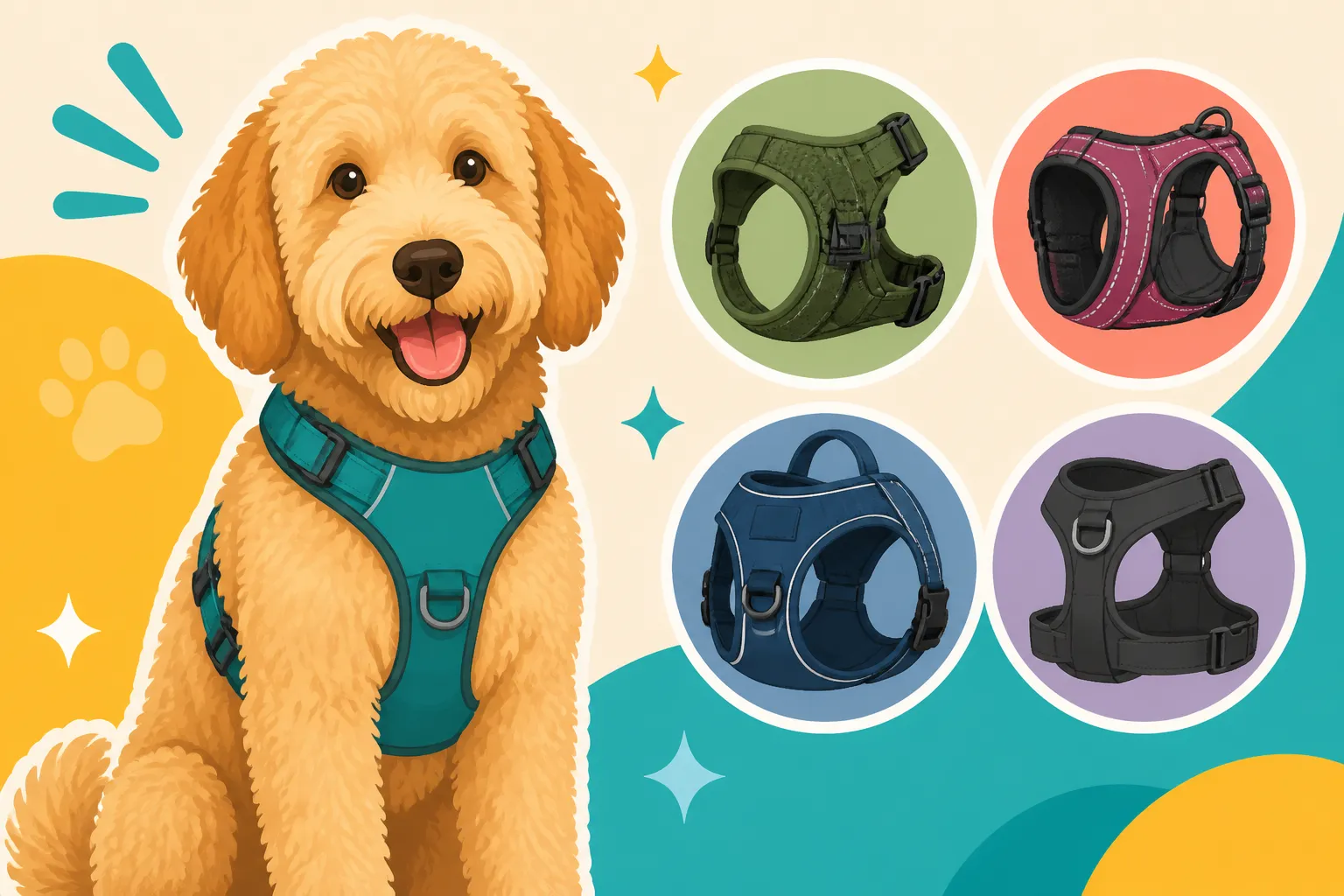
- Smooth, Soft Fabrics: Look for harnesses made from smooth nylon webbing, neoprene, or those with fleece or mesh linings, particularly in areas that touch the sensitive underbelly and armpits. These materials create less friction. Think about the difference between rubbing sandpaper and silk against your skin – that's the kind of difference it makes for your Goldendoodle's coat.
- Breathability: Goldendoodles have thick coats, and some can even have a dense woolly texture. Breathable materials help prevent overheating, especially on warmer days or during vigorous activity. Trapped heat and moisture can exacerbate skin issues under a thick coat, so a material that allows air circulation is a big plus.
- Avoid Rough or Stiff Materials: Steer clear of harnesses made from very stiff, coarse webbing or those with excessive stitching that could create extra friction points. Leather harnesses can be very durable, but they can also be quite stiff and heavy, potentially creating more opportunities for matting.
It's also worth considering that different Goldendoodle coats might respond differently. A Goldendoodle with a straighter, wavier coat might tolerate certain materials better than one with a dense, curly wool coat, which is particularly prone to matting. Understanding The Goldendoodle Coat Change at Eight to Twelve Months can also inform your choices, as the adult coat is typically denser and more prone to tangles than the puppy fluff.
Design and Fit for a Goldendoodle's Build
The harness design determines where the pressure is distributed and how much contact it has with the coat. This is crucial for both comfort and mat prevention.
- Y-Front (or "H-Style") Harnesses: These are often considered the gold standard for Goldendoodles. They form a 'Y' shape over the dog's chest, allowing for full range of motion in the shoulders and leaving the trachea free. The straps typically sit further back from the armpits, reducing rubbing. This design is also great for preventing pressure on the delicate neck area, which is vital if your Goldendoodle is prone to pulling. They often distribute pressure more evenly across the chest and shoulders, which is ideal for a growing puppy or an active adult. Many options available on Amazon feature this Y-front design, often with soft padding.
- Step-In Harnesses: While popular for smaller breeds, step-in harnesses can be less ideal for Goldendoodles. They sometimes have more straps that crisscross the chest and underbelly, increasing the surface area for potential friction and matting. They also might not offer the same level of control for larger, stronger Goldendoodles.
- Back-Clip vs. Front-Clip: We’ll delve into these more later, but understand that the clip placement affects how the harness functions. A front-clip harness (where the leash attaches at the chest) can be very helpful for Goldendoodle Leash Manners by Size and reducing pulling, while a back-clip (leash attaches at the back) is often preferred for dogs who walk nicely on a loose leash. Some harnesses even offer both.
No matter the style, ensure the harness is highly adjustable. Goldendoodles vary widely in size, even within the same litter, and puppies grow incredibly fast. You'll need to adjust the harness regularly to ensure a snug, but not tight, fit.
Avoiding Pressure Points and Promoting Comfort
A good harness should never restrict your Goldendoodle's natural movement or cause discomfort.
- Clearance from Armpits: This is perhaps the most critical point for Goldendoodles. The straps should sit far enough behind the armpits to prevent chafing and matting. If the harness rubs directly in the armpit area, it will quickly create painful raw spots and mats. You should be able to comfortably slide two fingers under any strap that sits near the armpit.
- No Throat Pressure: As mentioned, avoid harnesses that put any pressure on the throat or trachea. The design should channel all pulling force to the chest and shoulders, protecting your dog's delicate neck. This is especially important if you have a Goldendoodle who likes to leap or lunge occasionally.
- Even Weight Distribution: A well-designed harness will distribute any pressure evenly across the strongest parts of your dog's body – primarily the chest and shoulders. This prevents concentrated pressure on any single point, which can be uncomfortable or even lead to injury over time. For an active Goldendoodle, especially one who enjoys running or hiking, proper weight distribution is essential for long-term joint health.
Top Harness Types Recommended for Goldendoodles
Now that we know what to look for, let's talk about the specific types of harnesses that generally work best for Goldendoodles, considering their diverse personalities and activity levels.
Front-Clip Harnesses for Pullers
If your Goldendoodle is still learning their leash manners and tends to pull, a front-clip harness can be a game-changer. The leash attaches to a ring on the dog's chest, rather than on their back.
- How They Work: When your Goldendoodle pulls, the leash attachment point on the chest gently redirects them to the side, turning their body back towards you. This makes it difficult for them to pull forward effectively, naturally discouraging the behavior. It's a fantastic training tool for teaching a loose-leash walk without putting pressure on their neck.
- Pros for Goldendoodles: They offer much better control for strong Goldendoodles, especially puppies who are full of exuberance. They prevent neck strain and are an excellent alternative to choke or prong collars, which are generally not recommended for Goldendoodles due to their sensitive nature and coat. Many effective front-clip harnesses can be found on Amazon, often incorporating soft, breathable materials that are kind to the coat.
- Cons to Consider: Some front-clip harnesses, if not designed well, can shift or twist on the dog's body, potentially causing a strap to rub in the armpit or on the shoulder. It's vital to ensure a snug fit and check for proper alignment during walks. They also don't offer the same immediate "stop" as a back-clip harness if your dog suddenly bolts, as the redirection is more gradual. However, for a Goldendoodle puppy, integrating a front-clip harness with training methods from programs like BAXTER & Bella can be highly effective in establishing good leash habits early on.
Back-Clip Harnesses for Casual Walkers
For Goldendoodles who have mastered loose-leash walking or who aren't strong pullers, a back-clip harness is a comfortable and convenient option. The leash attaches to a ring on the dog's back, usually between the shoulder blades.
- Best for Minimal Pulling: If your Goldendoodle strolls politely by your side, a back-clip harness is perfectly fine. It allows for natural movement and doesn't interfere with their gait. Many owners find them easier to put on and take off than front-clip designs.
- Pros for Goldendoodles: They typically have fewer straps crossing the chest, potentially reducing friction points. They're great for relaxed walks, hikes where your dog isn't constantly straining, or even just for attaching ID tags when you're out and about. If your Goldendoodle is a senior or has joint issues, a back-clip harness can be less intrusive on their body.
- Cons to Consider: For dogs who do pull, a back-clip harness can actually engage their opposition reflex, meaning they'll pull harder. It doesn't offer the same leverage or redirection as a front-clip, so it's not ideal for training a consistent loose leash. They can also be easier for some determined Goldendoodles to back out of if the fit isn't perfect, especially if they get spooked or try to slip away. This is where attention to proper sizing and the 'two-finger rule' becomes paramount.
Dual-Clip or Multi-Functional Harnesses
For the best of both worlds, a dual-clip or multi-functional harness offers versatility for various situations. These harnesses typically have both a front-clip attachment and a back-clip attachment.
- Versatility is Key: You can use the front clip for training sessions or walks where you anticipate your Goldendoodle might be excited and prone to pulling, like passing a dog park. Then, for a relaxed evening stroll in a familiar neighborhood, you can switch to the back clip. This saves you from needing multiple harnesses for different scenarios.
- Ideal for Training Goldendoodle Puppies: A dual-clip harness is fantastic for Goldendoodle puppies who are still learning the ropes. You can start with the front clip to establish good leash manners, then transition to the back clip as they become more reliable. This flexibility is invaluable during those crucial early months of Training a Goldendoodle Puppy Before Its Coat Changes.
- Adaptable to Changing Needs: As your Goldendoodle matures, their pulling habits might change. A dual-clip harness can adapt with them. If you take them hiking off-leash in a safe area, the back clip can hold a locator or ID tag without getting in the way.
Sizing, Fitting, and Maintenance for a Healthy Coat
Getting the right harness is only half the battle; ensuring it fits perfectly and maintaining it properly are just as critical for your Goldendoodle's comfort and coat health. A harness that fits like a glove can truly enhance your dog's quality of life.
How to Measure Your Goldendoodle Correctly
Don't just guess or rely on your dog's estimated weight. Goldendoodles come in a huge range of sizes – standard, medium, mini, and toy – and their proportions can vary.
- Chest Girth: This is the most important measurement. Use a soft tape measure (the kind you use for sewing) and wrap it around the widest part of your Goldendoodle’s chest, just behind their front legs. Make sure the tape is snug but not tight. Write down this number.
- Neck Circumference: Measure around the base of your Goldendoodle’s neck, where a collar would naturally sit. This is less critical for Y-front harnesses that avoid the throat, but still good to have.
- Length/Back Strap: Some harnesses require a measurement from the base of the neck to mid-back. Check the specific sizing chart for the harness you're considering.
- The Two-Finger Rule: Once the harness is on, you should be able to comfortably slide two fingers flat underneath any strap. If you can’t, it’s too tight. If you can fit more than two, it’s too loose and could cause chafing or allow your Goldendoodle to escape.
- Re-measure Regularly: Goldendoodle puppies grow incredibly fast, sometimes putting on several pounds a week! Re-measure them every few weeks. Even adult Goldendoodles can gain or lose weight, which will affect the fit. For larger Goldendoodles, monitoring Goldendoodle Weight Gain and the Strain on Joints is important, and harness fit plays a small but significant role.
When buying online from places like Amazon, always check the specific brand's sizing chart. They can vary dramatically from one manufacturer to another.
Spotting a Bad Fit and Preventing Coat Damage
Even with careful measuring, sometimes a harness just doesn't work out. Knowing the signs of a bad fit can save your Goldendoodle a lot of discomfort and prevent coat issues.
- Redness or Chafing: After a walk, remove the harness and inspect your Goldendoodle’s skin, especially in the armpit area, behind the shoulders, and across the chest. Any redness, irritation, or hair loss indicates rubbing. This is a clear sign the harness doesn't fit correctly or the material is too abrasive.
- Mats and Tangles: As we discussed, mats are a primary concern. If you notice persistent tangles or actual mats forming specifically where the harness straps lie, particularly after only short periods of wear, it’s a strong indication that the harness is causing too much friction. This issue can worsen significantly if you don't keep up with Brushing a Goldendoodle Three Times a Week.
- Behavioral Cues: Your Goldendoodle might try to tell you something is wrong. They might scratch excessively at the harness area, rub against furniture, or show reluctance to have the harness put on. They might walk stiffly or try to bite at the straps. Always pay attention to these subtle (or not-so-subtle) signals.
- Restricted Movement: Watch your Goldendoodle walk and run in the harness. Does it seem to impede their natural stride? Are their shoulders moving freely? A well-fitting harness should allow for full, unrestricted movement.
If you spot any of these issues, it's time to adjust the harness, try a different style, or explore different materials. Don't force your Goldendoodle to tolerate an uncomfortable fit.
Cleaning and Care to Protect the Harness and Coat
A clean harness is a happy harness, and it's also better for your Goldendoodle's coat and skin.
- Regular Cleaning: Harnesses can get dirty quickly, picking up mud, sweat, and environmental allergens. This grime can then rub back onto your Goldendoodle's coat and skin, potentially causing irritation or infection. Most nylon or fabric harnesses can be hand-washed with mild soap and water, or even tossed into a mesh laundry bag on a gentle cycle in the washing machine. Let it air dry completely. This proactive cleaning ties into the broader routine of Goldendoodle Grooming Every Six Weeks Adds Up.
- Thorough Drying: Ensure the harness is completely dry before putting it back on your Goldendoodle. A damp harness can create a breeding ground for bacteria or yeast, which can lead to skin issues, especially under a thick Goldendoodle coat.
- Inspect for Wear and Tear: Regularly check the harness for frayed straps, loose stitching, or damaged buckles. A worn harness is less secure and could fail during a walk, putting your Goldendoodle at risk.
- Remove When Not in Use: Unless there’s a specific reason, don’t leave the harness on your Goldendoodle when they’re unsupervised or just lounging around the house. This reduces constant friction on the coat and gives their skin a break. It also minimizes the chance of the harness snagging on something or becoming a chew toy.
By being mindful of these details, you'll ensure your Goldendoodle's harness is a tool for enjoyable adventures, not a source of discomfort or matting. Choosing wisely and maintaining regularly means more happy walks and less time battling tangles!
| Harness Feature | Benefit for Goldendoodles | What to Look For | Avoid If |
|---|---|---|---|
| Material | Prevents friction, reduces matting, comfortable | Smooth nylon, fleece-lined, neoprene, breathable mesh | Coarse, stiff, rough webbing with sharp edges |
| Design (Shape) | Full range of motion, no throat pressure, even weight distribution | Y-front (H-style) harness | Horizontal chest strap, step-in with too many straps |
| Clip Placement | Provides control, adapts to training needs | Front-clip for pulling, back-clip for loose leash, dual-clip for versatility | Only back-clip if your dog pulls |
| Adjustability | Accommodates growth, ensures snug fit | Multiple adjustment points around neck and chest | Limited adjustability, one-size-fits-most |
| Armpit Clearance | Prevents chafing and matting | Straps sit well behind armpits, 'two-finger rule' applies | Straps rub directly in the armpit region |
Disclaimer
This article is for general informational purposes only and does not constitute professional advice. Laws, prices and regulations vary by location and change over time. Consult a qualified professional for guidance on your specific situation.