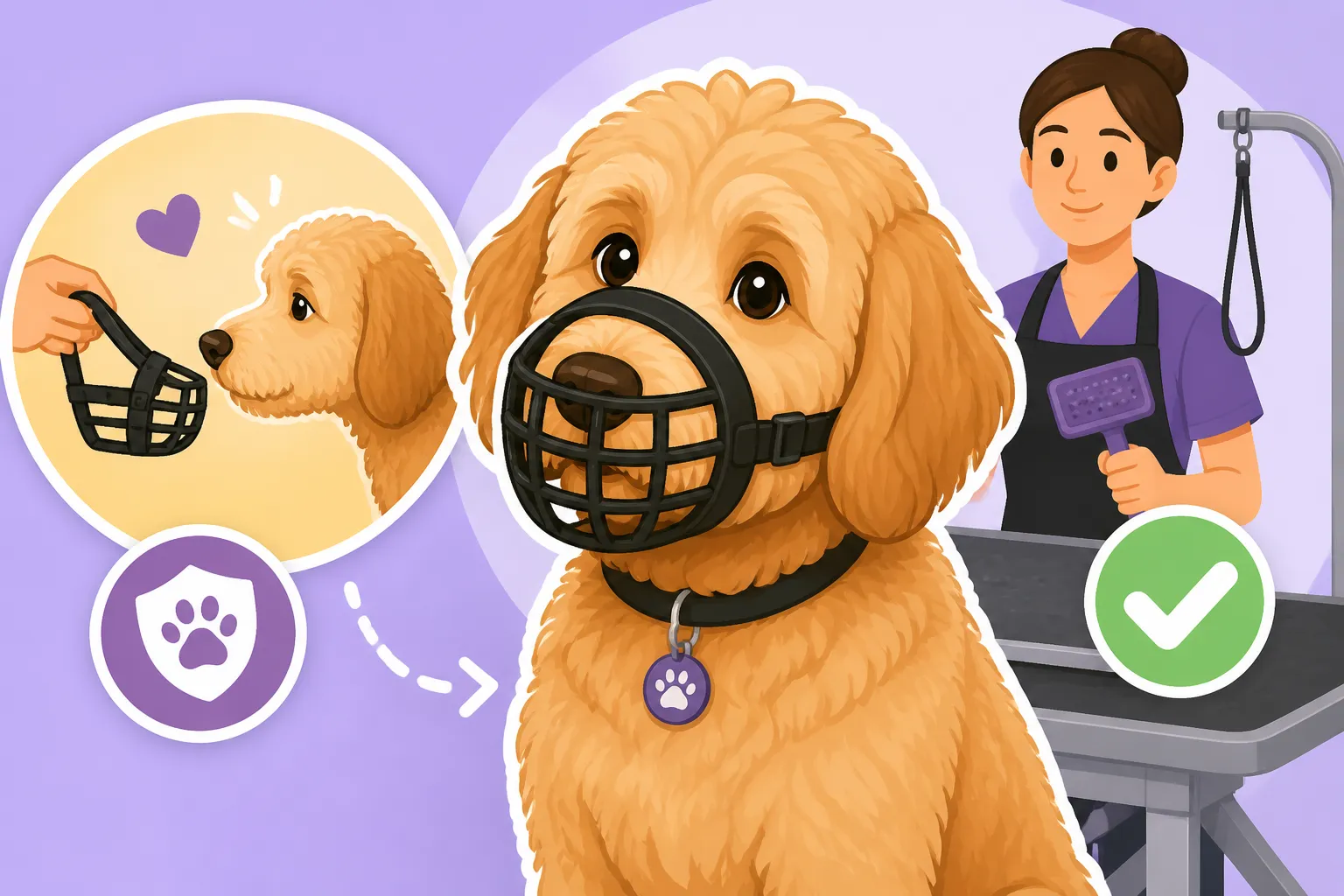
Muzzle Training a Goldendoodle for the Groomer
It’s a scenario many Goldendoodle owners know all too well: your sweet, goofy companion is a dream at home, but the moment the groomer’s clippers come out, they transform into a wriggly, fearful mess, sometimes even resorting to nips or bites. This guide is all about equipping you with the kind, patient, and effective method of muzzle training, turning those stressful grooming appointments into safer, calmer experiences for everyone involved.
Why Muzzle Training Becomes Essential for Goldendoodles
Let’s be honest, few dogs truly love being groomed, but for Goldendoodles, it’s not just a preference; it's a necessity. Their unique coats, while beautiful, demand consistent care. When grooming becomes a battle, not only is your dog stressed, but they could also be at risk of pain from matting, and groomers might have to refuse services.
The Goldendoodle Grooming Challenge: Their Coats Demand It
Goldendoodles are often adored for their gorgeous, low-shedding coats, which can range from wavy to curly. But here's the kicker: these coats are absolute mat magnets. Without regular, thorough brushing down to the skin, mats form quickly, especially behind the ears, in the armpits, and around the collar. Imagine having a tight knot constantly pulling at your skin – that's what a mat feels like for your dog. When a groomer tries to work through or remove these mats, it can be incredibly uncomfortable, even painful, leading to a perfectly understandable defensive reaction from your Goldendoodle.
We talk a lot about Goldendoodle Grooming as the Biggest Line in the Budget for a reason – it’s intensive work. A well-maintained coat makes grooming much easier, but even then, sensitive areas like paws, faces, and sanitary regions can still trigger anxiety. The buzzing sound of clippers, the unfamiliar sensation of scissors, and being handled by a stranger can all contribute to a Goldendoodle’s apprehension. When a groomer is trying to carefully trim around delicate eyes or clip nails, a sudden lunge or snap can be dangerous for both the dog and the professional. Muzzle training, approached correctly, isn't about control through force, but about building confidence and safety for everyone involved when those necessary tasks come around.
Fear, Pain, and the Groomer's Experience: How It Escalates
For many dogs, a negative grooming experience isn't forgotten easily. If they've had mats pulled, been startled by a clipper buzz, or felt vulnerable on a high grooming table, those feelings of fear can intensify with each subsequent visit. What might start as mild anxiety can escalate into full-blown panic, growling, or even biting. It’s crucial to understand that this behavior isn't usually "aggression" in the traditional sense, but often a fear response – your Goldendoodle is trying to communicate that they are scared and want the perceived threat to stop.
Groomers are professionals, but their primary concern is safety, both for themselves and your dog. They are often trying to work quickly and efficiently in a busy environment. If a dog is constantly thrashing, snapping, or trying to bite, it creates a dangerous situation. Imagine trying to use sharp scissors or a powerful clipper on a moving target that is actively trying to nip you. It’s simply not safe, and it’s not fair to the groomer or your dog. Many groomers will try their best with patience and gentle handling, but there comes a point where, for everyone’s well-being, they have to consider refusing service. This isn't a judgment on your dog; it's a practical reality of their job.
When Groomers Have to Refuse Service
It's a heartbreaking call to get: "We can't groom Fido anymore." But it happens, especially with Goldendoodles who haven't been adequately prepared for the grooming process. Why Groomers Refuse Some Goldendoodles often boils down to safety concerns. A groomer has a right to feel safe in their workplace, and they cannot risk injury from a dog that is consistently exhibiting fear-based aggression. They might also worry about accidentally cutting a dog that is thrashing violently, which is a devastating outcome for everyone.
Refusal of service doesn't mean your Goldendoodle is a "bad" dog; it simply means their current level of anxiety around grooming is beyond what the groomer can safely manage. This leaves owners in a tough spot: how do you maintain a Goldendoodle's coat if no one will groom them? This is where proactive muzzle training comes in. It's not about forcing your dog into a situation they hate, but about teaching them a tool that allows necessary care to happen safely, while simultaneously working on their underlying comfort with grooming. It gives groomers the confidence to work, knowing they have a layer of protection, and it gives you a pathway to get your dog the essential care they need.
Choosing the Right Muzzle for Positive Training
When we talk about muzzle training, the type of muzzle you choose is paramount. It’s not just about stopping a bite; it’s about ensuring your Goldendoodle is comfortable, can breathe freely, and can still participate in positive reinforcement during the training process.
Basket Muzzles Are Your Best Friend (and Your Dog's!)
Forget those tight, cloth "grooming muzzles" that essentially strap a dog's mouth shut. Those are for very short-term, emergency situations and prevent your Goldendoodle from panting, drinking, or taking treats – all things that are absolutely essential for compassionate, positive muzzle training. What you need is a basket muzzle. These muzzles, often made from wire, plastic, or sometimes a flexible silicone material, allow your dog to fully open their mouth to pant (crucial for cooling!), drink water, and, most importantly, receive treats. This ability to pant and take treats is what makes basket muzzles the only ethical choice for long-term wear, training, or during grooming sessions.
When choosing one, you'll find various options on platforms like Amazon. Look for features like strong, yet lightweight materials, adjustable straps for a secure fit, and ample space around the snout. Some basket muzzles even come with padding over the nose bridge for added comfort. The goal is to make it as pleasant an experience as possible for your Goldendoodle, not a restrictive or punishment-based one.
Sizing and Fit: More Crucial Than You Think
Getting the right size is non-negotiable. A muzzle that's too small will pinch and be uncomfortable, potentially causing rubbing or chafing. One that's too large could allow your Goldendoodle to remove it, or worse, still be able to bite. You'll need two key measurements for most basket muzzles:
- Length: Measure from the tip of your Goldendoodle's nose to the stop (the point where the muzzle meets their forehead, between the eyes). The muzzle should be about a quarter to a half-inch longer than this measurement to allow for panting space.
- Circumference: Measure the circumference of your Goldendoodle's muzzle at its widest point, usually just below the eyes. The muzzle should be about one to two inches wider than this measurement to allow for panting and movement.
Always double-check the manufacturer's sizing guide, as they can vary. When it arrives, test it carefully. It should fit snugly enough that your Goldendoodle can't paw it off, but loose enough that it doesn't rub or restrict their breathing, especially when panting. Don't forget to adjust the head strap so it sits securely behind the ears. A properly fitted muzzle will look a bit big at first glance because it provides that essential panting room, but trust me, that space is vital.
A Step-by-Step Guide to Muzzle Training Your Goldendoodle
Muzzle training isn't a quick fix; it's a gradual process built on positive association. Think of it less like "muzzling" and more like "mask training" – making it a normal, even pleasant, part of their routine.
Making the Muzzle a Treat Dispenser
The absolute first step is to transform the muzzle from a strange object into a magical treat dispenser. Start by simply holding the muzzle in your hand. Without trying to put it on, bring it towards your Goldendoodle and drop a high-value treat (think small pieces of cheese, cooked chicken, or liver paste) through the opening. The moment they sniff or interact with it, a treat appears! Repeat this many, many times over a few days. You want your Goldendoodle to see the muzzle and immediately think, "Treats!"
You can also smear a bit of peanut butter or cream cheese inside the front of the basket. Hold it out and let your Goldendoodle stick their nose in to lick it clean. This creates an immediate, positive, and rewarding experience inside the muzzle. The key here is that the muzzle itself predicts good things. Don't rush this stage. You want them happily investigating it.
Gradual Introduction: From Sniff to Secure
Once your Goldendoodle is enthusiastically nudging their nose into the muzzle for treats, you can start the gradual process of securing it.
- Nose in, Treat, Out: Continue to smear treats or hold them inside the muzzle. As your Goldendoodle pushes their nose in, say "Yes!" or "Good!" and give the treat. Then immediately take the muzzle away. Keep these sessions very short – just a few seconds.
- Buckle for a Second: Once your Goldendoodle is comfortable putting their nose in, try to buckle the straps for literally one second, then unbuckle, give a treat, and remove the muzzle. This might feel painstakingly slow, but it's crucial. We're building positive associations in tiny increments.
- Increase Duration: Gradually increase the time the muzzle is buckled, always pairing it with treats. Buckle, give a treat, unbuckle, remove. Then buckle, give a treat, count to two, unbuckle, remove, give another treat. Build up to 10-15 seconds, then a minute, then five minutes. During these longer durations, continuously feed treats through the muzzle's opening. Make it a constant stream of good things!
- Pair with Activities: Once your Goldendoodle can wear it for a few minutes happily, start integrating it into short, positive activities. Put the muzzle on, go for a very short walk, play a brief game of fetch, or do a quick training session where they still receive treats through the muzzle. The goal is for them to forget they're even wearing it because they're doing something fun.
For those looking for structured guidance, programs like BAXTER & Bella often offer step-by-step videos and support for complex training behaviors, which can be invaluable during this process. Remember, consistency is key, and never punish your dog for resisting the muzzle. If they pull away, simply reset and make the next attempt even easier and more rewarding.
Practicing for Grooming Sessions at Home
The real test comes when you integrate the muzzle into mock grooming sessions at home. Once your Goldendoodle is reliably comfortable wearing the muzzle for 15-20 minutes, start practicing handling them while they wear it.
- Touch and Treat: While your Goldendoodle is muzzled and receiving treats, gently touch their paws, lift their ears, and run a brush over their body. The goal isn't to do a full groom, but to desensitize them to the sensations they'll experience at the groomer.
- Introduce Tools: Gradually bring out the actual grooming tools – the clippers, the comb, the nail grinders. Let them see and hear the tools from a distance while muzzled and receiving treats. Then, with the clippers off, gently touch them to your Goldendoodle's body. Turn the clippers on (away from your dog at first), let them hear the sound, then gradually bring them closer, always associating it with treats. This directly addresses fears of things like Desensitising a Goldendoodle to Clippers.
- Table Practice: If your Goldendoodle will be groomed on a table, practice having them stand or lie on a raised surface at home while wearing the muzzle and being handled. This helps them get used to the elevated position and the feeling of stability.
The more positive practice you do at home, the better equipped your Goldendoodle will be for the actual groomer. This consistent, positive exposure helps build their tolerance, as outlined in articles about Building a Goldendoodle's Tolerance for Two Hours of grooming.
When to Involve a Professional Trainer
While many owners can successfully muzzle train their Goldendoodle with patience and consistency, there are times when professional help is invaluable. If you find your Goldendoodle is experiencing extreme stress or panic during the training, or if their fear-based reactions are particularly intense, a certified professional dog trainer or behaviorist can offer tailored guidance.
A professional can assess your dog's specific triggers and anxieties, developing a customized training plan that might include counter-conditioning techniques, relaxation protocols, or even medication in severe cases (in consultation with your vet). They can also guide you on proper technique, ensuring you're not inadvertently making the situation worse. Online resources like BAXTER & Bella can also provide a framework for these challenges, but for severe cases, hands-on, one-on-one help might be necessary. It's an investment in your dog's long-term comfort and safety, and ultimately, it makes essential care like grooming much more manageable.
Common Pitfalls and Troubleshooting Goldendoodle Muzzle Training
Even with the best intentions, you might hit a snag or two during muzzle training. It's completely normal! Understanding common mistakes can help you navigate them more effectively.
Rushing the Process: The Biggest Mistake
This cannot be stressed enough: rushing is the enemy of successful muzzle training. Our Goldendoodles are intelligent and sensitive creatures, often eager to please, as discussed in Training a Goldendoodle That Wants to Please You, but pushing them too fast will only create negative associations and set you back further. If you try to force the muzzle on, or if you immediately try to buckle it for a long period, your Goldendoodle will learn to see it as a scary, uncomfortable item rather than a neutral, or even positive, one.
Instead, commit to very short, frequent training sessions – sometimes as little as 30 seconds to a minute, several times a day. End each session on a positive note, with your Goldendoodle still happy and eager for more. If they show any signs of stress – yawning, lip licking, looking away, or trying to paw it off – you've gone too far, too fast. Back up to an easier step where they were comfortable and build from there. Slow and steady truly wins this race, building a solid foundation of trust and comfort.
Associating the Muzzle with Punishment
A muzzle should never be used as a form of punishment. If your Goldendoodle misbehaves, you address it through appropriate training methods, not by muzzling them. Using the muzzle as a consequence for unwanted behavior will immediately create a negative association, making all your positive conditioning work utterly useless. Your Goldendoodle will come to dread the sight of the muzzle, making grooming, vet visits, or any other necessary muzzled activity incredibly stressful, if not impossible.
Instead, the muzzle should always predict good things. It means delicious treats are coming. It means a short, pleasant walk. It means a puzzle toy. It means a comfortable grooming session that ends quickly and with praise. It's a tool for safety and comfort, not a disciplinary device. This positive association is paramount, and it's a concept that aligns perfectly with Positive Reinforcement and Why It Suits a Goldendoodle.
Dealing with Resistance and Anxiety
Even with the most careful approach, you might encounter resistance. Your Goldendoodle might paw at the muzzle, rub their face on the carpet, or try to back away. This is their way of telling you they're uncomfortable or anxious. When this happens, it’s not a failure; it’s feedback.
- Reassess and Simplify: Go back to an earlier step where your Goldendoodle was completely comfortable. Maybe they need more sessions of just getting treats dropped into the muzzle before you try to buckle it. Maybe the duration you're asking for is too long.
- Increase Treat Value: Are your treats high-value enough? For some Goldendoodles, plain kibble just won't cut it. Break out the soft, smelly treats like cheese, hot dogs, or spray cheese. You can find many excellent training treat options on Amazon.
- Change the Environment: Sometimes, a new environment can be distracting. Try training in a quiet room with no other distractions.
- Stay Calm and Patient: Your energy is contagious. If you get frustrated, your Goldendoodle will pick up on it. Remain calm, cheerful, and patient. If you're feeling stressed, take a break and come back later.
- Consult a Professional: As mentioned, if you’re truly stuck, or if the anxiety is severe, don't hesitate to reach out to a certified professional dog trainer or veterinary behaviorist. They have the expertise to help you and your Goldendoodle through these challenges, ensuring that your dog can receive the care they need in a humane and compassionate way. After all, the goal is always to reduce stress, not increase it.
| Training Step | Duration/Frequency | Goal | Common Issue & Solution |
|---|---|---|---|
| Introduce Muzzle as Treat Dispenser | 5-10 times/day for 2-3 days | Dog happily associates muzzle with treats. | Dog ignores muzzle: Use higher-value treats. |
| Nose in, Treat, Out | 5-10 times/day for 3-5 days | Dog willingly puts nose into muzzle opening. | Dog pulls head away: Make duration shorter, use more enticing treats. |
| Buckle for 1 Second | 5-8 times/day for 3-5 days | Dog tolerates muzzle buckled for a fleeting second without fuss. | Dog paws at muzzle: Buckle, treat immediately, unbuckle. Don't let pawing become a reward for removal. |
| Gradual Duration Increase | 3-5 sessions/day, slowly building | Dog comfortable wearing muzzle for 1-5 minutes, then 10-20 minutes with continuous treats. | Dog shows stress (yawning, licking lips): Reduce duration, revert to easier step, use higher-value treats. |
| Practice with Grooming Tools | 2-3 times/week for 2-4 weeks | Dog tolerates sights/sounds of tools while muzzled. | Dog reacts to clippers: Start with clippers off, then on at a distance, gradually closer with treats. |
| Mock Grooming Sessions | Weekly, as needed | Dog allows handling (paws, ears, brushing) while muzzled for extended periods. | Dog still struggles with handling: Increase positive reinforcement, break down handling into smaller steps (e.g., one paw). |
Disclaimer
This article is for general informational purposes only and does not constitute professional advice. Laws, prices and regulations vary by location and change over time. Consult a qualified professional for guidance on your specific situation.