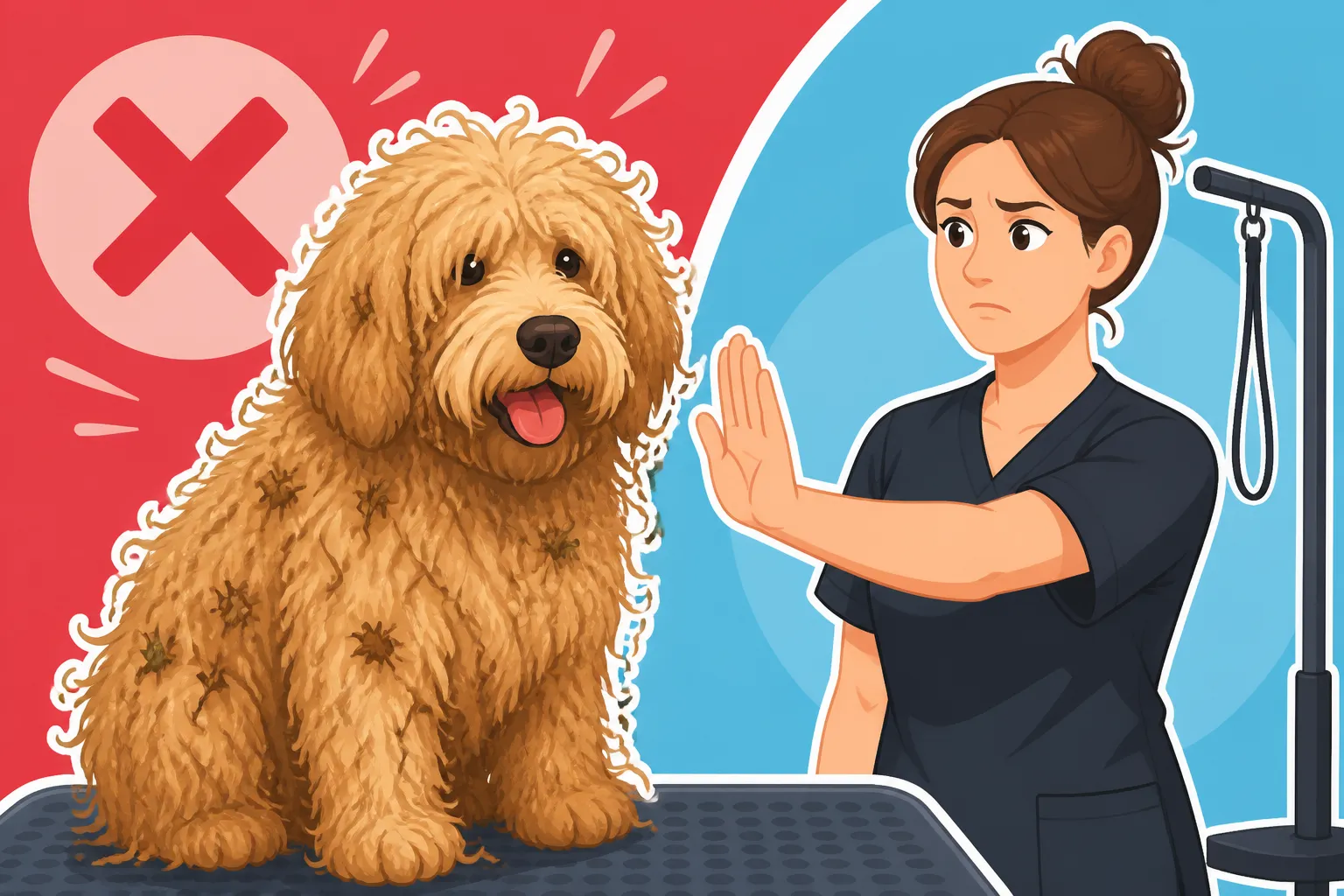
Why Groomers Refuse Some Goldendoodles
It’s a truly disheartening experience to hear that a groomer has refused to take your beloved Goldendoodle, or worse, has told you they simply can’t finish the job. You might feel frustrated, embarrassed, or even a little defensive, wondering what on earth went wrong. The truth is, groomers aren't turning away Goldendoodles to be difficult or judgmental; they're often doing so for very real, practical, and sometimes safety-related reasons that directly impact your dog's well-being, their own safety, and the efficiency of their salon. This guide will walk you through the most common reasons Goldendoodles are turned away from grooming appointments and, more importantly, equip you with the knowledge and strategies to ensure your furry friend is always welcomed with open arms (and clippers!).
The Core Reasons Groomers Turn Goldendoodles Away
When a groomer says they can’t work with a Goldendoodle, it almost always boils down to a few key issues that make the grooming process unsafe, overly stressful, or simply impossible within a standard appointment slot. Understanding these fundamental challenges is the first step toward preventing them.
Matting: The Biggest Culprit
Let's be brutally honest: matting is, by far, the number one reason groomers refuse Goldendoodles. Many prospective Goldendoodle owners are drawn to the breed by the promise of a "hypoallergenic" and low-shedding coat. While some Goldendoodles do shed less, the trade-off is often a coat that requires intense, consistent maintenance to prevent matting. A Goldendoodle's coat, especially the curly or wool-like types, is a magnet for tangles. When these tangles aren't brushed out regularly and thoroughly, they quickly compact into felt-like mats that pull on the skin, causing pain, discomfort, and even skin infections.
Groomers face a difficult ethical and practical dilemma with matted dogs. Firstly, shaving a matted coat is incredibly dangerous. The mats sit so close to the skin that it's very easy to nick or cut the dog, even for experienced groomers. Imagine trying to shave hair that's plastered to your skin with superglue – that's what shaving a matted dog can feel like. Secondly, the process is extremely time-consuming and labor-intensive, often requiring specialized blades and extra care, which can blow past the typical appointment length and disrupt the groomer's entire schedule. Thirdly, it's often a painful and terrifying experience for the dog. A groomer's primary goal is to ensure the dog has a positive, or at least tolerable, experience. Forcing a matted shave can traumatize a dog, making future grooming impossible. Many groomers would rather refuse the dog than put it through such an ordeal, or risk injury to themselves or the dog. This is why you often hear about Dematting Surcharges on a Goldendoodle or groomers simply refusing to demat. The cost and effort involved make it prohibitive. It really starts with consistent home care, as explained in Brushing a Goldendoodle Often Enough to Stop Matting.
Lack of Grooming Acclimation and Training
Another significant hurdle for groomers is a Goldendoodle that simply isn't used to the grooming process. Many Goldendoodle puppies, with their charming, cuddly demeanor, don't get introduced to the sights, sounds, and sensations of grooming early enough. This isn't just about brushing; it’s about getting them comfortable with being touched all over, having their paws handled, their ears cleaned, and hearing the whir of clippers and the blast of a high-velocity dryer.
Without this early acclimation, a Goldendoodle can quickly become stressed, fearful, or even aggressive on the grooming table. They might struggle, bite, try to escape, or freeze up completely. For a groomer, this isn't just difficult; it's a safety hazard. A squirming dog can be accidentally cut by sharp tools, and a fearful dog might bite out of self-preservation. Groomers are skilled professionals, but they are not dog trainers or behaviorists in the same vein. Their job is to groom, not to wrestle an untrained dog into submission. If a dog is too stressed or dangerous to safely complete the groom, a responsible groomer will refuse to continue. Training a Goldendoodle Puppy for the Grooming Table is crucial for avoiding these issues later on.
Behavior Challenges on the Table
Beyond simply being unacclimated, some Goldendoodles present specific behavioral challenges that make grooming difficult or impossible. These can include:
- Extreme Fear or Anxiety: Some Goldendoodles, due to their Poodle heritage, can be quite sensitive. The new environment, the strange smells, the loud noises of the salon, and the unfamiliar person touching them can trigger intense fear. This can manifest as shaking, excessive drooling, panic attacks, or even aggressive displays borne from terror.
- Aggression: While Goldendoodles are generally known for their friendly nature, fear aggression or resource guarding (of their own body) can surface during grooming, especially if they are in pain from mats or have had negative past experiences. A bite to a groomer's hand or face is a serious incident that no professional should have to endure.
- Over-Excitement/Lack of Impulse Control: On the flip side, some Goldendoodles are simply too friendly and wiggly. They might jump, lick excessively, or refuse to stand still for more than a second. While this seems less severe than aggression, it still makes precise grooming tasks, like trimming around the eyes or paws, incredibly difficult and risky. Imagine trying to trim a child's hair who won't stop bouncing! This ties into Goldendoodle Behavior Problems That Start in Puppyhood and the importance of early training.
It's important to remember that groomers love dogs, and turning one away is often a last resort, done with a heavy heart but for valid reasons concerning safety and welfare.
Recognizing the Signs Your Goldendoodle Might Be "Difficult"
As an owner, you're in the best position to recognize if your Goldendoodle is developing habits that could lead to trouble at the groomer's. Being proactive about these signs can save you and your dog a lot of stress down the line.
Reluctance and Resistance During Home Care
Your Goldendoodle’s behavior during home grooming is a huge indicator of how they'll fare at the salon. Do they dart away when you bring out the brush? Do they snap or growl when you try to touch their paws or clean their ears? Do they treat the brush like a chew toy instead of a grooming tool? These aren't just minor quirks; they're clear signals that your dog isn't comfortable with grooming.
| Grooming Task | Goldendoodle Behavior | Potential Problem | What It Means for the Groomer |
|---|---|---|---|
| Brushing | Runs away, chews brush, snaps, rolls onto back | Dislikes being handled, coat sensitivity, fear of tools | Difficulty line brushing, risk of nicks, stressful experience |
| Paw Handling | Pulls away, growls, bites, licks excessively | Sensitive paws, fear of restraint | Unable to trim nails or paw pads, high risk of biting |
| Ear Cleaning | Head shakes, pulls away, whines, nips | Ear sensitivity, pain, fear of tools | Difficulty cleaning deep ear canals, potential for infection |
| Face Trimming | Avoids eye contact, turns head, struggles, tries to bite | Sensitive face, fear of scissors/clippers | Inability to clear hair from eyes, risk of eye injury |
| Clipper Noise | Panics, shakes, tries to hide | Noise sensitivity, past negative experience | Cannot use clippers for body or sanitary trims |
| Drying | Fear of loud noises, tries to escape | Noise sensitivity, fear of powerful air | Cannot dry coat thoroughly, leading to matting/skin issues |
If you're struggling to brush your Goldendoodle without a fight, imagine how much harder it is for a groomer who only sees your dog every few weeks. These home struggles are direct precursors to grooming refusals. Learning Handling a Goldendoodle's Feet, Face and Ears from a young age is paramount.
Over-Excitement or Fear at the Salon
How does your Goldendoodle react when you arrive at the grooming salon? Do they pull frantically on the leash, barking and whining with uncontrolled excitement, trying to greet every dog and person in sight? Or do they become a trembling mess, tail tucked, trying to hide behind your legs, perhaps even having an "accident" on the floor?
Both extremes are problematic for a groomer. The overly excited Goldendoodle, while seemingly friendly, can be a handful. They might jump on the groomer, refuse to settle on the table, and generally make it difficult to perform precise work safely. Their sheer enthusiasm can be exhausting and disruptive in a busy salon. On the other hand, a fearful or anxious Goldendoodle will likely have an incredibly stressful time. This stress can escalate to panic or even fear-based aggression, making any grooming attempt unsafe for both the dog and the groomer. Many groomers prioritize a calm and positive environment, and a dog that arrives already in a state of high arousal or intense fear can disrupt that for everyone.
A History of Grooming Incidents
Sometimes, the writing is already on the wall. Has your Goldendoodle been sent home unfinished from a previous groomer? Have you received calls mid-appointment describing how uncooperative your dog is? Have you noticed they come home particularly stressed or withdrawn after a groom? These aren't isolated incidents; they're a pattern that indicates your Goldendoodle isn't coping well with the grooming process.
Groomers often share notes or remember "difficult" clients. If your Goldendoodle has a reputation, even if it's informal, it can make it harder to find a groomer willing to take them on. It's not about being mean; it's about managing risk and maintaining a professional environment. A groomer needs to protect their hands, their business, and the well-being of all the animals in their care. Ignoring these past incidents is like ignoring a leaky faucet – it's only going to get worse.
Proactive Steps to Ensure Your Goldendoodle Is a Groomer's Delight
The good news is that most grooming challenges can be prevented or significantly improved with consistent effort. By investing time and patience, you can turn your Goldendoodle into a model client that groomers adore.
Starting Early with Positive Grooming Experiences
The key to a well-behaved Goldendoodle on the grooming table begins in puppyhood. As soon as you bring your puppy home, start introducing them to grooming tools and sensations. This isn't about doing a full groom, but rather about creating positive associations.
- Gentle Touch: Regularly touch your puppy's paws, ears, tail, and mouth. Make it a game, offering high-value treats and praise. This teaches them that being handled is a pleasant experience.
- Brush Introduction: Introduce a soft brush (like a slicker brush from Amazon that's appropriate for their puppy coat) for short, frequent sessions. Keep it light, fun, and always end on a positive note. Build up duration gradually.
- Sound Acclimation: Turn on clippers (without touching the dog with them yet) or a hairdryer in another room while your puppy is eating or playing. Gradually move them closer. The goal is for these sounds to become background noise, not something startling. Getting a Goldendoodle Used to Clipper Noise is a critical step.
- "Table Time": If you have a sturdy table, practice having your puppy stand on it for short periods. Reward them for standing calmly. This simulates the grooming table experience.
- First Professional Visit: Don't wait until your Goldendoodle is a year old and matted for their first professional groom. Many groomers offer "puppy intro" sessions where the puppy simply gets used to the salon environment, hears the sounds, gets a bath, and perhaps a trim around the eyes and paws. This is invaluable for building positive experiences.
Remember, every interaction should be positive. If your puppy shows fear, stop, comfort them, and try again later with a less intense approach. The goal is to build confidence, not to force compliance. The principles of Positive Reinforcement and Why It Suits a Goldendoodle are key here.
Consistent Home Grooming Routine
Between professional appointments, you are your Goldendoodle's primary groomer. A professional groom every 6-8 weeks is essential, but it won't prevent matting if you're not doing your part at home. This is especially true given The Goldendoodle Coat Change at Eight to Twelve Months when their puppy coat gives way to a more demanding adult coat.
- Daily Brushing: For most Goldendoodle coat types, daily brushing is non-negotiable, especially behind the ears, in the armpits, and where harnesses rub. You need a good quality slicker brush and a metal comb. The brush smooths, and the comb finds the mats the brush misses. Learn to "line brush" down to the skin. This prevents those tiny tangles from becoming huge mats. Read up on Why Goldendoodle Matting Is Almost Always Preventable.
- Regular Baths & Drying: Bathe your Goldendoodle as needed, using a good quality dog shampoo and conditioner. Crucially, always thoroughly dry their coat afterward with a force dryer if possible, while brushing. Letting a Goldendoodle air dry is a recipe for matting.
- Trimming & Cleaning: Learn to trim hair around their eyes to keep their vision clear and prevent irritation. Keep their nails trimmed short. Check and clean their ears weekly, as Goldendoodles are prone to Goldendoodle Ear Infections Under a Furnished Ear.
- Health Checks: Use grooming time to check your Goldendoodle's skin for bumps, rashes, or parasites. Early detection of issues can prevent them from becoming painful problems at the groomer's.
Think of your home grooming routine not as a chore, but as essential preventative maintenance and bonding time. It helps your Goldendoodle stay comfortable, healthy, and makes the professional groomer's job infinitely easier and safer.
Working with a Professional Trainer or Behaviorist
If you're already encountering significant resistance or fear during home grooming, or if your Goldendoodle has been refused by groomers, it's time to call in the professionals. A certified dog trainer or a veterinary behaviorist can provide invaluable guidance.
- Cooperative Care Training: This approach focuses on teaching your dog to willingly participate in their care, rather than being forced. It uses positive reinforcement to teach them specific behaviors, like "chin rest" for face trims or "down-stay" for brushing, where they choose to offer the behavior and can signal when they need a break. Programs like BAXTER & Bella offer excellent online resources that can guide you through cooperative care training for grooming, making it a positive experience for everyone involved.
- Desensitization & Counter-Conditioning: For fearful dogs, a behaviorist can help you implement a plan to gradually expose your Goldendoodle to grooming stimuli (clippers, dryer, baths) at a level they can tolerate, pairing it with highly positive rewards. The goal is to change their emotional response from fear to indifference or even enjoyment.
- Addressing Underlying Issues: Sometimes, grooming difficulties stem from anxiety (e.g., Goldendoodle Separation Anxiety From Both Parent Lines), pain, or even underlying medical conditions. A behaviorist or vet can help diagnose and address these root causes, which might involve medication in severe cases.
Remember, seeking professional help isn't a sign of failure; it's a responsible choice that prioritizes your Goldendoodle's welfare and sets them up for a lifetime of stress-free grooming.
What to Do If Your Goldendoodle Has Already Been Refused
If you've already hit that wall where a groomer has said "no," don't despair. It's a wake-up call, but it's not the end of the road. There are still many paths you can take to ensure your Goldendoodle gets the care they need.
Finding a Specialist or Cooperative Care Groomer
Not all groomers are created equal, and some specialize in working with difficult, anxious, or reactive dogs. These groomers often have:
- Specialized Training: They might have certifications in fear-free grooming techniques or canine behavior.
- More Time: They typically book longer appointments to allow for breaks, desensitization, and a slower, more patient approach. This usually comes with a higher price tag, but it's worth it for your dog's comfort and safety.
- Quiet Environment: Their salons might be designed to be less stressful, with fewer dogs, quieter equipment, or private grooming rooms.
- Muzzle Training Experience: They are skilled in humane muzzle training and may require a dog to be muzzled for safety, but they will ensure it’s done in a way that minimizes stress.
Look for groomers who market themselves as "fear-free," "force-free," "cooperative care," or "behaviorally informed." Ask detailed questions about their approach to difficult dogs and what strategies they use. They might be the perfect fit for a Goldendoodle who needs a little extra patience and understanding.
Incremental Desensitization and Counter-Conditioning
This is where you become an active participant in your dog's rehabilitation. If a groomer has refused your Goldendoodle due to behavioral issues, you'll need to work diligently at home to change their emotional response to grooming.
- Break It Down: Instead of thinking about "grooming," break it into tiny, manageable steps: touching a paw, then clipping one nail, then clipping another.
- Low-Stress Environment: Start in a quiet, familiar place where your dog feels safe.
- Pair with High Value Rewards: Every time you perform a tiny, successful step (e.g., touching the brush to their back for half a second), immediately give a super high-value treat (cooked chicken, cheese, peanut butter). The goal is for your dog to associate the grooming step with something amazing.
- Go at Their Pace: If your dog shows any signs of stress (lip licking, yawning, looking away, freezing), you've gone too fast. Take a step back to where they were comfortable and try again at a lower intensity.
- Practice Frequently, in Short Sessions: A few minutes every day is far more effective than one long, stressful session once a week.
This process takes time and consistency, but it's incredibly effective. You're literally changing your Goldendoodle's brain chemistry to associate grooming with good things. Tools from Amazon like lick mats spread with peanut butter can also be incredibly useful during these sessions, keeping your dog distracted and happy.
Understanding the Groomer's Perspective
Finally, it's crucial to approach this situation with empathy for the groomer. They are professionals with skills, but also with limitations. They have a schedule, other dogs to groom, and a responsibility to maintain a safe working environment. When they refuse a Goldendoodle, it's rarely personal.
- Safety First: They prioritize the safety of your dog, themselves, and their staff. A bite or a serious cut due to a struggling dog is a real concern.
- Time Constraints: Grooming a highly matted or unruly Goldendoodle can take hours longer than a cooperative one, throwing off their entire day.
- Dog's Welfare: Sometimes, refusing a groom is the most humane option for a dog that is terrified or in pain from severe matting. Forcing them through it can create lifelong trauma.
Open communication is vital. When you call a new groomer, be honest about your Goldendoodle's history and challenges. Ask if they have experience with anxious or reactive dogs. The more upfront you are, the better chance you have of finding a groomer who is equipped and willing to work with your specific situation. They might even suggest a trial visit just to assess your dog's temperament and coat condition, which is a great sign of a responsible professional. Remember, a good groomer wants to help your Goldendoodle look and feel great, but they need you to partner with them in making that possible.
Disclaimer
This article is for general informational purposes only and does not constitute professional advice. Laws, prices and regulations vary by location and change over time. Consult a qualified professional for guidance on your specific situation.