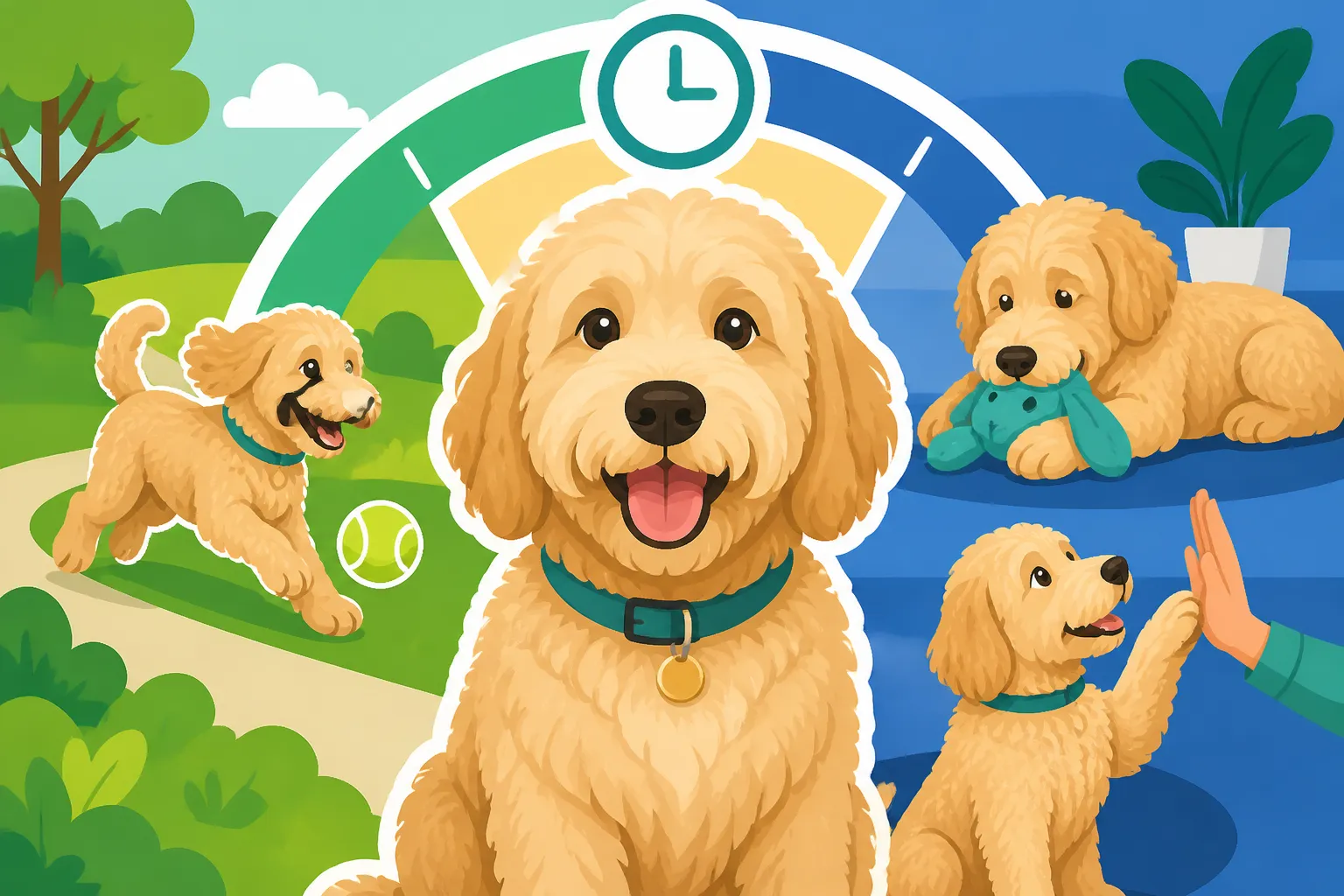
The Hour or Two a Goldendoodle Needs Each Day
It’s easy to look at your fluffy Goldendoodle, sprawled out after a game of fetch, and think they’re perfectly content with a short stroll. Many Goldendoodle owners wrestle with the balance, wondering if their beloved companion is truly getting enough activity to be happy and well-behaved. The truth is, these intelligent and energetic dogs need a significant amount of daily engagement, blending physical exertion with crucial mental stimulation, and this guide is here to help you nail that balance.
Understanding Your Goldendoodle's Inner Drive
Before we even talk about minutes or miles, it’s vital to grasp the genetic blueprint of your Goldendoodle. They're a blend of two incredibly active and smart breeds: the Golden Retriever and the Poodle. Both of these parent breeds were developed for demanding tasks that require stamina, keen intelligence, and a strong desire to work. This isn't just about chasing a ball; it's about fulfilling an inherent drive that sits deep in their DNA.
The Golden Retriever side brings that boundless enthusiasm, a love for retrieving, and a general "happy-go-lucky" attitude towards activity. They want to be involved, they want to explore, and they thrive on companionship during their adventures. Many Goldendoodles inherit this strong desire to please and participate in whatever their human is doing, which often translates into an eagerness for walks, runs, and games.
Then you have the Poodle, often underestimated for its athleticism and sharp mind. Poodles were originally water retrievers, meaning they have incredible endurance and a love for swimming. Beyond their physical prowess, they are highly intelligent and excel in obedience, agility, and problem-solving. This Poodle influence means your Goldendoodle isn't just a running machine; they're also a thinking machine that needs regular mental challenges to feel truly satisfied. Neglect this mental aspect, and you might find yourself with a Goldendoodle inventing its own "games," which often involves chewing something inappropriate or barking excessively.
The Blended Energy of a Goldendoodle
The combination of these two fantastic breeds creates a dog that is often incredibly athletic, eager to learn, and highly social. Your Goldendoodle isn't designed to be a couch potato, especially in their younger years. While some individuals might be more mellow than others due to the unpredictable nature of hybrid vigor, the vast majority will have significant energy to burn. It's not just about a daily walk, but about diverse activities that tap into both their physical endurance and their sharp minds. What a Goldendoodle Inherits From Each Parent Breed highlights how these traits come together.
Think of it like this: if you have a high-performance sports car, you don't just fill it with gas and let it sit in the garage. You take it out, you give it opportunities to perform, and you maintain it. Your Goldendoodle is much the same. They have a powerful engine, and it needs to be used constructively. If that energy isn't channeled into appropriate outlets, it often manifests as destructive behavior, excessive vocalization, or an inability to settle down, which can be incredibly frustrating for owners.
Why Exercise Prevents Behavior Problems
It's a common story: a Goldendoodle owner struggling with a dog that chews furniture, jumps on guests, or barks incessantly. Often, the root cause isn't a "bad" dog, but an under-exercised and under-stimulated one. A tired Goldendoodle is usually a good Goldendoodle. When their physical and mental needs are met, they are far more likely to be calm, cooperative, and content companions. If you're wondering how much your Goldendoodle needs, consider what happens when they don't get enough. Are they pacing, bugging you for attention, or constantly seeking trouble? These are often cries for more activity.
Beyond just preventing bad habits, adequate exercise is crucial for your Goldendoodle's overall health and well-being. It helps maintain a healthy weight, strengthens their muscles and joints, and promotes good cardiovascular health. Just like in humans, regular physical activity can also help manage stress and anxiety in dogs, contributing to a happier, more balanced temperament. When you invest in their daily activity, you're investing in their longevity and quality of life. Goldendoodle Exercise for Body and Mind offers more ways to approach this holistic approach.
Beyond the Walk: Crafting a Comprehensive Exercise Routine
So, what does "enough" actually look like for a Goldendoodle? While individual needs vary, a good baseline for most adult Goldendoodles is at least one to two hours of dedicated, moderate to vigorous exercise per day, broken into multiple sessions. But simply walking around the block on a loose leash won't cut it. We need to think about a mix of activities that engage their whole being.
This doesn't mean you need to be a marathon runner or an agility pro every single day. It means being creative and consistent. A leisurely stroll might be great for sniffing and decompression, but it rarely burns enough calories or engages their mind enough to truly satisfy a Goldendoodle's energy reserves. Consider variety: some days might be longer walks, others might be intense play sessions, and some might focus heavily on training games.
Daily Physical Activity Recommendations
For many adult Goldendoodles, those one to two hours should include a mix of the following:
- Brisk Walking or Jogging: This is your baseline. A good 30-60 minute walk, ideally twice a day, where your dog is actively moving, not just stopping to sniff every blade of grass. The pace should be brisk enough to get their heart rate up.
- Running/Off-Leash Play (in a safe, enclosed area): This is where they can really stretch their legs and hit top speeds. A dog park (if your Goldendoodle is well-socialized and responsive to recall) or a secure backyard where you can play fetch or chase is invaluable. Think 20-30 minutes of high-intensity bursts. Just be mindful of other dogs and your Goldendoodle's individual play style. Goldendoodle Recall and the Retriever Half talks about how their instincts can play into off-leash adventures.
- Retrieving Games: This taps into their Golden Retriever lineage. Fetch, frisbee, or even hide-and-seek with toys can be fantastic. These games combine physical exertion with mental engagement as they track and bring items back. A session of 15-20 minutes can be surprisingly tiring.
- Swimming: If you have access to a safe body of water (a dog-friendly lake, pool, or even a large kiddie pool in the backyard), swimming is a low-impact, high-intensity exercise that many Goldendoodles adore, thanks to their Poodle heritage. Even 15-30 minutes can burn a lot of energy without stressing their joints.
Here’s a rough idea of how you might structure a day for an active adult Goldendoodle:
| Time Slot | Activity Type | Duration | Notes |
|---|---|---|---|
| Early Morning | Brisk Walk/Jog | 30-45 mins | Get the day started with energy burning. |
| Mid-Day (if possible) | Play/Fetch/Training | 15-30 mins | Break up the day, especially if you're home. |
| Late Afternoon/Evening | Longer Walk/Off-Leash Play | 45-60 mins | Decompression, social sniffing, or intense play. |
| Before Bed | Calm Walk/Potty Break | 10-15 mins | Wind-down routine, light sniffing. |
Remember, these are just guidelines. The key is consistent, daily effort. On days with bad weather, you'll need to get creative indoors, which leads us to the next point.
The Power of the Mind: Mental Stimulation is Key
You could run a Goldendoodle for miles, and they might still come home and chew your sofa if their brain hasn't been engaged. Mental stimulation is just as, if not more, important than physical exercise for these smart dogs. Think about it: a crossword puzzle can make you feel more tired than a walk around the block, and it's the same for dogs. Ignoring this aspect is why Why Physical Exercise Alone Never Tires a Goldendoodle is such an important read.
Mental work helps to tire them out in a different way, satisfying their innate need to problem-solve and use their intelligence. This is especially true for the Poodle side of their ancestry, which thrives on learning and applying new skills. Without it, they can become bored, frustrated, and start creating their own "fun," which rarely aligns with your household rules.
Incorporating Brain Games and Training
There are countless ways to provide mental enrichment, and many can be done right in your living room:
- Puzzle Toys and Treat Dispensers: These are fantastic for keeping a Goldendoodle occupied. Fill them with kibble or healthy treats, and let your dog figure out how to get the goodies out. You can find an incredible array of robust chew toys and interactive puzzle feeders on platforms like Amazon, which can be a lifesaver for those rainy days or when you need a moment of quiet. Start with simpler puzzles and gradually move to more complex ones as your dog learns.
- Obedience Training: Daily training sessions, even short 5-10 minute bursts, are wonderful for mental exercise. Practice existing commands, teach new tricks, or work on more advanced concepts like "stay" with distractions. This strengthens your bond and builds their confidence. Even simple "sit," "stay," and "come" drills in new environments can be mentally challenging. Online training programs, like those offered by BAXTER & Bella, can provide structured ideas for mental challenges and skill-building that go beyond basic obedience.
- Scent Work/Nose Games: Goldendoodles have excellent noses, thanks to their retriever heritage. Hide treats around the house or yard and encourage them to "find it." You can start easy and make it progressively harder. Even wrapping a treat in a towel and letting them unroll it is a simple nose game. Nose Games to Play With a Goldendoodle Indoors has more ideas to get you started. This is incredibly tiring for dogs and doesn't require much physical space.
- Chewing: Providing appropriate chew items, like long-lasting chews or filled KONGs, can satisfy a dog's natural chewing instinct and be mentally engaging. The act of chewing is a natural stress reliever for dogs and can keep them happily occupied for extended periods. Just be sure to choose safe, size-appropriate chews.
The Role of Consistent Training
Consistency in training isn't just about obedience; it's about providing structure and expectations, which are mentally reassuring for dogs. A Goldendoodle that knows what's expected of them, and is regularly challenged with learning, is generally a more confident and calmer dog. Consider working on polite leash manners, practicing their recall in varying environments, or even teaching them to settle on a mat while you're busy. Training a Goldendoodle That Wants to Please You dives deeper into effective training methods for this breed.
Even during a regular walk, you can turn it into a mental exercise by practicing commands like "heel," "sit at curbs," or "leave it" when passing interesting smells. This engagement turns a simple walk into a more enriching experience.
Tailoring Exercise to Your Goldendoodle's Age and Size
It's clear that a one-size-fits-all approach to Goldendoodle exercise simply won't work. The specific needs of your dog will change dramatically throughout their life, and also depend heavily on their size category. What a tiny puppy needs is vastly different from a rambunctious adolescent or a sedate senior.
Puppy Goldendoodles: Gentle, Frequent Bursts
Goldendoodle puppies are bundles of joy and energy, but their bodies are still developing. Over-exercising a puppy, especially with high-impact activities like long runs or intense jumping, can damage their still-forming growth plates. This can lead to serious joint problems down the line, such as hip or elbow dysplasia. It’s a common mistake, but an important one to avoid.
Instead, focus on short, frequent play sessions and short walks. A general rule of thumb is 5 minutes of structured exercise per month of age, twice a day. So, a 3-month-old puppy might get two 15-minute walks/play sessions a day. Beyond that, let them have free play in a safe, enclosed area where they can self-regulate. These short bursts of activity, coupled with plenty of naps, are crucial for their development. Don't forget that puppy playtime and exploring new environments are also mentally stimulating. Goldendoodle Puppy Vaccination Timing is important to consider before introducing them to public spaces.
Adolescent Goldendoodles: The Energy Titans
This is often the most challenging phase for Goldendoodle owners. From about 6 months to 2 years, Goldendoodles hit their "teenage" phase. They have boundless energy, seem to forget all their training, and are exploring their independence. This is when they will likely need the most exercise. Those one to two hours of moderate to vigorous activity are especially critical now.
Adolescent Goldendoodles can handle longer walks, more intense play sessions, and might even be ready for activities like hiking (once fully grown and conditioned) or dog sports like agility or flyball. Their minds are also craving more complex challenges, so double down on training and puzzle toys. Without sufficient outlets, this is often when problem behaviors like destructive chewing, excessive barking, or jumping truly escalate. Goldendoodle Adolescence and Selective Hearing touches on the behavioral aspects of this stage.
Adult Goldendoodles: Finding the Right Rhythm
Once your Goldendoodle matures (typically around 18 months to 2 years, though larger breeds mature slower), their energy levels might stabilize somewhat. They'll still need consistent daily exercise, but you might find their frantic puppy energy mellows into a more enduring stamina. Continue with the 1-2 hours of mixed physical and mental activity, adjusting based on their individual temperament and health.
Consider Adult Goldendoodle Exercise by Size Category as a reference. A Standard Goldendoodle will likely need more sustained physical activity than a Toy or Mini Goldendoodle. Smaller Goldendoodles might be satisfied with more intense, shorter bursts of activity, while larger ones need longer, more consistent output. Monitoring their weight and body condition is also crucial; an overweight Goldendoodle needs more exercise, not less, to maintain joint health.
Senior Goldendoodles: Comfort and Gentler Activity
As your Goldendoodle ages, usually after 7-9 years old, their exercise needs will naturally decrease. They might develop arthritis or other age-related health issues, making intense activity uncomfortable or even harmful. The goal shifts from high-impact training to maintaining mobility, comfort, and mental engagement.
Focus on shorter, more frequent, gentle walks. Swimming can be an excellent low-impact option for older dogs. Continue with mental games, puzzle toys, and gentle training to keep their minds sharp. Pay close attention to any signs of discomfort or fatigue. If they are limping or struggling, consult your vet before pushing them. Senior Goldendoodle Mobility and Arthritis offers excellent advice on caring for an aging Goldendoodle's joints. Regular vet check-ups will help you understand any physical limitations and adjust their routine accordingly.
Goldendoodle Size and Exercise Variation
The size of your Goldendoodle will also play a significant role in their exercise requirements.
| Goldendoodle Size | Typical Weight Range | Daily Exercise Recommendation | Notes |
|---|---|---|---|
| Toy | 10-25 lbs | 45-60 minutes | Shorter, brisk walks, indoor play, plenty of mental games. |
| Mini | 26-35 lbs | 60-90 minutes | Brisk walks, fetch in a yard, obedience training. |
| Medium | 36-50 lbs | 90-120 minutes | Good walks, moderate runs, hiking, retrieving games. |
| Standard | 50-90+ lbs | 120+ minutes | Long walks, running, swimming, dog sports, intense play. |
These are general guidelines, and individual dogs will always vary. Observe your Goldendoodle's behavior: are they still restless after their exercise? Are they easily tired? These clues will help you fine-tune their routine. What may feel like a lot of exercise to you might just be their baseline, so be prepared to adjust and adapt as your Goldendoodle grows and changes.
Disclaimer
This article is for general informational purposes only and does not constitute professional advice. Laws, prices and regulations vary by location and change over time. Consult a qualified professional for guidance on your specific situation.