Why Goldendoodle Grooming Training Starts Week One
Bringing home a Goldendoodle puppy is a whirlwind of pure joy and endless cuddles, but amidst all that excitement, many new owners inadvertently overlook one of the most crucial aspects of their Goldendoodle's well-being: grooming. What often gets overlooked is that grooming isn't just about maintaining that adorable teddy bear look; it's a critical part of your Goldendoodle's health and comfort, and the journey truly needs to start the very first week your fuzzy friend steps through your door. This guide will walk you through why establishing a solid grooming foundation in week one is non-negotiable and how to set your Goldendoodle up for a lifetime of stress-free, positive grooming experiences.
Why Early Grooming Training Prevents Future Headaches
It’s easy to get caught up in the cuteness of a tiny Goldendoodle puppy, especially when their coat is still soft and manageable. You might think, "Oh, we'll get to grooming later, once they're a bit bigger and settled." This, my friends, is where many well-meaning Goldendoodle owners unwittingly set themselves and their pups up for a world of frustration and fear. The truth is, that sweet, fluffy puppy coat is going to change, and if you haven't laid the groundwork for positive grooming experiences early on, you're going to face an uphill battle.
Avoiding Fear and Anxiety Later On
Imagine being held against your will while a stranger tugs at your hair, sticks things in your ears, and trims your nails – it sounds awful, right? For a dog, especially one who hasn't been properly introduced to these sensations, a grooming session can feel exactly like that. If the first time your Goldendoodle experiences a brush or clippers is at eight months old, when their coat is starting to mat and pull, it's highly likely to be a traumatic event. They’ll associate grooming with pain and discomfort, leading to a lifetime of struggle, fear, and even aggression. This isn't just inconvenient; it can make essential care like veterinary exams and daily brushing incredibly stressful for everyone involved. Starting early means every touch, every tool, every sound becomes a normal, even pleasant, part of their routine. You’re building a positive association from day one, teaching them that human touch around their sensitive areas is safe and rewarding. This early desensitization is key to a calm, cooperative adult dog.
The Inevitable Coat Change
That beautiful, soft puppy fluff your Goldendoodle arrives with is a deceptive little thing. Between eight and twelve months of age, your Goldendoodle will undergo a significant "coat change," where their soft puppy fur sheds out and is replaced by their denser, adult coat. This period is notorious for matting because the shedding puppy hair gets tangled with the emerging adult hair. It's like trying to comb out a giant hairball mixed with new strands – it's a nightmare if not meticulously maintained. The Goldendoodle Coat Change at Eight to Twelve Months is no joke, and if your dog isn't accustomed to regular brushing and handling by then, you'll be in for a rude awakening. Professional groomers often see Goldendoodles coming in for their first "big groom" after the coat change, completely matted to the skin because their owners weren't prepared. This often results in a full shave-down, which no one wants. Early training ensures that by the time this challenging phase hits, your Goldendoodle views brushing as a normal, perhaps even enjoyable, activity, making it far easier for you to navigate this tricky period without pain or extreme measures.
Establishing Cooperative Care for Life
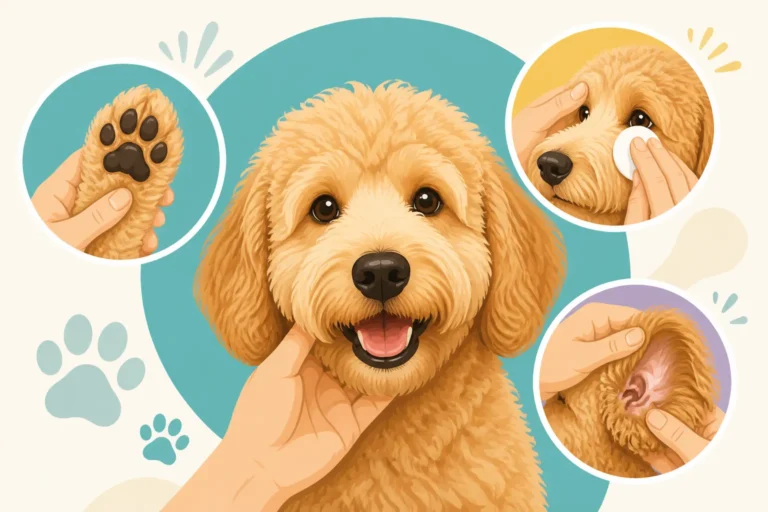
Grooming isn't just about aesthetics; it's about health. Your Goldendoodle will need their ears cleaned regularly, their nails trimmed, their paw pads cleared of hair, and their teeth brushed. These aren't optional extras. Goldendoodle Ear Infections Under a Furnished Ear are common, and regular cleaning is vital. Untrimmed nails can cause pain and permanent damage. Poor dental hygiene leads to serious health issues. If your Goldendoodle fights every attempt at these necessary tasks, you're putting their health at risk. Early grooming training is essentially cooperative care training. You're teaching your dog to not just tolerate but actively participate in their care. This means they learn to stand still, offer their paws, or accept ear cleaning because it's associated with positive reinforcement. This isn't just for you; it makes vet visits less stressful for your dog too, as they'll be more comfortable with being touched and examined by unfamiliar hands.
Starting Strong: Your Week One Grooming Playbook
The good news is that starting early doesn't mean hours of intense training. It means short, positive, consistent interactions. Think of it as bite-sized lessons that build a strong foundation without overwhelming your puppy.
Gentle Touch and Handling Drills
From the moment your Goldendoodle puppy comes home, make gentle handling a daily ritual. This isn't about doing grooming yet, it's about making touch a normal, pleasant experience. Stroke their head, run your hands over their back, gently touch their paws, lift their lips to peek at their teeth, and briefly peek inside their ears. Pair every touch with a tiny, high-value treat and soft praise. The goal is for them to associate your hands on every part of their body with something wonderful. Don’t force anything; if they pull away, ease up and try again later or with a lighter touch. Remember, the key here is positive association. Resources like the BAXTER & Bella online puppy school often have fantastic modules dedicated to cooperative care and grooming desensitization, breaking down these crucial early steps into manageable daily tasks.
Here's a quick look at a week one schedule:
| Day | Focus Area | Activity | Reinforcement | Duration (Approx.) |
|---|---|---|---|---|
| 1 | General Body | Gentle petting all over | Treats & praise | 2-3 minutes |
| 2 | Paws & Legs | Gently hold a paw for 1-2 seconds | Treats & praise | 2-3 minutes |
| 3 | Ears & Mouth | Gently lift ears, touch gums/teeth | Treats & praise | 2-3 minutes |
| 4 | Face & Tail | Gently stroke face, hold tail base | Treats & praise | 2-3 minutes |
| 5 | Introduce Brush | Short, soft strokes with a puppy brush | Treats & praise | 2-3 minutes |
| 6 | Practice All | Rotate through all areas, add brush | Treats & praise | 3-5 minutes |
| 7 | Repeat & Enjoy | Keep it fun and positive | Treats & praise | 3-5 minutes |
Introducing the Tools: Brush, Comb, and Clippers
Once your puppy is comfortable with being touched all over, you can start introducing grooming tools. Again, this is about exposure, not full-on grooming.
- The Brush and Comb: Start with a very soft puppy brush, or a slicker brush with soft pins, and a wide-toothed metal comb. The Slicker Brush and Comb a Goldendoodle Needs will become your best friends. Let your puppy sniff the brush. Touch the brush to their body for a second, then immediately offer a treat and praise. Do this a few times. Then, try one gentle stroke, followed by a treat. Build up slowly. The goal is to make the brush a source of treats, not terror. Use very short sessions, maybe 30 seconds to a minute, a few times a day. You can find a great starter slicker brush and metal comb on Amazon that are perfect for gentle puppy coats.
- The Clippers: This is often where owners hesitate, but early introduction to the sound and vibration of clippers (even if they're not cutting hair yet) is invaluable. Get a quiet pair of clippers – a small, cordless trimmer for paw pads and sanitary areas works well initially. Turn them on, let your puppy hear the sound, then give a treat. Turn them off. Repeat. Gradually, while they're eating a treat, touch the back of the vibrating clippers (not the blade) to their leg or back for a second. The vibration is a strange sensation, so go slow and keep it positive. Desensitising a Goldendoodle to Clippers will save you and your groomer a lot of hassle later. Remember, you're not trying to give them a haircut; you're just making the tools part of their everyday sensory experience.
Making it Positive and Playful
The absolute golden rule of early grooming training is to always keep it positive and short. End every session on a good note, even if it's just one successful stroke of the brush or a quick paw touch. Use high-value treats – something truly irresistible like boiled chicken bits or cheese. Talk to your puppy in a calm, soothing voice. If your puppy gets wiggly or shows signs of stress, take a break. Never scold or punish them for not cooperating; this will only create negative associations. Make it a game! "Let's find the treats under the brush!" or "Show me your pretty paw!" The more fun and rewarding you make these early interactions, the more likely your Goldendoodle will view grooming as a bonding experience rather than a dreaded chore. Remember, Goldendoodle Puppy Biting and Mouthing can be an issue during handling, so keep sessions short and redirect any nibbles to an appropriate chew toy immediately.
Beyond Puppyhood: Long-Term Gains of Early Grooming
The effort you put into those first few weeks and months of grooming training will pay dividends throughout your Goldendoodle's entire life. This isn't just about their appearance; it fundamentally impacts their health, behavior, and your relationship with them.
A Calm Dog for Regular Grooming
A Goldendoodle who has been consistently trained from puppyhood will be far more tolerant and calm during grooming sessions, whether they're at home with you or at a professional salon. Imagine your dog happily lying on the grooming table, or even just relaxing on the floor while you brush out their coat. This cooperative attitude means less stress for them, and less stress for you. It also means you can maintain their coat properly, preventing painful matting and skin issues. How Often a Goldendoodle Actually Needs Brushing is significant, and a cooperative dog makes adherence to that schedule much easier. When your dog is calm, tasks like Handling a Goldendoodle's Feet, Face and Ears become routine rather than a battle, ensuring vital health checks are performed without incident.
Easier Vet Visits and Health Checks
The benefits extend beyond the grooming table. A Goldendoodle accustomed to being handled, touched, and examined will be a much better patient at the vet's office. Think about how many times a vet needs to check ears, feel joints, look at teeth, or draw blood. If your dog panics every time a stranger touches them in sensitive areas, it makes these crucial health procedures incredibly difficult, more stressful for your dog, and potentially requiring sedation. Early grooming training is, in essence, early medical handling training. Your Goldendoodle learns to trust that human hands touching them, even in unusual ways, won't cause harm, making them more accepting of necessary veterinary care throughout their lifespan.
Strengthening Your Bond
Believe it or not, grooming can be a powerful bonding experience. When it's done gently, patiently, and with positive reinforcement, those quiet moments of brushing, petting, and praise deepen the trust and affection between you and your Goldendoodle. They learn that you are a source of comfort and good things, even when you're doing something they might not instinctively love. This builds a foundation of mutual respect and understanding that strengthens your relationship in countless other ways. You become their safe person, the one they trust to care for them, even when it involves clippers or a nail trim. This daily interaction, even if brief, reinforces your role as their provider and protector, fostering a deeper, more meaningful connection.
Common Missteps and How to Sidestep Them
Even with the best intentions, it's easy to fall into common traps when it comes to Goldendoodle grooming. Knowing what to watch out for can help you maintain consistency and positivity.
Overlooking the "Velcro Dog" Tendency
Goldendoodles are often described as "Velcro dogs" – they love being close to their people. While this is endearing, it can sometimes lead to an inability to tolerate being separated or restrained, even for short grooming sessions. Owners might accidentally reinforce this by never asking their puppy to be still or spend time apart. From week one, incorporate short "settle" exercises, like asking them to lie on a mat or bed for a minute while you do something nearby, rewarding them for staying calm. This teaches them impulse control and the ability to be still, which is crucial for grooming. If your Goldendoodle struggles with this, remember that Goldendoodle Separation Anxiety From Both Parent Lines can be a real issue, and early training for quiet independence also aids grooming tolerance.
Waiting Until a Problem Arises
One of the biggest mistakes is waiting for the first mat to appear before serious grooming starts. By then, the experience is likely to be painful, negative, and much harder to overcome. The adage "an ounce of prevention is worth a pound of cure" is incredibly true for Goldendoodle grooming. Don't wait until the matting begins, or until their nails are too long, or their ears are smelly. Proactive, consistent training from week one means you're addressing these needs before they become problems, thereby avoiding painful and scary experiences. Why Goldendoodle Matting Is Almost Always Preventable through diligent, early care.
Expecting Too Much Too Soon
Remember that your Goldendoodle puppy is just that – a puppy! Their attention span is short, and they are learning about a brand-new world. Expecting them to tolerate a full half-hour brushing session on day one is unrealistic and will only lead to frustration for both of you. Keep sessions incredibly short, positive, and frequent. Two to three one-minute sessions a day are far more effective than one ten-minute struggle. Celebrate small wins, like a single paw touch, and gradually increase duration as their comfort grows. This patience is key to Building a Goldendoodle's Tolerance for Two Hours of grooming when they are older. If you find yourself getting frustrated, take a break. Your mood directly influences your puppy's experience.
Conclusion
Starting Goldendoodle grooming training in week one isn't just a suggestion; it's an investment in your dog's future comfort, health, and your peaceful coexistence. By introducing gentle handling, brushes, combs, and even the sound of clippers in short, positive sessions from the moment your puppy arrives, you're building a foundation of trust and cooperation that will last a lifetime. Don't underestimate the power of these early weeks to shape your Goldendoodle's attitude towards a necessary part of their care. Embrace the process, be patient, and enjoy the wonderful bond that grows from these shared, positive experiences. Your future self, and your beautifully groomed Goldendoodle, will thank you.
Disclaimer
This article is for general informational purposes only and does not constitute professional advice. Laws, prices and regulations vary by location and change over time. Consult a qualified professional for guidance on your specific situation.