Introducing a Goldendoodle Puppy to Children
Bringing a bouncy, fluffy Goldendoodle puppy home when you have children is an incredibly exciting time, full of dreams of cuddles and playtime. But let's be realistic: it's also a period that can quickly become overwhelming for both the puppy and the kids, leading to nipping, fear, or frustration if not managed thoughtfully. This guide will walk you through creating a harmonious environment from day one, ensuring your Goldendoodle puppy and children build a safe, loving, and respectful relationship that lasts a lifetime.
Setting Up for a Successful First Meeting
The key to a smooth introduction lies in proactive preparation. You can't just throw a puppy and kids together and hope for the best, no matter how good-natured your Goldendoodle is likely to be. Thoughtful groundwork ensures everyone feels secure and understood.
Preparing the Children for a New Puppy
Children, especially young ones, often have a picture in their heads of a puppy that's a furry, living toy. They imagine endless games of chase, constant cuddles, and a playmate who never gets tired. The reality is quite different. Puppies are babies, full of sharp teeth, an inability to control their bladder, and a deep need for sleep and quiet time.
Before your Goldendoodle puppy even sets a paw in your home, it's crucial to have a serious chat with your children. Explain that the puppy is a living creature with feelings, and it needs gentle hands and quiet voices. Teach them that puppies communicate through body language: a tail wag doesn't always mean "come play!"; sometimes it means "I'm nervous!" Emphasize that the puppy needs space, especially when eating or sleeping. We're aiming for respectful interaction, not constant invasion of personal space. A great way to prepare them is to practice "gentle hands" on a stuffed animal, showing them where and how to pet (shoulders, chest) and what areas to avoid (face, tail, paws initially). This also helps manage expectations about puppy behavior, letting them know that sometimes puppies nip or get zoomies, and it's not personal.
Creating a Safe Space for Your Goldendoodle Puppy
Just like a toddler needs a crib or a quiet room to retreat to, your Goldendoodle puppy needs its own sanctuary. This isn't just a convenience; it's a fundamental part of teaching your puppy to feel safe and secure in its new home. Think about a designated spot, like a crate in a quiet corner of a family room, or a playpen set up with a cozy bed, water, and some safe chew toys. This is their "den," their private room where they can eat, sleep, and decompress without being disturbed.
Crucially, establish a firm rule from day one: when the puppy is in its safe space, children are not allowed to bother it. No reaching in, no poking, no loud noises right next to it. This teaches the puppy that its crate or playpen is a place of peace, not another play area. This rule also protects children from a startled or overwhelmed puppy that might snap out of fear. Ensure the area is puppy-proofed, meaning anything valuable, dangerous, or chewable is out of reach. You can find excellent durable chew toys on sites like Amazon that will keep your puppy occupied and away from your furniture. This safe zone will become invaluable during the Goldendoodle Puppy Sleep and Night Waking phases, providing a consistent place for rest.
The Importance of Supervision, Always
I know, I know, you've heard it a million times, but it bears repeating: never, ever leave a Goldendoodle puppy unsupervised with children, regardless of their age. This isn't about distrusting your dog or your kids; it's about acknowledging that both puppies and children are unpredictable.
Puppies explore with their mouths, and those needle-sharp puppy teeth can hurt, even unintentionally. A child might accidentally step on a puppy, pull its tail, or try to take a toy away, leading to a startled or defensive reaction from the puppy. Even the most tolerant Goldendoodle puppy can react poorly when pushed past its limits. Supervision means actively watching, ready to intervene, redirect, or separate the puppy and child at a moment's notice. It means being the referee, the teacher, and the protector for both parties. This level of supervision is paramount in building a relationship based on trust and safety, preventing negative incidents before they even begin.
Guiding the Initial Interactions
Once the groundwork is laid, it's time for the first meetings. This needs to be a calm, controlled, and positive experience for everyone involved. Think quality over quantity when it comes to early interactions.
Controlled Introductions, One at a Time
Forget the movie scenes where a puppy bounds into a living room to a screaming horde of children. That's a recipe for disaster. The first few interactions should be highly structured and brief. Start with one child at a time, in a calm environment. Have your Goldendoodle puppy on a leash or within its playpen so you can manage its movement and prevent it from jumping or nipping out of excitement.
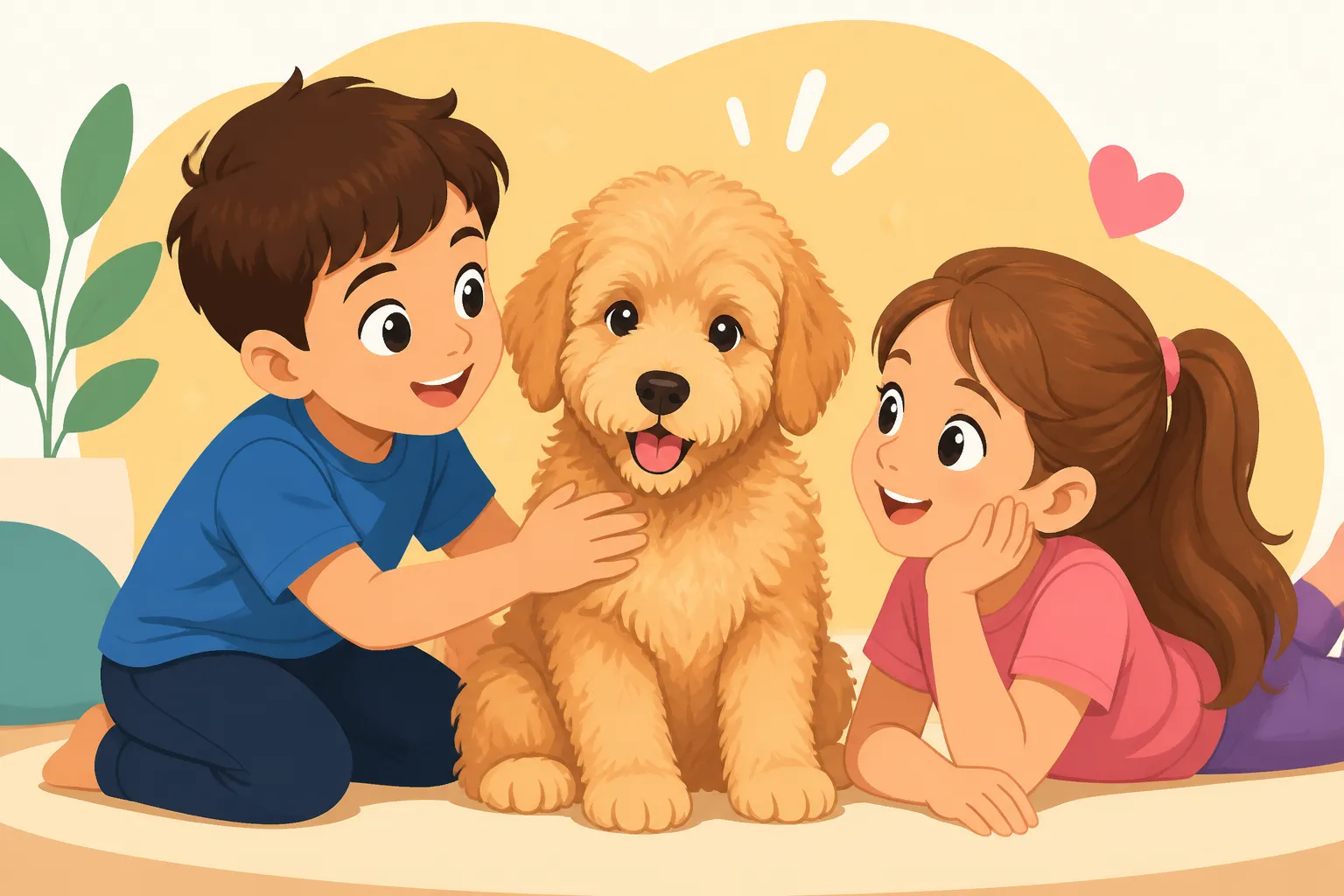
Instruct the child to approach slowly and quietly. Kneel down to the puppy's level; standing over it can be intimidating. Allow the puppy to initiate contact, perhaps sniffing the child's outstretched hand (palm up). Keep these first meetings very short, perhaps just a few minutes, ending on a positive note before either the child or the puppy gets overstimulated. If you have multiple children, introduce them individually over a day or two, building positive associations one calm interaction at a time. Your goal is for both child and puppy to feel curious and safe, not overwhelmed.
Teaching Gentle Petting and Play
Goldendoodle puppies are often incredibly affectionate, but they need to learn how to interact gently. Teach your children to pet the puppy on its back or chest, avoiding sensitive areas like the top of the head, face, or tail. Show them how a soft, slow stroke is much better than a quick pat or grab.
For play, redirect any puppy nipping onto appropriate toys. Long-handled toys, like flirt poles or rope toys, are excellent for interactive play that keeps sharp teeth away from little fingers. Teach children to gently toss a soft toy for the puppy rather than engaging in rough-housing that encourages jumping or nipping. A Goldendoodle's natural retrieve drive, which it inherits from its Golden Retriever side, means fetch can be a wonderful, safe game. Emphasize "four paws on the floor" from the start, rewarding the puppy with praise or a small treat when it greets calmly without jumping. Consistency here will prevent common issues like Goldendoodle Jumping on Every Visitor.
Recognizing and Respecting Puppy Signals
One of the most valuable lessons you can teach both your children and yourselves is to "speak dog." Puppies, even the friendliest Goldendoodles, communicate their feelings through subtle body language long before they resort to a growl or snap. Learning these signals is critical for preventing problems.
Teach everyone to look for signs that a puppy might be stressed or uncomfortable: lip-licking, yawning (when not tired), turning their head away, stiffening their body, wide eyes showing the whites (whale eye), or trying to move away. If you see these signs, it's time to give the puppy a break. Gently guide the child away, or lead the puppy to its safe space. Explain to the child, "Puppy needs a rest, let's play with your toys for a bit." This teaches children empathy and respect for the puppy's boundaries, fostering a safer and more positive relationship for everyone.
Establishing Boundaries and Ongoing Training
The initial introductions are just the beginning. Building a lasting, positive relationship between your Goldendoodle puppy and your children requires ongoing effort, consistent rules, and integrating everyone into the puppy's training journey.
Consistent Rules for Everyone in the Household
Imagine a puppy trying to understand what's expected of it when one person allows jumping on the couch, another punishes it, and a third ignores the behavior. It's confusing and unfair to the puppy! Every single person in the household, children included, needs to be on the same page regarding rules and boundaries.
Sit down as a family and decide on clear, simple rules. For example:
- "No bothering the puppy when it's in its crate or eating."
- "We don't chase the puppy, and the puppy doesn't chase us."
- "Puppy gets pets on its back, not its head."
- "We always use quiet voices around the puppy."
Write these rules down and post them somewhere visible. Consistency is key. When a child follows a rule, praise them enthusiastically! If a child forgets, gently remind them and guide them to do it correctly. This unified approach reinforces good behavior from both the puppy and the children, helping the Goldendoodle understand its place within the family structure. This also relates to broader training principles covered in Why Goldendoodle Owners Get Wrong in Year One.
Integrating Children into Training Routines
Children can be fantastic training assistants for your Goldendoodle puppy, and involving them deeply in the process can strengthen their bond and teach them responsibility. Start with simple, positive reinforcement-based tasks that are easy for children to grasp.
For instance, teach your child how to ask the puppy to "sit" before receiving a treat or before getting a toy. Supervise them as they give a command and reward the puppy when it complies. They can help with feeding times, letting the puppy sit patiently before placing the bowl down. This is an excellent way to teach patience and impulse control to both the puppy and the child. Online training platforms, like those offered by BAXTER & Bella, often have family-friendly lessons that children can participate in, turning training into a fun, collaborative activity rather than a chore. Just remember to keep training sessions short, positive, and always supervised. This kind of Positive Reinforcement and Why It Suits a Goldendoodle will build trust and responsiveness.
Managing High Energy Goldendoodle Play
Goldendoodles are known for their playful, often exuberant nature. They can have sudden bursts of energy, often called "zoomies," where they run around frantically. While this can be hilarious, it can also be intimidating or even dangerous for small children.
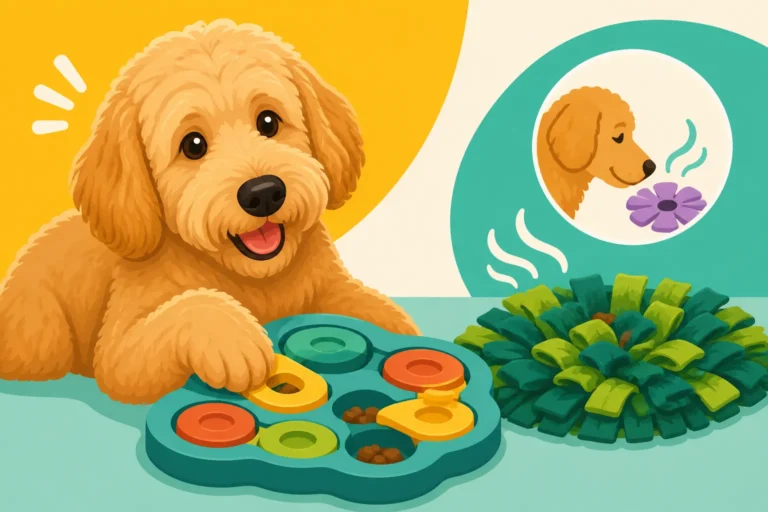
Teach children to recognize the signs of an impending zoomie and how to react safely: stand still, turn their back, or move to a safe spot. Never let children try to chase or grab a puppy during a zoomie, as this can escalate the frenzy. Instead, direct the puppy's energy to an appropriate outlet, like a large, durable chew toy or a quick game of fetch in a fenced yard with an adult. Designated play times where children and puppies can interact safely with appropriate toys are vital. Make sure your Goldendoodle gets enough physical exercise, such as walks, and mental stimulation, like puzzle feeders (readily available on Amazon), to help burn off excess energy in constructive ways. This prevents over-the-top, uncontrolled play that can lead to accidental bumps or nips.
Common Challenges and Solutions
Even with the best preparation, living with a Goldendoodle puppy and children means you'll likely encounter a few bumps in the road. Knowing how to address them calmly and effectively will make all the difference.
Puppy Nipping and Mouthing at Children
This is probably the most common complaint from families with Goldendoodle puppies and children. Puppy nipping is almost always exploratory and playful, not aggressive, but those sharp little teeth can still leave red marks or even break the skin, understandably upsetting children.
The key is to teach the puppy "bite inhibition" – that human skin is fragile. When your Goldendoodle puppy nips a child, have the child (if old enough and calm enough) or an adult immediately let out a high-pitched "ouch!" or "yip!" and then completely disengage from the puppy. Walk away for 10-20 seconds. This mimics how puppies teach each other that play has gone too far. When play resumes, redirect the puppy's mouth to an appropriate chew toy. Never punish or hit the puppy for nipping, as this can make them hand-shy or, worse, fearful and potentially defensive. For a deeper dive into this, check out Goldendoodle Puppy Nipping at Hands. Consistency is vital for this to work.
Overwhelmed Puppy or Overzealous Child
Sometimes, despite your best efforts, either the puppy or a child (or both!) can become overwhelmed. A puppy might retreat to its crate and refuse to come out, or a child might become overly persistent in trying to get the puppy to play, leading to frustration.
Recognizing these moments and intervening quickly is crucial. If your puppy is showing stress signals or constantly trying to hide, it's had enough. Enforce a mandatory quiet time for the puppy in its safe space. Explain to your child that the puppy needs rest, just like they do. If a child is being too boisterous or isn't respecting the puppy's signals, it's time for them to have a break from the puppy. Supervise future interactions even more closely, keep them shorter, and ensure there are always plenty of appropriate toys and activities to redirect energy. Sometimes, simply separating them for a bit allows everyone to calm down and reset.
Resource Guarding and Prevention
While relatively rare in Goldendoodles, resource guarding—where a dog becomes possessive over food, toys, or even a favored spot—can sometimes develop. It's vital to address this proactively and safely, especially with children in the home.
Preventative measures start early. Regularly practice "trading" with your puppy: offer a high-value treat in exchange for a toy it's playing with, then immediately give the toy back. This teaches the puppy that people approaching its things means good things happen, not that its possessions will be stolen. Teach children not to approach the puppy when it's eating, chewing a bone, or playing with a favored toy. Instead, teach them to ask an adult for help if they need to retrieve something. If you notice any signs of resource guarding (a stiff posture, a low growl, quickly swallowing food), immediately seek guidance from a qualified positive reinforcement dog trainer. This behavior needs professional intervention to ensure safety for everyone, especially Goldendoodles With Toddlers in the House.
Do's and Don'ts for Kids and Goldendoodle Puppies
To help consolidate these crucial points, here's a quick summary table for guiding interactions between children and your Goldendoodle puppy.
| Do This! | Don't Do This! |
|---|---|
| Use quiet voices and slow movements. | Scream, shout, or make sudden loud noises. |
| Pet gently on the back or chest. | Pull tail, ears, or poke eyes. |
| Offer appropriate chew toys for nipping. | Use hands as chew toys or roughhouse. |
| Play fetch with a soft toy. | Chase the puppy or grab it during zoomies. |
| Respect the puppy's safe space (crate/bed). | Disturb the puppy when it's eating or sleeping. |
| Ask an adult if you need to approach the puppy. | Approach the puppy unsupervised. |
| Help with simple training (e.g., "sit" for a treat). | Punish the puppy for accidents or unwanted behaviors. |
| Give the puppy space if it looks stressed. | Corner or hold down the puppy. |
Introducing a Goldendoodle puppy to children can be a truly wonderful experience, enriching everyone's lives. With patience, clear boundaries, consistent positive reinforcement, and vigilant supervision, you can foster a relationship built on mutual respect and affection, creating cherished memories for years to come.
Disclaimer
This article is for general informational purposes only and does not constitute professional advice. Laws, prices and regulations vary by location and change over time. Consult a qualified professional for guidance on your specific situation.