Goldendoodle Play Style With Other Dogs
Goldendoodles are known for their bubbly, friendly personalities, and it's no surprise that many owners hope their furry companions will be social butterflies, eager to romp and play with every dog they meet. However, understanding your Goldendoodle's unique play style with other dogs isn't always straightforward. Their exuberant nature, while charming, can sometimes be misinterpreted by other canines or even lead to overly boisterous interactions. This comprehensive guide will help you decipher your Goldendoodle's play behaviors, navigate social situations, and foster positive, safe play experiences for your beloved companion.
Understanding the Goldendoodle Play Personality
Goldendoodles are a fantastic blend of two beloved breeds: the Golden Retriever and the Poodle. This unique heritage gives them a distinct personality and play style that can be incredibly endearing, but also sometimes a bit much for other dogs. It’s like having two strong opinions in one furry package, and understanding where these influences come from is key to guiding their social interactions.
The Golden Retriever's Enthusiastic Approach
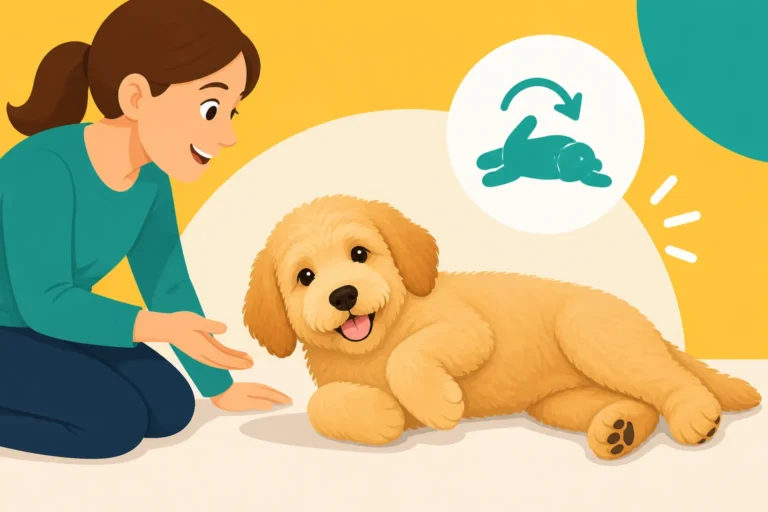
From the Golden Retriever side, Goldendoodles often inherit an almost boundless enthusiasm for life, and this certainly extends to playtime. Golden Retrievers are known for their incredible friendliness, their desire to please, and their love of engaging with both humans and other dogs. This translates into a Goldendoodle that might approach new playmates with an open heart and a wagging tail, ready for action. They often initiate play with a characteristic "play bow" – a lowered front end with their rear end up, often accompanied by happy barks and tail wags.
This Golden influence means your Goldendoodle might be a natural-born retriever, bringing toys to other dogs, or eagerly engaging in a game of chase. They're generally not prone to aggression and tend to be quite forgiving, which is a huge asset in dog-on-dog interactions. However, this same exuberance can sometimes overwhelm more timid or reserved dogs. Imagine a friendly, furry freight train barreling towards a shy chihuahua – the intentions are good, but the delivery can be a bit much! Understanding What a Goldendoodle Inherits From Each Parent Breed helps set expectations.
The Poodle's Intelligent and Agile Play
The Poodle lineage brings a different, yet equally important, dimension to the Goldendoodle's play style. Poodles are highly intelligent, agile, and often possess a mischievous sense of humor. They are less about the brute force of play and more about the strategy, the quick turns, and the clever dodges. You might see your Goldendoodle demonstrating incredible agility during play, making sharp turns in a chase game, or using their intelligence to 'outsmart' a playmate in a game of tug. They also tend to be quite tuned into social cues, sometimes even more so than their Golden counterparts.
This Poodle influence can mean your Goldendoodle might engage in more nuanced play, perhaps taking turns in a chase or understanding when to back off if another dog signals discomfort. However, some Poodles can also be a bit more sensitive, and this can occasionally manifest as a Goldendoodle that gets easily overwhelmed by overly boisterous play or retreats if another dog is too rough. They might be more selective about their playmates, preferring dogs who match their agility and intelligence rather than just their energy level.
The "Doodle" Factor: A Mix of Both
The true "Doodle" factor is where these two distinct play styles merge, creating something wonderfully unique. You get the Golden's sociability and desire to engage, combined with the Poodle's intelligence and agility. This often results in a dog that is incredibly playful, adaptable, and generally good-natured. They might switch seamlessly from an enthusiastic wrestling match to a delicate game of chase, or from initiating play with a full-body wag to subtly inviting a shy dog to join in.
However, this mix also means there can be variability. Some Goldendoodles lean more into their Golden side, becoming the life of the party, while others might show more of the Poodle's discerning nature. This is why it's so important to observe your specific Goldendoodle rather than relying on generalizations. They thrive on interaction and often seek out play, but the type of play they enjoy and how they execute it can differ greatly. It's often said that The Goldendoodle Traits Owners Mention Most include their high play drive and sociability.
Common Goldendoodle Play Behaviors and What They Mean
Observing your Goldendoodle during play is crucial for understanding if they are having a positive interaction or if you need to step in. Their body language, vocalizations, and specific actions can tell you a lot about their state of mind and how they are perceived by other dogs.
The "Bouncy" and "Mouthy" Greeting
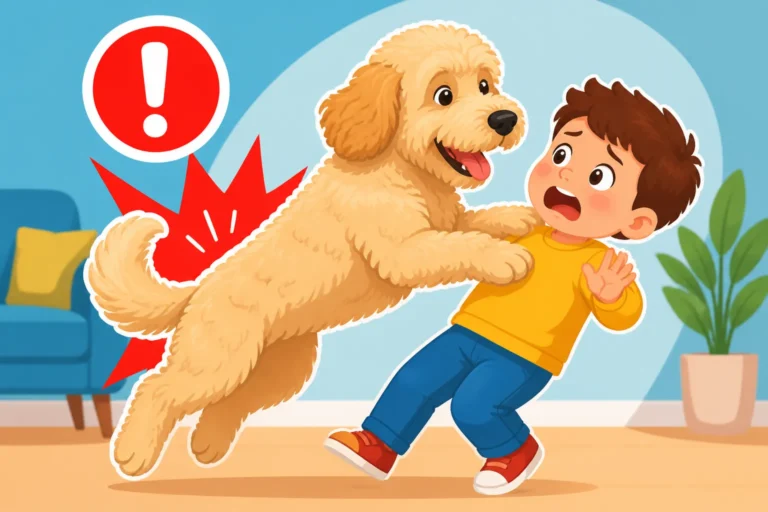
One of the most common Goldendoodle play behaviors, especially when they're excited to meet a new dog, is the "bouncy" and often "mouthy" greeting. They might jump up, mouth at the other dog's face or neck (often with soft, inhibited bites), and generally act like a pogo stick. While their intentions are usually friendly and an invitation to play, this can be off-putting or even alarming to other dogs. A shy dog might see this as overly aggressive, and a more dominant dog might react defensively.
This behavior stems from their puppyhood, where siblings would mouth and wrestle during play. It's part of how they learn bite inhibition. However, as adults, it needs to be managed. If your Goldendoodle is still prone to Goldendoodle Puppy Biting and Mouthing, it’s essential to continue redirecting that behavior. When dogs are greeting, watch for:
- Loose body language: A relaxed tail wag (not stiff and high), soft eyes, and a wiggling body usually indicate friendly intent.
- Mutual engagement: Both dogs are approaching each other willingly, with similar energy levels.
- Reciprocity: One dog initiates play, and the other responds in kind, then they switch roles.
If you notice stiffness, a low growl, ears pinned back, or one dog trying to disengage, it’s time to intervene. Often, your Goldendoodle just needs to learn better impulse control, which is essential for polite greetings.
The Chase and Tussle: Is it Too Much?
Goldendoodles absolutely adore a good game of chase, and they can be incredibly fast and agile. They also often enjoy wrestling, body-slamming gently (or not so gently, depending on the playmate), and a good game of tug. These are all natural and healthy dog play behaviors, but the intensity needs to be monitored. A long, sustained chase where one dog is constantly fleeing and the other is relentlessly pursuing can quickly cross the line from fun to harassment. Similarly, wrestling should involve breaks and role reversals, not one dog pinning the other down for extended periods.
Here's a quick checklist to determine if chase and tussle play is healthy:
| Play Behavior Indicator | Healthy Play | Concerning Play |
|---|---|---|
| Pace | Includes pauses, breaks, shake-offs. | Relentless pursuit, no breaks. |
| Role Reversal | Dogs take turns chasing/being chased, pinning/being pinned. | One dog is always the aggressor, the other always the victim. |
| Body Language | Loose, relaxed, happy grins, play bows. | Stiff body, tense muscles, hard stares, ears back. |
| Vocalizations | Happy yips, playful growls. | High-pitched yelps of distress, frantic barking. |
| Engagement | Both dogs are actively participating and returning to play. | One dog is actively trying to get away or hide. |
If you see your Goldendoodle becoming overly focused, not taking breaks, or ignoring polite cues from another dog, it’s time for a "time out." Sometimes, their high energy means they simply don't register the subtle signals of a dog asking them to slow down. That’s where you, as the owner, step in. Regular Goldendoodle Impulse Control Exercises can make a huge difference in these situations.
Reading Your Goldendoodle's Body Language
Becoming fluent in canine body language is perhaps the most important skill you can develop as a Goldendoodle owner. Your dog communicates constantly, and their subtle signals often precede more obvious behaviors. A Goldendoodle's soft, expressive eyes, floppy ears, and often wagging tail can make them seem perpetually happy, but even they have tells when something isn't right.
Look for these signs of relaxed, happy play:
- Relaxed Mouth: A slightly open mouth, sometimes even appearing to "smile."
- Soft Eyes: No hard stares; pupils are normal, not dilated.
- Loose Body: Fluid movements, no stiffness or tension.
- Play Bows: A clear invitation to play.
- Shake-offs: Dogs often "reset" by shaking their entire body during or after play.
- Self-Handicapping: A larger, stronger Goldendoodle might deliberately lie down or slow down to play at the level of a smaller or older dog. This is a wonderful sign of good social skills!
Conversely, be aware of signals that play is becoming too intense or stressful:
- Stiff Body: Rigid posture, tense muscles, tail held high and stiff.
- Hard Stares: Intense, unblinking eye contact.
- Lip Licking/Yawning: Out of context, these are stress signals.
- Turning Away/Head Aversion: A dog trying to disengage.
- "Whale Eye": When you can see the whites of a dog's eyes as they turn their head away but keep an eye on the other dog.
- Growling/Snapping (real, not playful): Clear warnings.
- Cowering/Tucking Tail: Fear or submission.
A Goldendoodle might not intentionally be a bully, but their enthusiasm can sometimes overshadow their ability to read subtle cues. It’s your job to be their advocate and intervene before a situation escalates.
Navigating Different Playmates and Environments
Not all dogs are compatible playmates, and not all environments are conducive to healthy Goldendoodle play. Understanding these dynamics is crucial for setting your dog up for success and avoiding negative experiences.
Size and Energy Mismatches
This is probably one of the biggest challenges when it comes to Goldendoodle play. A 60-pound Goldendoodle playing with a 15-pound terrier might look cute, but the size difference alone can lead to accidental injuries. Even if your Goldendoodle is gentle, a misstep or an overly enthusiastic jump can cause harm. Similarly, an energetic young Goldendoodle playing with an arthritic senior dog is rarely a good idea.
When choosing playmates, consider:
- Size: Aim for dogs within a similar weight range. If there's a significant size difference, ensure the larger dog is exceptionally gentle and practiced at self-handicapping.
- Energy Level: A mellow dog might be overwhelmed by a Goldendoodle’s "zoomies." Match high-energy dogs with other high-energy dogs, and provide calmer playmates for dogs who prefer a more relaxed interaction.
- Play Style: Some dogs are wrestlers, others are runners, some prefer chase, others tug. Try to pair your Goldendoodle with dogs who enjoy a similar play style to reduce friction.
You might find that for Goldendoodle Leash Manners by Size, managing their excitement around smaller dogs requires extra focus.
Dog Parks vs. Structured Playdates
Dog parks can be a fantastic outlet for some Goldendoodles, offering a wide array of potential playmates and plenty of space to run. However, they are also chaotic, unsupervised environments where things can go wrong quickly. Not all dogs at a dog park are well-socialized, and not all owners are paying attention. Your Goldendoodle's friendly, often pushy, play style can sometimes make them a target for less tolerant dogs, or they might inadvertently annoy others.
Structured playdates, on the other hand, offer a much more controlled and predictable environment. You can choose known, compatible playmates, limit the number of dogs, and ensure responsible owners are present. This allows for closer supervision and easier intervention if play becomes too rough.
Consider these factors for different play environments:
| Environment | Pros | Cons | Best for Goldendoodles |
|---|---|---|---|
| Dog Park | Large space, many potential playmates, free exercise. | Unpredictable, unsupervised, risk of injury/negative interactions. | Well-socialized, resilient Goldendoodles with good recall, whose owners are highly vigilant. |
| Structured Playdate | Controlled environment, known dogs, supervised. | Requires planning, limited variety of playmates. | All Goldendoodles, especially those still learning social cues or with specific play preferences. |
| Doggy Daycare | Professional supervision, vetted dogs, consistent routine. | Can be costly, some facilities are too chaotic, risk of illness. | Goldendoodles who thrive in group settings, whose owners need regular care, and where the facility's play management is excellent. |
If you opt for a dog park, ensure your Goldendoodle has solid recall and that you are constantly scanning the environment. Programs like those offered by BAXTER & Bella often emphasize recall training, which is invaluable in an open setting. For more on navigating these spaces, check out Goldendoodle Dog Park Manners.
Introducing Your Goldendoodle to New Dogs
Making introductions properly is key to setting up positive play experiences. Rushing a greeting can create anxiety or lead to defensiveness. Always start with a calm, neutral approach.
- Parallel Walk: If possible, have both dogs walk parallel to each other on leashes (not nose-to-nose) at a comfortable distance for a few minutes. This allows them to get used to each other's presence without direct pressure.
- Loose Leash Greetings: Allow a brief, loose-leash sniff-and-greet. Keep leashes slack to avoid creating tension, which can transfer to the dogs.
- Off-Leash if Appropriate: If both dogs show relaxed, positive body language, move to a fenced, neutral area for off-leash play. If there's any tension, keep them on leash, or separate them and try again another day.
- Keep it Short and Sweet: The first few play sessions should be brief – 15-20 minutes is often plenty. End on a high note before anyone gets over-tired or over-stimulated.
- One-on-One First: Introduce new dogs individually before throwing them into a larger group. This allows them to build a rapport.
Remember, Why a Friendly Goldendoodle Still Needs Socialization is all about quality, not just quantity of interactions. A few positive, well-managed playdates are far more beneficial than chaotic, stressful encounters.
Fostering Positive Play: Tips for Owners
As a Goldendoodle owner, you are the primary guide in their social development. It’s not enough to just let them "figure it out" with other dogs; active management and training are essential for polite and enjoyable interactions.
Supervision and Intervention
Constant supervision during dog-on-dog play is non-negotiable, especially with Goldendoodles who can get very caught up in the moment. You need to be ready to step in at a moment's notice.
- Be a "Play Monitor": Don't just scroll on your phone. Watch their body language, listen to their vocalizations, and look for signs of stress or over-arousal in both dogs.
- Intervene Early: Don't wait until things escalate. If you see stiff body language, relentless chasing, or one dog trying to disengage, step in immediately.
- The "Reset": Call your Goldendoodle away for a quick "time out." A simple "come" and a sit, then release them back to play (if appropriate), helps them de-escalate. Sometimes, a quick break for a drink of water or a short walk away from the play area is all they need.
- Know When to End Play: If one dog is consistently uncomfortable, if play is too rough, or if either dog is getting overly tired or grumpy, end the session. It’s better to cut it short than to have a negative experience.
Remember, a Goldendoodle's high energy can lead to intense play sessions, and sometimes, even the best-intentioned play can become too much. Regular breaks are essential to keep things fun and prevent over-excitement, which can sometimes lead to what we call Goldendoodle Zoomies and When They Happen.
Training for Better Play Manners
Training is not just for obedience classes; it's fundamental for good play manners. A well-trained Goldendoodle is a better playmate because they understand boundaries and respond to your cues.
- Recall: A solid "come" command is your most important tool. It allows you to call your Goldendoodle away from intense play, prevent them from bothering an unwilling dog, or simply reset the situation. You can find excellent resources on training reliable recall, including online courses available through platforms like Amazon or BAXTER & Bella.
- "Leave It" / "Drop It": These commands are vital for preventing resource guarding over toys or intervening if play gets too focused on one item.
- "Off" / "Four Paws on the Floor": Goldendoodles love to jump, especially when excited. Teaching them that jumping on other dogs (or people) is not acceptable is crucial for polite greetings and play. For tips on managing this, you might explore articles like What It Costs to Train a Goldendoodle Out of Jumping.
- "Wait" / "Stay": These commands teach impulse control, helping your Goldendoodle manage their excitement when they see another dog they want to greet.
- Practice in Low-Distraction Environments: Start practicing these commands in quiet areas before introducing them to the excitement of a dog park or playdate. Gradually increase the distractions as your Goldendoodle gets more proficient.
- Reward Calmness: Actively reward your Goldendoodle when they offer calm, polite greetings or disengage from play appropriately. This reinforces the behaviors you want to see. Training a Goldendoodle That Wants to Please You often involves positive reinforcement.
Enrichment Beyond Dog-on-Dog Play
While dog-on-dog play is wonderful, it shouldn't be your Goldendoodle's only outlet for exercise and mental stimulation. Relying solely on other dogs for entertainment can sometimes lead to an over-reliance on canine interaction, making your Goldendoodle less resilient or more prone to anxiety if they can't always play with other dogs.
- Interactive Play with You: Tug-of-war, fetch, hide-and-seek, and flirt pole games with you are incredibly bonding and provide excellent exercise.
- Puzzle Toys and Snuffle Mats: These engage your Goldendoodle's intelligent Poodle side, providing mental stimulation and helping them burn off energy in a calm, focused way. Many great options are available on Amazon.
- Training Sessions: Short, fun training sessions throughout the day build their brains and help with impulse control.
- Long Walks and Hikes: Exploring new environments with their human is a fantastic form of physical and mental enrichment.
- Scent Work: Goldendoodles, with their retriever heritage, often excel at nose work and scent games, which are incredibly tiring mentally.
By providing a diverse range of activities, you create a well-rounded Goldendoodle who is happy and confident, whether they are playing with other dogs or enjoying quiet time with you. Remember, good Goldendoodle Daycare Rates Per Day might seem high, but they provide that consistent supervised play and enrichment you might not always be able to provide.
Disclaimer
This article is for general informational purposes only and does not constitute professional advice. Laws, prices and regulations vary by location and change over time. Consult a qualified professional for guidance on your specific situation.