Why a Friendly Goldendoodle Still Needs Socialization
It's such a joy to have a Goldendoodle, isn't it? Their naturally cheerful and eager-to-please personalities are often what draw us in. But sometimes, that very friendliness can lead to a misunderstanding, making us think they don't really need intentional socialization. The truth is, a friendly Goldendoodle still absolutely needs proper socialization to become a well-adjusted, confident, and polite member of society, not just a boisterous greeter who means well but causes chaos. This guide will help you understand the difference and give you the tools to guide your beloved Goldendoodle.
Understanding the Goldendoodle's Inherited Friendliness
Goldendoodles are often described as "love sponges" or "Velcro dogs," and for good reason! They inherit wonderful traits from both their Golden Retriever and Poodle parents that contribute to their generally friendly disposition. However, it’s crucial to remember that this inherent friendliness is a starting point, not the finish line, for good social skills.
The Golden Retriever's Sociable Nature
From the Golden Retriever side, Goldendoodles often get that hallmark eagerness to meet and greet everyone. Goldens are, by nature, companions. They thrive on interaction and often view every stranger as a friend they just haven't met yet. This translates into a dog that genuinely wants to be around people and other animals. It’s part of the beloved Goldendoodle Temperament From Two Parent Breeds. This desire for connection is fantastic, but without guidance, it can manifest as jumping up, pulling on the leash to say hello, or vocalizing excitedly. They're not being rude intentionally; they're just overflowing with that Golden Retriever exuberance and haven't learned the nuances of polite interaction.
Imagine taking your Goldendoodle puppy, who has this innate Golden desire to please and connect, to a bustling park. They see a child, another dog, a jogger – and their instinct is to rush over with an open heart. Without training, this can easily become an overwhelming experience for both your dog and the people they're greeting, leading to unintended consequences like knocking someone over or frightening a smaller child with their sheer enthusiasm. You want to cultivate that friendly spirit, not stifle it, but you also want it to be channeled constructively.
The Poodle's Intelligence and Sensitivity
Then there's the Poodle influence. Poodles are highly intelligent and sensitive dogs, known for their sharp minds and ability to bond deeply with their families. What a Goldendoodle Takes From the Poodle includes this keen intelligence and often a desire to work alongside their human. This intelligence can make them quick learners, which is a huge advantage in training and socialization. However, Poodle sensitivity also means they can be more prone to anxiety or overstimulation if not properly introduced to new experiences. A Goldendoodle might appear friendly, but beneath that enthusiastic exterior, a sensitive Poodle brain might be processing a lot of new input, and without proper coping mechanisms, this can lead to stress or reactivity down the line.
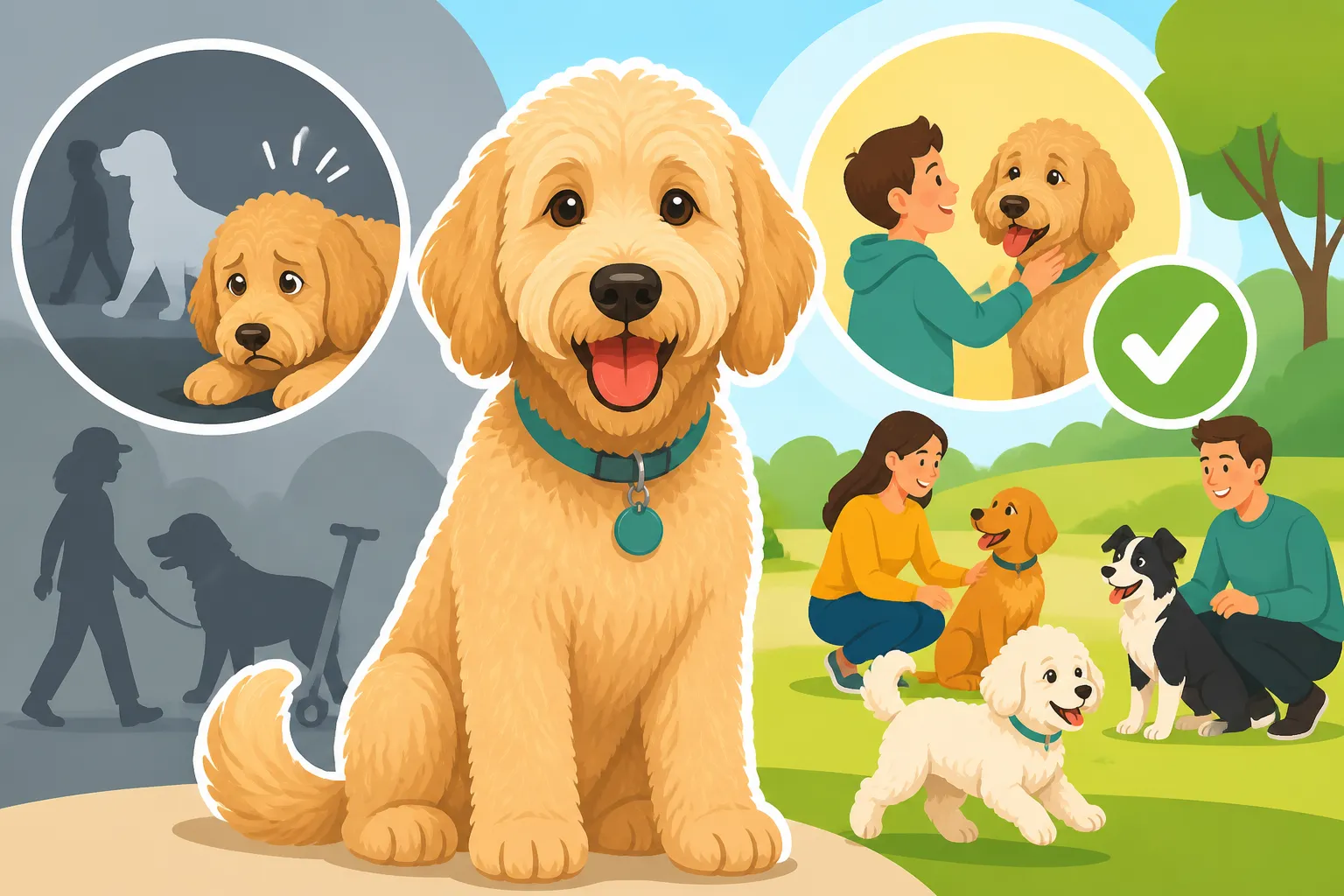
Consider a Goldendoodle whose Poodle lineage gives them a slightly more reserved or observant nature. They might initially be friendly, wagging their tail, but if overwhelmed by a chaotic dog park or an aggressive interaction, their sensitivity can lead to fear or avoidance behaviors. This isn't a lack of friendliness, but a natural response to being poorly equipped for a challenging social situation. Their intelligence means they learn fast, both good and bad habits. If their early "friendly" overtures consistently lead to negative or overstimulating experiences, they can quickly learn to be wary or even reactive, despite their friendly core.
The "Velcro Dog" Tendency
The combination of these traits often results in the "Velcro dog" phenomenon. Goldendoodles love their people and want to be right by their side, often quite literally. This intense bond is one of the most endearing qualities, making them wonderful family pets and emotional support animals. However, this deep attachment, without careful socialization, can inadvertently foster a dependence that makes it hard for them to cope independently. A dog that is overly reliant on its human for comfort and security might struggle in new environments or when separated from their owner, even if they're generally friendly when with their person. This is often linked to The Signs a Goldendoodle Cannot Cope Alone.
While it might seem cute for your Goldendoodle to stick to you like glue, it can become a problem if they haven't learned to feel secure and confident in varying situations without you as their sole anchor. A truly socialized dog is comfortable in new places, can meet new people and dogs politely, and can handle short periods of separation without undue stress. Their inherent friendliness is a gift, but it's one that needs careful unwrapping and shaping through thoughtful socialization.
The Difference Between "Friendly" and "Socialized"
This is perhaps the biggest misconception I see Goldendoodle owners grappling with. They'll say, "My Goldendoodle is so friendly! He loves everyone!" And while that's wonderful, there's a world of difference between being friendly by nature and being well-socialized. One is an innate disposition; the other is a learned skill set.
Beyond Basic Greetings: Exposure vs. Experience
Think of it this way: your Goldendoodle might be friendly and eager to greet every dog they see. This is "exposure" – they see other dogs and want to engage. But true "socialization" goes much deeper than just brief, happy encounters. It means teaching your dog how to interact politely, how to disengage, how to walk calmly past distractions, and how to be comfortable in a wide variety of situations, even if they aren't directly interacting.
A friendly Goldendoodle might pull you frantically towards another dog, jumping and whining with excitement. While this is born from friendliness, it's not a polite or safe way to interact. A socialized Goldendoodle, on the other hand, learns impulse control. They might still be excited, but they've learned that a calm sit or a loose-leash walk gets them closer to a positive interaction. They understand cues like "leave it" when another dog isn't interested, and they can settle calmly at a cafe while people walk by.
It's about teaching your Goldendoodle to navigate the world with confidence and good manners, rather than just raw, unbridled enthusiasm. This includes exposure to different people (children, people in hats, people on scooters), different environments (city streets, quiet parks, vet offices), and different sounds (traffic, alarms, construction). It's not just about meeting everyone; it's about being comfortable around everyone and everything, even if no direct interaction occurs. A puppy's crucial socialization window closes around 16 weeks, so paying attention to What a Goldendoodle Puppy Must Meet Before Sixteen Weeks is vital.
Preventing Over-Arousal and Frustration
A common pitfall with friendly Goldendoodles is allowing their enthusiasm to escalate into over-arousal. When a dog is consistently allowed to rush greetings, pull on the leash, or jump on people, they learn that this frantic energy is the way to get what they want. This high state of arousal makes it difficult for them to think, listen, or control their impulses. What starts as friendly excitement can quickly tip into frustration if they can't get to the thing they want, leading to barking, lunging, or even nipping.
This is especially true with other dogs. A Goldendoodle who loves other dogs might approach every dog like a playmate. But not all dogs appreciate a boisterous, in-your-face greeting. Without the ability to read canine body language or to calmly disengage, your friendly Goldendoodle could inadvertently cause stress or even defensive reactions in other dogs. Understanding Goldendoodle Play Style With Other Dogs helps, but knowing when not to play is equally important.
A truly socialized dog has an "off switch." They can be excited, but they can also settle. They understand that not every person wants to be jumped on, and not every dog wants to play. By teaching them calmer greetings and impulse control, you're not dampening their friendly spirit; you're equipping them with the skills to be genuinely welcome and safe in any social situation. This prevents the cycle of over-arousal that often leads to frustration and potentially problematic behaviors.
Practical Steps for Effective Goldendoodle Socialization
So, how do we take that wonderful, inherent Goldendoodle friendliness and shape it into confident, polite social skills? It's all about intentional, positive, and structured exposure.
Early and Ongoing Exposure
Socialization isn't a one-and-done event; it's an ongoing process that starts the moment you bring your Goldendoodle puppy home and continues throughout their life.
- Puppy Classes are Gold: These classes are invaluable. They offer a safe, controlled environment for your puppy to interact with other puppies and learn basic manners under the guidance of a professional. They're also a great opportunity for you to learn how to read canine body language and understand what constitutes healthy play versus rude behavior. Many local pet stores or private trainers offer excellent puppy socialization classes.
- A World of Sights and Sounds: Once your puppy is fully vaccinated, take them to diverse, calm environments. This doesn't mean letting them interact with every person or dog. Often, it just means sitting on a bench at a park, a quiet outdoor cafe, or even outside a busy supermarket (if allowed) and letting them observe the world from a distance. Introduce them to different surfaces (grass, pavement, gravel), sounds (traffic, children playing, sirens), and people (different ages, genders, hats, umbrellas). The goal is positive exposure, not forced interaction. Bring high-value treats to create positive associations.
- Controlled Introductions: When introducing your Goldendoodle to new people or dogs, always ensure it's a controlled, positive experience. For people, teach them a "four on the floor" greeting – no jumping! For dogs, ensure the other dog is calm, well-socialized, and a good match for your Goldendoodle's energy level. Short, positive interactions are far better than long, overwhelming ones.
Structured Interactions
Beyond just exposure, giving structure to your Goldendoodle's social experiences helps them understand expectations and develop appropriate responses.
- Loose-Leash Walking in Public: This is fundamental. A Goldendoodle pulling on the leash, even if it's to greet, is not a socialized dog. Practice walking in various environments, teaching them that a loose leash is the pathway to moving forward. Start in quiet areas and gradually increase distractions. Tools like front-clip harnesses can be incredibly helpful for Goldendoodle Leash Manners by Size.
- "Place" or "Mat" Training in Busy Areas: This teaches your Goldendoodle to settle calmly on a designated spot amidst distractions. It's a fantastic skill for public places like patios, friends' homes, or even just when guests come over. You can find excellent durable mats and place beds on platforms like Amazon.
- "Meet and Greet" Practice: Actively practice polite greetings. When you see someone your Goldendoodle wants to greet, ask for a sit. If they sit politely, allow a quick, calm interaction. If they jump or pull, immediately disengage and try again. Teach them that calm behavior gets them what they want. You might even find an online training program like BAXTER & Bella helpful for structured guidance on these everyday skills. Their virtual training resources can be a lifesaver for busy owners looking for systematic approaches to common issues.
- Regular Playdates with Known Dogs: Instead of chaotic dog parks, arrange playdates with one or two dogs you know are well-behaved and match your Goldendoodle's play style. This allows for healthy, fun interaction in a controlled setting, fostering good canine social skills.
Here’s a quick comparison of friendly vs. socialized behaviors:
| Scenario | Friendly Goldendoodle (Unsocialized) | Socialized Goldendoodle (Well-Adjusted) |
|---|---|---|
| Meeting New People | Jumps excitedly, nips hands, whines loudly, ignores commands. | Approaches calmly, sits for attention, waits for an invitation to interact. |
| Seeing Other Dogs | Pulls frantically on leash, barks, lunges, initiates rough play without invitation. | Observes calmly, may offer a polite sniff, disengages if other dog is uninterested, walks on a loose leash. |
| At the Vet's Office | Restless, barks at other pets, tries to greet everyone, anxious during exams. | Waits patiently, accepts handling and examination, calm amidst other animals. |
| New Environments | Overwhelmed, hides, barks at novel sounds, pulls to leave, may mark. | Curious and explores, responds to cues, comfortable observing from a distance. |
| Home with Visitors | Jumps on guests, won't settle down, demands constant attention. | Greets politely, then settles on its mat or bed, understands boundaries. |
The Long-Term Benefits of Proper Socialization
Investing time and effort into proper socialization for your Goldendoodle is one of the best gifts you can give them. It transforms them from a friendly, but potentially unruly, companion into a confident, calm, and joyful member of your family and the wider community.
A Confident and Well-Adjusted Companion
A truly socialized Goldendoodle is a joy to live with. They're not just friendly; they're confident. They understand how the world works, they've been exposed to its quirks and challenges in a positive way, and they've learned that they can trust you to guide them through it. This confidence means less anxiety, less fear, and ultimately, a happier dog. They're comfortable meeting new people, visiting new places, and encountering new situations without becoming overwhelmed or resorting to undesirable behaviors.
Imagine being able to take your Goldendoodle almost anywhere – to pet-friendly stores, on vacation, to friends' houses – knowing they will behave politely and represent the wonderful companion they are. This ease of integrating them into your life enriches both your experiences together. A well-socialized Goldendoodle will generally be more relaxed, more resilient, and less prone to stress-related issues like excessive barking, destructive chewing, or reactivity on walks. It's about nurturing their natural desire to be part of your world in a way that truly works for everyone.
Avoiding Common Behavioral Pitfalls
Without proper socialization, that inherent Goldendoodle friendliness can morph into quite a few frustrating behaviors. Jumping on guests, uncontrolled leash pulling, excessive barking at passersby, or frantic greeting behaviors can all stem from a lack of appropriate social learning. Owners often report Goldendoodle Behaviour Problems That Start in Puppyhood that could have been mitigated with early and consistent socialization.
Moreover, while Goldendoodles are generally adaptable, a lack of varied, positive exposure can make them more susceptible to specific anxieties. A Goldendoodle who hasn't learned to cope with being alone might develop Goldendoodle Separation Anxiety From Both Parent Lines. One who hasn't learned appropriate manners around other dogs, despite being "friendly," might become frustrated and reactive on the leash when they can't get to say hello to every dog they see.
By being proactive with socialization, you're not just teaching good manners; you're building a resilient and adaptable companion who can handle the ups and downs of life with grace. You're setting them up for a lifetime of positive interactions and preventing the development of stress-induced behaviors that can be challenging to undo later. Remember, Positive Reinforcement and Why It Suits a Goldendoodle is key to making all these socialization experiences enjoyable and effective for your highly intelligent and eager-to-please companion. Your friendly Goldendoodle deserves the chance to be a truly well-adjusted one.
Disclaimer
This article is for general informational purposes only and does not constitute professional advice. Laws, prices and regulations vary by location and change over time. Consult a qualified professional for guidance on your specific situation.