A Goldendoodle That Rushes the Door for Packages
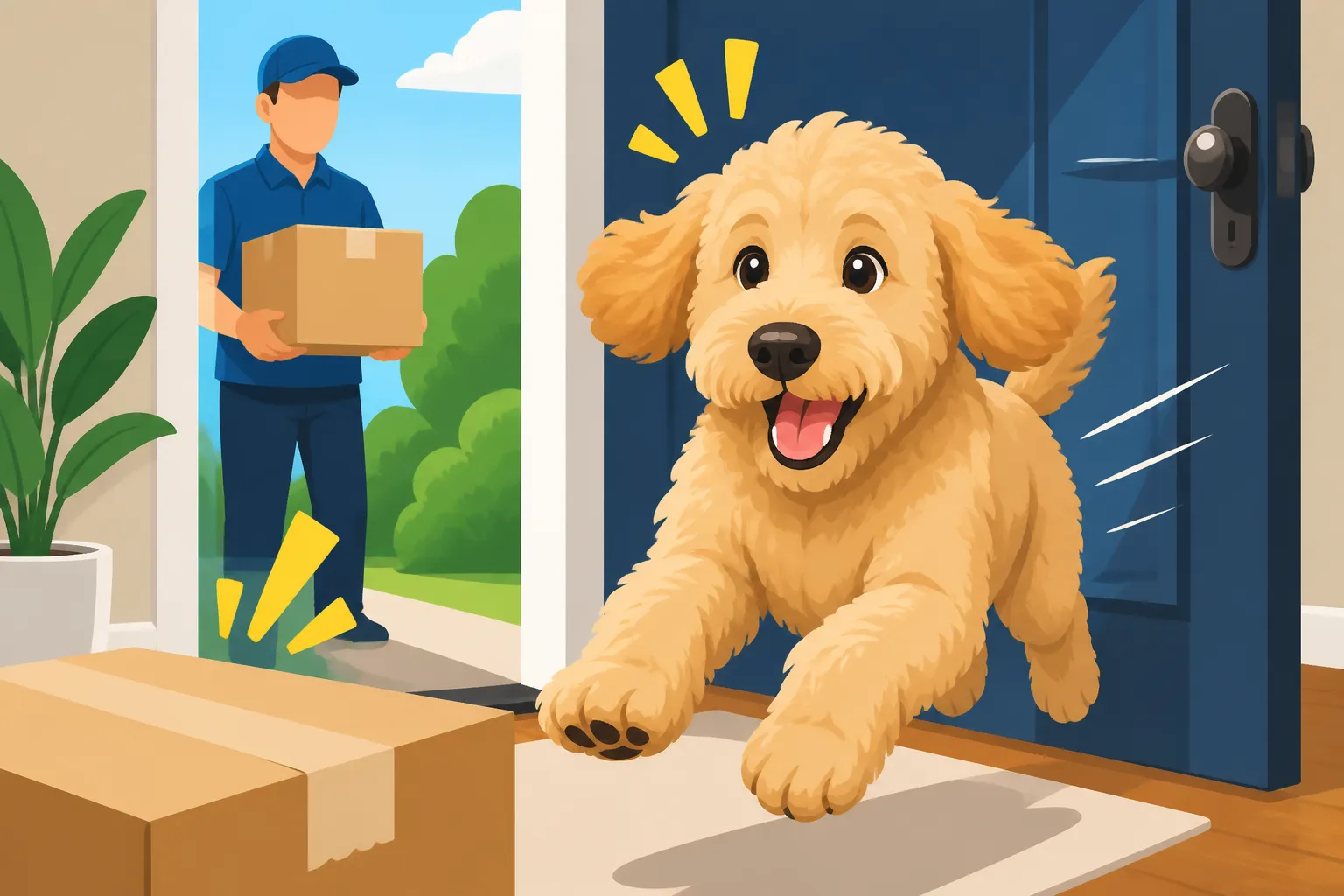
That sudden burst of barks and the frantic scramble towards the front door when the mail carrier or a delivery truck pulls up? Oh, I know it well. It’s frustrating, a bit embarrassing, and honestly, it can be downright dangerous for both your enthusiastic Goldendoodle and the person on the other side of the threshold. This guide is all about tackling that chaotic door-dashing behavior, turning those wild greetings into calm, polite encounters, and helping your Goldendoodle understand that a ringing doorbell or a package arrival isn't an invitation for an impromptu wrestling match or a sprint to freedom.
Understanding Why Your Goldendoodle Becomes a Door Demon
It’s easy to get upset when your Goldendoodle transforms from a sweet, cuddly companion into a barking, jumping whirlwind at the sight of a delivery driver or guest. But to truly fix the problem, we need to understand why they do it. It’s rarely out of malice or disobedience; it’s usually a mix of instinct, excitement, and learned behavior.
The Thrill of the New Arrival
Goldendoodles are inherently friendly dogs, often inheriting a strong desire to greet and interact from their Golden Retriever lineage. When someone arrives at the door, it’s a big, exciting event! There’s a sound (doorbell, knock, truck pulling up), a visual cue (person approaching), and the anticipation of interaction. For many Goldendoodles, this combination is simply overwhelming, leading to an explosion of energy. They want to be part of the action, to say hello, or maybe even to ‘help’ with the package. This isn't just about greeting; it's about the novelty and heightened stimulation of a new presence in their territory.
Consider the sheer build-up of energy. They might have been napping peacefully, and then bam! – the world outside just exploded with excitement. Their heart rate goes up, their adrenaline surges, and their primal instincts kick in. It's hard for them to regulate that excitement without clear guidance and consistent training. They're not being "bad"; they're reacting in a way that feels natural to them, even if it’s disruptive for us.
Lack of Impulse Control
One of the biggest culprits behind door-rushing is a simple lack of impulse control. Goldendoodles, with their intelligent Poodle brains and biddable Golden Retriever hearts, are often quick to learn, but sometimes that eagerness to please can translate into over-the-top reactions if not channeled correctly. If your Goldendoodle has never been taught how to manage their excitement in these specific situations, they'll just act on their immediate impulses – which often means barking, jumping, and lunging.
Think of it like a child seeing a giant ice cream truck. Their first instinct is to run towards it, not to politely wait. Our Goldendoodles are often just like that. They see or hear something exciting, and their brain says "Go! Go! Go!" without much thought for manners or safety. This is where dedicated training comes in, focusing on teaching them to pause, to think, and to wait for cues before reacting. Without this crucial skill, every doorbell ring or knock is a free-for-all. Many of the behaviors we find annoying, like Goldendoodle Jumping and the Impulse Control Problem, stem from this very issue.
Reinforcement (Accidental or Otherwise)
Let’s be honest, sometimes we accidentally reinforce the very behaviors we want to stop. When your Goldendoodle barks and lunges at the door, what do you usually do? You likely rush over, grab their collar, try to calm them, or even talk to them loudly. To your Goldendoodle, all of this attention, even if it's negative attention, can be a reward. They might think, "Wow, I barked, and now I'm getting all this attention from my human! This must be a great way to get noticed!"
Even the brief interaction with the delivery person, or the quick grab of the package, can be enough to solidify the behavior. If the door eventually opens and they get a sniff or a quick pet, that's a huge jackpot. We need to break this cycle by ensuring that door-rushing never leads to a desired outcome. This means managing the environment and teaching alternative, calm behaviors that do get them what they want – whether that's a treat, a greeting, or just your calm approval. It’s a classic example of how our reactions, even well-intentioned ones, can shape our dog’s understanding of a situation.
Laying the Groundwork: Prevention and Early Training
Preventing door-rushing is always easier than fixing it once it's a deeply ingrained habit. If you have a Goldendoodle puppy, now is the time to start building those calm habits. For older Goldendoodles, these foundational steps are still crucial to reset their expectations.
Socializing Beyond Hyper-Friendliness
While Goldendoodles are generally very friendly, true socialization means teaching them appropriate ways to interact and react to new stimuli, not just letting them be universally gregarious. For a puppy, this involves controlled exposure to various sights, sounds, and people, ensuring these experiences are positive but not overstimulating. Don't just let every visitor rush up and shower your puppy with attention; teach your puppy to sit calmly before greeting.
With delivery people, this can be tricky, as they often don't have time to participate in your training. Instead, focus on creating a positive association with the sounds of deliveries without the direct interaction. Play recordings of doorbells, knocking, and truck sounds at a low volume, rewarding your Goldendoodle for remaining calm. Gradually increase the volume over time. The goal is to make these sounds ordinary background noise, not a signal for high alert. You might find resources on What a Goldendoodle Puppy Must Meet Before Sixteen Weeks helpful for broader socialization tips.
Crate Training for Calm
A solid foundation in crate training can be a game-changer for door-rushing. If your Goldendoodle loves their crate and sees it as a safe, comfortable den, you can use it as a management tool during high-excitement times. When you know a package is arriving, or when you’re expecting guests, you can calmly guide your Goldendoodle to their crate with a long-lasting chew toy or a puzzle feeder. This removes them from the immediate trigger, preventing the unwanted behavior from happening in the first place.
This isn't about punishment; it's about setting them up for success. By crating them before the doorbell rings, you're giving them a safe space to decompress and redirect their energy. Over time, as they become more confident and learn alternative behaviors, you may not need the crate as often, but it's an invaluable tool in the early stages. Remember, Crate Training a Velcro Goldendoodle can be a process, but it's worth the effort for managing excited behaviors.
Mat Training: Your Goldendoodle's "Place"
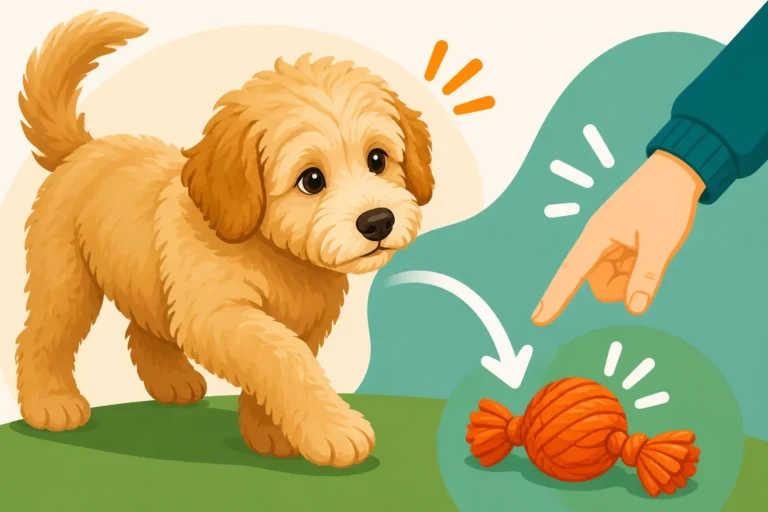
Teaching your Goldendoodle to go to a "place" (like a dog bed or mat) on command is one of the most effective ways to manage door-rushing. This gives them a clear, alternative behavior to perform when someone approaches the door. Start by teaching them the "place" command in a quiet environment, rewarding them heavily for staying on their mat. Gradually introduce distractions.
Once they understand "place" perfectly, start practicing with simulated door arrivals. Have someone knock, and cue your Goldendoodle to their mat. Reward them for staying there, even if they whine or try to get up. The ultimate goal is for them to automatically go to their mat when they hear the doorbell or a knock. You can find excellent step-by-step guides on Mat Settle Training for a Restless Goldendoodle that will walk you through this process. This empowers them to make a good choice, rather than just reacting to their impulses.
Teaching Calm: Strategies for Existing Door Rushers
If your Goldendoodle already has a well-established habit of rushing the door, it's time to implement more direct training strategies. This will require patience and consistency, but it's absolutely achievable.
"Go To Your Place" and Stay
This builds directly on mat training. When you anticipate a delivery or visitor, give your Goldendoodle the "place" command before the trigger (the doorbell, knock, or truck sound). Lure them to their mat, have them lie down, and reward them for staying. If they break their stay when the doorbell rings, gently lead them back to their mat without fuss and try again. They only get the reward (a treat, a release command, or a calm greeting) when they remain on their mat.
Practice this many, many times without actual deliveries. Have family members or friends simulate arrivals. The key is to practice in a controlled environment where you can ensure success before moving to real-life scenarios. Use high-value treats to make staying on their mat more appealing than the thrill of the door. When a delivery actually happens, try to keep your own demeanor calm. Your stress will only heighten theirs. Online training programs, such as those offered by BAXTER & Bella, often include comprehensive modules for teaching place commands and door manners, providing structured lessons you can follow at your own pace.
Leash Control and Barrier Management
Sometimes, an interim step is necessary, especially if your Goldendoodle's door-rushing is particularly strong. Keeping them on a leash before the doorbell rings can give you the control you need to prevent the unwanted behavior. You can loop the leash around a sturdy piece of furniture or simply hold it. When the doorbell rings, direct them to a sit or a down, and reward them for holding that position calmly.
Consider using physical barriers as well. A sturdy baby gate, which you can easily find on Amazon, placed a few feet from the front door can create a safe zone, preventing your Goldendoodle from getting right up to the door. This allows them to still hear and see, but removes the opportunity to lunge or jump at the door itself. This isn't a replacement for training, but a management tool that buys you time to teach the correct behavior without them practicing the incorrect one. This is especially helpful if you have a Standard Goldendoodle Tall Enough to Reach the Counter who might be able to easily vault over smaller barriers.
| Technique/Tool | Description | Pros | Cons |
|---|---|---|---|
| "Place" Training | Teaching dog to go to a designated spot (mat/bed) and stay until released. | Builds impulse control, offers clear alternative behavior. | Requires consistent practice, initially slow to generalize. |
| Leash Management | Keeping dog on leash (held or tethered) during door events. | Provides immediate physical control, prevents rehearsal of bad habits. | Dog might still bark/pull, doesn't teach self-control alone. |
| Baby Gate/Barrier | Physical barrier separating dog from the immediate door area. | Prevents direct contact/lunging, reduces immediate danger. | Doesn't address underlying excitement, dog may jump/bark behind gate. |
| Desensitization | Gradual exposure to doorbell/knocks, paired with positive reinforcement. | Addresses root cause (fear/excitement), creates positive association. | Time-consuming, requires careful staging. |
| Crate Training | Confining dog to crate with a chew toy during door events. | Prevents all unwanted behavior, provides safe space. | Requires prior positive crate association, dog might still vocalize. |
Desensitization and Counter-Conditioning
This is a powerful long-term strategy. The goal is to change your Goldendoodle's emotional response to the doorbell or knock. Instead of associating it with excitement and rushing, you want them to associate it with something pleasant and calm.
Here's how:
- Start Small: Have a friend or family member stand outside and lightly tap the door or ring the doorbell very softly.
- Reward Calm: The instant your Goldendoodle hears the sound and doesn't react, or reacts minimally (e.g., a head tilt instead of a bark), immediately give them a high-value treat.
- Repeat and Increase: Do this many times, gradually increasing the intensity of the knock/ring, the frequency, and eventually moving to someone actually approaching the door.
- Never Push: If your Goldendoodle reacts with barking or lunging, you've gone too fast. Go back to an easier step. The moment they react negatively, stop the "doorbell game" for a while and restart at an easier level.
This process systematically changes their emotional response. Instead of "Doorbell = crazy fun!" it becomes "Doorbell = treat from human if I stay calm." This kind of work is crucial for Goldendoodle Impulse Control Exercises.
Consistency and Management for a Lifetime of Calm Doors
Training is a journey, not a destination, especially with an enthusiastic Goldendoodle. Maintaining polite door manners requires ongoing consistency and smart environmental management.
Every Interaction Matters
This is perhaps the hardest part: everyone in the household needs to be on the same page, and every time someone comes to the door, the rules must be enforced. One slip-up where your Goldendoodle gets to rush the door and jump on a visitor can undo weeks of training. Be prepared to manage every delivery, every visitor, and every unexpected knock with the same calm, consistent approach.
Polite door greetings aren't just for visitors, but for you too. When you come home, teach your Goldendoodle to sit or wait calmly for a few seconds before you pet them. This reinforces the idea that calm behavior gets rewards, not frantic excitement. Consistency is the bedrock of all successful training; without it, your Goldendoodle will be confused about what’s expected of them. For more general training guidance, consider topics like Positive Reinforcement and Why It Suits a Goldendoodle.
Environmental Management is Key
Even with training, there will be times when you can't actively supervise or train. This is where good environmental management comes in.
- Prevent Access: If you know a package is due, or you're going to be busy, place your Goldendoodle in a separate room, behind a baby gate, or in their crate with a chew toy before the delivery person arrives. This removes the opportunity for them to practice the unwanted behavior.
- Visual Barriers: If your Goldendoodle barks at people walking by, consider applying privacy film to lower window panes or keeping blinds closed during peak delivery times. Out of sight, out of mind can often reduce the initial trigger.
- Dedicated Space: Ensure your Goldendoodle has a comfortable, quiet space away from the front door where they can relax. This can be their crate, a bed in another room, or a designated "place" mat.
These management strategies aren't punishments; they're simply smart ways to avoid situations where your Goldendoodle might fail, allowing you to gradually build their skills in controlled environments.
Continued Training and Exercise
A tired Goldendoodle is often a well-behaved Goldendoodle. Ensure your dog is getting adequate physical exercise and mental stimulation every day. A quick walk around the block isn't enough for many Goldendoodles; they need purposeful activity that engages both their body and their mind. This could be a longer hike, a game of fetch in a securely fenced yard, or even brain games like puzzle feeders.
Mental work is particularly important. Teach them new tricks, engage them in scent work, or use puzzle toys that require them to think for their food. A Goldendoodle whose mental and physical needs are met is less likely to have excess energy to throw at the front door. You might be surprised how much Goldendoodle Exercise and Mental Work Every Day can impact their overall behavior, including their door manners. Remember that even little bursts of attention for calmness, even if it's just a casual "good dog" and a little scratch behind the ears, can reinforce the desired behavior.
By understanding the root causes of door-rushing, implementing consistent training techniques like "place" and desensitization, and maintaining smart environmental management, you can transform your Goldendoodle's frantic door greetings into calm, polite encounters. It takes time, effort, and patience, but the peace of mind knowing your dog won't bolt or bowl over a guest is absolutely worth it.
Disclaimer
This article is for general informational purposes only and does not constitute professional advice. Laws, prices and regulations vary by location and change over time. Consult a qualified professional for guidance on your specific situation.