Teaching a Goldendoodle to Stand Still for Grooming
If you're a Goldendoodle parent, you know the struggle: trying to groom your furry companion can feel like wrestling an octopus coated in Velcro. Whether you’re attempting a simple brush-out, a paw trim, or just trying to get a good look at their ears, a wiggling, squirming Goldendoodle can turn a necessary chore into an Olympic event, leaving both of you frustrated and potentially risking nicks or cuts. This guide is here to help you transform grooming time from a battle into a bonding experience, teaching your Goldendoodle to stand calmly and cooperatively.
Understanding the Goldendoodle's Grooming Challenges
Goldendoodles are wonderful dogs, full of joy and intelligence, but their unique blend of genetics can make grooming a bit of a puzzle. It's not just about their fabulous, often high-maintenance coats; it's also about their inherited dispositions towards being handled and staying still. Many owners find themselves asking why their otherwise obedient Goldendoodle suddenly forgets all manners when the brush comes out.
The Poodle's Grooming Legacy vs. the Golden's Disinterest
Think about the parent breeds. On one side, you have the Poodle, a dog historically bred to be groomed. Their coats were meticulously styled for function (like buoyancy in water for retrieving) and then later for show. Poodles often tolerate, and are even trained from a young age to enjoy, being on a grooming table for extended periods. They're typically patient and used to the process.
Then, you have the Golden Retriever. Goldens, while intelligent and eager to please, historically had a much simpler grooming regimen. A good brush-out, perhaps some feathering trimmed, but nothing requiring hours of intricate work or prolonged stillness. Their focus was on retrieving, not posing. When you combine these two, you get a Goldendoodle, and their individual grooming tolerance can swing wildly depending on which genetic predispositions come to the forefront. Some might inherit the Poodle's patience, while others get the Golden's "let's go do something fun!" attitude, making stillness a challenge.
Early Experiences Matter: The Foundation of Grooming Behavior
Every Goldendoodle's journey with grooming starts the moment they're a tiny puppy. Their initial experiences, positive or negative, lay the groundwork for how they'll react to brushes, clippers, and baths for the rest of their lives. A scary first bath, a painful mat being tugged out, or even just being held too tightly can create a lasting aversion. Dogs don't generalize well; a bad experience with a brush might lead them to distrust all grooming tools, and even human hands trying to reach for their coat.
Many puppies come home with little to no prior exposure to grooming tools beyond perhaps a quick brush. If the breeder hasn't systematically introduced the puppy to being handled, having nails trimmed, or hearing the sound of clippers, you're starting from scratch. It's a bit like asking a child who's never seen a dentist to sit perfectly still for a root canal. They simply haven't learned to associate these things with comfort or reward, and their natural instinct is to try and escape what feels unfamiliar or threatening.
Coat Type Complexity: Adding to the Challenge
Goldendoodles are famous for their diverse coats: straight, wavy, and curly. Each type requires specific tools and techniques, and some are simply more prone to matting than others. A curly or wool-type coat, for instance, can develop mats quickly, especially in high-friction areas like behind the ears, under the armpits, or where a collar or harness sits. Trying to work out these mats can be uncomfortable, even painful, for your Goldendoodle, further cementing their dislike for grooming.
If your Goldendoodle's coat is becoming matted, it prolongs the grooming session and necessitates more intense brushing, which can pull at their skin. This cycle of matting, painful detangling, and avoidance is common. Sometimes, the issue isn't just about standing still, but about the dog associating the entire process with discomfort because of their particular coat type and its upkeep requirements. Understanding these challenges is the first step in addressing them with patience and effective training.
Starting Early: Puppy Foundations for Future Grooming Success
The absolute best time to start training your Goldendoodle for cooperative grooming is the day they come home as a puppy. Those early weeks, specifically before they hit 16 weeks of age, are a critical socialization window where they are most open to new experiences. Building a positive association with grooming now will save you countless headaches and potential vet bills down the road. This isn't just about neatness; it's about health, comfort, and building a foundation of trust. Why Goldendoodle Grooming Training Starts Week One is crucial reading for new owners.
Handling Exercises from Day One: Building a Touch-Friendly Dog
When your Goldendoodle puppy first arrives, make handling a regular, positive part of your daily routine. This isn't formal grooming yet, but rather gentle, purposeful touching that desensitizes them to having their body manipulated. Spend a few minutes each day gently touching their paws, spreading their toes, and pretending to trim nails. Reward them with a tiny, high-value treat every time you touch a paw, then release. Do this briefly, multiple times a day.
Extend this to their ears: lift them, peek inside, gently rub the ear canal. Touch their tail, lift it, examine it. Stroke their face, gently hold their muzzle, and carefully lift their lips to look at their teeth. Practice these "body checks" for very short durations – think 5-10 seconds per body part – always ending on a positive note with a treat and praise. The goal is for your puppy to think, "Oh, human hands on my body means yummy things happen!" This builds a fantastic foundation for future actual grooming. Handling a Goldendoodle's Paws Every Single Day goes into more detail about this crucial practice.
Introducing Grooming Tools Gradually: No Surprises
Once your puppy is comfortable with being handled, slowly introduce the actual grooming tools. Start with the least intimidating ones. A soft slicker brush or a wide-toothed comb can be presented first. Let your puppy sniff them. Put them on the floor. Then, gently stroke your puppy's coat with the brush for just a few seconds, immediately followed by a treat. Repeat this many times over several days. The key is to associate the tool with something pleasant.
Next, introduce the sound of clippers. Start by just turning the clippers on in another room, so it's a distant hum. Reward your puppy for showing no reaction. Gradually, bring the clippers closer, always on, and reward calm behavior. Eventually, you can touch the back of the turned-off clippers to their body, then the turned-on clippers to their body (starting with a less sensitive area like their back or shoulder, avoiding the face and paws initially), always pairing it with a delicious treat. Similarly, bring out the nail trimmers or grinder, letting them sniff it, then reward. Don't rush to use the tool; focus on positive exposure. Desensitising a Goldendoodle to Clippers is a wonderful resource for this specific step.
Short, Positive Sessions: Keep it Fun, Lots of Treats and Praise
The golden rule for puppy grooming training is: keep it short and keep it positive. A 2-minute "grooming session" where your puppy gets multiple treats and lots of praise is infinitely more valuable than a 20-minute struggle that ends with both of you stressed. Aim for frequent, brief sessions throughout the day rather than one long, exhausting one. If you notice your puppy starting to get antsy or show signs of discomfort, end the session immediately on a positive note, even if it's just after one quick brush stroke.
Always use high-value treats – something your Goldendoodle absolutely loves, like small pieces of cheese, cooked chicken, or training-specific soft treats. Never force or punish. If your puppy pulls away, simply reset, try again gently, and reward the smallest sign of cooperation. The goal is to build enthusiasm for grooming, not dread. By consistently making these early interactions pleasant and rewarding, you'll teach your Goldendoodle that grooming isn't something to fear, but rather a normal, even enjoyable, part of their life. Think of it as investing in future sanity – both yours and your dog's.
The "Stand" Command and Its Variations
Getting your Goldendoodle to simply stand still can feel like a monumental task, especially if they have a strong "wiggle" gene. However, teaching a formal "stand" command and then extending it to "stand-stay" specifically for grooming is a foundational step. This empowers your dog with an understanding of what's expected, rather than just forcing them into a position.
Lure and Reward for Standing Still
To begin teaching "stand," have some high-value treats ready. Start with your Goldendoodle in a sitting position. Hold a treat near their nose and slowly move it forward, just above their head, in an arc that encourages them to shift their weight onto all four paws and stand up. As soon as all four paws are on the floor, mark the behavior (with a verbal marker like "yes!" or a clicker) and immediately give the treat. Repeat this several times.
Once they're reliably standing from a sit using the lure, start to fade the lure. Instead of physically moving the treat, use the same hand motion but with an empty hand, then reward with the treat from your other hand. The goal is for the hand motion alone to cue the stand. If they struggle, go back to using the lure more overtly. It’s a process of gradually increasing their understanding while reducing reliance on the physical treat.
Adding Verbal Cues and Hand Signals
Once your Goldendoodle understands the physical lure/hand motion for "stand," it's time to add the verbal cue. Just before you do your hand motion, say "Stand." Then, perform the lure, mark the behavior when they stand, and reward. Consistency is key here. Always say "Stand" right before the action. Over time, your Goldendoodle will associate the word with the action.
Once they reliably respond to "Stand," you can extend this to "stand-stay." With your Goldendoodle standing, give the "stay" command (or use your hand signal for stay – often an open palm facing the dog). Take one step back, wait a second, then step back to them, mark, and reward. Gradually increase your distance and the duration of the "stay" for very short increments. If they break the stay, calmly guide them back to the standing position and try again, but shorten the duration. It’s crucial to reward them before they have a chance to break the stay, especially in the early stages, building their confidence in the behavior.
Duration and Distraction: Building Up Grooming Tolerance
This is where the real work for grooming begins. Once your Goldendoodle can stand and stay for a few seconds in a quiet environment, you need to systematically introduce duration and distractions, specifically those related to grooming. Start by asking for a "stand-stay" on a non-slip mat or a low, stable surface that will eventually become your grooming area. Reward profusely for staying still for even a few seconds.
Then, while they are in their "stand-stay," introduce very gentle grooming touches. Perhaps just one stroke with a soft brush, then mark and reward. The next session, two strokes. Gradually build up to touching different parts of their body: lift a paw, touch an ear, gently separate some fur on their back. Each time they tolerate the touch while standing, mark and reward. If they move, gently guide them back to position, wait for them to stand still again, and then reward. Avoid rewarding the movement. Introduce the sound of clippers (off, then on quietly) while they stand. Use small, high-value treats frequently to keep them engaged and comfortable. This incremental exposure to grooming stimuli while maintaining the "stand-stay" is paramount to building a cooperative Goldendoodle who accepts being handled during their grooming sessions.
Creating a Positive Grooming Environment at Home
The physical space where you groom your Goldendoodle plays an enormous role in their cooperation. Trying to groom a large, fluffy dog on the floor can quickly turn into a wrestling match, and it's uncomfortable for your back too! Setting up a dedicated, positive grooming environment at home signals to your dog that this is a specific activity with specific expectations, and it makes the process safer and more efficient for everyone.
The Importance of a Grooming Table: Elevating for Better Control
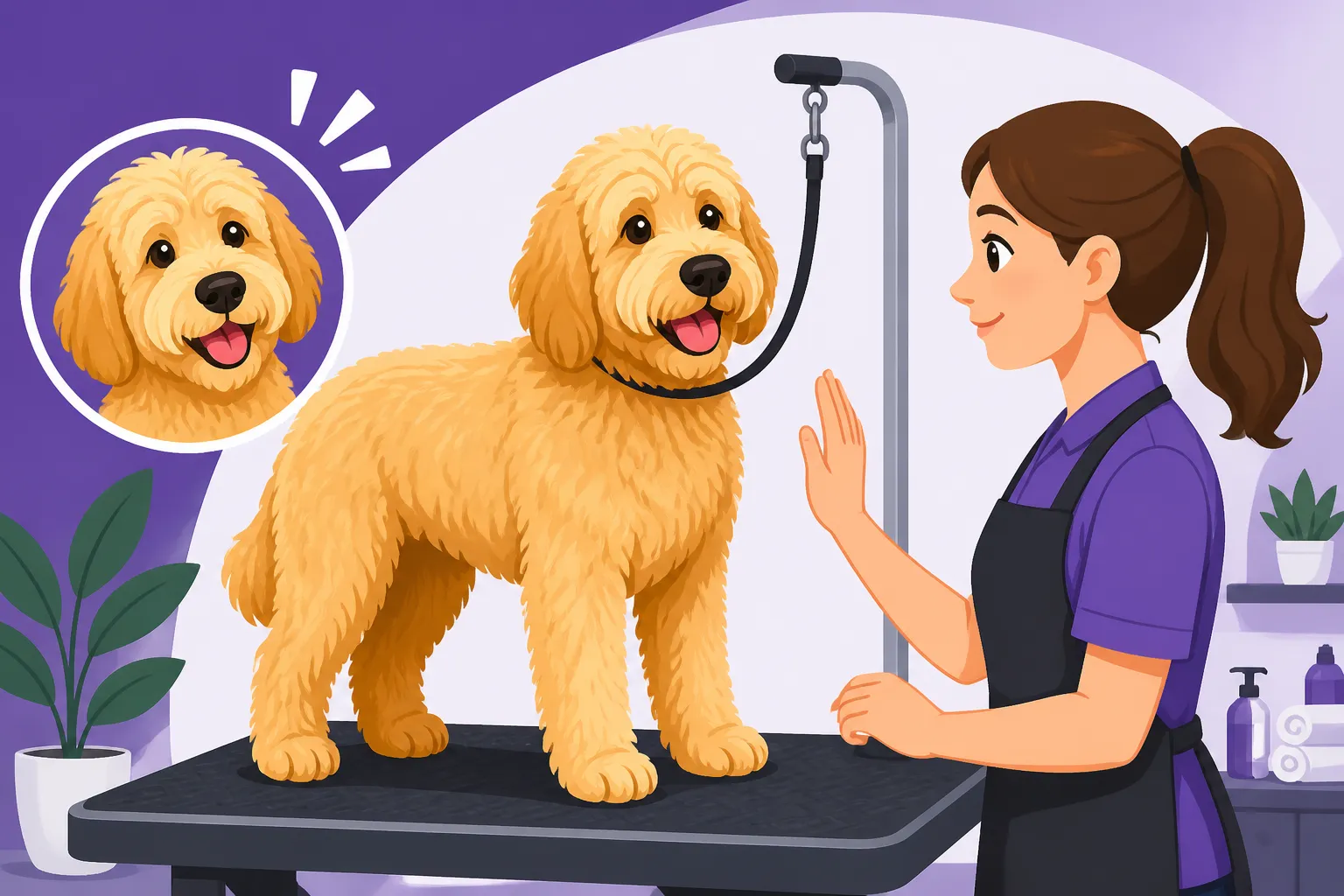
One of the single most valuable investments you can make for home grooming is a dedicated grooming table. Grooming tables elevate your Goldendoodle to a comfortable working height for you, which immediately gives you better control and visibility. When a dog is on the floor, they have more leverage to wiggle, back away, or simply sit down. On a table, they understand they are in a different, more structured environment.
The elevation also signals to your dog that this isn't playtime. It creates a defined space for grooming, much like a doctor's examination table signals a specific type of interaction. Look for a sturdy, stable table with a non-slip surface. There are many options available on platforms like Amazon that cater to different dog sizes and budgets. Introducing the table calmly, perhaps with treats on it, and practicing your "stand-stay" command on the table itself, will help your Goldendoodle associate it with good things rather than a scary height.
Safety First: Grooming Loops and Non-Slip Surfaces
Safety is paramount during grooming. A non-slip surface on your grooming table is essential to prevent your Goldendoodle from slipping and injuring themselves, or from feeling unstable which will naturally make them more anxious. Many grooming tables come with a textured rubber surface, but if yours doesn't, consider adding a non-slip mat.
Grooming loops are also incredibly helpful, but they must be used correctly and never left unsupervised. A grooming loop attaches to an arm on the table and goes around your dog's neck or under their chest, helping to keep them in a standing position. It's not for restraint in the aggressive sense, but for gentle guidance and to prevent them from jumping off the table. The goal is not to choke them or hold them tightly, but to give them a gentle reminder to stay put. Practice with the loop for very short periods, always rewarding calm behavior. The loop is a safety measure, not a crutch for poor training, and should always be loose enough for comfortable breathing while still preventing accidental falls.
Calming Aids and Strategies: Setting the Mood
Beyond the physical setup, consider the atmosphere you create. Grooming can be stressful for some dogs, so anything you can do to make it calmer will help. Gentle, calming music can mask scary sounds like clippers or the high-velocity dryer. Some owners find that a diffuser with dog-safe calming essential oils (like lavender, used responsibly and diluted) can create a more relaxed mood in the room.
Consider also the use of enrichment during grooming. For dogs who are prone to anxiety, a lick mat smeared with peanut butter (ensure it's xylitol-free!) or plain yogurt and stuck to the wall near the grooming table can be a wonderful distraction. It keeps their mouth busy and releases endorphins, making the experience more positive. For dogs with higher anxiety, talk to your vet about potential calming supplements or even short-term situational medications that can make grooming tolerable while you work on behavior modification. Remember, the ultimate goal is for your Goldendoodle to tolerate and eventually enjoy the process, not just endure it.
Desensitization to the "Scary" Stuff: Clippers, Dryers, and Water
Even if your Goldendoodle is perfectly happy to stand still, the specific tools and sensations of grooming can be intimidating. The buzzing of clippers, the blast of a high-velocity dryer, or the feeling of water running over their coat can trigger fear or anxiety. Desensitization is key here – gradually introducing these stimuli in a non-threatening way, paired with positive reinforcement, until your Goldendoodle views them as neutral or even pleasant.
Clipper Acclimation: Vibration, Sound, and Touch
Clippers are often one of the biggest hurdles. The sound and vibration can be quite startling. The process of acclimation needs to be slow and steady. Start with the clippers off, letting your Goldendoodle sniff them, then rewarding. Next, turn them on in another room or under a blanket to muffle the sound. Reward your dog for calm behavior. Gradually, bring the running clippers closer, rewarding at each step.
Once they tolerate the sound nearby, gently touch the back of the running clippers to their body. Start with a less sensitive area like their back or shoulder, then move to legs, belly, and finally, sensitive areas like paws and face. Each touch, however brief, should be followed by a high-value treat. Don't immediately try to cut hair. The goal is to make the sensation of vibration and sound feel normal. You can even use a vibrating toothbrush first to help them get used to the sensation before moving to actual clippers. A good quality, quiet clipper can also make a huge difference. Getting a Goldendoodle Used to Clipper Noise is a dedicated guide that will walk you through this process with practical advice.
Bath Time Bliss (or Tolerance): Making Soaking and Drying Less Stressful
Many Goldendoodles love water, but bath time is different. Being confined, sprayed, and then blasted with a dryer can be overwhelming. For baths, use lukewarm water and a non-slip mat in the tub or shower. Start by simply getting their paws wet, then reward. Gradually work up to wetting their entire body, always using a calm, reassuring voice. Use a gentle stream of water, not a harsh spray. For long-coated Goldendoodles, ensure you use a good quality dog shampoo and conditioner to prevent matting during the wash, which can make the experience uncomfortable.
The high-velocity dryer is another big one. Many Goldendoodles are terrified of the noise and force of the air. Again, start slowly. Turn the dryer on in another room. Reward calm. Bring it closer. Point it away from your dog initially, letting them feel the distant breeze. Gradually aim it at their body, starting with low power and a good distance, always pairing with treats. Never aim it directly at their face or genitals. The goal is to dry them down to the skin to prevent matting, but this needs to be done gently and patiently. If your dog is struggling, consider short breaks or breaking the drying into multiple sessions.
Brushing and Combing for Comfort: Turning Maintenance into a Pleasant Experience
Regular brushing isn't just about looking good; it's vital for a Goldendoodle's health, preventing painful mats and allowing you to check for skin issues. If brushing is uncomfortable, your dog will resist standing still. Ensure you're using the right tools: a good quality slicker brush and a metal comb. The comb is crucial for finding hidden mats the slicker brush might miss.
Make brushing a positive routine. Start with very short sessions, maybe just 30 seconds, and use plenty of treats. Always brush in layers, down to the skin, rather than just skimming the top of the coat. If you encounter a mat, don't just yank. Gently work it out with detangling spray and your fingers, or carefully use the end of a metal comb. If it’s too painful, it’s okay to stop and shave it out later (or have a professional do it). The goal is for your Goldendoodle to associate the brush and comb with gentle, pleasant strokes and delicious rewards, not pain. Consistency in daily or every-other-day brushing will also prevent mats from forming, making the entire process easier. Brushing a Goldendoodle Often Enough to Stop Matting offers a detailed guide to this essential care step.
Troubleshooting Common Grooming Challenges
Even with the best intentions and consistent training, Goldendoodles can present a variety of challenges during grooming. It's easy to get frustrated when your dog wiggles, bites, or just flat-out refuses to cooperate. Understanding why these behaviors happen and having strategies to address them can turn a difficult session into a manageable one.
Dealing with Nipping and Biting: Understanding the Cause
Nipping and biting during grooming are usually signs of discomfort, fear, or overstimulation, not maliciousness. Your Goldendoodle isn't trying to be "bad"; they're trying to communicate that something is wrong. It could be pain from a mat, fear of a tool, or simply an overwhelmed sensory system.
Strategies:
- Identify the trigger: Is it a specific tool? A particular area of their body being touched? The sound of the clippers? Pinpointing the trigger helps you address it directly.
- Stop and assess: If your dog nips, stop the grooming activity immediately. Do not punish. This only makes them more fearful. Instead, take a short break. Let them calm down.
- Redirect and reward: Offer a chew toy or a lick mat as a distraction before they start nipping. If they calm down, praise and reward.
- Go back to basics: If nipping occurs, it means you've likely progressed too quickly. Revisit earlier desensitization steps with the problematic tool or body part. Break down the task into even smaller, less intimidating steps. For instance, if they nip when you touch their paw, go back to just touching their leg, then reward, then just one toe, then reward.
- Consider a muzzle: For dogs with a history of nipping, especially if it's escalating to biting, cooperative muzzle training can be a life-saver. A basket muzzle allows them to pant, drink, and take treats, but prevents bites. Introduce it slowly, pairing it with high-value treats, so they associate it positively. Never use it as punishment. Muzzle Training a Goldendoodle for the Groomer is an important topic to research if you face this issue.
The "Goldendoodle Sit" and Other Resistance
Ah, the infamous "Goldendoodle Sit" – when your dog just collapses into a sit or even a flop right in the middle of a grooming session, refusing to stay standing. This is a common form of passive resistance, their way of saying, "I'm done" or "I don't like this."
Strategies:
- Reinforce "Stand-Stay": Go back to consistently practicing your "stand-stay" command in non-grooming contexts, making it rock-solid.
- Gentle correction and re-positioning: If they sit, gently guide them back up into a standing position with your hands under their belly. Don't pull them up by the collar. As soon as they are standing, mark and reward. The reward is for standing, not for sitting and then being re-positioned.
- Shorten sessions: If they keep sitting, you're asking for too much duration. Shorten the grooming sessions dramatically. End before they even think about sitting.
- Increase motivation: Use even higher-value treats. Make the reward so compelling that standing is worth it. For example, a dollop of spray cheese or a small piece of cooked steak might be more enticing than a regular kibble piece.
- Consistency: Every time they sit, gently reposition. Don't give in and groom them while they're sitting if the goal is for them to stand.
When Professional Help is Needed: Knowing When to Call a Pro
There are times when despite your best efforts, you might feel completely overwhelmed, or your Goldendoodle's grooming challenges are simply too much to handle alone. This is perfectly normal, and seeking professional help is a sign of a responsible pet owner.
When to call a professional groomer:
- Severe matting: If your Goldendoodle has extensive mats that you cannot safely remove, a professional groomer has the tools and expertise to either carefully detangle (if possible without pain) or safely shave them down.
- Aggression or severe anxiety: If your Goldendoodle is showing aggression, extreme fear, or panic attacks during grooming, a professional groomer who specializes in difficult dogs might be able to help. They often have specific techniques and calm environments.
- Lack of time or skill: If you simply don't have the time to commit to extensive home grooming, or feel unsure about your technique, a professional can keep your Goldendoodle looking and feeling great.
- Post-training maintenance: Even after you've taught your Goldendoodle to stand still, regular professional grooms are invaluable. They reinforce good behavior and handle tasks you might not feel comfortable with, like intricate scissor work or anal gland expression. Remember, Booking a Goldendoodle Groom Every Six to Eight Weeks is a typical recommendation.
When to consult a certified professional dog trainer or veterinary behaviorist:
- Persistent behavioral issues: If nipping, biting, severe anxiety, or panic attacks persist despite consistent training, a professional trainer specializing in fear-based aggression or anxiety can provide tailored strategies.
- Underlying medical conditions: Sometimes, resistance to grooming can stem from pain or a medical condition. Your vet can rule out issues like ear infections (Goldendoodle Ear Infections Under a Furnished Ear), arthritis, or dental pain that might make handling uncomfortable. A veterinary behaviorist can also assess if medication might be appropriate to help manage severe anxiety alongside behavior modification.
- Your own safety: If you feel unsafe grooming your Goldendoodle, please do not continue alone. Your safety and your dog's well-being are paramount.
Remember that BAXTER & Bella offers comprehensive online puppy training programs that often include modules dedicated to cooperative care and grooming desensitization. Their structured approach and support can be a fantastic resource if you're struggling to implement these strategies on your own.
Consistency is Key: Integrating Grooming into Daily Life
The journey to a Goldendoodle who calmly stands for grooming isn't a one-time fix; it's a lifestyle. Consistency is the magic ingredient that transforms resistance into routine. By weaving short, positive grooming interactions into your dog's daily life, you reinforce good habits and prevent problems from escalating.
Short Daily Check-ins: Building a Routine of Tolerance
Instead of thinking of grooming as a separate, dreaded event, integrate brief "check-ins" throughout your day. These don't have to be full brush-outs; they're quick, positive interactions that keep your Goldendoodle accustomed to being handled and make them anticipate good things. For example, while you're watching TV, gently brush their coat for a minute or two, offering a treat. As they lie on their bed, gently touch and inspect their ears, then reward. Cleaning a Goldendoodle Ear Every Week is a great habit to incorporate into these daily check-ins.
Practice lifting their paws, gently spreading their toes, and giving a quick "pretend" nail trim. Do this consistently, every single day, for short durations. The goal is to make these touches so normal that your Goldendoodle barely notices them, or even leans into them, expecting a treat or praise. This routine prevents minor issues from becoming major ones and maintains their desensitization to handling. Think of it as hundreds of tiny positive deposits into their "grooming confidence" bank.
Scheduling Regular Professional Grooms: Maintenance, Not Emergencies
Even if you become a pro at home grooming, regular appointments with a professional groomer are indispensable for a Goldendoodle. Their complex coats often require specialized tools and techniques that are difficult to replicate at home, especially for trims and detailed work. Professional grooms help maintain the coat's health, prevent severe matting, and keep your Goldendoodle comfortable.
The key is to schedule these appointments proactively, typically every six to eight weeks, rather than waiting until your Goldendoodle is a matted mess. Regular maintenance grooms are much less stressful for your dog (and the groomer!) than trying to detangle or shave down a heavily matted coat, which can be painful and lead to a negative association with the groomer. Inform your groomer about the positive training you're doing at home so they can reinforce those efforts. A good groomer understands the importance of positive experiences and will work with you and your dog to make each visit as low-stress as possible. Booking a Goldendoodle Groom Every Six to Eight Weeks is a standard guideline to follow.
Rewarding Good Behavior Generously: Positive Reinforcement Always
This cannot be stressed enough: positive reinforcement is the most effective way to train a Goldendoodle for cooperative grooming. Every single time your Goldendoodle offers even a moment of stillness, tolerates a touch, or allows a tool near them without protest, mark that behavior with a verbal "yes!" or a clicker, and follow it immediately with a high-value treat.
Your Goldendoodle needs to understand that staying still and cooperating directly leads to good things. Don't be stingy with treats, especially in the early stages or when introducing a new challenge. The treats don't have to be huge; tiny, pea-sized pieces of cooked chicken, cheese, or specialized training treats from Amazon work wonders. Beyond treats, use lavish praise ("Good boy/girl!"), gentle scratches in their favorite spots, or a quick game of fetch (if appropriate to the dog's energy level and the stage of grooming). The more positive associations you build, the more willingly your Goldendoodle will participate in their grooming routine.
Long-Term Benefits of Cooperative Grooming
Investing the time and patience into teaching your Goldendoodle to stand still for grooming pays dividends far beyond just a tidy coat. These aren't just superficial benefits; they touch every aspect of your Goldendoodle's health, your relationship with them, and their overall well-being.
Health Monitoring: Easier to Spot Issues
When your Goldendoodle calmly accepts being touched and handled all over their body, it becomes incredibly easy to perform regular health checks at home. During a routine brush-out, you'll naturally be able to feel for:
- Lumps and bumps: Early detection of suspicious growths can be life-saving.
- Skin irritations: Hot spots, rashes, or dry patches can be spotted before they become severe.
- Parasites: Ticks, fleas, or other skin parasites are much easier to find and remove when your dog doesn't resist examination.
- Ear infections: Regularly checking and cleaning ears Goldendoodle Ear Infections Under a Furnished Ear means you can catch the first signs of redness, odor, or discharge, preventing painful, chronic infections.
- Dental issues: Being able to lift lips and inspect teeth helps you monitor for tartar buildup or broken teeth.
- Joint pain: If your dog flinches when you touch a certain limb, it could be an early indicator of developing arthritis or an injury, prompting a timely vet visit.
This proactive approach to health monitoring, made possible by cooperative grooming, can save you significant veterinary costs and, more importantly, can catch serious conditions early, improving your Goldendoodle's prognosis and quality of life.
Reduced Stress for Everyone: A Calmer Household
Imagine the difference: instead of dreading grooming day and anticipating a struggle, you and your Goldendoodle approach it with calm confidence. This reduction in stress is profound for both of you. For your Goldendoodle, it means less fear, less anxiety, and no more associating grooming tools with discomfort or struggle. For you, it means less frustration, fewer worries about accidental nicks, and a more enjoyable interaction with your beloved pet.
This calmer approach extends to professional groomers and veterinary staff too. A Goldendoodle who is accustomed to standing still and being handled will have much less stressful vet visits, making routine examinations, vaccinations, or even emergency treatments much smoother. The ability to handle your dog without a fight is a huge asset in any medical situation. It cultivates a more peaceful and harmonious environment, where essential care is met with cooperation rather than conflict.
Stronger Bond: Building Trust Through Positive Interactions
Ultimately, the process of teaching your Goldendoodle to stand still for grooming isn't just about training; it's about building a deeper, more trusting relationship. When you consistently use positive reinforcement, patience, and gentle handling, your Goldendoodle learns that you are a reliable, kind leader who will not hurt them and that cooperation leads to good things.
Every positive grooming session reinforces this trust. It shows your dog that even when you're doing something they might not instinctively love, you'll make it as comfortable and rewarding as possible. This strengthens your bond, creating a dog who feels safe and secure in your care, not just during grooming, but in all aspects of your shared life. It's a testament to your commitment to their well-being and a foundation for a happy, healthy, and long-lasting companionship.
A Snapshot of Goldendoodle Grooming Stages
Here's a quick look at the typical progression of cooperative grooming training, from puppyhood to adult dog, highlighting what you might focus on at each stage.
| Stage | Age/Phase | Primary Focus | Key Activities | Expected Outcome (Ideal) |
|---|---|---|---|---|
| Foundation | 8-16 Weeks (Puppy) | Positive Handling & Desensitization | Daily full-body touches, short sessions with soft brush, introducing clipper sounds (off/on distant), sniff/reward for all tools. | Puppy tolerates gentle touch on all body parts; shows curiosity, not fear, towards grooming tools. |
| Building Basics | 4-8 Months (Adolescent) | "Stand-Stay" Command & Tool Acclimation | Formal "stand-stay" training, gradually increasing duration/distraction; gentle body clipping (back/sides), paw handling, ear cleaning. | Goldendoodle stands for short periods on command; accepts gentle brushing and brief exposure to running clippers (not necessarily cutting hair). |
| Advanced Tolerance | 8-12 Months (Adolescent/Young Adult) | Full Grooming Routine & Duration | Extending "stand-stay" with full brushing, combing, paw pad trims, sanitary trims, full ear cleaning. Building tolerance for high-velocity dryer. | Goldendoodle stands cooperatively for 10-20 minutes, allowing detailed grooming without significant resistance. |
| Maintenance | 1 Year+ (Adult) | Reinforcement & Professional Support | Regular short home grooming sessions (3-4x/week); professional grooms every 6-8 weeks; quick daily health checks. | Goldendoodle views grooming as a normal, positive routine; minimal stress at home or with professional groomers. |
Disclaimer
This article is for general informational purposes only and does not constitute professional advice. Laws, prices and regulations vary by location and change over time. Consult a qualified professional for guidance on your specific situation.