A Goldendoodle Lunging Toward Other Dogs
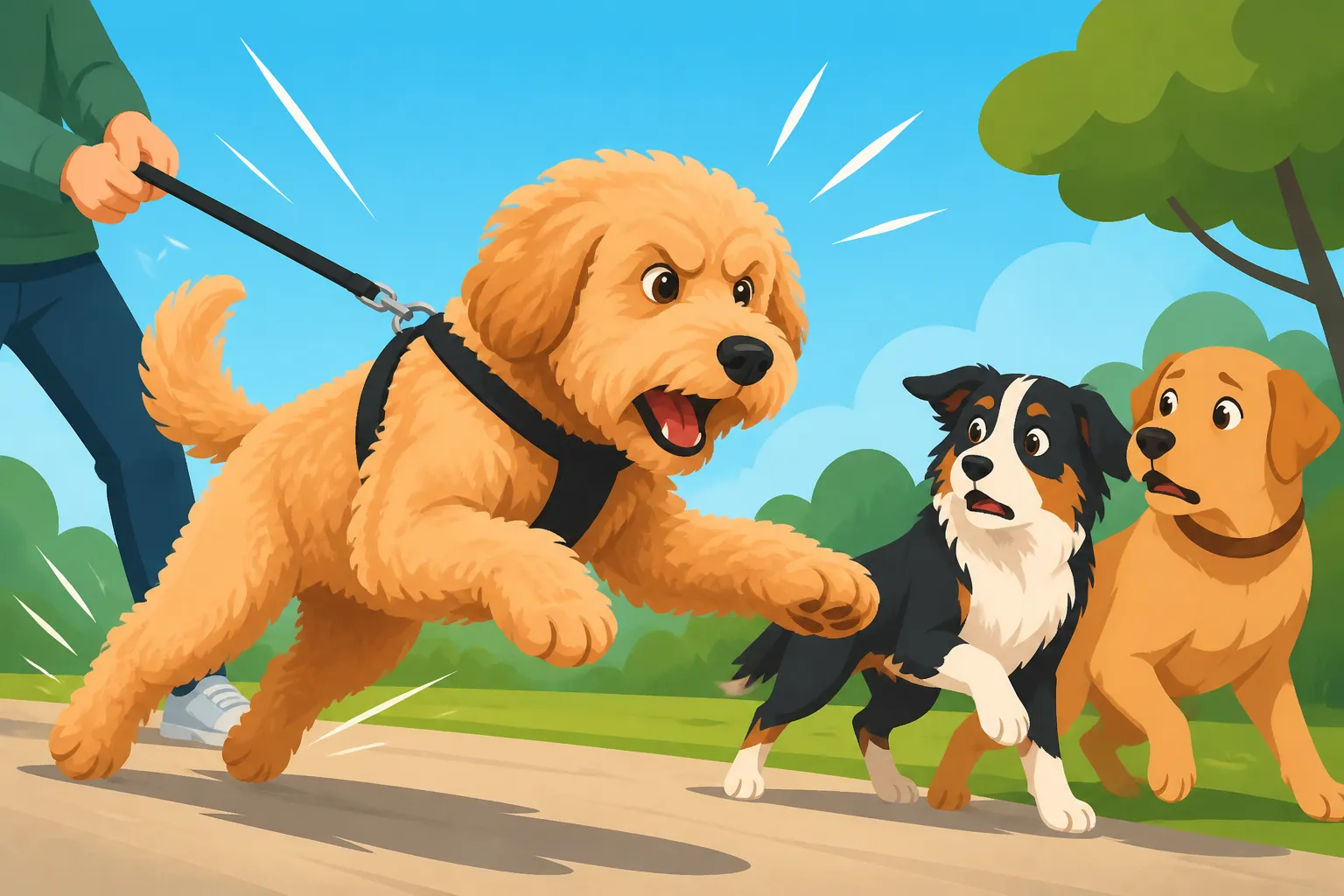
Seeing your beloved Goldendoodle, usually so sweet and eager to please, suddenly transform into a lunging, barking, or whining mess at the sight of another dog can be incredibly frustrating and frankly, embarrassing. You might feel a mix of confusion, helplessness, and even a little bit of dread every time you step out the door. This guide is here to help you understand why this happens and give you actionable steps to regain control, making walks enjoyable for both you and your furry companion.
Understanding Why Your Goldendoodle Lunges
It’s easy to feel like your Goldendoodle is deliberately misbehaving when they lunge, but often, it's a symptom of deeper emotions or unmet needs. Understanding the root cause is the first step toward effective management and training.
The Difference Between Friendly Frustration and Reactivity
Many Goldendoodle owners wrestle with a particular type of leash reactivity that isn't rooted in aggression or fear, but rather in an overwhelming desire to greet every dog they see. Your Goldendoodle is bred from two famously friendly and social breeds – the Golden Retriever and the Poodle. They often genuinely love other dogs, and being restrained on a leash when another dog is nearby can create immense frustration. This "friendly frustration" manifests as lunging, barking, whining, and pulling because they desperately want to go say hello, but can't.
This isn't to say true reactivity (rooted in fear, anxiety, or even aggression) doesn't exist in Goldendoodles, but it's important to distinguish. A Goldendoodle suffering from friendly frustration will often have loose, wiggly body language, a wagging tail, and an open mouth (a "smile") once they get close to another dog, even if their on-leash approach looked frantic. A truly reactive dog might show stiff body language, growling, ears pinned back, or an attempt to retreat if given the chance. Knowing the difference helps you tailor your approach. For more on their inherent friendliness, check out Why a Goldendoodle Cannot Contain Itself at Greetings.
Common Triggers for Lunging Behavior
Lunging isn't a random act; it's almost always triggered by something specific in the environment. For Goldendoodles, the primary trigger is, unsurprisingly, other dogs. However, the context matters immensely.
- Distance: Often, the closer another dog gets, the more intense the reaction. Your Goldendoodle might be fine if a dog is across the park, but becomes a wild animal when one turns the corner on your street.
- Surprise Encounters: A sudden appearance of another dog can trigger a much stronger reaction than if your Goldendoodle has time to process their presence from afar.
- Restraint: The leash itself can be a major factor. This is often called "leash frustration." When a dog feels confined and unable to act on their impulse (to greet, to play, or even to flee), the leash can intensify their reaction. They might feel more vulnerable or simply more frustrated by the physical barrier.
- Environment: Certain environments might be more triggering than others. A busy dog park path or a narrow sidewalk where dogs pass close by are often hotspots for lunging, whereas an open field might produce a different, calmer response.
Understanding these triggers helps you anticipate and manage situations before your Goldendoodle even has a chance to react. It’s all about setting them up for success.
Breed Traits Contributing to Lunging
It’s crucial to remember that your Goldendoodle is a blend of two highly intelligent and active breeds, each bringing specific traits to the table. These traits, while wonderful in many contexts, can also contribute to the lunging behavior we're trying to address.
The Golden Retriever side of your Goldendoodle often brings an immense desire to please, paired with a natural exuberance and friendliness towards everyone and everything. They want to be friends with every person and every dog they meet. This drive to connect is powerful. What a Goldendoodle Takes From the Golden Retriever elaborates on this eagerness.
On the other hand, the Poodle influence contributes intelligence, sensitivity, and often a high energy level. Poodles can be quite sensitive to their environment and the emotions of their handlers. They also often possess a boundless enthusiasm for play and interaction. Combine this sensitivity with the Golden's outgoing nature, and you get a dog that can become incredibly overstimulated and frustrated when prevented from engaging with other dogs. This can lead to what looks like unruly behavior, but is often just an outpouring of unmanaged excitement.
Practical Strategies to Manage Leash Lunging
Managing leash lunging effectively requires a multi-faceted approach, combining environmental control with consistent positive reinforcement training. It's about changing both your dog's reaction and the way you handle situations.
Managing the Environment and Avoiding Triggers
The immediate goal is to prevent your Goldendoodle from practicing the unwanted behavior. Every time they lunge and bark, they are essentially rehearsing the behavior, making it stronger. Think of it like breaking a bad habit in humans – the less you do it, the easier it is to stop.
- Increase Distance: This is your number one tool. If your Goldendoodle reacts at 20 feet, try to stay at 30 or 40 feet. Find the distance where they notice another dog but don't react. This is their "threshold." Work below this threshold. This might mean crossing the street, ducking behind a car, or even turning around and walking in the opposite direction.
- Change Walking Routes and Times: If you know certain paths or times of day are crowded with dogs, adjust your schedule. Walk in quieter neighborhoods, during off-peak hours (early morning or late evening), or explore less popular trails. This isn't avoiding the problem forever; it's buying time to train.
- Parallel Walks: If you have a trusted friend with a calm, dog-friendly pup, arrange parallel walks. Start far apart and walk in the same direction, gradually decreasing the distance over many sessions, only as your Goldendoodle remains calm. The dogs should not be allowed to greet face-to-face during this training phase.
Using Positive Reinforcement for Calm Behavior
Positive reinforcement is the absolute cornerstone of addressing lunging, especially for Goldendoodles who are typically eager to please. We want to reward the alternative behaviors we desire.
- Counter-Conditioning: This means changing your Goldendoodle's emotional response to the trigger. Instead of seeing another dog and feeling frustrated, we want them to associate other dogs with something good happening to them. Start at that "threshold distance" where your Goldendoodle notices the other dog but stays calm. The moment they spot another dog, immediately mark the moment (with a verbal marker like "yes!" or a clicker) and give them a super high-value treat (think cooked chicken, cheese, or hot dogs). The other dog appears, tasty treat appears.
- Desensitization: This is the process of gradually exposing your Goldendoodle to the trigger at increasing intensity, while keeping them below their threshold. Combine this with counter-conditioning. As they consistently remain calm at a certain distance, you can slowly try to decrease the distance, always ready to increase it again if they show signs of stress or impending reaction.
- "Look at Me" or "Focus" Cue: Teach your Goldendoodle to make eye contact with you on cue, first in a distraction-free environment, then gradually introducing mild distractions. This becomes an invaluable tool on walks. When you see a trigger approaching, ask for their focus before they can react. Reward generously for eye contact. This is a fantastic Goldendoodle Impulse Control Exercise.
Essential Gear and Tools
Having the right equipment can make a significant difference in both your ability to manage your Goldendoodle and their comfort during training.
- Front-Clip Harness: For many Goldendoodles, a front-clip harness can be a game-changer. When your dog pulls, the leash attachment on the chest redirects their momentum to the side, making it harder for them to lunge forward with full force. This gives you more control and can reduce the immediate physical impact of a lunge. Avoid harnesses that restrict shoulder movement or cause discomfort. There are many options available on platforms like Amazon.
- Standard Leash (6-foot): A standard 6-foot leash (not retractable) provides enough length for your Goldendoodle to explore safely while giving you adequate control. Always hold the leash securely.
- High-Value Treats: These are non-negotiable. Forget boring kibble. You need treats that your Goldendoodle would do anything for – soft, smelly, and easy to consume quickly. Cut them into pea-sized pieces for rapid rewarding.
- Treat Pouch: A convenient treat pouch worn on your waist means treats are always readily accessible, allowing for quick rewards the moment your Goldendoodle performs a desired behavior. This instant gratification is key to effective positive reinforcement.
Step-by-Step Training Plan for Addressing Lunging
Consistency and patience are vital. This isn't a quick fix, but a journey of teaching your Goldendoodle new, calmer ways to navigate the world.
Foundation Training: Focus and Engagement
Before you even step out the door, build a strong foundation of focus and engagement indoors. If your Goldendoodle doesn't pay attention to you in a calm environment, they certainly won't when highly distracted by another dog.
- "Watch Me" Command: Start by holding a treat near your nose. When your Goldendoodle looks at your eyes, say "Yes!" and give the treat. Gradually phase out the treat from your nose, making eye contact the rewardable behavior. Practice this in different rooms, with mild distractions, then gradually outdoors in a quiet area.
- Name Recognition: Ensure your Goldendoodle reliably turns their head and looks at you when you call their name. Make their name a positive interrupter and a cue for good things (treats!). This is essential for getting their attention when a trigger appears.
- Engaging Play: Spend time playing with your Goldendoodle (fetch, tug-of-war) to strengthen your bond and make yourself the most interesting thing in their world, even over external distractions.
Implementing the "Look at That" (LAT) Game
The "Look at That" (LAT) game is a powerful counter-conditioning tool for dogs who lunge. It teaches them to look at a trigger, then look back at you for a reward, effectively changing their emotional response.
- Find Your Threshold: Begin in an environment where other dogs are visible but far enough away that your Goldendoodle notices them but doesn't react. This might be across a large park or even watching from inside a car with the window down.
- Mark and Reward the "Look": The instant your Goldendoodle looks at another dog (without reacting), say "Yes!" or click, and give them a high-value treat. Don't wait for them to look back at you yet; just mark and reward the observation of the trigger.
- Repeat and Build the Association: Continue this, creating a positive association: "Other dog = treat!"
- Introduce the "Look Back": Once they reliably look at the other dog and then look back at you expecting a treat, you can introduce a verbal cue like "Look at that!" (or "LAT"). Say "LAT" as they spot the dog, then mark and reward their eventual look back at you.
- Gradually Decrease Distance: Over many, many sessions, very slowly decrease the distance to the trigger, always ensuring your Goldendoodle stays below their threshold. If they start to react, you've moved too fast; increase the distance again.
- Practice, Practice, Practice: This game requires consistent practice in various environments. Online training programs, like those offered by BAXTER & Bella, can provide structured modules and support to guide you through these steps systematically, helping you build this crucial skill with your Goldendoodle.
What to Do When Lunging Happens
Despite your best efforts, your Goldendoodle will occasionally go over threshold and lunge. How you react in these moments is crucial.
- Disengage and Create Distance: The immediate priority is to safely remove your Goldendoodle from the situation. Turn and walk in the opposite direction, duck behind a car, or find a natural barrier. Do this as calmly as possible. The goal is to get them below their threshold again.
- Avoid Punishment: Never punish your Goldendoodle for lunging. Punishment (yelling, leash corrections, physical force) can actually worsen reactivity because it adds negative association to the trigger (now, other dogs predict discomfort from you). It also damages your bond and can make your Goldendoodle fear you.
- Manage, Then Reset: Once you've created distance and your Goldendoodle is calm, ask for a simple behavior like a "sit" or "watch me," reward it, and then continue your walk or training session. Don't dwell on the incident; simply use it as information that you pushed too far too fast, or an unexpected trigger occurred. For more on impulse control, consider Goldendoodle Impulse Control Exercises.
When to Seek Professional Help
While these strategies are incredibly effective for many Goldendoodles, sometimes the behavior runs deeper, or you simply need personalized guidance. There's no shame in seeking professional help; it's a responsible choice for both you and your dog.
Recognizing Signs Your Goldendoodle Needs More Support
If you've been diligently working on the above strategies for several weeks or months, but you're not seeing improvement, or if the behavior seems to be escalating, it's time to consider a professional.
- Aggression: If your Goldendoodle is showing signs of true aggression (growling, snapping, baring teeth, attempts to bite) rather than just friendly frustration, immediate professional intervention is necessary to ensure safety.
- Fear/Anxiety: Some lunging stems from fear or deep-seated anxiety. If your Goldendoodle displays a tucked tail, cowering, excessive panting, drooling, or attempts to hide, they might be genuinely fearful.
- Self-Injury: If your Goldendoodle is lunging so violently that they are choking themselves on the leash, hurting your arm, or showing other signs of extreme distress, a professional can help you develop safer management and training plans.
- Stuck on a Plateau: If you feel like you've hit a wall and can't progress to closer distances or different environments, a fresh pair of expert eyes can offer new insights and techniques.
- General Stress: If your Goldendoodle seems generally stressed or anxious, even when not encountering triggers, this could indicate a broader issue that needs veterinary and behavioral support.
Finding a Qualified Trainer or Behaviorist
Choosing the right professional is critical. Unfortunately, the dog training industry is largely unregulated, so it's essential to do your homework.
- Certifications Matter: Look for trainers with certifications from reputable organizations such as the Certification Council for Professional Dog Trainers (CCPDT), the Karen Pryor Academy (KPA), or the Academy for Dog Trainers. For more severe cases, a Veterinary Behaviorist (DACVB) or a Certified Applied Animal Behaviorist (CAAB) might be necessary.
- Positive Reinforcement Only: Insist on a trainer who uses only positive reinforcement and fear-free methods. Avoid anyone who suggests harsh corrections, choke chains, prong collars, or e-collars for reactivity. These methods can suppress behavior temporarily but often exacerbate underlying fear and can damage your Goldendoodle's emotional well-being. Positive Reinforcement and Why It Suits a Goldendoodle can provide more detail.
- Experience with Reactivity: Ask about their experience specifically with leash reactivity and Goldendoodles or similar breeds. A good trainer will have a clear understanding of breed-specific traits and common challenges.
- Observe a Session: Ask if you can observe a training session before committing. Watch how they interact with dogs and clients.
- References: Don't hesitate to ask for references from past clients.
- Veterinarian Recommendation: Your veterinarian may be able to recommend local trainers or behaviorists they trust.
For more generalized advice on finding a professional, you can read Finding a Trainer Who Works With Goldendoodles.
Here's a quick comparison of common training goals and approaches for lunging:
| Goal | Approach | Key Tools/Techniques | Expected Outcome |
|---|---|---|---|
| Reduce Reaction Intensity | Counter-conditioning & Desensitization | High-value treats, Clicker/marker, Threshold management | Goldendoodle notices trigger but remains calm/looks at you |
| Increase Handler Focus | Engagement & Attention Training | "Watch Me" cue, Name recall, Engaging play | Goldendoodle chooses to look at you over distractions |
| Improve Leash Manners | Loose-leash walking, Front-clip harness | Reward for slack leash, Direction changes | Goldendoodle walks politely without pulling |
| Teach Impulse Control | "Leave It," "Stay," "Place" commands | Structured exercises, Gradual distraction introduction | Goldendoodle delays gratification, self-regulates |
Remember, your Goldendoodle isn't trying to be difficult; they're communicating. With patience, understanding, and the right training, you can help them become a calmer, more confident companion on walks.
Disclaimer
This article is for general informational purposes only and does not constitute professional advice. Laws, prices and regulations vary by location and change over time. Consult a qualified professional for guidance on your specific situation.