Why a Goldendoodle Cannot Contain Itself at Greetings
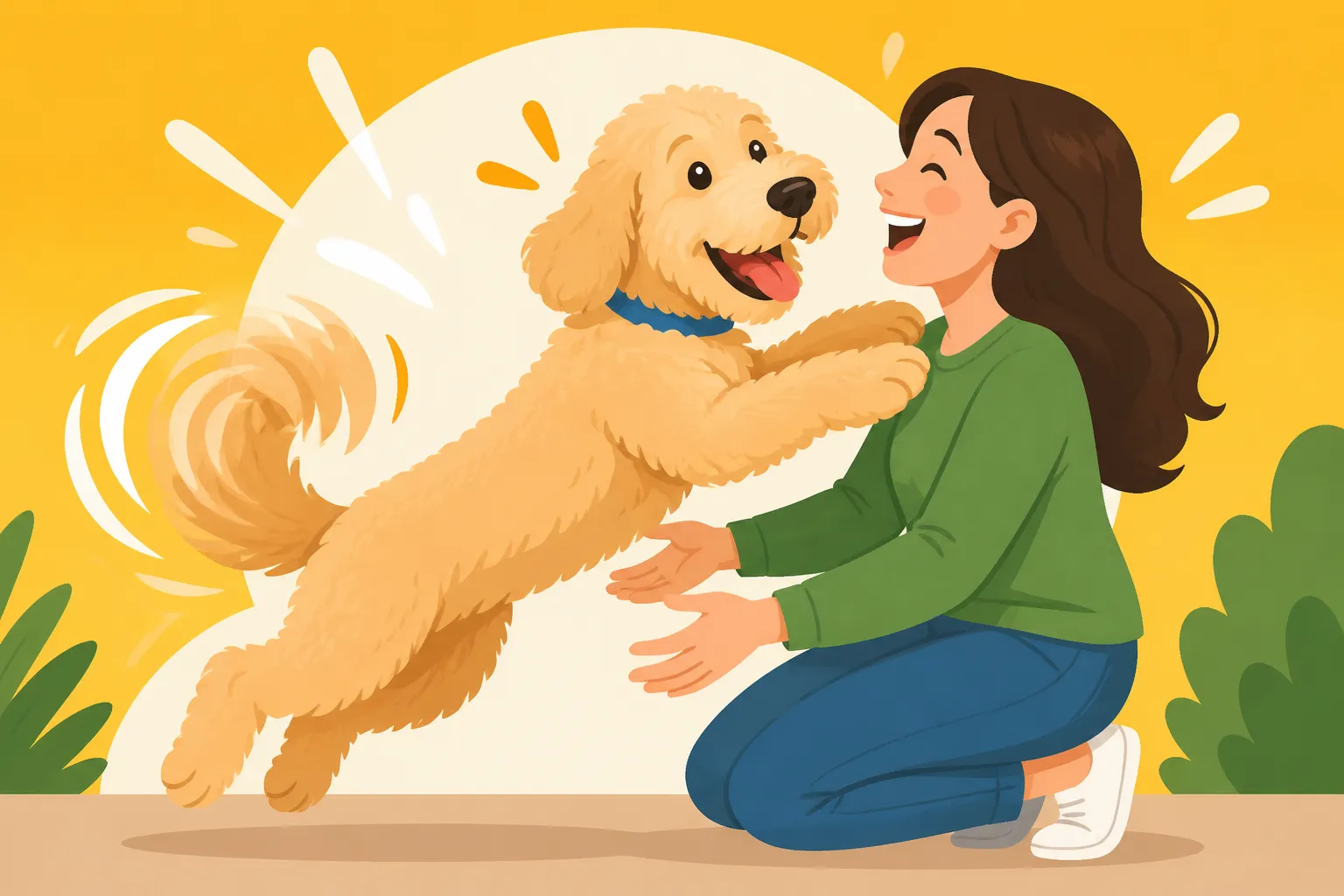
Oh, the Goldendoodle greeting! It's a tale as old as time, or at least as old as the Goldendoodle itself. You love their joyful nature, their exuberance, their absolute delight when they see you or a guest. But let's be honest, that delight often manifests as an uncontrollable explosion of jumps, frantic tail wags, and sometimes, even a little nervous pee. It’s frustrating when you just want a calm "hello" without getting knocked over or having your guest retreat in fear. This guide is here to help you understand why your Goldendoodle struggles to contain themselves during greetings and, more importantly, equip you with the strategies to teach them a more polite way to say hi.
The Goldendoodle Temperament: A Recipe for Over-Excitement
Goldendoodles are truly wonderful dogs, known for their affectionate, friendly, and often goofy personalities. But these very traits, when left unchecked, can translate into an inability to self-regulate their excitement during greetings. They are, after all, a blend of two highly social and intelligent breeds, each bringing their own contributing factors to the greeting frenzy.
The Golden Retriever's Enthusiastic Greeting Nature
Let's start with the Golden Retriever side of the family. Goldens are renowned for their eagerness to please and their incredibly friendly disposition. They love people, like, really love people. It's almost as if every new face is a long-lost best friend, and they simply can't wait to share their joy. This innate drive to connect with humans often comes with a certain level of physical expression – jumping up, mouthing, and wiggling their entire body. It’s not malice; it's pure, unadulterated excitement and a strong desire for attention and interaction. They're often so caught up in the moment that they don't even realize they're being rude or causing discomfort. Many Goldendoodle owners can attest to this boundless enthusiasm, often feeling like their dog is a furry, four-legged wrecking ball of love. It’s part of What a Goldendoodle Takes From the Golden Retriever.
The Poodle's Intelligence and Desire to Engage
Then there's the Poodle, a breed celebrated for its sharp mind and active intelligence. Poodles are not just pretty faces; they are highly attuned to their environment and their human companions. This intelligence, while fantastic for training, can also contribute to frantic greetings if not channeled properly. A smart dog often learns quickly what gets a reaction, and for many Goldendoodles, jumping up or being overly boisterous has been accidentally rewarded with attention, even negative attention. The Poodle side also brings a certain sensitivity; some Goldendoodles might be overwhelmed by new people or situations, and their frantic greeting is a way of coping with that overstimulation, especially if they haven't been properly socialized. They crave interaction and mental engagement, and sometimes, a wild greeting is their misguided attempt to initiate that connection. Think of it as their brain going into overdrive. This can sometimes contribute to The Poodle Sensitivity a Goldendoodle Can Inherit.
How Early Socialization (or Lack Thereof) Shapes Greetings
The experiences your Goldendoodle has during its crucial puppyhood deeply influence its adult behavior, including how it greets people. A well-socialized puppy is exposed to a wide variety of sights, sounds, people, and other animals in a positive and controlled manner. This helps them develop confidence and appropriate social skills.
- Inadequate Socialization: If a Goldendoodle puppy hasn't had enough exposure to different types of people (tall men, kids, people with hats, people in wheelchairs, etc.) or positive interactions, they might greet new individuals with an overwhelming mix of excitement and uncertainty. Their frantic behavior can be a blend of "Oh my goodness, a new person!" and "I'm not entirely sure how to act right now!" This can lead to Goldendoodle Behavior Problems That Start in Puppyhood that manifest as extreme greeting behaviors.
- Over-the-Top Greetings Reinforced: Conversely, sometimes even well-meaning owners accidentally reinforce frantic greetings. Every time your puppy jumps and you squeal, push them off, or even just look at them, you're giving them attention – and to a Goldendoodle, any attention is often good attention. They learn that jumping gets a reaction, making them repeat the behavior. It’s a classic case of positive reinforcement gone awry. That's why Socializing a Goldendoodle Beyond Hyper-Friendliness is so important – it’s not just about liking people, but about how to engage with them politely.
Understanding the Root Causes of Jumping and Frantic Greetings
When your Goldendoodle is launching itself at your guests, it’s not just being "naughty." There are often several underlying motivations and learned behaviors at play. Unpacking these can help you approach training with more empathy and effectiveness.
Attention-Seeking and Reinforcement Cycles
This is by far one of the most common reasons for a Goldendoodle's inability to contain itself. They want your attention, or the attention of your visitor, and they’ve learned that a big, bouncy greeting gets it.
Imagine this scenario: A friend comes over, and your Goldendoodle, let's call her Daisy, races to the door. She jumps up, paws at your friend's legs, maybe even lets out a little excited bark. Your friend, trying to be polite, bends down and pats Daisy, or says "No, no!" while pushing her away. In Daisy's mind, she just got exactly what she wanted: interaction. Even if the interaction was a push or a verbal correction, it was attention. Goldendoodles thrive on engagement, and they quickly figure out which behaviors reliably elicit a response. This creates a powerful reinforcement cycle that is hard to break without a deliberate change in your own responses. A Goldendoodle That Jumps on Every Guest is simply following a learned pattern.
Lack of Impulse Control and Overarousal
Goldendoodles are often high-energy dogs, especially in their younger years. Their enthusiasm can quickly turn into overarousal, where they become so excited they lose the ability to think rationally or control their impulses. When someone new arrives, their internal "excitement meter" skyrockets. They want to be polite, but their brain is saying, "Guest! Friend! Play! Attention! NOW!" at a million miles an hour.
This isn't just about greetings; a lack of general impulse control can manifest in other areas, like snatching treats, bolting through doors, or relentless whining. It’s why focusing on Goldendoodle Impulse Control Exercises in daily life, not just at greeting times, is so crucial. They need to learn to pause, to think, and to choose appropriate behaviors even when highly stimulated. Without this fundamental skill, every new visitor is a test they’re not yet equipped to pass. They struggle with that crucial moment of self-restraint.
Fear, Anxiety, or Uncertainty Masked as Excitement
While many Goldendoodle greetings are pure joy, sometimes frantic behavior can stem from a place of fear, anxiety, or uncertainty. This might seem counterintuitive because they look so happy, but overwhelmed dogs can express their discomfort in various ways.
Consider a Goldendoodle who wasn't properly socialized as a puppy, or perhaps had a negative experience with a particular type of person. When a new guest arrives, that dog might jump, bark, and wiggle not just out of excitement, but because they are trying to create distance, solicit reassurance, or are simply unsure how to handle the new presence. The energy might be genuine, but the underlying emotion is a bit more complex. They might be thinking, "Who are you? Are you friendly? Please don't hurt me! Let's just get this over with!" It’s a dog’s way of saying, "I'm overwhelmed!" Recognizing this distinction is vital, as training approaches for anxiety differ from those for pure attention-seeking. A dog experiencing genuine stress might also exhibit other subtle signs like lip-licking, yawning, or tucking their tail, even amidst the frantic wiggles.
Practical Strategies for Teaching Calm Greetings
So, how do you go from a Goldendoodle greeting you like a runaway train to one that offers a polite "hello"? It takes consistency, patience, and a clear plan. The good news is that Goldendoodles are smart and eager to please, making them excellent candidates for positive reinforcement training.
Foundation Training: "Sit" and "Stay" as the Starting Point
Before you can tackle the chaos of greetings, your Goldendoodle needs a solid foundation in basic obedience, specifically "sit" and "stay." These aren't just parlor tricks; they are crucial tools for managing excited behavior.
- Mastering "Sit": Start in a calm, distraction-free environment. Use a high-value treat to lure your Goldendoodle into a sit, mark the behavior (with a clicker or a verbal "Yes!"), and reward. Practice this many, many times a day in various locations. The goal is for "sit" to become your dog's default response when they want something – whether it’s food, a toy, or attention. We're aiming for a strong "sit" that they offer automatically. This forms the basis of Four Paws on the Floor for a Goldendoodle.
- Introducing "Stay": Once "sit" is reliable, add duration and distance. Start with just a second or two, gradually increasing the time before releasing them and rewarding. Then, take a step back and practice "stay" with you moving a short distance away. Build this up slowly. The "stay" command gives you those critical seconds to manage the environment and your dog's expectations when a guest arrives.
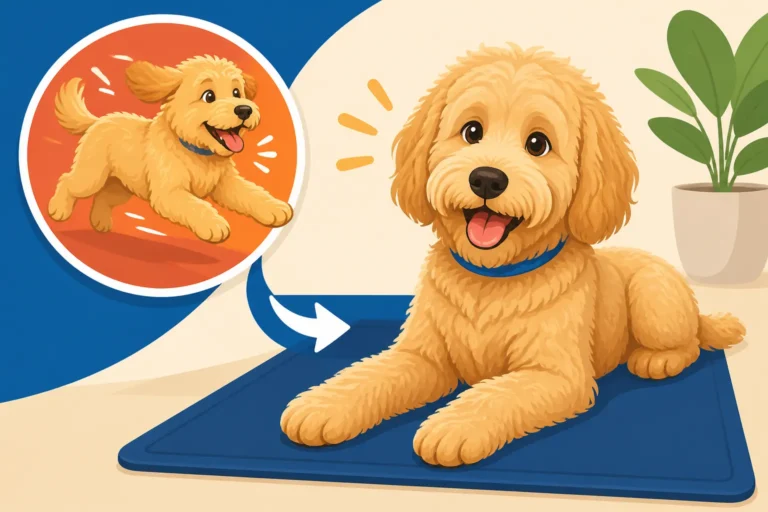
- Integrating "Place" or "Mat Settle": This is an incredibly powerful tool. Teach your Goldendoodle to go to a designated "place" (a dog bed, mat, or crate) and stay there until released. This gives them a calm, safe zone to go to when things get exciting. You can use a brand like BAXTER & Bella to find some great resources for "place" training, or just search for general online guides. Many Goldendoodles benefit immensely from having a dedicated "spot" when company comes over.
Managing the Environment for Successful Greetings
Training is essential, but sometimes, the best strategy is to manage the environment to prevent the frantic behavior from happening in the first place. This sets your Goldendoodle up for success, rather than failure.
- Leash Management: When you know a guest is coming, put your Goldendoodle on a leash before they arrive. This gives you control. Hold the leash firmly but gently. If they start to lunge, you can calmly redirect them or step on the leash to prevent jumping. This isn't about punishment; it's about physical guidance.
- Confinement (Temporary): For particularly excitable dogs, consider using a baby gate, an exercise pen, or even their crate in another room for the initial greeting. Once your guest is settled and the initial excitement has died down, you can then bring your Goldendoodle out on a leash for a controlled, calm greeting. This removes the opportunity for them to practice the unwanted behavior, which is crucial for breaking the cycle. This is especially helpful if your Goldendoodle is prone to Frantic Greeting Behavior in a Goldendoodle.
- Pre-Arrival Exercise: A tired Goldendoodle is a better-behaved Goldendoodle. Before guests arrive, take your dog for a good long walk, play a vigorous game of fetch, or engage in some mental enrichment activities. A physically and mentally satisfied dog will be much calmer and more receptive to your training cues. Remember, Goldendoodle Exercise and Mental Work Every Day is important for their overall well-being and helps manage arousal.
Desensitization and Controlled Practice with Visitors
This is where the real work happens. You need to practice greetings in a controlled way, gradually exposing your Goldendoodle to the exciting situation while ensuring they remain calm.
- Enlist a "Practice Guest": Ask a friend or family member who your dog knows and likes to help you. The key is that they understand the plan and will follow your instructions implicitly.
- The "Doorbell Drill": Have your practice guest ring the doorbell. Before your Goldendoodle can get worked up, direct them to their "place" or ask for a sit/stay. Reward heavily for any calm behavior. If they jump, the "guest" immediately leaves (even just stepping out of sight for a second). The moment your dog is calm, the guest reappears. This teaches them that calm equals guests, and frantic equals no guests.
- The Calm Entry: When your guest is ready to enter, your Goldendoodle should be on their leash or in their "place." The guest should completely ignore your dog at first – no eye contact, no talking, no petting. This removes the accidental reinforcement.
- Rewarding Calmness: Once your Goldendoodle is calm (four paws on the floor, no jumping or frantic wiggling), then the guest can offer a calm greeting – a gentle pat under the chin, a quiet word. If the dog gets excited and jumps, the attention immediately stops. They learn that calm behavior earns attention, while frantic behavior makes it disappear.
- Gradual Increase in Excitement: Start with very brief, calm interactions, and slowly increase the duration and intensity as your dog succeeds. This is a process of desensitization, helping your Goldendoodle learn to associate guests with calm behavior and positive rewards. For some Goldendoodles, you might even need to use positive reinforcement with a clicker or marker word, as discussed in Marker Training a Goldendoodle From Week One.
Long-Term Management and Consistency for Lasting Change
Teaching a Goldendoodle to greet politely isn't a one-and-done kind of deal. It requires ongoing commitment, clear communication, and a holistic approach to their behavior and training.
Consistency is Key: Everyone on Board
This cannot be stressed enough: everyone in your household, and ideally anyone who regularly interacts with your dog, needs to be on the same page. If you're diligently working on Goldendoodle Jumping and the Impulse Control Problem, but your spouse or kids are still allowing or even encouraging jumping during greetings, you're sending mixed signals and undermining your own efforts.
- Establish Clear Rules: Decide on a consistent greeting protocol. For example: "Goldendoodle must sit before getting attention," or "Goldendoodle must stay on their mat until released for a calm greeting."
- Communicate with Guests: Don't be shy about educating your guests. A quick text before they arrive, like "Please ignore Fido for the first few minutes until he's settled, then you can give him a calm pet when he's sitting," can make a world of difference. Most people are happy to help if they know what to do. You can even keep high-value treats (perhaps something from an Amazon order, like small training kibble) by the door for guests to use when your dog does offer a calm behavior.
- Patience and Persistence: There will be setbacks. Your Goldendoodle might have a day where they forget everything. Don't get discouraged. Just calmly redirect and reinforce the desired behavior. Every successful, calm greeting is a step forward.
Beyond Greetings: General Impulse Control and Enrichment
While greeting manners are a specific skill, they are also a reflection of your Goldendoodle's general ability to control their impulses and manage their energy. Building these skills in other areas of their life will naturally spill over into better greetings.
- Structured Walks: Teach loose-leash walking, where your Goldendoodle walks politely by your side, not pulling ahead. This requires focus and impulse control.
- "Leave It" and "Wait": These commands are invaluable. "Leave It" helps them ignore distractions, and "Wait" teaches them patience before getting something they want (like a meal or going through a door). These are all part of a broader set of Goldendoodle Impulse Control Exercises.
- Mental Stimulation: Goldendoodles are smart dogs, and a bored mind can lead to over-excitement and frantic behavior. Incorporate puzzle toys, scent games, and trick training into their daily routine. Mental work can be just as tiring as physical exercise and helps them use their brains in constructive ways.
- Consistent Routines: Dogs thrive on predictability. A consistent daily routine for feeding, walks, training, and downtime can help reduce anxiety and keep their energy levels more balanced, making them less likely to explode with excitement at unexpected events.
When Professional Help is Needed
Sometimes, despite your best efforts, a Goldendoodle's greeting behavior remains problematic. This can be due to deeply ingrained habits, specific anxieties, or a lack of understanding on the owner's part. Don't feel ashamed to seek professional help.
- Certified Professional Dog Trainer (CPDT-KA): A good positive reinforcement trainer can assess your Goldendoodle's specific behavior, identify underlying causes, and create a tailored training plan. They can also provide hands-on guidance and help you hone your training techniques. Look for trainers who specialize in Goldendoodles or similar energetic, intelligent breeds.
- Veterinary Behaviorist (Dip. ACVB): If the frantic greetings seem rooted in deep-seated anxiety, fear, or aggression, a veterinary behaviorist (a veterinarian with specialized training in behavior) can offer a more comprehensive approach, including potential medication in conjunction with behavior modification. They can rule out any underlying medical conditions that might be contributing to the behavior.
| Behavior Trait | Description | Training Focus | Management Strategies |
|---|---|---|---|
| Over-Excitement | Jumping, barking, zooming, mouthing at greetings. | "Sit," "Stay," "Place" commands. Impulse control games. | Leash control, crate/pen for initial greeting, pre-arrival exercise. |
| Attention-Seeking | Initiates boisterous contact to get a reaction. | Rewarding calm alternative behaviors. Ignoring unwanted behavior. | Removing opportunities for self-reinforcement. |
| Lack of Control | Struggles to calm down once aroused. | General obedience, relaxation protocols, structured play. | Controlled environment, managing triggers, predictable routines. |
| Anxiety/Fear | Frantic behavior as a coping mechanism for stress. | Confidence-building, desensitization, counter-conditioning. | Safe space, predictable routine, professional behaviorist consultation. |
Ultimately, teaching your Goldendoodle to greet politely is about patience, consistency, and understanding. They want to connect with you and your guests; you're simply teaching them the most appropriate and enjoyable way to do it for everyone involved.
Disclaimer
This article is for general informational purposes only and does not constitute professional advice. Laws, prices and regulations vary by location and change over time. Consult a qualified professional for guidance on your specific situation.