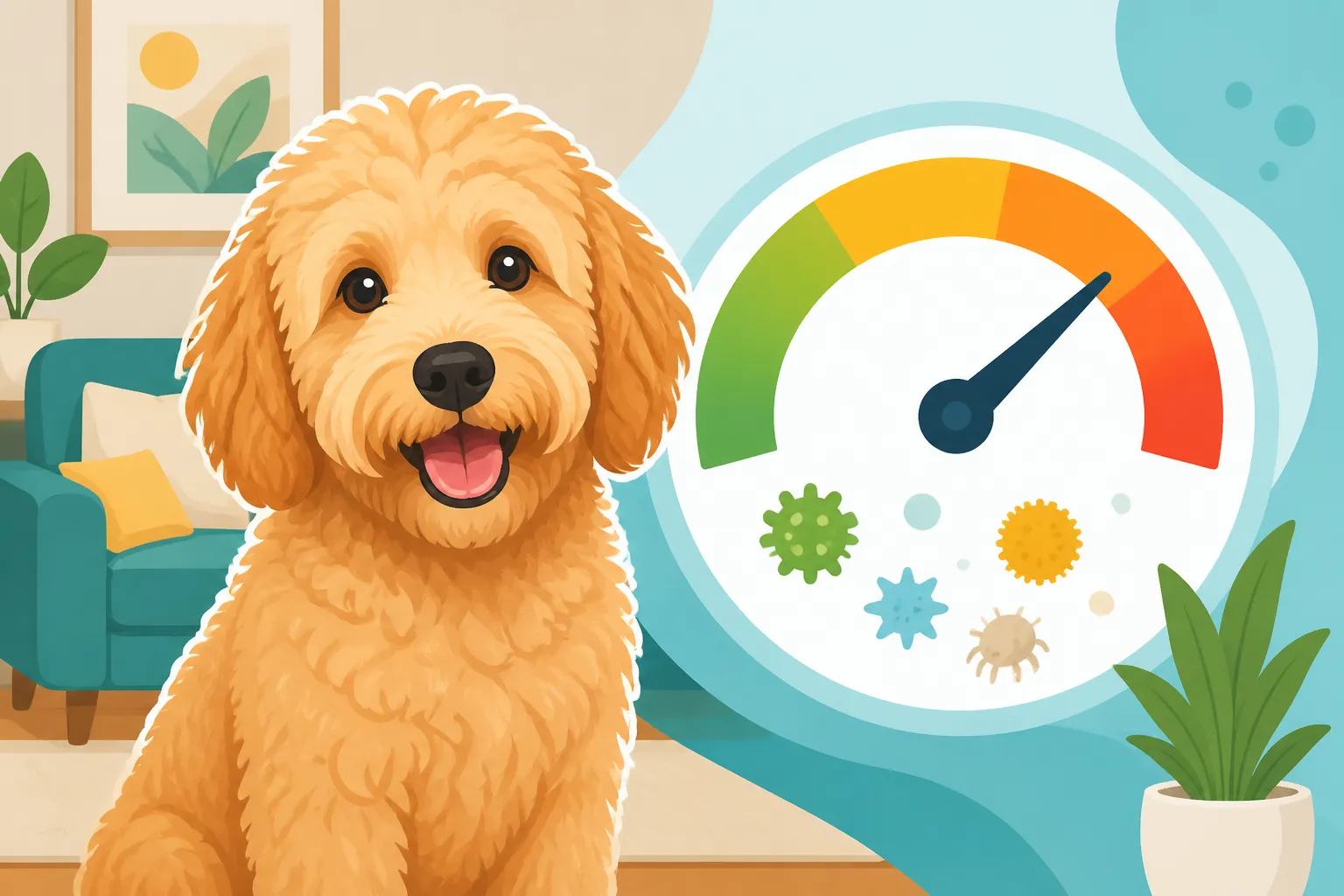
Allergen Levels Measured in Goldendoodle Homes
So, you're dreaming of bringing a fluffy, friendly Goldendoodle into your life, but that nagging worry about allergies keeps creeping in. You've heard they're "hypoallergenic," but what does that actually mean when it comes to living with one, especially if someone in your household has sensitivities? It’s a common frustration, and honestly, the term "hypoallergenic" can be really misleading. This guide is here to cut through the confusion and help you understand the true nature of allergen levels in Goldendoodle homes, offering realistic insights and practical steps to create a more comfortable environment.
Understanding the Real Culprit: Goldendoodle Allergens Beyond the Shed
It’s easy to think that if a dog doesn’t shed much, it won’t trigger allergies. Many Goldendoodle owners, and even some breeders, will tell you their dogs are hypoallergenic because they don't leave piles of hair around. But that’s only part of the story, and frankly, it's often the least important part when it comes to actual allergic reactions. What people are allergic to isn't typically the hair itself, but rather the proteins found in a dog's dander, saliva, and urine.
The Science Behind Dog Allergens: Can f 1 and Beyond
The primary culprit for most dog allergies is a protein called Can f 1. This isn't just floating around on shed hair; it’s produced in a dog’s skin glands, saliva, and urine. When your Goldendoodle licks itself, the saliva dries, and tiny particles containing Can f 1 become airborne or settle on surfaces. When they scratch, more dander – which is microscopic flakes of skin – is released into the environment, carrying these proteins along with it. Even their urine, if they have an accident or mark territory, contains allergens.
Think about it this way: your Goldendoodle might be a low-shedder, but they still have skin, they still groom themselves with their tongue, and they still pee. All of these bodily functions are continuous sources of allergens, regardless of how much hair ends up on your sofa. It's a bit like saying a cat with short hair won't cause allergies; it's the dander and saliva, not just the hair, that are the main irritants. This is why Can f 1 and Where a Goldendoodle Carries Allergens is such an important topic to understand.
Dander: The Invisible Allergen Distributor
Dander is microscopic, often invisible to the naked eye, and incredibly sticky. It can adhere to clothing, furniture, carpets, walls, and even circulate in the air through your home’s ventilation system for hours. This means that even if your Goldendoodle isn't in a particular room, their dander—and the allergens it carries—can still be present. This is a critical point that often gets overlooked when people focus solely on shedding.
Imagine a Goldendoodle bounding in from outside, shaking off excess energy. What you might not see is the cloud of microscopic dander, dust, and environmental allergens (like pollen picked up on their coat) that disperses into your living space. This invisible cascade settles everywhere, embedding itself into soft furnishings and carpets, becoming a persistent presence. Even the cleanest home will have dander if a dog lives there, and for an allergy sufferer, this constant exposure can be incredibly challenging.
Why "Hypoallergenic" Isn't the Whole Story for Goldendoodles
The term "hypoallergenic" literally means "less allergenic," not "non-allergenic." It implies that these breeds produce fewer allergens or release them less into the environment. While Goldendoodles, particularly those with curlier, more Poodle-like coats, might shed less visible hair, this doesn't automatically translate to significantly lower allergen production or release.
Coat Types and Their Real Impact on Allergens
Goldendoodles come in a few different coat types: straight (often called "flat coat" or "hair coat"), wavy (fleece coat), and curly (wool coat). It’s generally the curlier coats, inherited more strongly from the Poodle side, that are associated with less shedding. The idea is that shed hairs get caught in the curls rather than falling out onto floors and furniture, thus trapping dander and preventing it from becoming airborne.
However, even if the hair (and the dander attached to it) is trapped, it's still present on the dog. When you brush your Goldendoodle, when they rub against furniture, or even just when air currents move around them, these trapped allergens can still be released. Think of it like a lint trap: it catches the lint, but the lint is still there until you empty it. Similarly, a Goldendoodle's coat, regardless of its texture, is a carrier of allergens. You might find it useful to read The Three Goldendoodle Coat Types and How to Tell Them to understand how these coats can vary.
Shedding vs. Dander Production: A Crucial Distinction
The key distinction here is between shedding (the release of hair) and dander production (the release of skin cells and associated proteins). All dogs, including Goldendoodles, produce dander. A Goldendoodle might shed less visible hair than a Golden Retriever, but it doesn't necessarily produce less dander. The Goldendoodle hybrid vigor claim often focuses on health, but it doesn't magically eliminate allergen production either.
Many people get a Goldendoodle because they’re told it won't shed, and therefore won't cause allergies. They bring home an adorable puppy, and for the first few months, everything seems fine. Then, as the puppy coat changes or as the dog grows, allergic reactions can start to surface because the underlying dander is still being produced. This can be incredibly disheartening for families who thought they had found a foolproof solution. This is why understanding Whether a Low-Shedding Goldendoodle Helps Allergies is so important before making a commitment.
Measuring Allergens in Your Goldendoodle Home: What Studies Show and What It Means
While anecdotal evidence abounds regarding "hypoallergenic" dogs, scientific studies on allergen levels in homes with these breeds offer a more nuanced picture. It’s not as clear-cut as many wish it were. The goal here isn't to discourage, but to equip you with realistic expectations.
Research on Allergen Levels in "Hypoallergenic" Homes
Several studies have compared allergen levels in homes with "hypoallergenic" breeds (including Poodles and their crosses like Goldendoodles) to homes with other breeds. The findings are often inconsistent. Some studies show no significant difference in airborne or surface allergen levels between homes with so-called hypoallergenic dogs and those with shedding breeds. Others suggest only marginal differences, not enough to alleviate severe allergies.
For example, a study might collect dust samples from carpets or measure airborne particles. What they often find is that while a Poodle or Goldendoodle might shed less hair, the concentration of Can f 1 protein in the environment isn't drastically different. This suggests that the primary source of the allergen is not just the shed hair, but the dander and saliva that are universally produced by all dogs. It essentially confirms that What Allergists Say About Goldendoodles often diverges from popular marketing.
What These Findings Mean for Allergy Sufferers
For someone with mild allergies, a Goldendoodle might feel like a better fit simply because there's less visible hair around, which can subjectively make the home feel cleaner. However, for individuals with moderate to severe dog allergies, relying solely on a Goldendoodle's "hypoallergenic" status could lead to significant disappointment and health issues. The continuous, albeit perhaps less visible, presence of allergens can still trigger symptoms like sneezing, itchy eyes, skin rashes, or even asthma.
It's a really tough pill to swallow when you've fallen in love with the idea of a Goldendoodle, only to learn that the science doesn't fully back up the "no allergies" claim. It means that simply having a Goldendoodle doesn't solve the allergy problem on its own. It requires a more proactive, multi-faceted approach to managing the home environment.
Practical Strategies for Reducing Allergen Levels in Goldendoodle Homes
Okay, so we've established that Goldendoodles aren't truly allergen-free. But does that mean an allergy sufferer can never live with one? Not necessarily! With a diligent and consistent approach, you can significantly reduce allergen levels in your home, making it more manageable for those with sensitivities. It takes effort, but it's often worth it for the love of a Goldendoodle.
Grooming Routines to Minimize Dander Spread
Regular and thorough grooming is your first line of defense. This means brushing your Goldendoodle daily, preferably outside, to capture loose hair and dander before it spreads through your home. Use a slicker brush and a metal comb to get deep into their coat, ensuring you're removing as much as possible. A good bath schedule is also essential, usually every 2-4 weeks, using a mild, dog-specific shampoo to wash away dander and other irritants from their skin and coat.
When bathing, make sure to rinse thoroughly to avoid leaving any shampoo residue that could irritate their skin and lead to more scratching and dander. After the bath, completely dry their coat; a damp coat can be a breeding ground for yeast or bacteria, which can exacerbate skin issues and lead to more dander. Investing in a high-velocity dryer can be incredibly helpful for this. You might find a wide range of suitable grooming supplies on Chewy, from brushes to hypoallergenic shampoos that can make this process easier and more effective. Remember, consistent Brushing a Goldendoodle Often Enough to Stop Matting is key, and it helps with allergens too!
Environmental Controls and Cleaning Protocols
Your home environment plays a huge role in allergen management. Here's a table outlining key areas and actions:
| Area/Action | Description | Frequency |
|---|---|---|
| Flooring | Replace carpets with hard-surface flooring (hardwood, laminate, tile) where possible. Carpets trap allergens deep within their fibers. | One-time change, then daily/weekly cleaning |
| Upholstery/Fabrics | Opt for leather or easily washable slipcovers on furniture. Wash pet bedding, blankets, and throws frequently in hot water. | Weekly for bedding, monthly for slipcovers, as needed for throws |
| Air Filtration | Use high-efficiency particulate air (HEPA) filters in your vacuum cleaner and HVAC system. Consider standalone HEPA air purifiers in rooms where your Goldendoodle spends a lot of time, especially bedrooms. | Vacuum filter: replace every 3-6 months; HVAC filter: monthly; Air purifier filter: every 6-12 months (check manufacturer recommendations) |
| Vacuuming | Vacuum regularly with a HEPA-filtered vacuum. Focus on areas where your Goldendoodle rests or walks. Damp mop hard floors afterwards to catch any remaining airborne particles. | Daily or every other day, especially in high-traffic pet areas |
| Designated "No-Dog" Zones | Establish certain areas, particularly the allergy sufferer's bedroom, as off-limits for your Goldendoodle. This creates a sanctuary with lower allergen exposure. | Always (enforce strictly) |
| Handwashing | Encourage everyone, especially allergy sufferers, to wash hands thoroughly after petting or playing with the Goldendoodle. | After every interaction |
Investing in a high-quality HEPA air purifier can make a significant difference, running it continuously in common areas. For a bedroom where an allergy sufferer sleeps, keeping the Goldendoodle out and running an air purifier can create a much-needed haven. Remember, consistency is key with these cleaning protocols. You're not just cleaning for cleanliness; you're cleaning for health. Chewy also carries many effective cleaning products designed for pet homes, including enzyme cleaners for any accidents that might leave allergen residue.
Dietary Considerations and Overall Health
Sometimes, a Goldendoodle's skin health can impact dander production. Dry, flaky skin can lead to more dander. Ensure your Goldendoodle is on a high-quality, balanced diet that supports skin and coat health. Omega-3 fatty acids, often found in fish oils or fortified dog foods, can be beneficial for skin hydration and reducing inflammation. Always consult your vet if you notice excessive scratching, redness, or flakiness, as these could be signs of allergies in your Goldendoodle itself, which might lead to more dander. Goldendoodle allergies and itchy skin can be a vicious cycle for both dog and owner, so addressing the root cause is crucial.
It’s about more than just what goes into their bowl; it's about their overall wellness. A healthy, happy Goldendoodle with well-maintained skin and coat will naturally produce less irritated, flaky dander. This holistic approach, combining diet, regular vet check-ups, and diligent grooming, creates the best possible scenario for minimizing allergen impact in your home.
Ultimately, living with a Goldendoodle when allergies are a concern requires a realistic outlook and a commitment to ongoing management. It's not a "set it and forget it" situation, but with dedication, many families successfully navigate these challenges to enjoy the wonderful companionship these dogs offer.
Disclaimer
This article is for general informational purposes only and does not constitute professional advice. Laws, prices and regulations vary by location and change over time. Consult a qualified professional for guidance on your specific situation.