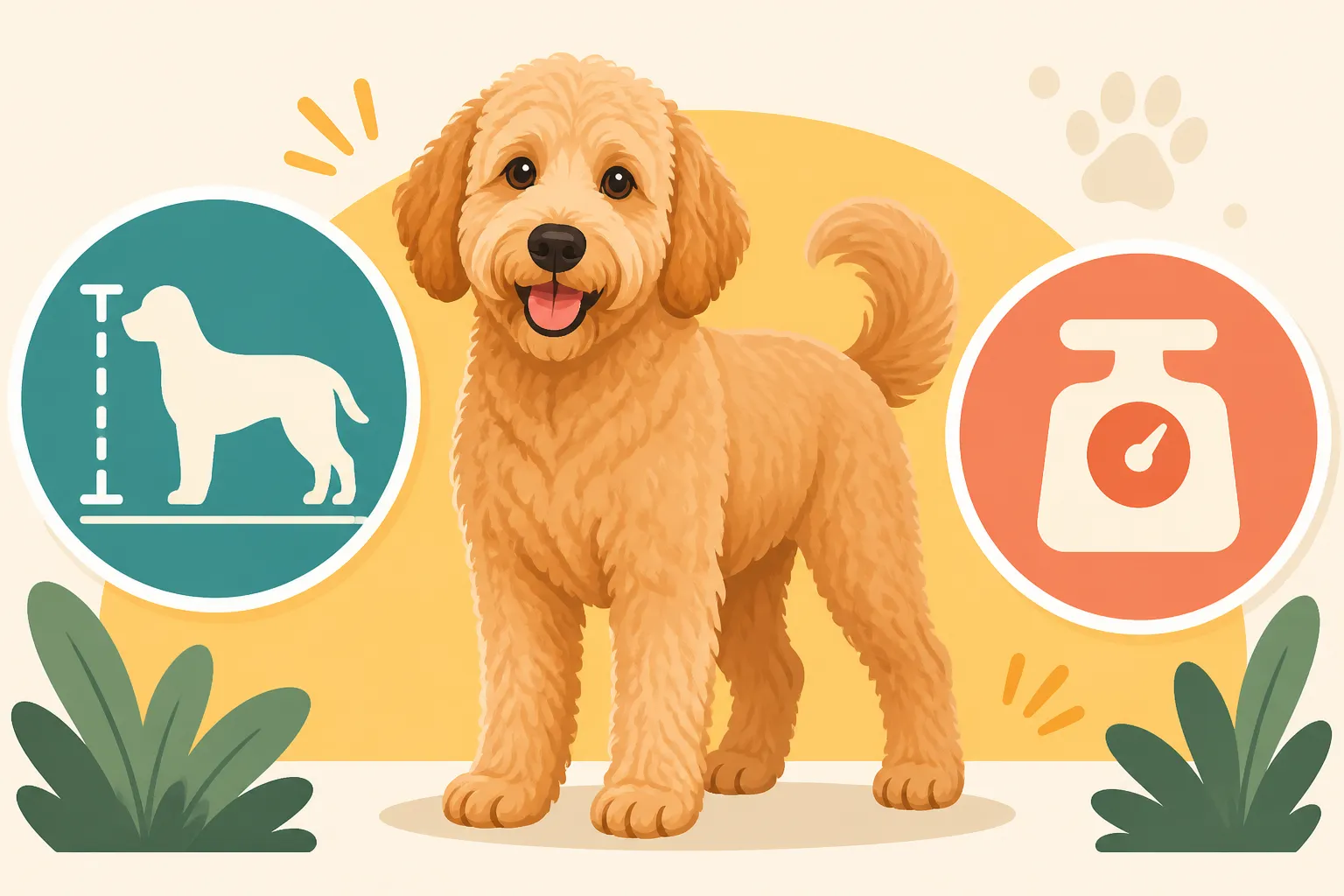
Medium Goldendoodle Height and Weight
It's such a common situation when you're dreaming of bringing a Goldendoodle into your life: you've heard about all the different sizes, and "medium" sounds just right, but then you start looking and realize there's no single, universally agreed-upon definition! It can feel like you're trying to hit a moving target when every breeder seems to have their own interpretation. This guide is here to cut through that confusion, helping you understand the typical height and weight ranges for a medium Goldendoodle, what influences these figures, and what to expect as your puppy grows.
What Defines a "Medium" Goldendoodle Anyway?
When you’re navigating the world of Goldendoodles, one of the first things you discover is that size categories aren't as rigidly defined as with purebred dogs. There’s no official breed standard from a kennel club telling breeders exactly what a "medium" Goldendoodle should be. This can be incredibly frustrating for prospective owners who just want a clear answer! Instead, the size categories are generally set by breeders and have become common parlance within the Goldendoodle community, usually referring to a dog that falls comfortably between the smaller Miniatures and the larger Standards.
The Typical Height Range for a Medium Goldendoodle
Generally speaking, a medium Goldendoodle stands at a height that allows them to be substantial without being overwhelmingly large, making them a great fit for many homes. You'll typically find that a medium Goldendoodle will stand somewhere between 17 to 21 inches tall at the shoulder. This measurement, known as "wither height," is taken from the ground to the highest point of their shoulder blades. It's a nice, manageable size that allows them to interact easily with children and fit comfortably in smaller vehicles, yet still have enough presence to feel like a proper, sturdy dog.
This height range is a sweet spot for many families who want a dog that isn't too small to roughhouse gently with, but also won't inadvertently knock over toddlers or require a giant sofa to sprawl on. They're often seen as the Goldilocks size – "just right." Remember, though, that these are averages, and a Goldendoodle might be an inch or two outside this range and still be considered "medium" by their breeder. The best way to gauge potential adult height is always to look at the parent dogs, particularly the Poodle parent, as their genetics play a massive role in setting the size. You can learn more about this in How the Poodle Parent Sets Goldendoodle Size.
The Typical Weight Range for a Medium Goldendoodle
In line with their height, the weight of a medium Goldendoodle usually falls into a range that makes them a comfortable lap dog for a quick cuddle, but also robust enough for active adventures. You can expect a medium Goldendoodle to weigh anywhere from 36 to 50 pounds when fully grown. This weight is significant enough that they feel solid and strong, but not so heavy that they are difficult to manage on a leash or lift if needed, such as into a car or for a vet visit.
This weight class means they're not delicate like a toy breed, nor are they as heavy as some of the larger standard breeds, which can be important for things like potential joint health later in life. They're usually light enough that joint impact from jumping isn't as severe as it might be for a 70-pound dog, but still heavy enough to require good leash manners. Keep in mind that individual weight can vary based on diet, activity level, and muscle mass, so these figures represent a healthy, lean Goldendoodle within this size category.
The Genetic Blueprint Behind Medium Size
Understanding where the "medium" size comes from requires a quick dive into Goldendoodle genetics, specifically how the parent breeds contribute. Goldendoodles are a crossbreed, typically combining a Golden Retriever with a Poodle. The magic (and sometimes mystery!) of their size lies in the variations within those parent lines, particularly on the Poodle side. Breeders aren't just crossing any Golden Retriever with any Poodle; they're strategically selecting individuals to achieve a desired size outcome, like a medium Goldendoodle.
The Influence of Parent Breeds and Poodle Size
The Golden Retriever parent typically contributes a larger frame to the Goldendoodle equation. Golden Retrievers are generally medium to large dogs, often weighing between 55-75 pounds and standing 21-24 inches tall. So, if you're aiming for a medium Goldendoodle, the Poodle parent is where the size control really comes into play. Breeders aiming for a medium Goldendoodle will usually use a Miniature Poodle or, less commonly, a Moyen Poodle (which is a size between Miniature and Standard, more recognized in Europe).
A Miniature Poodle generally stands 10-15 inches tall and weighs 10-15 pounds, while a Moyen Poodle might be 15-20 inches and 20-30 pounds. When you cross a Golden Retriever with a Miniature Poodle, the resulting Goldendoodles often fall into that medium category, inheriting a blend of their parents' sizes. If a breeder uses a Standard Poodle, the offspring are almost certainly going to be Standard Goldendoodles. This careful selection of the Poodle parent's size is paramount in producing a predictable "medium" Goldendoodle.
How Breeders Aim for a Medium Goldendoodle
To reliably produce medium Goldendoodles, breeders employ a few strategies. The most common is the direct cross between a Golden Retriever and a Miniature Poodle, often resulting in an F1 (first generation) Goldendoodle that lands in the medium range. However, it's not always a perfect science, as even within an F1 litter, you can see a range of sizes. This is due to the inherent genetic variability when crossing two distinct purebred lines.
Another common method involves breeding an F1 Goldendoodle back to a smaller Poodle (often a Miniature Poodle), creating an F1b Goldendoodle. This "backcross" often intensifies Poodle traits, including their size. For example, if you have an F1 Goldendoodle that leaned towards the larger side of medium, breeding it with a Miniature Poodle can help bring the size down in the F1b litter, making the resulting puppies more consistently medium. You might even see a smaller Golden Retriever used in some breeding programs to contribute to a generally smaller overall size. It's a careful balancing act to ensure that puppies consistently hit the desired size range, which is why reputable breeders track their lines meticulously. This is also Why Two Goldendoodle Litter Mates Finish Different Sizes is a real phenomenon you might observe.
Growth Patterns and When to Expect Full Size
Watching a Goldendoodle puppy grow is like witnessing fast-forward motion – they sprout up so quickly! But understanding their growth patterns, especially for a medium-sized doodle, can help you manage expectations and ensure they get the right nutrition and exercise. Unlike some purebreds with very predictable growth charts, a Goldendoodle's mixed heritage means there can be a bit more variability, even within the same litter.
Goldendoodle Puppy Growth Trajectory
Goldendoodle puppies, including those destined to be medium-sized, typically experience their most rapid growth during the first six months of life. During this period, they're not just getting taller; they're also gaining weight at an impressive rate. You'll notice weekly changes, sometimes daily, as they transition from a tiny, fluffy bundle to a more lanky, adolescent dog. This initial burst of growth is crucial, and it’s when proper nutrition is especially important to support healthy bone and muscle development.
It's common for Goldendoodles to reach most of their adult height by around 10 to 12 months of age. However, they aren't usually considered "done" growing at that point. After their rapid vertical growth slows, they begin to fill out. This means they'll continue to gain muscle mass and broaden their chests, adding to their adult weight and overall sturdy appearance. This "filling out" phase can last up until they are 18 to 24 months old. So, while your medium Goldendoodle might look like an adult at one year, they’re still maturing and gaining their full robust physique. Knowing about Goldendoodle Growth Plates by Size Category can also help you understand when their bones are done growing and solidify.
Estimated Growth Milestones for a Medium Goldendoodle
While every Goldendoodle is an individual, we can offer some general milestones for a medium-sized dog to give you a clearer picture of what to expect. Keep in mind that these are approximations, and your puppy might be a little ahead or behind. Always consult with your veterinarian regarding your puppy's specific growth and dietary needs. For general feeding guidelines, articles like Daily Calories for a Mini Goldendoodle or Daily Calories for a Standard Goldendoodle can give you an idea of caloric needs, adjusted for your medium pup.
Here's a general table outlining estimated growth for a medium Goldendoodle:
| Age | Estimated Height (at shoulder) | Estimated Weight | Developmental Notes |
|---|---|---|---|
| 8 Weeks | 7-10 inches | 5-10 pounds | Rapid growth begins; puppy coat. |
| 4 Months | 12-15 inches | 15-25 pounds | Rapid growth continues; beginning to show adult build. |
| 6 Months | 15-18 inches | 25-35 pounds | Approaching adult height; filling out. |
| 8-10 Months | 16-20 inches | 30-45 pounds | Most adult height reached; filling out continues. |
| 12-14 Months | 17-21 inches | 35-50 pounds | Adult height reached; continuing to gain muscle/weight. |
| 18-24 Months | 17-21 inches | 36-50 pounds | Fully mature in size and build. |
This chart provides a helpful visual reference for your puppy's journey. Remember, tracking their weight at home, especially if you have a kitchen scale for smaller pups, and regularly checking in with your vet will give you the most accurate picture of your individual dog's growth.
Managing Expectations and Why "Medium" Can Still Vary
It's a truth universally acknowledged among Goldendoodle owners: even when you pick a "medium" puppy, nature sometimes has its own plans. Despite a breeder's best efforts, genetics can be wonderfully unpredictable. You might start with a tiny fluffball that you're sure will be petite, only to find them blossoming into the upper end of the medium range, or even creeping into standard territory! This variability can be a source of bewilderment for new owners, but it's part of the charm (and challenge) of a crossbreed.
The Unpredictability Within a "Medium" Litter
Even in a litter specifically bred to produce medium Goldendoodles, you'll often see a range of sizes among the siblings. One puppy might take more after the smaller Poodle parent, while another might inherit more of the Golden Retriever's substantial frame. This is just how genetics work with crossbreeds; you don't always get an exact 50/50 split of traits, even in an F1 generation. Some puppies might hit the lower end of the medium scale at 36 pounds and 17 inches, while a littermate could comfortably reach 50 pounds and 21 inches, both technically falling within the "medium" category.
This is why looking at the parents' sizes, and even the grandparents if available, is incredibly important when choosing a puppy. A good breeder will be transparent about the expected size range for their litters and will be able to show you their previous generations. They might even be able to give you a more educated guess about an individual puppy's likely adult size based on its current growth trajectory and paw size, though it's never a guarantee.
Impact of Spay/Neuter Timing on Growth
Another factor that can subtly influence a Goldendoodle's final size, particularly their bone structure, is the timing of their spay or neuter surgery. Studies have shown that early spaying or neutering (before 12-18 months of age) can sometimes lead to dogs growing slightly taller than they otherwise would have. This happens because the sex hormones, which are removed during spay/neuter, play a role in signaling the growth plates in a dog's bones to close. Without these hormones, the growth plates may remain open longer, allowing the leg bones to grow for an extended period.
For a medium Goldendoodle, this might mean an extra inch or so in height. While this isn't a massive difference, it's something to discuss with your veterinarian and breeder. Many vets now recommend waiting until a dog is more physically mature, especially for larger breeds or those prone to joint issues, to allow their growth plates to fully close naturally. This can contribute to better joint health in the long run.
Living with a Medium Goldendoodle: Practical Considerations
Bringing a medium Goldendoodle into your home means preparing for a companion that’s big enough to be a significant presence, yet often manageable in most living situations. Their size strikes a fantastic balance, making them adaptable to various lifestyles, from suburban homes with yards to urban apartments, provided their exercise and space needs are met. Thinking ahead about the practical aspects of their size will ensure a smooth and joyful transition for both of you.
Space, Exercise, and Equipment Needs
A medium Goldendoodle fits comfortably in most homes without requiring vast amounts of space. Unlike their standard counterparts who can sprawl out and take over a room, a medium Goldendoodle typically curls up neatly on a dog bed or on the floor. However, they still need their own designated space, like a crate, where they can feel safe and secure. When choosing a crate, make sure it’s appropriately sized to allow them to stand up, turn around, and lie down comfortably as an adult. Crate Size Set by Goldendoodle Size Category can offer more specific guidance here. For their bed, a robust, comfortable option from a brand like Chewy will ensure they have a supportive place to rest after a busy day.
In terms of exercise, a medium Goldendoodle is typically energetic and requires at least 30-60 minutes of moderate to vigorous activity daily. This could be a good long walk, a game of fetch in the park, or even a hike on a local trail. Their size makes them excellent companions for many activities without being overwhelming. Regarding equipment, a well-fitting harness is essential to prevent pulling, especially if you have a dog that is enthusiastic on walks. You might find useful information in Goldendoodle Leash Pulling by Size Category for managing an excited medium-sized dog.
Grooming Considerations for a Medium Goldendoodle
While their size doesn't directly dictate their coat type, a medium Goldendoodle still comes with the Goldendoodle grooming commitment. Whether they have a wavy, curly, or even a straighter "flat" coat, regular brushing is non-negotiable to prevent matting. A medium-sized Goldendoodle means there's a good amount of hair to maintain, but it's not as overwhelming as grooming a much larger standard dog. You'll need quality tools – a good slicker brush, a metal comb, and potentially a dematting spray – to keep their coat healthy and tangle-free.
Professional grooming appointments every 6-8 weeks will be a regular part of your budget and routine. These sessions keep their coat trimmed, ears cleaned, and nails clipped, preventing issues like ear infections or uncomfortable overgrown paw hair. Between appointments, plan to brush your medium Goldendoodle at home several times a week, paying special attention to areas prone to matting like behind the ears, in the armpits, and where their collar or harness sits. Their size means they're usually pretty cooperative on the grooming table, especially if introduced to it young.
Conclusion
Choosing a medium Goldendoodle means you're often getting the best of both worlds: a dog that's substantial enough to be a robust companion for adventures, yet still manageable in size for most homes and families. While the term "medium" might not be as rigid as a purebred standard, understanding the typical 17-21 inch height and 36-50 pound weight range gives you a solid foundation for your expectations. Remember that genetics can lead to some variability, and a good breeder will always be your best resource for predicting your puppy's adult size. With the right care, training, and a clear understanding of their growth patterns, your medium Goldendoodle will undoubtedly bring boundless joy and companionship into your life.
Disclaimer
This article is for general informational purposes only and does not constitute professional advice. Laws, prices and regulations vary by location and change over time. Consult a qualified professional for guidance on your specific situation.