Which Embark Results Matter on a Goldendoodle Parent
Bringing a Goldendoodle into your life is exciting, but navigating all the talk about health and genetics can feel like trying to solve a puzzle with half the pieces missing. Many prospective owners get overwhelmed by conflicting information on what health tests truly matter, especially when breeders mention DNA panels like Embark. This guide is here to cut through the confusion and explain exactly which Embark results are crucial for Goldendoodle parents and what they mean for your future furry family member's health.
Understanding the Importance of Goldendoodle Parent Health Testing
It’s completely understandable to feel a bit lost when breeders start talking about genetic panels and clearances. You might have heard that Goldendoodles, being a crossbreed, somehow magically escape the health issues of their parent breeds. While the concept of "hybrid vigor" sometimes gets thrown around, suggesting crossbreeds are inherently healthier, it's a serious misunderstanding that can lead to heartbreak. The truth is, Goldendoodles inherit their genes, good and bad, directly from their Golden Retriever and Poodle parents. This means they are susceptible to a wide array of genetic conditions common to both breeds.
Why Health Testing Isn't Just for Purebreds
The idea that health testing is solely for purebred dogs is one of the biggest misconceptions in the designer dog world. A Goldendoodle is a mix, yes, but those genes don't just disappear. They come from two distinct purebred lines, each with its own set of genetic predispositions. Think of it this way: if both Golden Retrievers and Poodles carry a gene for a certain eye disease, then a Goldendoodle can absolutely inherit it, too. This is why extensive health screening, including genetic testing like Embark, is not just a nice-to-have, but an absolute necessity for responsible Goldendoodle breeding. It directly impacts the health and longevity of your future puppy. Without it, you’re essentially rolling the dice, hoping for the best but not preparing for the worst. This proactive approach is a huge reason Why Testing Beats the Word Hybrid on a Goldendoodle every single time.
The Limitations of Visual Inspection and Pedigrees
It’s tempting to think that a beautiful, lively Goldendoodle parent must be perfectly healthy, right? Unfortunately, appearances can be incredibly deceiving. Many serious genetic conditions are "recessive," meaning a dog can carry the faulty gene without ever showing symptoms. This dog, known as a "carrier," appears perfectly healthy but can pass that gene on to its offspring. If two carriers of the same recessive gene are bred together, each puppy in the litter has a 25% chance of being "affected" – meaning they will develop the disease. You simply cannot tell a carrier from a clear dog just by looking at them.
Furthermore, unlike purebred dogs registered with the American Kennel Club (AKC), Goldendoodles don't have a universal, recognized breed club that mandates specific health tests or maintains a comprehensive, verifiable registry of health clearances. This means that a "pedigree" for a Goldendoodle might tell you the lineage but provides no guarantee of health testing or genetic soundness unless the breeder explicitly provides documentation. Without official oversight, it’s up to individual breeders to be transparent and diligent with their testing, and it's up to you, the prospective owner, to know what to ask for.
Navigating Embark: Key Health Results for Goldendoodle Parents
Embark Veterinary offers a comprehensive DNA testing panel that screens for over 200 genetic health conditions. While not all of these are prevalent in Goldendoodles, many are directly inherited from their Golden Retriever and Poodle ancestry. Understanding which of these results truly matter for Goldendoodle parents is essential for making an informed choice about your puppy's breeder.
Prioritizing Breed-Specific Genetic Conditions
When reviewing an Embark panel for a Goldendoodle parent, you'll want to focus on the conditions known to affect Golden Retrievers and Poodles, as these are the ones most likely to be passed on. This robust testing is part of The DNA Panel a Goldendoodle Breeder Should Run to ensure the healthiest possible litters.
Golden Retriever-linked Conditions:
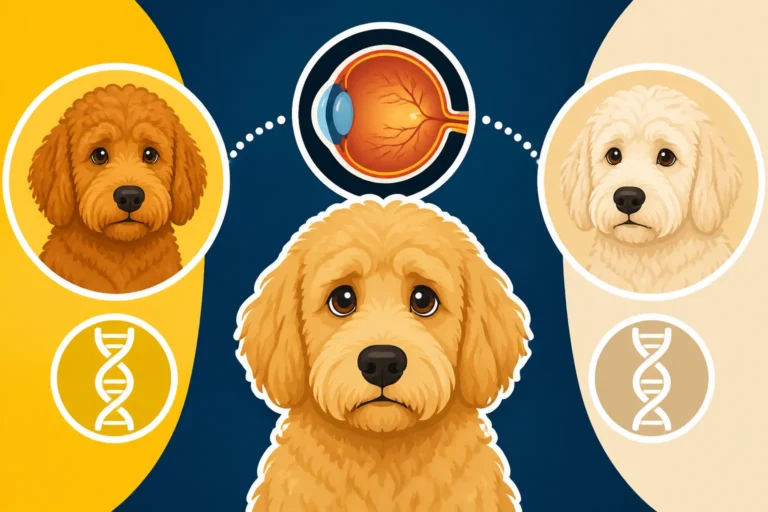
- Progressive Retinal Atrophy (PRA): This group of inherited eye diseases causes the retina to degenerate over time, eventually leading to blindness. Several forms exist, including prcd-PRA, GR-PRA1, and GR-PRA2, which are particularly common in Golden Retrievers. A Goldendoodle parent should be clear of these. For more detail, understanding Progressive Retinal Atrophy and the Goldendoodle Eye Test is critical.
- Ichthyosis: This skin condition causes dry, flaky skin, often described as having scales, and can lead to secondary infections. While not life-threatening, it requires lifelong management and can significantly impact a dog's quality of life.
- Von Willebrand Disease (vWD): This is a genetic bleeding disorder, similar to hemophilia in humans. Dogs with vWD have a deficiency in a protein necessary for blood clotting, putting them at risk for excessive bleeding during surgery, injury, or even minor procedures. Goldendoodles can inherit this from either parent line, making it a crucial test. You can learn more about Von Willebrand Disease and Goldendoodle Bleeding Risk.
- Degenerative Myelopathy (DM): A progressive neurological disease affecting the spinal cord, DM leads to weakness in the hind limbs, stumbling, and eventually paralysis. While often seen in older dogs, the genetic predisposition can be identified early through DNA testing.
- Cancers: While Embark doesn't predict all cancers, which are often multifactorial, it can screen for certain genetic markers or predispositions. Golden Retrievers, unfortunately, have a higher incidence of certain cancers like lymphoma, hemangiosarcoma, and mast cell tumors. While complex, genetic indicators can sometimes offer insights. For a broader view of this risk, explore The Cancer Types Both Goldendoodle Parents Pass Down.
Poodle-linked Conditions:
- Progressive Retinal Atrophy (PRA): Similar to Golden Retrievers, Poodles can also carry genes for PRA, particularly prcd-PRA. Ensuring both parents are clear of these forms is paramount.
- Von Willebrand Disease (vWD): As mentioned, Poodles also carry the gene for vWD, so it's a condition to test for on both sides of the Goldendoodle lineage.
- Neonatal Encephalopathy with Seizures (NEWS): A severe neurological disorder specific to Poodles, NEWS results in puppies that are weak, unable to nurse, and often experience seizures, typically leading to death within a few weeks of birth. It's a devastating condition, and testing parents is vital to prevent it.
- Osteochondrodysplasia (OCD): This is a disorder of cartilage and bone development, sometimes referred to as skeletal dwarfism. It can lead to abnormal limb development and joint issues.
- Degenerative Myelopathy (DM): Poodles can also carry the gene for DM, making it a shared concern with Golden Retrievers and a critical test for Goldendoodle parents.
- Addison's Disease: While not a direct DNA test on Embark (it's a complex autoimmune condition), Addison's is notably more common in Standard Poodles. This disease affects the adrenal glands and can lead to a crisis if not managed. While Embark won't diagnose Addison's, knowing its prevalence in the Poodle line means breeders should be attentive to any signs in their breeding stock. We dive deeper into Addison's Disease a Goldendoodle Gets From the Poodle in another article.
Understanding Carrier Status vs. Affected Status
One of the most valuable aspects of Embark testing is distinguishing between a dog that is "clear," a "carrier," or "affected" for a genetic condition.
- Clear: This means the dog does not carry the gene variant for the disease and cannot pass it on to its offspring.
- Carrier: This means the dog carries one copy of the gene variant but will not develop the disease itself because it also has a normal copy of the gene (most genetic diseases screened by Embark are recessive). A carrier can pass the gene to approximately 50% of its offspring. This status is often misunderstood, so reading What a Carrier PRA Result Means for a Goldendoodle can really clarify things.
- Affected: This means the dog has two copies of the gene variant and will develop the disease.
A responsible Goldendoodle breeder will understand these distinctions. It's perfectly acceptable to breed a carrier, as long as the other parent is clear for that specific condition. This pairing ensures that no puppy will inherit two copies of the faulty gene and become affected. All puppies from such a pairing will either be clear or carriers themselves, but none will suffer from the disease. The critical error is breeding two carriers together, which risks producing affected puppies.
What Embark Doesn't Cover (and Other Tests Needed)
While Embark is fantastic for genetic predispositions, it’s crucial to remember that it doesn't cover everything. Many significant health issues in Goldendoodles are structural or complex, requiring physical examinations and specific imaging by veterinary specialists. A reputable breeder will go far beyond just a DNA panel.
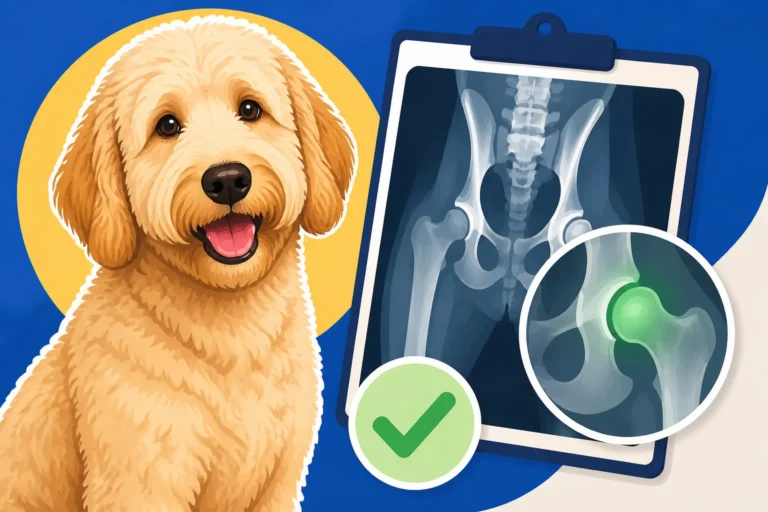
- OFA/PennHIP for Hips and Elbows: Hip and elbow dysplasia are debilitating conditions where the joints don't develop properly, leading to arthritis and pain. Both Golden Retrievers and Poodles can be affected. Orthopedic Foundation for Animals (OFA) evaluations or PennHIP screenings involve X-rays taken by a vet and reviewed by experts to assess joint quality. These are non-negotiable for Goldendoodle parents. To understand the numbers, delve into Goldendoodle Hip Dysplasia and the OFA Numbers and Goldendoodle Elbow Dysplasia From Both Parent Breeds.
- OFA Eye Exams (CAER): These are annual examinations performed by a board-certified veterinary ophthalmologist to screen for observable eye conditions that aren't necessarily genetic (or aren't on DNA panels), such as cataracts, glaucoma, and eyelid abnormalities. You'll want to see annual eye exam certifications. For thoroughness, make sure the breeder provides The Annual Eye Exam a Goldendoodle Breeder Should Have.
- OFA Cardiac Exams: Especially for larger Goldendoodles, heart health is vital. Exams by a veterinary cardiologist, involving auscultation (listening with a stethoscope) and sometimes an echocardiogram (ultrasound of the heart), screen for congenital heart defects. Conditions like subvalvular aortic stenosis (SAS), common in Golden Retrievers, can be identified. Understand The Heart Defect a Goldendoodle Gets From the Golden Line for more context.
- Patellar Luxation: More common in smaller breeds, patellar luxation (slipped kneecap) can affect Mini and Toy Goldendoodles. This involves a physical exam by a vet who manually checks for kneecap stability. If you're considering a smaller Goldendoodle, understanding Patellar Luxation in a Mini Goldendoodle is important.
Interpreting Embark Results for Breeding Decisions
Ultimately, the goal of all this testing, including the detailed Embark panel, is to ensure that Goldendoodle puppies are born as healthy as possible and that breeders are making responsible, informed decisions.
The Goal: Avoiding Affected Puppies
A truly ethical Goldendoodle breeder isn't just checking boxes; they're actively using Embark results to plan breedings that guarantee no puppy will be affected by the genetic diseases screened. This means if a potential dam (mother) is a carrier for prcd-PRA, her mate (the sire) must be clear for prcd-PRA. This careful pairing is the cornerstone of responsible breeding and significantly reduces the risk of heartbreaking genetic conditions appearing in a litter. Breeders who ignore these results, or worse, breed two carriers together, are not prioritizing the welfare of their puppies.
Even with the best planning, life happens. This is where a robust health guarantee from a breeder combined with forward-thinking solutions like pet insurance can offer a safety net. Companies like Healthy Paws can help cover unexpected veterinary costs if, despite all precautions, a health issue arises.
Transparency and What Breeders Should Provide
As a prospective puppy owner, you have every right to see the actual Embark results for both Goldendoodle parents. Don't settle for a breeder simply saying their dogs are "clear by parentage" or "health tested." Ask to see the full reports. Embark provides detailed, easy-to-read reports online that show the results for every condition tested. A transparent breeder will happily share these with you, along with OFA certificates for hips, elbows, heart, and eyes. They should be proud to show you the evidence of their commitment to health. If a breeder is evasive or only shows you partial information, that's a significant red flag.
When a breeder provides these results, take the time to look them over. Understand if any parent is a carrier for a specific condition. If they are, then ensure the other parent is clear for that same condition. This demonstrates the breeder’s thoroughness and dedication. Should a health issue still develop, having comprehensive pet insurance like Healthy Paws in place early can provide invaluable peace of mind, especially for conditions that might not be genetically testable or that develop later in life.
The Role of Health Guarantees and Insurance
Even the most meticulously bred Goldendoodle can face unforeseen health challenges. Genetic testing and physical clearances significantly reduce risks, but they don't eliminate them entirely. This is why many responsible breeders offer health guarantees, typically covering major genetic or congenital defects for a certain period, often the first year or two of the puppy's life. These guarantees can help provide financial assistance if a serious condition is diagnosed.
However, a health guarantee usually has limitations, and major veterinary expenses can quickly accumulate. This is where considering pet insurance, like a policy from Healthy Paws, becomes a wise decision for any Goldendoodle owner. Pet insurance can cover a significant portion of unexpected vet bills for accidents, illnesses, and emergencies that aren't covered by a breeder's guarantee or that emerge later in life. Enrolling your Goldendoodle puppy early, before any pre-existing conditions are identified, ensures the broadest coverage for their lifetime. It’s an investment in your peace of mind and your Goldendoodle's long-term well-being.
| Genetic Test Type | Common Conditions Screened | Primary Parent Breed Relevance | What to Look For |
|---|---|---|---|
| Embark DNA Panel | Progressive Retinal Atrophy (PRA) | Golden Retriever & Poodle | Clear for all forms (prcd, GR-PRA1, GR-PRA2) |
| Ichthyosis | Golden Retriever | Clear | |
| Von Willebrand Disease (vWD) | Golden Retriever & Poodle | Clear, or Carrier x Clear pairing | |
| Degenerative Myelopathy (DM) | Golden Retriever & Poodle | Clear, or Carrier x Clear pairing | |
| Neonatal Encephalopathy (NEWS) | Poodle | Clear | |
| Osteochondrodysplasia (OCD) | Poodle | Clear | |
| OFA/PennHIP | Hip Dysplasia | Golden Retriever & Poodle | Good, Excellent, or Fair (OFA); DI score below 0.7 (PennHIP) |
| Elbow Dysplasia | Golden Retriever & Poodle | Normal | |
| OFA CAER Eye Exam | Cataracts, Glaucoma, Eyelid Issues | Golden Retriever & Poodle | Normal (annual) |
| OFA Cardiac Exam | Subvalvular Aortic Stenosis (SAS), other heart defects | Golden Retriever & Poodle | Normal (by Cardiologist) |
| OFA Patellar Exam | Patellar Luxation (slipped kneecap) | Poodle (especially smaller sizes) | Normal |
Disclaimer
The information provided in this guide is for general informational purposes only and does not constitute veterinary advice. Always consult with a qualified veterinarian for any health concerns or before making any decisions about your Goldendoodle's health care. Breed-specific health recommendations and testing protocols can evolve, so it's important to stay informed and work with professionals.