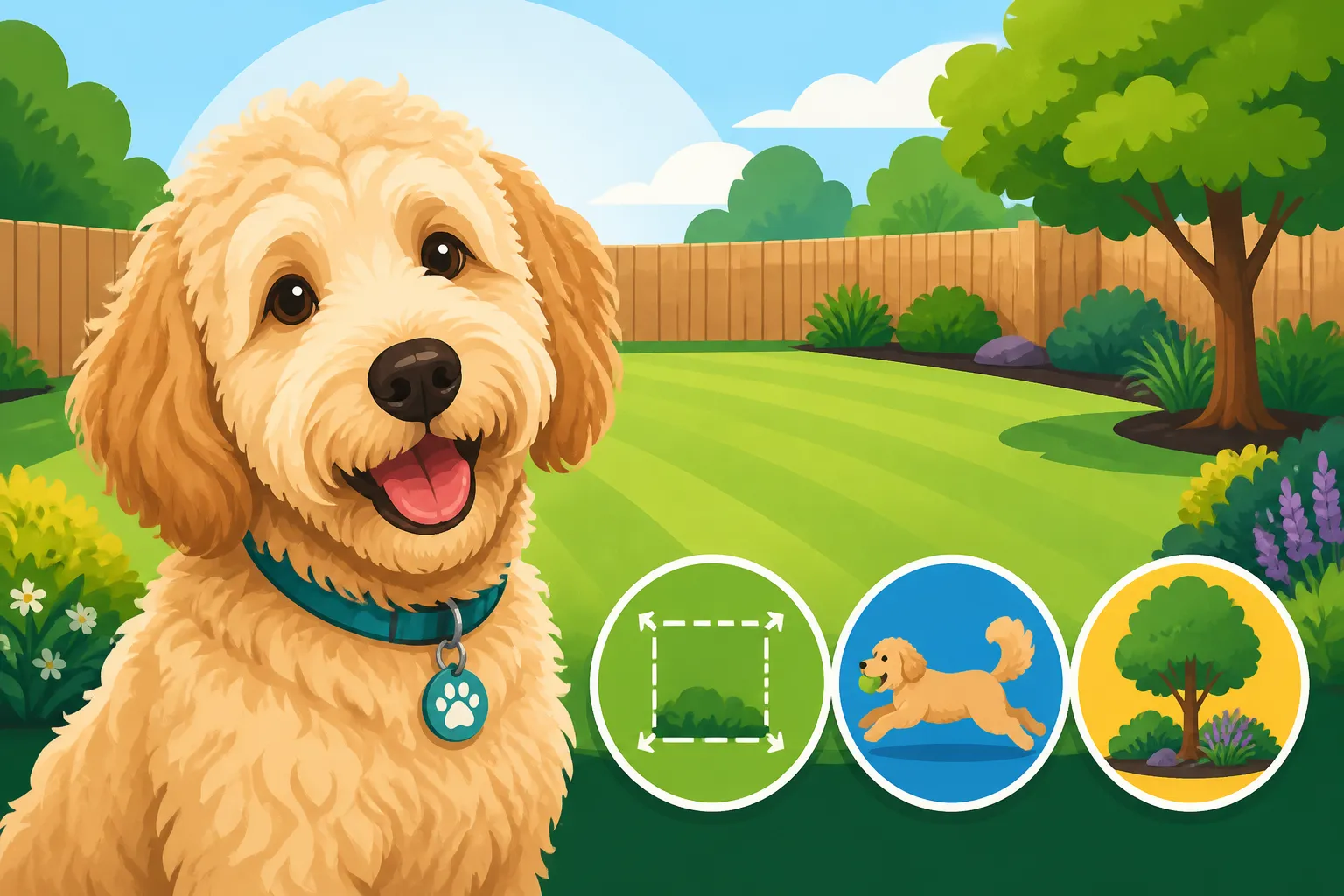
The Yard a Goldendoodle Actually Needs
Many prospective Goldendoodle owners wrestle with the idea that they absolutely must have a sprawling backyard for their furry friend. The truth is, while a big yard can be a wonderful asset, it's far from the only, or even the most important, factor in a Goldendoodle's happiness and well-being. This guide will cut through the myths and lay out exactly what kind of outdoor space truly supports a thriving Goldendoodle, no matter your living situation.
Debunking the "Big Yard" Myth for Goldendoodles
It’s easy to picture a Goldendoodle joyfully romping through acres of green, and certainly, they’d love it! But the idea that a large yard is a non-negotiable requirement is a common misconception that often prevents wonderful families from considering this breed. Many assume that a Goldendoodle's energy levels demand constant, unsupervised outdoor access, and if they don't have that, the dog will be miserable or destructive. This simply isn't the full picture.
Why a Big Yard Alone Isn't Enough
Let's be realistic: an unfenced, neglected backyard, no matter how large, isn't going to satisfy your Goldendoodle's needs. A Goldendoodle left to their own devices in a massive yard will likely just pace, sniff around for a few minutes, maybe bark at a squirrel, and then stand at the back door, wondering why you're not out there with them. These are social, intelligent dogs who thrive on interaction and engagement. They don't just "exercise themselves" by being outside. Think of it this way: would you rather have a huge, empty gym all to yourself, or a smaller, well-equipped one with a personal trainer? Most Goldendoodles would pick the latter – they want you involved!
The issue isn't the size of the space; it's the quality of the engagement within that space. A Goldendoodle who spends all day in a large yard without mental or physical stimulation from their human companions can become bored, destructive, or even develop anxiety. They might start digging holes, chewing on landscaping, or barking excessively because they're under-stimulated. This isn't because the yard isn't big enough; it's because it's not being used effectively to meet their inherent needs for companionship and purpose.
The Problem with Unsupervised Outdoor Time
Relying solely on a yard, big or small, for your Goldendoodle's exercise can lead to behavioral issues. These dogs are smart and energetic, inheriting both the Golden Retriever's biddability and the Poodle's sharp mind. Without structured activities, their minds and bodies aren't being worked adequately. A Goldendoodle who is bored in the backyard might start to self-entertain in ways you won't appreciate, like finding ways to escape, harassing wildlife, or developing nuisance barking habits. Goldendoodle Exercise and Mental Work Every Day is crucial, and that work requires your active participation.
Moreover, simply letting your Goldendoodle "hang out" in the yard means you're missing opportunities for bonding and training. Every walk, every game of fetch, every training session is a chance to strengthen your relationship and reinforce good behavior. Unsupervised yard time, while convenient for us, often falls short for them. It's a bit like giving a child a huge playroom but never playing with them – they might have all the space in the world, but they're still missing out on vital interaction and direction.
What a Goldendoodle Actually Needs in a Yard (or Without One)
So, if a huge yard isn't the be-all and end-all, what does a Goldendoodle truly need when it comes to outdoor space? The answer boils down to safe, stimulating environments that facilitate both physical exercise and mental engagement, regardless of square footage.
Space for Zoomies and Play
Goldendoodles, especially puppies and young adults, often get what we affectionately call "zoomies" – bursts of frantic energy where they run around like crazy for a few minutes. A yard, even a modestly sized one, can be perfect for these explosive sprints. It provides a safe, contained area where they can let loose without concern for traffic or other hazards. For a standard Goldendoodle, a bit more linear space for a good sprint is certainly appreciated, but even a compact backyard can work if you engage in games of fetch or chase with them.
The key is a space where they can move freely without immediately hitting a fence or obstacle. Even in a smaller space, you can incorporate vertical elements for play, like small agility tunnels or low jumps, turning a simple yard into an exciting playground. Consider how you can use the available space for games like "hide and seek" with treats, or just for a good old game of fetch. Goldendoodle Exercise at Every Life Stage is vital, and a yard can be a great place to facilitate it.
Secure Containment for Safety
Whether your yard is postage stamp-sized or sprawling, security is paramount. Goldendoodles are often friendly and curious, and a lapse in containment can lead to a lost dog or a dangerous encounter. A robust fence that your Goldendoodle cannot jump over, dig under, or squeeze through is non-negotiable. For many Goldendoodles, a solid six-foot fence is ideal, as some can be surprisingly agile. Think about the type of fence – chain-link might be climbable for determined individuals, while a solid privacy fence removes visual distractions.
Beyond physical fences, ensure gates are always securely latched and that there are no weak spots in the perimeter. A curious Goldendoodle can spot a loose board or a low spot in seconds. For those without a physical fence, a long-line tether or supervised leash walks are essential. Never assume your Goldendoodle will stay put just because they are "good." Their natural retriever instincts might kick in if a squirrel or bird catches their eye, leading to them darting off.
Mental Stimulation and Enrichment
A yard isn't just for running; it's a prime location for mental enrichment too. Goldendoodles thrive on problem-solving and sniffing out new things. Turn your yard into an adventure zone! Hide treats or their favorite toys for them to find, encouraging their natural scent-work abilities. You can use durable puzzle toys from Chewy that dispense kibble as they play, turning mealtime into a fun outdoor game. This kind of "thinking work" can tire a Goldendoodle out just as much, if not more, than pure physical exertion. The Thinking Work That Actually Tires a Goldendoodle is essential for a well-rounded dog.
Consider adding elements like a designated digging pit (if you want to save your landscaping), or even a small shallow kiddie pool for splashing on hot days. These activities tap into their instincts and provide constructive outlets for their energy. A Goldendoodle who is mentally tired is a much calmer and happier companion indoors. Even in a small yard, you can scatter their meal in the grass for a "sniffari," which engages their powerful noses and minds.
Optimizing Smaller Spaces for Your Goldendoodle
Don't have a huge yard? No problem! Many Goldendoodles live incredibly fulfilling lives in apartments, townhouses, or homes with small patches of grass. The key is to be proactive and intentional about meeting their needs.
Regular Walks and Outdoor Adventures
The most obvious, and often most effective, way to compensate for a smaller yard is through regular, structured walks. These aren't just potty breaks; they're opportunities for exploration, exercise, and socialisation. Aim for at least two substantial walks a day, lasting 30-60 minutes each, depending on your Goldendoodle's age and energy level. For a standard Goldendoodle, that might mean a brisk pace, while a toy Goldendoodle might be happy with a slightly shorter, slower stroll. Adult Goldendoodle Exercise by Size Category can help you tailor the length and intensity.
Vary your routes to keep things interesting. Explore different parks, trails, or even new neighborhoods. The changing sights, sounds, and smells provide invaluable mental stimulation. Think about how a human feels after walking the same block every day versus exploring a new city park. Your Goldendoodle feels the same way! These walks also provide crucial exposure to the world, helping to build a well-adjusted and confident dog. If you live in a city, look for dog-friendly areas where you can safely walk your Goldendoodle.
Utilizing Dog Parks and Daycare
For those without a yard, or with very small ones, dog parks and reputable doggy daycares can be lifesavers. Dog parks offer a large, enclosed space for your Goldendoodle to run, play, and socialise with other dogs. Just be sure the park is clean, well-maintained, and that the dogs playing there are well-behaved. Supervise your Goldendoodle closely and be ready to intervene if play gets too rough. Goldendoodle Dog Park Manners are important for everyone's safety and enjoyment.
Doggy daycare, on the other hand, provides supervised play and structured activity throughout the day. This can be an excellent option for Goldendoodles whose owners work long hours or who need extra socialization. A good daycare will have separate play areas for different sizes and temperaments, ensuring your Goldendoodle has a safe and fun experience. They'll come home tired, happy, and mentally satisfied. When researching daycares, ask about staff-to-dog ratios, cleaning protocols, and how they handle different play styles.
Indoor Enrichment and Training
Remember, a Goldendoodle's world isn't just outdoors. Their indoor environment is just as important. With a smaller or no yard, indoor enrichment becomes even more critical. Invest in a variety of puzzle toys, chew toys, and interactive games. Brands like Chewy offer a fantastic selection of brain games that can keep your Goldendoodle entertained and mentally engaged for significant periods. Rotate these toys regularly to keep them novel and exciting.
Dedicate time each day to indoor training sessions. Goldendoodles are intelligent and love to learn, so teaching new tricks, practicing obedience commands, or even engaging in some indoor agility can burn off energy and provide mental satisfaction. Even 10-15 minutes of focused training can be equivalent to a much longer walk in terms of mental exertion. Trick Training as Goldendoodle Mental Work is a fantastic way to bond and stimulate their minds.
Safety and Setup for Any Outdoor Space
No matter the size of your yard, creating a safe, comfortable, and stimulating outdoor environment is crucial for your Goldendoodle. A little forethought can prevent problems and make the space truly beneficial.
Fencing and Secure Gates
I cannot stress this enough: a secure perimeter is paramount. If you have any kind of outdoor space your Goldendoodle will access, ensure it's fully fenced and that the gates are strong and latched. Goldendoodles can be surprisingly agile and persistent. Some might jump, while others might become expert diggers. Regularly inspect your fence line for any weaknesses – loose boards, gaps under the fence, or compromised latches. Many Goldendoodles are "door darters," meaning they will bolt through an open gate or door if given the chance. Consider a double-gate system if you have an entry point that is frequently used.
If an inground or invisible fence is your only option, understand its limitations. While these can work for some dogs, they are not a physical barrier and rely solely on training and your dog's willingness to respect the boundary. A determined Goldendoodle, especially one with a strong prey drive, might ignore the correction if a squirrel or deer catches their attention. Always have a backup plan, like a long lead, and never leave your Goldendoodle unsupervised with only an invisible fence as containment.
Shade, Shelter, and Water Access
Your Goldendoodle needs protection from the elements, especially if they'll be spending any significant time outdoors. Provide ample shade for sunny days – a shady tree, an awning, or a dog house. Goldendoodles, particularly those with dense, curly coats, can overheat quickly, especially in warmer climates or during intense play. Whether a Curly Goldendoodle Overheats in Summer is a real concern. Always ensure they have access to fresh, cool water. A sturdy, tip-proof bowl that can't be easily knocked over is essential. On Chewy, you can find bowls specifically designed for outdoor use that are easy to clean and resist algae build-up.
In cooler weather, if they'll be out for more than a few minutes, ensure they have a dry, sheltered spot to retreat from wind or rain. While Goldendoodles enjoy snow, their paws can get cold, and their coats can collect ice balls, so short, supervised sessions are best. Always check paw pads after winter play for cracks or ice buildup.
Dog-Proofing Your Garden and Yard
Before letting your Goldendoodle loose, take a good look at your yard from a dog's perspective. Are there any toxic plants they might chew on? Many common landscaping plants, like azaleas, sago palms, and lilies, are dangerous for dogs. Remove or securely fence off any hazardous vegetation. Yard Plants That Are Toxic to a Goldendoodle is an important list to consult. Also, check for any pesticides, fertilizers, or rodenticides that could be poisonous. These should be stored securely out of reach.
Consider the surface of your yard. Grass is ideal, but if you have gravel or concrete, ensure it's not too rough on their paw pads. If you have a designated potty area, regular cleaning is crucial to prevent odors and discourage parasites. A Goldendoodle's curious nature means they will explore every nook and cranny, so eliminating potential dangers beforehand is a critical step in creating a safe outdoor space.
| Feature / Need | Large Yard (Unstructured) | Small Yard / No Yard (Structured) | Ideal Yard (Structured, Any Size) |
|---|---|---|---|
| Physical Exercise | Potential for zoomies, but often unfulfilled | Relies heavily on walks, dog parks, indoor play | Structured fetch, agility, supervised play |
| Mental Stimulation | Limited, can lead to boredom and destruction | Achieved through puzzle toys, training, varied walks | Scent games, hidden treats, varied play stations |
| Safety/Containment | Can be overlooked, potential for escape | High reliance on leash, careful supervision | Secure fencing, routine checks, no hazards |
| Social Interaction | Minimal without owner presence | Requires intentional outings, dog daycare | Owner-involved play, social outings |
| Convenience for Owner | Easy potty breaks, but not full exercise | Requires more active planning and effort | Balanced, with both quick access and planned activity |
Ultimately, the size of your yard matters far less than how you use it – or how you compensate for its absence. A loving, engaged owner who provides consistent exercise, mental stimulation, and training will always create a happier, healthier Goldendoodle than someone who simply provides a large patch of grass and calls it a day. Focus on quality of interaction over square footage, and your Goldendoodle will thrive.
Disclaimer
This article is for general informational purposes only and does not constitute professional advice. Laws, prices and regulations vary by location and change over time. Consult a qualified professional for guidance on your specific situation.