Training a Goldendoodle Puppy for the Grooming Table
Bringing home a fluffy Goldendoodle puppy is one of the most exciting experiences, but many new owners quickly discover that beneath all that adorable floof lies a real challenge: grooming. Without early, consistent, and positive training, that sweet little puppy can quickly turn into a wiggling, stressed-out mess on the grooming table, making future appointments a nightmare for both you and your dog. This guide will walk you through exactly how to prepare your Goldendoodle puppy for a lifetime of comfortable grooming experiences, making it a positive and even enjoyable routine.
Understanding the Goldendoodle Grooming Challenge
Let's be honest, those Goldendoodle curls and waves are a huge part of their appeal. They're soft, they're cuddly, and they have that signature teddy bear look. But these beautiful coats are also incredibly prone to matting and require regular, dedicated care. This isn't just about aesthetics; matted coats can be painful, pull on the skin, and even hide skin infections. Understanding why grooming is such a big deal for Goldendoodles is the first step in setting your puppy up for success.
Why Early Grooming Training is Crucial for Goldendoodles
You might think a quick brush now and then is enough for a young puppy, but with a Goldendoodle, you're looking at a commitment from day one. Their coats, whether straight, wavy, or curly, are designed to catch and hold onto loose hair, dirt, and anything else they might pick up. If you don't start early, those tiny tangles can quickly become solid mats, often unnoticed until they're causing discomfort. The reality is, a Goldendoodle will need professional grooming every six to eight weeks for their entire lives, plus daily or every-other-day brushing at home. Waiting until your puppy is older or has a bad matting experience before you start grooming training will only make things harder.
Imagine trying to brush out a painful mat from an adult dog who has never learned to tolerate handling – it's a recipe for fear, snapping, and avoidance. Early training isn't just about teaching your Goldendoodle to tolerate grooming; it's about teaching them to enjoy it, or at the very least, remain relaxed and cooperative. This foundation built in puppyhood means less stress for your dog, less frustration for you, and a much happier groomer. It helps them build trust and understand that handling isn't a threat. This early exposure becomes incredibly important when their Goldendoodle Coat Change at Eight to Twelve Months comes around, a period notorious for matting.
Common Goldendoodle Reactions to Grooming
Goldendoodles inherit traits from both their Golden Retriever and Poodle parents. From the Golden side, they often get a wonderful eagerness to please and a friendly disposition. From the Poodle, they get intelligence, sensitivity, and, of course, that fantastic, often non-shedding, coat. However, this Poodle sensitivity can also manifest as being prone to anxiety or overstimulation, and their Golden enthusiasm can lead to a lot of wriggling when they'd rather be playing. Without proper desensitization, that initial brush can feel strange, the clippers might sound scary, and the nail trim can be downright terrifying.
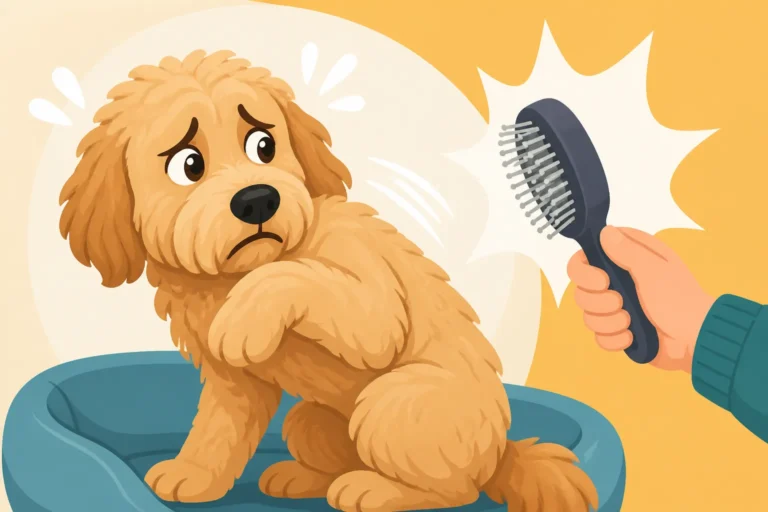
It's not uncommon for puppies to try to mouth the brush, swat at clippers, or even nip if they feel uncomfortable or trapped. Their natural reaction might be to pull away, squirm, or vocalize their displeasure. If these reactions are met with frustration or force, the puppy quickly learns to associate grooming with negative feelings. They might become resistant, cower, or even display aggressive behaviors in an attempt to make the scary thing stop. Recognizing these potential reactions early and addressing them with patience and positive reinforcement is key to preventing a lifetime of stressful grooming sessions. Think about Goldendoodle Puppy Biting and Mouthing in general; grooming presents many opportunities for them to test boundaries with their mouths if not managed correctly.
Essential Tools and Creating a Positive Environment
You can't expect your Goldendoodle to love grooming if you're pulling their hair with a cheap brush or using loud, vibrating clippers right out of the box. Just like any other training, success starts with the right equipment and a thoughtful setup.
Setting Up Your Puppy's "Grooming Zone"
Before you even touch a brush to your puppy, you need a designated space. This isn't just about convenience for you; it's about creating a consistent, safe, and controlled environment for your puppy. Trying to groom your Goldendoodle on the floor, on your lap, or on a bed is a recipe for disaster. They'll likely try to escape, use their leverage to wiggle, or chew on whatever they can reach.
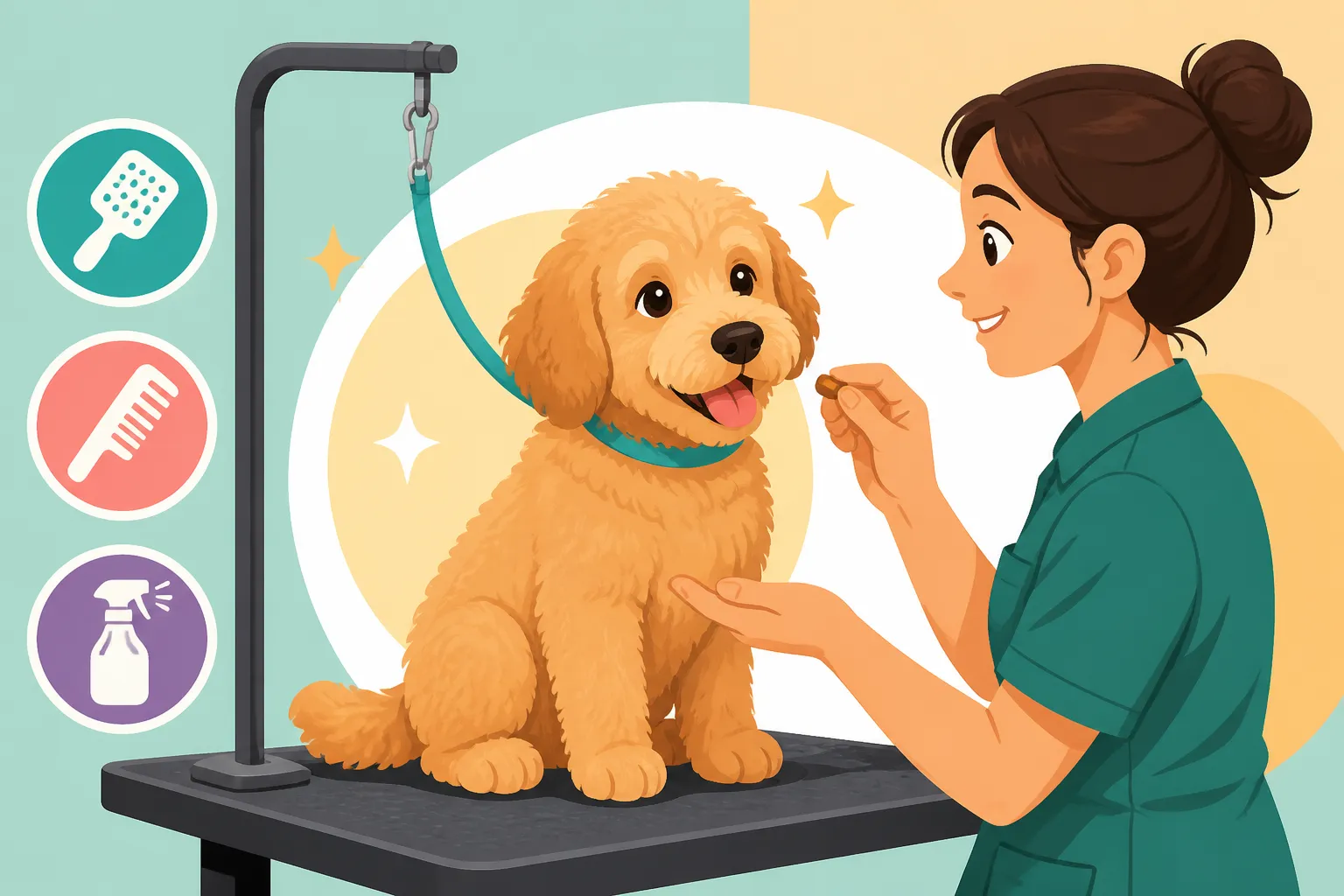
A grooming table, even a small, inexpensive one, or a sturdy, elevated surface like a laundry room counter covered with a non-slip mat, is ideal. The elevation helps prevent them from jumping off and gives you better control over their body. The non-slip surface is crucial so they feel secure and don't slip and slide, which can be frightening. This dedicated "grooming zone" should be associated with positive experiences. Bring out high-value treats, speak in a calm, reassuring voice, and keep the sessions short. For little Goldendoodles, a simple sturdy plastic table from Amazon can work wonders to establish this routine.
Must-Have Grooming Tools for Puppy Desensitization
You don't need a professional groomer's toolkit from day one, but having a few key items is essential for desensitization. Think quality over quantity.
- Slicker Brush: This is your primary tool for removing tangles and loose undercoat. Choose one with flexible pins that are gentle on the skin. You'll be using this a lot for Brushing a Goldendoodle Often Enough to Stop Matting.
- Metal Comb: A good quality, stainless steel comb with both wide and fine teeth is indispensable. It helps you find mats the slicker brush might miss and ensures you're getting all the way down to the skin. This is vital for checking for matting around their sensitive areas.
- Nail Clippers (or Grinder): Start exposing your puppy to these early. The sound and sensation can be very alarming. A guillotine style clipper or a Dremel-style grinder are both good options.
- Blunt-nosed Scissors: For trimming around eyes and paw pads safely.
- Quiet Clippers (Optional, but recommended): Even if you plan on professional grooming, having a quiet pair of clippers for face, paw pad, and sanitary trims can be incredibly helpful for desensitization. The vibration and sound can be a major hurdle.
- High-Value Treats: These are your secret weapon. Small, soft, super tasty treats that your puppy absolutely loves.
- Detangling Spray: A good quality spray can help condition the coat and make brushing easier, reducing pulling and discomfort.
Remember, the goal isn't to groom perfectly right away, but to make your puppy comfortable with these objects and the sensations they create. This is about gradual exposure. You can find many of these Home Grooming Tools a Goldendoodle Actually Needs conveniently online.
Step-by-Step Desensitization Techniques
Now that you have your setup and tools, it's time to start the actual training. The key here is patience, positivity, and taking tiny, incremental steps. Think of it as building a strong bridge, brick by brick, rather than trying to jump to the other side.
Introducing the Grooming Table and Tools
Start by making the grooming table a happy place. Simply lead your puppy to the table, help them up, and immediately reward them with praise and treats for being on it. Don't do anything else at first. Just "up, treat, down." Repeat this a few times a day. Once they are comfortable being on the table, start working on stillness. Reward for standing or sitting calmly for even a few seconds, gradually increasing the duration. Many puppy programs, like BAXTER & Bella's online program, have structured steps for this kind of foundation work.
Next, introduce the tools, one at a time. Let your puppy sniff and investigate the brush, comb, and clippers. Give them a treat if they show curiosity without fear. Then, before you use the tool on them, make some noise. Click the nail clippers in the air, turn on the clippers for a second (away from them), and immediately offer a treat. The goal is to create a positive association: "Scary sound equals yummy treat." This counter-conditioning is incredibly powerful. Desensitising a Goldendoodle to Clippers is a game-changer if you get it right early on.
Handling and Touch Exercises
This is perhaps the most critical part of grooming training. Goldendoodles need to be comfortable with having every part of their body handled. Their ears, paws, and face are particularly sensitive and are areas where grooming is frequent.
Start by gently stroking their body, especially where the fur is thickest, while giving treats. Progress to lightly touching their paws, spreading their toes, and gently squeezing each toe pad. Do this for a few seconds on one paw, treat, then release. Build up to all four paws. For their ears, gently lift them, look inside, and touch the inner flap. Reward generously. For their face, gently stroke their beard, chin, and around their eyes. This will be invaluable for when you need to clean out eye boogers or trim facial hair.
These sessions should be incredibly short – literally 10-20 seconds for each body part initially. You're aiming for dozens of tiny, positive interactions throughout the day, rather than one long, potentially overwhelming session. Think of these as "puppy massages" where they learn to associate your touch with calm pleasure and delicious rewards. This is fundamentally about Handling a Goldendoodle's Feet, Face and Ears.
Short, Frequent Practice Sessions
The mistake many owners make is waiting until the puppy "needs" a groom, then trying to do everything at once. This is a recipe for disaster. Instead, incorporate very short, positive grooming practice into your daily routine. We're talking 3-5 minutes, a couple of times a day.
During these mini-sessions:
- Get your puppy on the grooming table.
- Do one or two gentle strokes with the slicker brush, moving slowly and rewarding for stillness.
- Gently touch a paw, perhaps briefly touch a nail with the clippers (no actual clipping!), and reward.
- Gently touch their ear, or stroke their face.
- End on a positive note, with a final treat and praise, then let them off the table.
The key is to always stop before your puppy gets stressed or tries to leave. You want them to think, "Oh, that was easy! And I got treats!" not, "Finally, that's over!" These consistent, brief exposures are far more effective than infrequent, lengthy battles. This aligns perfectly with the idea of Why Goldendoodle Grooming Training Starts Week One.
Building Patience and Stillness
Once your Goldendoodle puppy is somewhat comfortable with the concept of the grooming table and tools, the next challenge is teaching them to stay still and be patient. Goldendoodles, especially as puppies, are naturally enthusiastic and curious. Channeling that energy into calm cooperation is essential for stress-free grooming.
"Stay" and "Place" Commands on the Grooming Table
Think about teaching "stay" and "place" on the grooming table just like you would on the floor. Start with incredibly short durations. Ask your puppy to "stay" for one second on the table, reward, and release. Gradually build up the time. Use a hand signal for "stay" and practice consistently.
The "place" command is also incredibly useful. You can put a small mat or a designated soft towel on the grooming table and teach your Goldendoodle that "place" means to get on the mat and settle down. Reward heavily for settling, lying down, or simply standing quietly on their designated spot. This gives them a clear understanding of where they should be and what behavior is expected. If they try to jump off, gently but firmly redirect them back to their spot without scolding, then reward the moment they're back. This helps them understand that the table is not a place for escape attempts but a place for calm cooperation.
Distraction Management During Grooming
Even with the best training, some Goldendoodles will still find grooming a bit boring or slightly uncomfortable, especially as they get older and coat changes make brushing more complex. This is where strategic distraction can come in handy. For routine maintenance at home, things like lick mats smeared with peanut butter (xylitol-free!), plain yogurt, or canned pumpkin can keep your puppy happily occupied while you work.
You can also offer a favorite chew toy, but be mindful that you want them to associate stillness with positive attention from you, not just the toy. Sometimes, a well-timed high-value treat every few moments for good behavior is more effective than a constant distraction. The key is to know your dog. Is your puppy squirming out of boredom, or genuine discomfort? If it's discomfort, slow down and re-evaluate your approach. If it's boredom, a lick mat or puzzle feeder from Amazon might buy you enough time to get through a tricky spot.
| Training Step | Goal | Tools Needed | Recommended Frequency | Duration per Session |
|---|---|---|---|---|
| Table Introduction | Comfortably getting on/off the table | Treats, Non-slip mat | Daily | 1-2 minutes |
| Tool Desensitization | Accepting presence and sound of tools | Treats, Slicker brush, Comb, Nail clippers | Daily | 2-3 minutes |
| Handling Exercises | Tolerating touch on all body parts | Treats | Multiple times daily | 10-30 seconds each |
| Brushing Practice | Accepting gentle brushing | Slicker brush, Comb, Detangler spray, Treats | Daily/Every other day | 3-5 minutes |
| Nail Trim Practice | Tolerating paw handling and nail clipping sound | Nail clippers (or grinder), Treats | 2-3 times per week | 1-2 minutes |
| Clipper Exposure (Face/Paws) | Tolerating quiet clippers on sensitive areas | Quiet clippers, Treats | 2-3 times per week | 1-2 minutes |
Preparing for Professional Groomers
Even if you're diligent with home grooming, your Goldendoodle will almost certainly need professional grooming appointments throughout their life. These sessions are longer, involve more intense handling, and louder equipment. Preparing your puppy for this experience is crucial to ensure they have positive experiences with their groomer.
Communicating with Your Groomer
Before your puppy's first professional groom (which often happens after they've had all their initial vaccinations, typically around 12-16 weeks), schedule a "meet and greet" with the groomer. This allows your puppy to visit the salon, hear the sounds, smell the smells, and meet the groomer without any actual grooming taking place. It's a low-pressure way to introduce them to the environment.
When you do book that first actual appointment, choose a groomer who has experience with Goldendoodles and, ideally, with puppies. Be completely honest about your puppy's temperament and what training you've done. Tell them if your puppy is particularly sensitive about their ears or paws. A good groomer will appreciate this information and adjust their approach accordingly. They might suggest shorter "puppy intro" grooms that focus on positive reinforcement and basic trims, rather than a full, lengthy session. Understanding Why Groomers Refuse Some Goldendoodles can give you insight into the importance of this communication and early training. The more information you provide, the better equipped your groomer will be to make the experience a good one.
Practicing Grooming Behaviors at Home
To make professional grooming easier, try to mimic some of the actions a groomer would perform. This helps your puppy get used to the sensations.
- Holding Paws & Extending Legs: Groomers need to hold paws firmly to trim nails and hair. Practice holding your puppy's paws, extending their legs, and even lifting a paw off the ground as if to trim the underside.
- Lifting the Tail & Handling the Sanitary Area: Goldendoodles often need trims around their sanitary area. Gently lift their tail and touch this sensitive region, rewarding for calm acceptance.
- Facial Holding: Groomers will often hold a dog's muzzle gently but firmly to trim around the eyes and face. Practice this short hold, rewarding immediately.
- Blow Dryer Exposure: Professional groomers use powerful high-velocity dryers. These are loud and produce a strong blast of air. At home, start by exposing your puppy to your own hairdryer on a low, cool setting, from a distance. Gradually bring it closer, rewarding for calm behavior. This will help with Getting a Goldendoodle Used to Clipper Noise and other loud sounds they'll encounter at the salon.
Remember, the goal is always positive association. If your puppy shows any signs of stress, back off, reduce the intensity, and try again later. Your consistency and patience now will pay dividends in a relaxed, happy Goldendoodle who looks forward to their spa day, rather than dreading it. Getting them comfortable with routine handling is critical, as Goldendoodle coats require consistent care, meaning Goldendoodle Grooming Every Six Weeks Adds Up to many visits over their lifetime.
Disclaimer
This article is for general informational purposes only and does not constitute professional advice. Laws, prices and regulations vary by location and change over time. Consult a qualified professional for guidance on your specific situation.