Von Willebrand Disease and Goldendoodle Bleeding Risk
Discovering that your beloved Goldendoodle might carry a genetic bleeding disorder like Von Willebrand Disease (vWD) can be incredibly scary and overwhelming. You envision simple cuts turning into emergencies, or even routine procedures becoming life-threatening. This guide will walk you through what vWD means for your furry family member, how to spot the signs, and most importantly, how to proactively manage the risks to ensure your Goldendoodle lives a full, happy, and safe life.
Understanding Von Willebrand Disease in Goldendoodles
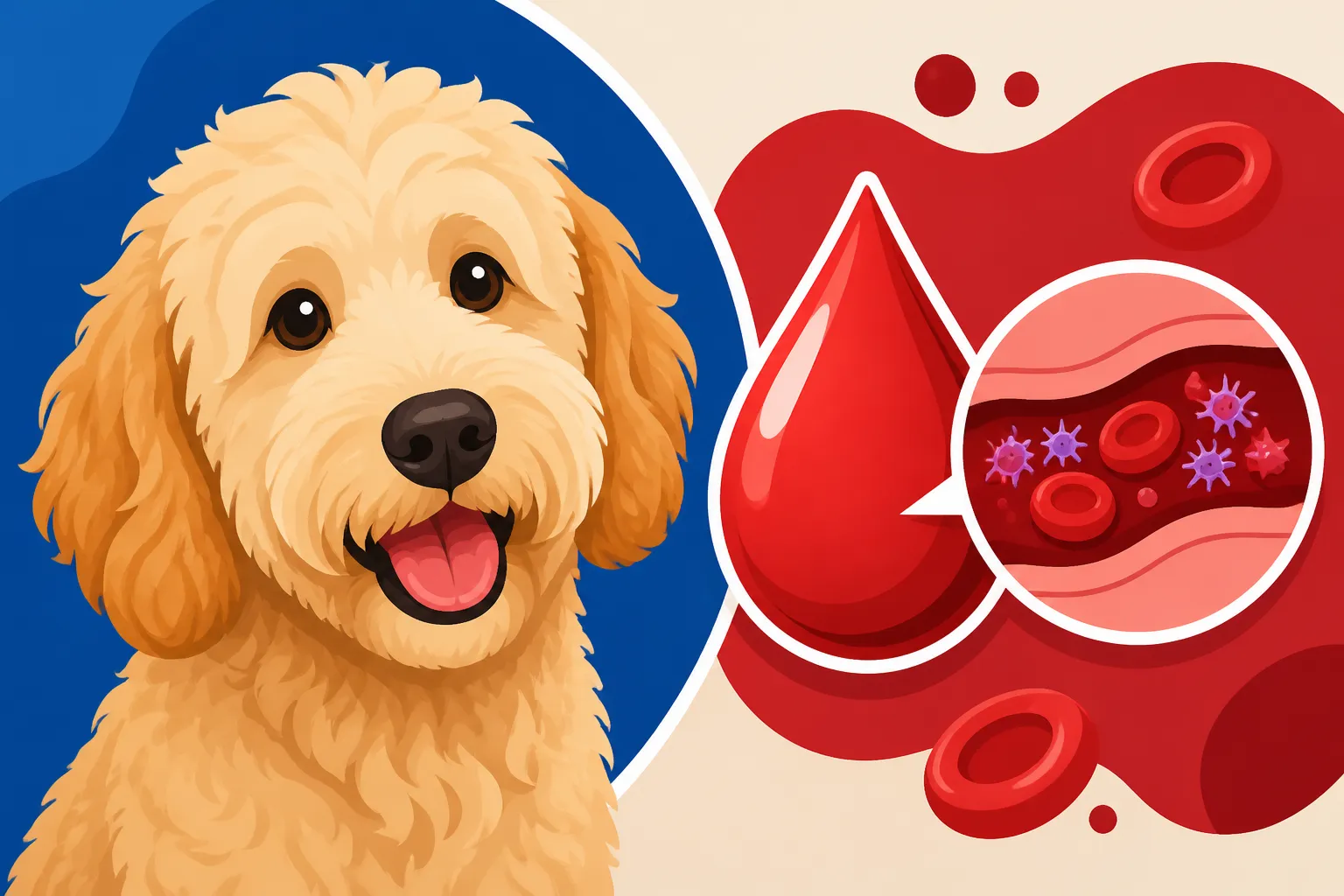
Von Willebrand Disease is one of those silent threats that can lurk in a dog's genetic makeup, often without you even knowing it until a crisis hits. It's a hereditary bleeding disorder, meaning it's passed down from parents to puppies, and it affects the blood's ability to clot properly. When a dog with vWD gets a cut or needs surgery, their blood might not form a stable clot, leading to prolonged or excessive bleeding. For Goldendoodle owners, this is particularly important because both parent breeds, Golden Retrievers and Poodles, are known to carry the gene for this condition.
The Different Types of vWD Affecting Dogs
It's not just one type of Von Willebrand Disease; there are actually a few, and they vary in severity. Understanding these types can help you grasp the potential impact on your Goldendoodle.
- Type 1 vWD: This is the most common form in many breeds, including Golden Retrievers, and it's generally considered the mildest. Dogs with Type 1 produce some amount of Von Willebrand factor (vWF) – the protein essential for blood clotting – but not enough. Think of it like a car engine that runs, but not quite at full power. They might experience mild bleeding episodes, for instance, a nosebleed that takes a while to stop, or more significant bleeding during a spay/neuter surgery. Many dogs with Type 1 can lead relatively normal lives with careful management, but they always carry an elevated risk.
- Type 2 vWD: This is much rarer and unfortunately, far more severe. Dogs with Type 2 produce vWF, but the protein itself is abnormal and doesn't function correctly. This is like having a car engine that's running, but the fuel mixture is all wrong, making it inefficient and prone to stalling. Breeds like German Shorthaired Pointers and some Poodles can be affected, and dogs with Type 2 vWD face a much higher risk of life-threatening bleeding episodes, even from minor injuries.
- Type 3 vWD: This is the most severe form, characterized by a complete absence or near-complete absence of functional vWF. This is the equivalent of a car with no engine at all. Standard Poodles are one of the breeds most commonly associated with Type 3 vWD. Dogs with Type 3 vWD are at constant high risk for spontaneous, severe bleeding, which can occur in joints, mucous membranes, or internal organs, and even minor trauma can be fatal. This severe form makes careful management and prevention absolutely critical.
Given the parentage of Goldendoodles, they are primarily at risk for Type 1 and Type 3 vWD, depending on which parent contributes the specific genetic mutation. This is why understanding the health history of both parent breeds is so crucial.
How Goldendoodles Inherit the Disease
Von Willebrand Disease is typically inherited in an autosomal recessive or autosomal dominant pattern, depending on the type. For Type 1, it's often an autosomal dominant trait with incomplete penetrance, meaning a dog only needs one copy of the affected gene to potentially show symptoms, though not all do. For the more severe Type 3, it's generally autosomal recessive. This means a Goldendoodle must inherit two copies of the defective gene—one from each parent—to be affected. If they inherit only one copy, they become a "carrier."
Understanding carriers is vital, especially if you're considering breeding your Goldendoodle. A carrier dog won't show symptoms themselves, but they can pass the gene onto their offspring. If two carriers are bred together, there's a 25% chance with each puppy that it will inherit two copies of the gene and be affected by Type 3 vWD. If an affected dog is bred with a carrier, there's a 50% chance of affected puppies. This highlights the importance of genetic testing for any Goldendoodle involved in a breeding program. You can learn more about what a carrier PRA result means for a Goldendoodle, which applies similar genetic principles.
Spotting the Signs of Von Willebrand Disease
One of the most frustrating things about vWD is that it can be a silent issue until an emergency arises. Many Goldendoodles live for years without any noticeable problems, only for a routine dental cleaning or a minor injury to reveal a serious bleeding disorder. Being vigilant and knowing what to look for can make all the difference.
Common Symptoms to Watch For
The signs of vWD can vary widely depending on the type and severity, but they all boil down to problems with blood clotting.
- Prolonged Bleeding from Minor Wounds: This is often the first clue. A small cut on a paw, a scraped nose, or a broken nail that just won't stop bleeding, even after applying pressure for a significant amount of time, should raise a red flag. Instead of clotting within a few minutes, you might find yourself battling persistent oozing for half an hour or more.
- Frequent Nosebleeds: Spontaneous nosebleeds, especially without any apparent trauma or allergy trigger, are a classic symptom. If your Goldendoodle is suddenly having frequent, unexplained nosebleeds that are difficult to stop, it warrants immediate investigation.
- Bleeding Gums: During teething as a puppy, or even as an adult, if your Goldendoodle's gums bleed excessively during brushing or after chewing on a toy, it could be a sign. Severe dental crowding in a Toy Goldendoodle mouth can sometimes lead to gum irritation, which could then expose a vWD issue.
- Excessive Bruising: Dogs can get bumps and bruises just like us, but if your Goldendoodle develops large, unexplained bruises from minor bumps, or seems to bruise more easily than other dogs, it's a concern. These might appear as dark patches under their coat.
- Bleeding After Surgery or Trauma: This is where vWD can become life-threatening. If your Goldendoodle has prolonged or excessive bleeding after a spay, neuter, or any other surgical procedure, or following a significant injury, it's a strong indicator of a clotting disorder. This is why testing a Goldendoodle before elective surgery is incredibly important.
- Blood in Stool or Urine: In severe cases, internal bleeding can manifest as blood in your Goldendoodle's feces (which might look tarry black if it's from the upper GI tract, or bright red if it's from the lower) or urine. This is an emergency and requires immediate veterinary attention.
- Joint Swelling or Lameness: Internal bleeding can sometimes occur in the joints, leading to painful swelling, stiffness, or lameness. This might be mistaken for arthritis, but if it comes on suddenly or without obvious injury, vWD should be considered.
It's important to remember that some of these symptoms could be indicative of other conditions. However, if you notice a pattern of easy bruising or prolonged bleeding, especially multiple symptoms, it's time to talk to your vet.
When to Worry: Emergency Situations
While minor bleeding can be managed at home with pressure, there are definitely times when you need to drop everything and head to the emergency vet.
- Uncontrollable Bleeding: If you've applied firm, constant pressure to a wound for 10-15 minutes and it's still bleeding heavily, it's an emergency.
- Large Blood Loss: Any significant pool of blood, or if your Goldendoodle appears weak, lethargic, or pale after a bleeding episode, indicates severe blood loss.
- Internal Bleeding Signs: If you suspect internal bleeding (tarry stools, bloody urine, swollen abdomen, difficulty breathing, or collapse), do not wait. This is a critical situation.
- Bleeding After Injections: While rare, if your Goldendoodle experiences excessive bleeding from the site of a vaccination or other injection, it's concerning. Always monitor your dog closely after any procedure, even seemingly minor ones like Goldendoodle puppy vaccination timing.
The emotional toll of an emergency is immense, and the financial burden can be shocking. Costs for Goldendoodle surgery and emergency vet costs can quickly add up, so having a plan, and ideally pet insurance like Healthy Paws, can alleviate some of that stress.
Diagnosing and Managing VWD in Your Goldendoodle
Proactive steps are always better than reactive ones when it comes to inherited conditions like vWD. The good news is that reliable tests exist, and with a diagnosis, you can work with your vet to create a management plan.
Diagnostic Testing for Von Willebrand Disease
The primary way to diagnose vWD in your Goldendoodle is through specific testing. This should ideally be done before any planned surgeries or if you suspect an issue.
- Genetic DNA Test: This is the most accurate and definitive way to determine if your Goldendoodle is affected by, or a carrier of, vWD. A simple cheek swab or blood sample can be sent to a specialized lab. The test will identify the specific genetic mutations associated with vWD in their parent breeds. Reputable labs like Embark or Paw Print Genetics offer comprehensive DNA panels. This is a crucial test that should be part of the full DNA panel a Goldendoodle breeder should run on their breeding dogs. A positive result will categorize your Goldendoodle as clear, a carrier, or affected.
- Buccal Mucosal Bleeding Time (BMBT): This is a functional test that measures how long it takes for a small incision on the inside of the dog's lip to stop bleeding. While not as definitive as a DNA test, it can indicate a clotting disorder and is often used as a screening tool, especially in emergency situations or prior to surgery if DNA results aren't available. A prolonged BMBT suggests an issue, but doesn't specifically diagnose vWD as other clotting disorders could be at play.
- Von Willebrand Factor Antigen (vWF:Ag) Assay: This blood test directly measures the amount of vWF protein in your Goldendoodle's blood. Low levels of vWF suggest vWD. This test is quantitative and can help confirm a diagnosis, especially when combined with a DNA test.
When you're looking at prospective breeders, always ask for proof of genetic testing for vWD on both parents. If they tell you "hybrid vigor" protects Goldendoodles from such diseases, understand that The Goldendoodle Hybrid Vigor Claim and Where It Breaks explains that inherited conditions can still be passed down.
Treatment and Management Options
While there's no cure for vWD, it can be managed. The goal is to prevent bleeding crises and ensure your dog is safe during necessary medical procedures.
- Desmopressin (DDAVP): For dogs with Type 1 vWD, desmopressin can sometimes be administered before surgery or in an emergency. This synthetic hormone helps stimulate the release of stored vWF from the dog's own cells, temporarily increasing clotting factor levels. It's not effective for all dogs, especially those with severe types where little to no vWF is present.
- Cryoprecipitate or Fresh Frozen Plasma (FFP): In emergency bleeding situations or prior to surgery for severely affected dogs, transfusions of cryoprecipitate (a concentrated source of vWF) or fresh frozen plasma (which contains vWF) can provide the necessary clotting factors. This is a life-saving measure.
- Supportive Care: Managing acute bleeding involves applying direct pressure to wounds, and sometimes surgical intervention to stop bleeding from internal sources. In cases of significant blood loss, supportive care like intravenous fluids and monitoring for shock are essential.
- Avoiding Certain Medications: Some medications, particularly NSAIDs (non-steroidal anti-inflammatory drugs like ibuprofen or aspirin, or even vet-prescribed ones not designed for clotting issues), can interfere with platelet function and worsen bleeding in vWD-affected dogs. Always inform your vet about your Goldendoodle's vWD status before any medication is prescribed.
- Careful Surgical Planning: Any Goldendoodle diagnosed with vWD, especially Type 3, requires meticulous planning for any surgical procedure, from routine spays/neuters to emergency surgeries. This often involves pre-treatment with desmopressin or cryoprecipitate, and having blood products on hand for transfusions.
Table: Von Willebrand Disease Types and Management Overview
| vWD Type | Primary Parent Breed Risk | Severity | Symptoms | Management Strategies | Genetic Inheritance |
|---|---|---|---|---|---|
| Type 1 | Golden Retriever | Mild to Moderate | Prolonged bleeding (minor cuts, surgery), nosebleeds, easy bruising. | Desmopressin, careful surgery, avoid NSAIDs, supportive care. | Autosomal Dominant (incomplete penetrance) |
| Type 2 | Rare (e.g., GSP) | Moderate to Severe | Similar to Type 1, but often more pronounced. May not respond to desmopressin. | Cryoprecipitate/FFP, careful surgery, avoid NSAIDs, supportive care. | Autosomal Recessive |
| Type 3 | Standard Poodle | Severe | Spontaneous, severe bleeding (gums, nose, joints, internal), life-threatening. | Cryoprecipitate/FFP, careful surgery, avoid NSAIDs, supportive care. | Autosomal Recessive |
Remember, a diagnosis of vWD isn't a death sentence, but it does mean you'll need to be more proactive and communicative with your veterinary team. These preventative measures and treatments can be costly, highlighting the importance of Goldendoodle pet insurance for a dog with no breed papers, as unexpected conditions can arise.
Living with a Goldendoodle Affected by vWD
Having a Goldendoodle with Von Willebrand Disease means adopting a heightened sense of awareness and taking specific precautions. It's about empowering yourself with knowledge to keep your furry friend safe and healthy.
Daily Precautions and Lifestyle Adjustments
Life with a vWD-affected Goldendoodle doesn't have to be filled with fear, but it does require a bit more intentionality in your daily routine.
- Avoid Rough Play: While Goldendoodles are often active and love to play, try to minimize overly rough play that could lead to accidental bumps, scrapes, or tears. This isn't to say they can't have fun, but perhaps supervise playtime more closely or opt for less physical games like fetch or puzzle toys. Goldendoodle exercise for body and mind is still crucial, but choose activities wisely.
- Safe Chews and Toys: Be mindful of the toys and chews you provide. Hard bones or toys that could splinter or chip teeth might cause gum bleeding. Opt for softer, yet durable, chew toys and ensure they are appropriately sized for your Goldendoodle's mouth to prevent choking hazards.
- Nail Trimming Vigilance: Even a minor quicking of a nail during a trim can lead to significant bleeding in a vWD-affected dog. Use sharp clippers or a grinder, and always have styptic powder or cornstarch readily available. Consider regular professional nail trims where staff are experienced.
- Mouth and Dental Care: Regular Goldendoodle dental crowding in the smaller sizes can lead to gum irritation, which is exacerbated by vWD. Talk to your vet about appropriate dental hygiene. Routine dental cleanings often require general anesthesia, which means careful pre-surgical planning is paramount.
- Environment Check: "Puppy-proof" your home for all life stages. Remove sharp objects, cover exposed corners, and be aware of potential hazards in the yard, like thorny bushes or sharp rocks, that could cause cuts.
- Inform Everyone: Make sure anyone who cares for your Goldendoodle – dog walkers, pet sitters, groomers, family members – is aware of their vWD diagnosis and knows what to do in case of a bleeding incident. Provide clear emergency contacts and instructions.
- ID Tag and Records: Your Goldendoodle should always wear an ID tag, and consider adding a specific tag noting their vWD status. Keep detailed medical records, including their vWD test results, easily accessible, especially if you travel. Keeping the records no Goldendoodle registry holds is vital here, as this is a personal health record.
Working Closely with Your Veterinarian
Your vet is your most important partner in managing vWD. Establish a strong, open line of communication.
- Pre-Surgical Consultations: Before any procedure, no matter how minor, always discuss your Goldendoodle's vWD status with your vet. This includes dental cleanings, lump removals, or any other interventions. They may recommend pre-treatment or special precautions.
- Emergency Plan: Work with your vet to develop an emergency protocol for bleeding episodes. This might include specific medications to have at home, local emergency vet contacts, and instructions on when to seek immediate help.
- Regular Check-ups: Maintain a schedule of regular veterinary check-ups. These visits allow your vet to monitor your Goldendoodle's overall health and discuss any changes or concerns related to their vWD. For a senior Goldendoodle care after the age of nine, managing vWD alongside other age-related conditions becomes even more complex.
- Medication Awareness: Always double-check with your vet before giving your Goldendoodle any new medication, even over-the-counter supplements, to ensure they don't interfere with clotting.
The Financial Aspect of VWD Management
Managing a chronic condition like vWD can come with significant financial implications. The costs can range from routine genetic testing and special pre-surgical treatments to emergency transfusions and extended hospital stays.
- Diagnostic Costs: Initial DNA testing can range from $100-$200, but is a one-time cost that provides invaluable information.
- Emergency Care: A severe bleeding episode requiring an emergency vet visit, blood transfusions, and hospitalization can easily run into thousands of dollars.
- Pre-Surgical Preparations: Desmopressin or cryoprecipitate transfusions before surgery add to the cost of any procedure.
This is where pet insurance becomes a true lifesaver. Policies from providers like Healthy Paws can significantly offset these unexpected and often high expenses, allowing you to focus on your Goldendoodle's care rather than the immediate financial burden. When choosing a plan, ensure you understand how they classify a Goldendoodle crossbreed and their coverage for hereditary conditions. While some insurers might have waiting periods for certain genetic conditions, enrolling your Goldendoodle puppy in week one gives you the best chance of coverage for unforeseen issues like vWD.
Living with a Goldendoodle with Von Willebrand Disease requires diligence and a strong partnership with your veterinary team, but it doesn't mean a diminished life for your beloved companion. With proper care and preparation, your Goldendoodle can thrive.
Disclaimer
Please remember that this article provides general information and is not a substitute for professional veterinary advice. Always consult with a qualified veterinarian regarding any health concerns or before making any decisions about your Goldendoodle's care or treatment.