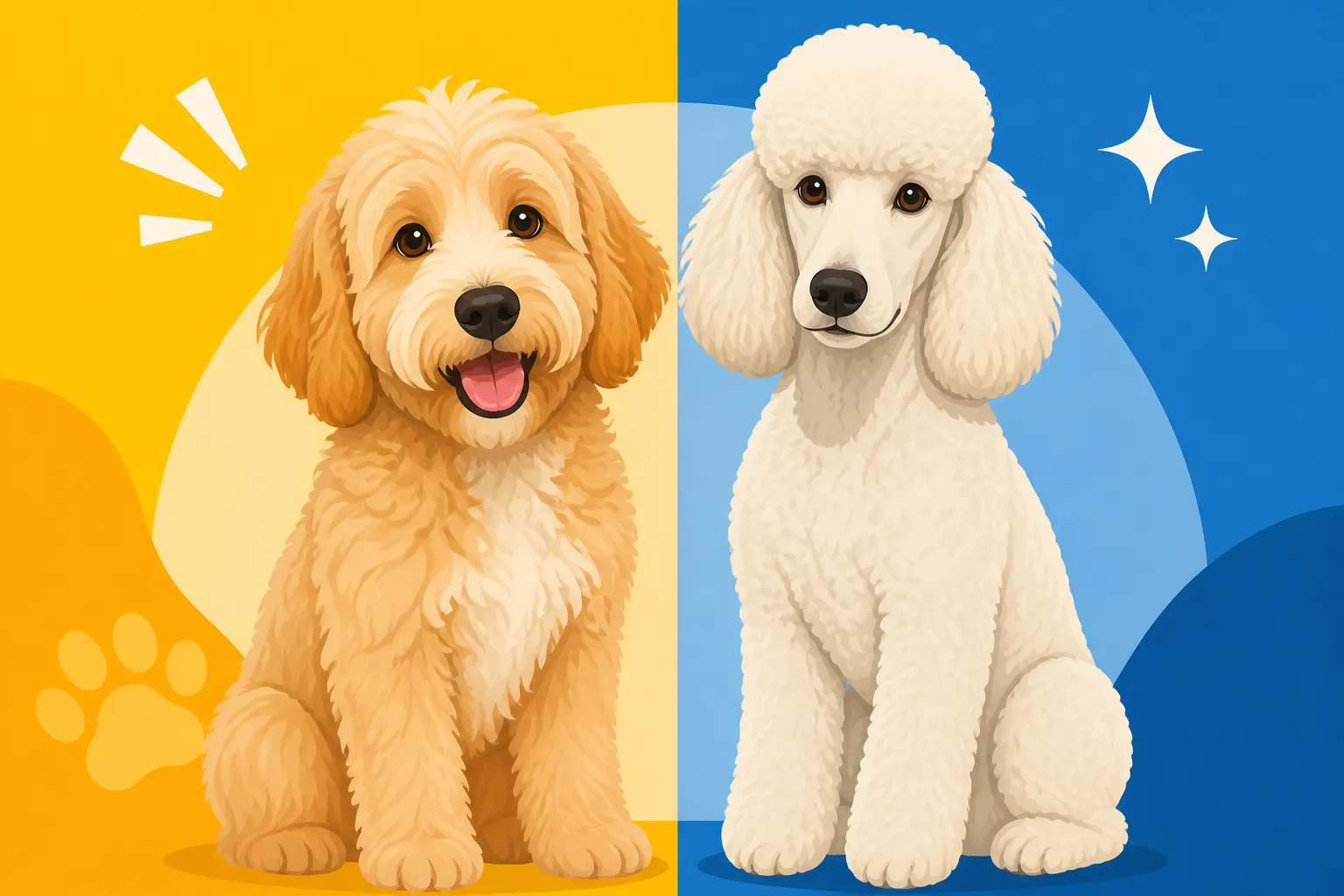
A Goldendoodle Next to a Standard Poodle
Choosing the right canine companion is a huge decision, and for many families, the quest for an intelligent, loving, and potentially lower-shedding dog often leads them to two wonderful breeds: the Goldendoodle and the Standard Poodle. While they share some genetic lineage, these two dogs offer distinct experiences. This guide will help you understand the core differences between them, exploring their origins, temperaments, care needs, and more, so you can confidently decide which furry friend is the best fit for your life.
A Look at Their Ancestry: Golden Retriever vs. Purebred Poodle Influence
When you’re trying to understand the nuances between a Goldendoodle and a Standard Poodle, it all really begins with their roots. One is a venerable, established breed with a long history, and the other is a relatively newer crossbreed, a delightful blend of two distinct purebreds.
The Standard Poodle's Purebred Pedigree
Let's start with the Standard Poodle. This isn't just a fluffy show dog; Poodles were originally bred in Germany as water retrievers, hence their practical, curly, waterproof coat and intelligent, alert nature. They're workers at heart, athletic and incredibly smart. Their lineage is well-documented, meticulously managed by kennel clubs around the world for centuries. When you get a Standard Poodle, you're getting a dog with a predictable set of traits, both physically and temperamentally, that breeders have been carefully cultivating for generations. You know what you're signing up for: a dog bred for intelligence, agility, and a certain regal elegance. They carry a distinct genetic blueprint that has been refined over hundreds of years.
The Goldendoodle's Hybrid Heritage
The Goldendoodle, on the other hand, is what we call a hybrid or crossbreed. It's a purposeful mix of a Golden Retriever and a Standard Poodle. The intention behind this cross was to combine the friendly, outgoing nature of the Golden Retriever with the intelligence and low-shedding coat of the Poodle. This blend, however, introduces a degree of variability that you won't find in a purebred. Each Goldendoodle puppy, even within the same litter, can inherit different combinations of traits from its two parent breeds. Some might lean more towards the Golden Retriever in appearance or personality, while others might be more Poodle-like. This is why you see such a wide range in Goldendoodle coats, sizes, and even temperaments. It’s part of their charm, but also something to be aware of when considering what kind of dog you want. It’s important to understand What a Goldendoodle Actually Is and Is Not when making your decision.
Temperament and Personality: A Tale of Two Loyalties
Both Goldendoodles and Standard Poodles are renowned for their intelligence and loyalty, but the way these traits manifest can be quite different. It often comes down to the blend of personalities from their parent breeds.
The Standard Poodle's Elegant Intelligence
Standard Poodles are incredibly intelligent, often ranking among the smartest dog breeds. This intelligence makes them highly trainable and eager to please, thriving on mental stimulation and purpose. They are graceful, athletic, and can excel in various dog sports like agility, obedience, and even dock diving. While deeply loyal and affectionate with their families, they can sometimes be a bit reserved or observant with strangers, taking their time to warm up. They carry themselves with an air of dignity, and while playful, their energy can be channeled into focused activities. They respond incredibly well to consistent, positive reinforcement training and enjoy having a "job" to do, even if it's just learning new tricks around the house. They are sensitive dogs who thrive on routine and a strong bond with their people.
The Goldendoodle's Affectionate Enthusiasm
The Goldendoodle often inherits the best of both worlds: the Poodle's intelligence and the Golden Retriever's famous friendliness and desire to please. This typically results in a dog that is outgoing, highly affectionate, and possesses an infectious enthusiasm for life. Goldendoodles are often described as "people pleasers" and tend to be incredibly social, making friends easily with both humans and other animals. They thrive on companionship and can be quite "velcro dogs," wanting to be wherever their family is. While they are smart and generally easy to train, their Golden Retriever lineage can sometimes make them a bit more boisterous or goofy than the more reserved Poodle. They are playful and loving, often making excellent family pets due to their patient and tolerant nature. Understanding The Goldendoodle Temperament Owners Describe can give you a clearer picture.
Coat Type, Grooming Needs, and Allergen Impact
This is perhaps one of the most significant areas where Goldendoodles and Standard Poodles diverge, especially for those considering a dog due to allergy concerns. The coat is a defining feature and dictates a lot about the daily care routine.
The Standard Poodle's Consistent Coat
A Standard Poodle's coat is distinctive: dense, curly, and non-shedding. It's often described as hair rather than fur because it grows continuously, much like human hair. This means no tumbleweeds of dog hair around your house, which is a huge plus for many. However, "non-shedding" does not mean "no maintenance." In fact, it means more maintenance. The Poodle's curly coat will quickly mat if not brushed regularly and thoroughly, ideally several times a week, right down to the skin. Professional grooming every 4-6 weeks is essential to keep their coat healthy and prevent painful matting. Without this consistent care, the coat can become a tangled mess, leading to skin issues and discomfort for the dog.
Goldendoodle Coat Variability and Maintenance
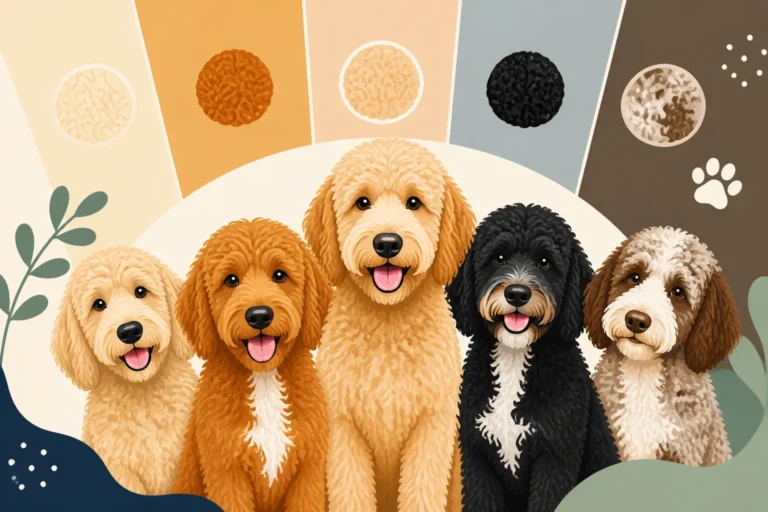
Ah, the Goldendoodle coat! This is where the variability of a crossbreed truly shines (or tangles, depending on your luck and effort). Unlike the predictable Poodle coat, Goldendoodles can have several different coat types: straight (often called "flat coat," which sheds more), wavy (the most common, a lovely shaggy look), or curly (Poodle-like, but often softer). You can read more about The Three Goldendoodle Coat Types and How to Tell Them. The straight and wavy coats tend to shed more than the curly variety, but even the curly Goldendoodles usually have a looser curl than a purebred Poodle.
Regardless of the curl pattern, Goldendoodle coats are prone to matting because they have hair that grows continuously and often has a thick undercoat. Daily or at least every-other-day brushing is crucial, especially during the "coat change" phase around 8-12 months of age, when the puppy coat transitions to the adult coat. Professional grooming appointments every 6-8 weeks are generally a must. This can make Goldendoodle Grooming as the Biggest Line in the Budget for many owners. You'll need good quality brushes, combs, and detangling sprays. Brands like Chewy offer a wide selection of grooming tools, from slicker brushes and metal combs to dog-friendly shampoos and conditioners, making it easier to keep up with their demanding coats at home between professional visits.
Debunking the Hypoallergenic Myth for Both
Let's address the elephant in the room: "hypoallergenic." It's a term often thrown around, especially with Goldendoodles, but it's largely a misconception. No dog is truly 100% hypoallergenic. The term implies "less allergenic," meaning they are less likely to trigger allergies in sensitive individuals.
Standard Poodles are often recommended for allergy sufferers because they don't shed dander-laden hair into the environment as much as shedding breeds. Instead, the dander and loose hairs tend to get caught in their curls. However, allergens are also found in saliva and urine, not just dander. So, while a Poodle might be a better choice for someone with mild allergies, they are not a guaranteed solution.
For Goldendoodles, the "hypoallergenic" claim is even more tenuous due to their mixed heritage. While some Goldendoodles inherit a Poodle-like, low-shedding coat, others can shed moderately or even heavily, especially those with straighter or wavy coats. If a Goldendoodle puppy inherits more Golden Retriever coat traits, it will likely shed more and produce more allergens. Even the curliest Goldendoodle will produce dander and saliva that can trigger allergies. It’s crucial to spend time with a Goldendoodle before bringing one home if allergies are a concern. This is why it's so important to understand Why No Goldendoodle Is Truly Hypoallergenic.
| Feature | Standard Poodle | Goldendoodle |
|---|---|---|
| Origin | Purebred, German water retriever | Crossbreed (Golden Retriever x Standard Poodle) |
| Predictability | High consistency in traits and appearance | Variable traits, depends on parent blend |
| Temperament | Intelligent, elegant, loyal, sometimes reserved | Affectionate, friendly, enthusiastic, sociable |
| Coat Type | Dense, tight, consistent curl, non-shedding | Straight, wavy, or curly; variable shedding |
| Grooming Frequency | Daily brushing, professional groom every 4-6 weeks | Daily brushing, professional groom every 6-8 weeks |
| Hypoallergenic Claim | Less allergenic (dander caught in coat) | Highly variable; not truly hypoallergenic |
| Exercise Needs | High mental & physical stimulation | High energy, needs consistent physical & mental work |
| Lifespan | Generally 10-14 years | Generally 10-15 years |
Health Considerations and Lifespan Differences
Both Goldendoodles and Standard Poodles are generally healthy dogs, but like all breeds and crosses, they are predisposed to certain genetic conditions. Understanding these can help you make informed choices and prepare for potential health needs.
Standard Poodle Health Profile
Standard Poodles are known for a few specific health concerns that reputable breeders diligently screen for. These include hip dysplasia, elbow dysplasia, Progressive Retinal Atrophy (PRA), Addison's Disease, and Bloat (Gastric Dilatation-Volvulus). Hip and elbow dysplasia affect the joints, potentially leading to arthritis and mobility issues. PRA is an eye condition that can lead to blindness. Addison's Disease is a hormonal disorder that can be life-threatening if not managed. Bloat is an acute, life-threatening condition where the stomach twists. Responsible Poodle breeders conduct extensive health screenings on their breeding stock to minimize the risk of passing these conditions on to puppies. A Poodle's typical lifespan is often between 10 and 14 years, with good care and genetics.
Goldendoodle Health and Hybrid Vigor (or Lack Thereof)
The Goldendoodle, as a crossbreed, sometimes gets the reputation of benefiting from "hybrid vigor," which is the idea that crossbred animals are inherently healthier than purebreds due to increased genetic diversity. While hybrid vigor can indeed reduce the incidence of some recessive genetic conditions, it's not a magical shield against all health problems. Goldendoodles can inherit any condition that either the Golden Retriever or the Standard Poodle is prone to. This means they are at risk for hip and elbow dysplasia, PRA, certain cancers (especially from the Golden Retriever side, like lymphoma and hemangiosarcoma), and Addison's Disease (from the Poodle side).
The critical factor for a Goldendoodle's health isn't just its hybrid status, but the health testing of its parents. A reputable Goldendoodle breeder will perform the same genetic and orthopedic health clearances on both the Golden Retriever and Poodle parents as a responsible purebred breeder would. This includes OFA or PennHIP certifications for hips and elbows, eye certifications from a veterinary ophthalmologist, and DNA tests for conditions like PRA and Von Willebrand's disease. Without these tests, you have no way of knowing what genetic predispositions a Goldendoodle puppy might carry. It's truly essential to prioritize Health Testing Both Goldendoodle Parents Should Have. The lifespan of a Goldendoodle generally mirrors that of its parent breeds, usually 10-15 years, with minis potentially living a bit longer. You can explore Goldendoodle Lifespan and What a Cross Really Buys You for more detail.
Exercise Requirements and Training Aptitude
Both breeds are highly intelligent and active, but their exercise and training needs can present in slightly different ways, reflecting their distinct backgrounds.
Standard Poodle's Need for Mental and Physical Engagement
Standard Poodles are not merely pretty faces; they are highly intelligent and athletic dogs that require significant mental and physical stimulation to thrive. They were bred to work, and they retain that drive. Daily vigorous exercise is a must – think long walks, runs, swimming, or engaging in dog sports. A bored Poodle can become a destructive Poodle, using its formidable intellect to find its own entertainment, which might not align with your furniture.
Training a Standard Poodle is often a joyful experience because they are so smart and eager to learn. They respond incredibly well to positive reinforcement and can quickly pick up complex commands and tricks. Early socialization and consistent training are key to channeling their intelligence and energy into appropriate behaviors. They love having a "job" to do, even if it's just practicing obedience commands or playing puzzle games. This mental engagement is just as important as physical exercise for their overall well-being.
Goldendoodle's High Energy and Trainability
Goldendoodles, inheriting the Poodle's smarts and the Golden Retriever's biddability and enthusiasm, are generally highly trainable and eager to please. This makes them a popular choice for first-time dog owners. However, don't let their lovable nature fool you; they are typically high-energy dogs, especially in their younger years. They need a good amount of daily exercise to prevent boredom and destructive behaviors. This could include long walks, fetching games, trips to the dog park, or even hiking. They love being active participants in family life.
Their intelligence and eagerness to please mean they generally excel in obedience training. Starting with puppy classes and continuing with consistent positive reinforcement at home is highly effective. They thrive on attention and praise. Some Goldendoodles can inherit a strong retrieving drive from their Golden Retriever side, making fetch a favorite activity. While generally easy to train, it's worth investing time in Training a Goldendoodle That Wants to Please You from a young age, as their size and exuberance can be a handful if not properly channeled. Providing Goldendoodle Exercise and Mental Work Every Day is crucial for a well-adjusted companion.
Conclusion
Both the Standard Poodle and the Goldendoodle offer companionship, intelligence, and joy in spades, but they cater to slightly different preferences and lifestyles. The Standard Poodle is a purebred dog with a predictable set of traits, a sophisticated intelligence, and rigorous but consistent grooming needs, making them an excellent choice for those who appreciate their elegant demeanor and focused energy. The Goldendoodle, a beloved crossbreed, brings an unparalleled friendliness, often with a highly variable coat that demands significant grooming attention, appealing to those seeking an outgoing, affectionate family dog with a blend of desirable traits. Your choice ultimately depends on what you value most in a canine companion: predictability, specific temperament traits, grooming commitment, and your approach to managing potential health predispositions. Whichever you choose, be prepared for a loving, intelligent companion that will enrich your life immensely.
Disclaimer
This article is for general informational purposes only and does not constitute professional advice. Laws, prices and regulations vary by location and change over time. Consult a qualified professional for guidance on your specific situation.