Which Clipper Motor Handles a Goldendoodle Coat
If you've ever tried to groom your beloved Goldendoodle at home, you know the struggle: you start with good intentions, but your clippers bog down, snag, and get hot, leaving your pup uncomfortable and you utterly frustrated. It’s not just you; many standard pet clippers simply aren't built to handle the unique, often dense and curly coat of a Goldendoodle. This comprehensive guide will walk you through the world of clipper motors, helping you understand what makes some powerful enough for your Goldendoodle's beautiful, albeit challenging, coat, and how to choose the right tool for stress-free grooming.
Understanding the Goldendoodle Coat Challenge
Before we dive into the technicalities of clipper motors, let's really acknowledge the beast we're taming here: the Goldendoodle coat. It's truly a marvel of nature, combining the best (and sometimes most challenging) aspects of its Golden Retriever and Poodle parents. But that marvel can quickly turn into a matted nightmare if not properly managed, and standard grooming tools often just don't cut it, literally.
The Density and Texture of Goldendoodle Hair
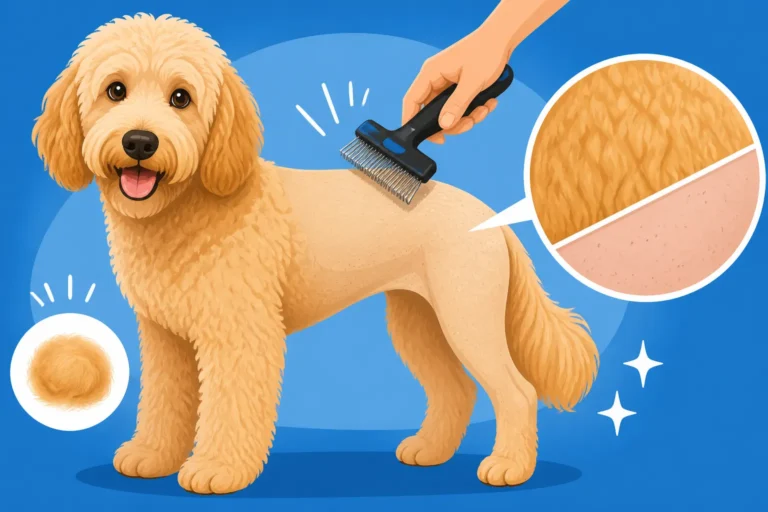
Goldendoodle coats are famous for their variety, but they generally share a few common traits: they are often dense, can range from wavy fleece to tight woolly curls, and have a tendency to grow rather than shed. This combination means you're dealing with a lot of hair packed closely together. Imagine trying to cut through a thick wool blanket with a pair of dull craft scissors – that’s pretty much what it feels like for inadequate clippers trying to tackle a Goldendoodle.
The texture itself presents a challenge. The soft, often fine individual strands, when curled, create a resilient barrier that cheap blades and weak motors struggle to penetrate smoothly. This isn't like clipping a short-haired dog; this is a full-on expedition into a furry jungle. And because the coat is constantly growing, it can quickly become a haven for tangles and mats if not brushed regularly. If you want to dive deeper into the nuances, check out The Three Goldendoodle Coat Types and How to Tell Them.
Why Regular Clippers Fall Short
Most clippers you find at your local big-box pet store are designed for general use, perhaps for a short-haired terrier or a dog with a much thinner, straighter coat. These clippers typically come with less powerful motors and are not built for sustained use on a thick, dense Goldendoodle coat. You might notice them slowing down, pulling at the hair instead of cutting, or heating up uncomfortably fast.
This isn't a fault of your technique or your dog's coat; it's simply a mismatch of tool to task. When a clipper's motor lacks the torque and speed to push the blade through thick hair consistently, it struggles, heats up, and quickly becomes ineffective. This leads to frustrating stops, missed patches, and a miserable experience for both you and your Goldendoodle. Trying to save money on clippers can often lead to a much larger bill at the professional groomer to fix a patchy, half-finished job or, worse, to demat a severely tangled coat. Many Goldendoodle owners quickly learn that Why a Goldendoodle Mats in a Week Without Brushing is a harsh reality, and inadequate tools only make it worse.
Types of Clipper Motors: Rotary, Pivot, and Magnetic
When you start looking at more serious grooming clippers, you'll encounter a few different motor types, each with its own strengths and weaknesses. Understanding these can help you make an informed decision about what will actually perform well on your Goldendoodle.
Rotary Motors: The Workhorses for Goldendoodles
For Goldendoodle owners, the rotary motor is typically the hero of the grooming world. These motors are designed to provide consistent power and speed, regardless of the resistance they encounter. Think of it like a powerful, reliable engine that just keeps going. They operate with a single shaft that drives the clipper blade, offering a smooth, consistent cut that is essential for dense, curly coats.
Rotary clippers come in both single-speed and multi-speed versions. Multi-speed options are fantastic because they allow you to adjust the RPMs (rotations per minute) based on the coat condition. A lower speed might be better for delicate areas or very matted sections where you need to go slowly and carefully, while a higher speed can power through thicker body hair. Many professional groomers use rotary clippers because of their versatility and robust performance. They generate heat, of course, but better models often include internal cooling systems or are designed to dissipate heat more effectively, which is critical during a longer grooming session.
Pivot and Magnetic Motors: When They Might (or Might Not) Work
While rotary motors are generally preferred for Goldendoodles, it's worth knowing about pivot and magnetic motors. These types have their place in the grooming world, but they typically aren't the first choice for a full Goldendoodle clip.
- Pivot Motors: These motors are known for their high torque but lower speed. This means they can cut through very thick, dense, or even somewhat matted coats without bogging down. However, their slower blade speed means they take longer to cover an area and don't provide as smooth a finish on a longer coat as a rotary clipper. They can be useful for specific tasks, like carefully working through a small, dense mat, but for an entire Goldendoodle, they can be a slow process.
- Magnetic Motors: Magnetic motors are very fast, running the blade at a high RPM. However, they tend to have less torque than rotary or pivot motors. This makes them great for light-duty work, such as trimming faces, paws, or sanitary areas on dogs with finer, less dense coats. On a thick Goldendoodle coat, a magnetic clipper might zip through fine hair but could easily snag and pull if it hits a dense patch or a slight tangle, leading to discomfort for your dog and frustration for you.
Here's a quick comparison of the motor types to help visualize the differences:
| Motor Type | Power for Goldendoodles | Speed | Heat Generation | Best Use Case for Goldendoodles |
|---|---|---|---|---|
| Rotary | Excellent (High Torque) | High (Often multi-speed) | Moderate (Often with cooling) | Full body grooms, dense, curly coats, versatile |
| Pivot | Good (High Torque) | Low | Low | Very thick, matted areas, specific careful cuts |
| Magnetic | Fair (Lower Torque) | High | Low | Lighter touch-ups, faces, paws (on less dense hair) |
Deciding on your main clipper is a big step, but remember that the actual frequency of grooming is just as important. For most Goldendoodles, Booking a Goldendoodle Groom Every Six to Eight Weeks is essential to prevent mats, but home grooming in between is a lifesaver.
Key Considerations When Choosing a Goldendoodle Clipper Motor
Choosing the right clipper isn't just about the motor type; it's about understanding how the motor's characteristics translate into practical grooming performance. For a Goldendoodle, where grooming sessions can be lengthy and the coat challenging, a few key factors stand out.
Power and RPM Rotations Per Minute
The power of a clipper motor, often indicated by its RPM (rotations per minute) or strokes per minute (SPM), is crucial for a Goldendoodle. You need a motor that can maintain a high blade speed consistently, even when encountering dense or slightly resistant hair. A high RPM combined with sufficient torque means the blades glide through the coat efficiently, reducing the chance of snagging, pulling, or leaving choppy lines.
Think about it: if the blade slows down every time it hits a thicker section, it won't cut cleanly. Instead, it will chew at the hair, creating unevenness and causing discomfort to your dog. For Goldendoodles, a clipper with at least 3,000-4,000 SPM is a good starting point, with multi-speed options that can reach even higher for general body work. This ensures that you can power through the coat without constantly fighting the tool.
Heat Management and Blade Cooling
One of the most common complaints from home groomers is that their clippers get too hot, too fast. This isn't just an inconvenience for you; it can actually burn your dog's skin. Goldendoodles have thick coats that can trap heat, and if the clipper blade gets excessively hot, it can cause severe discomfort or even skin irritation.
Professional-grade clippers with rotary motors often come with better heat management systems. Some have internal fans to cool the motor, which in turn helps keep the blades cooler for longer. The blades themselves also play a role; ceramic blades, for example, tend to stay cooler than steel blades. However, even with the best clippers, it's vital to have multiple blades on hand so you can swap them out when one gets warm. You should always be able to touch the blade comfortably; if it's too hot for your hand, it's too hot for your dog's skin. Remember, a Goldendoodle's skin needs to breathe, and proper drying after a bath, as detailed in Drying a Goldendoodle Coat Properly, also helps prevent skin issues.
Corded vs. Cordless Convenience
The choice between a corded and cordless clipper often comes down to personal preference and your grooming setup. Both have their distinct advantages and disadvantages when you're tackling a Goldendoodle.
- Corded Clippers: The main advantage here is consistent, uninterrupted power. You never have to worry about a battery dying mid-groom, which can be a huge relief during a long session on a large or very dense-coated Goldendoodle. They tend to be slightly lighter because they don't house a battery pack. However, the cord can be a nuisance, getting tangled around your legs, restricting your movement, or even spooking your dog if it catches them unexpectedly. You need a safe, accessible outlet and perhaps an extension cord.
- Cordless Clippers: These offer unparalleled freedom of movement. You can groom your Goldendoodle anywhere without being tethered to an outlet, which is fantastic for getting into awkward angles or if your dog is particularly wiggly. The downside is battery life and potential power fade. Even the best cordless clippers will eventually need recharging, and as the battery depletes, the motor might lose some of its power, affecting cutting efficiency. For a Goldendoodle, look for cordless models with long-lasting lithium-ion batteries and, ideally, a "power boost" mode or consistent power delivery until the battery is completely drained. Having a spare charged battery is always a good idea. Building up your Goldendoodle's tolerance for long grooming sessions is also key, as discussed in Building a Goldendoodle's Tolerance for Two Hours.
Making the Right Investment for Your Goldendoodle's Coat
Investing in the right clippers is one of the smartest decisions you can make as a Goldendoodle owner. It transforms grooming from a dreaded chore into a manageable, even bonding, experience. Trying to make do with subpar equipment will only lead to frustration, poor results, and potentially expensive trips to the professional groomer for dematting.
Professional-Grade Clippers: What to Look For
When you're ready to upgrade, look for clippers that groomers actually use. These are designed for heavy-duty, continuous use and will stand up to the challenge of a Goldendoodle coat. Here’s what makes them different:
- Robust Rotary Motors: As discussed, these are your best bet. Look for models with sealed, maintenance-free motors designed for long life.
- Detachable Blade System: This is a non-negotiable feature. Detachable blades allow you to easily snap blades on and off for cleaning, oiling, and swapping out sizes or replacing dull ones. This also helps with heat management; you can quickly switch to a cool blade if one gets too warm.
- Multiple Speed Settings: This gives you versatility. You can use lower speeds for sensitive areas or anxious dogs, and higher speeds for powering through thick body hair.
- Ergonomics and Weight: Grooming a Goldendoodle can take time, so a clipper that feels comfortable in your hand and isn't too heavy will make a big difference in preventing hand fatigue.
- Durable Casing: Look for clippers made with high-quality, impact-resistant materials. They're an investment, so you want them to last.
While I can't name specific models or prices, reputable brands in the grooming industry are often talked about by professional groomers. A quick search for "professional dog grooming clippers" on platforms like Amazon or Chewy will bring up many options that fit these criteria.
Maintaining Your Clippers for Longevity
Even the best clippers won't perform well if they're not properly maintained. Think of them as precision tools that need regular care.
- Clean After Every Use: Remove all hair from the blades and housing. A small brush (often included with clippers) works wonders.
- Oil the Blades: This is critical. After cleaning and before storing, apply a few drops of clipper oil to the blades. This lubricates them, reduces friction and heat, and prevents rust.
- Cool Down: Allow the blades to cool completely before storing them. Never put hot blades away.
- Check for Dullness: Even good blades will dull over time. Have a sharp replacement set ready. Dull blades pull hair, cause discomfort, and put strain on the motor.
- Store Properly: Keep your clippers and blades in a clean, dry place, ideally in a protective case.
Proper maintenance not only ensures your clippers work efficiently but also extends their lifespan, saving you money in the long run. Combined with the right Slicker Brushes and Combs a Goldendoodle Needs, good clippers are the foundation of effective home grooming.
Where to Buy Reliable Goldendoodle Clippers
When you're ready to make that investment, you want to ensure you're getting a genuine product and good support.
- Online Retailers: Large online platforms like Amazon and Chewy offer a vast selection of professional-grade clippers. You can read countless reviews from other dog owners and groomers, which can be incredibly helpful in narrowing down your choices. Just be sure to purchase from reputable sellers to avoid counterfeits.
- Specialty Pet Supply Stores: Some larger pet supply stores might carry higher-end grooming equipment, especially those catering to professional groomers. This gives you the chance to hold the clippers, feel their weight, and ask questions of knowledgeable staff.
- Grooming Supply Distributors: There are online and brick-and-mortar stores that specifically cater to professional dog groomers. These often have the widest selection of top-tier brands and accessories.
Don't be afraid to invest a bit more upfront for a quality clipper. While the initial cost might seem higher than those cheap pet store models, the durability, performance, and comfort it provides for both you and your Goldendoodle will pay dividends. It’s an essential tool in your home grooming arsenal, making the task less daunting and much more successful. Many owners wonder Whether Home Grooming Saves a Goldendoodle Owner Money, and while there's an initial outlay for tools, the long-term savings are significant, especially with a breed that requires such consistent care.
Disclaimer
This article is for general informational purposes only and does not constitute professional advice. Laws, prices and regulations vary by location and change over time. Consult a qualified professional for guidance on your specific situation.