Drying a Goldendoodle Coat Properly
Oh, the Goldendoodle bath time saga! It’s a scene many of us know all too well: your lovable furball emerges from the tub, shaking water everywhere, looking like a fluffy, adorable mop. You grab a towel, give them a good rub, and think, "Phew, that's done!" But then, a few days later, you start noticing those sneaky little knots forming, or worse, a musty "damp dog" smell clinging to their beautiful coat. Improper drying isn't just about aesthetics; it's a direct route to painful matting, skin irritation, and even infections. This guide is here to walk you through exactly how to dry your Goldendoodle's coat properly, saving you (and your dog!) a lot of trouble down the road.
Why Proper Drying is Non-Negotiable for Goldendoodles
Let’s be honest, Goldendoodles are famous for those luscious, fluffy coats. But with great fluff comes great responsibility – especially when it comes to keeping it clean and, critically, dry. Skipping corners on the drying process isn't just a minor oversight; it's practically an invitation for a whole host of problems that can quickly turn your adorable, freshly-bathed pup into a matted, itchy mess.
The Matting Monster: How Dampness Fuels Tangles
The biggest villain in the Goldendoodle grooming world is matting, and dampness is its number one accomplice. When your Goldendoodle's coat gets wet, especially after a full bath, the individual hairs swell and then, as they dry, they intertwine and cling together. If these damp hairs aren't thoroughly separated and dried, they fuse, creating knots that rapidly turn into dense, painful mats.
Think about it: you might towel-dry your dog and their outer coat feels mostly dry to the touch. But beneath that top layer, especially in dense areas like the armpits, behind the ears, on the belly, and around the tail, the undercoat can remain stubbornly damp for hours. This hidden dampness is a matting factory. The longer it stays damp, the more opportunity the hairs have to tangle and lock together. It's like trying to comb through wet spaghetti that's been left to dry in a clump – impossible without a lot of pulling and discomfort. This is why a quick towel-dry after a rainy walk or a dip in the lake can set the stage for major matting problems just a day or two later. Those tiny, seemingly innocent tangles quickly escalate, tightening as the coat moves and rubs. When you look at Why a Goldendoodle Mats in a Week Without Brushing, you'll see how quickly these things can develop, and dampness just accelerates the whole process.
Skin Health and the Damp Environment
Beyond the visible mats, improper drying poses a significant threat to your Goldendoodle's skin health. Their thick, often curly coats are fantastic insulators, which means once they get damp, they create a warm, moist environment right against the skin. This kind of setup is absolutely ideal for the proliferation of yeast and bacteria.
Have you ever smelled that distinct "damp dog" odor even after you thought your Goldendoodle was dry? That's often a sign of yeast or bacterial growth thriving in residual moisture. This can lead to itchy skin, redness, irritation, and eventually, hot spots – those painfully inflamed, weeping lesions that dogs constantly lick and chew, making them even worse. Goldendoodles are already prone to certain skin issues, and allowing dampness to linger exacerbates these tendencies. Just imagine wearing wet clothes for hours – it’s uncomfortable, and your skin would get irritated, right? The same goes for your dog, only they can't take off their fur. This is particularly relevant around their ears, which are often covered by long, furnished ear flaps, creating a warm, dark, moist canal. This is why Goldendoodle Ear Care Under All That Hair is so crucial, as dampness can quickly lead to chronic ear infections.
The Professional Groomer's Perspective
Your groomer will be the first to tell you that proper drying is not just about making your dog look good; it’s about making the grooming process safe and comfortable for them. When a Goldendoodle arrives at the salon with a matted, damp undercoat, it drastically changes the approach a groomer has to take.
For starters, attempting to brush out significant matting on a still-damp coat is incredibly painful for the dog and often impossible without causing skin irritation or breakage. Groomers will often have to spend extensive time pre-drying and attempting to carefully separate mats, incurring "dematting" charges that can add a substantial amount to your bill. More severely, if the mats are too tight or extensive, especially when compounded by dampness and skin issues, a groomer may have no choice but to "humanely shave" the dog down. This isn't a punitive measure; it's often the kindest thing to do to relieve the dog from the discomfort and allow their skin to breathe and heal. As explored in Why a Groomer Shaves a Matted Goldendoodle, a matted coat can pull on the skin, restrict movement, and hide underlying problems. Sending your Goldendoodle to the groomer with a well-dried, mat-free coat shows respect for both your dog's comfort and your groomer's time and expertise.
Essential Tools for Effective Goldendoodle Drying
You wouldn't try to build a house with a butter knife and a spoon, right? Similarly, you can't expect to properly dry a Goldendoodle's dense, multi-layered coat with just a regular bath towel and a prayer. Having the right tools isn't just a luxury; it's a necessity for efficiently and safely getting your Goldendoodle thoroughly dry and mat-free.
High-Velocity Force Dryers: Your Best Friend
If there's one tool that will revolutionize your Goldendoodle's post-bath routine, it's a high-velocity force dryer. Let me be clear: this is not a human hairdryer. A force dryer is specifically designed for dogs, expelling a high volume of unheated or minimally heated air at a powerful speed. The magic here isn't heat; it's air volume and velocity.
These dryers literally force the water out of the coat, rather than just evaporating it. This action helps to separate the hairs right down to the skin, 'blowing out' loose undercoat and preventing mats from forming as the hair dries. Think of it like power washing your dog's coat dry. The benefits are tremendous:
- Speed: It drastically cuts down drying time, which means less stress for both you and your dog.
- Efficiency: It gets the coat completely dry, even the dense undercoat that towels or regular hairdryers often miss.
- Health: Because it uses minimal heat, there's a significantly reduced risk of burning your dog's sensitive skin. It also helps prevent that damp, musty environment where yeast and bacteria thrive.
- Mat Prevention: As the air separates the hairs, it actively works against matting, making brushing easier.
You can find excellent force dryers from various manufacturers. Many pet supply retailers like Chewy or large online marketplaces like Amazon offer a range of options, from compact models for smaller Goldendoodles to more powerful units for standard sizes. Investing in a good quality force dryer is probably the single best grooming investment you'll make for your Goldendoodle. For more in-depth information, check out Force Dryers for Home Goldendoodle Grooming.
Absorbent Towels and Microfiber Wonders
While a force dryer is the star, don't underestimate the humble towel. Your first line of defense against a sopping wet dog is a good, absorbent towel. The goal here is to remove as much surface water as possible before you even think about the force dryer. This significantly reduces the time you'll need to spend with the dryer, making the whole process quicker and less taxing.
Regular cotton bath towels work, but if you want to elevate your game, invest in some high-quality microfiber pet towels. These are specifically designed to be super absorbent, wicking away moisture far more effectively than standard cotton. Instead of vigorously rubbing your Goldendoodle (which can actually encourage tangles), the technique is more about blotting, squeezing, and pressing the towel against the coat to absorb water. You'll be amazed at how much water these towels can hold. Having several on hand is a good idea, especially for larger Goldendoodles or if you have a particularly fluffy one who loves to shake.
Brushes and Combs for the Drying Process
This is where many owners go wrong, thinking the brushing comes after the dog is dry. For a Goldendoodle, brushing during the drying process is absolutely critical. As the coat starts to dry, it's beginning to set, and if there are any tangles, they're going to set right into mats.
Your essential tools here are a good quality slicker brush and a sturdy metal comb.
- Slicker Brush: This brush has fine, wire bristles that are angled to separate and straighten the hair without pulling excessively. It’s perfect for working through sections of the coat as you dry, getting right down to the skin.
- Metal Comb: A comb with both wide and narrow teeth is your ultimate mat detector. Once you've brushed a section with the slicker, run the comb through it. If the comb glides smoothly from root to tip, that section is dry and mat-free. If it snags, you've either got a tangle to work out or a damp spot that needs more attention.
Using these tools while drying helps to ensure that the coat dries straight and separated, preventing the hairs from clumping and forming mats. For a detailed look at selecting the right tools, refer to The Slicker Brush and Comb a Goldendoodle Needs. Remember, the goal is to dry the hair straight and prevent it from tangling as it loses moisture.
Step-by-Step Guide to Drying Your Goldendoodle
Now that you understand the "why" and have gathered your essential tools, let's get into the practical "how." Drying a Goldendoodle properly is a process, not a sprint. It requires patience, the right technique, and a commitment to getting every inch of that fluffy coat bone dry.
Post-Bath Prep: Squeeze, Blot, and Detangle
The drying process really begins the moment the bath is over. Before you even think about introducing a force dryer, your primary goal is to remove as much excess water as possible without creating new tangles.
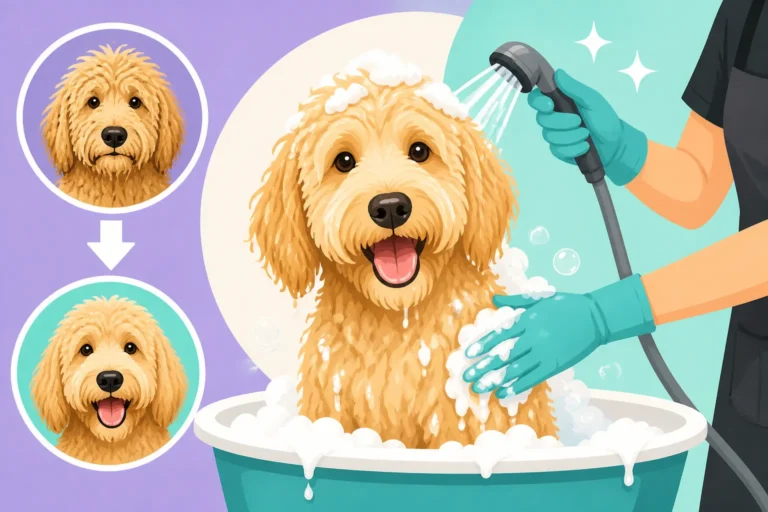
First, gently squeeze large sections of your Goldendoodle's coat, starting from their head and working your way down their back and legs. Don't wring or twist the hair aggressively, as this can cause breakage and initiate matting. The goal is just to encourage the water to run off. Next, grab your super-absorbent microfiber towels. Instead of rubbing furiously (which, again, is a matting magnet!), gently press the towels against your dog's coat, blotting and patting to absorb the water. You'll likely go through a couple of towels, especially with a larger or very fluffy Goldendoodle. Get as much water out as you possibly can at this stage.
Once the coat is no longer dripping, you might do a very light, initial comb-through with a wide-toothed comb, paying special attention to areas prone to matting like behind the ears, in the armpits, and around the tail. If you used a good conditioner during the bath, this step should be relatively easy. For tips on choosing the right products, see Conditioner and Why a Goldendoodle Needs It. The less water and fewer tangles you have before the force dryer comes out, the smoother the rest of the process will be.
The Force Dryer Technique: Section by Section
This is where your high-velocity force dryer earns its keep. Before you start, remember ear protection for both you and your dog – the dryers can be loud! Many dogs benefit from cotton balls in their ears, or a snood, to muffle the sound.
Start with the lowest setting and gradually increase the power as your dog tolerates it. Begin drying in less sensitive areas, like the back or sides, letting your dog get used to the sensation and sound. Many owners find starting on a leg or the back is better than the face. Use your free hand to guide the hair, lifting it away from the skin. The technique is to work in small sections, moving the nozzle back and forth, against the direction of hair growth. This helps to lift the hair and push the water out.
- Legs and Paws: Start here, as these areas often dry fastest and give your dog a sense of accomplishment. Work from paw to shoulder.
- Body: Move methodically across the body, section by section. Point the nozzle at the skin, pushing the water out and fluffing the hair.
- Tail: Hold the tail up and dry underneath, separating the hair.
- Head and Face: This is often the trickiest part. Keep the nozzle a safe distance from their eyes, ears, and nose. Use one hand to gently hold their muzzle if needed, and angle the air away from their face. Sometimes, turning down the dryer's power for the face is helpful.
As you dry each section, use your slicker brush to constantly brush the hair, keeping it separated and tangle-free. This isn't just about drying; it's about straightening the hair as it dries, which is key to preventing mats. If you notice any tangles, pause the dryer on that spot and gently brush them out before continuing. Keep the air moving; don't hold it in one spot for too long to avoid overheating the skin.
Line Drying and Final Comb-Through
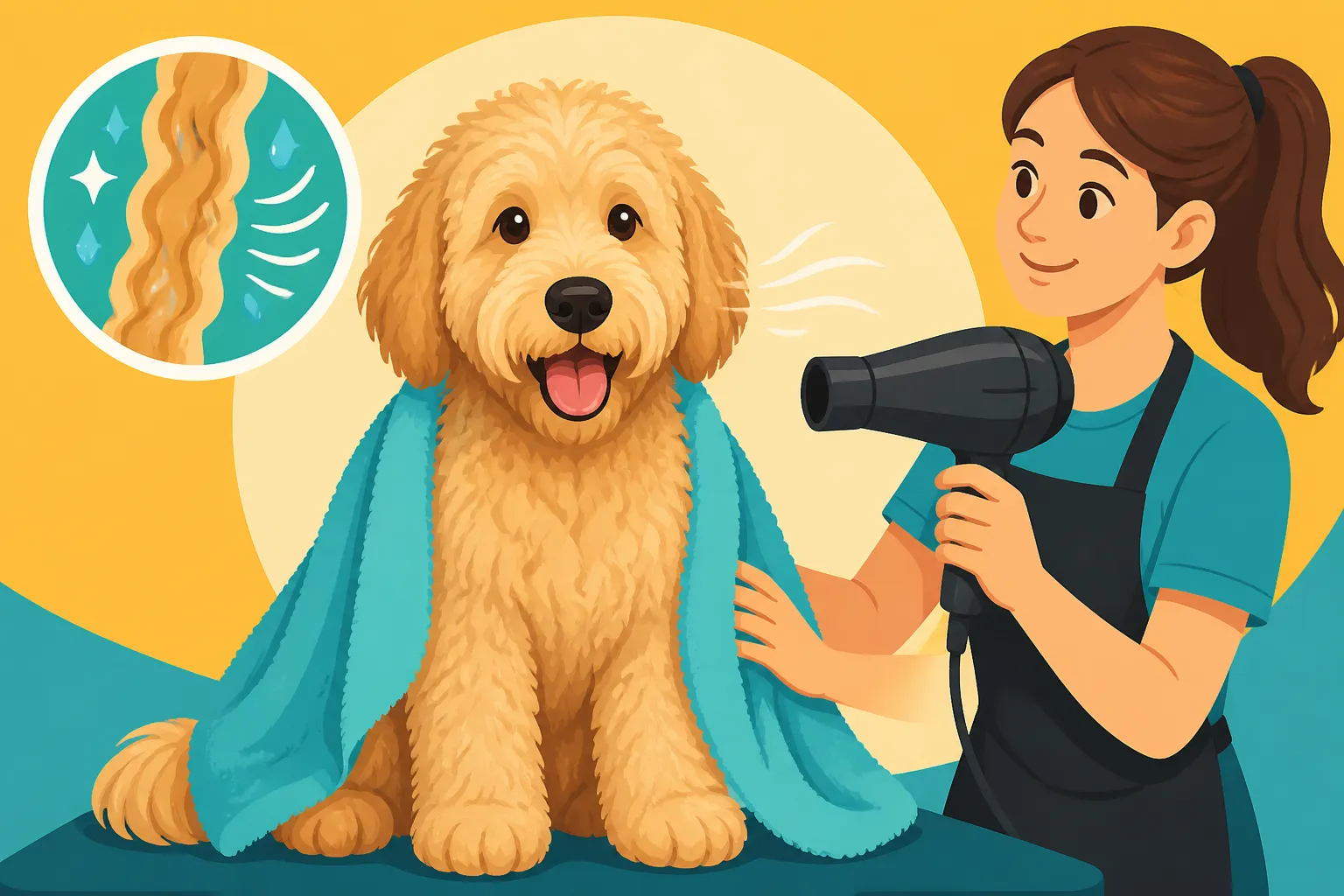
"Line drying" is a professional grooming technique that ensures every single hair is separated and dry, right down to the skin. It’s what transforms a fluffy, damp Goldendoodle into a perfectly soft, flowing one.
Once you’ve gone over your Goldendoodle with the force dryer and they feel mostly dry, it’s time to confirm and perfect. Take your slicker brush and comb, and work methodically through the coat. Start at the bottom of a leg or flank. Part the hair horizontally with your hand, exposing a "line" of skin. Brush the hair below this line downwards and outwards, drying it with the force dryer until it's completely dry and fluffy. Then, move your hand up slightly, creating a new "line" of hair, and repeat the process. You are essentially drying and brushing small sections of hair, one line at a time, ensuring you reach the roots. This is precisely what's described in Line Brushing a Goldendoodle Section by Section.
After you’ve line-dried the entire coat, pick up your metal comb. Run the comb through every single inch of your Goldendoodle's coat, from root to tip. If the comb glides smoothly, congratulations – that section is dry and mat-free! If the comb catches, it means either there’s still a hidden tangle or, more likely, a damp spot. Go back with your force dryer and slicker brush to address that area until the comb glides freely. Pay extra attention to common trouble spots like the armpits, behind the ears, the groin area, and the tail base. This final comb-through is your ultimate quality control check to ensure no residual dampness or forming mats are left behind.
Common Drying Mistakes and How to Avoid Them
Even with the best intentions, it's easy to fall into common traps when drying a Goldendoodle. These mistakes, however, can lead to painful matting, skin irritation, and extra trips (and costs) to the professional groomer. Understanding what not to do is just as important as knowing what to do.
Using a Human Hairdryer and Heat Damage
This is perhaps the most common and potentially dangerous mistake Goldendoodle owners make. A human hairdryer, while seemingly convenient, is simply not designed for a dog's dense coat and sensitive skin.
Human hairdryers primarily rely on heat to evaporate water. This means they get incredibly hot, and while it might feel fine on your hand, your dog's skin is far more delicate. Holding a human hairdryer too close or for too long can cause severe burns, especially in areas where the hair is dense, trapping the heat. Additionally, the airflow from a human hairdryer is typically not powerful enough to penetrate the thick Goldendoodle undercoat and effectively separate the hairs. Instead of blowing the water out, it tends to just blast hot air onto the surface, leaving the deeper layers damp. You'll end up with a dog whose outer coat feels dry but whose undercoat is still wet, creating a perfect storm for matting and skin issues. Your dog might also flinch, try to escape, or show signs of discomfort due to the intense heat, making the whole experience stressful and negative. Always, always use a dedicated force dryer designed for pets, which prioritizes high volume cool or lukewarm air over high heat.
Incomplete Drying and Hidden Dampness
The Goldendoodle's coat is a master of deception. It can look and feel perfectly dry on the surface, while deep down, against the skin, it's still damp. This incomplete drying is a leading cause of matting and skin problems.
Think about those dense areas: the inner thighs, the armpits, behind those long, floppy ears, the underside of the tail, and even the chest and belly. These are the prime hiding spots for residual moisture. You might spend a good amount of time drying, and your dog might even look fluffy, but if you don't use your metal comb to check right down to the skin, you're missing crucial damp spots. These hidden damp areas don't just sit there innocently; they encourage the hair to clump and felt together, forming mats from the inside out. As the dog moves, these damp, clumped hairs rub against each other, tightening the mats further. This is why Why a Damp Goldendoodle Coat Mats Faster is such a critical concept. Always err on the side of over-drying with a force dryer, using your comb to verify dryness. If the comb snags, it's either a mat or a damp spot needing more attention.
Skipping Brushing During the Process
Many people view bathing and drying as one process, and brushing as a separate, after-the-fact activity. For a Goldendoodle, this sequential thinking is a recipe for disaster. Brushing must be integrated into the drying process.
When your Goldendoodle's coat is wet, the individual hairs are pliable and easily tangle. As they dry, they lock into whatever position they were in. If the hair is tangled when it's damp, it will dry into a mat. Trying to brush out dry mats is significantly more difficult and painful than preventing them in the first place. You'll pull, your dog will be uncomfortable, and you might even break their delicate hair. By using your slicker brush while you're force drying, you're actively separating and straightening the hair as the water is pushed out. This prevents the wet hairs from intertwining and fusing together. It's a proactive approach to mat prevention that saves you hours of frustrating detangling later. Without this continuous brushing during drying, you'll find that even a force dryer won't completely eliminate matting if the hair is left to dry clumped together. Remember, the goal is not just to remove water, but to ensure the hair dries straight and separate. This direct correlation to matting is extensively covered in Goldendoodle Matting in a Week Without Brushing.
Making Drying a Positive Experience for Your Goldendoodle
Let's face it, the drying process can be intimidating for some dogs, especially with the noise and sensation of a force dryer. But it doesn't have to be a battle! With the right approach, patience, and plenty of positive reinforcement, you can turn drying time into a manageable, even enjoyable, routine for your Goldendoodle.
Desensitization and Positive Reinforcement
The key to a stress-free drying experience starts early, ideally when your Goldendoodle is a puppy. The concept is desensitization: gradually introducing the tools and sensations so they become familiar and non-threatening.
- Start Small: Don't just blast the dryer on full power right away. Begin by simply having the dryer out and visible. Let your dog sniff it. Turn it on a low setting in another room, so they get used to the sound without the direct sensation.
- Gradual Introduction: Once they're comfortable with the sound, turn it on low and hold it a good distance from them. Don't point it directly at them yet. Just let them feel the air movement from afar. Pair this with super high-value treats (like a dollop of peanut butter on a lick mat, or soft cheese). The moment the dryer turns on, the treats appear. The moment it turns off, the treats disappear. This creates a positive association: dryer = yummy things!
- Short Sessions: Keep initial sessions very short – just a few seconds of dryer time, followed by praise and treats. Gradually increase the duration and proximity.
- Body Language: Watch your Goldendoodle's body language closely. Are they yawning, licking lips, tucking their tail, or trying to move away? If so, you’re pushing too hard. Dial it back. The goal is comfort, not compliance through fear.
- Practice Without a Bath: Don't wait until bath day to use the dryer. Practice short desensitization sessions between baths to keep the positive association strong.
This process is similar to how you would get your dog comfortable with nail trims or even the sound of clippers, as discussed in Getting a Goldendoodle Used to Clipper Noise. Consistency and positivity are paramount.
Creating a Calm and Safe Environment
The physical environment plays a huge role in how your Goldendoodle perceives the drying process. A chaotic, slippery, or uncomfortable space will only heighten their anxiety.
- Location, Location, Location: Choose a quiet, confined space where your Goldendoodle feels secure. A bathroom often works well, or a dedicated grooming area if you have one. Minimizing distractions will help them focus on you and the task at hand.
- Non-Slip Surface: Goldendoodles can get anxious on slippery surfaces. Lay down a non-slip bath mat or a textured grooming mat to give them secure footing. This prevents slips and slides that can cause fear or injury.
- Comfort is Key: Have a comfortable mat or towel for them to stand on, especially if the session might be longer.
- Gather Your Tools: Make sure everything you need – dryer, towels, brushes, combs, and most importantly, treats – is within arm's reach before you start. Fumbling around or leaving your dog unattended while you search for a tool can increase their stress.
- Good Lighting: Clear visibility helps you see what you’re doing, ensuring you don’t miss any damp spots or mats, especially in darker areas of the coat.
A well-prepared, calm environment communicates to your Goldendoodle that this is a safe, predictable routine, not something to fear.
Patience and Consistency
Perhaps the most important "tool" you have is your own patience. Goldendoodles are intelligent and eager to please, but learning to tolerate (and even enjoy) something as intense as a force dryer takes time.
Don't expect your Goldendoodle to be a perfectly behaved grooming model overnight. There will be days they're more antsy, days they try to pull away, and days you might feel frustrated. Remember that your calm energy will transmit to your dog. If you're stressed, they'll pick up on it. Break down the drying process into smaller, manageable chunks if needed. If your dog is getting overwhelmed, take a break, offer a chew toy, or simply end the session on a positive note and try again later.
Consistency is also vital. Regular baths and drying sessions, even if they're not full-blown scrubbing, help normalize the experience. The more frequently your Goldendoodle encounters the dryer and the brushing process in a positive way, the more accustomed they'll become. The payoff for your patience and consistency will be immense: a Goldendoodle who not only looks fantastic with a mat-free, healthy coat but also tolerates their grooming routine with minimal fuss. And for you, it means less struggling, less stress, and more time enjoying your beautifully fluffy companion. This commitment is part of what makes Drying a Goldendoodle Coat Properly a crucial part of their overall care.
| Drying Method | Pros | Cons | Best Use |
|---|---|---|---|
| Air Dry / Towel Dry | No equipment needed, quiet, gentle on sensitive dogs | Very slow, high risk of matting and skin issues (yeast/hot spots), rarely gets coat fully dry | Only for very short, sparse coats (not typical Goldendoodles), or initial water removal before other drying |
| Human Hairdryer | Readily available, familiar sound for some owners | High heat risk (burns!), insufficient airflow for dense coats, often leaves undercoat damp, can cause static | Generally not recommended for Goldendoodles |
| High-Velocity Force Dryer | Fast, efficient, penetrates dense coats, prevents mats, promotes healthy skin, removes loose undercoat | Can be noisy (requires desensitization), initial investment in equipment, requires technique | Essential for all Goldendoodle coat types, especially for full drying after baths |
Disclaimer
This article is for general informational purposes only and does not constitute professional advice. Laws, prices and regulations vary by location and change over time. Consult a qualified professional for guidance on your specific situation.