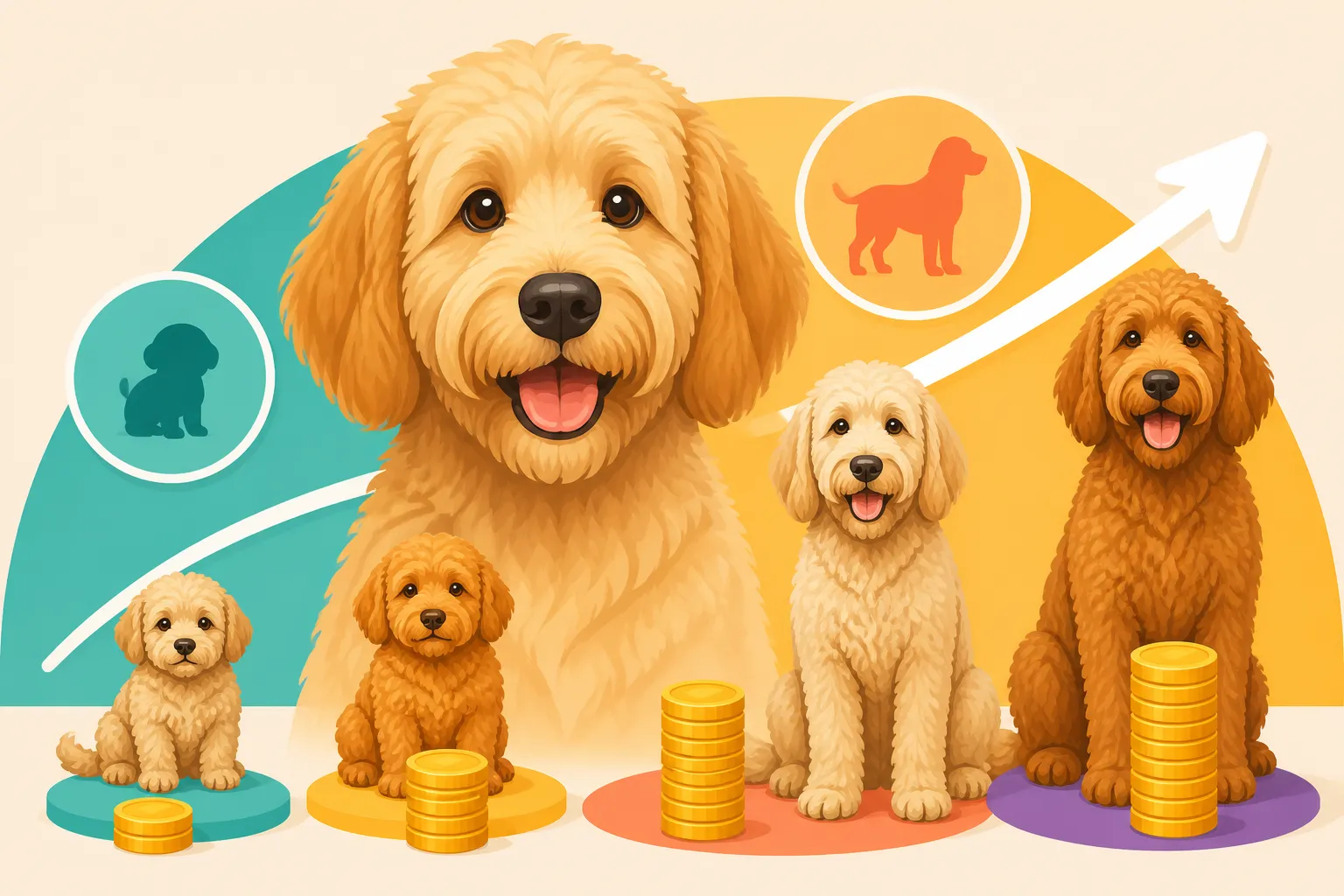
Why Goldendoodle Prices Vary by Generation and Size
It’s enough to make your head spin – one Goldendoodle puppy advertised for $2,000, another for $5,000, and you’re left wondering if you’re looking at two entirely different breeds. The truth is, the price tag on a Goldendoodle can fluctuate wildly, leaving many prospective owners confused and a little overwhelmed. This comprehensive guide will peel back the layers on Goldendoodle pricing, exploring exactly why factors like generation, size, and other key elements cause such significant variations, helping you understand where your money goes.
Understanding Goldendoodle Pricing Basics
Before we dive into the specifics of generations and sizes, it’s crucial to grasp the fundamental economics behind Goldendoodle pricing. These aren't purebred dogs with standardized pricing models dictated by a kennel club. Instead, their cost is a complex blend of breeder investment, market demand, perceived value, and a host of hidden factors that often catch first-time buyers off guard. The range for Goldendoodle puppies can indeed swing from around $1,500 to over $6,000, sometimes even higher for rare combinations or specific breeder reputations.
The Base Cost of Raising a Litter
Responsible breeding is an incredibly expensive undertaking, and a significant portion of a Goldendoodle puppy's price reflects the breeder's investment long before the puppies are even conceived. This isn't just about feeding a few dogs; it's a commitment to health, welfare, and genetic soundness. Before a breeding pair is even considered, they undergo extensive health screenings. This includes OFA clearances for hips and elbows, eye certifications by a veterinary ophthalmologist, and genetic DNA panels to screen for common diseases like progressive retinal atrophy or Von Willebrand disease that affect both Golden Retrievers and Poodles. Each of these tests costs hundreds, sometimes thousands, of dollars per parent. Beyond testing, there's the stud fee if the male isn't owned by the breeder, which can range from $1,000 to $4,000 or more.
Once pregnancy is confirmed, the costs escalate further. High-quality nutrition for the pregnant mother, potential veterinary check-ups and ultrasounds, and then, of course, the actual whelping process. Some breeders opt for planned C-sections, especially with smaller breeds or in cases of complications, which can run into thousands. Then, there's the initial care for a litter of puppies: specialized puppy food, vaccinations, deworming protocols, microchipping, and vet checks for each individual puppy. Not to mention the breeder's time, which is invaluable – round-the-clock care for newborns, early socialization efforts, and starting crucial training. When you see a Goldendoodle puppy listed at a certain price, remember that this isn't just a number pulled from thin air; it's often a reflection of these substantial initial investments.
Why Goldendoodles Command Higher Prices
Many people wonder why Goldendoodles often cost more than their purebred parent breeds. There are several reasons for this. Firstly, immense popularity plays a huge role. The Goldendoodle has become one of America's most sought-after companion dogs, celebrated for its friendly temperament, intelligence, and often low-shedding coats. This high demand allows ethical breeders to set prices that reflect their investment and the quality of their puppies. Secondly, the "designer dog" label, while sometimes viewed negatively, contributes to their market value. People are willing to pay a premium for a dog that combines desirable traits from two beloved breeds, particularly the intelligence of the Poodle and the gentle nature of the Golden Retriever.
Furthermore, the perceived "hypoallergenic" quality, even if not entirely accurate, drives up demand among allergy sufferers who hope a Goldendoodle will be a suitable pet. While no dog is truly 100% hypoallergenic, certain Goldendoodle generations and coat types are less likely to trigger allergies for many people, which adds to their appeal. This perception, coupled with their often adorable appearance and adaptable personalities, creates a strong market where prices naturally ascend. It’s a classic supply-and-demand scenario, where the extensive care and testing required by responsible breeders meet a fervent desire from the public for these charming canine companions.
The Impact of Goldendoodle Generations on Price
One of the most significant factors influencing a Goldendoodle's price is its generation. This "F" designation (F1, F1B, F2, Multigen) tells you a lot about the puppy's genetic makeup, particularly concerning its coat type and potential for shedding, which directly impacts desirability and, consequently, price. Understanding What the Letter F Means in a Goldendoodle Pedigree is key to grasping these distinctions.
F1 Goldendoodles: The Original Cross
F1 Goldendoodles are the first-generation cross, meaning they are 50% Golden Retriever and 50% Poodle. They are bred by crossing a purebred Golden Retriever with a purebred Poodle. This generation is highly popular because it embodies the original hybrid vigor concept, potentially leading to fewer health issues due to increased genetic diversity. However, when it comes to coat and shedding, F1s can be quite unpredictable. Their coats can range from wavy to straight, and while many are low-shedding, some can shed almost as much as a Golden Retriever. This unpredictability in shedding can make them a slightly less expensive option compared to generations specifically bred for lower shedding.
Typically, F1 Goldendoodles might be on the lower end of the Goldendoodle price spectrum, often falling between $2,000 and $3,500. This is because their coat type isn't as consistently low-shedding as later generations, and there's a higher chance of a "flat coat" or less furnished look, which some buyers prefer less. Despite this, they are often known for excellent temperaments, combining the best traits of both parent breeds. If shedding isn't your primary concern, an F1 Goldendoodle can be a wonderful, loving companion that offers many of the desired Goldendoodle qualities without the top-tier price tag.
F1B Goldendoodles: Boosting Hypoallergenic Traits
The F1B Goldendoodle is often where prices start to climb due to its increased predictability in terms of coat and shedding. An F1B is produced by crossing an F1 Goldendoodle with a purebred Poodle. This results in a puppy that is roughly 75% Poodle and 25% Golden Retriever. The higher Poodle percentage significantly increases the likelihood of a curlier, more consistently low-shedding, or even non-shedding coat. For families with allergy concerns, the F1B is often marketed as the "most hypoallergenic" option, driving up demand and, consequently, the price.
Due to their higher predictability in producing the desired curly, low-shedding coat, F1B Goldendoodles typically command a higher price than F1s, often ranging from $2,500 to $4,500. Breeders invest time and effort in carefully selecting F1 parents with desirable traits and then pairing them with a Poodle to achieve this specific genetic makeup. The expectation of a more allergy-friendly coat and the reduced shedding that makes grooming easier (or at least less frequent cleaning of dog hair from furniture) adds to their perceived value. Many families find the extra investment worthwhile for the peace of mind that comes with a more reliably low-shedding dog.
Multigenerational Goldendoodles: Consistency and Health Testing
Multigenerational (Multigen) Goldendoodles are often the most expensive option, and for good reason. These are F3 or higher generation Goldendoodles, meaning they have F2 or F1B parents bred together, or even further generations of Goldendoodles bred to Goldendoodles. The goal of breeding multigens is to create a dog with the most consistent Goldendoodle traits, including temperament, health, and especially coat type. Responsible Multigen Goldendoodles and Why Breeders Prefer Them are often the result of years of selective breeding to solidify the desired characteristics.
Breeders of multigen Goldendoodles aim for highly predictable, low-shedding, and often curly or wavy coats. This level of consistency requires extensive knowledge of genetics and careful selection of breeding stock over multiple generations. The parents of multigen litters themselves are usually well-established Goldendoodles with known health backgrounds, often having undergone rigorous health testing themselves. This long-term investment in their breeding program, coupled with the proven consistency of their lines, means multigen Goldendoodles can easily fall into the $3,000 to $6,000+ range. Buyers seeking a specific look, guaranteed low-shedding qualities, and documented lineage often gravitate towards these more expensive but highly predictable puppies.
How Goldendoodle Size Influences Cost
Beyond generation, the size of a Goldendoodle is another major determinant of its price. Goldendoodles come in several sizes – Standard, Medium, Mini, and Toy – and the smaller the dog, the higher the price tends to be. This isn't just a quirk of the market; it reflects the complexities and risks involved in breeding smaller dogs.
Standard Goldendoodles: The Original Large Companion
Standard Goldendoodles are typically the largest size, often weighing between 50 and 90 pounds, and sometimes even more. They are usually the result of breeding a Standard Poodle with a Golden Retriever. While still a significant investment, Standard Goldendoodles are generally the least expensive per puppy within the Goldendoodle family. This is partly because Standard Poodles and Golden Retrievers tend to have larger litters, and the breeding process is often less complicated than with their smaller counterparts.
You can often find Standard Goldendoodle puppies in the $2,000 to $3,500 range. While this might seem like a substantial sum, it's typically lower than the price commanded by smaller sizes. They offer the classic Goldendoodle temperament and often possess great athleticism, making them ideal companions for active families. For those who aren't restricted by living space and desire a larger canine friend, a Standard Goldendoodle offers excellent value. It's important to remember that even a large Goldendoodle can be prone to certain health issues, such as bloat, that owners should be aware of. You can learn more about The Standard Goldendoodle at Fifty to Ninety Pounds to understand their specific needs and characteristics.
Mini and Toy Goldendoodles: The Demand for Smaller Sizes
Mini and Toy Goldendoodles are significantly more expensive than their standard counterparts, often commanding prices from $3,500 to upwards of $6,000. This price premium is driven by several factors, primarily the increased complexity and risk associated with breeding smaller dogs. Mini Goldendoodles typically weigh between 26 and 35 pounds, while Toy Goldendoodles are usually under 25 pounds. To achieve these smaller sizes, breeders often use Miniature or Toy Poodles, which tend to have much smaller litters compared to Standard Poodles. A Toy Poodle might only have 2-4 puppies, whereas a Standard Poodle could have 6-10. Fewer puppies mean a higher individual cost to recoup the breeder's investment.
Furthermore, breeding smaller dogs carries higher risks. The dam (mother dog) is often smaller, making gestation and whelping potentially more difficult and expensive, sometimes requiring veterinary intervention like C-sections. There's also the added challenge of finding appropriate breeding stock that carries good health clearances and desirable traits in a smaller package. The immense demand for apartment-friendly, lap-sized doodles also fuels these higher prices. Many people desire the Goldendoodle temperament and coat but in a more compact form, making Mini and Toy Goldendoodle Puppy Prices soar. The convenience of a smaller dog that takes up less space and can be more easily transported is a significant draw, and buyers are often willing to pay a premium for it.
Breeder Reputation and Practices: A Major Price Factor
It's not just about the dog's genetics; the integrity and practices of the breeder play an enormous role in determining the price of a Goldendoodle. While it might be tempting to opt for a cheaper puppy, a lower price often signals a lack of responsible breeding practices, which can lead to heartbreaking and costly issues down the line. A reputable breeder's price reflects their commitment to the health and well-being of their dogs and puppies.
Health Testing and Ethical Breeding Costs
A significant portion of a reputable breeder's price covers the extensive health testing and ethical practices they employ. This isn't optional; it's fundamental to producing healthy puppies. Reputable Goldendoodle breeders perform comprehensive health screenings on both parent dogs for conditions common to Golden Retrievers and Poodles. This includes OFA (Orthopedic Foundation for Animals) certifications for hips and elbows to screen for conditions like Goldendoodle Hip Dysplasia at 15 to 20 Percent or elbow dysplasia, which can be devastating. They also conduct eye exams by board-certified veterinary ophthalmologists and DNA tests for genetic diseases like Progressive Retinal Atrophy (PRA), Addison's Disease, and Von Willebrand's Disease. These tests are expensive, but they significantly reduce the risk of passing on debilitating conditions to puppies.
Beyond testing, ethical breeding involves providing top-notch care for the breeding dogs – high-quality food, regular veterinary check-ups, and a safe, stimulating environment. Puppies are raised in a clean, enriching home environment, receiving early neurological stimulation, proper socialization, and appropriate veterinary care (deworming, vaccinations). They are often temperament tested to ensure a good match with prospective families. A higher price from a reputable breeder is an investment in a puppy's likely health and temperament, providing a health guarantee and ongoing support. It’s also wise to inquire about The DNA Panel a Goldendoodle Breeder Should Run to ensure thorough screening.
Backyard Breeders and Puppy Mills: The Lower-Priced Pitfalls
On the other end of the spectrum are backyard breeders and puppy mills, who often offer Goldendoodle puppies at significantly lower prices. While the sticker price might be appealing, these operations typically cut corners on essential care and testing, leading to a host of problems for the unsuspecting buyer. Backyard breeders often don't perform any health testing on their breeding dogs, meaning they could be unknowingly passing on severe genetic diseases to their puppies. Their dogs may live in substandard conditions, receive inadequate nutrition, and lack proper veterinary care.
Puppy mills are even worse, prioritizing profit above all else. Dogs are often kept in cramped, unsanitary conditions, bred relentlessly, and receive minimal medical attention. Puppies from these environments are frequently poorly socialized, riddled with parasites, and prone to severe health issues and behavioral problems due to neglect and poor genetics. A cheaper puppy from such a source often translates into thousands of dollars in veterinary bills, behavioral training, and emotional distress for the new owner. While the initial investment is less, the lifetime cost can be astronomical. Always be wary of a Goldendoodle listing with no parent health tests or one that seems too good to be true.
Coat Type, Color, and Desirability Premiums
The Goldendoodle's charming appearance is a huge part of its appeal, and specific coat types and colors can significantly influence the puppy's price. While all Goldendoodles are adorable, some combinations are simply more sought-after, leading breeders to price them accordingly.
The Allure of Specific Coat Types
The Goldendoodle is famous for its low-shedding, allergy-friendly coat, but not all Goldendoodle coats are created equal. There are generally three main coat types: straight, wavy, and curly, often influenced by the "furnishings" gene that gives them their characteristic beard and eyebrows. The wavy (or "fleece") and curly (or "wool") coats are typically the most desirable, as they are most consistently low-shedding and tend to be associated with that classic "doodle" look. Breeders who can reliably produce these coat types often charge more. A puppy with a more predictable wavy or curly coat, especially in F1B or Multigen litters, will almost always be more expensive than one with a straighter, more Golden Retriever-like coat.
The reason for this premium is largely consumer demand. Many people choose a Goldendoodle specifically for its low-shedding qualities to mitigate allergies or simply reduce household cleaning. A straight-coated Goldendoodle, while still beautiful, may shed more, making it less attractive to these buyers. Therefore, breeders invest in genetic testing to confirm the presence of the furnishings gene and the appropriate curl genes in their breeding stock to ensure they can produce the highly desired, low-shedding coats. This precision in breeding adds to the overall cost, reflecting the consistency and predictability offered to the buyer.
Rare Colors and Patterns: Is the Premium Justified?
Beyond coat texture, certain Goldendoodle colors and patterns can also command a premium. Standard colors like cream, apricot, and red are popular, but "rare" colors and patterns such as chocolate, black, parti (two colors, often white with patches), phantom (like a Doberman's markings), and especially merle can significantly increase the price. A merle Goldendoodle, for example, can often be priced hundreds or even thousands of dollars higher than a solid-colored puppy from the same litter. This is purely due to perceived rarity and aesthetic appeal.
While these unique colors and patterns can be stunning, it's crucial for buyers to exercise caution and understand if the premium is truly justified. The merle gene, for instance, can be associated with serious health issues (like deafness and blindness) if two merle dogs are bred together, a practice responsible breeders strictly avoid. Whether Rare Goldendoodle Colors Cost More often depends on market trends, but ethical breeders will always prioritize health over color. Responsible breeders will ensure that any dog carrying such genes is carefully bred, and they will fully disclose any potential health implications. A higher price for a rare color from a reputable breeder should mean they've taken all necessary precautions, but buyers should always do their homework and not be swayed by color alone without verifying the breeder's health testing and ethical standards.
Geographic Location and Market Demand
Just like real estate, the cost of a Goldendoodle puppy can vary significantly depending on where you live. The economic landscape, cost of living, and regional popularity all play a role in setting prices. A puppy in a bustling metropolitan area might carry a much higher price tag than one in a rural setting, even if both puppies come from equally reputable breeders.
Urban vs. Rural Pricing Differences
The cost of operating a breeding program in an urban or suburban area is generally much higher than in a rural one. Breeders in metropolitan regions often face higher overheads, including property costs, veterinary service fees, and general living expenses. These increased costs are invariably factored into the price of their puppies. For instance, a veterinarian in New York City or Los Angeles will likely charge more for health clearances and puppy vaccinations than a vet in a small town in, say, Nebraska or Arkansas. This difference in operational costs directly translates to the final price a buyer pays for a Goldendoodle.
Furthermore, access to a larger pool of potential buyers in densely populated areas means breeders can often command higher prices due to sheer demand. In contrast, a breeder in a more rural setting might have lower overheads and a smaller, less immediate local market, potentially leading to slightly more competitive or lower prices. This doesn't necessarily mean the quality of the puppy or the breeder's practices are inferior in rural areas; it's simply a reflection of differing economic environments. Therefore, if you're willing to travel a bit, you might find that Goldendoodle Puppy Prices by Region of the Country can offer some savings.
Regional Popularity and Availability
The popularity of Goldendoodles can also vary regionally, impacting pricing. In areas where Goldendoodles are particularly trendy or have been adopted by local celebrities, demand can skyrocket, driving prices upwards. Conversely, in regions where other breeds or crosses might be more in vogue, or where there are more breeders, the supply might better match the demand, leading to more moderate pricing. This creates a dynamic market where prices are constantly shifting based on local trends and availability.
For example, a breeder in the Pacific Northwest might experience higher demand for Goldendoodles dueading to higher prices compared to a breeder in a less 'doodle-crazy' part of the country. Waiting lists are often longer in areas with high demand, and breeders can be more selective about placements. If you’re truly committed to finding a Goldendoodle at a specific price point, expanding your search beyond your immediate geographic area to include breeders in neighboring states or even across the country could yield different options. Just remember to factor in potential travel costs or safe transportation options when considering breeders further afield.
Beyond the Puppy Price: Hidden Costs to Consider
When budgeting for a Goldendoodle, it's a common mistake to focus solely on the initial purchase price. The reality is that the puppy's cost is just the tip of the iceberg. Goldendoodles, like all dogs, come with significant ongoing expenses that can quickly add up, easily surpassing the initial investment over their lifetime. Being aware of these "hidden" costs is crucial for responsible ownership.
Grooming: The Unsung Expense
The Goldendoodle's glorious, often non-shedding coat is one of its most desirable features, but it's also one of its biggest ongoing expenses. Goldendoodles require regular, professional grooming, typically every 6 to 8 weeks, to prevent matting, maintain hygiene, and keep them looking their best. These grooming sessions usually involve bathing, drying, brushing, clipping, ear cleaning, and nail trims. Depending on your location and the size of your Goldendoodle, a single professional grooming appointment can cost anywhere from $70 to $150, or even more if your dog is matted or requires specialized services.
Over the course of a year, Goldendoodle Grooming as the Biggest Line in the Budget can easily add up to $700 to $1,200 annually. If you try to stretch visits, you risk severe matting, which can lead to painful skin issues, infections, and even higher "dematting" fees at the groomer, or necessitate a full shave-down. While some owners learn to groom their Goldendoodle at home, this requires a significant investment in quality tools (clippers, shears, brushes, dryer) and a considerable amount of time and effort. It's a skill that takes practice, and many owners find it challenging to achieve salon-quality results consistently. So, when you're looking at that puppy price, mentally add a significant annual budget for grooming.
Ongoing Health and Wellness Costs
Beyond the initial puppy price and grooming, a Goldendoodle requires consistent investment in its health and general well-being throughout its life, which can span 10 to 15 years. This includes annual veterinary check-ups, vaccinations, parasite prevention (flea, tick, and heartworm medication), and quality food. A large Standard Goldendoodle will consume more food than a Toy Goldendoodle, but quality kibble, fresh food (like from Ollie), or raw diets can be substantial for any size. Consider also the cost of treats and supplements, particularly joint supplements as they age.
Then there are unexpected vet bills. Despite careful breeding, no dog is immune to illness or injury. Goldendoodles can still be prone to certain conditions, such as ear infections (due to their floppy, hairy ears), allergies, or orthopedic issues like arthritis later in life. Emergency vet visits can run into thousands of dollars. This is where Goldendoodle Pet Insurance for a Dog With No Breed Papers can offer peace of mind. Providers like Healthy Paws can help offset significant veterinary expenses, but even insurance comes with a monthly premium and a deductible. Factor in training classes, toys, beds, crates, and leashes, and you'll see that the lifetime financial commitment to a Goldendoodle is substantial, far exceeding the initial puppy price.
Making an Informed Decision: Value vs. Price
Navigating the world of Goldendoodle pricing can feel overwhelming, but approaching it with a focus on value rather than just the lowest price is paramount. A higher price often reflects a breeder's significant investment in health, genetics, and early care, which translates to a healthier, well-adjusted puppy for you. Conversely, a suspiciously low price should always raise red flags.
Understanding What a Higher Price Should Entail
When you encounter a Goldendoodle puppy on the higher end of the price spectrum, say $3,500 to $6,000, it's essential to understand what that investment should cover. It should mean the breeder has:
- Comprehensive Health Testing: Both parent dogs should have verifiable OFA clearances for hips, elbows, and patellas, current eye certifications from a veterinary ophthalmologist (CERF/OFA Eye), and DNA panels clearing them of breed-specific genetic diseases like PRA, Ichthyosis, and Von Willebrand Disease. They should be transparent about these results.
- Optimal Care for Parents and Puppies: The breeding dogs should be well-fed, healthy, and live in a clean, loving environment. Puppies should be raised indoors, receiving consistent human interaction, early socialization, and age-appropriate vet care (first vaccinations, deworming, microchipping).
- Support and Guarantees: A reputable breeder will offer a written health guarantee (typically for 1-2 years against genetic defects) and lifetime support for their puppies, being available to answer questions and offer guidance throughout the dog's life. They should also provide a clear contract outlining terms and conditions.
- Transparency: They should welcome visits (or video calls) to meet the parents and see the living conditions. They should freely share health documentation and be eager to answer all your questions.
A high price tag without these assurances is simply overcharging. But when these elements are present, a higher price reflects a responsible, ethical breeding program committed to setting its puppies up for success.
Avoiding Scams and Unethical Breeders
The popularity of Goldendoodles has unfortunately made them a target for scammers and unethical breeders looking to make a quick profit. As you research Goldendoodle prices, be extremely wary of these common red flags:
- Unusually Low Prices: If a Goldendoodle puppy is priced significantly below the average market rate (e.g., $1,000 or less), it's a huge red flag. This often indicates no health testing, poor living conditions, or even a puppy mill.
- No Health Testing Documentation: A breeder who claims their dogs are healthy but cannot provide verifiable OFA and DNA test results for the parents is to be avoided. Don't accept vague assurances; ask for specific documentation and check the OFA website yourself.
- Inability to Meet Parents/See Environment: If a breeder insists on meeting you in a public place, wants to deliver the puppy, or otherwise prevents you from seeing where the puppies are raised and meeting the mother (and ideally the father), this is a major warning sign. Puppy mills often try to hide their conditions.
- High-Pressure Sales Tactics: Be wary of breeders who push you to make a deposit immediately or offer steep "discounts" if you buy on the spot.
- Lack of Questions: A responsible breeder will interview you thoroughly to ensure you're a good fit for their puppy. If they don't ask about your living situation, experience, or plans for the puppy, they're likely more concerned with selling than placing their puppies in good homes.
Instead of rushing into a purchase based on price, take your time, ask many questions, and verify everything. A bit of upfront diligence can save you immeasurable heartache and expense in the long run. Resources like the Goldendoodle Association of North America (GANA) can provide breeder directories, although their standards are not a substitute for your own thorough research.
Table of Goldendoodle Price Variations
To help consolidate the information on how generation and size impact Goldendoodle prices, here's a general overview. Keep in mind these are approximate ranges and can fluctuate based on all the factors discussed above.
| Generation | Size Category | Poodle/Golden Retriever Ratio | Coat & Shedding Tendency | Estimated Price Range (USD) |
|---|---|---|---|---|
| F1 | Standard | 50% Poodle / 50% Golden | Variable (Wavy to Straight, Moderate Shed) | $1,800 – $3,000 |
| F1 | Medium/Mini | 50% Poodle / 50% Golden | Variable (Wavy to Straight, Moderate Shed) | $2,000 – $3,500 |
| F1B | Standard | 75% Poodle / 25% Golden | More Consistent (Wavy to Curly, Low Shed) | $2,500 – $4,000 |
| F1B | Medium/Mini | 75% Poodle / 25% Golden | More Consistent (Wavy to Curly, Low Shed) | $3,000 – $5,000 |
| F1B | Toy | 75% Poodle / 25% Golden | More Consistent (Wavy to Curly, Very Low Shed) | $3,500 – $6,000+ |
| F2 | Any Size | F1 x F1 (Variable) | Highly Variable (Can Shed Significantly) | $1,500 – $3,000 |
| Multigen | Standard | F3 or higher | Most Consistent (Wavy to Curly, Very Low Shed) | $3,000 – $4,500 |
| Multigen | Medium/Mini | F3 or higher | Most Consistent (Wavy to Curly, Very Low Shed) | $3,500 – $5,500 |
| Multigen | Toy | F3 or higher | Most Consistent (Wavy to Curly, Very Low Shed) | $4,000 – $6,000+ |
Note: "Multigen" generally implies F3 or higher generations where specific desired traits, particularly coat type, have been bred for consistency over several generations. F2 Goldendoodles, while technically a second generation, can be quite unpredictable in coat and shedding, making them sometimes less expensive unless they are F2B (F1 Goldendoodle x F1B Goldendoodle or similar backcross for coat consistency).
Disclaimer
This article is for general informational purposes only and does not constitute professional advice. Laws, prices and regulations vary by location and change over time. Consult a qualified professional for guidance on your specific situation.