Why Physical Exercise Alone Never Tires a Goldendoodle
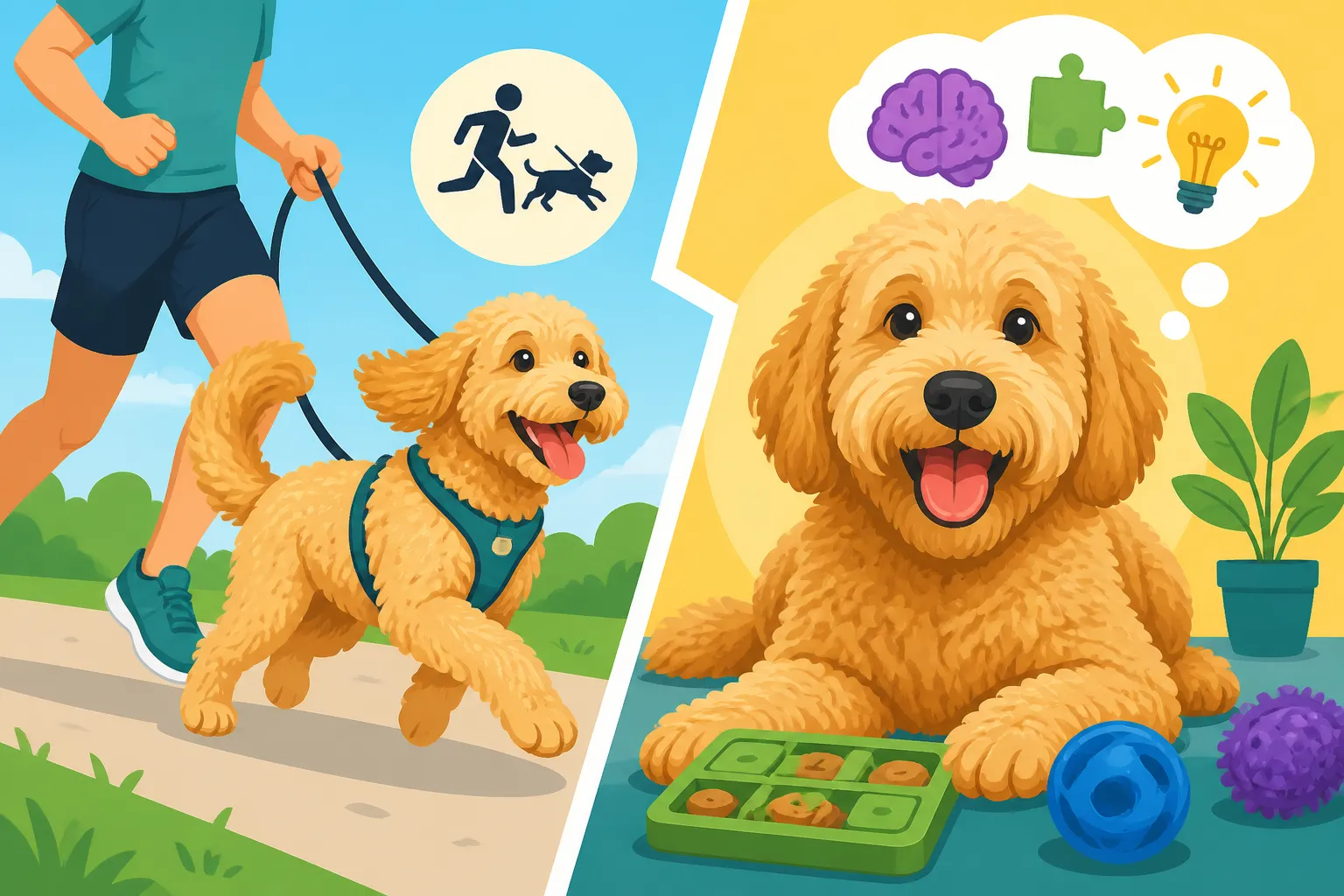
It’s a common scenario: you’ve just taken your Goldendoodle for what felt like an epic walk, maybe even a romp at the dog park, and yet, they’re still pacing, nudging you with a toy, or finding creative (and often destructive) ways to entertain themselves around the house. You thought you'd exhausted them, but they clearly have other ideas. This guide will dive deep into why physical exercise alone often falls short for Goldendoodles and explore the crucial role mental stimulation plays in truly tiring out your clever companion.
The Goldendoodle Brain: More Than Just Legs
If you've spent any time with a Goldendoodle, you know they're not just bundles of fluffy energy; they're also incredibly smart. This isn't surprising when you consider their heritage. The Golden Retriever side brings an eager-to-please attitude and a strong desire to work alongside their humans, historically in roles that required intelligence and focus, like retrieving game. They love having a job to do. Then you have the Poodle half, renowned for its sharp intellect, problem-solving abilities, and historical role as a working dog, often performing complex tricks and tasks. When you combine these two highly intelligent breeds, you get a dog that needs more than just a physical outlet. Their brains crave engagement just as much as their bodies need to move.
Think about it from their perspective. A long walk is great for stretching legs and sniffing new scents, which does offer some mild mental stimulation, but it's largely repetitive. It doesn't challenge their innate problem-solving skills or give them a "job" that truly engages their higher cognitive functions. Without this mental engagement, they can quickly become bored, and a bored Goldendoodle is often a creative Goldendoodle – sometimes in ways you don't appreciate, like finding your forgotten socks or counter-surfing for crumbs. Many owners find their Goldendoodle is highly attentive during Goldendoodle Training Sessions and How Long to Run Them, demonstrating just how much they enjoy using their minds.
Why Walks Aren't Enough for a Goldendoodle's Energy
While regular walks and runs are undeniably important for your Goldendoodle's physical health, they rarely provide the comprehensive "exhaustion" that truly satisfies them. Picture yourself. You could run a marathon, and while your body would be tired, your mind might still be racing with thoughts, ideas, or even boredom if the activity itself wasn't mentally stimulating. Dogs, especially intelligent breeds like Goldendoodles, are much the same.
A Goldendoodle’s energy isn't just physical fuel that gets depleted through movement. It's a complex mix of physical drive, mental alertness, and emotional needs. A quick sniff around the neighborhood on a leash might burn some calories, but it doesn't engage their natural hunting instincts, their desire to problem-solve, or their need for novelty. They might walk for miles and still come home with a mental "reserve" that makes them seem restless. This often leads to behaviors like incessant barking, destructive chewing, or that frustrating inability to settle down in the evening, sometimes even leading to A Goldendoodle That Cannot Settle in the Evening. These aren't necessarily signs of a "bad" dog; they're often cries for more mental stimulation.
Consider the common issues Goldendoodle owners face. If your Goldendoodle is still Goldendoodle Puppy Biting and Mouthing even after a long walk, it could be a sign of pent-up mental energy. If they're Goldendoodle Leash Pulling by Size Category with intense focus on everything around them, it shows their environment is interesting, but their mind isn't being channeled into constructive tasks. They need outlets that tap into their Poodle intelligence and Golden Retriever biddability, offering a more complete form of exercise that truly tires them out from the inside.
Incorporating Mental Enrichment into Your Goldendoodle's Day
The good news is that mental exercise doesn't have to be complicated or require vast amounts of time. Even short, consistent bursts of brain work can be incredibly effective in tiring out your Goldendoodle. The key is to make it engaging and varied, tapping into their natural instincts and intelligence.
Puzzle Toys and Interactive Feeders
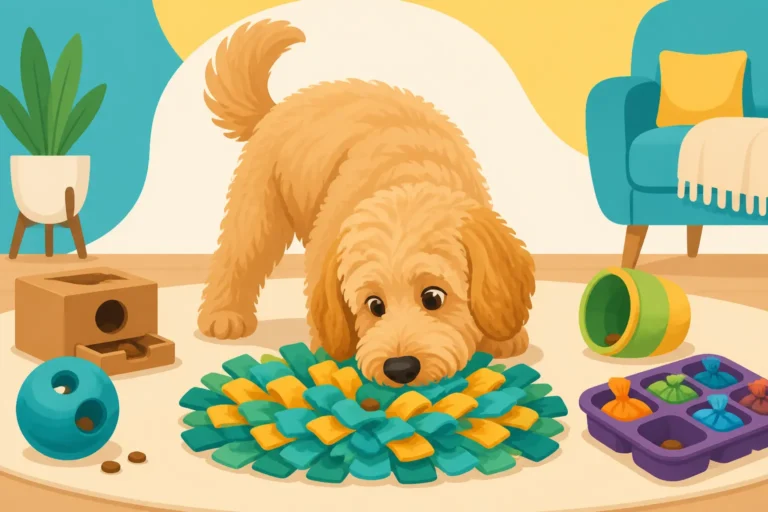
One of the easiest ways to introduce mental stimulation is through puzzle toys and interactive feeders. Instead of simply putting your Goldendoodle's food in a bowl, make them work for it. There's a huge variety available, from simple treat-dispensing balls to more complex puzzles that require multiple steps to unlock food.
| Type of Toy | How it Helps | Best for |
|---|---|---|
| Kongs & Fillable Toys | Requires licking, chewing, and problem-solving to extract treats. | Great for quiet, focused mental work, especially if frozen. Good for alone time. |
| Snuffle Mats | Encourages sniffing and foraging instincts as they search for hidden kibble. | Excellent for nose work, calms excited dogs, and provides a low-impact mental challenge. |
| Slider Puzzles | Dogs must move pieces, lift lids, or slide panels to reveal treats. | Challenges problem-solving skills and fine motor control. Can be quite engaging. |
| Dispensing Balls | Dogs push or roll the ball to release kibble or treats. | Encourages movement and problem-solving. Great for moderate energy release combined with mental effort. |
These toys are fantastic because they encourage independent problem-solving and can keep your Goldendoodle occupied for a decent amount of time. You can find a huge selection of Puzzle Toys That Occupy a Goldendoodle for an Hour on platforms like Amazon, offering different levels of difficulty as your Goldendoodle gets smarter. For a beginner, start with something easy, and gradually increase the challenge to keep them interested.
Scent Work and Nose Games
Goldendoodles have excellent noses, thanks to their Golden Retriever lineage, and utilizing this sense is incredibly tiring for them. Think of it as their version of reading a really complex book. Nose Games to Play With a Goldendoodle Indoors are simple to set up and immensely rewarding.
You can start by hiding treats around a room and encouraging your Goldendoodle to "find it." As they get better, you can hide them in more challenging spots, under blankets, behind furniture, or even in different rooms. Another fun activity is a "scent trail" where you drag a treat across the floor or yard and let them follow the scent. This engages their primal instincts and uses a completely different part of their brain than just running. It's often amazing to see how quickly a dog that was bouncing off the walls can become a focused, calm detective after a good session of scent work.
Training and Trick Learning
Remember that Poodle intelligence? Goldendoodles love to learn! Regular training sessions, even short ones, provide immense mental stimulation. It's not just about obedience commands; teaching them new tricks can be incredibly rewarding for both of you. Think about "shake a paw," "roll over," or "fetch a specific toy."
Breaking down complex behaviors into smaller steps and using positive reinforcement keeps them engaged and thinking. Resources like BAXTER & Bella offer excellent online programs that guide you through puppy training and behavior, focusing on these positive, mentally stimulating methods. Learning new things builds confidence, strengthens your bond, and satisfies their desire to work with you. This aligns perfectly with Why a Goldendoodle Wants to Work With You. Even just five-minute sessions, a few times a day, can make a huge difference in their overall demeanor.
Balancing Physical and Mental Exercise for a Happy Goldendoodle
The goal isn't to replace physical exercise with mental exercise, but to achieve a harmonious balance that addresses all aspects of your Goldendoodle's needs. A truly satisfied Goldendoodle has had both their body and their mind challenged.
Crafting a Comprehensive Exercise Schedule
Consider a weekly routine that incorporates both types of stimulation:
- Daily: A combination of leash walks (for physical movement and sniffing opportunities) and dedicated mental games. This could be a puzzle feeder for breakfast, a 10-minute training session in the afternoon, and a hide-and-seek game before bed.
- Several times a week: Longer, more vigorous physical activity like off-leash play in a secure area, hiking, or swimming, if your Goldendoodle enjoys it. Follow this with a calming mental activity, like a stuffed Kong, to help them settle.
- Weekly/Bi-weekly: Introduce novelty! Visit a new park for different smells, try a new puzzle toy, or work on an advanced trick. This keeps their minds fresh and prevents boredom.
Mixing it up is crucial. One day might be a long hike followed by a quiet evening with a treat-dispensing toy. The next might involve several short walks and multiple short training sessions throughout the day. The variety itself is stimulating. For active Goldendoodles, combining physical activity with problem-solving, like practicing recall in a new environment, can be particularly effective. Exploring activities like Goldendoodle Agility and Whether It Suits Them could be another excellent way to combine both.
Recognizing Signs of Under-Stimulation
It's important to learn your Goldendoodle's tells. Are they pacing? Nipping? Barking excessively at sounds they usually ignore? Chewing on things they shouldn't? These are often clear signals that they have unmet mental or physical needs. For example, Goldendoodle Puppy Chewing Through Furniture might not just be "being a puppy" but a symptom of boredom.
Common Signs of Under-Stimulation:
- Destructive Chewing: Especially on inappropriate items like furniture or shoes.
- Excessive Barking or Whining: Often for attention or out of boredom.
- Pacing or Restlessness: Unable to settle down even after physical exercise.
- Frantic Greetings: Over-the-top excitement when you return, struggling to calm down.
- Digging: In the yard or even indoors, trying to create their own entertainment.
- Nipping/Mouthing: Persistent nipping, even when not playing.
By understanding these signs, you can adjust your routine to provide more targeted engagement. Maybe that afternoon walk needs to be shorter, but followed by a longer session with a snuffle mat, or you introduce a new trick. Remember, a tired Goldendoodle is usually a well-behaved Goldendoodle, and "tired" in this context means both physically and mentally. Investing in their mental well-being is just as important as their physical health for a happy, well-adjusted companion.
Disclaimer
This article is for general informational purposes only and does not constitute professional advice. Laws, prices and regulations vary by location and change over time. Consult a qualified professional for guidance on your specific situation.