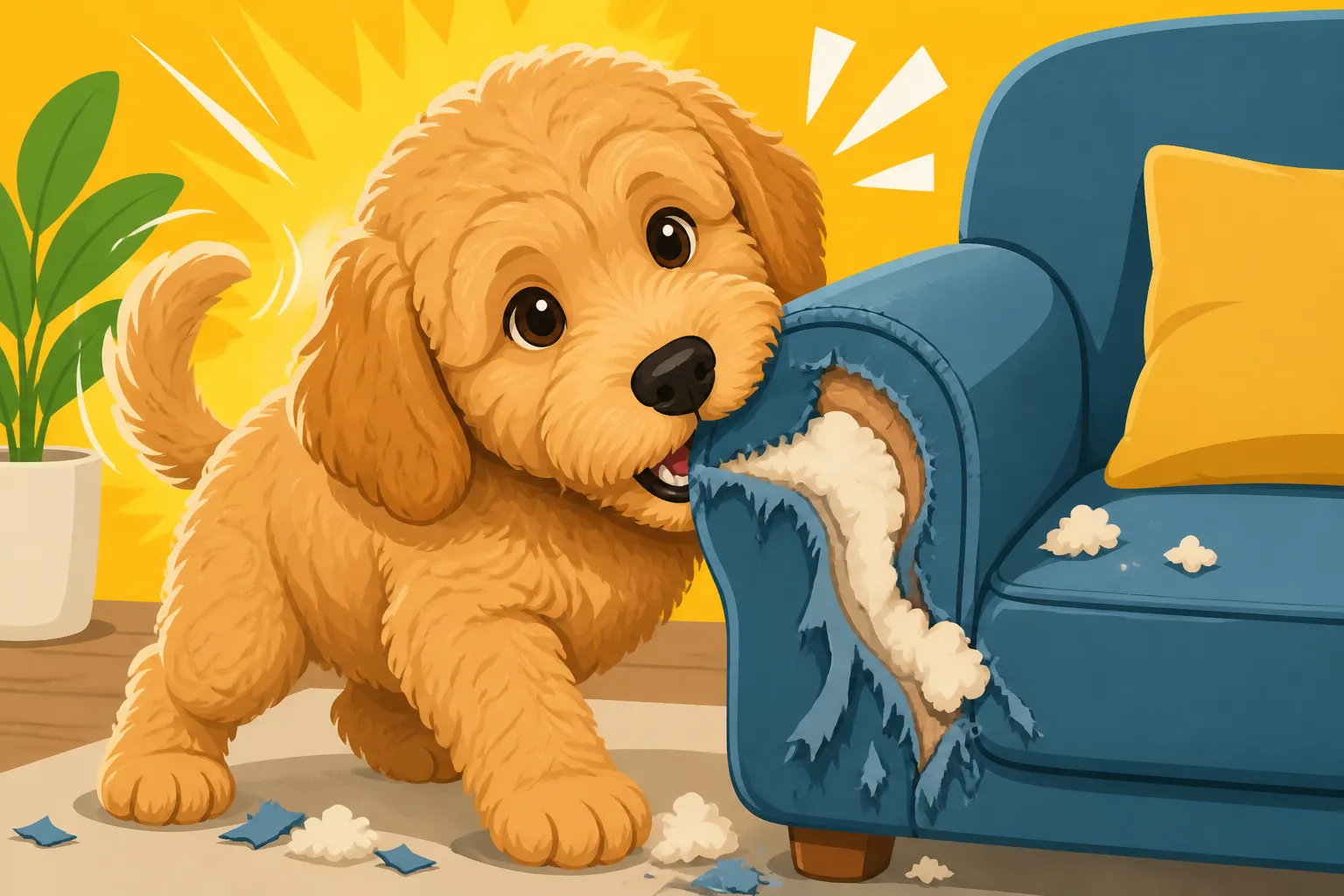
Goldendoodle Puppy Chewing Through Furniture
There's nothing quite like the joy of bringing home a bouncy, fluffy Goldendoodle puppy. Their sweet faces and playful antics fill your home with so much love and laughter. But then, one day, you walk into the living room and find a corner of your coffee table looking suspiciously gnawed, or a beloved shoe missing a heel. It’s a gut punch, right? You adore them, but the destruction can be incredibly frustrating. This guide is here to walk you through why your Goldendoodle puppy might be chewing through furniture and, more importantly, how to redirect that natural instinct into acceptable outlets, saving both your belongings and your sanity.
Why Goldendoodles Chew Everything (It's Not Just Spite!)
Let’s be honest, sometimes it feels personal when your puppy decides to redecorate your favorite armchair with their teeth. But the truth is, destructive chewing isn't a sign of malice; it's almost always a symptom of an unmet need or a normal stage of development. Understanding the root cause is the first step to solving the problem.
Teething Troubles
Just like human babies, Goldendoodle puppies go through a teething phase that can be quite uncomfortable. Those tiny, needle-sharp puppy teeth erupt first, followed by the painful process of losing them and growing in their much larger, stronger adult teeth. This usually starts around 3-4 months old and can last until 6-7 months.
During this time, your puppy experiences a lot of pressure and soreness in their gums. Chewing provides relief, massaging their inflamed gums and helping those baby teeth fall out. They're not looking for your antique table leg out of spite; they're looking for something, anything, with the right texture to make their mouth feel better. Think about what feels good to them: often cool, hard, or textured surfaces. A frozen rag or specially designed teething toy can be a lifesaver here.
Exploration and Boredom Busters
Goldendoodles are exceptionally intelligent dogs, inheriting keen minds from both their Golden Retriever and Poodle parents. While this makes them wonderfully trainable, it also means they need significant mental stimulation. A bored Goldendoodle puppy is a destructive Goldendoodle puppy, almost without fail.
When they don't have enough appropriate outlets for their energy and curiosity, they'll create their own "jobs." This often involves exploring their environment with their mouths, which is a completely natural canine behavior. A Goldendoodle puppy might chew on furniture because it’s there, it offers an interesting texture, or simply because it’s more stimulating than doing nothing. If they’re left alone for long periods without engaging toys or activities, they will literally chew their way to entertainment. This isn't naughtiness; it's a puppy trying to make sense of its world and alleviate profound boredom. Goldendoodle Exercise and Mental Work Every Day is crucial for these smart pups.
Anxiety and Stress Chewing
Another significant reason for destructive chewing, especially in Goldendoodles, can be anxiety or stress. Goldendoodles are often described as "Velcro dogs" due to their strong desire to be close to their human companions. This wonderful trait can, unfortunately, sometimes lead to separation anxiety if they aren't properly accustomed to being alone. Goldendoodle Separation Anxiety From Both Parent Lines is something many owners face.
When a puppy is stressed, whether it’s from being left alone, a change in routine, or new surroundings, chewing can be a self-soothing mechanism. The act of chewing releases endorphins, which helps to calm them down. If you notice your Goldendoodle puppy only chews destructively when you're away, or if the chewing is accompanied by other signs like excessive barking, pacing, or house-soiling, anxiety could definitely be a factor.
Puppy-Proofing Your Home to Save Your Sanity (and Your Sofa)
Before you can truly tackle the chewing behavior, you absolutely must make your home a safe zone for your Goldendoodle puppy and your belongings. Puppy-proofing isn't a suggestion; it's a non-negotiable step to prevent bad habits from forming and protect your young pup from ingesting something harmful.
Containment Strategies for Peace of Mind
You cannot supervise your Goldendoodle puppy 100% of the time, and trying to do so will lead to exhaustion for both of you. This is where strategic containment comes in. It's not about punishment; it's about setting your puppy up for success.
- Crate Training: A well-sized crate is invaluable. When properly introduced, it becomes a cozy, safe den where your puppy can relax without the opportunity to chew on inappropriate items. It’s perfect for when you can’t actively watch them, such as when you’re showering, cooking, or leaving the house for a short while. Crate Training a Velcro Goldendoodle can be a game-changer. Ensure the crate is large enough for them to stand, turn around, and lie down comfortably, but not so big that they can relieve themselves in one corner and sleep in another.
- Puppy Pens (Exercise Pens): These provide a larger, contained area than a crate, perfect for when you're home but busy. You can set one up in the living room or kitchen, filling it with safe chew toys, a comfy bed, and a water bowl. This allows your puppy more space to play and move while still limiting their access to tempting furniture.
- Baby Gates: Use baby gates to restrict access to certain rooms. If there's a room with particularly valuable or dangerous items, simply close it off. This creates manageable zones in your home where you can supervise effectively.
The key to all containment is making it a positive experience. Never use the crate or pen as punishment. Always ensure they have water, comfortable bedding, and a selection of appropriate chew toys when contained.
Removing Temptation: The "Out of Sight, Out of Mind" Approach
This might seem obvious, but many owners underestimate just how thoroughly they need to clear things away. Imagine the world from your Goldendoodle puppy's perspective: everything is new, interesting, and potentially chewable!
- Shoes, Clothing, and Personal Items: These are often primary targets because they carry your scent, which is comforting, and they have interesting textures. Keep all shoes in closets or on high shelves. Laundry baskets with dirty clothes should be securely lidded or put away. Purses, wallets, and keys should never be left on low tables.
- Furniture Legs and Corners: These are irresistible. Consider wrapping vulnerable furniture legs in heavy-duty tape or using covers designed to deter chewing for a temporary period. If possible, rearrange furniture to block access to certain corners until your puppy grows out of the worst of the chewing phase.
- Electrical Cords: This is a serious safety hazard. Bundle cords, use cord protectors, and elevate them whenever possible. A chew through a live electrical cord can be fatal.
- Houseplants: Many common houseplants are toxic to dogs. Either elevate them entirely out of reach or temporarily remove them from your puppy's accessible areas.
Conduct a thorough "puppy-level" inspection of your home. Get down on your hands and knees and look at everything from your puppy's height. What looks tempting? What could be dangerous?
Bitter Sprays and Deterrents (Use with Caution!)
For items you simply cannot move or completely block off, bitter apple sprays or similar deterrents can sometimes be helpful. These products typically contain a harmless but foul-tasting substance that makes the object unappealing to chew.
However, use them with caution and realistic expectations:
- Not a Magic Bullet: Some Goldendoodles are completely unfazed by bitter sprays. Others learn to tolerate the taste. Don't expect it to be a permanent solution.
- Consistency is Key: If you do use them, apply them consistently and frequently to the targeted items.
- Test First: Always test on an inconspicuous area of furniture first to ensure it doesn't stain or damage the material.
- Positive Alternatives are Primary: These sprays should never replace providing appropriate chew toys and redirection. They are a backup, not the main strategy.
Redirecting That Chewing Energy (Because They Will Chew)
Your Goldendoodle puppy needs to chew. It's a fundamental part of being a dog. The goal isn't to stop them from chewing entirely, but to teach them what is acceptable to chew and what isn't. This comes down to providing irresistible alternatives and consistent guidance.
The Right Chews for Your Goldendoodle
Not all chew toys are created equal, especially for a smart, strong-jawed Goldendoodle. You need a variety of safe, durable, and engaging options to keep them interested.
| Chew Toy Type | Goldendoodle Benefits | Considerations |
|---|---|---|
| Durable Rubber | Resists strong chewing, bouncy, can be stuffed with treats | Ensure size is appropriate to prevent choking; inspect for damage regularly. |
| Dental Chews | Helps clean teeth, satisfies chewing urge, good texture | Check ingredients for sensitivities; some are high calorie; not always long-lasting. |
| Bully Sticks | Highly palatable, long-lasting, digestible | Can be expensive; choose reputable brands; supervise to prevent gulping large pieces. |
| Nylon Chews | Extremely durable, good for power chewers, various shapes | Can be very hard; ensure it doesn't splinter or break off sharp pieces; replace if sharp. |
| Puzzle Toys | Mental stimulation, dispenses treats slowly, prolongs play | Requires supervision; can be frustrating if too difficult; keep clean to prevent bacterial growth. |
| Frozen Kongs | Soothes teething gums, occupies for long periods, tasty | Messy; takes prep time; ensure fillings are dog-safe and low-calorie. |
Rotate your Goldendoodle's chew toys to keep them novel and exciting. Don't leave all of them out all the time. Bring out a few, and then swap them for others after a day or two. This keeps their interest piqued. You can find a huge variety of safe chew toys and enrichment items on platforms like Amazon, often with reviews that can guide you toward durable options suitable for Goldendoodles.
Mental Stimulation Beyond Chews
Physical exercise is important, but for a Goldendoodle, mental exercise is just as vital in preventing destructive chewing. A physically tired puppy might still be mentally bored, leading to chewing.
- Training Sessions: Short, frequent training sessions (5-10 minutes, several times a day) can be incredibly stimulating. Goldendoodles love to learn and please. Work on basic obedience cues like sit, stay, come, and "leave it." Five Minute Goldendoodle Training Sessions are perfect for this.
- Puzzle Feeders: Instead of just putting food in a bowl, use puzzle feeders or snuffle mats to make mealtime a game. This forces your Goldendoodle to "work" for their food, engaging their brain and slowing down eating.
- Scent Games: Hide treats around the house and encourage your Goldendoodle to find them. This taps into their natural sniffing instincts and is a fantastic mental workout. Start easy and gradually increase the difficulty. Nose Games to Play With a Goldendoodle Indoors can be simple yet effective.
- Online Training Programs: For comprehensive guidance on integrating mental stimulation and training, an online program can be incredibly helpful. Many owners find structured programs, like those offered by BAXTER & Bella, provide a roadmap for everything from basic manners to advanced enrichment, which directly impacts chewing behavior.
Supervised Play and Training: Teaching "Leave It"
The most powerful tool you have is your direct interaction and training. When you catch your Goldendoodle puppy chewing on something inappropriate, don't just yell or punish them. Instead:
- Interrupt and Redirect: Say "oops" or clap your hands to get their attention.
- Offer an Appropriate Chew: Immediately give them one of their designated chew toys.
- Praise: As soon as they take the correct toy, praise them enthusiastically ("Good chew!").
- Practice "Leave It": Teach your Goldendoodle puppy the "leave it" command. Start with low-value items and gradually work up to things they find very tempting. This teaches them to disengage from an object on command. Teaching Leave It to a Goldendoodle is essential for preventing chewing on forbidden items.
Consistency is absolutely key here. Every single time you see them chew the wrong thing, redirect. Every single time they chew the right thing, praise. Your Goldendoodle will quickly learn the rules.
When Chewing Becomes a Bigger Problem (Beyond Normal Puppy Antics)
While some chewing is normal for a Goldendoodle puppy, there are times when it can signal a deeper issue that requires professional intervention. It's important to recognize when the behavior crosses the line from typical puppy antics to a more serious problem.
Identifying Problematic Chewing
Normal puppy chewing typically subsides or becomes much more manageable after the teething phase, usually by 7-8 months of age, provided you've been consistent with redirection and training. However, some chewing behaviors persist or intensify, indicating a potential problem:
- Chewing Even with Appropriate Toys: If your Goldendoodle puppy consistently ignores their designated chew toys in favor of furniture or other household items, even when given ample opportunity and variety, it's a red flag. This suggests the appropriate outlets aren't satisfying their underlying need, or the habit is deeply ingrained.
- Self-Harm Chewing: Any chewing that results in harm to themselves, such as excessive licking or chewing at their paws or tail to the point of redness or sores, is problematic. This often points to anxiety, allergies, or other underlying medical issues.
- Ingesting Non-Food Items (Pica): If your Goldendoodle puppy is not just chewing but actively eating parts of furniture, fabric, or other non-food items, this is a serious concern. Ingesting foreign objects can lead to blockages, perforations, and costly emergency surgery. Goldendoodle Vomiting and When It Matters can often be linked to ingesting inappropriate items.
- Destruction Driven by Panic: If the chewing is accompanied by other signs of extreme distress when left alone—such as frantic attempts to escape, persistent barking or howling, house-soiling, or drooling—it points strongly to separation anxiety that goes beyond typical puppy discomfort.
Consulting a Professional
If you're seeing signs of problematic chewing, don't hesitate to reach out for professional help. It's much easier to address these issues early than to let them become deeply ingrained habits.
- Your Veterinarian: Rule out any underlying medical causes first. Dental pain, gastrointestinal issues, or even nutritional deficiencies can sometimes contribute to excessive chewing. Your vet can also assess for signs of severe anxiety.
- Certified Professional Dog Trainer (CPDT-KA): A trainer specializing in positive reinforcement methods can help you implement effective management strategies and obedience training. They can guide you on setting up your home, choosing the right chews, and teaching critical commands like "leave it."
- Certified Dog Behaviorist (CDBC) or Veterinary Behaviorist (DACVB): For more severe cases, especially those involving significant anxiety, fear, or pica, a behaviorist is the best choice. They have a deeper understanding of canine behavior and can create a comprehensive behavior modification plan, which might include medication in conjunction with training. Finding a trainer who works with Goldendoodles specifically can be advantageous, as they often understand the unique quirks and needs of the breed.
Remember, patience and consistency are your greatest allies when dealing with Goldendoodle puppy chewing. They grow incredibly fast, and with the right guidance, this destructive phase will pass, leaving you with a well-adjusted, cherished companion.
Disclaimer
This article is for general informational purposes only and does not constitute professional advice. Laws, prices and regulations vary by location and change over time. Consult a qualified professional for guidance on your specific situation.