Brushing and Chews for a Toy Goldendoodle Mouth
If you’ve ever looked into the tiny mouth of your adorable Toy Goldendoodle, you probably understand the struggle: all those teeth crammed into such a small space! It’s not just a cute quirk; it presents real challenges for their oral health. This guide will walk you through the ins and outs of keeping your pint-sized pal’s pearly whites sparkling, from the best brushing techniques to understanding dental chews, so you can keep those little choppers healthy and pain-free.
The Unique Challenges of a Toy Goldendoodle's Mouth
It’s easy to think a small dog just has a smaller version of a big dog’s mouth, but that's not quite right. Toy Goldendoodles, like many miniature breeds, face specific anatomical hurdles that make dental care even more critical. Their charmingly petite size comes with a predisposition for certain oral issues that can become painful and expensive if not addressed proactively.
Dental Crowding and Misalignment
Imagine trying to fit a full set of adult teeth into a jaw that's really only designed for puppy teeth. That’s often the reality for a Toy Goldendoodle. Their genetic makeup means they inherit the full complement of adult teeth, but their tiny jaw size, especially when compared to their Golden Retriever and Poodle ancestors, just doesn't always have the room. This leads to what veterinarians call dental crowding. Teeth might erupt at odd angles, overlap each other, or rotate in their sockets, creating tight crevices and pockets that are prime locations for food particles and plaque to accumulate.
This isn't just an aesthetic issue; it's a significant health concern. Those crowded spaces become incredibly difficult to clean, whether by chewing or by brushing. It's frustrating for us as owners because even with the best intentions, reaching every surface is nearly impossible. This constant buildup of plaque and tartar sets the stage for gum inflammation (gingivitis) and eventually, periodontal disease, which can lead to pain, tooth loss, and even systemic health problems. For more on this, you might find our article Dental Crowding in a Toy Goldendoodle Mouth really helpful.
Retained Puppy Teeth
Another common issue for Toy Goldendoodles, and something many small dog owners grapple with, is retained deciduous teeth, or simply, retained puppy teeth. Normally, as adult teeth push through, they resorb the roots of the puppy teeth, causing them to fall out. But in smaller breeds, this process can sometimes go awry. The adult tooth might emerge next to the still-firmly-rooted puppy tooth, leading to a "double row" of teeth. This is most frequently seen with canine teeth, creating a rather odd sight and a problematic situation.
These extra teeth, or puppy teeth that simply refuse to budge, create even more tight spaces where food and plaque can get trapped. It's like having perpetual popcorn kernels stuck in your teeth, but worse, because it leads to inflammation, infection, and can even deflect the adult tooth into an abnormal position. If these puppy teeth aren't extracted, they contribute significantly to early-onset dental disease. Many times, these are discovered during a routine puppy check-up or when the Goldendoodle is spayed or neutered, as that's often the first time a vet gets a really good look in a sedated mouth. Ignoring them is not an option, as they are a ticking time bomb for oral health problems. You can learn more about this specific challenge in Retained Puppy Teeth in a Mini Goldendoodle.
The Art of Brushing a Toy Goldendoodle's Tiny Teeth
Brushing your Goldendoodle's teeth might sound like an impossible task, especially with their playful energy and those small mouths, but it's truly the gold standard for preventing dental disease. Consistency, patience, and the right tools make all the difference. Think of it as a bonding activity, not a chore!
Choosing the Right Tools
When you're dealing with a Toy Goldendoodle, standard human toothbrushes are simply too large and clunky. You need specialized tools designed for small canine mouths.
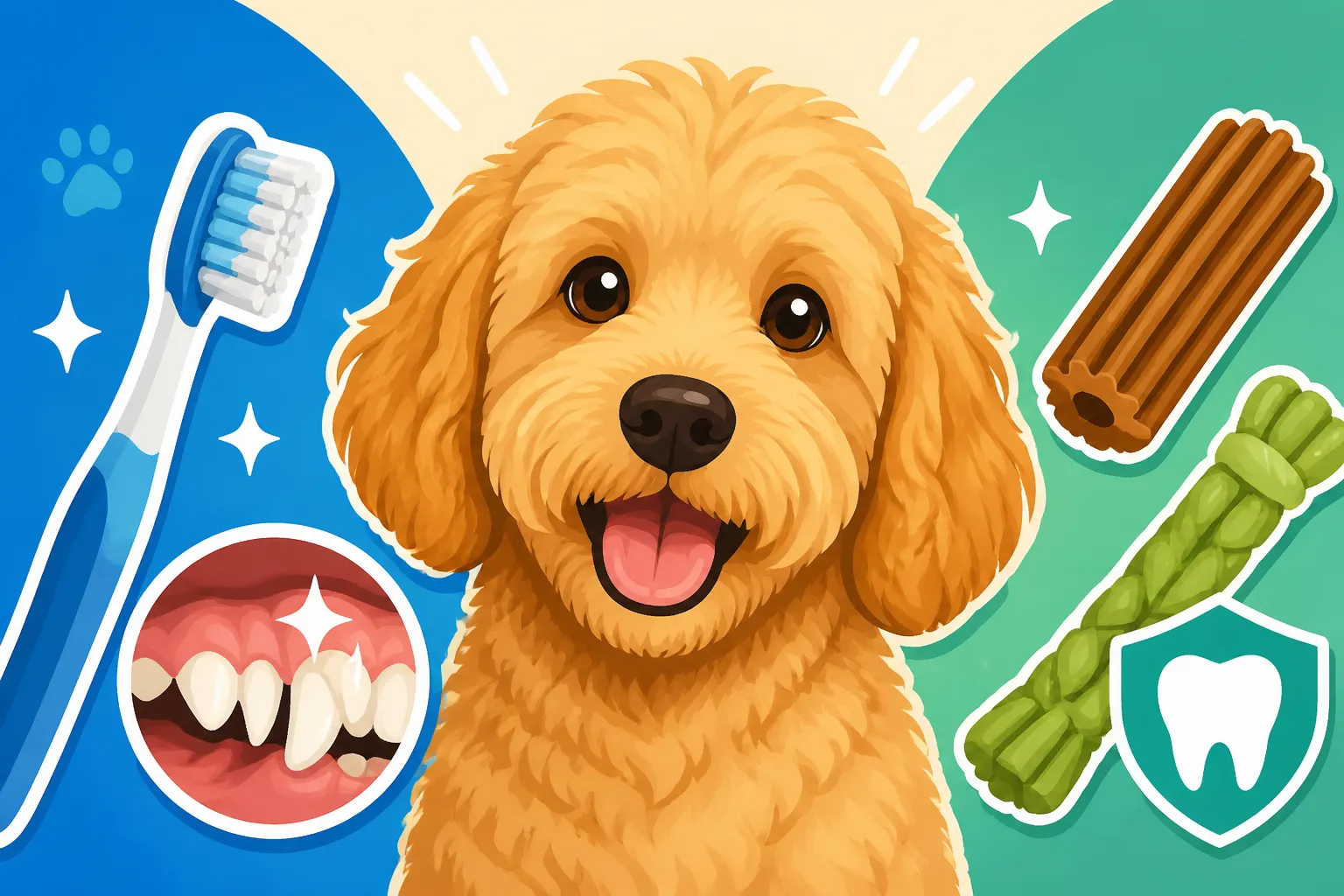
First, consider the toothbrush itself. Many owners start with a finger brush, which slips over your finger and has soft silicone bristles. This can be great for puppies or very sensitive dogs as it offers maximum control and a gentle touch. However, for more thorough cleaning, a tiny bristle toothbrush, often labeled for "toy breeds" or "cats," is ideal. These brushes have small heads and soft bristles that can navigate the nooks and crannies of a crowded mouth. Brands like Virbac or CET often have these smaller sizes. You can often find a good selection of these on Amazon or at your local pet supply store.
Next, the toothpaste. Please, never use human toothpaste on your dog. It contains fluoride and xylitol, which are toxic to canines. Instead, opt for enzymatic dog toothpaste. These are specially formulated to be safe for ingestion and contain enzymes that help break down plaque even after you've finished brushing. Flavors like poultry or beef are usually a hit, making the experience more palatable for your pup. Look for products that are approved by the Veterinary Oral Health Council (VOHC) for proven efficacy.
Making Brushing a Positive Experience
The key to successful tooth brushing is to start early and make it a positive, rewarding experience. If you wait until your Goldendoodle is older and already has dental pain, it will be a much harder battle.
Begin by simply letting your puppy lick the enzymatic toothpaste off your finger. Once they're comfortable with the taste, introduce the finger brush or a tiny toothbrush. Keep initial sessions very short, just a few seconds, focusing on the outer surfaces of their teeth, especially the canines and molars where plaque tends to accumulate most. Always follow up with praise, cuddles, and perhaps a small, high-value treat. The goal is to build up tolerance gradually. You want them to associate brushing with good things, not discomfort or struggle.
If your Goldendoodle squirms or protests, don't force it. Take a break and try again later or the next day. Sometimes, it helps to brush when they are naturally sleepy or relaxed, like after a long walk or play session. Over time, you can increase the duration, aiming for at least 30 seconds to a minute on each side of the mouth, every single day. Remember, consistency beats intensity when it comes to dental hygiene. It's much better to do a quick, positive brush daily than a thorough, stressful one once a week.
Dental Chews: A Supplement, Not a Substitute
Dental chews can be a wonderful addition to your Toy Goldendoodle’s oral care routine, offering a mechanical scrubbing action and some can even contain ingredients that help reduce plaque. However, it’s crucial to understand that they are supplements to brushing, not a replacement. No dental chew can effectively clean all surfaces of all teeth in the way a toothbrush can, especially in a crowded mouth.
Selecting Safe and Effective Chews
When choosing dental chews for your Toy Goldendoodle, size and texture are paramount. A chew that’s too large can be overwhelming and not allow them to properly mouth it to get the cleaning action. One that’s too small can be swallowed whole, posing a choking hazard or offering no dental benefit. Look for chews specifically designed for "toy" or "small" breeds (typically under 15-20 pounds). Many pet retailers, including Chewy, offer filters by dog size, which can be incredibly helpful.
Texture is also important. Some dental chews are designed to be more abrasive, mechanically scraping plaque off the tooth surface. Others incorporate enzymatic ingredients or natural antiseptics that help reduce bacteria in the mouth. Again, look for the VOHC seal of approval, which indicates that a product meets certain standards for plaque and/or tartar reduction. Always supervise your Goldendoodle while they are enjoying a chew to ensure they are chewing safely and not attempting to swallow large pieces. If your dog is a very fast eater, you might even consider a chew puzzle to slow them down.
Chews to Avoid for Small Mouths
While some chews are beneficial, others can pose significant risks, especially for a Toy Goldendoodle's delicate teeth and jaws.
Avoid extremely hard chews like antlers, real bones (cooked or raw), and certain types of very dense nylon chews. While they might seem like they'd clean teeth effectively, they can be too hard for small canine teeth. The risk of tooth fracture, especially of the pre-molars and molars, is very high. A fractured tooth is incredibly painful and often requires an expensive root canal or extraction. A good rule of thumb is: if you can't indent it with your thumbnail or if you wouldn't hit yourself on the knee with it, it's too hard for your dog's teeth.
Also, be wary of chews that splinter easily, like some rawhides (though many modern rawhides are safer, always check reviews). Splinters can cause internal damage. Additionally, avoid anything that could be swallowed whole or in large chunks, as this creates a choking risk. Always choose quality, reputable brands, and read the ingredients carefully. Some highly processed chews can contain unnecessary fillers or artificial ingredients that might not be ideal for your dog's digestive health.
Beyond Brushing and Chews: Other Dental Care Strategies
While daily brushing and appropriate dental chews form the cornerstone of at-home dental care, there are other tools in the arsenal that can complement these efforts. These methods are typically less effective on their own but can contribute to overall oral hygiene, especially for those hard-to-reach areas or for dogs who are particularly resistant to brushing.
Water Additives and Oral Rinses
For owners who struggle with brushing, or who just want an extra layer of protection, water additives and oral rinses can be an appealing option. These products typically contain ingredients like zinc gluconate, chlorhexidine, or other compounds designed to reduce bacteria in the mouth, freshen breath, and sometimes even help break down plaque.
Water additives are arguably the easiest to use: you simply add the recommended amount to your dog's drinking water daily. The idea is that as your Goldendoodle drinks, the active ingredients come into contact with their teeth and gums. Oral rinses work similarly but are applied directly to the gums or sprayed into the mouth. Some dogs might tolerate a quick spray better than a full brushing session. However, it's important to have realistic expectations. While these products can help reduce bacteria and freshen breath, they rarely provide the mechanical cleaning action needed to remove existing plaque and tartar buildup, especially in crowded teeth. They're best used as a preventative measure or as part of a multi-pronged approach, not as a standalone solution. Always check for the VOHC seal and consult your vet before introducing any new supplement into your dog's routine.
Regular Professional Dental Cleanings
No matter how diligently you brush or how many dental chews your Goldendoodle enjoys, professional dental cleanings under anesthesia remain an indispensable part of their oral health regimen. Just like humans need regular dental check-ups and cleanings, so do our canine companions. For a Toy Goldendoodle, with their propensity for Goldendoodle Tartar and Gum Disease due to crowded teeth, these cleanings are even more critical.
During a professional cleaning, your veterinarian or a veterinary dental specialist will perform a thorough examination of your dog's entire mouth, including areas you can't see. They use specialized instruments to scale away plaque and tartar both above and below the gum line, where periodontal disease truly takes hold. They will polish the teeth to smooth the surface, making it harder for plaque to adhere, and often take dental X-rays to assess the health of the tooth roots and jawbone, identifying issues like abscesses, bone loss, or retained tooth fragments that are invisible to the naked eye. This is also the time when problematic retained puppy teeth or severely diseased teeth can be safely extracted.
Many owners express concern about anesthesia, especially for smaller dogs. While any anesthetic procedure carries some risk, modern veterinary anesthesia protocols are incredibly safe, especially with pre-anesthetic blood work, IV fluids, and continuous monitoring of vital signs throughout the procedure. The benefits of preventing painful dental disease and potential systemic infections far outweigh the minimal risks for most dogs. Your vet can provide you with detailed information on their protocols and discuss Dental Cleaning Costs for a Toy Goldendoodle.
Recognizing Signs of Dental Trouble
As much as we try to prevent dental problems, they can still arise. Knowing what to look for can help you catch issues early, potentially saving your Toy Goldendoodle from significant pain and more extensive, costly treatments down the line. It's about being observant and trusting your instincts as a pet parent.
Bad Breath and Gum Inflammation
One of the most common and often overlooked signs of dental trouble is bad breath, or halitosis. Many people simply dismiss "dog breath" as normal, but truly foul, persistent breath is usually a clear indicator of bacterial buildup and infection in the mouth. It’s not just unpleasant for you; it signifies a thriving colony of bacteria that are attacking your dog's gums and teeth. If you find yourself recoiling when your Goldendoodle gives you a loving lick, it's time for a closer look.
Alongside bad breath, look for signs of gum inflammation. Healthy gums should be a pale pink color, firm, and hug tightly around the teeth. If you notice gums that are red, swollen, or bleeding when your Goldendoodle chews or you try to brush, these are classic signs of gingivitis, the earliest stage of periodontal disease. You might also see a visible buildup of yellowish-brown tartar on the tooth surfaces, especially on the back molars or canine teeth. Don’t ignore these early warnings; they are your Goldendoodle's way of telling you something is wrong in their mouth.
Changes in Eating or Behavior
Dental pain can manifest in subtle ways, and because dogs are masters at hiding discomfort, you need to be particularly vigilant. A Toy Goldendoodle experiencing oral pain might not suddenly stop eating, but you might notice changes in their eating habits. This could include dropping food from their mouth, chewing only on one side, favoring soft food over kibble, or showing a reluctance to chew on their favorite dental chews or toys. Some dogs might approach their food bowl eagerly but then hesitate or cry out when they try to eat.
Beyond eating, behavioral changes can also signal dental pain. Your Goldendoodle might become more irritable or withdrawn, especially if you try to touch their face or mouth. They might paw at their mouth, rub their face on the carpet or furniture, or salivate more than usual. Some dogs might become less active or playful, simply because the constant discomfort is draining their energy. If you notice any of these subtle shifts in your Goldendoodle’s usual routine or personality, it's always best to have a veterinary check-up. Dental pain is often chronic and can significantly impact their quality of life, even if they're still eating enough to survive.
Creating a Lifelong Dental Health Plan
A beautiful, healthy smile isn't just about aesthetics; it's fundamental to your Goldendoodle's overall health and well-being. Establishing a robust dental care plan early in their life will pay dividends, preventing discomfort, costly procedures, and potentially extending their lifespan by warding off systemic infections.
A Daily Routine That Works
The cornerstone of any effective dental health plan for your Toy Goldendoodle is a consistent daily routine. Think of it like your own dental hygiene: you wouldn't go weeks without brushing your teeth and expect them to be healthy. For your Goldendoodle, this means aiming for daily teeth brushing. Even if you can only manage 30 seconds to a minute, focusing on the outer surfaces of the teeth and particularly the molars, that consistent effort will make a huge difference. Incorporate it into a routine that already works for you, perhaps after their morning walk or before bedtime. For an article on this specifically, check out Toothbrushing a Goldendoodle With a Beard in the Way.
Beyond brushing, integrate appropriate VOHC-approved dental chews into their day, ensuring they are sized correctly for a toy breed. These offer supplementary cleaning and mental enrichment. Regularly check their mouth at home: lift their lips, check their gums for redness, look for any unusual lumps or bumps, and sniff their breath. Early detection is often the key to simpler, less invasive treatment. Making these steps a normal part of their day from puppyhood makes it much easier for them (and you!) to accept.
Partnering with Your Vet
While home care is vital, your veterinarian is your indispensable partner in your Goldendoodle’s lifelong dental health. Regular veterinary check-ups are not just for vaccinations; they are opportunities for your vet to perform oral examinations and identify potential issues that might not be obvious to you. Your vet can guide you on the best dental products for your specific Goldendoodle, show you proper brushing techniques, and help you gauge the effectiveness of your at-home routine.
Crucially, your vet will advise you on the timing and necessity of professional dental cleanings under anesthesia. For many Toy Goldendoodles, these cleanings might be recommended annually, especially once they reach middle age, due to their predisposition for dental disease. Don't hesitate to discuss any concerns you have about your dog's oral health, anesthetic safety, or specific behavioral challenges you face when trying to brush their teeth. Together, you and your vet can create a comprehensive and proactive dental health plan that ensures your Goldendoodle enjoys a lifetime of healthy, happy chompers.
Here's a quick comparison of popular at-home dental care methods:
| Method | Primary Benefit | Ease of Use | Effectiveness (Plaque/Tartar) | Best Used As | Considerations |
|---|---|---|---|---|---|
| Daily Brushing | Manual removal of plaque/food | Requires training | High | Primary preventative method | Needs dog-specific toothpaste; consistency is key |
| VOHC Dental Chews | Mechanical abrasion, some active ingredients | Very easy | Moderate | Supplement to brushing | Must be size-appropriate; supervise chewing |
| Water Additives | Reduces bacteria, freshens breath | Very easy (add to water) | Low to Moderate | Supplementary, preventative | Not a substitute for mechanical cleaning; VOHC seal important |
| Oral Rinses/Sprays | Reduces bacteria, freshens breath | Easy to Moderate | Low to Moderate | Supplementary, preventative | Some dogs resist; VOHC seal important |
| Professional Cleaning | Comprehensive plaque/tartar removal, sub-gingival care | Requires vet visit & anesthesia | High (most effective) | Essential maintenance, problem solving | Anesthesia concerns for some owners, cost involved |
Disclaimer
This article is for general informational purposes only and does not constitute professional advice. Laws, prices and regulations vary by location and change over time. Consult a qualified professional for guidance on your specific situation.