Retained Puppy Teeth in a Mini Goldendoodle
It can be incredibly confusing and even a little worrying when you notice your adorable mini Goldendoodle puppy still holding onto its tiny, sharp puppy teeth, even as its bigger, adult teeth try to push through. Many owners simply assume these baby teeth will fall out on their own, or they miss the signs entirely, which can lead to painful and expensive problems down the road. This guide is here to help you understand why these "retained puppy teeth" happen, how to spot them, and what steps you absolutely need to take to keep your furry friend’s smile healthy.
Understanding Puppy Teeth in Mini Goldendoodles
Just like human babies, Goldendoodle puppies are born without teeth, and then a set of temporary, deciduous teeth (what we commonly call "puppy teeth") emerge. These tiny, needle-sharp teeth are perfect for nursing and exploring the world through play and gentle chewing, but they aren't meant to last a lifetime. Understanding the normal process is the first step to recognizing when something isn't quite right, especially in smaller breeds like the mini Goldendoodle.
The Normal Teething Process
A Goldendoodle puppy's first set of teeth, usually around 28 deciduous teeth, typically begin to erupt when they are about 3-4 weeks old. By the time they are 6-8 weeks old, most puppies will have a full set of puppy teeth. This is often around the age when you're bringing your little fluffball home, and you might notice their sharp little nips as they learn bite inhibition.
The crucial transition happens between 3 and 7 months of age. During this period, the roots of the puppy teeth are reabsorbed by the body, making them loose and allowing the permanent adult teeth to push them out. Your Goldendoodle puppy should lose all of its 28 puppy teeth, which are then replaced by 42 larger, stronger adult teeth. You might occasionally find a tiny puppy tooth on the floor or in their chew toys, but more often than not, they simply swallow them, which is completely normal. The key sign of healthy teething is that as the adult tooth emerges, the corresponding puppy tooth should fall out, making way for the new one.
Why Mini Goldendoodles Are Prone to Retained Teeth
While any dog can experience retained puppy teeth, mini Goldendoodles, along with many other small and toy breeds, are particularly susceptible. The primary reason for this heightened risk often comes down to genetics and the physical structure of their mouths. Mini Goldendoodles have smaller jaws compared to their standard counterparts, which means there's less space for both sets of teeth to exist simultaneously and for the adult teeth to properly align once they emerge.
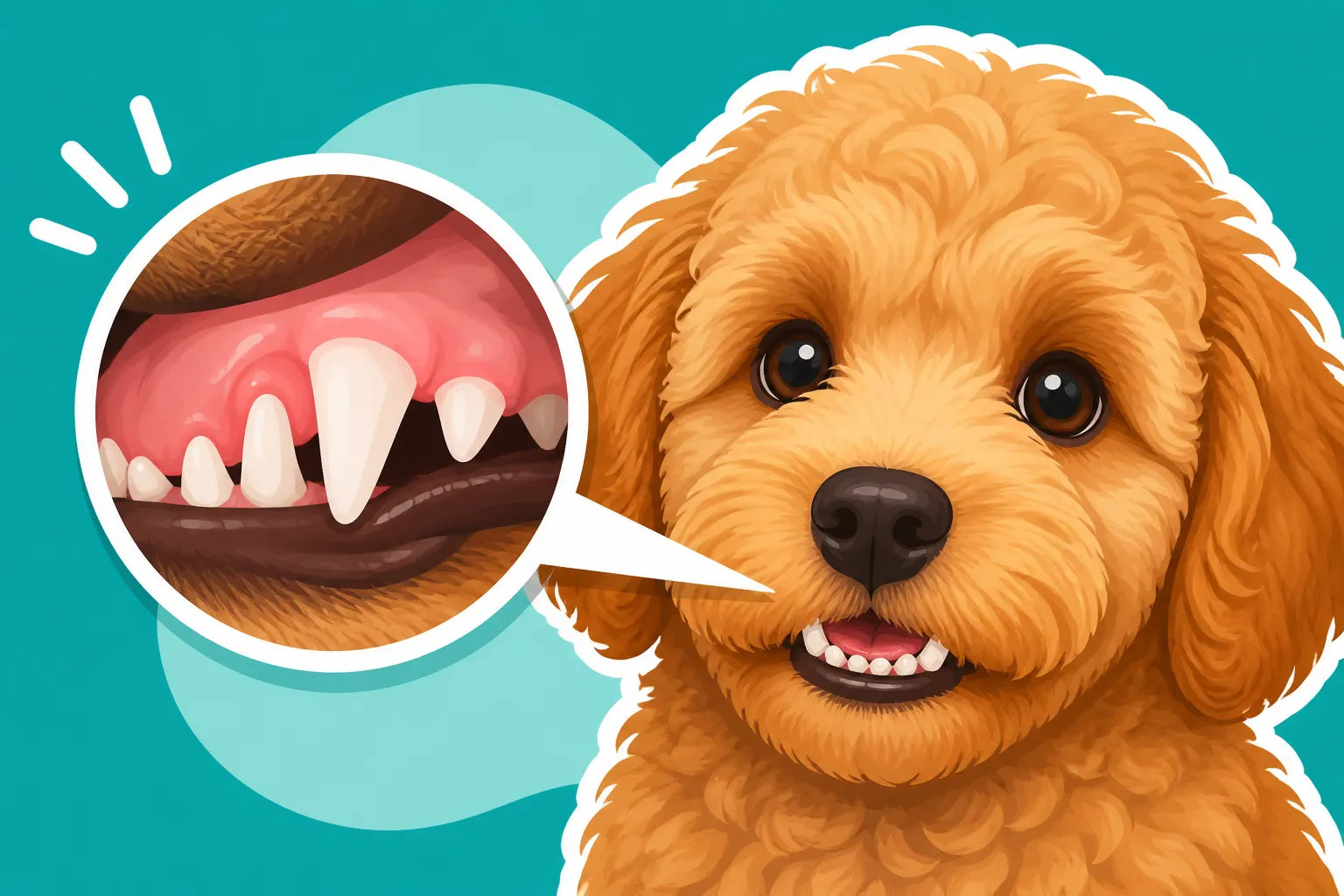
The smaller jaw can lead to issues like Goldendoodle Dental Crowding in the Smaller Sizes, where adult teeth don't have enough room to grow in straight. When a puppy tooth fails to fall out, it essentially creates a roadblock for the adult tooth. Instead of erupting directly underneath and pushing out the baby tooth, the adult tooth might come in at an angle, in front of, or behind the retained tooth. This often happens with the canine teeth, where you might see what looks like a "double set" of fangs, but incisors can also be affected. Breeders should always look for this during early puppy Goldendoodle Puppy Health Checks.
This phenomenon isn't a sign of poor breeding necessarily, but rather a characteristic that small breeds often contend with. The compact nature of their dental arch means there's a higher chance for physical obstruction, where the roots of the puppy teeth aren't fully reabsorbed, or the adult tooth simply doesn't exert enough pressure in the right spot to dislodge its predecessor. It’s a common frustration for mini Goldendoodle owners, but being aware of it means you can take proactive steps.
Identifying Retained Puppy Teeth
Catching retained puppy teeth early is vital for your mini Goldendoodle’s long-term oral health. It’s not always obvious, especially with their playful energy, but a consistent routine of checking their mouth can make all the difference. Don't wait until you notice a problem; make it part of your regular puppy care routine.
Visual Cues and What to Look For
The most critical period for checking for retained teeth is between 4 and 7 months of age, when the adult teeth are actively erupting. What you're looking for is any instance where an adult tooth is visible, but the corresponding puppy tooth is still firmly in place. This is most commonly seen with the canine teeth (the fangs) but can also occur with incisors (the small teeth at the front) and premolars.
Here's how to conduct a quick visual check:
- Regularly open your puppy’s mouth: Get them used to you touching their muzzle and gently lifting their lips from an early age. Reward them with praise and treats.
- Count the teeth: At 6 months, a Goldendoodle puppy should be close to having all its adult teeth. Look for any areas where you see two teeth trying to occupy the same space – the adult tooth right next to or behind the puppy tooth.
- Focus on the canines: This is the most frequent spot for retained teeth. You’ll see the sharp puppy canine and right beside it, the larger, emerging adult canine.
- Check the incisors: Sometimes, multiple retained incisors can create a picket fence effect, leading to significant crowding.
- Look for gaps: As adult teeth come in, the puppy teeth should vacate their spots. If you see an adult tooth emerging but no gap where a puppy tooth should have been, that's a red flag.
Don’t be afraid to gently poke and prod. If a puppy tooth is truly loose and ready to come out, it might wiggle slightly. But if it’s firmly in place alongside an emerging adult tooth, it’s highly likely to be retained and needs veterinary attention. Your vet will also check for these things during their regular Goldendoodle Puppy Vaccination Timing appointments and health checks.
The Dangers of Unaddressed Retained Teeth
It might seem like a minor cosmetic issue, but retained puppy teeth are far more than that. Leaving them in place can lead to a cascade of painful and serious oral health problems for your mini Goldendoodle. These issues aren't just uncomfortable; they can significantly impact their quality of life and even shorten the lifespan of the affected teeth.
- Dental Crowding and Misalignment: This is the most immediate and common consequence. When an adult tooth tries to emerge alongside a retained puppy tooth, it's forced into an abnormal position. This leads to severe crowding, where teeth are too close together, overlap, or erupt at incorrect angles. Such misalignment can cause the adult teeth to rub against other teeth or even impinge upon the soft tissues of the mouth, leading to painful sores or damage.
- Increased Plaque and Tartar Buildup: Crowded and misaligned teeth create nooks and crannies where food particles and bacteria can easily accumulate. These areas are incredibly difficult to clean, even with diligent at-home brushing. This accelerates the formation of plaque, which then hardens into tartar. Tartar is rough and irritating to the gums, and it provides an ideal surface for more bacteria to adhere.
- Gum Inflammation and Periodontal Disease: The constant irritation from tartar and the packed nature of the teeth lead to gingivitis, which is inflammation of the gums. If left unchecked, this progresses to periodontal disease, a destructive infection that damages the tissues supporting the teeth. This can result in bad breath, pain, bleeding gums, and ultimately, tooth loss. Early onset of periodontal disease is a serious concern, as it often necessitates extensive and costly dental work down the line.
- Pain and Discomfort: Imagine having a permanent tooth trying to push through, but a baby tooth is still there, causing pressure and preventing it from settling correctly. This can be genuinely painful for your Goldendoodle, affecting their willingness to chew, play, or even eat comfortably. They might become pickier with food or show subtle signs of discomfort when their mouth is touched.
- Damage to Adult Teeth: The retained puppy tooth can actually damage the enamel of the adjacent adult tooth, making it more susceptible to decay or fractures. In severe cases, retained puppy teeth can even lead to root damage or cysts forming around the impacted adult tooth.
Ignoring retained puppy teeth is essentially setting your mini Goldendoodle up for a lifetime of dental issues. While your Goldendoodle might seem fine initially, these problems develop subtly and can become quite advanced before outwardly visible symptoms appear. This is why addressing them promptly is paramount.
Veterinary Intervention and Treatment Options
Once you've spotted potential retained puppy teeth, or if your vet notes them during a routine exam, prompt professional intervention is the only safe and effective course of action. Unlike human baby teeth, dog puppy teeth rarely fall out on their own if they're truly "retained" and causing obstruction for adult teeth. Waiting too long can significantly complicate matters and increase discomfort for your beloved Goldendoodle.
The Importance of a Timely Vet Visit
The moment you suspect your mini Goldendoodle has retained puppy teeth, scheduling a veterinary appointment is crucial. The optimal time for intervention is generally when the adult teeth are actively erupting, usually between 5 and 7 months of age. This window allows the vet to remove the problematic puppy teeth before they can cause lasting damage to the incoming adult teeth or lead to significant malocclusion (improper bite alignment).
During the visit, your veterinarian will conduct a thorough oral examination. They'll carefully check each tooth, assessing for overcrowding, gum inflammation, and the precise position of both deciduous and permanent teeth. They can confirm which teeth are retained and discuss the best course of action. Sometimes, a puppy tooth might just be a little late to fall out, but a firm, unmoving tooth alongside an adult one almost always needs removal. Don't delay thinking they'll just fall out on their own – if the adult tooth is already there, it's unlikely the puppy tooth will budge without help. Regular Goldendoodle Puppy Health Checks include a thorough dental examination, which is precisely why these appointments are so important in those critical early months.
The Extraction Procedure
If your vet confirms retained puppy teeth, the typical treatment is surgical extraction. This is a common and relatively straightforward procedure, but it does require general anesthesia. Understandably, the thought of your precious pup undergoing anesthesia can be unsettling, especially for a smaller breed like a mini Goldendoodle. Rest assured, veterinary clinics take every precaution. Your vet will perform pre-anesthetic blood work to ensure your Goldendoodle is healthy enough for the procedure and tailor the anesthetic protocol to their specific needs. You can learn more about the considerations for a small dog in Anesthesia Risk for a Toy Goldendoodle.
During the procedure:
- Anesthesia: Your Goldendoodle will be safely put under general anesthesia. This ensures they feel no pain and remain still throughout the extraction.
- Examination: Once under, the vet can perform an even more thorough oral exam, often taking dental X-rays to check the roots of both retained and adult teeth and to ensure no other hidden issues are present.
- Extraction: Using specialized instruments, the veterinarian will carefully extract the retained puppy teeth. This involves teasing out the tooth and ensuring the entire root is removed to prevent complications.
- Sutures (if needed): In some cases, tiny dissolvable sutures might be placed to help the gums heal.
- Post-operative care: After the extraction, your Goldendoodle will be monitored closely as they recover from anesthesia. You'll receive specific instructions for at-home care, which usually includes soft food for a few days, pain medication, and sometimes antibiotics. They might be a little groggy or have some mild swelling, but these usually subside quickly.
Often, breeders or owners opt to combine this dental procedure with their Goldendoodle's spay or neuter surgery, assuming the timing aligns appropriately, to minimize the number of times the dog needs to be anesthetized. This makes sense for many, and your vet can discuss if this is a viable option based on your dog's age and health, considering factors like Neuter Timing That Depends on Goldendoodle Size.
Managing Costs and Insurance Considerations
Let's be real, veterinary care can be a significant expense, and extracting retained puppy teeth is no exception. The cost of the procedure can vary widely depending on your geographic location (a vet in a major city like New York or Los Angeles might charge more than one in a rural area), the number of teeth needing extraction, and the complexity of the case. Generally, you can expect the cost to include the initial consultation, pre-anesthetic blood work, anesthesia, the extraction itself, any pain medication, and post-op check-ups. It's often bundled with other "first year" expenses, similar to The First Groom and Other Week One Goldendoodle Bills.
A single retained tooth extraction might cost a few hundred dollars, but if multiple teeth need to be removed or if complications arise, the bill can quickly climb higher. It’s always best to get a detailed estimate from your vet before proceeding.
This is where pet insurance can truly be a lifesaver. Many pet insurance providers, like Healthy Paws, offer plans that cover unexpected accidents and illnesses, which would typically include necessary dental extractions due to retained puppy teeth. However, it's crucial to understand the specifics of your policy:
- Waiting Periods: Most policies have waiting periods (e.g., 14 days) before coverage kicks in for illnesses. If you enroll your puppy, make sure to do it well before dental issues become apparent, as conditions diagnosed before the waiting period or enrollment are often considered pre-existing.
- Deductibles and Reimbursement: You'll typically have a deductible to meet, and then the insurance will reimburse a percentage (e.g., 70-90%) of the covered costs.
- Dental Rider: Some plans may require a specific dental rider for extensive dental work beyond basic extractions, so clarify this with your provider.
Investing in pet insurance when your Goldendoodle is young and healthy, ideally within the first few weeks home, can provide peace of mind for unexpected health issues, including things like retained puppy teeth. It's worth researching options like Goldendoodle Pet Insurance for a Dog With No Breed Papers to ensure you have coverage for these kinds of necessary veterinary interventions. While you can't predict every health challenge, being prepared financially for common issues in mini Goldendoodles, especially those concerning their unique dental structure, is a smart move.
| Condition | Symptoms/Appearance | Consequences if Untreated | Treatment |
|---|---|---|---|
| Normal Teething (6 months) | Adult teeth erupting, puppy teeth falling out. | Healthy adult dentition. | None, normal process. |
| Retained Puppy Tooth | Adult tooth visible, puppy tooth still firmly in place. Often "double fangs." | Dental crowding, plaque/tartar, gingivitis, pain, damage to adult tooth. | Surgical extraction under anesthesia. |
| Dental Crowding | Teeth packed tightly, rotated, or overlapping. | Increased risk of periodontal disease, tooth decay, pain. | Extractions (if retained teeth are the cause), orthodontic work (rare). |
| Gingivitis | Red, swollen gums, bad breath. | Progression to periodontal disease, tooth loss. | Professional dental cleaning, improved home care. |
Long-Term Oral Health for Your Mini Goldendoodle
Addressing retained puppy teeth is a fantastic start, but maintaining excellent oral health for your mini Goldendoodle is a lifelong commitment. Their unique dental structure and plush facial hair make them more susceptible to certain dental issues, so being proactive is key to preventing future problems and ensuring a happy, healthy smile for years to come.
At-Home Dental Care Practices
You are the first line of defense against dental disease for your Goldendoodle. Establishing a consistent at-home dental care routine early on can drastically reduce the need for extensive professional cleanings later. It might seem daunting at first, especially if your pup isn't a fan of mouth handling, but with patience and positive reinforcement, it becomes a routine they accept.
Here's what you should aim for:
- Daily Brushing: This is the gold standard. Use a dog-specific toothbrush and enzymatic toothpaste (never human toothpaste, as it contains xylitol which is toxic to dogs). Focus on the outside surfaces of the teeth, where plaque tends to accumulate most. Start with short sessions, just a few seconds, and gradually increase the duration. Reward heavily with treats and praise. Even a few minutes a day can make a massive difference.
- Dental Chews and Toys: Incorporate veterinary-approved dental chews designed to reduce plaque and tartar. Look for products with the VOHC (Veterinary Oral Health Council) seal of acceptance, which indicates they meet specific standards for effectiveness. Chew toys, especially those with nubs or grooves, can also help mechanically remove some plaque, but they are not a substitute for brushing. Always supervise your Goldendoodle with chews to prevent choking.
- Water Additives and Dental Wipes: These can be supplementary tools. Water additives help reduce bacteria in the mouth, while dental wipes can be used on days when brushing isn't feasible, offering a quick way to wipe down tooth surfaces. They're not as effective as brushing but are better than nothing.
- Diet: While diet alone isn't a complete solution, some veterinary dental diets are specially formulated with a unique kibble texture that helps scrape plaque off teeth as your dog chews. Discuss these options with your vet.
Remember that Goldendoodles, especially the minis, can have dental crowding even after retained teeth are addressed. This makes meticulous at-home care even more crucial. Their furnishings (beard and mustache) can also sometimes get in the way of proper cleaning, so keep those areas trimmed and clean.
Regular Professional Dental Check-ups
Even with the most diligent at-home care, professional dental check-ups and cleanings are an indispensable part of your Goldendoodle's long-term oral health plan. Just like humans need regular dentist visits, dogs benefit immensely from veterinary dental care.
- Annual Veterinary Exams: Your Goldendoodle should have a comprehensive oral exam during their annual veterinary check-up. Your vet will visually inspect their teeth, gums, and overall mouth for any signs of disease, such as tartar buildup, gingivitis, broken teeth, or unusual growths. This can help catch problems early, before they become severe.
- Professional Dental Cleanings (Under Anesthesia): Depending on your Goldendoodle’s individual needs and the effectiveness of your at-home care, your vet might recommend professional dental cleanings every one to three years. These cleanings are performed under general anesthesia, allowing the vet to thoroughly examine the entire mouth, including areas below the gumline that aren't visible during a conscious exam. During a professional cleaning, the veterinary team will:
- Scale: Remove plaque and tartar from all tooth surfaces, both above and below the gumline, using ultrasonic and hand scalers.
- Polish: Smooth the tooth surfaces to make them less prone to plaque adhesion.
- Fluoride Treatment: Apply a fluoride treatment to strengthen enamel and reduce sensitivity.
- Dental X-rays: Take full-mouth dental X-rays to assess the health of the tooth roots and jawbone, revealing issues like bone loss, abscesses, or impacted teeth that aren't visible to the naked eye.
- Extractions: If any diseased or painful teeth are found, they will be extracted during the same procedure to alleviate pain and prevent further complications.
Think of professional cleanings as deep dives into their oral health. While at-home care manages surface plaque, professional cleanings address tartar buildup, gumline issues, and underlying problems that only X-rays can detect. By combining consistent home care with regular professional attention, you're giving your mini Goldendoodle the best possible chance for a healthy, pain-free mouth throughout their life, avoiding more costly and extensive procedures down the road, similar to the discussions around Dental Cleaning Costs for a Toy Goldendoodle.
Disclaimer
This guide offers general information and advice regarding retained puppy teeth in mini Goldendoodles. It is not a substitute for professional veterinary medical advice, diagnosis, or treatment. Always consult with a qualified veterinarian for any health concerns or before making any decisions about your pet's care.