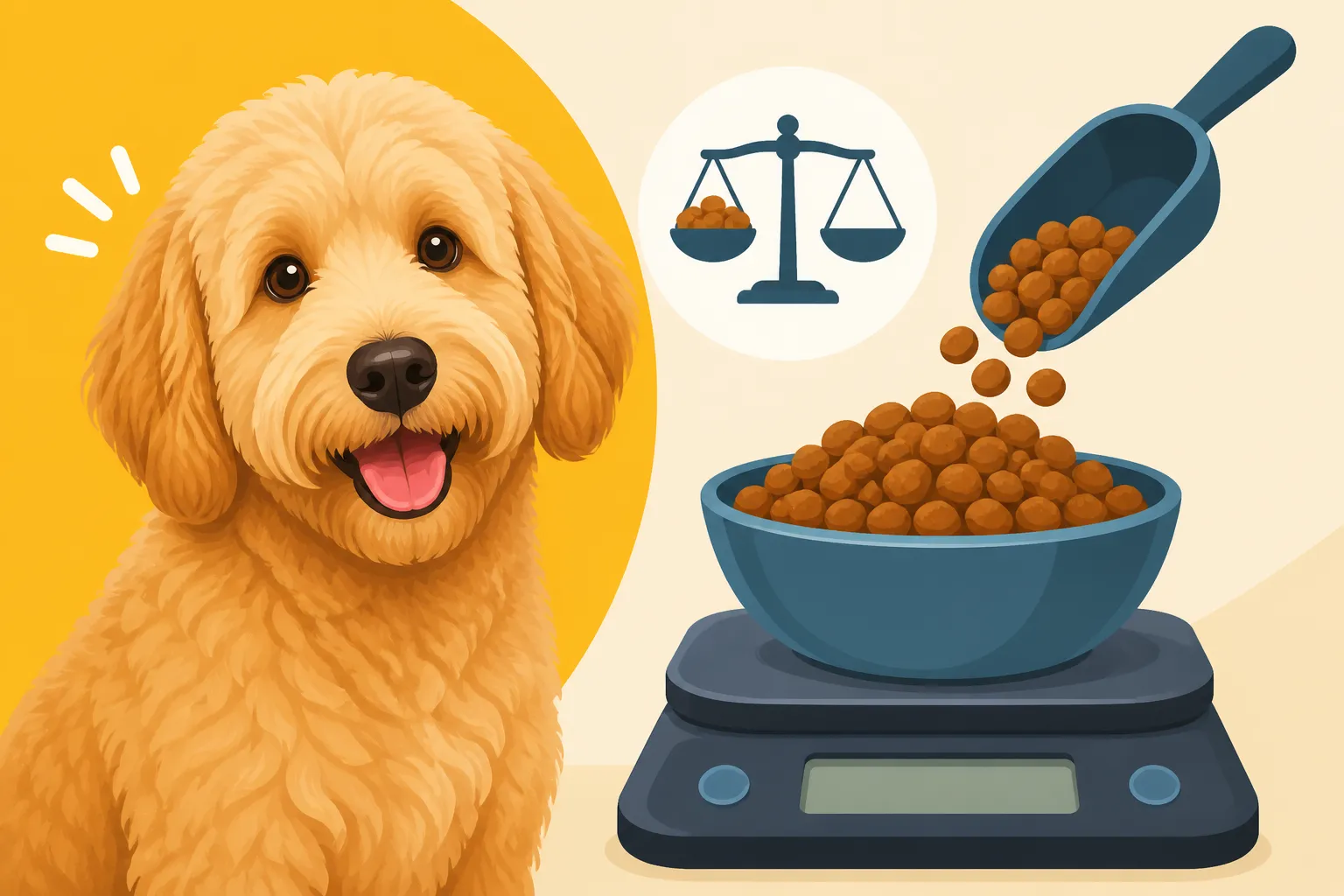
Measuring Goldendoodle Food by Weight
If you're like many Goldendoodle parents, you probably grab a standard measuring cup, scoop out your pup's kibble, and call it a day. It feels convenient, efficient, and like you're doing exactly what the food bag tells you. But here's the kicker: that seemingly simple act of scooping can actually be far less precise than you realize, leading to unnoticed weight creep or, just as concerning, underfeeding your energetic companion. This guide is all about ditching the guesswork and embracing a truly accurate method: measuring your Goldendoodle's food by weight, ensuring they get precisely what they need for a healthy, happy life.
Why Measuring by Volume (Cups) Often Falls Short for Your Goldendoodle
It's a common scene: you've got your Goldendoodle, their eager eyes fixed on the bag of kibble, and you reach for that handy plastic scoop. You think you're being consistent, but the truth is, volume-based measurement is fraught with inconsistencies that can really impact your dog's diet. It’s not just about being a little off; it’s about a cumulative effect that can have serious implications for their health over time.
The Inconsistency of the Scoop
Think about it for a moment. Not all kibble is created equal. Some brands produce small, dense pellets, while others have large, airy puffs. Even within the same brand, kibble can vary slightly in size and density between batches. When you scoop a cup, are you packing it down? Is it a loose scoop? Are you leveling it perfectly every time? The answers to these questions can lead to significant differences in the actual caloric intake your Goldendoodle receives.
For instance, a cup of small, dense kibble might weigh substantially more and contain more calories than a cup of larger, lighter kibble, even if both look like a "full cup." If you're using a generic scoop that came with a bag, it might not even be a true eight-ounce measuring cup. These subtle variations, day in and day out, mean your Goldendoodle could be getting 10-20% more or less food than you intend, simply because "a cup" isn't as universal as we assume it to be. This kind of inconsistency makes it incredibly difficult to fine-tune their diet or understand why their weight might be fluctuating.
Goldendoodle Weight Management Challenges
Goldendoodles, with their famously fluffy and often dense coats, are masters at hiding extra pounds. You might not notice your Goldendoodle gaining a little weight until it's become a more significant issue, simply because that glorious fur can camouflage the gradual expansion of their waistline. This is where the imprecise nature of volume measuring can really become a problem. An extra handful here, an over-scoop there, and suddenly those seemingly small, daily discrepancies add up.
Even a slight caloric surplus, perhaps 50-100 calories a day more than your Goldendoodle needs, can translate into several pounds of weight gain over a year. For a breed that can be prone to joint issues like hip and elbow dysplasia, Goldendoodle Weight Gain and the Strain on Joints that extra weight puts an unnecessary strain on their developing or aging skeletal system. It's a silent creeping problem that many owners only discover at their annual vet check when the doctor points out their Goldendoodle is a little too cuddly.
The Nutritional Impact of Imprecise Feeding
Beyond just weight, imprecise feeding can have broader nutritional impacts. Consistently overfeeding can lead to obesity, which opens the door to a host of other health problems, including diabetes, heart disease, certain types of cancer, and increased risk during anesthesia. It’s not just about aesthetics; it's about genuine health risks that shorten lifespan and diminish quality of life.
On the flip side, consistently underfeeding, even slightly, can lead to nutrient deficiencies. For a growing Goldendoodle puppy, this can impact proper bone and muscle development. For an active adult, it might mean they don't have enough energy for their daily exercise, or their coat condition suffers. Maintaining the right balance is crucial, and that balance is incredibly hard to strike when your primary measurement tool is inherently inconsistent.
The Precision Power of Measuring Goldendoodle Food by Weight
Let's cut to the chase: if you want to be truly accurate about your Goldendoodle's nutrition, measuring their food by weight is the gold standard. It takes the guesswork out of feeding and gives you complete control over their caloric intake. It's a small change that yields massive benefits for their health and your peace of mind.
How a Digital Scale Eliminates Guesswork
Imagine knowing, down to the exact gram, how much food your Goldendoodle is consuming at every meal. That's the power of a digital kitchen scale. Unlike volumetric measurements, weight is constant. A gram of kibble is always a gram of kibble, whether it's small, large, dense, or airy. This means that every single meal, your Goldendoodle gets the exact same amount of food, ensuring consistent caloric intake.
This precision is invaluable. It allows you to make tiny, informed adjustments to their diet if you notice slight weight changes or if their activity level shifts. If your Goldendoodle needs to lose a pound or two, you can reduce their daily intake by a precise number of grams, rather than vaguely trying a "slightly less than a cup" approach. This repeatable accuracy is the cornerstone of effective weight management and overall health.
Finding the Right Grams for Your Goldendoodle's Needs
Most high-quality dog food bags provide feeding guidelines in both cups and grams. If you've been using cups, it's time to locate the gram measurement on the bag. This number is usually based on your dog's ideal adult weight and activity level. For example, a standard Goldendoodle might need around 300-400 grams of a particular food per day, while a mini Goldendoodle would need significantly less. Daily Calories for a Standard Goldendoodle and Daily Calories for a Mini Goldendoodle can vary wildly based on size and energy, so paying attention to the specific recommendations for your dog's size is paramount.
It's crucial to remember that these are just starting points. Your veterinarian is your best resource for determining your Goldendoodle's exact caloric needs, especially if they are a puppy, a senior, or have any underlying health conditions. They can help you calculate a precise target based on age, current weight, ideal weight, and activity level. Once you have that target, you can easily convert it to grams based on your chosen food's caloric density (calories per gram or per cup). This ensures you're feeding specifically for your dog, not just a generic recommendation.
Essential Tools for Weight-Based Feeding
The good news? You don't need fancy, expensive equipment to start measuring by weight. A simple digital kitchen scale is all it takes.
Here’s what you'll need:
- Digital Kitchen Scale: Look for one that measures in grams (most do) and has a capacity of at least a few pounds (enough for a large meal plus the bowl). You can find reliable, affordable options on sites like Amazon or at most kitchen supply stores. They don't need to be complex; a basic, accurate scale with a tare function (to zero out the bowl's weight) is perfect.
- Your Goldendoodle's Food: Of course! Make sure you keep the bag handy, as it's where you'll find the manufacturer's gram recommendations and caloric density.
- Your Dog's Food Bowl: This will be placed directly on the scale.
That's it! No special scoop, no guessing games. Just these few items will transform your Goldendoodle's mealtime precision. Many Goldendoodle owners discover that once they get into the habit, weighing food is actually faster and less messy than trying to level off a cup perfectly.
Step-by-Step: Implementing Weight-Based Feeding for Your Goldendoodle
Making the switch to weight-based feeding is easier than you might think. It just requires a little initial setup and a commitment to consistency. Once you get into the rhythm, you’ll wonder why you ever relied on imprecise scoops.
The Initial Transition: From Cups to Grams
Let's walk through it together.
- Find Your Target: Look at your Goldendoodle's food bag. Find the feeding guide and locate the recommended daily intake in grams for your dog's weight range. If it only lists cups, you'll need to do a quick conversion. Many food brands list the weight of one cup in grams, or you can use an online converter if you know the caloric content per cup and per gram.
- Gather Your Tools: Place your digital kitchen scale on a flat, stable surface. Have your Goldendoodle's food bowl and the food bag ready.
- Tare the Bowl: Turn on your scale. Place your Goldendoodle's empty food bowl on the scale. Hit the "tare" or "zero" button. This will reset the scale to zero, so you're only measuring the food, not the bowl.
- Measure the Food: Slowly pour your Goldendoodle's kibble into the bowl until the digital display shows the precise gram weight for one meal. If your dog eats twice a day, divide the daily total by two.
- Serve and Repeat: That's it! Lift the bowl, serve your Goldendoodle, and repeat the process for their next meal.
It might feel a little awkward the first few times, but you'll quickly build muscle memory. Some owners even pre-measure their dog's daily ration in the morning and split it into two containers, making subsequent meals a breeze.
Adjusting for Your Goldendoodle's Activity Level and Body Condition
Remember, the feeding guidelines on the bag are just a starting point, a general recommendation. Your Goldendoodle is unique, with their own metabolism, activity level, and body type. It's essential to fine-tune their intake based on their specific needs.
Here's how to adjust:
- Assess Body Condition Regularly: This is key! You should be able to feel your Goldendoodle's ribs easily, but not see them protruding. When viewed from above, they should have a discernible waist. From the side, their abdomen should tuck up slightly, not hang low. With their thick coats, feeling for the ribs is paramount. Goldendoodle Body Condition Under a Thick Coat is something every owner needs to master. If you're struggling to find those ribs, even under their luxurious coat, it might be a sign they're carrying too much weight.
- Monitor Weight: Weigh your Goldendoodle regularly, perhaps once a month, especially if you're trying to manage their weight. A home pet scale is great for smaller Goldendoodles, or you can use your vet's scale.
- Adjust Gradually: If your Goldendoodle is gaining weight, reduce their daily gram intake by about 5-10%. If they're too lean or very active, you might increase it by the same amount. Make these changes slowly, over a week or two, and continue to monitor their body condition. Don't make drastic cuts or increases overnight, as this can upset their digestive system.
- Factor in Activity: A Goldendoodle that spends an hour romping at the dog park will naturally need more calories than one whose daily exercise is a leisurely stroll around the block. Be honest about their actual activity level.
Your vet can provide invaluable guidance here, helping you understand what a healthy weight and body condition look like for your specific Goldendoodle and how to adjust their food intake accordingly.
Making it a Habit: Tips for Consistency
Making weight-based feeding a routine doesn't have to be a chore. Here are some tips to integrate it seamlessly into your daily life:
- Pre-Measure: On Sunday, measure out your Goldendoodle's food for the entire week into individual Ziploc bags or small airtight containers. Store them in a cool, dry place. This way, each morning and evening, you just grab a bag and pour. This is especially helpful if multiple family members feed your dog, ensuring everyone is on the same page.
- Designated Feeding Station: Set up a dedicated spot in your kitchen for feeding, with the scale, food bag, and bowls easily accessible. This creates a ritual and makes it less likely you'll skip the weighing step.
- Involve the Family: If others in your household help with feeding, make sure they understand the importance of measuring by weight. Show them how to use the scale and explain why it matters for your Goldendoodle's health.
- Automate if Possible: Some automatic feeders allow you to program feedings by weight, which can be fantastic for consistency, especially if you have a busy schedule.
- Consider Fresh Food Services: Services like Ollie often provide fresh, human-grade food that is precisely portioned by weight (or even by caloric needs) for your dog, taking all the guesswork out of it. This can be a great option for owners who want maximum precision with minimal effort. They simply deliver the pre-measured meals right to your door.
| Measurement Method | Pros | Cons | Accuracy | Consistency | Ease of Adjustment |
|---|---|---|---|---|---|
| Volume (Cups) | Familiar, widely used, no special equipment needed | Highly inconsistent, varies with kibble, prone to error | Low | Low | Difficult |
| Weight (Grams) | Precise, consistent, eliminates guesswork | Requires a digital scale, initial setup time for conversion | High | High | Easy |
Beyond the Scale: Other Nutritional Considerations for Your Goldendoodle
While measuring by weight is a huge step forward for precision, it’s part of a larger picture of holistic Goldendoodle nutrition. Getting the right amount is crucial, but so is getting the right quality and understanding all sources of calories.
Choosing High-Quality Goldendoodle Food
No amount of precise measuring can compensate for poor-quality food. When you’re weighing out those grams, you want to ensure each gram is packed with beneficial nutrients, not just fillers. Look for dog foods where real meat (like chicken, beef, or lamb) is the first ingredient, followed by wholesome grains or vegetables. Avoid foods with excessive artificial colors, flavors, or preservatives.
High-quality food often means your Goldendoodle will feel more satisfied with a smaller portion because it's more nutrient-dense. This can actually make weight management easier in the long run. While brands like Chewy offer a vast selection, take the time to read labels and research companies to find one that aligns with your Goldendoodle's specific needs and your nutritional philosophy. Remember, investing in good food is an investment in your Goldendoodle's health.
Treats and Supplements: Accounting for Extra Calories
This is where many well-intentioned Goldendoodle parents unintentionally sabotage their precise feeding efforts. Every treat, every dental chew, every spoonful of peanut butter for that pill – it all contains calories. These "extras" can quickly add up, easily pushing your Goldendoodle over their daily caloric limit, even if their meals are perfectly weighed. Treat Costs for a Goldendoodle in Puppy Class might seem small, but the calories can be significant.
The key is to account for them. If your Goldendoodle is getting a lot of training treats throughout the day, reduce their main meal portion slightly to compensate. Opt for low-calorie treats or break larger treats into smaller pieces. Many owners find success with using their Goldendoodle's daily kibble ration as training treats throughout the day, ensuring no extra calories are added. Remember, balance is everything.
The Role of Your Veterinarian
Your veterinarian is your most valuable partner in your Goldendoodle’s nutritional journey. While this guide gives you the tools for precise feeding, your vet can provide personalized advice based on your dog's age, breed, lifestyle, and individual health profile. They can help you:
- Determine ideal weight and body condition: They have the professional eye to assess if your Goldendoodle is at a healthy weight, even under all that fur.
- Calculate exact caloric needs: Based on comprehensive health exams and your Goldendoodle's specific situation.
- Recommend appropriate food types: For puppies, seniors, or dogs with specific conditions like allergies or digestive sensitivities.
- Address health concerns: If your Goldendoodle isn't gaining or losing weight as expected, or if they develop any health issues, your vet can investigate and offer solutions. Senior Goldendoodle Vet Visits After Nine become even more crucial as your Goldendoodle ages and their nutritional needs change.
Don't hesitate to bring your digital scale and food packaging to your next vet appointment. Discuss your feeding regimen and ask for their professional opinion. This collaborative approach ensures your Goldendoodle receives the best possible care, both at home and from their health care provider.
Disclaimer
This article is for general informational purposes only and does not constitute professional advice. Laws, prices and regulations vary by location and change over time. Consult a qualified professional for guidance on your specific situation.