Why a Goldendoodle Coat Turns at Nine Months
It’s a tale as old as time for Goldendoodle owners: you bring home this adorable, fluffy little puppy, convinced you know exactly what its coat will be like. It’s soft, it’s manageable, it’s everything you dreamed of. Then, around that seven-to-ten-month mark, something dramatic happens. Suddenly, your sweet little fluff ball transforms into a matting monster, a knot factory, a coat enigma that leaves you scratching your head, clippers in hand, wondering what on earth went wrong. This guide is here to unravel that mystery, explaining why your Goldendoodle's coat undergoes such a significant transformation around nine months and how you can navigate this often-frustrating phase.
Understanding the Goldendoodle Puppy Coat
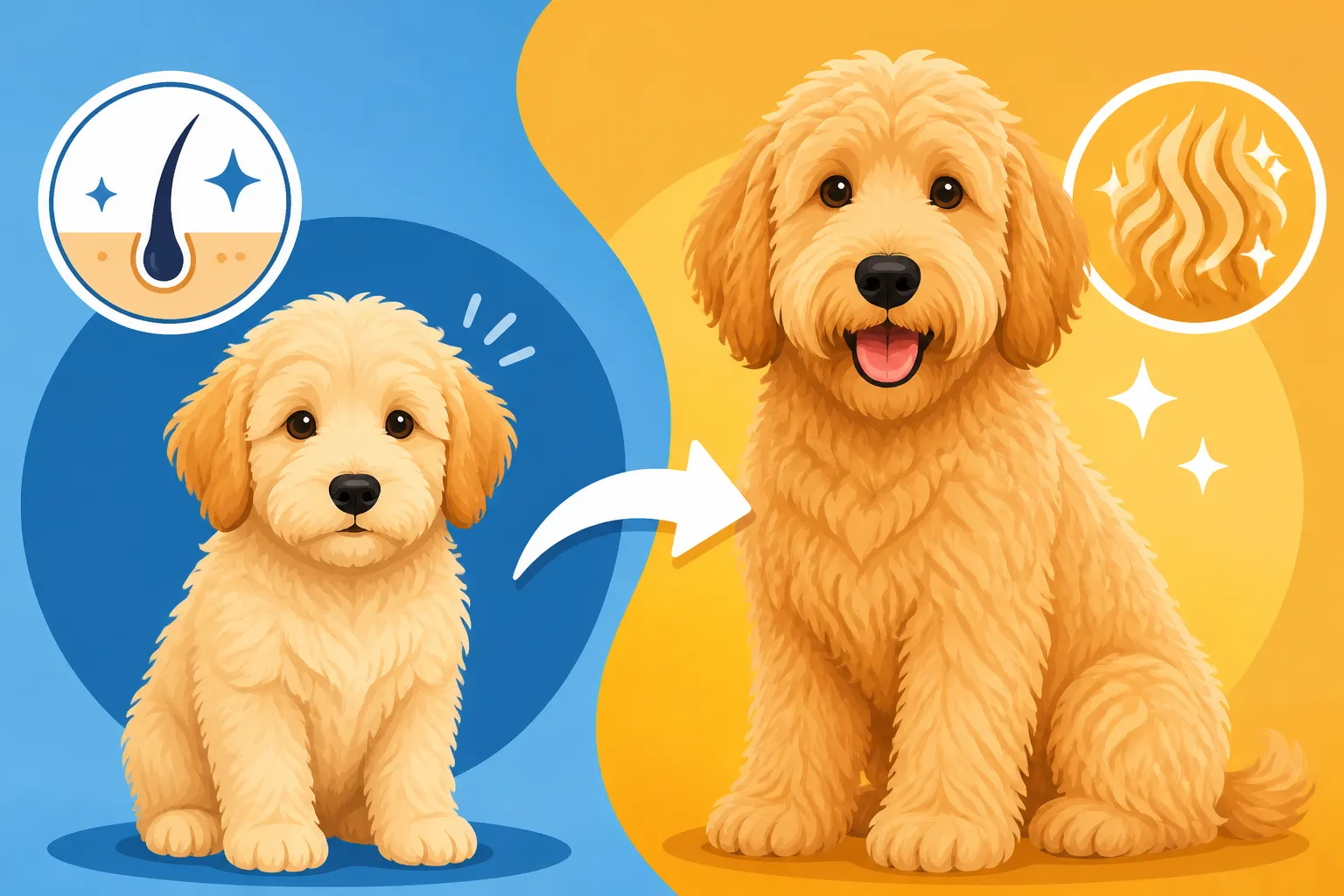
When you first bring home a Goldendoodle puppy, their coat is typically a delightful, soft fluff. It’s light, easy to brush (or so it seems), and barely sheds. This early coat often gives new owners a false sense of security, leading them to believe that grooming will be a breeze. However, this puppy coat is a temporary phase, a deceptive precursor to the often more demanding adult coat that lies beneath.
The "Fluff Ball" Illusion
That incredibly soft, fine hair your Goldendoodle puppy sports is just that: puppy hair. It's designed for warmth and protection in their early months, and it’s generally quite distinct from the adult coat that will eventually replace it. Think of it like a baby's soft, wispy hair compared to an adult's thicker, more structured strands. This fluff is often easy to maintain because it hasn't yet developed the dense undercoat or the strong curl patterns that characterize many adult Goldendoodle coats. It feels light, looks airy, and often seems to repel mats with ease – a truly enchanting illusion that lulls us into a false sense of grooming security.
Many owners, myself included, have looked at their 10-week-old Goldendoodle and thought, "Oh, this is going to be easy!" The puppy tolerates a brush, the coat glides through your fingers, and you envision a lifetime of effortless grooming sessions. But it's crucial to understand that this phase is fleeting. The puppy coat is not indicative of the grooming commitment required for an adult Goldendoodle, and recognizing this early can save you a lot of headaches (and your Goldendoodle a lot of discomfort) down the line.
Genetic Indicators (or Lack Thereof) in Puppies
While some breeders might try to predict adult coat type based on a puppy's look or genetic testing, the truth is, a Goldendoodle puppy's coat is notoriously unpredictable. You might see a very wavy puppy that grows into a super curly adult, or a seemingly straight-coated pup that develops a lovely, loose wave. This unpredictability is a hallmark of the Goldendoodle crossbreed, where the genes from the Golden Retriever (known for its shedding, straight-to-wavy double coat) and the Poodle (known for its non-shedding, tightly curled single coat) interact in myriad ways.
Even with parental coat information and genetic tests like those for furnishings (which give the Goldendoodle its distinctive beard and eyebrows), the exact texture and density of the adult coat can be a surprise. This is why you often hear the phrase, "Why a Goldendoodle Puppy Coat Predicts Nothing". It’s a genetic lottery, to some extent, and your beautiful little puppy’s coat is simply playing its part in the grand genetic unveiling. This means that preparing for any eventuality, particularly increased grooming needs, is the wisest approach.
The Goldendoodle Coat Change: What's Happening?
Around the seven-to-ten-month mark, your Goldendoodle is likely entering or fully immersed in adolescence, a period of rapid growth and significant hormonal shifts. Just like human teenagers, they’re going through a lot, and one of the most visible changes is the dramatic transformation of their coat. This isn't just a slight adjustment; it's a full-on transition from soft puppy fluff to a denser, often curlier, and much more mat-prone adult coat.
Puberty and Hormonal Shifts
The primary driver behind the Goldendoodle coat change is a combination of age and hormonal development. As your puppy matures into an adolescent, their body begins to produce adult hormones that signal the end of the puppy phase and the onset of sexual maturity. These hormones trigger the development of the adult coat, which is typically thicker, coarser, and has a different texture than the puppy coat. It's a natural biological process, much like how a child's fine hair often thickens and changes texture as they grow into adulthood.
This transition isn't always neat and tidy. The old puppy hair doesn't just fall out uniformly; it gets caught up in the emerging adult coat, leading to a tangled mess. Owners often describe this as the "ugly duckling" phase, where the coat looks uneven, feels rough, and becomes incredibly difficult to manage. It's a clear indicator that your Goldendoodle is growing up, even if the result is a temporarily disheveled appearance that makes you long for those easy-care puppy days.
The Adult Coat Emerges
What happens during this transition is that the new, adult hair follicles start producing stronger, thicker, and often curlier hairs. These adult hairs then begin to push out the finer puppy hairs. Imagine two different types of fishing nets trying to occupy the same space: the larger, stronger net (adult hair) starts to entangle the finer, weaker net (puppy hair). This creates a dense, interlocked layer of hair that is ripe for matting.
The emerging adult coat can vary wildly from dog to dog, even within the same litter. Some Goldendoodles might develop a loose, wavy coat, while others will sprout a dense, woolly curl. This is where you really start to see the genetic blend of the Golden Retriever and Poodle playing out. The texture could be anything from a silky wave to a tight, spiral curl. This new coat is what your Goldendoodle will wear for the rest of their life, and it demands a completely different approach to grooming than their initial puppy fluff. It's vital to adapt your routine as soon as you notice this shift, because ignorance or delay can quickly lead to severe matting.
Matting Mayhem During the Transition
This period of coat change is often affectionately (or perhaps exasperatedly) referred to as "matting mayhem." The puppy hair, which is still attached but being shed, gets trapped by the incoming adult hair. Because the Goldendoodle's coat, particularly the curlier types, is designed to be low-shedding (meaning the hair doesn't easily fall out), those old puppy hairs have nowhere to go. They literally get woven into the new growth, forming tight, painful mats that can quickly become a serious problem.
These mats aren't just cosmetic; they can pull on the skin, cause irritation, and even lead to skin infections if moisture gets trapped underneath. It’s particularly common to find mats behind the ears, in the armpits, around the collar area, and on the legs – areas of high friction. If left unchecked, these mats can become so severe that the only humane solution is to shave the dog completely down. Many new Goldendoodle owners are genuinely shocked by how quickly a seemingly clean coat can turn into a matted mess overnight during this phase. Understanding that this is a predictable, albeit challenging, part of Goldendoodle development is the first step in addressing it proactively.
Predicting Your Goldendoodle's Adult Coat
While the exact nature of your Goldendoodle's adult coat can feel like a mystery, there are some clues and genetic factors that can offer a glimpse into what you might expect. No one can give you a 100% guarantee, but combining knowledge of genetics with observation can help you prepare.
Examining Parent Coats and Generations
One of the strongest indicators of your Goldendoodle's potential adult coat lies with its parents. If both parents have very curly, non-shedding coats (common in F1b or Multigen Goldendoodles), there's a higher likelihood your puppy will develop a similar coat. Conversely, if one parent is a Golden Retriever and the other a Poodle (an F1 Goldendoodle), the outcome can be much more variable, ranging from wavy to curly. Breeders often provide information on The Three Goldendoodle Coat Types and How to Tell Them, such as flat, wavy, or curly, and this can be a helpful guide. However, even with this information, nature sometimes throws a curveball!
Looking at the Goldendoodle's generation (F1, F1b, F2, Multigen) also offers insights. F1 Goldendoodles, being 50% Golden Retriever and 50% Poodle, tend to have the widest range of coat types, from straight and shedding to wavy. F1b Goldendoodles, which are 75% Poodle and 25% Golden Retriever, are typically bred for their curlier, lower-shedding coats, making them a more predictable choice for those seeking that classic 'doodle look with less shedding. Multigen Goldendoodles often have the most consistent coats, as breeders have had several generations to select for specific traits.
Early Warning Signs of an Impending Change
Even if you can't definitively predict the type of coat, you can certainly watch for signs that the coat change is beginning. The most common and obvious sign is the onset of matting, particularly in those high-friction areas mentioned earlier – behind the ears, armpits, and under the collar. You might also notice that your once-easy brushing sessions suddenly become much more difficult, with the brush dragging and catching in tangles.
Another subtle cue is a change in texture. The silky puppy fluff might start to feel slightly coarser or denser to the touch, especially along the back and sides. You might also notice a slight wave or curl starting to form where there was none before. Some owners even report a slight increase in shedding as the old puppy coat begins to loosen, although this can be tricky to spot in a low-shedding breed. If you start seeing any of these indicators, consider it your urgent signal to ramp up your grooming routine immediately to prevent serious matting. Don't wait until the mats are already tightly formed!
Managing the Coat Change: Grooming Strategies
The coat change phase is undeniably challenging, but with the right strategies, you can minimize discomfort for your Goldendoodle and keep their coat healthy. This isn't the time to slack off on grooming; it's the time to double down and be diligent.
Stepping Up Your Brushing Routine
During the coat change, your daily brushing routine needs to become daily. And I mean daily. What used to be a quick run-through with a brush won't cut it anymore. You need to commit to thorough Daily Brushing Through a Goldendoodle Coat Change, using the right tools and techniques. The key here is "line brushing" – a method where you systematically brush small sections of hair down to the skin, working layer by layer. This ensures you're getting through both the adult and puppy hair and preventing mats from forming at the base of the coat.
A good quality slicker brush and a sturdy metal comb are your best friends during this period. The slicker brush will help detangle the bulk of the coat, while the comb is essential for checking your work and finding any small mats that the slicker brush might have missed. Pay extra attention to those mat-prone areas like the armpits, behind the ears, and around the tail. It can feel tedious, but trust me, an hour of daily brushing now will save you countless hours (and potentially expensive dematting fees) later. Websites like Chewy or Amazon offer a huge selection of grooming tools, making it easy to find what you need.
Professional Grooming During the Transition
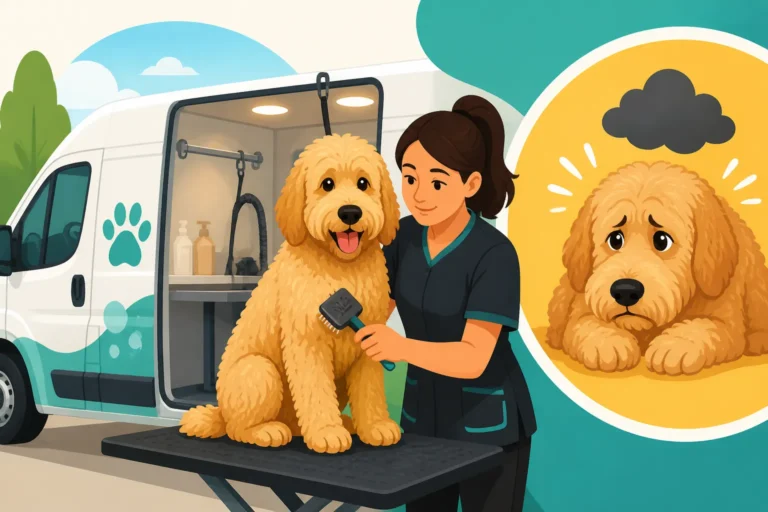
Even with diligent home brushing, many Goldendoodle owners find that professional grooming is indispensable during the coat change. A professional groomer has the expertise, tools, and often a higher-powered dryer to get through the dense, tangling coat effectively. They can assess the coat condition, skillfully work out minor mats, and give your Goldendoodle a "puppy cut" that makes home maintenance much easier. Don't feel like you've failed if you need to call in the pros; this is a genuinely difficult phase.
I always recommend Booking a Goldendoodle Groom Six Weeks Out (or even sooner) once you start noticing the coat change. Getting a professional trim that shortens the hair, especially on the body and in those trouble spots, can drastically reduce the matting potential. A good groomer can also show you how to tackle specific areas or demonstrate proper line brushing techniques. They're an invaluable resource during this tricky time, ensuring your dog stays comfortable and mat-free.
Tools and Products That Help
Having the right arsenal of grooming tools can make a huge difference in surviving the coat change. Beyond the slicker brush and metal comb, consider adding a good detangling spray to your routine. These sprays can help loosen tangles and make brushing less painful for your dog. A high-velocity dog dryer, while an investment, can also be incredibly helpful after baths, ensuring the coat is thoroughly dry and fluffed out, which prevents matting.
Here’s a quick table of essential grooming tools for the coat change:
| Tool | Purpose | Usage During Coat Change |
|---|---|---|
| Slicker Brush | Removes loose hair, detangles minor knots, fluffs coat | Daily, to work through layers of puppy and adult hair; essential for line brushing. |
| Metal Comb | Finds hidden mats, checks for thoroughness after brushing, detangles | Daily, to comb through small sections from skin to tip; crucial for preventing mats. |
| Detangling Spray | Loosens knots, reduces static, adds moisture, makes brushing easier | Apply before brushing, especially on matted areas, to minimize pulling and discomfort. |
| High-Velocity Dryer | Dries coat quickly and thoroughly, helps straighten hair, prevents mats | Use after baths to ensure coat is completely dry and fluffy, pushing out loose hair. |
| Good Quality Shampoo & Conditioner | Cleanses and moisturizes coat, reduces tangles | Use during baths, ensuring thorough rinsing, always followed by conditioner to soften. |
You can find all these essentials on platforms like Amazon or Chewy. Additionally, some Goldendoodle owners find that a high-quality diet, perhaps one like Ollie, which focuses on fresh ingredients, can contribute to overall skin and coat health, potentially making the coat a bit more resilient.
Long-Term Coat Care Post-Change
Congratulations, you've survived the coat change! Your Goldendoodle now has their beautiful, permanent adult coat. But the grooming journey doesn't end there. In fact, it's just beginning in earnest. Maintaining that stunning Goldendoodle coat requires ongoing commitment and regular care.
Adapting to the Adult Coat
Once the full adult coat has come in, you'll need to adapt your grooming routine to its specific type. A Goldendoodle with a very curly, wool-like coat will likely require more frequent and thorough brushing than one with a looser, wavier coat. Understanding Why a Goldendoodle Mats in a Week Without Brushing is crucial here. The tight curls act like Velcro, catching loose hairs and environmental debris, leading to mats very quickly if not regularly brushed. For dogs with a straighter or wavy coat, while still needing attention, the matting might not be as aggressive.
You'll also need to decide on a regular haircut schedule with your groomer. Most Goldendoodle owners opt for professional grooms every 6-8 weeks to keep the coat at a manageable length, prevent matting, and ensure cleanliness. This frequency helps maintain hygiene, especially around the face, paws, and sanitary areas. It also gives you a fresh start for home maintenance, as a shorter coat is generally easier to brush through.
The Importance of Consistency
The absolute cornerstone of long-term Goldendoodle coat care is consistency. You cannot skip weeks of brushing and expect to avoid matting, especially with a curly or wool-type coat. Make brushing a positive daily ritual, a time for bonding with your dog. Even 15-20 minutes of thorough Line Brushing a Goldendoodle Section by Section every day can prevent major problems. This routine not only keeps their coat healthy and comfortable but also gets your Goldendoodle accustomed to being handled, which makes future vet visits and grooming sessions much less stressful.
Don't forget other essential aspects of coat care, like regular ear cleaning (especially with those furnished ears) and nail trims. The commitment to a Goldendoodle's coat is a lifelong one, but the reward is a beautiful, happy, and comfortable companion.
Disclaimer
This article is for general informational purposes only and does not constitute professional advice. Laws, prices and regulations vary by location and change over time. Consult a qualified professional for guidance on your specific situation.