Gas in a Goldendoodle That Eats Too Fast
Oh, the infamous Goldendoodle gas! If you’re reading this, you’ve probably experienced that unmistakable, eye-watering odor that makes you wonder if your otherwise adorable furry friend has transformed into a small, fluffy stink bomb. It's often worse after meals, leaving you questioning what on earth happened at the food bowl. You’re not alone in this pungent predicament; many Goldendoodle parents face the exact same frustrating issue, especially when their beloved companion scarfs down their dinner like it's their last meal on earth. This guide is here to help you understand why your Goldendoodle becomes a walking gas cloud after eating too fast, how to tell if it's normal or something serious, and most importantly, what practical steps you can take to bring peace (and fresh air) back to your home.
Why Your Goldendoodle Becomes a Gas Factory After Meals
Let's be real, nobody enjoys a smelly house, and when the source of the odor is your charming Goldendoodle, it can be downright embarrassing, especially with guests over. The truth is, Goldendoodles are often enthusiastic eaters, a trait they frequently inherit from their Golden Retriever lineage. This eagerness, while endearing in many ways, can lead to some rather unpleasant digestive consequences.
The Physics of Fast Eating and Air Swallowing (Aerophagia)
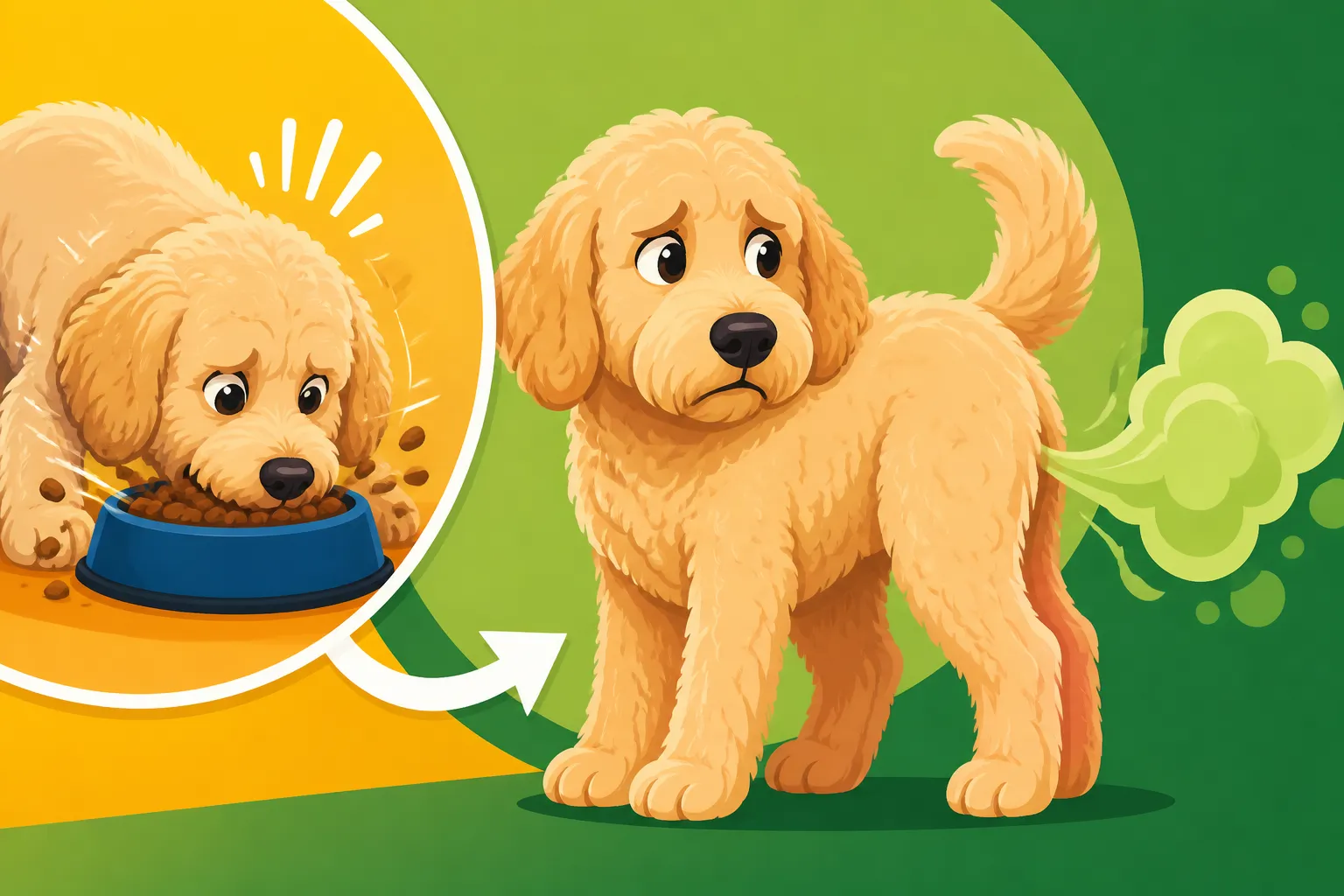
When your Goldendoodle eats at lightning speed, they're not just gobbling food; they're also gulping down a significant amount of air. This phenomenon is called aerophagia, and it's one of the primary culprits behind post-meal gas. Think about it: if you were to inhale your dinner, you’d probably feel pretty gassy too, right? It’s the same principle for our canine companions.
As your Goldendoodle shovels down kibble, they create a vacuum effect, pulling air into their esophagus along with their food. This excess air travels down to their stomach, mixing with digestive juices and the food itself. While some of this air might be released through burping (which, let's be honest, can also be quite noisy and charmingly gross), a good portion continues its journey through the digestive tract. As it moves through the small and large intestines, it accumulates, eventually needing an exit strategy – and that's when you experience the unpleasant, audible, and olfactory evidence of flatulence. This isn't just a minor annoyance; for your dog, it can lead to uncomfortable bloating and stomach rumbling, too.
Digestion and Fermentation: More Than Just Air
Beyond just swallowed air, the digestive process itself plays a huge role in gas production. Your Goldendoodle's digestive system, like ours, relies on a complex ecosystem of bacteria in the gut to break down food. When certain types of food, especially those rich in particular carbohydrates or fibers, are consumed quickly and perhaps not chewed thoroughly, they can reach the large intestine less digested. Here, these ingredients become a feast for colonic bacteria.
These bacteria then ferment the undigested food, producing various gases as byproducts, including hydrogen sulfide, methane, and carbon dioxide. It’s the hydrogen sulfide that’s the main offender for that truly rotten-egg smell we all dread. Common culprits often found in dog food that can contribute to this fermentation include certain types of peas, beans, lentils, and some starchy vegetables. Even seemingly healthy ingredients can be problematic if they're not easily digestible for your individual dog or if consumed in large, hurried quantities.
Sometimes, a Goldendoodle might also have a mild sensitivity to a particular ingredient, like certain proteins or grains, which can exacerbate gas production. It’s not necessarily an outright allergy, but rather an intolerance that leads to more fermentation and discomfort. Understanding this dual attack of swallowed air and bacterial fermentation is key to tackling the problem effectively. For more insight into what they inherit, you might find What a Goldendoodle Inherits From Each Parent Breed helpful.
Recognizing the Signs and Ruling Out Other Issues
Okay, so we've established that the farts are real. But how do you know if it's just a normal (albeit smelly) consequence of enthusiastic eating, or if it's a sign that something more serious might be brewing? It’s important to pay attention to your Goldendoodle's overall demeanor and other physical signs, not just the tell-tale odor.
Beyond the Odor: Other Clues Your Goldendoodle Has Gas
While the smell is certainly the most obvious indicator, Goldendoodles with excessive gas from fast eating might show other signs of discomfort. You might notice them burping frequently after a meal, trying to relieve the pressure in their stomach. Their belly might feel a bit tight or distended to the touch, and you could hear pronounced gurgling or rumbling sounds coming from their abdomen, far beyond what you'd consider normal digestive noises.
Some dogs will seem restless or uncomfortable, perhaps shifting positions a lot, stretching, or looking at their flank. They might even try to find a quiet corner to lie down, hoping the discomfort will pass. If they are normally a "velcro dog," always by your side, a sudden desire for solitude after eating could be a subtle sign they're not feeling their best. It’s not just the external stink; it’s the internal feeling that matters too. Pay close attention during those 30 minutes to an hour post-meal.
When Gas Signals Something More Serious
Here’s where it gets critical, especially if you have a Standard Goldendoodle. While gas is often just an uncomfortable nuisance, in some cases, it can be a warning sign of a much more serious, life-threatening condition called Gastric Dilatation-Volvulus (GDV), commonly known as bloat. Bloat is a sudden, severe condition where the stomach fills with gas and twists, trapping the gas and cutting off blood supply. It requires immediate veterinary attention.
The symptoms of bloat can sometimes mimic severe gas initially, which is why vigilance is so important. Look for these red flags:
- Unproductive retching or dry heaving: Your Goldendoodle tries to vomit but nothing comes up. This is a huge red flag.
- A distended, hard abdomen: Their belly will look visibly swollen and feel very firm, almost like a drum.
- Restlessness and pacing: They can’t get comfortable, constantly shifting, standing, and lying down.
- Drooling: Excessive drooling can occur.
- Pain: They might whine, groan, or show signs of acute pain when their abdomen is touched.
- Weakness or collapse: In advanced stages, they may become lethargic, weak, or even collapse.
If you ever suspect bloat, even for a moment, do not wait. Get to an emergency vet immediately. It's a true emergency where every minute counts. This is especially important for larger Goldendoodles who inherit some of the deep-chested anatomy from their Golden Retriever and Standard Poodle parents. For more on this, check out Bloat Risk in a Standard Goldendoodle. For everyday digestive upset, there’s usually less urgency, but it’s always wise to consult your vet if symptoms are persistent or concerning, or if you’ve tried remedies with no success.
Practical Solutions for a Gassy Goldendoodle Who Eats Too Fast
Alright, let's get to the good stuff: what can you actually do to stop your Goldendoodle from clearing a room after every meal? The good news is, there are many effective strategies, often starting with simple changes to how and what they eat.
The Magic of Slow Feeder Bowls and Puzzles
This is often the first and most impactful step for fast eaters. Slow feeder bowls are designed specifically to make it harder for your dog to gulp down their food quickly. They feature ridges, mazes, or other obstacles that force your Goldendoodle to work around them to get to their kibble, significantly slowing down their eating pace. This reduces the amount of air they swallow, which in turn drastically cuts down on post-meal gas.
You can find a huge variety of slow feeder bowls online, on sites like Amazon or Chewy. Some are simple designs with raised bumps, while others are more intricate mazes or even bowls with built-in towers that dispense kibble gradually. Start with a basic design and see how your Goldendoodle adjusts. It might take them a few meals to figure it out, but most quickly adapt and even seem to enjoy the challenge.
| Slow Feeder Type | Description | Pros | Cons |
|---|---|---|---|
| Basic Ridge Bowl | Simple raised ridges or bumps in a standard bowl shape. | Affordable, easy to clean, good starting point. | Might not be challenging enough for extreme gobblers. |
| Maze/Puzzle Bowl | More intricate patterns, deep crevices, or multiple compartments. | Highly effective at slowing down even the fastest eaters. | Can be harder to clean, may frustrate some dogs initially. |
| Interactive Mat/Toy | Lick mats, snuffle mats, or dispensing toys where kibble is hidden. | Provides mental stimulation, very effective at slowing. | Can be messy, requires more effort from the owner to prepare. |
| Elevated Slow Feeder | Slow feeder bowl raised off the ground. | Can be more comfortable for larger/older dogs, reduces neck strain. | Takes up more space, generally more expensive. |
Another excellent option is to use puzzle feeders or enrichment toys. Instead of just putting their meal in a bowl, scatter it across a snuffle mat, stuff it into a Kong-type toy, or use a treat-dispensing ball. This turns mealtime into a game, engaging their brain and physically preventing them from inhaling their food. It provides valuable The Thinking Work That Actually Tires a Goldendoodle as well!
Feeding Frequency and Environment Adjustments
Beyond how they eat, when and where they eat also makes a difference.
- Smaller, More Frequent Meals: Instead of one or two large meals a day, consider breaking your Goldendoodle's daily food ration into three smaller meals. This reduces the sheer volume of food (and air) they consume at once, making digestion easier.
- Calm and Quiet Environment: Is your Goldendoodle's mealtime a chaotic event? If they eat in a high-traffic area, or if there are other pets or children vying for attention, they might feel a need to eat faster. Try moving their food bowl to a quiet, undisturbed corner of the house. This allows them to relax and focus on eating without perceived competition or stress.
- Separate Feeding: If you have multiple dogs, feeding them in separate rooms or at a distance can significantly reduce eating speed. The instinct to "guard" their food or finish quickly before another dog might try to steal it is powerful.
Dietary Tweaks to Reduce Gas
Sometimes, it's not just the speed, but what they're eating that's causing the problem.
- Review Ingredients: Take a close look at your dog's current food. Some ingredients are notorious for causing gas in sensitive dogs. These can include:
- Legumes (peas, beans, lentils)
- Soy products
- Certain vegetables (broccoli, cauliflower, cabbage)
- Dairy products (if your dog is lactose intolerant)
- High-fat ingredients (can slow digestion and promote fermentation)
- Choose Easily Digestible Formulas: Opt for high-quality dog foods with easily digestible protein sources and moderate fiber levels. Some brands offer "sensitive stomach" or "limited ingredient" formulas that might be beneficial. You might want to consult your vet on specific food recommendations. For those interested in alternative options, some owners find fresh food delivery services, like Ollie, offer recipes with simpler, more digestible ingredients that might reduce gas.
- Introduce New Foods Gradually: If you decide to switch foods, do it slowly over 7-10 days, gradually mixing the new food with the old. A sudden change can upset your Goldendoodle's stomach and lead to even more gas and potentially diarrhea.
- Consider Probiotics: Probiotics introduce beneficial bacteria to the gut, which can help improve digestion and reduce gas-producing bacteria. Talk to your vet about appropriate probiotic supplements for your Goldendoodle.
Long-Term Management and Preventing Recurrence
Dealing with a gassy Goldendoodle isn't usually a one-time fix. It often requires consistent effort and a holistic approach to their care. The goal is to create a lifestyle that supports optimal digestion and minimizes discomfort for both your dog and your nose!
Consistent Routine and Monitoring
Dogs thrive on routine, and their digestive systems are no exception. Sticking to a consistent feeding schedule helps their bodies anticipate meals and produce digestive enzymes more efficiently. Avoid erratic feeding times, which can throw their system off balance.
- Food Diary: If you're struggling to pinpoint the cause, start a food diary. Note down everything your Goldendoodle eats (including treats and table scraps), when they eat it, and when the gas symptoms appear. This can help you identify specific triggers or patterns. Did they get extra bully sticks from Chewy that week? Did Aunt Carol sneak them some leftover green beans? These details matter!
- Mindful Treating: Remember that treats count too! Many common dog treats can be high in sugars, artificial ingredients, or fermentable fibers. Choose high-quality, easily digestible treats and offer them in moderation.
- Adequate Hydration: Ensure your Goldendoodle always has access to fresh, clean water. Proper hydration is crucial for healthy digestion and helps move food through the system effectively. You might want to invest in a water bowl that keeps their beard dry, as a perpetually wet beard can sometimes lead to skin issues, but that's a topic for another day!
- Regular Exercise (But Not After Eating): Consistent, moderate exercise helps stimulate digestion and bowel movements, which can naturally help expel gas. However, avoid strenuous exercise immediately before or after meals, especially for larger Goldendoodles, due to the increased risk of bloat. A gentle walk before a meal or an hour or two after is usually fine. For tips on managing their exercise, you might find Adult Goldendoodle Exercise by Size Category helpful.
Consulting Your Vet and Supplement Options
While many gas issues can be managed at home with dietary and eating habit adjustments, don't hesitate to involve your veterinarian, especially if the problem is persistent, severe, or accompanied by other symptoms like diarrhea, vomiting, or lethargy.
- Rule Out Underlying Health Issues: Your vet can help rule out any underlying medical conditions that might be contributing to excessive gas, such as food allergies, inflammatory bowel disease, exocrine pancreatic insufficiency, or parasitic infections. They can also advise on specific The DNA Panel a Goldendoodle Breeder Should Run which might reveal sensitivities.
- Vet-Approved Supplements: If lifestyle changes aren't enough, your vet might recommend specific supplements. These could include:
- Digestive Enzymes: These can help your Goldendoodle break down food more efficiently, especially if they have a deficiency in certain enzymes.
- Specific Probiotic Strains: Not all probiotics are created equal. Your vet can recommend a high-quality, canine-specific probiotic with strains known to support gut health and reduce gas.
- Anti-Gas Medications: In rare cases of severe, persistent discomfort not related to serious illness, your vet might prescribe a short course of anti-gas medication, but this is typically a last resort and not a long-term solution.
Never start your Goldendoodle on any supplements or medications without first consulting your veterinarian. They can provide guidance tailored to your dog's specific health needs and ensure that any intervention is safe and appropriate. It’s always better to be safe than sorry when it comes to your beloved Goldendoodle’s health. After all, a happy gut leads to a happy Goldendoodle (and a much happier household!).
Disclaimer
This article is for general informational purposes only and does not constitute professional advice. Laws, prices and regulations vary by location and change over time. Consult a qualified professional for guidance on your specific situation.