Spotting Goldendoodle Weight Gain Through the Coat
It’s a frustrating reality for many Goldendoodle parents: one day you’re admiring their fluffy, adorable coat, and the next you realize that beneath all that glorious floof, your beloved companion has put on a few (or more than a few) extra pounds. Their luxurious, dense fur, while beautiful, is an absolute master of disguise when it comes to masking weight gain, making it incredibly challenging to spot those subtle changes that signal a creeping weight problem. This guide is here to help you cut through the fluff, literally, and develop effective strategies for accurately assessing your Goldendoodle's body condition and keeping them at a healthy weight.
Why a Goldendoodle's Coat Makes Weight Gain Tricky to Spot
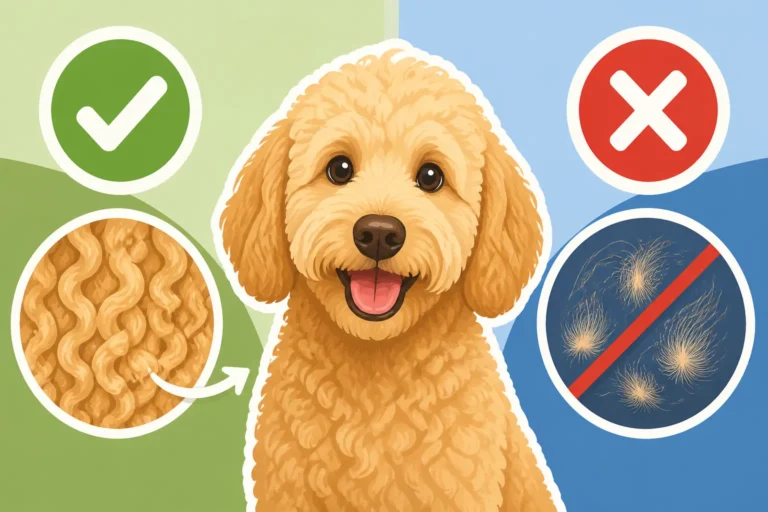
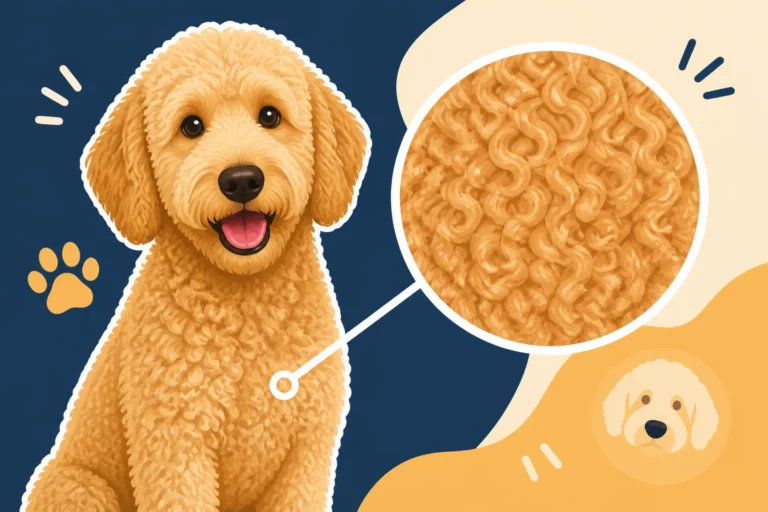
Goldendoodles are known for their magnificent coats, which range from sleek and wavy to dense and curly. While this is one of their most beloved traits, it's also a double-edged sword when it comes to health monitoring. That beautiful, fluffy exterior can effectively hide underlying changes in body shape, making it difficult for owners to realize their dog is gaining weight until it becomes a more significant issue. It’s like trying to judge the size of a sheep when it’s covered in a full winter fleece – you just can’t tell what’s going on underneath without a hands-on approach.
The Illusion of Fluff and Volume
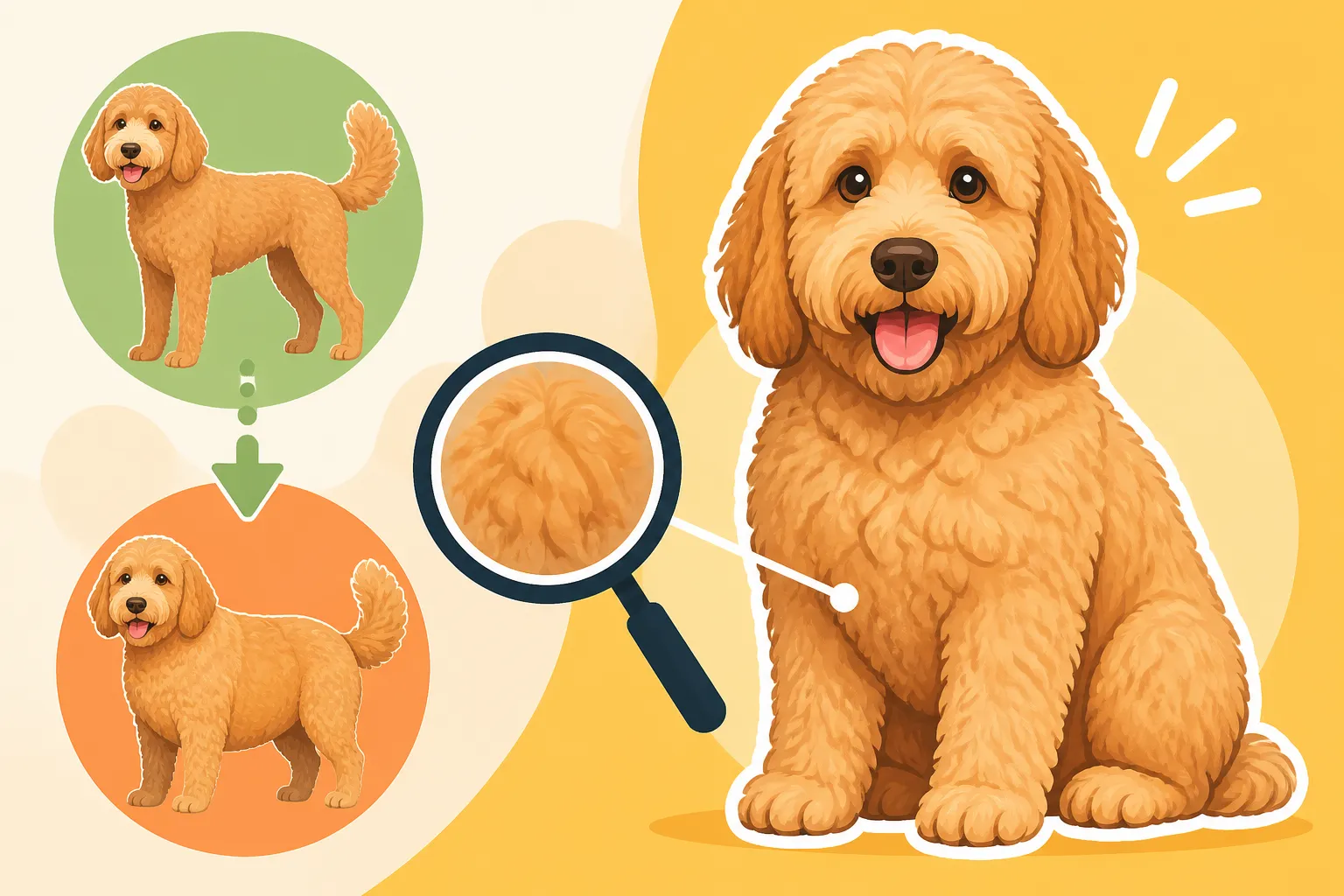
Imagine trying to tell if a cloud is getting bigger just by looking at its edges – it's tough, right? That's what many Goldendoodle owners face. Their coats, especially when long and untrimmed, create an illusion of consistent volume, regardless of whether there's muscle or fat filling that space beneath. You might be brushing your dog daily, admiring their soft, bouncy fur, completely unaware that their waistline has slowly expanded. This visual trickery means that by the time you see obvious signs of weight gain, like a saggy belly, they might already be well past their ideal weight.
Many owners have a moment of startling realization at the groomer. Your Goldendoodle goes in looking like a giant, fluffy marshmallow, and comes out two hours later looking significantly smaller, almost gaunt, with their true body shape revealed. It’s in these moments, after a good trim, that you might suddenly notice ribs that are harder to feel, a less defined waist, or a more rounded appearance. This isn't the groomer's magic; it's simply the removal of the insulating, disguising layer of fur that had been hiding the truth all along.
The Different Goldendoodle Coat Types and How They Conceal Weight
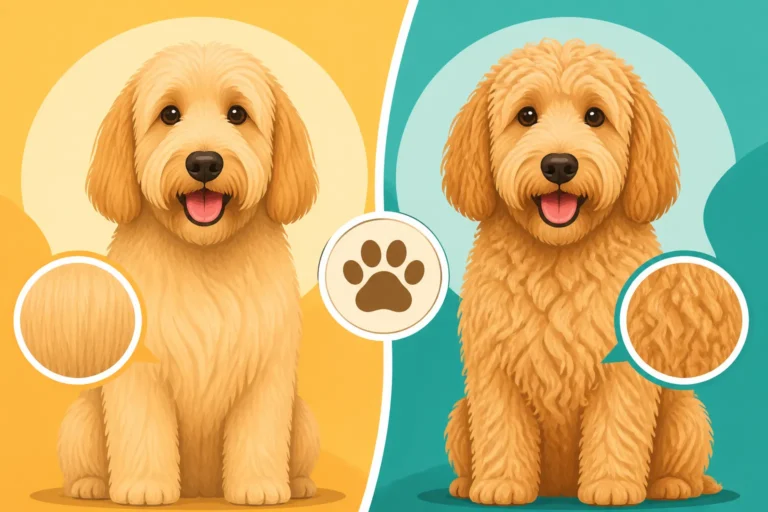
Not all Goldendoodle coats are created equal, and each type presents its own set of challenges for weight assessment. A dog with a straighter, "flat" coat, while still fluffy, might show changes in body shape a little sooner than their curlier counterparts. You might notice a slightly wider back or a fuller belly as the hair lays flatter against the body. However, these coats are less common in Goldendoodles bred for their low-shedding qualities.
The real challenge comes with the wavy and curly "fleece" and "wool" coats. These are the classic Goldendoodle looks, and they excel at masking weight fluctuations. A wavy coat has natural volume and bounce, making a few extra pounds disappear into the general floof. A curly coat, with its dense, springy texture, is perhaps the ultimate camouflage artist. Each curl acts like a tiny spring, holding the coat away from the body, making it nearly impossible to discern the actual body contour underneath. You could have a dog that’s genuinely chunky, but visually, they still look like a well-proportioned ball of curls. This is why you cannot rely solely on your eyes; you absolutely have to get your hands on them.
When the Coat Itself Changes, Adding to the Confusion
As if managing their existing coat wasn't enough, Goldendoodles also go through a significant "coat change" or "blowing their puppy coat" phase, typically between eight and twelve months of age. During this time, their soft, wispy puppy fur is replaced by a denser, coarser adult coat. This transition often leads to increased matting and an even fuller appearance. If your Goldendoodle is also undergoing growth spurts and has a hearty appetite during this period, it’s incredibly easy for weight gain to coincide with the coat change and go completely unnoticed.
The new adult coat can appear much thicker and more voluminous than their puppy fluff ever was, providing an even better hiding place for any extra fat deposits. Owners often attribute the dog's larger look solely to the new coat or their growth into adulthood, failing to differentiate between healthy muscle gain and unhealthy fat accumulation. This makes the period around one year of age a critical time for diligent body condition monitoring, as your Goldendoodle's appearance is already undergoing so many natural shifts. Consistency in checking your dog manually is key, especially during these periods of change.
Hands-On Methods for Checking Your Goldendoodle's Body Condition
Since visual cues are so unreliable with a Goldendoodle's coat, the most effective way to assess their weight is through touch. You need to get your hands on your dog regularly, not just during grooming sessions, to feel for key anatomical landmarks. This tactile assessment provides a far more accurate picture of their body condition than simply looking at them. It also helps you catch any creeping weight gain early, before it becomes a significant health concern.
The Rib Test: Feeling for Those Bony Landmarks
The rib test is perhaps the most crucial hands-on method. To perform it, gently run your open palms along your Goldendoodle's sides, starting from behind their shoulder blades and moving towards their tail. You should be able to easily feel their ribs, almost like feeling the knuckles on your hand, without having to press hard. You shouldn't be able to see the ribs, but you definitely should feel them with minimal pressure.
If you have to press firmly to feel the ribs, or if they feel like they’re covered by a thick layer of padding, your Goldendoodle is likely carrying too much weight. Conversely, if you can see their ribs clearly, or if they feel very sharp and prominent with no discernible padding, they might be too thin. It's a fine balance. This test works for all Goldendoodle sizes, from the smallest Toy Goldendoodle to a hefty Standard. Make this a regular part of your cuddle time – it’s a quick, non-invasive way to check in on their health. You can even do it while you’re brushing them, incorporating it into their routine grooming. For more detailed insights on joint health, you might want to read Goldendoodle Joint Health by Size Category.
The Spine and Hip Bone Check: More Than Just a Hunch
Beyond the ribs, checking the spine and hip bones offers additional clues. Run your fingers gently down the top of your Goldendoodle's back, along their spine. In a dog at an ideal weight, you should be able to feel the individual bumps of their vertebrae without them being sharply prominent, and certainly without having to dig your fingers in. If the spine feels completely smooth and flat, like a well-padded cushion, it indicates an excess layer of fat.
Next, feel around their hip bones, located on either side of the base of their tail. Just like the ribs, you should be able to feel these bones easily, but they shouldn't protrude sharply. If you have trouble locating them or if they feel buried under a significant amount of flesh, your Goldendoodle is probably overweight. Again, this is a hands-on assessment where the fluff of their tail base and hindquarters can easily hide visual changes, so touching is paramount. This consistent checking helps you monitor their Goldendoodle Weight and the Load on Its Joints.
The Tummy Tuck and Waistline Visuals
Even under a thick coat, there are still some visual clues you can try to look for, but they require a bit more effort. From above, when your Goldendoodle is standing, look for a discernible waistline. In an ideal weight dog, there should be a slight inward curve between their rib cage and their hips. With a Goldendoodle, you might need to part the fur or even gently compress the fur a bit to get a sense of this curve. If they look like a straight line or even bulge outwards, that’s a red flag.
From the side, an ideal weight Goldendoodle should have an abdominal tuck – meaning their belly should tuck up slightly from their chest to their hind legs, not hang straight down or sag. Again, their long belly fur can create the illusion of a full, low-hanging abdomen even on a lean dog. So, you might need to lift or part their coat to truly see the contour of their belly. This is particularly important for larger Goldendoodles who can easily pack on pounds around their midsection.
Here’s a simple table to help you compare what you should be feeling:
| Body Area | Underweight (Too Thin) | Ideal Weight (Just Right) | Overweight (Too Heavy) |
|---|---|---|---|
| Ribs | Easily visible, sharp to the touch | Easily felt without pressing hard | Difficult to feel, requires firm pressure |
| Spine | Visible, prominent bony protrusions | Easily felt individual bumps with light padding | Smooth, flat, difficult to feel bones |
| Hip Bones | Visible, sharp and prominent | Easily felt, but not protruding sharply | Difficult to locate, buried under flesh |
| Waistline | Extremely pronounced from above | Clearly discernible tuck behind ribs | Straight line or bulging out from ribs |
| Abdominal Tuck | Very pronounced, almost hollow | Slight tuck-up from chest to hind legs | Straight or sagging, no visible tuck |
Recognizing Subtle Signs of Weight Gain Beyond the Scale
While hands-on assessment is crucial, your Goldendoodle might also give you more subtle clues that they're gaining weight, long before the numbers on the scale get alarming. These signs often manifest in changes to their behavior, energy levels, and even their coat condition. Paying attention to these often-overlooked indicators can give you an early warning that it's time to adjust their diet or exercise routine.
Changes in Energy Levels and Playfulness
One of the first things you might notice is a slight dip in their usual Goldendoodle zest for life. A healthy Goldendoodle is typically an active, playful dog, eager for walks and games of fetch. If you start to see them lagging behind on walks, opting for a nap instead of playtime, or getting winded more easily, it could be a sign that they're carrying extra weight. They might be slower to get up from a lying position, or seem less enthusiastic about jumping onto the couch or into the car – especially if they are a Standard Goldendoodle at Fifty to Ninety Pounds.
This isn't always a dramatic shift; it might be as subtle as needing more encouragement to finish a walk they once loved, or choosing to chew a toy quietly instead of engaging in a vigorous romp. Don't dismiss these changes as simply "getting older" or "calming down," especially if your Goldendoodle is still in their prime. Extra weight puts a strain on their joints and cardiovascular system, making physical activity more tiring and less appealing. If they are showing discomfort during play, it could also be a sign of underlying issues, as discussed in Goldendoodle Arthritis After the Age of Eight.
Difficulty with Grooming and Matting
It might seem counterintuitive, but weight gain can actually make grooming more challenging and contribute to matting. When a Goldendoodle gains weight, their body shape changes, potentially creating new folds of skin around their neck, armpits, or groin area. These areas are already prone to matting because of friction, and extra skin folds can exacerbate the problem, making it harder for your brush to reach the skin and more likely for tangles to form.
Furthermore, an overweight Goldendoodle might become less flexible and less willing to tolerate being positioned for grooming. It might be harder for them to lie on their side for extended periods, or they might resist having their legs stretched out. This can lead to missed spots during brushing, which then turn into mats. If you suddenly find that grooming takes longer, your dog seems more uncomfortable during the process, or you're encountering more mats than usual despite your best efforts, it's worth considering if weight gain is playing a role. Remember, Brushing a Goldendoodle Often Enough to Stop Matting is critical, and weight gain just makes that job tougher. You can find quality grooming tools and even specialized scales on platforms like Chewy or Amazon to help with this.
Behavioral Shifts and Reluctance to Exercise
Beyond just reduced energy, weight gain can lead to more specific behavioral changes. An overweight Goldendoodle might start to avoid stairs, struggle to jump onto furniture they once easily scaled, or seem generally stiffer in their movements. They might also pant more heavily after minimal exertion, even in cool weather, indicating a reduced capacity for physical activity.
Sometimes, owners observe changes in their dog’s appetite or eating habits. While some overweight dogs might become more food-obsessed, others might actually seem less enthusiastic about food, or develop digestive issues, though these are less direct signs of weight gain itself and more symptoms of overall poor health from being overweight. What’s most important is to recognize that your Goldendoodle’s body is a finely tuned machine, and any consistent shift in its operation, especially towards sluggishness or discomfort, warrants investigation. If you notice your Goldendoodle is reluctant to do things they used to love, it’s a strong signal that something isn't quite right.
Practical Steps to Monitor and Manage Your Goldendoodle's Weight
Once you've identified that your Goldendoodle might be carrying extra pounds, the good news is that weight management is often a straightforward process, though it requires consistency and dedication. It's a proactive approach that blends regular monitoring with sensible adjustments to their daily routine. The key is to start small, be patient, and involve your veterinarian in the process.
Regular Weigh-Ins and Record Keeping
One of the simplest yet most effective tools for weight management is a consistent weigh-in schedule. While it can be tricky to get a large Goldendoodle on a home scale, many veterinary clinics have walk-on scales available for public use, or you can even weigh yourself, then weigh yourself holding your dog, and subtract the difference. Aim to weigh your Goldendoodle at least once a month, ideally more frequently if you’re actively trying to manage their weight.
Keep a written record of their weight, along with the date. This creates a clear trend line that helps you spot fluctuations that might be invisible to the eye due to their coat. A small, gradual increase over several months can easily be overlooked without records. If you notice a consistent upward trend, it's time to act. Some smart feeders and pet apps can help you track this, as can just a simple notebook. Brands like Ollie, known for their fresh dog food, often provide guidance on portion control which can be helpful once you know your dog’s ideal weight.
Adjusting Diet and Exercise Proactively
When it comes to diet, resist the urge to drastically cut their food overnight. Instead, make small, gradual reductions in their daily portion size. Start by reducing their regular meals by about 10-15%. Also, be mindful of treats! Those tasty little morsels, while seemingly insignificant, can add up to a substantial number of calories over a day or week. Consider switching to low-calorie training treats or using bits of their regular kibble as rewards. You can find a wide variety of portion-controlled foods and healthy treats on Chewy or Amazon.
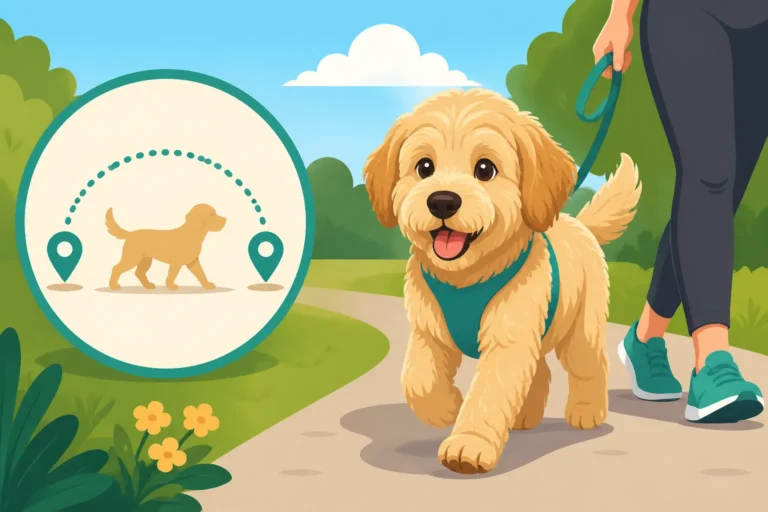
On the exercise front, aim for consistency rather than sudden, intense bursts of activity, especially if your dog is already overweight. Start with slightly longer walks, or add an extra short walk to their day. Incorporate more active play, like fetch or tug, if their joints allow. For standard Goldendoodles, a longer walk or even some swimming can be great ways to burn calories. For minis, more frequent, vigorous play sessions can be effective. Remember, it's not just about physical activity; mental stimulation like puzzle feeders and training sessions can also burn calories and keep them engaged. For more ideas, refer to Goldendoodle Exercise for Body and Mind.
Seeking Professional Guidance from Your Vet or a Canine Nutritionist
If you're unsure about how much to feed your Goldendoodle, or if their weight gain is significant, the best course of action is always to consult your veterinarian. They can accurately assess your dog’s body condition, rule out any underlying medical conditions that might contribute to weight gain (like a thyroid issue, discussed in Goldendoodle Hypothyroidism and Weight Gain), and provide a safe, tailored weight loss plan. Your vet can calculate your Goldendoodle's ideal weight and the precise caloric intake needed to achieve it.
Sometimes, a referral to a certified canine nutritionist might be beneficial, especially if your Goldendoodle has specific dietary needs or health concerns. They can help formulate a balanced diet that supports weight loss without compromising essential nutrients. Never put your dog on a crash diet or make extreme changes without professional guidance, as this can lead to nutritional deficiencies or other health problems. Your vet is your most valuable partner in ensuring your Goldendoodle lives a long, healthy, and lean life.
Disclaimer
This article is for general informational purposes only and does not constitute professional advice. Laws, prices and regulations vary by location and change over time. Consult a qualified professional for guidance on your specific situation.