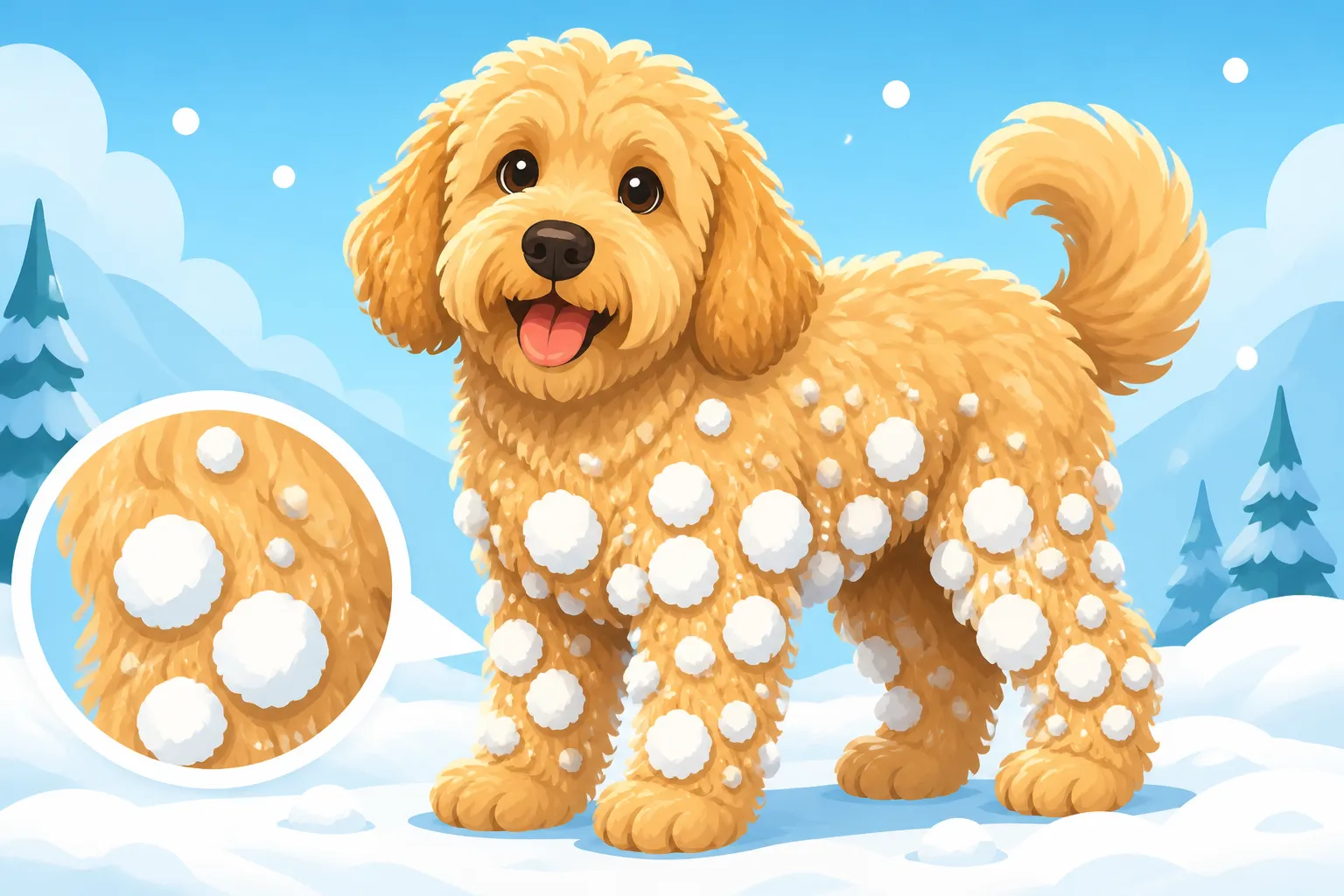
Snowballs Caught in a Goldendoodle Coat
Oh, the joys of winter with a Goldendoodle! Beautiful snow, fun romps, and then you look at your beloved furball and realize they've transformed into a giant, walking snow-monster, covered head to paw in icy snowballs. It's a real pain, isn't it? You wanted a picturesque snowy adventure, and instead, you're faced with a cold, matted, and often uncomfortable dog who needs a serious de-icing session. This guide is here to walk you through exactly why those pesky snowballs cling to your Goldendoodle's coat, how to prevent them in the first place, and the safest, most effective ways to get rid of them so you can both enjoy winter wonderland without the icy aftermath.
Why Your Goldendoodle Becomes a Winter Snow Magnet
It's not just bad luck that your Goldendoodle seems to attract every snowflake and turn it into a solid chunk of ice. Their unique coat, while beautiful and often touted as low-shedding, is actually perfectly designed to trap snow. Understanding why this happens is the first step to managing it.
The Goldendoodle Coat: A Perfect Snowball Trap
Goldendoodles typically inherit a coat that is a blend of the Golden Retriever's soft, often wavy double coat and the Poodle's dense, curly single coat. This combination, particularly in the wavy or curly varieties, creates a texture with countless tiny hooks and loops. When your dog romps through fresh snow, these flakes get caught in the individual hairs. As more snow accumulates and your dog moves, the friction, combined with their body heat, causes the snow to melt slightly, then refreeze into dense, hard ice balls. It’s a vicious cycle, and before you know it, your Goldendoodle looks like they’re wearing icy armor.
Think about the difference between a sleek, short-haired dog and your Goldendoodle. A Labrador retriever might shake off snow relatively easily, but your Goldendoodle’s longer, often softer strands grab onto it. It's especially true for those with the coveted "fleece" or "wool" coats – the very qualities many owners adore for their low-shedding nature are what make them a magnet for frozen precipitation. You might have heard about The Three Goldendoodle Coat Types and How to Tell Them, and knowing your dog's specific coat type can give you a leg up in understanding its winter challenges.
Common Areas Where Snowballs Form
While snowballs can form anywhere on a Goldendoodle, some areas are particularly prone due to movement, contact with the ground, or simply longer hair. The legs, especially the insides of the thighs and the hair around the paws, are prime targets. Imagine your Goldendoodle prancing through deep snow; their legs are constantly pushing through it, packing the flakes into those soft leg feathers. The belly and chest are another notorious spot, particularly for dogs with lower clearances or those who love to plop down and roll.
Even areas like the beard, ears, and tail can accumulate substantial ice clumps, especially if your dog is digging in the snow or burying their face. These aren't just uncomfortable; large ice balls can pull on the skin, cause painful matting underneath, and even lead to frostbite if left unattended for too long. It's a frustrating reality for many Goldendoodle parents who just want their dogs to enjoy the winter months without turning into a yeti.
Proactive Steps to Keep Snowballs from Forming
The best offense is a good defense, right? When it comes to Goldendoodle snowballs, prevention is far easier and more comfortable for your dog than removal. A little preparation before heading out can save you a lot of hassle and your dog a lot of discomfort.
Strategic Grooming Before Winter Walks
One of the most effective ways to combat snowballs is through smart grooming. Longer hair provides more surface area for snow to cling to and compact. Keeping your Goldendoodle's coat trimmed shorter, especially in those problem areas like the legs, belly, and paw pads, can dramatically reduce snowball formation. A good "winter trim" isn't necessarily a shave-down, but rather a practical cut that minimizes hair length where snow is most likely to gather. You might want to ask your groomer for a shorter length on the legs and belly while keeping a bit more fluff elsewhere for warmth.
Regular brushing is also paramount. A well-maintained, tangle-free coat repels snow better than a matted one. Even a tiny mat can act as a starting point for a huge ice clump. Make sure you're Brushing a Goldendoodle Often Enough to Stop Matting, ideally with a slicker brush and a metal comb to get deep into the coat. The Slicker Brush and Comb a Goldendoodle Needs are essential tools in your winter arsenal. Before a snowy outing, give your Goldendoodle a thorough brush-out to ensure their coat is as smooth and free-flowing as possible.
Protective Gear and Barrier Sprays
Beyond grooming, there are several products designed to create a barrier between your dog's coat and the snow. These can be lifesavers!
- Paw Protection: Dog booties are a fantastic solution for protecting paws, which are especially vulnerable to ice balls between the pads, chemical ice melt, and sharp ice shards. It might take some getting used to, but with positive reinforcement, most Goldendoodles can learn to tolerate them. Brands like Ruffwear or Muttluks offer durable options you can often find on Chewy or Amazon.
- Full-Body Suits or Vests: For Goldendoodles that accumulate snow everywhere, a waterproof dog suit or vest can cover the majority of their body, preventing snow from reaching the fur directly. Look for options that cover the belly and legs, as these are primary targets. Make sure it's not too tight or restrictive for their movement.
- Barrier Sprays and Balms: These products work by creating a slick surface on the fur, making it harder for snow and ice to stick. A popular choice is a thin layer of cooking spray (like Pam) or a specialized dog-safe barrier spray. Simply spray it on their legs, belly, and any other prone areas before you go out. For paw pads, a paw balm or wax (like Musher's Secret) can provide an excellent barrier, protecting against ice, salt, and snow. You can find many effective balms on Amazon or Chewy.
Here's a quick comparison of some common preventative measures:
| Prevention Method | Description | Pros | Cons |
|---|---|---|---|
| Short Winter Trim | Trimming hair shorter, especially on legs, belly, and paw pads. | Significantly reduces surface area for snow. | Requires regular grooming; less warmth for some. |
| Regular Brushing | Keeping the coat free of tangles and mats. | Improves natural snow repellency; good for coat health overall. | Requires consistent effort; doesn't stop all snow. |
| Dog Booties | Waterproof boots covering paws. | Excellent paw protection; prevents ice between pads. | Some dogs resist wearing them; can fall off. |
| Waterproof Dog Suits | Full-body suits or vests. | Covers large areas; highly effective for body snow. | Can be cumbersome; dog may overheat if too warm. |
| Barrier Sprays/Balms | Sprays or waxes applied to fur/paws. | Creates slick surface; easy to apply. | Needs reapplication; can be greasy; effectiveness varies. |
Remember, no single method is foolproof, but combining a few of these strategies will give you the best chance at a snowball-free Goldendoodle experience.
Gentle and Effective Methods for Snowball Removal
Despite your best preventative efforts, sometimes those snowballs still happen. When your Goldendoodle comes bounding in from the cold looking like a collection of icy ornaments, it’s crucial to remove them gently and effectively. Ripping them out can be painful and damage their coat.
Tools and Techniques for Ice Ball Removal
First, gather your supplies:
- Warm Water: A bowl or tub of lukewarm water is your best friend.
- Towels: Plenty of absorbent towels.
- Slicker Brush and Wide-Tooth Comb: For detangling after the ice has melted.
- Hair Dryer (optional, on cool/low heat): For faster drying.
Here’s a step-by-step approach:
- Warm Water Soak: This is by far the easiest and least painful method. If the snowballs are primarily on the legs and paws, simply place your Goldendoodle's paws into a shallow tub of lukewarm water. The ice will melt quickly and painlessly. For snowballs on the belly or chest, you can use a warm, damp towel pressed against the ice clumps, or even put them in a bathtub with shallow warm water. Avoid using hot water, as it can be uncomfortable or even harmful to their skin.
- Gentle Breaking: For very large, solid ice balls that are resisting the water, you can try to gently squeeze and break them apart with your hands before soaking. Do this carefully, ensuring you're only breaking the ice and not pulling on their fur. Never use anything sharp or hard.
- Brush and Comb Out: Once the ice has melted, your Goldendoodle's fur will be wet and likely matted where the snowballs were. Use your slicker brush and then your wide-tooth comb to gently work through any tangles. Start from the ends and work your way up to the skin, just as you would when Line Brushing a Goldendoodle Section by Section. This is essential to prevent painful mats from forming once the fur dries.
- Dry Thoroughly: Once brushed, use towels to absorb as much moisture as possible. If your Goldendoodle tolerates it, a pet-specific force dryer on a cool or low-heat setting can speed up the process and help ensure their coat is completely dry. Leaving a Goldendoodle's coat damp can lead to skin issues and new mats, as discussed in Why a Damp Goldendoodle Coat Mats Faster.
What NOT to Do When Removing Snowballs
In the panic of seeing your Goldendoodle covered in ice, it's tempting to rush, but some methods can cause more harm than good.
- Never Pull or Rip: This is the golden rule. Pulling at frozen clumps is incredibly painful for your dog and can cause significant damage to their skin and coat, including hair breakage, skin irritation, and even pulling out chunks of fur.
- Avoid Using Sharp Objects: Scissors, knives, or other sharp tools are a huge no-no. It's incredibly easy to accidentally cut your dog's skin, especially when it's obscured by ice and fur. Even dull tools can snag and pull.
- Don't Use Hot Water: While warm water is great, very hot water can burn your dog's sensitive skin, especially if they've been out in the cold for a while and their circulation might be affected. Stick to lukewarm.
- Resist the Urge to Force It: If an ice ball isn't melting easily, don't try to force it. Reapply warm water, be patient, and let the warmth do its work. Your dog will thank you for your gentleness.
Remember, a little patience goes a long way. Your Goldendoodle relies on you to make these experiences as comfortable as possible.
Post-Adventure Care and Protecting Their Winter Coat
Once the snowballs are gone and your Goldendoodle is dry, your job isn't quite finished. Proper aftercare ensures their skin and coat remain healthy through the colder months and prepares them for future snowy excursions.
Ensuring a Completely Dry and Detangled Coat
After a snowy adventure, even if you managed to prevent major snowball formation, your Goldendoodle's coat will likely be damp, especially around the legs and belly. It's vital to ensure they are completely dry to prevent skin issues like hot spots, yeast infections, and matting. Use several absorbent towels to blot and rub away as much moisture as you can. For Goldendoodles with very dense or curly coats, a high-velocity pet dryer can be invaluable for getting right down to the skin. Remember to always use a cool or low-heat setting.
Once dry, give them a final brush-out with their slicker brush and metal comb to ensure no lingering tangles. Pay special attention to areas prone to matting, like behind the ears, armpits, and under the collar. This meticulous Grooming a Goldendoodle at Home Between Appointments will keep their coat in top condition and prevent small tangles from escalating into major mats that are painful to remove.
Skin Hydration and Winter Comfort
The cold, dry winter air, combined with repeated wetting and drying of their coat, can take a toll on your Goldendoodle's skin and paw pads. Just like human skin, their skin can become dry, flaky, or itchy.
- Paw Pad Care: After coming in from the snow, check their paw pads. If they're dry or cracked, apply a moisturizing paw balm. Regular application of a paw wax or balm throughout winter can keep them supple and protected.
- Moisturizing Shampoos and Conditioners: If you're bathing your Goldendoodle during winter (perhaps after a particularly muddy or dirty snow day), choose a moisturizing dog shampoo and follow up with a good conditioner. This helps replenish natural oils and protect their skin and coat barrier. Many excellent options are available from brands on Chewy that cater to sensitive skin.
- Warmth and Comfort: Ensure your Goldendoodle has a warm, dry place to rest after a snowy outing. A cozy bed or blanket can help them warm up and feel secure. This is especially important for Senior Goldendoodle Care After the Age of Nine, who might feel the cold more acutely.
By taking these extra steps, you're not just dealing with the immediate problem of snowballs; you're actively supporting your Goldendoodle's overall health and comfort during the winter months. They'll be much happier, and you'll have a much cleaner, healthier companion ready for the next winter adventure.
Disclaimer
This article is for general informational purposes only and does not constitute professional advice. Laws, prices and regulations vary by location and change over time. Consult a qualified professional for guidance on your specific situation.