Why a Goldendoodle Is a Cross and Not a Breed
It can be incredibly confusing when you bring home your beloved Goldendoodle puppy, only to hear people debate whether your furry friend is a "real" dog breed or not. This isn't just semantics; understanding why a Goldendoodle is considered a crossbreed and not a recognized breed sheds light on everything from their health and temperament to finding a responsible breeder. This guide will unravel the distinctions and clarify what it truly means to be a Goldendoodle parent.
Understanding the "Breed" Definition: More Than Just Good Looks
When we talk about dog "breeds," we're often thinking about familiar names like Golden Retrievers or Poodles. But there's a strict, scientific, and historical definition behind that label that Goldendoodles, for all their charm and popularity, simply don't meet—yet.
The Strict Criteria for Breed Recognition
For a group of dogs to be recognized as a distinct breed by major kennel clubs like the American Kennel Club (AKC) or the Kennel Club in the UK, they need to consistently produce offspring that share predictable characteristics across generations. This means that if you breed two Golden Retrievers, you expect the puppies to look, behave, and even generally be predisposed to the same health conditions as other Golden Retrievers. This consistency is established over many, many generations of careful, selective breeding with specific goals in mind. Think of it as a blueprint that reliably duplicates itself.
This blueprint includes physical traits such as size, coat type, color, and even the way their ears are set. More importantly, it also encompasses temperament—a breed should have a predictable disposition, drive, and working aptitude. This uniformity is what allows for breed standards to be written, judging at dog shows, and for people to select a breed based on its expected traits. Without this consistency, it's impossible to define what a "typical" member of that breed should be. You can explore this further by reading Why a Goldendoodle Cannot Be Called a Breed.
The Role of Genetics and Predictable Traits
The predictability in recognized breeds comes from a closed gene pool. Breeders only breed dogs of the same recognized breed, adhering to specific lines and working to eliminate undesirable traits while solidifying desired ones. This rigorous process, sometimes spanning centuries, means that the genetic makeup becomes relatively homogenous, leading to fewer surprises in offspring. When you pick a Golden Retriever, you pretty much know what you're getting, genetically speaking, in terms of common traits and potential inherited health issues.
With crossbreeds like the Goldendoodle, the genetic pool is, by definition, much wider. You're combining two distinct purebred lines, each with its own set of genetic predispositions, traits, and potential health concerns. While breeders can aim for certain characteristics by selecting specific Poodles and Golden Retrievers, the outcome is inherently less predictable than breeding two dogs from a closed, established gene pool. This genetic variety is often highlighted when discussing "hybrid vigor," though that concept itself has nuances that are worth understanding.
The Goldendoodle's Origin Story: A Planned Cross
The Goldendoodle didn't emerge from centuries of natural selection or a slow, deliberate process of refining a single genetic line. Instead, it was a relatively recent, intentional cross, born from a specific desire.
A History of Intent, Not Evolution
The Goldendoodle really began to gain traction in the 1990s, following the success of the Labradoodle, which was originally bred in Australia in the late 1980s as a guide dog for a woman with allergies. The idea was simple: combine the intelligent, low-shedding Poodle with the biddable, friendly Golden Retriever, hoping to get the best of both worlds. This was a direct, purposeful cross, not the gradual evolution of a new, distinct canine lineage. There wasn't a group of founding breeders setting out to establish a new breed with a definitive standard, but rather individuals and kennels creating a specific "type" of dog for particular qualities.
Because this was a deliberate cross, there's no single "Goldendoodle" standard to which all breeders adhere. Each breeder may have slightly different goals, whether it's focusing on coat type, size, or temperament, which can lead to significant variation even within the same generation of Goldendoodles. This contrasts sharply with purebred dogs, where every breeder works towards the same, well-defined breed standard. To learn more about this historical context, check out The Novelist Who Crossed a Golden With a Poodle.
The Parent Breeds and Their Contributions
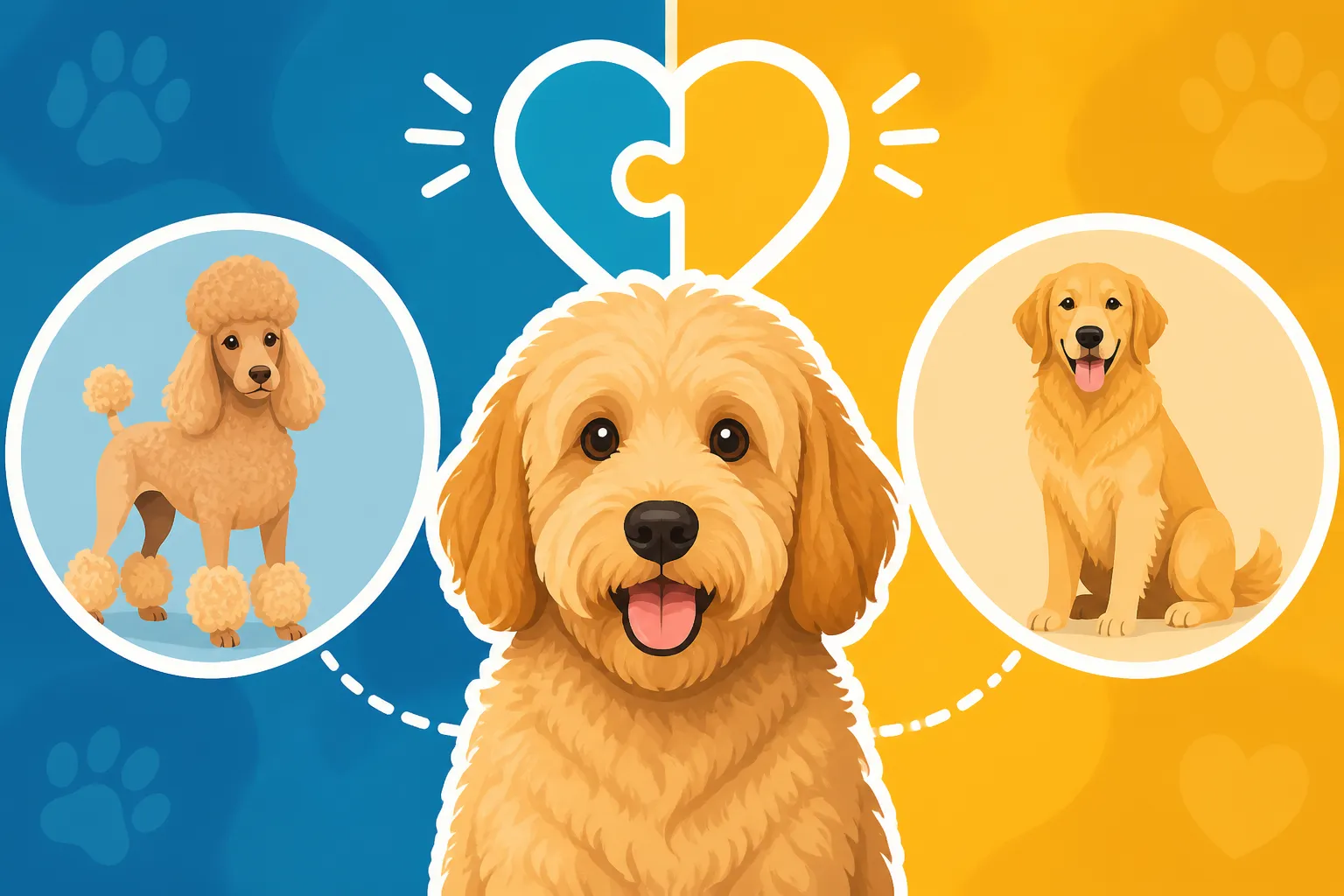
The Goldendoodle is a cross between a Golden Retriever and a Poodle. Both are incredible breeds in their own right, bringing fantastic qualities to the mix.
- Golden Retrievers are renowned for their friendly, tolerant disposition, intelligence, and eagerness to please. They are excellent family dogs, known for their patience and gentle nature, making them wonderful companions for children. However, they are also known for shedding quite a bit and are prone to certain health issues common in larger breeds.
- Poodles (Standard, Miniature, and Toy) are highly intelligent, active, and possess a non-shedding, hypoallergenic coat. They are incredibly versatile, excelling in obedience, agility, and various dog sports. Poodles are known for their lively personalities and keen minds, but their grooming needs are substantial.
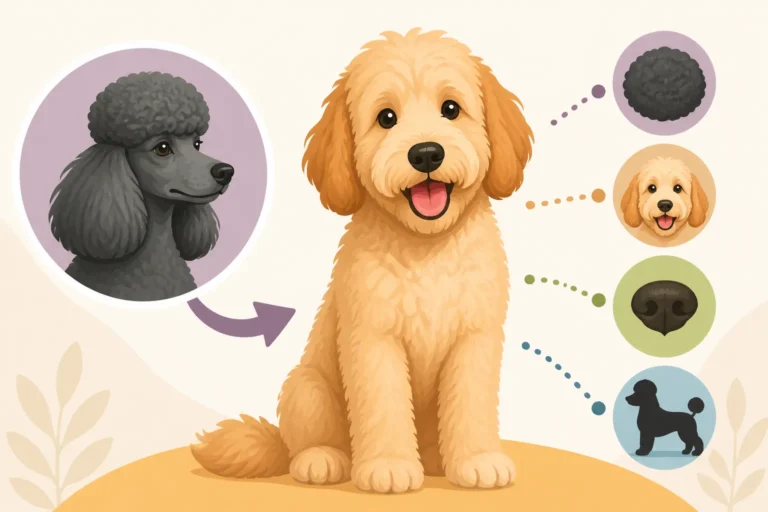
The hope with the Goldendoodle was to combine the Golden Retriever's wonderful temperament with the Poodle's low-shedding coat and intelligence. This often works out beautifully, but it's important to remember that puppies inherit a mix of traits, and it's not always a 50/50 split or a guarantee of the "best" traits from each. Sometimes, you might get more Poodle, sometimes more Golden Retriever, and sometimes a truly unpredictable combination. This is part of the charm, but also part of the challenge, of owning a crossbreed. You can read more about what a Goldendoodle inherits from its parents in What a Goldendoodle Inherits From Each Parent Breed.
Goldendoodle Generations: A Different Kind of Lineage
Unlike purebred dogs, which have a straightforward lineage (e.g., Golden Retriever + Golden Retriever = Golden Retriever), Goldendoodles are often described by "generations." These terms—F1, F1b, F2, Multigen—are specific to crossbreeds and describe the breeding combinations, not the establishment of a new, consistent breed.
What F1, F1b, and Multigen Truly Signify
Understanding these generational labels is crucial for grasping why Goldendoodles aren't a breed and for predicting some of their traits.
- F1 Goldendoodle: This is a first-generation cross, meaning it's a direct offspring of a purebred Golden Retriever and a purebred Poodle. These puppies are 50% Golden Retriever and 50% Poodle. While they often exhibit hybrid vigor, their coat types can be highly variable, ranging from wavy to curly, and their shedding can also vary. This unpredictability is a hallmark of the first cross.
- F1b Goldendoodle: This means a first-generation backcross. An F1 Goldendoodle is bred back to a purebred Poodle (or, less commonly, a Golden Retriever). This results in a dog that is typically 75% Poodle and 25% Golden Retriever. The goal here is usually to increase the Poodle's low-shedding, curly coat traits, making them more suitable for allergy sufferers.
- F2 Goldendoodle: This is a second-generation cross, meaning two F1 Goldendoodles are bred together. Genetically, this can be the most unpredictable generation for traits like coat and shedding, as the genetic lottery can lead to a wide spectrum of outcomes, even within the same litter. Some F2s might shed heavily, while others might be non-shedding.
- Multigen Goldendoodle: This term refers to Goldendoodles that are F3 or later generations, meaning at least two Goldendoodle parents (e.g., F2 x F2, or F1b x F1b, or F3 x F2). The idea behind multigen breeding is to stabilize desired traits over multiple generations, working towards more predictability in coat, size, and temperament. However, without a formal breed standard and registry overseeing this process, "multigen" still doesn't equate to "breed."
These generations are simply markers of parentage, not steps toward a recognized breed status. Each cross is an attempt to select for certain characteristics, but without the stringent controls of a kennel club breed program, consistency remains elusive. For a deeper dive into these specifics, read What the Letter F Means in a Goldendoodle Pedigree.
Why Generations Don't Equal Breed Consistency
The problem with equating "generation" to "breed" is that even within multigen Goldendoodles, there's still a wide range of genetic possibilities. In a true breed, the genetic blueprint is largely fixed, producing consistent results. With Goldendoodles, even after several generations of crossing Goldendoodle to Goldendoodle, there's no official standard or DNA markers that define a "Goldendoodle breed." This means that what one breeder considers a "multigen Goldendoodle" with ideal traits, another might approach differently, resulting in continuous variation.
Consider coat types, for example. You might have an F1b Goldendoodle, ostensibly bred to be low-shedding, but still, due to genetic recombination, it might shed more than anticipated. Similarly, temperament can vary. While both parent breeds are friendly, the degree of retrieve drive, energy level, or Poodle sensitivity can be quite different from one Goldendoodle to the next, even within the same generation. This inherent variability, while charming to many owners who love the uniqueness of their dog, is precisely what prevents the Goldendoodle from fitting the mold of a "breed."
Why Kennel Clubs Don't Recognize the Goldendoodle
This is often the sticking point for many Goldendoodle enthusiasts. If they're so popular and wonderful, why aren't they recognized by organizations like the American Kennel Club?
The AKC's Stance on Crossbreeds
The American Kennel Club (AKC) defines a breed as dogs that "reliably produce offspring with the same characteristics, generation after generation." They require a distinct, consistent breed standard that outlines physical appearance, temperament, and movement. For a breed to be recognized, it typically needs a significant population, a national parent club dedicated to the breed's improvement, and many generations of documented, consistent breeding. These requirements ensure genetic stability and predictability.
The Goldendoodle simply doesn't meet these criteria. There is no single, agreed-upon standard for a Goldendoodle. Their appearance, coat type, and even size can vary dramatically. While groups like the Goldendoodle Association of North America (GANA) exist and aim to promote responsible breeding, they are not a governing body like the AKC. They create their own standards, but these are not universally adopted or enforced across all Goldendoodle breeders. The AKC also generally does not recognize first-generation crosses or "designer dogs" as breeds because they lack the genetic consistency and multi-generational history required. To understand more about this, you can look into Why the AKC Will Not Register a Goldendoodle.
The Lack of a Consistent Breed Standard
Let's illustrate the difference with a table:
| Characteristic | Recognized Purebred (e.g., Golden Retriever) | Crossbreed (Goldendoodle) |
|---|---|---|
| Parentage | Two registered dogs of the same breed | Two different purebreds (or their crossbred offspring) |
| Breed Standard | Strict, detailed guidelines for appearance, temperament, movement | No universally recognized standard; varies by breeder/association |
| Genetic Consistency | High; predictable traits across generations | Variable; wide range of traits, even within same litter/generation |
| Registry | Official kennel club (e.g., AKC, KC) | Not recognized by major kennel clubs; some private associations exist |
| Show Eligibility | Yes, in breed-specific and all-breed shows | No, not in official breed shows (may compete in mixed-breed events) |
| Breeding Goals | Preserve and improve specific breed traits | Combine desirable traits from two breeds; reduce shedding |
As you can see, the lack of a consistent breed standard is the biggest hurdle. A Goldendoodle can be wavy-coated, curly-coated, or even flat-coated (unfurnished). They can range from 15 pounds to 90 pounds. Their facial features can lean heavily Poodle or heavily Golden. While Goldendoodle breeders often have certain "types" they aim for, this isn't the same as an official breed standard, which dictates minute details down to ear set, tail carriage, and bone structure. Without that fixed standard, the Goldendoodle will remain a cross, admired for its unique blend of qualities rather than its uniformity.
The Practical Implications for Goldendoodle Owners
So, what does it truly mean for you as a Goldendoodle owner that your dog is a crossbreed and not a recognized breed? It influences several key aspects of ownership, from predicting their characteristics to finding a responsible breeder.
Navigating Health and Temperament Predictions
One of the biggest implications is the variability in health and temperament. While many Goldendoodles are incredibly healthy and have wonderful dispositions, the lack of a consistent breed standard means you can't rely on the same kind of predictability you'd find in a purebred. Each Goldendoodle is a unique genetic blend. This isn't necessarily a bad thing, but it means you need to be more diligent in your research.
For example, a Goldendoodle might inherit the Poodle's tendency for Addison's Disease or the Golden Retriever's predisposition to certain cancers. The hybrid vigor often discussed is not a shield against all inherited conditions, especially if both parent breeds carry a gene for the same disease. This is why thorough health testing of both parent dogs is absolutely paramount when choosing a Goldendoodle puppy. You can learn more about this in Health Testing Both Goldendoodle Parents Should Have. You can't just assume a Goldendoodle will be "healthier" by default; it depends entirely on the genetics of the specific parents and the care taken by the breeder. Similarly, while generally friendly, a Goldendoodle's exact energy level, trainability, and social tendencies will be a roll of the genetic dice, leaning more one way or the other based on the individual parents and their lines.
Finding Reputable Breeders in an Unregulated Landscape
Because Goldendoodles aren't a recognized breed, there are no official kennel club registries or strict rules governing their breeding. This creates a bit of a "Wild West" scenario in the breeding world. It means that anyone can decide to breed two dogs and call them Goldendoodles, regardless of their health, temperament, or genetic background. This is where the term "designer dog" sometimes gets a negative connotation, as it can be exploited by unethical breeders or puppy mills.
For prospective owners, this means that the responsibility to research and vet breeders falls even more heavily on your shoulders. You can't rely on a simple AKC registration to guarantee quality. Instead, you'll need to look for breeders who:
- Perform extensive genetic health testing on both parent Poodles and Golden Retrievers, often above and beyond what purebred clubs might require, because they are combining two different genetic lines.
- Are transparent about their breeding practices and the health history of their lines.
- Can provide references and allow you to meet the puppy's parents.
- Prioritize temperament and socialization in their puppies.
- Offer support and advice long after you take your puppy home.
Brands like Chewy can be a great resource for educational content on mixed-breed care, but when it comes to finding a responsible breeder, you'll need to do your due diligence, asking probing questions and looking for detailed answers. This is a topic so important, we've dedicated a whole article to The DNA Panel a Goldendoodle Breeder Should Run.
Embracing the Goldendoodle for What It Is
Ultimately, whether your dog is a recognized breed or a crossbreed doesn't change the love and companionship they bring into your life. The Goldendoodle's status simply informs how we approach their care, health, and expectations.
The Joys of a Unique Companion
Many Goldendoodle owners cherish the very uniqueness that makes their dogs crossbreeds. No two Goldendoodles are exactly alike, and that individuality is a huge part of their appeal. They often combine the best traits of both parent breeds: the Golden Retriever's devoted, friendly nature with the Poodle's sharp intelligence and sometimes lower-shedding coat. This combination creates a highly adaptable, often very affectionate, and intelligent family dog that thrives on human interaction.
These dogs are known for their happy-go-lucky attitudes, making them excellent companions for active families, individuals, and even as therapy dogs. The diversity in size and coat type also means there's a Goldendoodle "type" for nearly every household preference. Whether you prefer a small, curly companion or a large, wavy-coated adventurer, the Goldendoodle world likely has a match. You can find all sorts of supplies for any size or coat type of Goldendoodle, from specialized grooming tools to the right kibble for their unique needs, often found at retailers like Chewy.
Advocating for Responsible Breeding Practices
The informal nature of Goldendoodle breeding also presents an opportunity for owners to advocate for responsible practices. Because there's no overarching kennel club dictating standards, it's up to individual breeders and educated buyers to push for ethical breeding. This means supporting breeders who:
- Prioritize the health and well-being of their breeding dogs and puppies.
- Conduct all recommended health screenings for both Golden Retrievers and Poodles, looking at hips, elbows, eyes, heart, and genetic diseases.
- Focus on producing well-tempered, well-socialized puppies.
- Are committed to transparency and educating prospective owners about the realities of owning a crossbreed.
- Do not breed for "rare" colors or questionable traits that may compromise health.
By choosing a responsible breeder, you're not just getting a healthier puppy; you're also making a statement about the kind of Goldendoodle breeding you support. Even though your Goldendoodle won't have "papers" from a major kennel club, the records from a reputable breeder—detailing parent health tests, lineage, and early puppy care—are far more valuable than any official-looking certificate that doesn't represent true breed recognition. You can find specific recommendations on this in What Health Papers a Goldendoodle Breeder Should Show.
Ultimately, the Goldendoodle is a wonderful, complex, and evolving type of dog. Understanding its status as a crossbreed rather than a breed helps set realistic expectations, encourages responsible ownership, and allows us to appreciate these unique dogs for all their endearing, individual qualities. When you shop for your Goldendoodle, whether it's for food or toys or a cozy bed, think of Chewy for a wide selection catering to all dog types, crossbreed or otherwise.
Disclaimer
This article is for general informational purposes only and does not constitute professional advice. Laws, prices and regulations vary by location and change over time. Consult a qualified professional for guidance on your specific situation.