How Long a Goldendoodle Would Take to Become a Breed
Bringing a Goldendoodle into your home is an incredibly exciting experience, filled with fluffy cuddles and playful antics. But if you've ever wondered about their status as a "breed" or heard chatter about them eventually being recognized by major kennel clubs, you've probably encountered a lot of confusing information. It’s natural to feel a bit frustrated by the mixed messages, especially when you see how popular and beloved these dogs are. This guide is here to shed light on what it actually takes for a crossbreed like the Goldendoodle to achieve breed recognition and why it's such an incredibly long and arduous journey.
Understanding What Makes a "Breed" in the Dog World
Before we can even talk about how long it would take for a Goldendoodle to become a recognized breed, it’s absolutely essential to understand what "breed" actually means in the context of major kennel clubs like the American Kennel Club (AKC) or the Kennel Club in the UK. Many people assume it's just about popularity or consistent looks, but it’s so much more intricate than that. A recognized breed isn't just a type of dog; it's a carefully cultivated lineage with specific, predictable traits that have been established over many, many generations.
The Foundation of a Breed Standard
At the heart of any recognized breed is something called a "breed standard." Think of this as the blueprint for the ideal dog of that breed. It's a comprehensive document that meticulously describes every single aspect: physical appearance, including height, weight, coat type, color, eye shape, ear set, and even tail carriage. But it doesn't stop there. The breed standard also outlines the desired temperament, energy levels, and even specific gait or movement. This isn't just for show; it's a functional description. For instance, a Golden Retriever's standard details their friendly, outgoing nature and their powerful, smooth gait, which is essential for a retrieving dog.
For a Goldendoodle to ever become a recognized breed, a unified breed standard would need to be created and then consistently achieved across countless litters. Right now, Goldendoodles come in such a wide array of sizes, coat types (from flat to curly), and even temperaments, that there isn't one singular "Goldendoodle standard." One Goldendoodle might be an F1 with a wavy coat and a strong retriever drive, while another might be an F1b with a very curly coat and more Poodle-like sensitivities. This wide variation is exactly what defines a crossbreed, and it's a huge hurdle for breed recognition.
The Role of a Dedicated Breed Club
Another critical component of breed recognition is the existence of a dedicated, stable, and widely recognized parent breed club. This isn't just a casual online forum or a group of enthusiasts; it’s a formal organization with a robust infrastructure. This club is responsible for maintaining the breed standard, advocating for the breed, organizing events, and, crucially, establishing and enforcing health testing protocols. They act as the guardians of the breed, ensuring that breeding practices uphold the standard and prioritize health.
Currently, while there are several Goldendoodle associations and registries, such as GANA (Goldendoodle Association of North America), these operate differently than a kennel club parent breed club. They do fantastic work in promoting the Goldendoodle, offering registration, and encouraging health testing, but they don't hold the same kind of authority or structured approach that a kennel club requires for a new breed submission. They are focused on the Goldendoodle as it exists now, not necessarily on a multi-generational project to "stabilize" it into a new, consistent breed. This is a subtle but significant distinction, and it speaks to the challenges outlined in Why No Kennel Club Recognizes the Goldendoodle.
The Long Road from Crossbreed to Recognized Breed
It’s a common misconception that if a crossbreed becomes popular enough, it will eventually become a recognized breed. While popularity certainly helps raise awareness, it doesn't automatically confer breed status. The journey from a crossbreed, no matter how beloved, to a recognized breed is a multi-generational commitment that often spans many decades, if not a century or more.
Establishing Genetic Consistency and Predictability
The absolute cornerstone of breed recognition is genetic consistency. When you breed two recognized Golden Retrievers, you know, within a very narrow margin, what you're going to get: a dog that looks, acts, and has a health profile consistent with the Golden Retriever breed standard. The same goes for Poodles. This predictability is the result of hundreds, even thousands, of years of selective breeding.
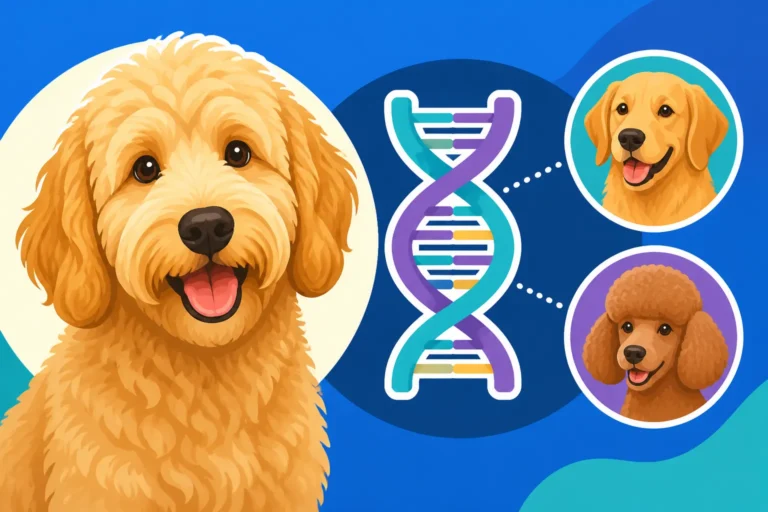
With Goldendoodles, you're dealing with a cross of two distinct breeds, each with its own complex genetic makeup. Even an F1 Goldendoodle, the first generation cross, can exhibit a wide range of traits because of the sheer genetic lottery involved in combining two different purebred parents. Why an F1 Goldendoodle Is the Least Predictable Healthwise explains some of these variations. As you move into later generations like F1b or Multigen, breeders are trying to achieve more consistency, particularly in coat type, but true genetic predictability across all traits is still a monumental undertaking. To achieve breed status, you'd need to breed Goldendoodle to Goldendoodle, generation after generation, and consistently produce offspring that all meet a very narrow, defined standard for appearance, temperament, and health. This alone could take dozens of generations.
The Rigor of Health Schemes and Data Collection
A responsible breed club doesn't just care about looks; it places immense importance on health. Kennel clubs often require extensive health testing data spanning many generations to track and reduce the prevalence of hereditary diseases within a developing breed. This means not just testing the parents, but collecting data on their offspring, their siblings, and so on, building a vast database of health information.
For Goldendoodles, while many responsible breeders perform health tests on their parent dogs (and you should always ask for those results!), there isn't a centralized, breed-specific health scheme that systematically tracks health outcomes across the entire Goldendoodle population for the purpose of breed development. Individual breeders might use services like Chewy for sourcing specialized veterinary diets for dogs with specific health needs, showing an awareness of health, but this doesn't equate to a unified, long-term health registry. Without this comprehensive data collection, demonstrating genetic health consistency and proving that the Goldendoodle is a distinct, healthy lineage becomes incredibly difficult.
The Sheer Time Commitment: Decades, Not Years
So, how long would this process realistically take? Based on historical examples of other breeds that started as crosses or landraces and eventually achieved recognition, we're talking about a minimum of several decades, and more likely 75 to 100 years, or even longer. Consider breeds like the Doberman Pinscher or the Australian Shepherd, which were deliberately developed from crosses. Even with dedicated breeders working towards a clear goal, it took a very long time to stabilize their characteristics and gain official recognition.
The Goldendoodle started gaining significant popularity in the late 1990s and early 2000s, as highlighted in How the Goldendoodle Created a Designer Dog Market. That's still a relatively short time in the grand scheme of breed development. For a Goldendoodle to be recognized, you would need:
- A Unified Vision: A core group of dedicated breeders would need to agree on one specific "type" of Goldendoodle to focus on, creating a very detailed breed standard. This means deciding on a size range, a specific coat type, a set temperament, and eliminating other variations.
- Selective Breeding: These breeders would then need to exclusively breed Goldendoodle to Goldendoodle, rigorously selecting only those dogs that most perfectly fit the new standard for the next 20-30 generations. This would involve potentially culling dogs that don't meet the standard, a practice many Goldendoodle owners might find unappealing given their current status as beloved family pets.
- Extensive Documentation: Every single breeding, every puppy, every health test, and every outcome would need to be meticulously documented and shared within the developing breed club. This would create a verifiable pedigree trail that goes back many generations, proving the consistency of the lines.
- Application and Review: After decades of this rigorous work, the parent club would submit a comprehensive application to major kennel clubs. This application would include the breed standard, extensive pedigree data, health clearances, and proof of consistent breeding outcomes. The kennel club would then undertake its own multi-year review process, often requiring the breed to be shown in various "miscellaneous" or "foundation stock" categories for a significant period to further evaluate consistency and sustainability.
Here’s a simplified breakdown of the requirements and the Goldendoodle's current status:
| Requirement for Breed Recognition | Goldendoodle's Current Status |
|---|---|
| Unified Breed Standard | Highly variable in size, coat type (flat, wavy, curly), and appearance. No single agreed-upon standard. |
| Genetic Consistency | Significant genetic diversity due to being a first-generation or early-generation cross. Offspring still show wide variation. |
| Dedicated Parent Breed Club | Several associations exist (e.g., GANA) promoting the cross, but not functioning as a traditional "parent breed club" for new breed development and recognition. |
| Multi-Generational Data | Pedigree tracking often limited to 2-3 generations; no centralized, long-term health or trait database across the entire population. |
| Predictable Temperament | Generally friendly and intelligent, but specific traits can lean heavily Poodle or Golden Retriever, leading to variation. |
| Established Health Schemes | Individual breeders conduct health tests, but no unified, kennel-club-recognized scheme for the Goldendoodle 'breed'. |
What a Goldendoodle Actually Is and Is Not helps clarify why this pathway is so different from a purebred dog.
Why Goldendoodles Don't Currently Meet Recognition Criteria
The primary reason Goldendoodles aren't recognized breeds is fundamentally tied to the lack of genetic consistency and a unified breed standard, which is inherent in being a crossbreed. It's not a judgment on their wonderful qualities as companions; it's simply a reflection of how kennel clubs define "breed."
The "F" Generations and Genetic Variability
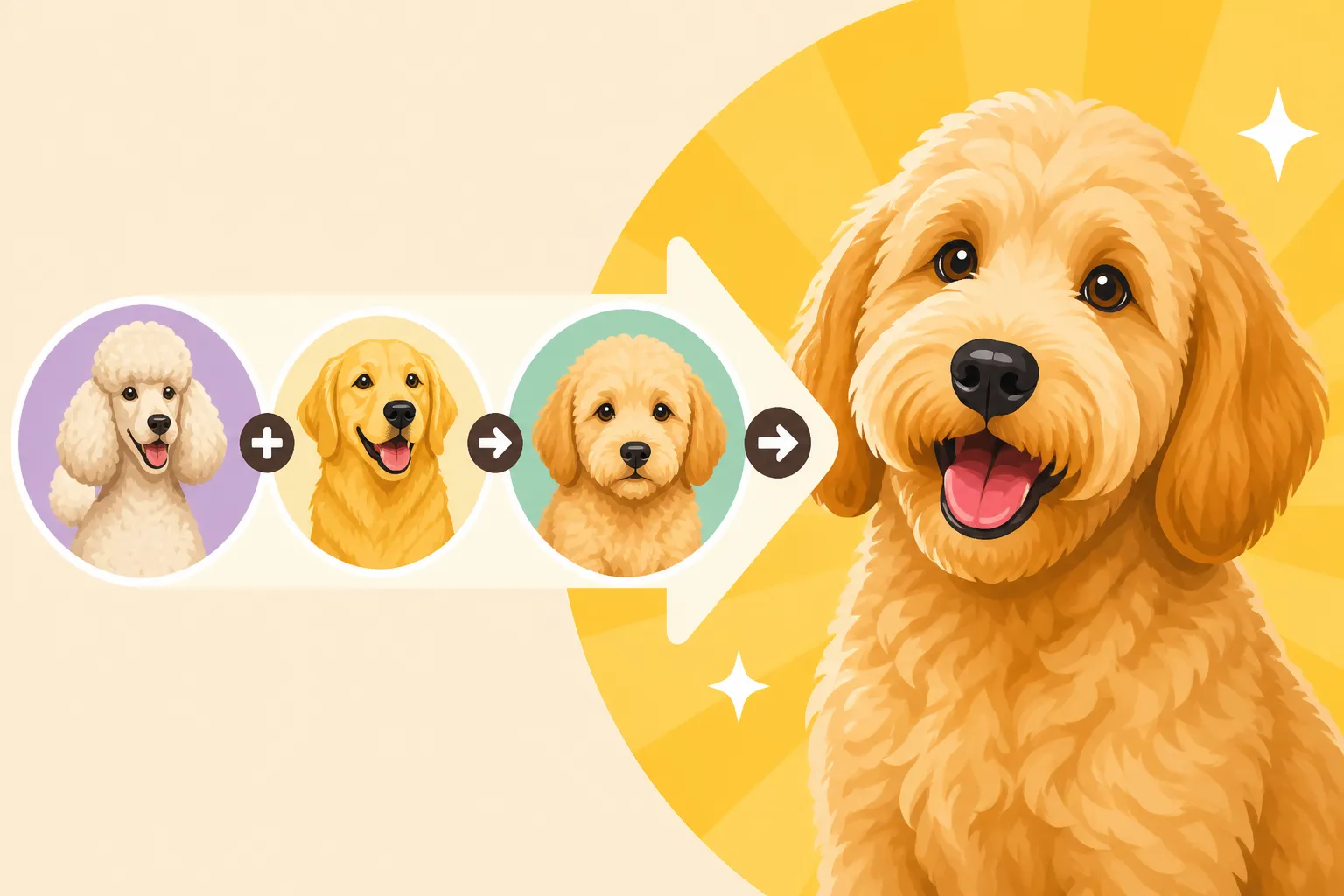
When we talk about Goldendoodles, we often refer to "generations" like F1, F1b, F2, and Multigen. These "F" terms, as explained in What the Letter F Means in a Goldendoodle Pedigree, are actually markers of their crossbreed status, not steps within a recognized breed's lineage. An F1 is a direct cross of a Golden Retriever and a Poodle. An F1b is an F1 bred back to a Poodle (or sometimes a Golden Retriever). Each of these generations is an attempt to achieve certain traits, often related to coat type or perceived hypoallergenic qualities, but they simultaneously highlight the genetic variability at play.
True breeds don't have these "F" designations because their genetic makeup is already considered stable. When you breed two Golden Retrievers, you're not wondering if it will be an "F1 Golden Retriever" – it's simply a Golden Retriever. The Goldendoodle's generational labels are a direct indicator that its genetic blueprint is still a work in progress, far from the stability required for breed recognition.
Divergent Breeding Goals
Another significant factor is the wide variety of breeding goals among Goldendoodle breeders. Some prioritize a certain curl pattern for allergy sufferers, others focus on smaller sizes like the Mini or Toy Goldendoodle, and still others might emphasize specific colors like merle or parti. While these goals are valid for meeting consumer demand, they actively work against the formation of a single, consistent breed.
For a Goldendoodle breed to emerge, all serious breeders would need to agree on one ideal Goldendoodle. This would mean abandoning the pursuit of diverse traits and dedicating themselves to creating a narrow, predictable line. This is a massive shift from the current landscape, where variety is often seen as a selling point. Even finding common ground on questions like Whether a Goldendoodle Is Healthier Than a Purebred or specific feeding guidelines can be a challenge across such a diverse group.
Lack of a Centralized Governing Body with Breed Development Mandate
While organizations like GANA do a great job providing a framework for Goldendoodle breeders and owners, they don't operate with the same mandate as a parent breed club focused on formal kennel club recognition. Their role is primarily to promote responsible breeding within the existing Goldendoodle framework, not to transform the Goldendoodle into a new, singular breed over many decades.
Consider the immense financial and time investment required. Imagine a group of Goldendoodle breeders deciding to commit the next 50-100 years of their lives (and their progeny's lives) to this single, unwavering goal, foregoing the immediate gratification of market demand for variety in favor of a singular, long-term vision. They would need to set up formal committees, establish strict breeding protocols, enforce adherence, and collect mountains of data. This kind of unified, long-term dedication is currently not present across the broad Goldendoodle community, nor is it truly expected given the Goldendoodle's primary purpose as a beloved companion animal rather than a project for breed development. You might find a wider array of general pet supplies at a retailer like Chewy, but a true breed club would specify highly particular tools, foods, and even medical protocols for their breed's development.
The Realistic Timeline: Generations of Dedicated Effort
So, to reiterate, if a concerted effort were to begin today with the sole, unwavering goal of getting the Goldendoodle recognized as a new purebred dog, how long would it actually take?
The Initial Phase: Defining and Stabilizing (20-40 Years)
The very first step, which itself is monumental, would be for a core group of highly dedicated and influential breeders to agree on a single, extremely specific breed standard. This means deciding on a precise range for height, weight, coat texture, color, and temperament. They would then need to embark on a highly selective breeding program, breeding Goldendoodle to Goldendoodle, consistently choosing only the puppies that most closely match this newly defined standard. This phase would be about reducing the massive genetic variability currently present. This alone would realistically take 20 to 40 years, spanning multiple generations of dogs and several human generations of breeders. During this time, they would meticulously document every single breeding, every puppy, and every health outcome. Imagine trying to find the perfect grooming tools or specific dietary supplements consistently over decades; even a large retailer like Chewy might evolve its offerings, requiring continuous adaptation.
The Application and Provisional Recognition Phase (10-20 Years)
Once a strong degree of consistency is achieved (and we are talking about most, if not all, puppies in a litter conforming to the standard), the newly formed parent club would prepare an application for provisional recognition with a major kennel club. This application would be incredibly detailed, including extensive pedigrees tracing back many generations, proof of health testing consistency across those generations, and photographic evidence of adherence to the proposed breed standard.
Even if accepted for provisional status, the breed would likely spend another 10 to 20 years, or more, in a "miscellaneous" or "foundation stock" category. During this time, the kennel club would observe the breed's development, assess its stability, and ensure that the parent club is effectively managing its growth and health. This phase is crucial for proving that the consistency wasn't just a fluke. Potential owners would also need to understand that buying a dog during this phase means participating in a breed still under review, not a fully recognized one.
Full Recognition (5-10 Years, or More)
Only after successfully navigating the provisional phase, demonstrating sustained consistency in all aspects over many additional generations, would the breed be considered for full recognition. This final step itself can take another 5 to 10 years, involving further reviews, votes by kennel club members, and the final granting of full breed status.
In total, from the very beginning of a truly concerted effort, we are looking at a minimum timeline of 35 to 70 years, and more conservatively, 75 to 100 years or even longer, for the Goldendoodle to achieve full breed recognition. This isn't a timeline for "if Goldendoodles continue to be popular" but rather "if a dedicated group of individuals commits their lives to fundamentally changing the Goldendoodle into a new, consistent purebred dog." Whether Goldendoodles Will Ever Become a Breed dives deeper into the complexities of this ambitious goal.
Ultimately, the Goldendoodle as we know and love them today is a wonderful crossbreed, celebrated for their unique charm, intelligence, and affectionate nature. Their current status doesn't diminish their value as companions one bit. For breed recognition to occur, it would necessitate a complete shift in philosophy and practice for a significant portion of the Goldendoodle community, a commitment that stretches far beyond any single generation.
Disclaimer
This article is for general informational purposes only and does not constitute professional advice. Laws, prices and regulations vary by location and change over time. Consult a qualified professional for guidance on your specific situation.