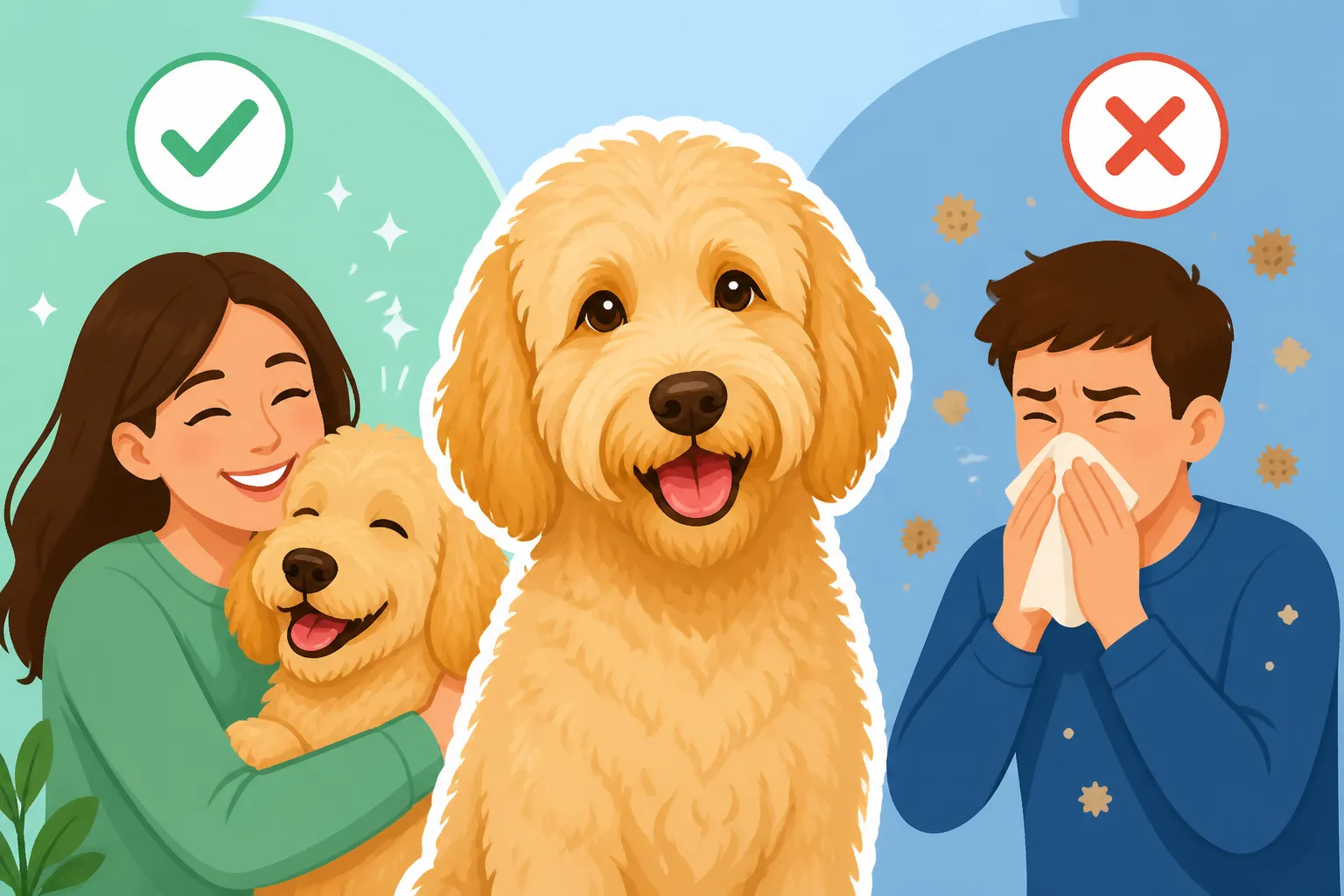
Whether a Low-Shedding Goldendoodle Helps Allergies
It's a common story: you've been dreaming of a Goldendoodle, drawn in by their undeniable charm and the promise of a "hypoallergenic" coat. You've heard they don't shed much, and for many allergy sufferers, that sounds like a miracle. But the reality is often a disappointing wake-up call, as sniffles, sneezes, and itchy eyes persist even with a low-shedding Goldendoodle. This guide is here to shed light on why a low-shedding Goldendoodle doesn't automatically mean an allergy-free home, what truly causes those allergic reactions, and what practical steps you can take to manage allergens in your beloved Doodle's domain.
The Common Misconception: Shedding Less Doesn't Mean Allergen-Free
When you start looking into Goldendoodles, one of the first things you'll likely hear is that they're a great choice for people with allergies because they "don't shed." It's an understandable leap to think that less shedding equals fewer allergens, but this widely held belief can lead to a lot of frustration and heartbreak for families who bring home a puppy only to find their allergies flaring up just as much as with a traditional shedding breed.
Why the "Hypoallergenic" Label is Misleading
The term "hypoallergenic" itself is a bit of a misnomer when it comes to dogs. It literally means "less allergenic," not "non-allergenic." No dog breed, Goldendoodle or otherwise, is 100% hypoallergenic because all dogs produce allergens. The primary allergens aren't actually the hair itself, but microscopic proteins found in a dog's dander (dead skin cells), saliva, and urine. While a dog that sheds less might spread less hair around your home, the dander and saliva are still present on their skin and coat, ready to trigger a reaction. It's not about the hair itself, but what's on the hair and skin. This is why it's so important to understand that Why No Goldendoodle Is Truly Hypoallergenic.
Many breeders and owners inadvertently perpetuate this myth because they see their Goldendoodles shedding very little compared to, say, a Golden Retriever. And for some lucky individuals, their specific allergies might be less reactive to the particular proteins produced by a Poodle or Goldendoodle. However, it's not a universal guarantee, and assuming it is can lead to significant disappointment and health issues for family members.
The Goldendoodle's Coat: A Spectrum of Shedding
One of the fascinating and sometimes unpredictable aspects of Goldendoodles is their variety of coat types, which directly impacts their shedding. You can have a litter of Goldendoodles from the same parents, and end up with puppies that have entirely different coats, ranging from flat and sleek (more like a Golden Retriever) to wavy, shaggy, or tightly curled (more like a Poodle). The Three Goldendoodle Coat Types and How to Tell Them provides a deeper dive into this.
Generally, the more Poodle-like the coat (meaning curlier and thicker), the less hair it tends to drop around the house. This is because the shed hair gets caught in the dense, curly coat rather than falling out onto your furniture and floors. However, this doesn't mean those hairs don't carry allergens. It just means they aren't as visibly dispersed. A Goldendoodle with a flat or wavy coat that more closely resembles a Golden Retriever will likely shed more, and thus visibly distribute more allergen-laden hair throughout the home. Regardless of the coat type, the dog is still producing the allergenic proteins on their skin and in their saliva.
The Real Culprits: Proteins in Dander and Saliva
To truly understand why a low-shedding Goldendoodle might still bother your allergies, we need to talk about the science behind pet allergies. It's not the visible hair that causes the problem, but microscopic particles that are much harder to see and control.
Understanding Pet Allergens
The primary culprits behind dog allergies are specific proteins, often referred to as "allergens." These aren't just one type of protein, but several, and they vary slightly from dog to dog. The most well-known dog allergen is Can f 1, but there are others like Can f 2, Can f 3, and so on. These proteins are naturally produced by a dog's body and are found in various places:
- Dander: This is the invisible flakes of dead skin that all dogs (and humans!) constantly shed. Dander is tiny and lightweight, allowing it to float easily in the air and settle on surfaces.
- Saliva: Every time your Goldendoodle licks himself, licks you, or even breathes, saliva particles containing these proteins are distributed. When saliva dries, the proteins become airborne.
- Urine: While less common for direct exposure, dried urine can also contain allergens, especially in houses where accidents aren't thoroughly cleaned.
When an allergic person comes into contact with these proteins, their immune system mistakenly identifies them as harmful invaders and mounts an attack, leading to the familiar symptoms of sneezing, itchy eyes, runny nose, or even skin rashes and asthma.
How Allergens Spread, Regardless of Hair Fall
Imagine your Goldendoodle, even the curliest, non-shedding kind, going about their day. They scratch an itch, roll on the carpet, lick their paws, or rub against the sofa. Each of these actions releases tiny particles of dander and dried saliva into the environment. Because these particles are microscopic, they can remain suspended in the air for hours, settle into carpets, upholstery, bedding, and cling to clothing. They are incredibly persistent and can even be carried into places where no dog has ever set a paw, like schools or offices, on the clothing of a dog owner.
A low-shedding dog might not leave visible hair tumbleweeds, but the allergens are still there, just in a different distribution. Instead of being spread by loose hairs, they're on every surface your dog touches, every piece of fabric they brush against, and floating in the air after any activity. It's a fundamental misunderstanding to link shedding directly to allergen presence; they are related but not directly proportional. A dog that doesn't visibly shed still produces and distributes plenty of allergens.
Can f 1 and Where a Goldendoodle Carries Allergens
As mentioned, Can f 1 is the most significant dog allergen for most people. This protein is found in a Goldendoodle's skin, saliva, and urine. So, while the Poodle parent brings a coat that tends to trap shed hair rather than release it, the Goldendoodle still produces the same allergenic proteins as any other dog. Their saliva, their skin, their breath – all contribute to the allergen load in your home.
Think about it: when your Goldendoodle licks your hand, jumps on your lap, or nudges you with their nose, they're transferring these proteins directly. Even if they have a non-shedding "wool" coat, the allergens are still there on the surface of their fur, carried by dander and dried saliva. Can f 1 and Where a Goldendoodle Carries Allergens delves into this in more detail. This biological reality means that focusing solely on shedding as a measure of allergenicity is a mistake for most allergy sufferers.
Why Your Goldendoodle Might Still Trigger Allergies
It's a frustrating paradox: you did your research, you chose a Goldendoodle specifically for their reputation, and yet your allergies are still making you miserable. There are several reasons why this might be the case, going beyond the simple shedding myth.
Individual Sensitivity Varies Wildly
The truth is, allergies are deeply personal. What triggers one person's sniffles might have no effect on another. Some people might be allergic to a specific dog protein that one Goldendoodle produces more of, while another Goldendoodle produces less. Some individuals are highly sensitive to even trace amounts of allergens, while others can tolerate a moderate exposure. This is why you might hear anecdotal stories of people with severe allergies living perfectly happily with a Goldendoodle, while others with seemingly mild allergies struggle.
Your individual immune response, the severity of your allergy, and even other environmental allergens (like pollen or dust mites) can all play a role. If you're experiencing a strong reaction to your Goldendoodle, it's not a sign that your dog is "more allergenic" than others, but rather that your specific immune system is reacting to the proteins they produce, regardless of how much they shed. Trying to ascertain if a specific Goldendoodle will trigger your allergies is difficult without direct exposure. This is why Spending Time With a Goldendoodle Before Buying is always highly recommended, ideally over multiple visits, to gauge your personal reaction.
The Impact of Coat Type and Grooming Frequency
While shedding isn't the primary cause of allergies, a Goldendoodle's coat type and how frequently it's groomed certainly play a role in how allergens are distributed and managed.
- Coat Type: Goldendoodles with more Poodle-like, curly, or "wool" coats tend to trap shed hair and dander within their coat. This can be a double-edged sword. On one hand, less airborne hair might mean fewer immediate allergens floating around. On the other hand, all that trapped hair and dander needs to be removed through regular brushing and professional grooming. If it's not, it builds up into a dense, allergen-rich mat close to the dog's skin, which can then be released in a concentrated burst during brushing or when the dog shakes.
- Grooming Frequency: If your Goldendoodle has a low-shedding coat but isn't brushed frequently enough or bathed regularly, those trapped allergens simply accumulate. Regular bathing helps wash away dander and saliva proteins from the coat and skin. Consistent brushing, especially line brushing, removes loose hair and dander before it can accumulate or become airborne. Skipping these crucial steps, even with a supposedly "hypoallergenic" coat, means you're allowing allergens to build up in your home environment. Brushing a Goldendoodle Often Enough to Stop Matting is not just about aesthetics; it's a key part of allergen management.
The Problem of Accumulated Allergens
Even with a low-shedding Goldendoodle, allergens accumulate over time. They settle into carpets, curtains, furniture, and bedding. They get on your clothes, your hair, and every surface your dog touches. If these allergens are not regularly removed from your home environment, they will build up to levels that can easily trigger symptoms in sensitive individuals.
Consider the places your Goldendoodle loves most: their favorite napping spot on the couch, their bed, the rugs where they play. These become hotspots for allergens. Without diligent cleaning and maintenance, you're constantly living with an elevated allergen load, which can make it feel like your Goldendoodle is causing a severe reaction, even if they're considered low-shedding. This accumulation is a major factor that often gets overlooked in the pursuit of a "hypoallergenic" dog.
Practical Strategies for Allergy Management in Goldendoodle Homes
If you have a Goldendoodle and are still struggling with allergies, don't despair! While there's no magic bullet for eliminating all allergens, there are many practical steps you can take to significantly reduce the allergen load in your home and manage your symptoms. It's about proactive management, not just hoping for a miracle coat.
Creating an Allergen-Reduced Environment
The goal here is to reduce the places where allergens can settle and accumulate, and to remove them regularly.
- Designated "Dog-Free" Zones: Designate certain areas of your home, especially bedrooms, as dog-free zones. This gives allergy sufferers a sanctuary where they can breathe easier, particularly while sleeping. Use baby gates or close doors to enforce these boundaries.
- Hard Surfaces Over Carpets: If possible, opt for hard flooring like wood, tile, or laminate instead of carpets. Carpets are notorious traps for dander, dust mites, and other allergens. If you must have carpets, vacuum frequently with a HEPA-filtered vacuum cleaner.
- Washable Fabrics: Choose furniture with washable covers, or use throws that can be laundered weekly. Wash bedding, curtains, and pet beds frequently in hot water to kill dust mites and remove allergens.
- Air Purification: High-efficiency particulate air (HEPA) filters can make a significant difference. Use a HEPA air purifier in rooms where your Goldendoodle spends a lot of time, and in your bedroom. Make sure your HVAC system has a high-quality filter (MERV 11-13 rating) and change it regularly. You can often find a good selection of these filters on sites like Chewy.
- Frequent Cleaning: Wipe down hard surfaces with a damp cloth daily to pick up settled dander. Vacuum frequently, even if you have hard floors, as dander can still accumulate. Steam clean carpets and upholstery periodically.
Grooming Routines to Minimize Allergen Spread
Your Goldendoodle's grooming routine is one of your most powerful tools in allergen management. This isn't just about keeping them looking pretty; it's about physically removing allergens from their coat before they can spread.
| Grooming Task | Frequency | Allergen Benefit |
|---|---|---|
| Brushing | Daily | Removes loose hair and dander before it falls off. Traps allergens in the brush. |
| Bathing | Every 1-2 weeks | Washes away accumulated dander, dried saliva, and environmental allergens from coat. |
| Professional Grooming | Every 6-8 weeks | Ensures thorough removal of mats and dead undercoat, deep cleaning. |
| Ear Cleaning | Weekly | Prevents yeast/bacterial buildup which can contribute to overall skin health. |
| Wiping Face/Paws | Daily/After meals | Removes saliva and dander from areas your dog touches frequently. |
When brushing, always use a slicker brush and a metal comb to get down to the skin and remove shed hair and dander. Consider brushing your Goldendoodle outdoors if weather permits, to release allergens away from your indoor environment. For bathing, use a gentle, dog-specific shampoo and conditioner. Some owners find that wiping their dog down with a damp cloth or specialized pet wipes between baths also helps. Remember, Goldendoodle Grooming as the Biggest Line in the Budget isn't just about aesthetics; it's a health and allergen management investment.
Exploring Allergy Treatments and Testing
If environmental controls and diligent grooming aren't quite enough, there are options for managing your own or a family member's allergies.
- Allergy Testing: Consulting with an allergist can be incredibly helpful. They can perform tests (skin prick or blood tests) to pinpoint exactly what you're allergic to, and how severe your reaction is. Sometimes, people are surprised to find they're not just allergic to dogs, but also to pollen, dust mites, or certain foods, which can exacerbate their pet allergy symptoms.
- Medications: Over-the-counter antihistamines, nasal sprays, and eye drops can help manage symptoms for many people. Your doctor or allergist might also prescribe stronger medications if needed.
- Immunotherapy (Allergy Shots): For more severe or persistent allergies, immunotherapy can be a long-term solution. This involves a series of injections with gradually increasing doses of the allergen, helping your immune system build tolerance over time. This is a commitment, but for many, it significantly improves quality of life. Goldendoodle Allergy Testing and Immunotherapy details these options further.
- Diet and Supplements for Your Goldendoodle: While not a direct allergy treatment for humans, ensuring your Goldendoodle has a healthy skin and coat can indirectly help. A dog with dry, flaky skin or allergies of their own might produce more dander. Talk to your vet about a high-quality diet and supplements like omega-3 fatty acids that support skin health. You can find many reputable options, including special allergy-friendly dog foods, on platforms like Chewy.
Living with a Goldendoodle and allergies requires a comprehensive approach, combining environmental controls, meticulous grooming, and sometimes medical intervention. The "low-shedding" label is a good starting point, but it's far from the whole story when it comes to living comfortably with your beloved Doodle.
Disclaimer
This article is for general informational purposes only and does not constitute professional advice. Laws, prices and regulations vary by location and change over time. Consult a qualified professional for guidance on your specific situation.