The Annual Eye Exam a Goldendoodle Breeder Should Have
Bringing a Goldendoodle into your life is an absolute joy, but it also comes with a significant responsibility to safeguard their health for as long as possible. One area that often causes a lot of anxiety, especially for breeders, is making sure their breeding dogs have the best possible vision and aren't passing on genetic eye conditions. This guide will walk you through why that annual eye exam for Goldendoodle breeders isn't just a recommendation, but a crucial step in ensuring the future health and happiness of countless Goldendoodle puppies and their families.
Why Comprehensive Eye Health Screening is Non-Negotiable for Goldendoodles
It's heartbreaking to imagine a beloved Goldendoodle losing their sight, especially when many eye conditions can be prevented or managed through responsible breeding practices. Goldendoodles inherit their genetics from two parent breeds – the Golden Retriever and the Poodle – both of which are unfortunately predisposed to a range of ocular issues. This means that a Goldendoodle has a doubled chance of inheriting problematic genes if breeders aren't diligent. Many people assume that if a puppy's eyes look clear, everything must be fine, but the truth is far more complex. Some devastating conditions don't show up until a dog is much older, well past breeding age, by which time they might have already passed on the genes to several litters.
The Genetic Legacy from Golden Retrievers and Poodles
When you look at the parent breeds, it's easy to see why eye health is such a big deal for Goldendoodles. Golden Retrievers, for instance, are known to carry genes for certain types of Progressive Retinal Atrophy (PRA) and inherited cataracts. On the Poodle side, particularly Standard Poodles, we see a predisposition to similar forms of PRA, as well as conditions like glaucoma and sebaceous adenitis, which can sometimes manifest with ocular symptoms. This dual inheritance means that breeders need to be especially vigilant. It's not enough to just check one parent; both the sire and dam contribute equally to the genetic makeup of their puppies, including any predispositions to eye disease. Without thorough testing on both sides, a breeder is essentially guessing, and that's a gamble no responsible breeder should ever take with a living creature's health.
The Deceptive Nature of "Clear" Puppy Eyes
It’s easy for prospective puppy owners to be charmed by a Goldendoodle puppy’s bright, clear eyes. And it’s equally easy for less scrupulous breeders to tell you that the puppies look perfectly healthy, therefore there’s no need for concern. But here’s the rub: many serious inherited eye conditions don't manifest until months, or even years, after a puppy has gone to its new home. For example, some forms of PRA can begin with subtle night blindness that goes unnoticed until it's quite advanced, often around the age of 3-5 years. Juvenile cataracts might develop in a young adult dog, long after its initial puppy checks.
Imagine the devastation for a family who has invested so much love, time, and money into their Goldendoodle, only to discover in its prime years that it's going blind from a condition that could have been screened for in the parents. This is why the annual eye exam for breeding dogs, performed by a board-certified veterinary ophthalmologist, is so incredibly important. It's a snapshot of their ocular health at that moment, capable of catching early signs of disease that might not be visible to the naked eye or a general practice vet. This ongoing screening helps ensure that only dogs with truly clear and healthy eyes are used for breeding, protecting subsequent generations from preventable suffering.
What the Annual Eye Exam Entails for Breeding Dogs
So, what exactly happens during this annual eye exam that makes it so critical? It's much more than a quick look with a flashlight. These examinations are performed by highly specialized veterinary ophthalmologists, who have undergone extensive training beyond general veterinary medicine to become experts in animal eye health. They don't just check for visible problems; they use specialized equipment and techniques to detect subtle changes that could indicate the start of an inherited disease.
The Role of a Board-Certified Veterinary Ophthalmologist
When we talk about the annual eye exam for a breeding Goldendoodle, we're not talking about your regular vet's check-up, as wonderful as your family vet might be. This is a specialized appointment with a board-certified veterinary ophthalmologist. These are veterinarians who have completed years of residency training specifically in ophthalmology and passed rigorous board certification exams. They possess the in-depth knowledge and specialized equipment to accurately diagnose inherited eye conditions.
During the examination, the ophthalmologist will thoroughly review the dog's medical history, including any previous eye exams or DNA test results. They will use dilation drops to get a better look at the back of the eye, and the dog may need to sit patiently for a detailed inspection. It's a serious medical procedure designed to catch even the earliest indicators of trouble, and it's important that breeders prioritize these specific experts for their evaluations. This commitment ensures the most accurate and reliable results possible.
Key Tests Performed During the Examination
A comprehensive annual eye exam, often referred to as a CAER (Companion Animal Eye Registry) exam through the Orthopedic Foundation for Animals (OFA), involves several crucial steps:
- Ocular Examination: The ophthalmologist begins with a general assessment of the eyes, eyelids, and surrounding structures, looking for any abnormalities in appearance, discharge, or inflammation. This initial visual inspection can reveal conditions like entropion or ectropion, where the eyelids roll inward or outward, causing irritation or exposure.
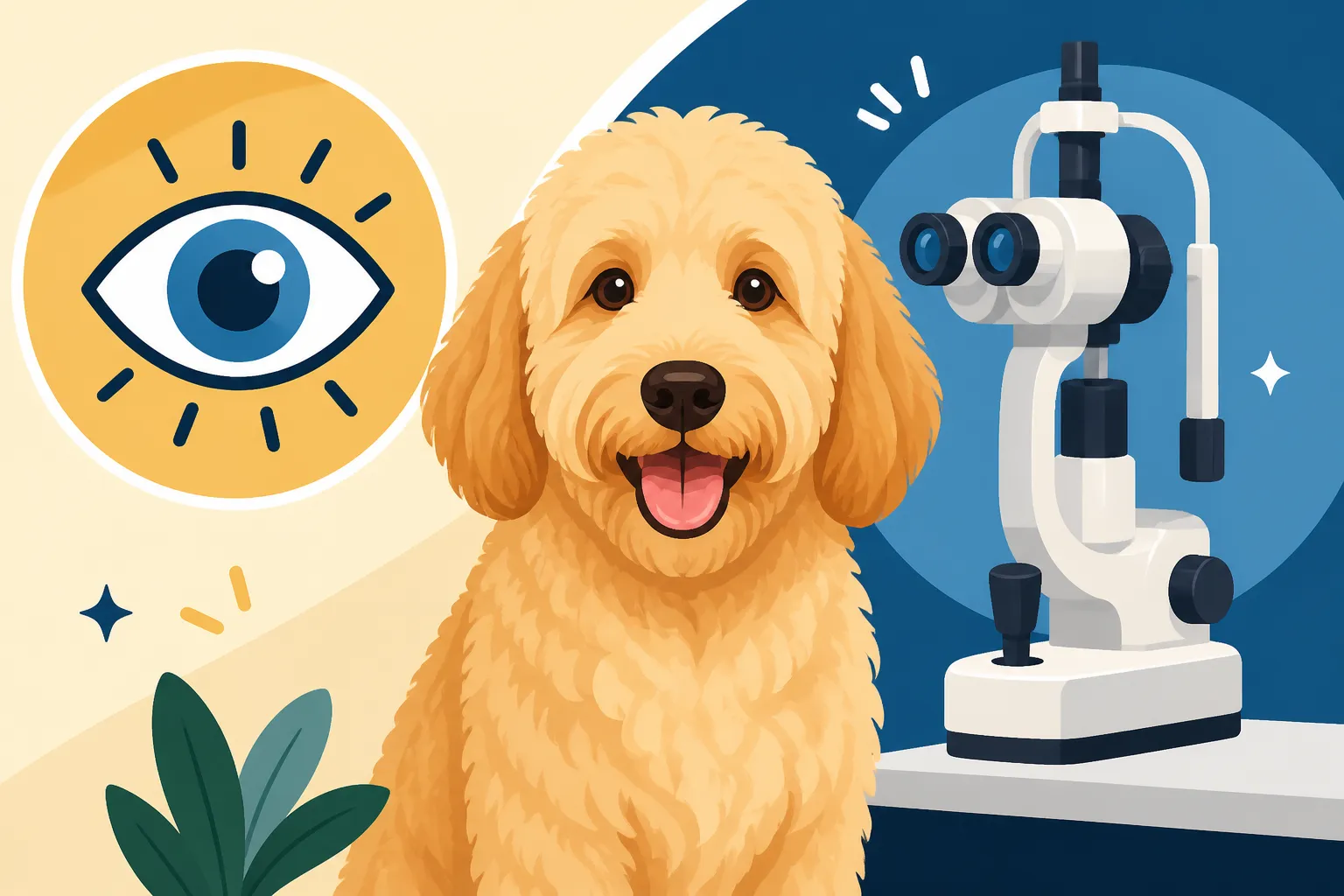
- Slit Lamp Biomicroscopy: This specialized microscope allows the ophthalmologist to examine the front structures of the eye—the cornea, iris, and lens—in fine detail. It's instrumental in detecting early cataracts, subtle corneal issues, and changes in the iris. For Goldendoodles, identifying even tiny, nascent cataracts is vital, as some forms are hereditary.
- Indirect Ophthalmoscopy: After dilating the pupils, the ophthalmologist uses an ophthalmoscope to view the retina and optic nerve at the back of the eye. This is where conditions like Progressive Retinal Atrophy (PRA) would be identified. Even before a dog shows signs of night blindness, a skilled ophthalmologist might observe changes in the retinal tissue indicative of early PRA. Catching these early signals can be life-changing for future puppies. You can learn more about Progressive Retinal Atrophy and the Goldendoodle Eye Test.
- Tonometry: This test measures the intraocular pressure within the eye, which is essential for screening for glaucoma. Glaucoma, characterized by high eye pressure, can lead to severe pain and irreversible blindness if not caught and treated quickly. While not as common as cataracts or PRA, it’s a devastating condition that can have an inherited component in some breeds.
- Gonioscopy: In some cases, particularly in breeds prone to glaucoma, a gonioscopy might be performed. This involves placing a special lens on the eye to visualize the drainage angle, which is where fluid leaves the eye. Abnormalities in this angle can predispose a dog to glaucoma.
Each of these tests provides a piece of the puzzle, building a complete picture of the dog's current eye health. The results are then submitted to the OFA CAER program, providing a public record that prospective puppy buyers can verify.
Why "Annual" Is So Important
The word "annual" in this context is absolutely critical. Eye conditions, like many diseases, can develop over time. A dog might have perfectly clear eyes at age one, but by age two or three, early signs of an inherited condition like cataracts or PRA could begin to appear. If a breeder only tests their dogs once, say, before their first litter, and then continues to breed them for several years without retesting, they risk passing on conditions that developed later in the dog's life.
Think of it like this: your own annual physical isn't just a formality; it's a proactive measure to catch health issues early. The same applies to breeding dogs. An inherited condition that might not be visible in a young dog might become apparent as it matures. By performing these exams every single year that a dog is part of a breeding program, breeders significantly reduce the risk of unknowingly propagating genetic eye diseases. This diligence is a hallmark of an ethical breeder and provides immense peace of mind to puppy buyers who want to ensure their Goldendoodle has the best possible chance at a long, healthy life with good vision.
Understanding Key Goldendoodle Eye Conditions
As mentioned, Goldendoodles can inherit a range of eye conditions from their Golden Retriever and Poodle lineage. A breeder’s annual eye exam is designed to detect these conditions early, allowing for informed breeding decisions. Let's delve into some of the most common and serious eye issues that these exams can uncover.
Progressive Retinal Atrophy PRA
Progressive Retinal Atrophy (PRA) is a family of genetic diseases that cause the degeneration of the retina, eventually leading to blindness. It's a particularly insidious disease because many forms don't show clinical signs until the dog is a young adult, sometimes even later, making regular screening and DNA testing crucial. Goldendoodles can inherit several forms of PRA, with some specific types linked to Golden Retrievers (e.g., GR-PRA1, GR-PRA2) and Poodles (e.g., prcd-PRA).
The initial symptom is often night blindness, where affected dogs struggle to see in dim light. This can progress to complete blindness over several months or years. Imagine your Goldendoodle, full of life and joy, slowly losing its ability to navigate its world. It’s a devastating prospect, but one that can largely be avoided. The annual ophthalmologist exam can detect changes in the retina consistent with early PRA. However, because PRA is genetic, DNA testing offers an even earlier and definitive diagnosis of carrier status or affected status. Breeders should be running DNA panels that include all known forms of PRA for both parent breeds. This allows them to avoid breeding two carriers together, which guarantees affected puppies. You can learn more about The PRA DNA Test Both Goldendoodle Parents Need.
Inherited Cataracts
Cataracts are opacities that form in the lens of the eye, obstructing the passage of light and leading to impaired vision. While cataracts can be caused by injury, diabetes, or old age (senile cataracts), inherited forms are a significant concern in Goldendoodles. Juvenile cataracts, for example, can appear in dogs as young as a few months to a few years old. These inherited cataracts can range from small, non-vision-impairing opacities to dense, vision-blocking cataracts that require surgical removal.
The annual eye exam with a board-certified ophthalmologist is excellent for identifying cataracts, even in their very early stages. A breeder who consistently performs these exams is able to detect these issues before they become severe, and more importantly, can make responsible decisions about whether to breed a dog that develops inherited cataracts. While surgery exists to remove cataracts and restore vision, it's a costly and invasive procedure. Preventing inherited cataracts through careful breeding is always the preferable path. If you are ever concerned about your Goldendoodle's vision, especially if you notice cloudiness or changes in their eye color, it's vital to seek veterinary attention. Explore options that can help with these costs, such as a robust pet insurance policy like those offered by Healthy Paws, which can significantly ease the financial burden of such treatments. Read more about Goldendoodle Cataracts and Vision Loss.
Glaucoma and Eyelid Abnormalities
Glaucoma is another serious eye condition that can affect Goldendoodles, although it might be less prevalent than PRA or cataracts. It's characterized by an increase in the fluid pressure inside the eye, which damages the optic nerve and can lead to rapid, irreversible blindness. Primary glaucoma can be inherited, and certain breeds, including some Poodle lines, can be predisposed. The annual eye exam includes tonometry specifically to measure intraocular pressure and screen for this painful condition. Early detection is absolutely critical because glaucoma can progress quickly, and emergency treatment is often necessary to save a dog's vision and alleviate pain.
Beyond internal eye issues, Goldendoodles can also be prone to eyelid abnormalities such as entropion and ectropion. Entropion is when the eyelid rolls inward, causing eyelashes or hair to rub against the cornea, leading to chronic irritation, pain, and potential corneal ulcers. Ectropion is the opposite, where the eyelid rolls outward, leaving the eye exposed and susceptible to dryness and infection. Both conditions can be inherited and often require surgical correction to prevent discomfort and protect the eye. These are typically visible during the initial ocular examination and slit lamp evaluation. Understanding Goldendoodle Eyelashes That Rub the Cornea is a good first step to recognizing these issues.
Dry Eye (Keratoconjunctivitis Sicca – KCS)
Dry eye, or Keratoconjunctivitis Sicca (KCS), is a condition where the eyes don't produce enough tears, leading to dryness, inflammation, and chronic irritation. While often associated with autoimmune issues, it can also have a genetic component in some breeds. Symptoms include persistent blinking, redness, thick discharge, and corneal changes. It can be incredibly uncomfortable for dogs and, if left untreated, can lead to serious corneal damage and even vision loss.
Goldendoodles, especially those with longer facial hair or a tendency for allergies, can sometimes develop dry eye. The annual eye exam allows an ophthalmologist to assess tear production using a Schirmer tear test and to examine the cornea for signs of dryness. Managing dry eye often involves lifelong medication, such as tear stimulants or artificial tears, to keep the eyes lubricated. This is a condition that, while treatable, can significantly impact a dog's quality of life. For dogs requiring long-term medication, considering pet insurance like Healthy Paws can be beneficial for managing ongoing treatment costs. Knowing about Dry Eye in a Goldendoodle With Long Face Hair can help owners identify early signs.
The Breeder's Responsibility and Proactive Steps
For any Goldendoodle breeder committed to ethical practices and the health of their lines, the annual eye exam is more than just a checkbox; it's a fundamental part of their breeding philosophy. It's about protecting the future generations of Goldendoodles and ensuring that the puppies they place in homes are as healthy as possible. This responsibility extends beyond merely having the tests done; it involves understanding the results, making informed decisions, and being transparent with prospective puppy buyers.
Navigating OFA CAER Results and Breeder Transparency
The Orthopedic Foundation for Animals (OFA) offers the Companion Animal Eye Registry (CAER) program, which provides standardized evaluation and registration of eye examination results. When a board-certified veterinary ophthalmologist performs the annual eye exam, they submit the findings to the OFA. The results classify dogs as "Normal," "Affected," or "Breeder Option" for various eye conditions.
An "Affected" result means the dog has a detectable eye condition. "Breeder Option" is for conditions that might be deemed minor or non-hereditary by the ophthalmologist but still warrant being noted. Ethical Goldendoodle breeders will proudly share the CAER certificates for their breeding dogs. These certificates usually list the date of the exam, the ophthalmologist's findings, and the dog's OFA eye registration number.
Prospective puppy owners should always ask to see these certificates for both parents, dated within the last 12 months. A reputable breeder will not only provide these documents but also be able to clearly explain what they mean. Transparency is key here. If a breeder makes excuses or avoids sharing current eye clearances, it's a major red flag. This transparency helps you, as a buyer, verify the health claims and feel confident that you're getting a puppy from parents who have been rigorously screened.
The Synergy of Clinical Exams and DNA Testing
While the annual ophthalmologist exam is invaluable for detecting clinical signs of eye disease, it's crucial to understand that it complements, rather than replaces, DNA testing for genetic conditions. Many inherited eye diseases, like certain forms of PRA, are caused by specific gene mutations. A dog can be a "carrier" of these mutations without ever showing symptoms, yet still pass the gene on to their offspring. If two carriers are bred together, there's a 25% chance of producing affected puppies.
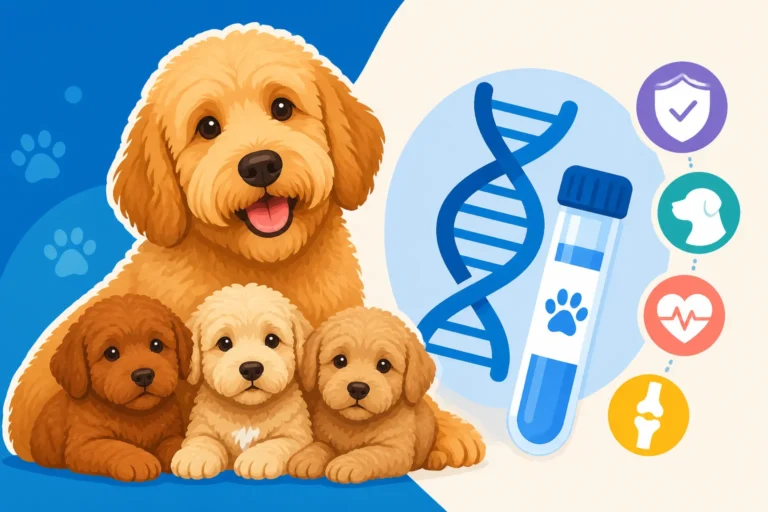
This is where DNA testing comes in. A simple cheek swab or blood test can definitively identify if a dog is clear, a carrier, or affected by specific genetic mutations for conditions like prcd-PRA, GR-PRA1, and GR-PRA2. Ethical Goldendoodle breeders will use a comprehensive The DNA Panel a Goldendoodle Breeder Should Run for all their breeding stock, in addition to the annual clinical eye exams.
By combining both approaches – annual ophthalmologist exams to catch current and developing conditions, and DNA testing to identify genetic predispositions – breeders create the most robust screening program possible. This dual approach significantly reduces the risk of passing on debilitating eye diseases, ensuring healthier Goldendoodle puppies. This kind of comprehensive health testing, including OFA Clearances on a Goldendoodle Sire and Dam, is what sets truly responsible breeders apart.
Making Responsible Breeding Decisions
The ultimate goal of all this testing and screening is to make informed, responsible breeding decisions. If a breeding dog receives an "Affected" diagnosis for a significant hereditary eye condition, an ethical breeder will remove that dog from their breeding program. This isn't an easy decision, especially if the dog is otherwise healthy and has a wonderful temperament, but it's a necessary one to protect the breed and future generations.
In cases where a dog is identified as a "carrier" for a recessive genetic eye disease (like some forms of PRA), the breeder has options. They can still breed the carrier, but only to a dog that has been DNA-tested and is "clear" for that specific condition. This pairing ensures that no affected puppies will be produced, though some puppies in the litter may be carriers themselves. These carrier puppies should then also be DNA tested as adults if they are ever considered for breeding, to continue the responsible cycle.
This level of dedication and integrity is what defines an outstanding Goldendoodle breeder. They understand that their choices impact not just their dogs, but the countless families who will welcome these puppies into their homes. It’s a commitment to health that pays dividends in the form of happy, healthy Goldendoodles with bright, clear eyes, enjoying long and fulfilling lives.
| Eye Condition | Description | Primary Symptoms (often subtle at first) | Detection Method |
|---|---|---|---|
| Progressive Retinal Atrophy (PRA) | Degeneration of the retina, leading to eventual blindness. Several genetic forms exist (e.g., prcd-PRA, GR-PRA). | Night blindness, dilated pupils, clumsiness in dim light, eventual full vision loss. | Annual Ophthalmologist Exam (ophthalmoscopy), DNA Testing |
| Inherited Cataracts | Opacities in the lens of the eye, obstructing light and impairing vision. Can be juvenile or adult-onset. | Cloudiness in the pupil, vision loss (stumbling, bumping into objects), reluctance to go in new places. | Annual Ophthalmologist Exam (slit lamp biomicroscopy) |
| Glaucoma | Increased intraocular pressure that damages the optic nerve, causing pain and rapid blindness. | Red eye, cloudy cornea, painful eye, dilated pupil, rubbing at eye, acute vision loss. | Annual Ophthalmologist Exam (tonometry, gonioscopy) |
| Entropion / Ectropion | Eyelids roll inward (entropion) or outward (ectropion), causing irritation or exposure. | Squinting, excessive tearing, redness, discharge (entropion), dry eye, visible "droopy" eyelid (ectropion). | Annual Ophthalmologist Exam (visual inspection, ocular examination) |
| Dry Eye (KCS) | Insufficient tear production, leading to chronic dryness, inflammation, and discomfort. | Redness, thick mucoid discharge, frequent blinking, rubbing at eyes, corneal ulcers. | Annual Ophthalmologist Exam (Schirmer Tear Test) |
Disclaimer
Please remember that the information provided in this guide is for informational purposes only and is not a substitute for professional veterinary advice. Always consult with a qualified veterinarian or a board-certified veterinary ophthalmologist for any health concerns or before making any decisions about your Goldendoodle's care or breeding.