Heart Murmurs Found in a Goldendoodle Puppy
Hearing that your sweet Goldendoodle puppy has a heart murmur can be absolutely terrifying. One moment you're dreaming of years of happy romps and cuddles, the next you're plunged into worry, wondering if this tiny heart can even make it. It's a shocking diagnosis, especially when your pup seems so full of life, and it leaves you with a million questions about what it means for their future. This guide will walk you through what a heart murmur is, why Goldendoodle puppies get them, what steps you need to take, and how you can best support your furry family member.
Understanding What a Heart Murmur Actually Is
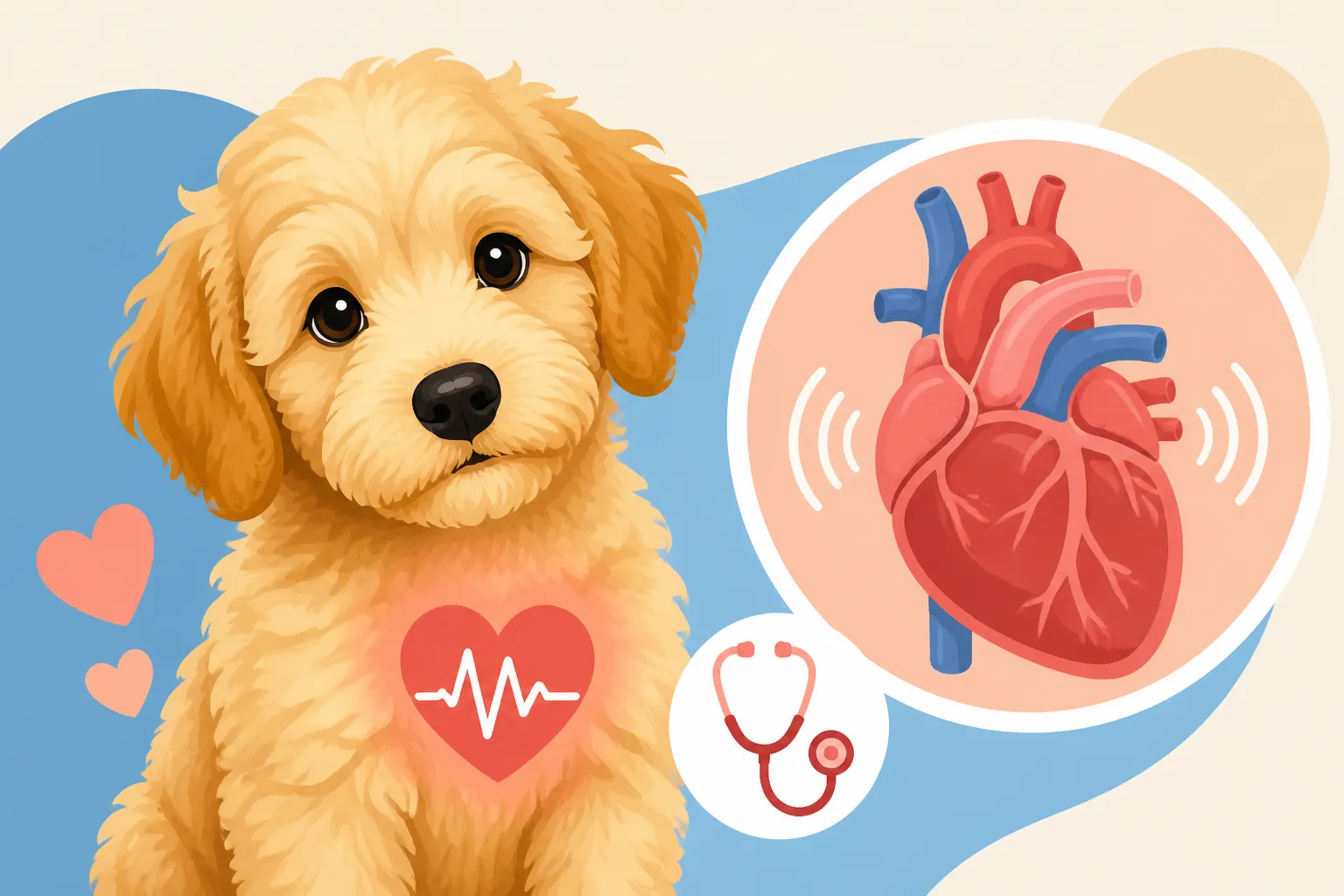
When a veterinarian tells you your Goldendoodle puppy has a heart murmur, it’s natural for your mind to jump to the worst-case scenario. But let's take a deep breath together. A heart murmur isn't a disease itself; it's a sound your vet hears through their stethoscope. Think of it like a ripple in a stream – it indicates something might be changing the normal, smooth flow of blood through the heart. Understanding this distinction is the first step in processing the diagnosis.
The Sound Behind the Diagnosis
Normally, when your vet listens to your dog's chest, they hear a distinct "lub-dub, lub-dub" sound. These are the heart valves opening and closing, directing blood through the heart's chambers and out to the body. A heart murmur is an extra sound, a swishing or whooshing noise, that interrupts or accompanies those normal heartbeats. This sound is caused by turbulent blood flow. Instead of flowing smoothly, the blood is creating eddies or vibrations as it moves through a narrow opening, a leaky valve, or even just at a high velocity. It’s like turning on a faucet too hard and hearing the pipes rattle a bit – the sound tells you something about the water pressure or the pipe's condition, but it's not the pipe itself.
For puppies, especially, a murmur can be quite subtle and might even be missed on a first exam if the pup is wiggly or has a lot of fluff around their chest. It often requires a quiet room and a very patient veterinarian to pick up on it. The key is that this sound signals an underlying cause, and finding that cause is what the diagnostic journey is all about. It’s important not to panic immediately, but to recognize it as a signal that more investigation is needed to understand your puppy’s specific situation.
Grading the Murmur's Intensity
To help characterize what they're hearing, veterinarians grade heart murmurs on a scale from 1 to 6. This grading system describes the intensity or loudness of the murmur, not necessarily how severe the underlying heart condition might be, though there is often a correlation.
- Grade 1: Very soft, often intermittent, and can be hard to hear even for an experienced vet. It might only be heard in one specific spot.
- Grade 2: Soft, but consistently audible in a localized area.
- Grade 3: Moderately loud and easily heard, but without a palpable thrill (a vibration you can feel with your hand on the chest).
- Grade 4: Loud, with a palpable thrill. This means you can feel the vibration on the chest wall.
- Grade 5: Very loud, with a prominent palpable thrill, and audible even when the stethoscope is slightly off the chest wall.
- Grade 6: Extremely loud, with a palpable thrill, and audible even when the stethoscope is held a short distance from the chest.
While a higher grade often suggests a more significant problem, it's not a hard-and-fast rule. A Grade 6 murmur due to a relatively benign cause might be less concerning than a Grade 3 murmur stemming from a severe, progressive condition. The grade simply gives your vet an initial piece of the puzzle. It tells them how much turbulence is occurring, but not why. This is why further diagnostics are often essential to get the complete picture and move beyond just the "grade" of the sound.
Causes of Heart Murmurs in Goldendoodle Puppies
The discovery of a heart murmur in a Goldendoodle puppy can stem from several different causes, some quite benign and others requiring serious medical attention. It's not a one-size-fits-all diagnosis, which is why your vet will usually recommend a period of observation or further testing. Understanding the potential origins can help you process the information and prepare for next steps.
Innocent or Physiological Murmurs
One of the most common reasons for a Goldendoodle puppy to have a heart murmur is an "innocent" or "physiological" murmur. These are often heard in young, rapidly growing puppies, usually between 6 weeks and 4-5 months of age. They are temporary and don't indicate any underlying structural heart disease. Think of it like a growth spurt causing a temporary inefficiency. These murmurs occur because a puppy's blood is flowing faster and their heart is working harder to supply their rapidly developing body with oxygen and nutrients. Their hearts and blood vessels are still maturing, and sometimes the blood flow isn't perfectly smooth yet.
These innocent murmurs are typically Grade 1 or 2, rarely louder, and usually resolve on their own as the puppy matures, often by 4-6 months of age. If your vet suspects an innocent murmur, they might suggest simply monitoring your Goldendoodle puppy and rechecking them in a few weeks or months. It can be a huge relief if your pup's murmur turns out to be one of these, but it still requires careful observation to ensure it truly disappears and isn't masking something more serious. While it’s scary to hear any mention of a heart issue, knowing that many puppy murmurs are harmless can offer a little comfort during the initial worry.
Congenital Heart Defects
Unfortunately, some heart murmurs in Goldendoodle puppies are indicators of more serious congenital heart defects, meaning conditions they were born with. Both parent breeds of the Goldendoodle, the Golden Retriever and the Poodle, are known to carry certain predispositions to cardiac issues, which can then be passed down to their offspring. This is why understanding What a Goldendoodle Inherits From Each Parent Breed is so crucial when considering a puppy.
One of the most common congenital heart defects seen in Golden Retrievers, and therefore potentially in Goldendoodles, is Subvalvular Aortic Stenosis (SAS). This condition involves a narrowing just below the aortic valve, making the heart work much harder to pump blood out to the body. Murmurs associated with SAS are often loud, heard over the left chest, and tend to be persistent. Another significant concern, more prevalent in Poodles and therefore also in Goldendoodles, is Patent Ductus Arteriosus (PDA). This occurs when a blood vessel that's open during fetal development fails to close after birth, leading to abnormal blood flow between the aorta and pulmonary artery. PDA murmurs have a very distinctive "machinery" sound and are typically loud and continuous. Other potential congenital issues could include pulmonic stenosis (narrowing of the valve to the lungs) or various septal defects (holes in the walls between heart chambers). These defects can lead to serious health problems, including heart failure, if not diagnosed and managed appropriately. This highlights the importance of asking your breeder about The Heart Defect a Goldendoodle Gets From the Golden Line and any Poodle-specific concerns.
Acquired Conditions Less Common in Puppies
While less common in very young puppies compared to older dogs, it's worth noting that heart murmurs can also sometimes be caused by acquired conditions. These aren't issues the puppy was born with, but rather develop later due to other health factors. For instance, severe anemia (a low red blood cell count) can cause a temporary murmur because the blood becomes thinner and flows more turbulently. A high fever or a serious infection that stresses the body can also lead to a physiological murmur. In rare cases, inflammation of the heart muscle (myocarditis) could also be a culprit.
However, when a vet detects a new murmur in a very young Goldendoodle puppy, especially during one of their initial check-ups, the focus is almost always on distinguishing between an innocent murmur and a congenital defect. Acquired conditions typically present with other noticeable symptoms of illness, making the cause of the murmur clearer. If your vet rules out congenital defects and the murmur persists or worsens, they might then start looking at these less common acquired causes, though this usually happens in older puppies or adult dogs.
What Happens After a Goldendoodle Puppy Gets a Murmur Diagnosis
Receiving a heart murmur diagnosis for your Goldendoodle puppy can feel overwhelming, but it's important to remember that it's the beginning of a process, not the end. Your veterinarian will guide you through a series of steps designed to determine the murmur's significance and your puppy's overall health.
Initial Vet Assessment and Monitoring
The first course of action after a murmur is detected, especially in a young Goldendoodle puppy, is often a watchful waiting approach. Your vet will likely recommend a re-check appointment in a few weeks, typically at the time of another round of Goldendoodle Puppy Vaccination Timing or a general wellness visit. During this follow-up, your vet will listen again very carefully to the murmur, noting if its grade has changed, if it's still present, or if it has resolved entirely. They will also perform a thorough physical exam, checking for any other signs of heart disease such as a persistent cough, shortness of breath, lethargy, or poor growth. These symptoms, combined with a persistent or worsening murmur, would raise a red flag.
It’s crucial during this monitoring period to pay close attention to your puppy's energy levels, appetite, and any changes in their breathing or activity. Many times, these initial murmurs disappear as the puppy matures and their cardiovascular system stabilizes. This is particularly true for those innocent physiological murmurs we discussed earlier. Your vet may advise limiting strenuous activity during this time, even if it's just temporarily, to avoid putting undue stress on a potentially compromised heart. They'll also counsel you on what to look out for that would warrant an earlier return visit.
Advanced Diagnostics and Specialist Referrals
If the murmur persists beyond 4-6 months of age, increases in intensity, or if your Goldendoodle puppy is showing any other clinical signs of heart disease, your veterinarian will recommend advanced diagnostics. The gold standard for evaluating heart murmurs is a cardiac ultrasound, also known as an echocardiogram. This non-invasive procedure uses sound waves to create real-time images of your puppy's heart, allowing a specialist to visualize the heart's chambers, valves, blood flow, and muscle function. It can precisely identify any structural abnormalities, such as the narrowed aorta of SAS or the open duct of PDA.
An echocardiogram is typically performed by a veterinary cardiologist, a specialist in animal heart health. They can definitively diagnose the underlying cause of the murmur, assess its severity, and determine the prognosis. They might also perform an electrocardiogram (ECG) to evaluate the heart's electrical activity or take chest X-rays to check for heart enlargement or fluid in the lungs. A referral to a cardiologist can be an unexpected cost, and this is where having pet insurance like Healthy Paws can be incredibly helpful. Policies from providers like Healthy Paws often cover specialist visits and advanced diagnostic procedures, easing the financial burden during a stressful time. Without insurance, these essential tests could cost hundreds or even thousands of dollars, making timely diagnosis a challenge for many families.
Managing and Treating Confirmed Heart Conditions
Once a specific heart condition is diagnosed, the veterinary cardiologist will work with you to develop a management and treatment plan for your Goldendoodle. Treatment options vary greatly depending on the specific defect and its severity. For conditions like Patent Ductus Arteriosus (PDA), surgical correction is often highly successful, especially if performed early. This surgery closes the abnormal vessel, allowing the puppy to live a normal, healthy life. For other conditions, such as severe Subvalvular Aortic Stenosis (SAS), surgical options are more limited, and management often involves lifelong medication to help the heart function more efficiently and reduce strain. Your vet might also discuss Exercise Limits for a Goldendoodle With a Heart Murmur to prevent overexertion.
The goal of treatment is always to improve your puppy's quality of life and, if possible, extend their lifespan. This might mean regular medication, dietary changes, and consistent monitoring by your vet and cardiologist. The long-term care for a Goldendoodle with a congenital heart defect can be extensive, involving frequent vet visits, ongoing medication, and potentially more diagnostic tests down the line. Again, this is where a good pet insurance plan from a company like Healthy Paws becomes invaluable. Knowing that a significant portion of these ongoing medical expenses could be covered allows you to make decisions based on your Goldendoodle's health needs rather than solely on financial constraints. Be sure to look into specifics, as some plans might have waiting periods or specific exclusions for pre-existing conditions, which is a common concern when seeking Goldendoodle Pet Insurance for a Dog With No Breed Papers.
Breeder Responsibility and Prevention
When bringing a Goldendoodle puppy into your home, the choices made by the breeder play an enormous role in your puppy's long-term health, including their heart health. A responsible breeder is transparent about health testing and proactive in trying to prevent hereditary conditions.
Importance of Parent Health Testing
The best defense against congenital heart defects is through responsible breeding practices, which heavily rely on thorough health testing of the parent dogs. Both Golden Retrievers and Poodles, the foundation breeds for Goldendoodles, have known genetic predispositions to certain heart conditions. For Golden Retrievers, this primarily includes Subvalvular Aortic Stenosis (SAS). For Poodles, while not as prevalent for SAS, other conditions like Patent Ductus Arteriosus (PDA) can occur, and careful screening is still vital.
Reputable Goldendoodle breeders should have both the dam and sire examined by a board-certified veterinary cardiologist. These cardiac evaluations are often registered with organizations like the Orthopedic Foundation for Animals (OFA). An OFA Cardiac exam involves a physical examination by a cardiologist, often with an echocardiogram, to ensure the breeding dogs are free of detectable heart disease that could be passed to their puppies. While genetic tests exist for some conditions, structural heart issues like SAS require a physical exam by a specialist. Always ask your breeder for copies of these certifications. You should be looking for OFA Clearances on a Goldendoodle Sire and Dam, including a "Normal" or "Clear" cardiac rating from a cardiologist. This dramatically reduces the risk of your Goldendoodle puppy inheriting a serious heart defect.
Questions to Ask Your Goldendoodle Breeder
When you're speaking with a Goldendoodle breeder, don't be shy about asking direct and detailed questions about the heart health of their breeding stock and previous litters. A good breeder will welcome these questions and be eager to provide documentation. Here are some essential questions to ask:
- "Have both parent dogs had their hearts screened by a board-certified veterinary cardiologist? Can I see their OFA or equivalent health certificates?"
- "Have any puppies from previous litters developed heart murmurs or been diagnosed with congenital heart defects?"
- "What is your policy or health guarantee if a puppy is diagnosed with a congenital heart defect?"
A reputable breeder will not only provide you with copies of the parent dogs' health clearances, but they'll also be honest about any issues that have arisen in their lines. They should also offer a health guarantee that covers hereditary conditions for a reasonable period, often a year or two. Be wary of any breeder who cannot or will not provide documentation, who seems dismissive of health concerns, or who claims "hybrid vigor" alone prevents all health issues without testing. While some breeders may boast about Goldendoodle Puppies Sold With a Health Guarantee, always clarify what that guarantee specifically covers regarding cardiac health, as the specifics can vary wildly. Understanding their breeding practices and health protocols, including The DNA Panel a Goldendoodle Breeder Should Run for other genetic conditions, is key to bringing home a healthy puppy.
Goldendoodle Puppy Heart Murmur Summary
| Murmur Type | Typical Onset | Grade (Common) | Resolution | Underlying Cause | Diagnostic Focus | Prognosis |
|---|---|---|---|---|---|---|
| Innocent/Physiological | 6 weeks – 4 months | 1-2 | Often resolves by 4-6 months | Rapid growth, temporary high blood flow, maturation | Observation, re-check | Excellent, no long-term issues |
| Congenital Defect | At birth (detected early) | 2-6 | Persistent | Structural abnormality (e.g., SAS, PDA) | Echocardiogram, specialist consult | Varies, can be serious, may require treatment |
| Acquired Condition | Any age (less common in pups) | Varies | May resolve if underlying cause treated | Anemia, fever, infection, myocarditis | Blood tests, physical exam, possibly echo | Varies, depends on underlying condition |
Disclaimer
The information provided in this article is for general informational purposes only and is not intended as a substitute for professional veterinary advice. Always consult with a qualified veterinarian regarding any medical concerns or conditions your Goldendoodle may have. The specific recommendations and treatments for a heart murmur will depend on your individual dog's health status and the underlying cause.