Why Two Goldendoodles From One Litter Differ
It's quite a head-scratcher when you bring home two Goldendoodle puppies from the same litter, expecting them to be peas in a pod, only to find they develop into wildly different individuals. One might be a fluffy, calm giant, while the other is a sleek, energetic mini; one might sail through puppyhood, while the other struggles with allergies. This guide will unravel the fascinating reasons why Goldendoodle littermates can exhibit such distinct differences in appearance, temperament, and even health, delving into the intricate dance of genetics and early life experiences.
The Genetic Lottery: Why Each Puppy is Unique
Even though they share the same parents and gestation period, each Goldendoodle puppy from a single litter is a unique genetic combination, much like human siblings. They don't just pick up a "Goldendoodle gene" – they inherit a specific, randomized assortment of genes from both their Golden Retriever and Poodle parents. This genetic lottery plays a huge role in the diversity you see.
Think of it like shuffling two decks of cards (representing the parents' full genetic code) and dealing out a completely new hand to each puppy. While the cards are from the same two decks, the combination for each hand is unique. This explains everything from coat type to color, size potential, and even predispositions to certain health issues. For example, some puppies might inherit more dominant Poodle genes, resulting in a tighter curl and reduced shedding, while others lean more towards the Golden Retriever's wavy coat. This also means that despite common assumptions, even F1 Goldendoodles, which are a direct 50/50 cross, will show significant variation. You can learn more about how genetics play a role in their development by reading about What a Goldendoodle Inherits From Each Parent Breed.
Inherited Physical Traits
The most noticeable differences often show up in their physical appearance. Take coat type, for instance. You might have one puppy with the super curly, non-shedding "wool" coat that many Goldendoodle owners adore, while another littermate sports a shaggier, wavy "fleece" coat that sheds a bit more. And occasionally, you might even see a "flat coat" Goldendoodle without the characteristic furnishings, meaning they lack the Poodle's longer facial hair and often shed more. These variations are all due to the specific genes each puppy pulls from the parental gene pool for traits like curl, length, and the presence of furnishings.
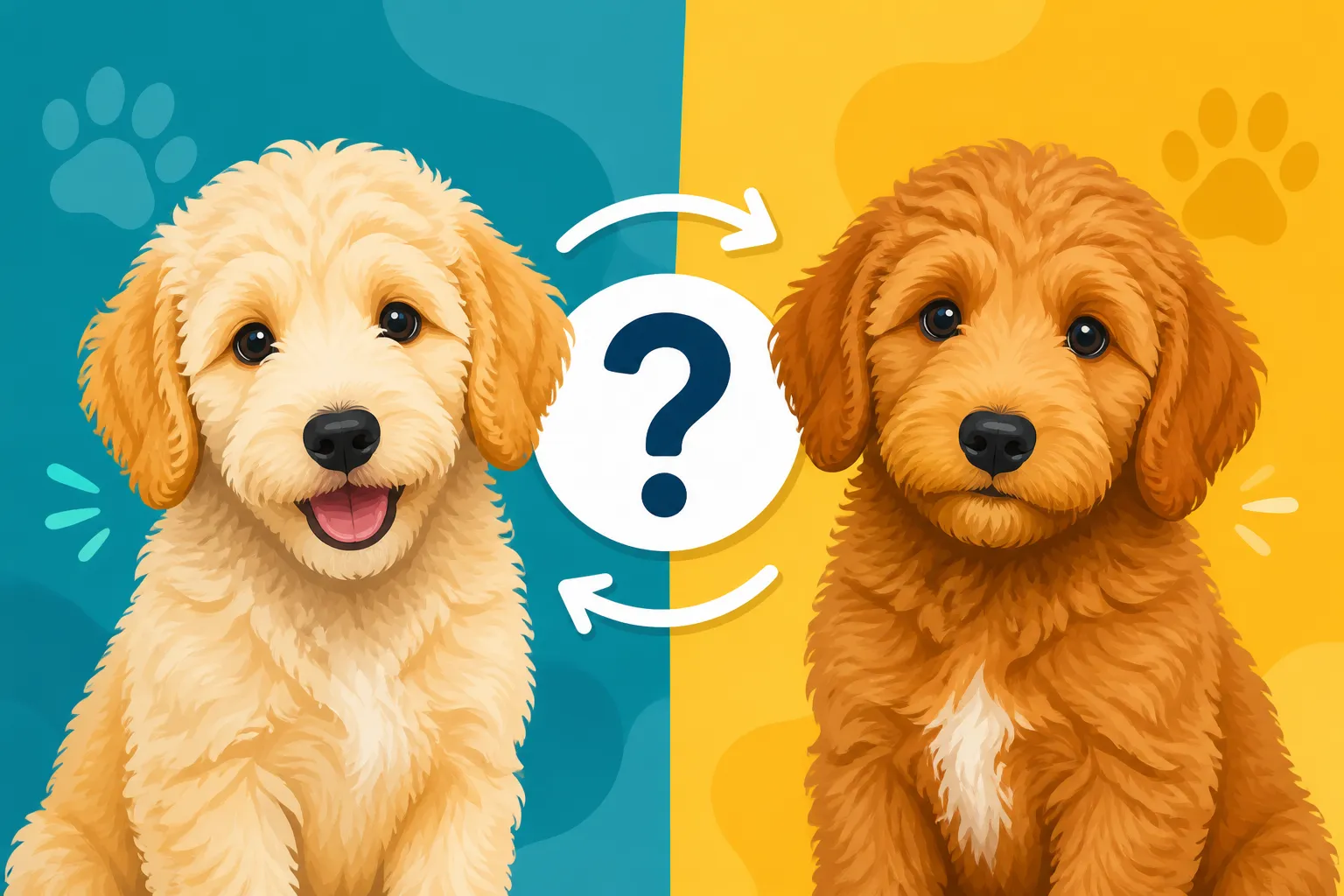
Beyond texture, color can vary dramatically. While a litter might be broadly categorized as "apricot," some pups could be a deep, rich red, others a pale cream, and some a light golden. This is because multiple genes influence coat color and intensity. Even markings like white blazes or small patches can appear randomly due to the intricate patterns of inheritance. It’s rare, but sometimes you’ll even get a phantom or parti-colored puppy in a litter with solid-colored parents, depending on the hidden recessive genes lurking in their lineage.
Size and Structure Differences
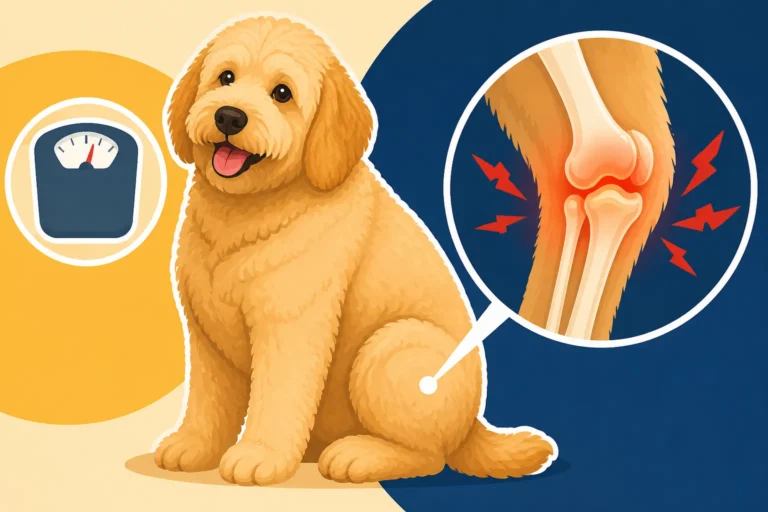
While a breeder can estimate the adult size of a litter based on the parents, individual puppies can still surprise you. One puppy might inherit genes for rapid growth and a larger frame, while a sibling might stay on the smaller side of the spectrum, even within the same size category (e.g., two mini Goldendoodles, one ending up at 25 pounds and the other at 35 pounds). This isn't just about weight, but also bone structure, leg length, and overall build. These subtle differences in skeletal development can also contribute to how they move, how athletic they appear, and even their proneness to certain joint issues. For example, a larger, faster-growing pup might put more stress on its developing joints. This is a good reminder that a Goldendoodle's adult size is not always perfectly predictable.
It’s also worth considering that while the initial size charts give you a ballpark, growth spurts can be different for each individual. One pup might hit its adult height earlier, while another continues to fill out and gain muscle mass for a longer period. This means that even at a year old, one sibling might look fully mature while the other still has that gangly, teenage appearance.
Health Predispositions and Temperament
Beyond the visible, genetic variations also influence health and temperament. Both Golden Retrievers and Poodles carry predispositions to certain health conditions, and each Goldendoodle puppy inherits a unique combination of these risks. For example, one puppy might inherit a higher genetic likelihood for Goldendoodle Hip Dysplasia at 15 to 20 Percent, while a sibling might be more predisposed to certain eye conditions like Progressive Retinal Atrophy Carried by Both Goldendoodle Lines or a blood clotting disorder like Von Willebrand disease from its Poodle side. This is precisely why reputable breeders conduct extensive Health Testing Both Goldendoodle Parents Should Have – to minimize the chances of these issues, but genetic probability still allows for individual variation within a litter.
Similarly, while Goldendoodles are generally known for their friendly, eager-to-please nature, temperament can still vary. One puppy might be naturally more confident and outgoing, eager to explore and greet new people, while another might be more sensitive, preferring quiet environments and taking longer to warm up. These are often innate personality traits, influenced by genetics, that are present even before significant environmental factors come into play. Understanding Goldendoodle Temperament From Two Parent Breeds can give you a baseline, but always expect individual quirks.
Nature vs. Nurture: Early Experiences Shape Development
While genetics lay the groundwork, a puppy’s environment, even in the earliest stages of life, profoundly shapes its development. From the womb to the whelping box and the first few weeks in their new homes, subtle differences in experiences can lead to significant variations between littermates.
It's tempting to think of the womb as a perfectly uniform environment, but even there, slight differences can exist. A puppy's position in the uterus, the amount of blood flow it receives, or even minor hormonal fluctuations can have an impact on its initial development. While these are usually subtle, they can set the stage for slightly different energy levels or even neurological development once they enter the world.
Whelping Box Dynamics and Sibling Interaction
Once born, the social dynamics within the litter begin to exert influence. Even in the whelping box, puppies are not passive recipients of their environment. Some might be more assertive at nursing, ensuring they get more milk and grow slightly faster. Others might be more observant, watching their siblings' interactions before joining in. These early roles can begin to shape their confidence levels and social skills.
A puppy that's consistently "top dog" among its siblings might develop a bolder personality, while one that's frequently pushed aside might become more reserved or learn to use different strategies to get attention. These early interactions, while seemingly minor, contribute to the foundational layers of their adult personalities. For instance, one puppy might be more prone to Goldendoodle Puppy Biting and Mouthing if it wasn't taught appropriate bite inhibition by its littermates as effectively as another.
Early Socialization and Exposure
The critical socialization window for puppies is generally between 3 and 16 weeks of age. During this time, every positive or negative experience (or lack thereof) leaves a lasting impression. If one puppy has more exposure to different sounds, sights, people, and other friendly dogs during this period, it's likely to develop into a more well-adjusted and confident adult. Conversely, a littermate who might have been more sheltered or had fewer varied experiences during these crucial weeks might develop anxieties or a more cautious nature.
Imagine one puppy from the litter is frequently picked up and cuddled by different family members, exposed to the vacuum cleaner, and taken for short, positive car rides. Its sibling, however, might spend more time observing from a distance, or perhaps a bit more timidly. The seemingly small differences in these early exposures can lead to one Goldendoodle being the life of the party, while its sibling is perfectly happy to be a quiet companion. This early period of exposure is crucial for shaping how they interact with the world around them later on.
Training and Individual Learning Styles
Once puppies go to their new homes, individual training approaches and environments further amplify differences. Even if two littermates go to loving homes, the daily routines, training methods, and consistency can vary greatly. One owner might enroll their Goldendoodle in extensive puppy classes and focus heavily on positive reinforcement, while another might take a more relaxed approach, or perhaps struggle with consistency due to a busy schedule.
Goldendoodles are known for being intelligent and eager to please, making them generally receptive to training. However, individual learning styles can still vary. One pup might be highly food-motivated and pick up cues quickly, while another might respond better to praise or play, and take a little longer to grasp new commands. A Goldendoodle's response to different training methods can significantly influence their behavior. For example, some might thrive on the challenge of agility, while others might prefer nose work. Even how you approach Training a Goldendoodle That Wants to Please You can elicit different responses from each unique individual.
Unpacking Goldendoodle Specifics: A Hybrid's Unpredictability
The very nature of the Goldendoodle as a hybrid dog means there's an inherent genetic diversity that often leads to more variation within litters compared to many purebred dogs. This unpredictability is part of their charm but also a key reason for the differences you see.
When you breed two purebred dogs, you're usually working with a much narrower genetic pool, resulting in offspring that are more consistent in appearance and temperament. With a Goldendoodle, you're combining the distinct genetic makeup of a Golden Retriever and a Poodle, two breeds with different coat types, sizes, temperaments, and health predispositions. Even within the same litter, puppies receive a unique blend, making each one a delightful surprise package.
Understanding Goldendoodle Generations
The generation of your Goldendoodle can also play a role in the extent of variation within a litter.
| Goldendoodle Generation | Parentage | Expected Coat/Temperament Consistency |
|---|---|---|
| F1 | Golden Retriever x Poodle | Most variable. Can range from flat coats to tight curls, higher shedding potential. Wide range of temperaments as both parent breeds contribute equally. |
| F1b | F1 Goldendoodle x Poodle (or Golden) | More consistent, especially F1b (F1 x Poodle) which typically has curlier, lower-shedding coats. Temperament might lean more towards the breed it's bred back to. |
| F2 | F1 Goldendoodle x F1 Goldendoodle | Highly unpredictable, often even more so than F1. Can see full range of coats and traits, some even reverting strongly to purebred appearance. |
| Multigen | F1b/F2b or higher x F1b/F2b or higher | Generally the most consistent in terms of coat type (often aiming for non-shedding) and size, as breeders selectively breed for desired traits over several generations. |
An F1 Goldendoodle litter (first generation, 50% Golden Retriever, 50% Poodle) often shows the most significant variation. Some puppies might inherit a coat that strongly favors the Golden Retriever parent, being straighter and shedding more, while a sibling might get the tightly curled Poodle coat. As you move into F1b, F2, or multigen Goldendoodle generations, breeders often select for specific traits, aiming for more consistency, but differences can still arise. Even with multigen, unexpected genetic combinations can pop up, making each puppy truly unique. You can explore this further by understanding Goldendoodle Generations From F1 to Multigen.
Hybrid Vigor and its Nuances
The concept of "hybrid vigor" is often discussed in relation to Goldendoodles, suggesting that crossbreeds are inherently healthier due to increased genetic diversity. While there's truth to this, it doesn't mean all littermates will share identical health outcomes or be immune to health issues. Hybrid vigor typically refers to the reduced likelihood of inheriting two copies of a specific recessive disease gene, as the parents are from different breeds. However, it doesn't eliminate the risk entirely, especially for conditions common to both parent breeds. For instance, both Golden Retrievers and Poodles can be susceptible to certain cancers, so a Goldendoodle can still inherit a risk.
Therefore, while Goldendoodles as a whole might benefit from some hybrid vigor, each individual puppy's genetic hand is still unique. One puppy might be healthier than its sibling due to a more favorable genetic combination, while another might still inherit a predisposition to a condition. This is why investing in pet insurance like Healthy Paws can be a smart move, as it helps cover unexpected veterinary costs, regardless of the individual health trajectory of each unique Goldendoodle. Knowing that even littermates can have different health needs makes a policy with Healthy Paws even more appealing for peace of mind.
The Influence of Parental Lines
Even with the same sire and dam, the specific genetic contribution from each parent can manifest differently in each puppy. A puppy might pick up its Poodle parent's keen intelligence and high energy, while its littermate inherits the Golden Retriever's laid-back, goofy charm. These combinations create a wide spectrum of personalities and physical attributes within the same litter.
Consider the diverse genetic backgrounds of the parent breeds. Golden Retrievers are known for their biddability, friendly nature, and love of retrieving, often with a double coat and a moderate activity level. Poodles, on the other hand, are highly intelligent, agile, and come with a non-shedding, curly coat, often requiring significant mental stimulation. The blending of these two distinct blueprints means that no two Goldendoodles are truly alike, even if they shared a womb and their first weeks of life. Understanding these parent breeds is key to appreciating the beautiful variability in your Goldendoodle.
Finding the Right Fit, Regardless of Differences
Ultimately, the inherent differences between Goldendoodle littermates are part of what makes each dog so special. It means that even if you're comparing two puppies from the same litter, you'll still have a unique individual with its own charm, personality, and needs. This understanding can help manage expectations and encourage you to appreciate the individuality of your furry family members.
When you're choosing a Goldendoodle, whether from a litter or a rescue, focusing on the individual puppy's temperament, energy level, and potential needs is far more important than expecting a carbon copy of a sibling or an idealized standard. Every Goldendoodle, even from the same parents, embarks on its own journey, and embracing that journey is a huge part of the joy of ownership. Remember, even with the best breeding, each pup will be unique. Having a robust pet insurance plan, like those offered by Healthy Paws, can certainly help cushion the financial impact of any unexpected health differences that might emerge as your individual Goldendoodles grow and mature.
Disclaimer
This article is intended for informational purposes only and does not constitute veterinary advice. Always consult with a qualified veterinarian for any health concerns or before making any decisions about your Goldendoodle's care.