Umbilical Hernias in Goldendoodle Puppies
Finding a soft, squishy bulge on your adorable Goldendoodle puppy's belly can be a startling and scary discovery for any new pet parent. It's perfectly natural to worry about what it means for their health and future. This guide aims to thoroughly explain umbilical hernias in Goldendoodle puppies, why they occur, what steps you should take, and what to expect regarding treatment and recovery, helping you navigate this common puppy concern with confidence.
What Exactly is an Umbilical Hernia in Goldendoodle Puppies?
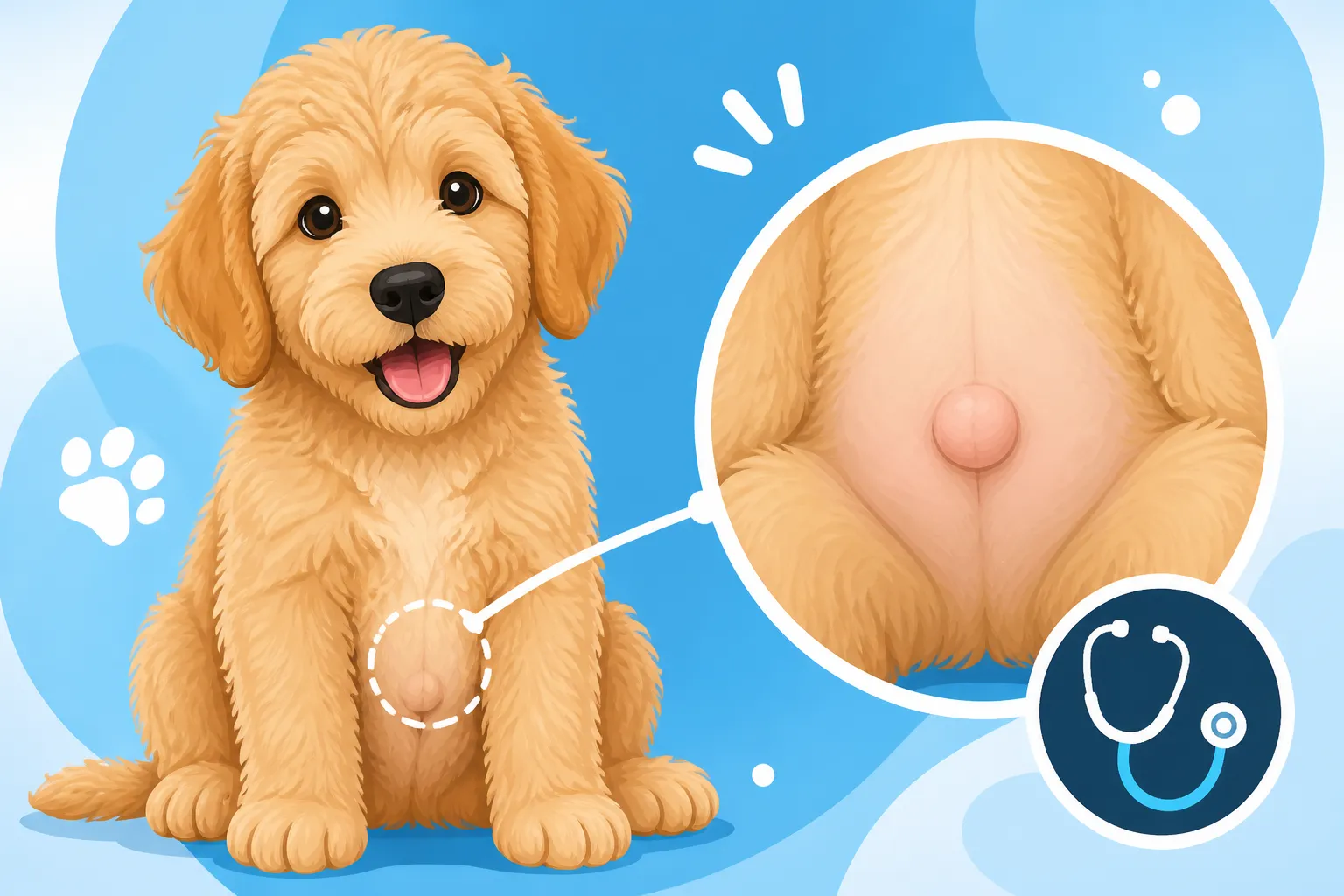
Let's break down what an umbilical hernia actually is, because understanding the basics can really help calm your nerves. Imagine the belly button area on a human baby – your Goldendoodle puppy has a similar spot where its umbilical cord was once attached in the womb. This spot, known as the umbilical ring, is essentially a small opening in the abdominal wall. During gestation, blood vessels passed through this opening, connecting your developing puppy to its mother, providing all the nutrients it needed to grow.
Normally, after a puppy is born and the umbilical cord is broken, this ring of muscle and tissue should close up tightly on its own within a few days or weeks. When it doesn't close completely, a small gap remains. An umbilical hernia occurs when a bit of fat, or occasionally a small loop of intestine, pushes through this incomplete opening, creating that noticeable bulge under the skin. It’s like a little weak spot in the muscle wall, allowing contents from inside the abdomen to protrude outwards. Most of the time, what you're feeling is just fat, not anything critical.
The Anatomy of the Umbilical Ring and Hernia Formation
To get a bit more technical, the umbilical ring is formed by the rectus abdominis muscles, which are the "abs" of your dog. These muscles are supposed to knit together and fuse, forming a strong, continuous wall that holds everything inside. When this fusion is incomplete, the layers don't quite meet, leaving a defect. The pressure inside the abdomen, which happens naturally every time your puppy breathes, strains, or even just moves, can push tissue outwards through this small opening.
The size of the hernia can vary significantly. Some are tiny, barely perceptible bumps that feel like a pea, while others might be large enough to hold a grape or even a walnut, especially in a standard-sized Goldendoodle. Most of these hernias are what we call "reducible," meaning you can gently push the contents back into the abdomen with your finger. This is a good sign, as it indicates the tissue isn't trapped or pinched. An "irreducible" hernia, on the other hand, means the tissue is stuck outside and can't be easily pushed back in. This situation carries a higher risk and warrants a more urgent vet visit.
Differentiating Hernia Types and What They Look Like
When you spot a bulge, it's natural to jump to conclusions, but knowing what you're looking at can provide immense relief. For Goldendoodles, umbilical hernias are by far the most common type of hernia seen in puppies. They present as a soft, often painless, swelling right at the navel. The skin over the hernia usually looks normal, and your puppy typically won't show any signs of discomfort unless there's a complication.
It's important to distinguish an umbilical hernia from other types of hernias, like inguinal hernias (in the groin area) or diaphragmatic hernias (which are internal and much more serious). Umbilical hernias are almost always benign and localized to the belly button. You might also notice that the bulge is more prominent when your puppy is standing, straining, barking, or crying, and it might become less noticeable when they are relaxed or lying down. This fluctuation is a classic sign of a reducible hernia, where the abdominal contents move freely in and out of the opening. It's a key observation to share with your vet during your initial puppy health checks.
Why Do Goldendoodle Puppies Get Umbilical Hernias?
When you’re staring at that little bulge on your puppy’s belly, one of the first questions that pops into your head is, "Why my puppy? Did I do something wrong?" The answer is almost certainly no. Umbilical hernias are rarely due to anything an owner does, and often, they’re not even entirely preventable by the breeder. They are primarily a result of either genetics or developmental anomalies during the very early stages of life.
The Role of Genetics and Inheritance
Genetics plays a significant role in the occurrence of umbilical hernias in dogs, including our beloved Goldendoodles. While it's not always a straightforward Mendelian inheritance pattern, there is a recognized familial predisposition. This means that if one or both parent dogs have a history of umbilical hernias, or if they come from lines where hernias are common, their puppies have a higher likelihood of developing them. It’s not necessarily a defect in the parents themselves, but a genetic tendency for that umbilical ring to not fully close.
A responsible Goldendoodle breeder will be transparent about any instances of umbilical hernias in their lines. They should also perform thorough health testing on both parent dogs to rule out other hereditary conditions. While there isn't a specific DNA test just for umbilical hernias, a comprehensive DNA panel for a Goldendoodle parent can shed light on other genetic predispositions that might be linked to overall structural integrity or developmental quirks. You can learn more about this in our guide on The DNA Panel a Goldendoodle Breeder Should Run. If a breeder consistently produces puppies with hernias, it might suggest a stronger genetic component at play that needs to be considered.
Developmental Factors During Gestation and Birth
Beyond genetics, several developmental factors can contribute to an umbilical hernia forming. During fetal development, the umbilical ring is meant to close naturally. Sometimes, for reasons that aren't always clear, this process is simply incomplete. It’s often just a minor hiccup in development, not a sign of a severely compromised puppy.
The way the umbilical cord is handled at birth can also play a minor, though less significant, role. If the cord is cut too short or tied off improperly, it could theoretically contribute to a larger defect, but most breeders and vets are extremely careful during this critical time. More commonly, it's just a natural variation in how each individual puppy's tissues develop. Since Goldendoodles are a crossbreed, there can be a wide range of genetic expression, leading to differences even between littermates. This is one of the reasons why Why Two Goldendoodles From One Litter Differ can be such a fascinating topic, even down to minor physical traits like this.
Breed Predisposition and Goldendoodles
While umbilical hernias are common across many breeds, some breeds do show a slightly higher incidence. The Poodle, one of the Goldendoodle's parent breeds, is sometimes noted to have a higher prevalence of umbilical hernias. Golden Retrievers, the other parent, can also develop them. So, when you combine these two breeds, there's a possibility that this genetic predisposition might carry over.
It's not that Goldendoodles are inherently "unhealthy" because they get hernias; it's just a common developmental issue that can occur. Knowing that your Goldendoodle might be at a slightly increased risk due to its lineage isn't a cause for alarm, but rather a reason to be observant during those initial weeks and months. Always make sure your puppy receives all its recommended health checks, starting with your initial vet visit which often coincides with Goldendoodle Puppy Vaccination Timing. Your vet will be able to properly assess any lumps or bumps.
When and How to Treat an Umbilical Hernia in Your Goldendoodle
Discovering an umbilical hernia often brings with it a wave of anxiety, especially when you start thinking about surgery. The good news is that not every umbilical hernia requires immediate or even eventual surgical intervention. Many tiny hernias will actually close on their own as your Goldendoodle puppy grows. The key is careful observation and professional veterinary assessment.
Monitoring for Spontaneous Closure
For small, reducible umbilical hernias (meaning you can gently push the contents back in), your veterinarian might recommend a "wait and see" approach. Puppies grow rapidly, and sometimes, as the abdominal muscles strengthen and mature, that small opening simply closes up. This spontaneous closure usually happens within the first six months of life. It’s always best to have your vet confirm that the hernia is indeed small and reducible, and to rule out any immediate concerns.
During this monitoring period, you'll need to keep a close eye on the hernia. Watch for any changes in size, texture, or color. If the hernia suddenly becomes hard, hot to the touch, or if your puppy shows any signs of pain when you touch it, or general discomfort like vomiting or lethargy, it's crucial to contact your vet immediately. These could be signs of a more serious complication where contents have become trapped.
Veterinary Assessment and When Surgery is Needed
When you take your Goldendoodle puppy to the vet for its initial health checks, like those discussed in Goldendoodle Puppy Vaccination and Puppy Health Checks, one of the things they'll certainly examine is the umbilical area. The vet will gently palpate the bulge to determine its size, whether it's reducible, and what kind of tissue is protruding.
Here’s a general guideline for when surgery might be recommended:
- Large hernias: If the opening is significantly big (e.g., larger than a fingertip for a small Goldendoodle, or larger than a couple of fingers for a standard size), it's less likely to close on its own and carries a higher risk of complications.
- Irreducible hernias: If the contents cannot be pushed back in, this indicates entrapment, and surgery is usually advised sooner rather than later to prevent more serious issues like strangulation (where blood supply is cut off).
- Signs of discomfort or complications: If your puppy shows pain, vomiting, or changes in behavior associated with the hernia, surgical repair becomes urgent.
- Persistent hernias: If a hernia hasn't closed by the time your Goldendoodle is six months to a year old, or if it has grown larger, your vet will likely recommend surgical correction.
The Surgical Process and Recovery
The good news is that umbilical hernia repair is a routine and generally low-risk surgical procedure. It involves a small incision over the hernia, carefully pushing the contents back into the abdomen, and then stitching the muscle layers back together to close the opening. Often, breeders and vets recommend combining the hernia repair with the puppy's spay or neuter surgery. This makes sense from a practical and financial standpoint, as the puppy will already be under anesthesia. If you're wondering about timing, our article on Neuter Timing That Depends on Goldendoodle Size might offer some helpful insights.
The recovery process is usually straightforward. Your Goldendoodle puppy will need to wear an E-collar (cone) to prevent them from licking or chewing at the incision site. Activity might be restricted for a couple of weeks to allow the surgical site to heal properly. Your vet will provide specific instructions on wound care, medication (if needed), and when to remove stitches. Most puppies bounce back quickly and are back to their playful selves in no time.
| Hernia Type | Size | Reducible? | Typical Management | Urgency for Surgery |
|---|---|---|---|---|
| Small Umbilical | Pea-sized to marble-sized | Yes | Monitor for spontaneous closure (up to 6-9 months) | Low |
| Medium Umbilical | Cherry-sized | Yes | Monitor, often repaired during spay/neuter | Moderate (if persistent) |
| Large Umbilical | Walnut-sized or larger | Yes/No | Surgical repair recommended | High (if irreducible or large) |
| Irreducible Umbilical | Any size, contents stuck out | No | Surgical repair recommended immediately | Very High |
Cost Considerations and Financial Planning
Now, let's talk about the elephant in the room: the cost. Goldendoodles come with their own set of expenses, from initial puppy costs to ongoing care, and unexpected vet bills can really throw a wrench in your budget. The cost of umbilical hernia repair can vary depending on your location, the veterinary clinic, and whether it's done as a standalone procedure or combined with a spay/neuter. Generally, you can expect costs to range from a few hundred dollars to over a thousand, especially if complications arise. For a deeper dive into general vet expenses, you might find our article on Goldendoodle Surgery and Emergency Vet Costs useful.
This is where pet insurance can be a real lifesaver. Companies like Healthy Paws offer various plans that can help cover unexpected veterinary expenses, including surgical procedures like hernia repair. While many policies have waiting periods and may not cover pre-existing conditions, enrolling your Goldendoodle puppy early could provide peace of mind for future health concerns. Even if a hernia is technically a pre-existing condition, some policies might offer coverage if you enroll before the condition is diagnosed or if it's considered congenital but not yet symptomatic. It's always worth checking with providers like Healthy Paws to understand their specific terms and conditions. Planning for a Goldendoodle's expenses across their full lifetime, including potential health issues, is a smart move.
Living with a Goldendoodle and an Umbilical Hernia: Owner Insights
Beyond the medical details, living with a Goldendoodle puppy, especially one with a little health quirk like an umbilical hernia, requires a blend of vigilance, common sense, and a whole lot of love. It’s about knowing what to watch for and when to act, without letting anxiety overshadow the joy of puppyhood.
Recognizing Red Flags for Complications
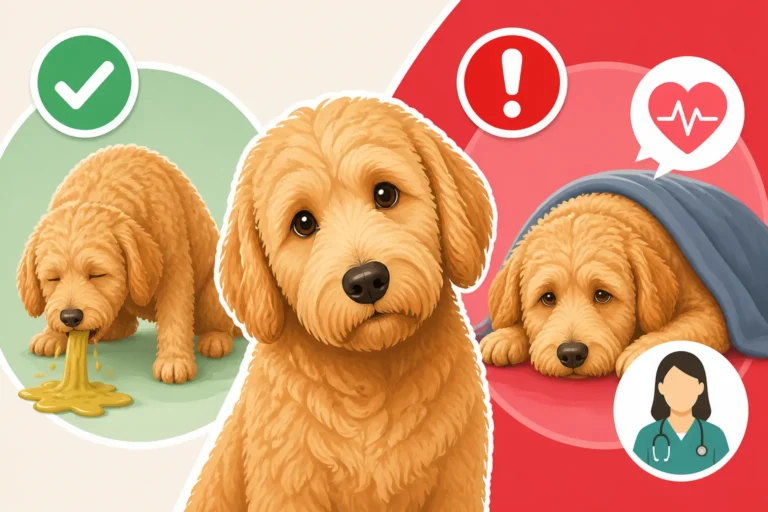
While most umbilical hernias are harmless, it's incredibly important to know the signs that suggest a problem. These red flags indicate that the hernia may have become "incarcerated" or "strangulated," meaning the protruding tissue is trapped or its blood supply is cut off. This is a medical emergency requiring immediate veterinary attention.
Look out for any of these symptoms:
- Sudden Increase in Size or Firmness: The hernia feels much larger or harder than usual, and you can no longer gently push it back in.
- Pain or Tenderness: Your puppy cries, whines, or recoils when you touch the hernia area, or they seem generally painful in their abdomen.
- Redness or Discoloration: The skin over the hernia appears red, bruised, or discolored.
- Vomiting or Loss of Appetite: These can be signs of intestinal obstruction if a loop of bowel is trapped.
- Lethargy or Weakness: Your puppy seems unusually tired, weak, or unresponsive.
- Fever: Any signs of infection or systemic illness.
If you observe any of these red flags, do not wait. Contact your veterinarian or an emergency animal hospital like the Northwood Animal Hospital in Grand Rapids, Michigan, immediately. Prompt action can prevent severe complications and ensure your Goldendoodle’s well-being.
Long-Term Outlook and Dispelling Myths
For Goldendoodles who have had their umbilical hernias successfully repaired, the long-term outlook is excellent. Once the surgical site has fully healed, the recurrence rate is very low, and your Goldendoodle can go on to live a full, active, and healthy life without any further issues related to the hernia. The vast majority of Goldendoodle owners who go through this process report complete success and no lingering problems.
There are also a few myths we can dispel about umbilical hernias:
- Myth 1: You can "tape" a hernia closed. This is an old wives' tale and can actually be dangerous. Taping or strapping the hernia doesn't help it close and can irritate the skin, cause infection, or even make the problem worse by hindering blood flow.
- Myth 2: All hernias are life-threatening. As we've discussed, many small umbilical hernias are benign and resolve on their own or are easily fixed with a routine surgery. It's only when complications like strangulation occur that they become truly dangerous.
- Myth 3: An umbilical hernia means a puppy is unhealthy. While it's a structural defect, it doesn't typically indicate overall poor health or a compromised immune system. It's usually an isolated issue.
Ultimately, an umbilical hernia in a Goldendoodle puppy is a common occurrence, and while it requires your attention and a vet’s assessment, it's rarely a cause for long-term concern. With proper care and timely intervention if needed, your Goldendoodle will be chasing squirrels and cuddling on the couch for years to come, a perfectly healthy and happy companion.
Disclaimer
Please remember that the information provided in this article is for general educational purposes only and is not a substitute for professional veterinary advice. Always consult with a qualified veterinarian regarding your Goldendoodle's specific health concerns, diagnosis, and treatment options.