Goldendoodle Surgery and Emergency Vet Costs
Bringing a Goldendoodle into your life is an incredible joy, but let's be honest, the thought of unexpected veterinary bills can cast a shadow over that excitement. It’s a real worry for many dog owners, especially when you consider how quickly emergency visits or complex surgeries can drain your savings. This comprehensive guide is here to walk you through the potential costs associated with Goldendoodle surgery and emergency vet care, offering realistic insights and practical advice to help you prepare for the unexpected.
Understanding the Reality of Goldendoodle Vet Bills
It's easy to fall in love with a Goldendoodle's charm and assume their "hybrid vigor" protects them from major health woes. However, like any dog, they can face serious health challenges that demand immediate and costly veterinary intervention. Ignoring this reality can leave you scrambling when a crisis hits, and trust me, you don't want to be making critical health decisions for your beloved companion based on your bank balance.
Why Goldendoodle Vet Costs Can Be a Shock
Many Goldendoodle owners are caught off guard by the financial demands because there's often a misconception that crossbreeds are inherently healthier or cheaper to maintain. While some might claim What Hybrid Vigor Means for a Goldendoodle, the truth is more nuanced. Goldendoodles inherit a blend of genes from both Golden Retrievers and Standard Poodles, which means they can inherit the predispositions to health issues found in both parent breeds. There isn't a dedicated Goldendoodle breed club or universally accepted health scheme that dictates mandatory health testing for parent dogs in the same way purebred registries do. This means the health background can vary wildly, and you might not know what you're truly getting until problems arise. Even with diligent breeder research and The DNA Panel a Goldendoodle Breeder Should Run, you can't guarantee a lifetime free of emergencies. These unforeseen issues, ranging from sudden illnesses to accidental injuries, quickly add up, often exceeding thousands of dollars in a single incident.
Common Emergencies That Rack Up Bills
Emergencies don't send appointment reminders; they just happen, usually at the most inconvenient times. For Goldendoodles, certain situations can escalate quickly and demand immediate veterinary attention, often in an emergency clinic where costs are inherently higher. One major concern for larger Goldendoodles is bloat, or Gastric Dilatation-Volvulus (GDV), a life-threatening condition where the stomach twists. Bloat Risk in a Standard Goldendoodle is a serious consideration, and if not treated within hours, it can be fatal. The surgery for bloat is extensive and expensive. Accidental ingestion is another common emergency; Goldendoodles, being curious and often food-motivated, can swallow anything from toys to socks, or even toxic substances like chocolate or household chemicals. Removing a foreign object from the stomach or intestines often requires surgery. Sudden lameness or limping, especially after vigorous play, could indicate a fracture, a ligament tear, or other orthopedic trauma requiring X-rays, pain management, and potentially surgery. And while Goldendoodles are famous for their lovely coats, they can also suffer from acute allergic reactions, bee stings, or severe hot spots that become infected, leading to emergency vet visits for immediate relief and medication.
The Cost of Diagnostics Before Treatment
Before any treatment plan, especially surgery, your vet needs to understand exactly what's going on inside your Goldendoodle. This means a battery of diagnostic tests, and each one comes with its own price tag. A simple emergency visit might start with an exam fee, but quickly escalate to hundreds, sometimes even thousands, depending on what's needed. For example, if your Goldendoodle is vomiting or lethargic, the vet might order blood work (complete blood count and chemistry panel) to check for infection, organ damage, or dehydration, costing anywhere from $100-$300. X-rays to look for foreign objects, fractures, or signs of bloat can run $150-$400 per area. If X-rays aren't clear, an ultrasound of the abdomen might be needed, adding another $300-$600. For neurological issues or complex orthopedic problems, an MRI or CT scan could be recommended, easily pushing costs into the $2,000-$4,000 range. These diagnostic steps are absolutely crucial for an accurate diagnosis and effective treatment, but they are often the first major hurdle in emergency vet bills, before any actual treatment even begins.
Major Surgeries and Their Price Tags
When it comes to Goldendoodles, certain genetic predispositions from their parent breeds mean specific surgeries are unfortunately common. Understanding these potential issues and their associated costs is vital for any owner.
Hip Dysplasia and Surgical Correction
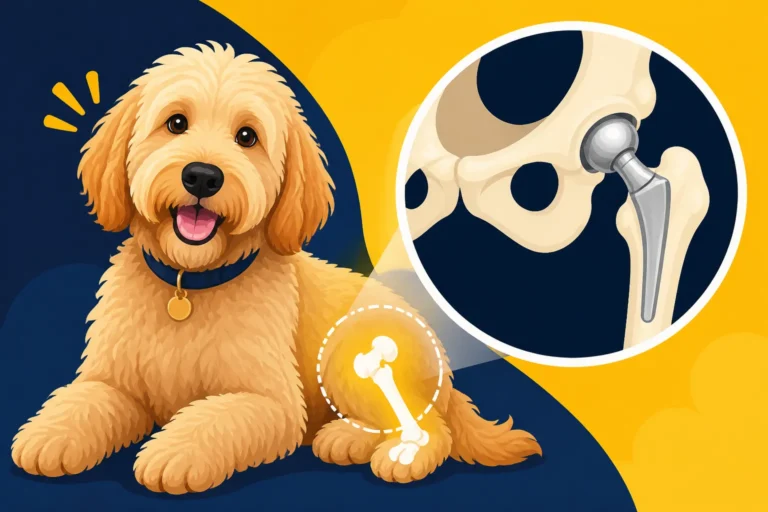
Hip dysplasia is a significant concern for Goldendoodles, a condition where the hip joint doesn't form correctly, leading to instability, pain, and eventually arthritis. While the Poodle parent might have a lower incidence, Goldendoodle Hip Dysplasia at 15 to 20 Percent is still a notable risk. If the condition is severe and conservative management (like pain medication, supplements, and physical therapy) isn't enough, surgery becomes the best option for a good quality of life. The most effective surgical treatment for severe hip dysplasia is a Total Hip Replacement (THR), where the damaged joint is replaced with artificial components. This is a highly specialized procedure, usually performed by an orthopedic surgeon, and can cost anywhere from $5,000 to $8,000 per hip. Recovery involves strict confinement, physical therapy, and follow-up X-rays. Another option, especially for smaller Goldendoodles or cases where THR isn't feasible, is a Femoral Head Ostectomy (FHO). This involves removing the head of the femur, allowing a "false joint" to form. FHO is less expensive, typically $2,000 to $4,000 per hip, but the recovery and functional outcome can be more variable.
Cruciate Ligament Tears and Knee Surgeries
Active Goldendoodles, particularly those prone to high-energy play and sudden movements, are unfortunately at risk for cranial cruciate ligament (CCL) tears in their knees – similar to an ACL tear in humans. This injury causes significant lameness and pain. Left untreated, it almost inevitably leads to arthritis and can even predispose the other knee to tearing. The most common and successful surgical procedure for a torn CCL in dogs is Tibial Plateau Leveling Osteotomy (TPLO). This complex surgery alters the angle of the shin bone (tibia) to stabilize the knee joint without relying on the ligament. A TPLO surgery can cost between $3,500 and $6,000 per knee. Less invasive options like lateral suture (extracapsular repair) are sometimes used for smaller, less active dogs, ranging from $2,000 to $4,000. Regardless of the method, recovery is lengthy, involving months of restricted activity and physical therapy. It's not uncommon for Goldendoodles to injure the other knee within a year or two, doubling your potential costs. Owners need to understand Cruciate Ligament Tears in a Jumping Goldendoodle and the commitment involved in recovery.
Patellar Luxation Repair in Smaller Goldendoodles
While large breed Goldendoodles might face hip and cruciate issues, their smaller counterparts—Mini and Toy Goldendoodles—are more susceptible to patellar luxation, or "slipping kneecaps." This is a condition where the kneecap (patella) dislocates from its normal groove in the thigh bone (femur). It can cause intermittent lameness, pain, and predispose the joint to arthritis and other injuries like CCL tears. The severity is graded from 1 to 4, with higher grades often requiring surgical intervention. The surgery involves deepening the femoral groove, realigning the quadriceps muscle, and tightening or loosening the joint capsule to keep the patella in place. The cost for patellar luxation repair typically ranges from $1,800 to $4,000 per knee, depending on the severity and surgical complexity. Just like with CCL tears, it's not uncommon for both knees to be affected, either simultaneously or at different times, requiring multiple surgeries and extended recovery periods. This is a prime example of why Why Small Goldendoodles Slip Kneecaps is an important consideration for potential owners of smaller doodles.
Emergency Abdominal Surgeries
Beyond orthopedic issues, Goldendoodles can face sudden, life-threatening abdominal emergencies that require immediate surgical intervention. As mentioned, Gastric Dilatation-Volvulus (GDV), or bloat, is a prime example. The surgery to de-rotate the stomach and perform a gastropexy (surgically attaching the stomach to the abdominal wall to prevent future twisting) is highly urgent and complex, often costing between $3,000 and $7,000, depending on complications and hospital stay. Another common emergency is foreign body ingestion. Goldendoodles, being playful and sometimes indiscriminate eaters, can swallow objects that get lodged in their esophagus, stomach, or intestines. Symptoms like persistent vomiting, lethargy, and abdominal pain warrant immediate vet attention. Surgical removal of a foreign body can cost $2,000 to $5,000, varying based on the object's location, the extent of damage to the digestive tract, and the length of hospital recovery. Less common, but equally urgent, might be the removal of rapidly growing tumors or internal bleeding. These situations often involve specialists and intensive care, pushing costs into the upper echelons of emergency vet care.
Chronic Conditions Requiring Ongoing Financial Commitment
Some health issues aren't a one-time surgical fix but rather a lifelong commitment to care and medication. Goldendoodles, unfortunately, can be prone to several such conditions that require consistent financial outlay.
Managing Goldendoodle Allergies and Skin Issues
Goldendoodles often inherit sensitive skin and a propensity for allergies from both parent breeds. This can manifest as relentless itching, paw licking, ear infections, and skin rashes. Goldendoodle Allergies and Itchy Skin are incredibly common and can be frustrating and costly to manage. Diagnosing allergies often starts with elimination diets using novel proteins (some owners turn to fresh food services like Ollie for this) or prescription hydrolyzed diets, which can be more expensive than regular kibble. Environmental allergy testing (blood tests or intradermal skin tests) can cost several hundred dollars. Once identified, management can involve daily antihistamines, medicated shampoos, topical treatments, and frequent ear cleanings. For severe cases, ongoing treatments like Apoquel or Cytopoint injections can be prescribed, costing $50-$150 per month, or even immunotherapy shots tailored to your dog's specific allergens, which can be hundreds of dollars annually after an initial setup fee. These are not one-off expenses; they're recurring bills that become a regular part of your Goldendoodle's care budget for life.
Lifelong Medication for Conditions like Addison's Disease
Addison's Disease, also known as hypoadrenocorticism, is an endocrine disorder inherited from the Poodle side that can affect Goldendoodles. It occurs when the adrenal glands don't produce enough hormones, particularly cortisol and aldosterone. Addison's Disease a Goldendoodle Gets From the Poodle can be tricky to diagnose because its symptoms—lethargy, vomiting, diarrhea, weakness, and loss of appetite—can mimic many other conditions. However, once diagnosed via an ACTH stimulation test, it requires lifelong medication. Treatment typically involves daily oral prednisone and monthly injections of Percorten-V (desoxycorticosterone pivalate). The monthly cost for these medications can range from $50 to over $200, depending on the dog's size and the specific medications prescribed. In addition to medication, regular blood tests are necessary to monitor hormone levels and adjust dosages, adding to the ongoing financial commitment. Without proper management, an Addisonian crisis can occur, which is a life-threatening emergency requiring hospitalization and intensive care, racking up thousands in vet bills.
Arthritis and Mobility Management in Senior Goldendoodles
As Goldendoodles age, especially the larger standard sizes, they become more susceptible to arthritis and other degenerative joint diseases. This is particularly true if they have underlying conditions like hip or elbow dysplasia that have progressed over time. Goldendoodle Arthritis After the Age of Eight is a common challenge for owners. Managing arthritis involves a multi-faceted approach, all of which come with costs. This can include daily non-steroidal anti-inflammatory drugs (NSAIDs) like Rimadyl or Galliprant, which might run $40-$100 per month. Joint supplements containing glucosamine, chondroitin, and MSM are often recommended, adding another $20-$50 monthly. Physical therapy, hydrotherapy, or acupuncture sessions can significantly improve mobility and comfort but cost $50-$150 per session, often needed weekly or bi-weekly initially. Additionally, owners might invest in orthopedic beds, ramps, or mobility harnesses to help their senior Goldendoodle navigate their home more comfortably. While these aren't emergency surgeries, the cumulative cost of managing chronic pain and mobility issues throughout a Goldendoodle's senior years can be substantial.
The Role of Pet Insurance in Goldendoodle Care
Given the potential for high-cost emergencies and chronic conditions, many Goldendoodle owners consider pet insurance. It's not a magic bullet, but it can certainly alleviate the financial burden during stressful times.
How Pet Insurance Works for Goldendoodles
Pet insurance essentially functions like human health insurance, but for your dog. You pay a monthly or annual premium, and in return, the insurance company reimburses you for a portion of your eligible veterinary bills after you've met your deductible. For Goldendoodles, like any crossbreed, getting coverage is usually straightforward, as they don't have the same "breed-specific" exclusions or higher premiums that some purebreds might experience due to recognized hereditary conditions. Most plans cover accidents, illnesses, surgeries, diagnostic tests, and medications. You'll choose a deductible (the amount you pay out-of-pocket before reimbursement kicks in, often $250-$1,000), a reimbursement rate (the percentage of the vet bill the insurer pays, typically 70-90%), and an annual limit (the maximum the insurer will pay in a policy year). It's crucial to understand that most policies operate on a reimbursement model, meaning you pay the vet directly at the time of service, and then submit a claim to your insurance provider, like Healthy Paws, for repayment. This means you still need access to funds upfront, but it can be a lifesaver for big bills.
Comparing Providers and Understanding Exclusions
Not all pet insurance policies are created equal, and it's essential to do your homework before committing. Companies like Healthy Paws are popular, but it's worth comparing several providers to find the best fit for your Goldendoodle and your budget. Pay close attention to what each policy excludes. The biggest exclusion to watch out for is pre-existing conditions. If your Goldendoodle has been diagnosed with a condition before you enroll in insurance or during the waiting period, that condition will almost certainly not be covered. This is why enrolling a Goldendoodle puppy as early as possible is often recommended. Some policies might also have specific exclusions for certain hereditary conditions, or impose longer waiting periods for orthopedic issues like hip or knee problems. Read the fine print carefully, especially regarding hereditary and congenital conditions, and any age restrictions or benefit schedule limits. Some plans might limit coverage for chronic issues like Goldendoodle Ear Infections as a Recurring Claim, so ensure recurring problems are adequately covered if that's a concern for your dog. A good practice is to get quotes from multiple providers and scrutinize their sample policies to understand the true scope of their coverage.
Is Goldendoodle Pet Insurance Worth the Investment?
This is the million-dollar question for many Goldendoodle owners. The answer largely depends on your financial situation, your risk tolerance, and, frankly, your dog's luck. Consider the potential costs: a TPLO surgery for a torn cruciate ligament could be $5,000. If your Goldendoodle needs that, and you have a 90% reimbursement rate with a $500 deductible, the insurance would cover $4,050, leaving you to pay $950. Without insurance, that $5,000 would come entirely out of your pocket. For chronic conditions like allergies or Addison's, the monthly medication costs and vet visits can add up to hundreds or even thousands annually. Insurance can significantly reduce this burden. The downside is that if your Goldendoodle is perfectly healthy throughout its life, you might feel like you've paid premiums for nothing. However, pet insurance provides peace of mind. It allows you to make medical decisions based on what's best for your Goldendoodle, not just what you can afford at that moment. Given the predispositions Goldendoodles carry for joint issues, allergies, and other hereditary conditions, many owners find it to be a worthwhile investment to protect against catastrophic financial hits.
Strategies for Budgeting and Mitigating High Costs
While emergencies are unpredictable, there are proactive steps you can take to manage your Goldendoodle's health and budget for potential costs. Being prepared is half the battle.
Preventive Care as a Cost-Saving Measure
The old adage "an ounce of prevention is worth a pound of cure" holds true for Goldendoodle health. Investing in consistent preventive care can significantly reduce the likelihood of expensive emergency treatments down the line. This means adhering to a regular vaccination schedule to protect against common and serious diseases like parvo and distemper, which can lead to costly hospital stays if contracted. Ensure your Goldendoodle receives regular parasite prevention for fleas, ticks, and heartworm, often costing $20-$50 per month depending on their size, but saving you from thousands in treatment for diseases these parasites carry. Routine annual or bi-annual veterinary check-ups are paramount. During these visits, your vet can catch developing issues early, before they become emergencies. For example, addressing Goldendoodle Dental Crowding in the Smaller Sizes with regular cleanings can prevent painful infections and extractions, which are far more expensive. Feeding a high-quality, balanced diet (many Goldendoodle owners choose reputable brands available through Chewy for convenience and variety) and maintaining a healthy weight for your Goldendoodle will also reduce strain on their joints and overall organ health, lessening the risk of conditions that require surgical intervention or chronic medication.
Emergency Funds and Savings Accounts
Even with pet insurance, there will be out-of-pocket expenses for deductibles, co-pays, and potentially services not covered by your policy. This is where an emergency fund specifically for your Goldendoodle becomes invaluable. Consider setting up a separate savings account and contribute a small amount each month, perhaps $50-$100, starting from the day you bring your puppy home. Over time, this fund can grow into a substantial buffer for unexpected vet bills. For instance, if you put aside $75 a month, in two years you'll have $1,800 saved. That's enough to cover many deductibles or even a minor surgery without dipping into your personal emergency fund or going into debt. Think of it as self-insurance for the gaps that pet insurance might not cover, or for those who choose not to purchase a policy. Having readily accessible funds means you can focus on your Goldendoodle's recovery rather than stressing about how to pay the bill.
Discussing Financing Options with Your Vet
When a major emergency or surgery arises, and you're faced with a bill that exceeds your immediate budget or insurance coverage, don't hesitate to talk openly with your veterinary team. Many veterinary clinics understand the financial strain these situations can cause and offer various payment solutions. Some clinics provide in-house payment plans, allowing you to pay the total cost over several months. You might need to apply and qualify, but it can be a lifesaver. Another popular option is third-party medical credit cards like CareCredit or Scratchpay. These work like traditional credit cards but are specifically for healthcare expenses, often offering promotional periods with deferred interest if the balance is paid within a certain timeframe. Before applying, always understand the terms and interest rates. Additionally, some charitable organizations and breed-specific rescues might offer financial aid for owners facing significant vet bills, especially for severe or chronic conditions. It's always worth asking your vet if they know of any local or national programs that could provide assistance during a crisis.
Estimated Costs for Common Goldendoodle Surgeries and Emergencies
To give you a clearer picture of the financial implications, here's a table outlining estimated costs for some common Goldendoodle-related surgeries and emergency situations. Keep in mind these are averages and actual costs can vary significantly based on your geographic location, the specific veterinary clinic (general practice vs. specialist vs. emergency hospital), the complexity of the case, and your Goldendoodle's size and individual needs.
| Condition/Procedure | Estimated Cost Range (USD) | Notes |
|---|---|---|
| Emergency Vet Visit (Initial Exam + Basic Diagnostics) | $200 – $800 | Includes after-hours fees, basic bloodwork, and possibly X-rays. |
| Foreign Body Removal Surgery (uncomplicated) | $2,000 – $5,000 | Varies by object location, hospital stay length. Can be higher for complications. |
| Gastric Dilatation-Volvulus (Bloat) Surgery | $3,000 – $7,000 | Urgent, complex surgery, includes gastropexy, intensive care. |
| Cruciate Ligament Repair (TPLO) | $3,500 – $6,000 per knee | Includes surgery, anesthesia, hospitalization, pain meds. Follow-up physical therapy extra. |
| Patellar Luxation Repair | $1,800 – $4,000 per knee | Varies by severity, surgeon. Follow-up physical therapy extra. |
| Total Hip Replacement (THR) | $5,000 – $8,000 per hip | Highly specialized, includes extensive recovery, X-rays. |
| Femoral Head Ostectomy (FHO) | $2,000 – $4,000 per hip | Less common for larger Goldendoodles, simpler recovery than THR but functional outcome varies. |
| Allergy Testing (skin or blood) | $300 – $800 | Diagnostic only. Does not include ongoing medication or immunotherapy costs. |
| Addison's Disease (Initial Diagnosis & First Treatment) | $500 – $1,500 | Includes ACTH stim test, initial stabilizing meds. Ongoing monthly medication is separate. |
| Annual Allergy Immunotherapy (after initial setup) | $600 – $1,200 annually | For severe allergies, after initial testing and formulation. Monthly medication like Apoquel/Cytopoint extra. |
| Severe Ear Infection (recurrent, needing specialist) | $300 – $1,000+ | Can escalate if needing sedation, deep cleaning, or specialist ear cytology. Chronic cases much higher. |
Disclaimer
This article is for general informational purposes only and does not constitute professional advice. Laws, prices and regulations vary by location and change over time. Consult a qualified professional for guidance on your specific situation.