Why a Mini Goldendoodle Groom Still Takes Two Hours
It’s a common moment for mini Goldendoodle owners: you drop off your adorable, fluffy companion at the groomer, expecting a quick tidy-up, only to be told it will be a couple of hours. Two hours for a mini Goldendoodle? It can feel surprising, even a little frustrating, when you picture their smaller size. However, that two-hour estimate isn't arbitrary; it reflects the unique complexities of their coat, the meticulous process involved in a proper groom, and the sheer skill required to keep your pup looking and feeling great. This comprehensive guide will walk you through exactly why your mini Goldendoodle’s grooming takes the time it does, helping you understand the value and effort behind that two-hour session.
The Unseen Complexity of a Mini Goldendoodle's Coat
Don't let the "mini" in mini Goldendoodle fool you into thinking their coat is a small, easy job. While they might be smaller in stature than their standard counterparts, the challenges their fur presents are anything but miniature. In fact, many aspects of their coat demand as much, if not more, attention than a larger dog with a simpler hair type.
More Than Just "Small Dog, Small Job"
The biggest misconception is often that smaller dogs inherently take less time to groom. While there's less surface area to cover, the density and unique texture of a Goldendoodle's coat often negate any time savings from size alone. Imagine trying to meticulously brush and trim a densely packed, curly rug versus a thin, flat sheet – the curly rug, even if smaller, demands far more effort and precision. Mini Goldendoodles inherit a blend of coat characteristics from both the Golden Retriever and the Poodle. This often results in a dense, wavy, or curly coat that can be incredibly prone to matting close to the skin. This isn't just about surface fluff; it's about layer upon layer of hair that needs careful handling.
Furthermore, a mini Goldendoodle, just like any other size of Goldendoodle, can have one of three primary coat types: straight, wavy, or curly. Each type comes with its own set of challenges. A straight coat might seem easier, but it can still shed and tangle, while a curly "wool" coat, though often low-shedding, is a mat magnet if not maintained perfectly. Even a wavy "fleece" coat, which is perhaps the most popular, requires consistent vigilance. Understanding The Three Goldendoodle Coat Types and How to Tell Them can help set your expectations for the amount of work involved.
The Furnishings and Their Tendency to Mat
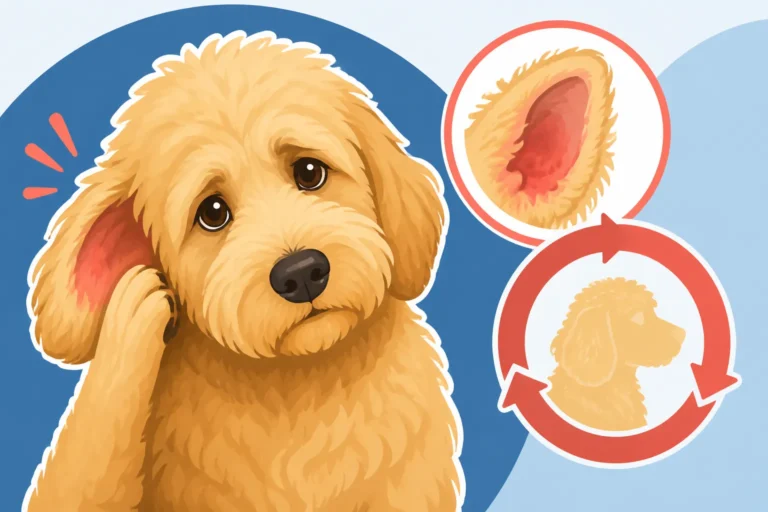
One of the defining characteristics of a Goldendoodle, regardless of size, is their "furnishings." These are the longer hair on their face that creates the adorable beard and eyebrows, and the feathering on their legs and tail. While these furnishings give Goldendoodles their charming, teddy-bear-like appearance, they are also incredibly susceptible to matting. The hair around their mouth gets wet with every drink and meal, leading to tangles and potential staining. Their long ear hair also poses unique challenges, often creating an ideal environment for moisture and mats that can contribute to ear infections. For more on this specific issue, you might want to read about Hair Growing Inside a Goldendoodle Ear Canal.
Professional groomers dedicate significant time to carefully detangling, cleaning, and trimming these furnished areas. It’s not just about aesthetics; mats around the eyes can obstruct vision and cause irritation, while mats in the beard can hold food particles and moisture, leading to skin issues. The groomer has to work slowly and methodically with specialized tools, often using a fine-toothed comb and small scissors, to ensure these delicate areas are clean and mat-free without causing discomfort or injury to your dog. This meticulous attention to detail simply takes time, even on a small face.
The Goldendoodle Coat Change Phenomenon
Perhaps one of the most surprising and time-consuming aspects of mini Goldendoodle grooming is the dreaded "coat change." This typically occurs between 8 to 12 months of age, though it can vary. During this period, your Goldendoodle puppy's soft, wispy puppy coat begins to shed out, making way for their denser, adult coat. The problem is, the puppy coat often gets trapped within the emerging adult coat, creating a dense, felt-like layer that mats incredibly quickly and tightly. It's a bit like having two different textures of hair trying to grow through each other.
This phase is notoriously difficult for both owners and groomers. What might have taken 45 minutes to brush a few weeks prior can suddenly take hours. Groomers often have to spend extensive time carefully "line brushing" – separating the coat into small sections and brushing from the skin out – to remove the trapped puppy hair and prevent severe matting. If a dog isn't brushed diligently at home during this period, even a mini Goldendoodle can become a matted mess requiring a full shave, which is never ideal. Knowing about The Goldendoodle Coat Change at Eight to Twelve Months can help you prepare for this challenging period and understand why your groomer needs extra time.
The Multi-Step Process of Professional Goldendoodle Grooming
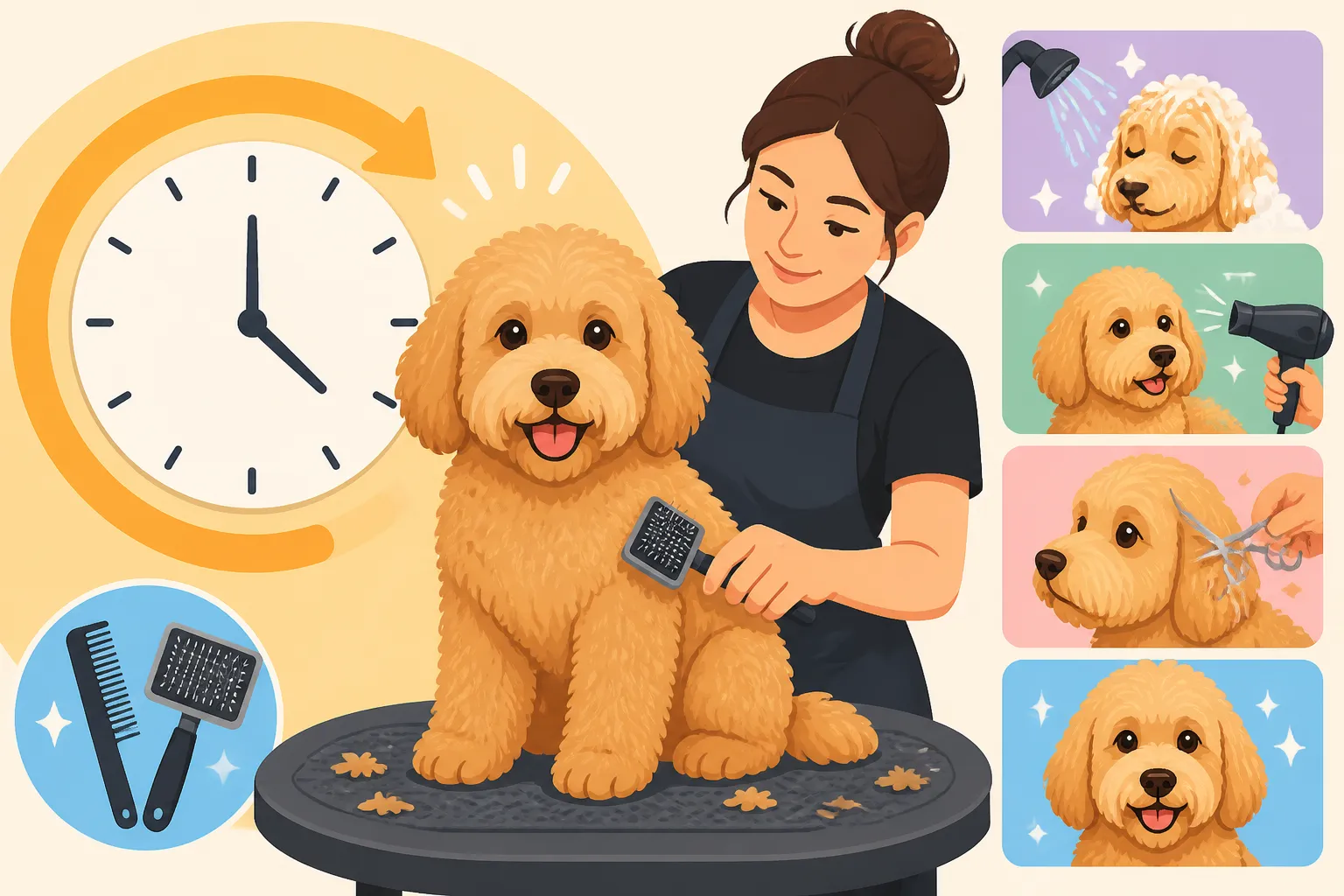
When you drop your mini Goldendoodle off, it’s not just a single step operation. A professional groomer follows a rigorous, multi-step process designed to ensure your dog is clean, comfortable, and looking their best. Each of these stages, even for a smaller dog, contributes significantly to the overall two-hour timeframe.
Pre-Grooming Prep: Brushing and Detangling
Before your mini Goldendoodle even sees the bath, a significant amount of time is dedicated to thorough pre-grooming preparation. This crucial first step involves a full body inspection and an extensive brushing and detangling session. The groomer will meticulously go over your dog's entire coat, section by section, using specialized tools like slicker brushes and metal combs. Their goal is to find and gently work out any mats or tangles that have formed. This isn't just a quick surface brush; it's about getting deep into the coat, all the way to the skin.
Why is this so important, and why does it take so long? Water will tighten mats, making them nearly impossible to brush out once wet. If a dog goes into the bath with mats, those mats can become solid felt, potentially causing skin irritation, discomfort, and even pain. A professional groomer understands the importance of Brushing a Goldendoodle Often Enough to Stop Matting and will not skip this step, even if it adds substantial time to the groom. For mini Goldendoodles, mats frequently occur in common trouble spots: behind the ears, in the armpits, under the collar or harness, and around the tail. These areas require particular patience and skill to address without hurting the dog. Depending on the condition of your mini Goldendoodle’s coat upon arrival, this pre-bath detangling alone can easily consume 30-60 minutes or even more, especially if there are significant mats.
The Double Wash, Condition, and Drying Ritual
Once thoroughly brushed, your mini Goldendoodle is ready for their spa treatment. This usually involves a double wash. The first shampoo helps break down dirt, oil, and grime, while the second ensures a truly deep clean. Groomers often use high-quality, professional-grade shampoos that are specifically formulated for dog coats and skin, avoiding harsh chemicals. Following the wash, a conditioner is applied to help soften the coat, making it easier to comb through and less prone to tangles later. This step is particularly vital for Goldendoodles, as it helps maintain the health and manageability of their dense fur.
However, the real time-consumer in this stage is the drying process. Unlike simply towel-drying at home, professional groomers use high-velocity dryers. These powerful tools not only remove water quickly but also help to "stretch" the hair straight, which is essential for achieving a smooth, even haircut. Improper or incomplete drying is a major cause of matting, as any residual dampness can cause the coat to curl back up and felt together. The groomer must meticulously dry every inch of your mini Goldendoodle’s dense coat, often line-drying small sections to ensure it’s completely dry down to the skin. This careful, labor-intensive drying process, designed to prevent future mats and prepare the coat for clipping, can easily take 30-45 minutes or more. For context on why this thorough drying is non-negotiable, consider the insights on Drying a Goldendoodle Coat Properly.
Precision Clipping, Scissoring, and Finishing Touches
After the bath and meticulous drying, your mini Goldendoodle’s coat is finally ready for the actual haircut, which is another time-intensive stage. This isn't just about shaving; it’s a detailed art form. The groomer uses clippers for the body, selecting the appropriate blade length based on your preferences (e.g., a "teddy bear cut" or a shorter, more practical length). For intricate areas like the face, paws, and sanitary regions, fine-point shears are used for precision and safety. Imagine the patience required to trim around sensitive eyes, or sculpt the perfect round paw, or carefully clean up the sanitary areas without causing nicks.
Beyond the cut itself, there are many finishing touches. This includes trimming nails, which requires careful handling to avoid the quick, and thorough ear cleaning. For Goldendoodles, this often means addressing potential Goldendoodle Ear Hair and Chronic Infection by carefully cleaning and, if appropriate, plucking hair from the ear canal (though this is becoming a more debated topic among professionals, with many opting for cleaning only unless specifically requested and necessary). They also apply finishing sprays for shine and detangling, and sometimes even a cute bandana or bow. All these steps demand steady hands, specialized tools, and a keen eye for detail. When you factor in the dog's movement, the need for breaks, and the sheer artistry involved in achieving a beautiful, even look, it’s clear why this stage alone can take another 30-60 minutes, bringing the total time to a solid two hours for a mini Goldendoodle.
Why Home Grooming Doesn't Necessarily Cut Down Salon Time
Many mini Goldendoodle owners, understandably, try to do some grooming at home to help manage their pup’s coat and potentially save on professional grooming costs. While regular home care is absolutely essential for maintaining coat health and extending the time between professional grooms, it doesn't always translate into a shorter salon appointment. In fact, sometimes, insufficient or incorrect home grooming can inadvertently increase the time a professional groomer needs.
The Skills and Tools of a Professional Groomer
Professional groomers undergo extensive training and apprenticeships to master their craft. They have a deep understanding of dog anatomy, coat types, and safe handling techniques. They know how to identify skin conditions, spot potential health issues hidden under the fur, and work with dogs of varying temperaments, including those who may not be thrilled about being groomed. Their experience allows them to work efficiently and safely, using skills developed over hundreds, if not thousands, of grooms. This expertise is something that most home groomers simply don't possess.
Furthermore, professional groomers invest in high-quality, specialized equipment that is far beyond what most pet owners have at home. This includes powerful clippers with various blades, professional-grade shears (often costing hundreds of dollars), high-velocity dryers that are much more effective than human hairdryers, and a wide array of brushes, combs, and detangling products. These tools are designed for efficiency and safety on a thick, dense Goldendoodle coat. For instance, while you might find clippers on Chewy, a professional-grade set will have a more powerful motor and sharper blades, making the job faster and less irritating for the dog. Trying to use inadequate tools at home can lead to an uneven cut, "clipper burn," or, worse, injury to your pet. The combination of skill and specialized tools allows a groomer to tackle a mini Goldendoodle coat with a level of precision and speed that is simply unachievable for most home groomers.
The Importance of Regularity and Prevention
The biggest impact home grooming has on salon time is preventative. Consistent, thorough home brushing and combing between professional appointments is key to preventing mats from forming or becoming severe. When a mini Goldendoodle arrives at the groomer’s with a well-maintained, mat-free coat, the groomer can proceed directly to the bath and haircut, significantly streamlining the process. This is the ideal scenario and often allows the groomer to stick to the standard two-hour timeframe without needing to add extra charges for de-matting.
However, if home grooming has been sporadic or ineffective, the groomer will spend a substantial portion of the two hours (or more) dealing with mats. This isn't just a quick brush-out; it can involve delicate work with detangling sprays (like those you can find on Chewy), special combs, and even careful shaving under the mats if they are too tight to brush out safely. This de-matting process is time-consuming, can be uncomfortable for the dog, and often incurs additional charges, as highlighted in "Dematting Surcharges on a Goldendoodle". Many Goldendoodles end up at rescues because their owners didn't realize the commitment required for coat care. While Learning to Groom Your Own Goldendoodle can be rewarding, it's a significant time investment itself, and requires commitment to be effective. Home grooming should be seen as a way to support and maintain a professional groom, rather than replacing it entirely, or expecting the salon time to magically shrink without diligent effort.
Managing Expectations and Cost for Your Mini Goldendoodle
Understanding why your mini Goldendoodle's groom takes two hours is the first step toward a more positive and realistic grooming experience. It's not just about the clock; it's about the comprehensive care your dog receives. Managing your expectations and communicating effectively with your groomer can make a world of difference.
Communicating Your Desired Look and Schedule
Open and honest communication with your groomer is paramount. Before each appointment, discuss the desired length and style for your mini Goldendoodle. Do you prefer a longer "teddy bear" look, which will require more meticulous scissoring and therefore more time? Or are you looking for a shorter, more practical "puppy cut" that might allow for slightly quicker clipping? Bringing in photos of your desired cut can be incredibly helpful. Be realistic about the condition of your dog's coat and how that might impact the groomer’s ability to achieve a certain style. If your dog is matted, a shorter cut may be the only humane option, regardless of your preference for a longer style.
Additionally, discuss the frequency of appointments. Most Goldendoodles benefit from professional grooming every 6 to 8 weeks to prevent matting and maintain coat health. Booking a regular schedule, as discussed in Booking a Goldendoodle Groom Every Six to Eight Weeks, helps the groomer stay on top of your dog's coat before it becomes problematic, potentially making each session smoother. If you stretch appointments out too long, say to 10 or 12 weeks, the groomer will almost certainly need more than two hours due to increased matting and coat growth.
The True Value of a Two-Hour Groom
While a two-hour grooming session for a mini Goldendoodle might seem like a significant investment of both time and money (with The $80 to $150 Goldendoodle Groom being a common range), it's crucial to view it as an essential part of your dog's overall health and well-being, not just an aesthetic luxury. The cost reflects the groomer’s skill, training, expensive equipment, time, and the physical demands of working with animals. A thorough groom isn't just about making your dog look good; it's about preventing painful mats, addressing potential skin issues, ensuring proper hygiene, and making your dog comfortable. Mats can pull on the skin, restrict movement, and even cut off circulation, leading to severe discomfort and even skin infections.
Consider the long-term benefits: a well-maintained coat is healthier, less prone to skin problems, and generally easier for your dog to live with. It also means fewer potential costly vet visits down the line for mat-related issues or skin infections. While pet insurance providers like Healthy Paws can help with unexpected vet bills, preventing issues through regular grooming is always the best approach. Investing in quality food, perhaps from a brand like Ollie, or finding great deals on Chewy for regular grooming supplies like brushes and shampoos, can also contribute to a healthier coat, making the groomer's job a little easier and more efficient. Ultimately, that two-hour groom is a testament to the dedication required to properly care for a mini Goldendoodle’s beautiful, yet demanding, coat.
| Grooming Task | Estimated Time (Well-maintained coat) | Estimated Time (Matted coat) | Key Reason for Time |
|---|---|---|---|
| Pre-Grooming Brushing/Detangling | 15-30 minutes | 45-90+ minutes | Meticulous mat removal, checking for skin issues. Mats must be removed before bathing. |
| Bathing & Conditioning | 15-20 minutes | 15-20 minutes | Double shampoo, thorough rinse, conditioning for coat health. |
| High-Velocity Drying | 30-45 minutes | 30-45 minutes (if de-matted) | Crucial for preventing new mats, straightening hair for even cut, ensuring skin health. Matted dogs cannot be dried this way directly. |
| Clipping, Scissoring & Finish | 30-45 minutes | 30-45 minutes (after shaving if matted) | Precision work for desired style, delicate areas like face/paws, nail trim, ear cleaning. |
| Total Groom Time | ~1.5 – 2 hours | ~2.5 – 4+ hours | The average two-hour groom assumes a well-maintained coat, with significant extra time needed for matting. |
Disclaimer
This article is for general informational purposes only and does not constitute professional advice. Laws, prices and regulations vary by location and change over time. Consult a qualified professional for guidance on your specific situation.