Goldendoodle Jumping on Every Visitor
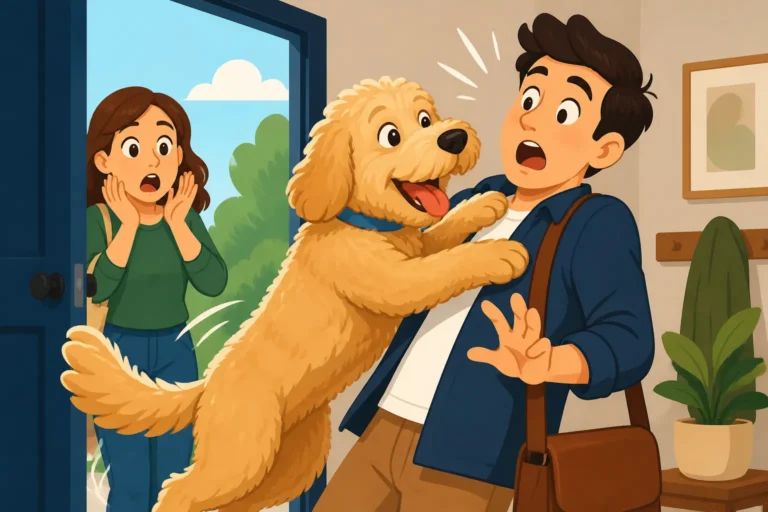
One of the most common, and frankly, most embarrassing, issues Goldendoodle parents face is the enthusiastic, often over-the-top, greeting that involves jumping on every single visitor. It's frustrating when your fluffy companion, who you adore, knocks over a relative or leaves muddy paw prints on a new outfit. This guide is here to unravel the why behind your Goldendoodle's jumping habit and provide a compassionate, step-by-step approach to transforming them into a calm, polite greeter.
Understanding the Goldendoodle Jumping Impulse
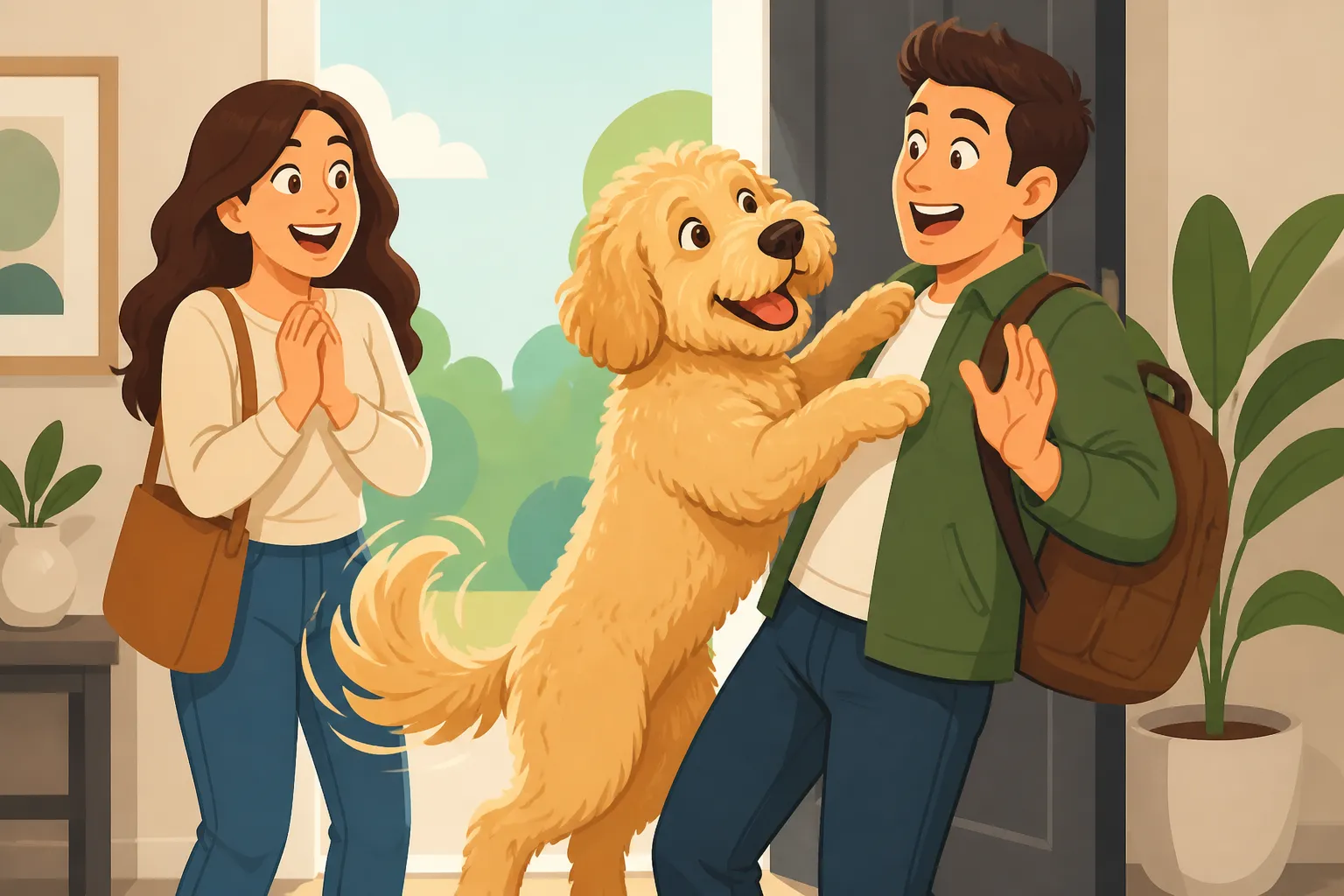
Let's be real, it’s not malicious. Your Goldendoodle isn't jumping on Aunt Carol because they dislike her new cashmere sweater. They're doing it because they're overflowing with joy, excitement, and a deep desire to connect with you and your guests. This behavior, while utterly endearing in a tiny puppy, quickly becomes a significant problem as your Goldendoodle grows into a fifty-pound (or more!) bundle of energy. Understanding the roots of this impulse is the first step toward effectively managing and redirecting it.
The Golden Retriever's Enthusiastic Greeting
Both parent breeds contribute distinct traits to the Goldendoodle, and the Golden Retriever side brings an undeniable exuberance when it comes to greeting people. Goldens are known for their friendly, outgoing nature and their desire to be close to their human companions. When someone new enters their space, it's like a party has just started in their brain. They want to be right there, in your face, sharing their happiness. This can manifest as leaping up to get closer to face level, making direct eye contact, and just generally trying to get as much physical contact as possible. It’s their way of saying, "You're here! I love you! Play with me!" This inherent biddability is a wonderful trait, but it needs careful channeling. Goldendoodle Temperament From Two Parent Breeds delves deeper into how their lineage shapes their personality.
The Poodle's Intelligence and Attention Seeking
On the other side of the Goldendoodle equation, we have the Poodle, a breed renowned for its intelligence, sensitivity, and strong bond with its family. Poodles are smart, and they learn quickly what behaviors get them attention. If jumping, even if it's negative attention like a gasp or a push, consistently gets a reaction, they're likely to repeat it. They crave engagement, and if the most reliable way to get noticed is to launch themselves at an incoming person, they’ll absolutely do it. They're not just trying to say hello; they're trying to figure out how to best interact with you and often misinterpret excitement for approval. They are highly attuned to human emotion and feed off of it, so an excited human often means an excited Poodle-brain.
Puppy Habits That Escalate
Think back to when your Goldendoodle was a tiny fluffball. When they jumped up on you, it was probably adorable. Maybe you even picked them up, gave them a cuddle, or laughed. This, while innocent, inadvertently taught them that jumping is a successful strategy for getting what they want – attention, affection, or even play. As they grew, that tiny jump became a larger, more impactful leap. What started as a cute quirk becomes a genuine hazard. Many owners unknowingly reinforce this behavior during puppyhood, making it harder to break later. It's a classic case of a little problem growing into a big one if not addressed early.
The Impact of Goldendoodle Jumping
While we've established that jumping usually comes from a place of love and excitement, that doesn't lessen its negative impact. It's not just an inconvenience; it can have real consequences for your guests, your home, and even your dog's own well-being. Over time, constant jumping can also lead to frustration for you, straining the otherwise joyful relationship you have with your Goldendoodle.
Safety Concerns for Visitors and Children
This is probably the most pressing concern for most Goldendoodle owners. A large, enthusiastic dog can easily knock over a small child, an elderly relative, or someone who is unsteady on their feet. The risk of falls, scratches, or even bites (often accidental, a result of over-excitement, not aggression) is significant. Imagine a visiting grandparent or a child being genuinely afraid of your otherwise sweet dog because they can't handle the intensity of the greeting. This is heartbreaking for owners who want their dog to be loved by everyone. It can also lead to people avoiding your home, which is a lonely consequence for both you and your Goldendoodle. For tips on managing interactions with younger family members, consider reading A Goldendoodle That Jumps on Small Children.
Damaging Property and Reputation
Beyond the immediate safety concerns, jumping can wreak havoc on your home and personal belongings. Muddy paws on clean clothes, scratches on doors or walls from exuberant leaps, or even spilled drinks are common complaints. It's embarrassing when you have to apologize constantly for your dog's behavior, and it can give guests a negative impression, even if they understand your dog means well. You might start making excuses for your dog, or worse, isolating them when guests arrive, which isn't fair to anyone. The goal is a dog that can be a welcome, integrated part of your social life, not a source of stress or embarrassment.
Stress for Your Goldendoodle and You
Believe it or not, constant jumping isn't great for your Goldendoodle either. Living in a state of perpetual high excitement, especially when new people arrive, can be stressful for them. They're constantly revved up, struggling to control their impulses, and likely getting frustrated when their attempts at connection are met with pushes or shouts. For you, the owner, it's exhausting. Having to constantly manage your dog's behavior, apologize to guests, and worry about potential accidents can take a toll. This cycle of excitement, frustration, and attempted correction creates tension rather than the harmonious household you envisioned. Breaking this cycle is beneficial for everyone's peace of mind.
Foundation Training for Four Paws on the Floor
The key to stopping jumping isn't just to tell your Goldendoodle "no," it's to teach them what to do instead. We need to replace the undesirable behavior with a desirable one and reward them heavily for choosing it. This foundation work starts long before a guest even rings the doorbell. It's all about impulse control and clear communication. The aim is to instill in your Goldendoodle the understanding that keeping all four paws on the ground is the most rewarding way to greet people. Goldendoodle Jumping and the Impulse Control Problem offers further insights into building self-control.
Teaching "Sit" and "Stay" as the Default Greeting
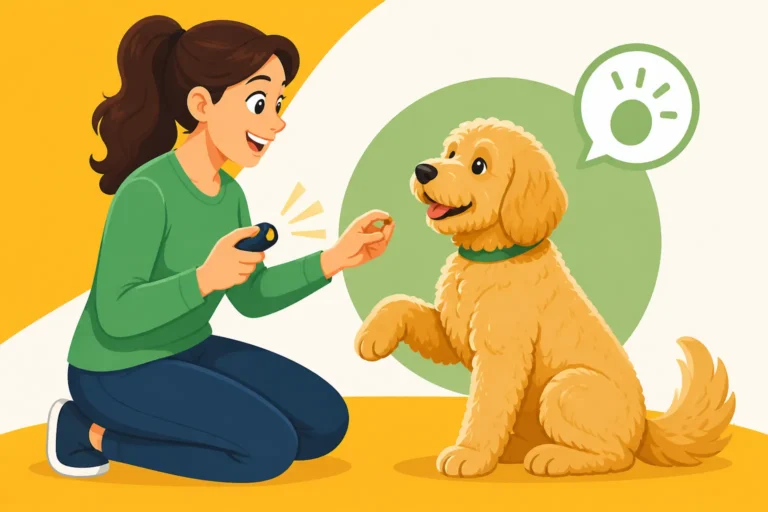
This is your go-to alternative behavior. Begin practicing "sit" and "stay" in calm, low-distraction environments. Use high-value treats and praise to make these commands super rewarding. Once your Goldendoodle consistently sits and stays for a few seconds, start introducing very mild distractions. Have a family member walk past, or pretend to ring the doorbell. The moment their rear touches the ground, mark it with a verbal cue like "Yes!" or a clicker, and reward them generously. The goal is to make "sit" their automatic response when they are excited or anticipating a greeting. Think of it as installing a default program in their brain.
Rewarding Calmness, Not Excitement
This is a crucial shift in perspective for many owners. We often inadvertently reward the excitement leading up to the jump. Instead, actively seek out and reward moments of calm. When your Goldendoodle approaches you calmly, with all four paws on the floor, immediately offer gentle praise and a small treat. If they start to get bouncy, turn your back, cross your arms, and completely ignore them. The moment they settle, even for a second, turn back around and calmly reward. This teaches them that calm behavior earns attention and rewards, while frantic behavior makes the fun disappear. This "no attention for jumping" rule applies to everyone in the household.
Using a Leash and Management for Initial Greetings
When you're first training, or when you have guests who might not be consistent with your training rules, a leash is your best friend. Put your Goldendoodle on a leash before guests arrive. Keep them by your side or have them on a "place" mat a short distance from the door. As guests enter, have your Goldendoodle sit, and only allow them to approach (still on leash) if they remain calm. If they attempt to jump, gently guide them back down with the leash and a verbal cue, asking for a sit. Reward heavily for keeping Four Paws on the Floor for a Goldendoodle. This management prevents the unwanted behavior from happening, giving you more opportunities to reward the correct one. It's like training wheels for polite greetings. Using a comfortable harness can also help with control without putting pressure on their neck. Harnesses That Suit a Goldendoodle Coat explores options.
Addressing Specific Jumping Triggers and Scenarios
Goldendoodles are smart, but they can be very situational. A dog who never jumps on you might still launch themselves at a brand new person or a child. We need to generalize the "four paws on the floor" rule to every possible scenario your Goldendoodle might encounter. This requires planned setups and consistent practice in varied environments.
The Doorbell Dash and Front Door Etiquette
The doorbell is often a huge trigger for Goldendoodles. It signals impending excitement! Start by desensitizing your Goldendoodle to the doorbell sound. Ring it yourself, then immediately ask for a sit-stay. Reward heavily for compliance. Gradually increase the time between the doorbell ring and the reward, eventually leading to opening the door yourself. Recruit a patient friend or family member to pretend to be a guest. Have them ring the doorbell, and when your Goldendoodle barks or jumps, ask your friend to simply wait outside until your dog is calm and sitting. Only then do you open the door. If your Goldendoodle then jumps, your friend steps back outside, closing the door. Repeat until your Goldendoodle associates the doorbell and an open door with calm, seated behavior. This takes patience but works wonders. Door Manners for a Goldendoodle That Bolts provides more detail on this specific challenge.
Jumping on Specific People (Children, the Elderly)
Certain individuals can be more challenging for your Goldendoodle to greet politely. Children's higher-pitched voices and erratic movements can fuel excitement, while the elderly may be perceived as less threatening to jump on. For children, teach them to be "tree stumps" – stand still, arms crossed, and ignore the dog until all four paws are on the floor. Only then can they offer a calm pet. For the elderly or those with mobility issues, keep your Goldendoodle on a leash during initial greetings. Have your dog sit a few feet away, and allow the guest to slowly approach and offer a treat if your dog remains calm. Never force an interaction. It’s about building confidence and respect, not just obedience.
Managing Excitement During Play and Walks
Jumping isn't just reserved for greetings. Some Goldendoodles will jump during play, when they're overly excited on a walk, or when they want to initiate interaction. If your Goldendoodle jumps on you during play, immediately stop playing, turn your back, and ignore them for a few seconds. Resume play only when they are calm. This teaches them that jumping means the fun stops. During walks, if they pull or jump when seeing another dog or person, use your leash to guide them into a "watch me" or "sit." Reward for focus on you, rather than the distraction. It's all about consistent redirection and rewarding the desired calm behavior over impulsive actions. Goldendoodle Impulse Control Exercises can offer more ways to build this self-control.
Tools and Aids for Goldendoodle Jumping Training
While training is primarily about consistent effort and communication, there are some invaluable tools that can make the process smoother and more effective. These aren't shortcuts, but rather aids to help you manage your Goldendoodle's strong impulses and create a safer, more controlled training environment. Choosing the right equipment can significantly impact your success.
Harnesses and Leashes for Control
A front-clip harness can be incredibly helpful for managing a Goldendoodle who jumps or pulls on leash. When they pull forward, the leash connection at the chest gently redirects their body sideways, making it harder for them to lunge or jump up. This gives you more physical control without causing discomfort. Traditional back-clip harnesses are fine for established walkers but offer less leverage against jumping. Combine your harness with a sturdy, comfortable leash. You might also consider a longer leash for practicing recall in a safe, enclosed area, or a shorter one for close-quarters greeting practice. Many excellent options are available online through retailers like Amazon, offering a variety of styles and sizes for your Goldendoodle.
Engaging Toys and Chews for Redirection
Sometimes, a Goldendoodle jumps because they have too much pent-up energy or simply need something else to do with their mouth. High-quality chew toys, puzzle feeders, or engaging enrichment toys can be fantastic for redirection. Before guests arrive, you can offer a stuffed Kong or a long-lasting chew to keep your Goldendoodle occupied and calm. During training sessions, a favorite squeaky toy or tug toy can be used as a reward for polite greetings, shifting their focus from jumping on people to interacting with an appropriate object. Make sure the toys are durable and appropriate for your Goldendoodle's size and chewing habits.
Professional Help When You're Stuck
If you've been consistent and feel like you're still not making progress, don't be afraid to seek professional help. A certified professional dog trainer can assess your Goldendoodle's specific behavior, identify underlying triggers, and provide personalized strategies. They can also demonstrate techniques in person, offering hands-on guidance that can be incredibly valuable. Group classes focusing on manners or impulse control can also be beneficial, providing a structured environment with controlled distractions. Organizations like BAXTER & Bella offer online training programs and resources that can be a great starting point for those looking for structured guidance from home. Finding a Trainer for a Goldendoodle can help you select the right professional.
Here's a quick reference table for managing common jumping scenarios:
| Scenario | Immediate Action | Long-Term Training Focus |
|---|---|---|
| Doorbell Rings / Guests Arrive | Leash your dog, ask for "sit-stay" at a distance. If jumps, turn back, re-cue. | Desensitize to doorbell, practice "place" command, reward calm greetings. |
| Greeting Family Members | Ignore all jumping; turn back or walk away immediately. Reward only four paws down. | Consistent "sit" greetings, teach family members to reinforce calm behavior. |
| Excitement During Play | Immediately stop play; ignore for a few seconds. Resume only when calm. | Teach "off" or "settle" commands, incorporate impulse control into games. |
| Jumping on Children | Leash control, teach children to "be a tree." Supervise all interactions closely. | Practice calm greetings with child stand-ins, reward gentle interaction. |
| Jumping for Attention | Withhold all attention (eye contact, talking, touching). Reward calm proximity. | Proactive attention for calm behavior, scheduled play and training sessions. |
Consistency and Patience: The Keys to Success
Training a Goldendoodle not to jump isn't a one-and-done deal. It's an ongoing process that requires unwavering consistency and a generous amount of patience. Remember, your Goldendoodle isn't trying to be naughty; they're acting on instinct and learned behaviors. Every successful greeting, every moment of calm, builds upon the last.
Involving the Whole Family and Guests
This is where many training plans fall apart. It's not enough for just you to be consistent. Every single person who interacts with your Goldendoodle needs to be on board with the rules. This includes partners, children, housemates, and even regular guests. If one person allows jumping, it undermines all the hard work everyone else is doing. Hold a family meeting, explain the "four paws on the floor" rule, and demonstrate how to calmly greet your Goldendoodle. Ask guests, politely but firmly, to assist in your training by ignoring jumping and only offering attention when your dog is calm. It might feel awkward at first, but it's essential for your Goldendoodle's success and the peace of your home.
Preventing Relapses and Maintaining Good Habits
Even after significant progress, there might be times when your Goldendoodle has a "oops" moment and tries to revert to jumping, especially in highly exciting situations. Don't get discouraged! This is normal. The key is to respond consistently every single time. Revisit your foundational training, reinforce the "sit" and "stay" commands, and go back to using the leash for controlled greetings if necessary. Continue to proactively reward calm behavior, even when there are no guests around. Think of it as maintaining a skill – the more you practice and reinforce, the stronger it becomes. Regular, short training sessions, perhaps guided by resources like those from BAXTER & Bella, can keep those good habits sharp. Remember, building good habits takes time and constant reinforcement.
Disclaimer
This article is for general informational purposes only and does not constitute professional advice. Laws, prices and regulations vary by location and change over time. Consult a qualified professional for guidance on your specific situation.